Axios Atlanta

November 13, 2026


Happy Friday! Anyone else not prepared for this weather whiplash?
☀️ Today's weather: Sunny and much cooler. Highs in the mid-50s and lows in the mid-30s.
🎂 Happy early birthday to our member Steve Fabian!
Today’s newsletter is 906 words — a 3.5-minute read.
1 big thing: Fixing Atlanta's aging bridges
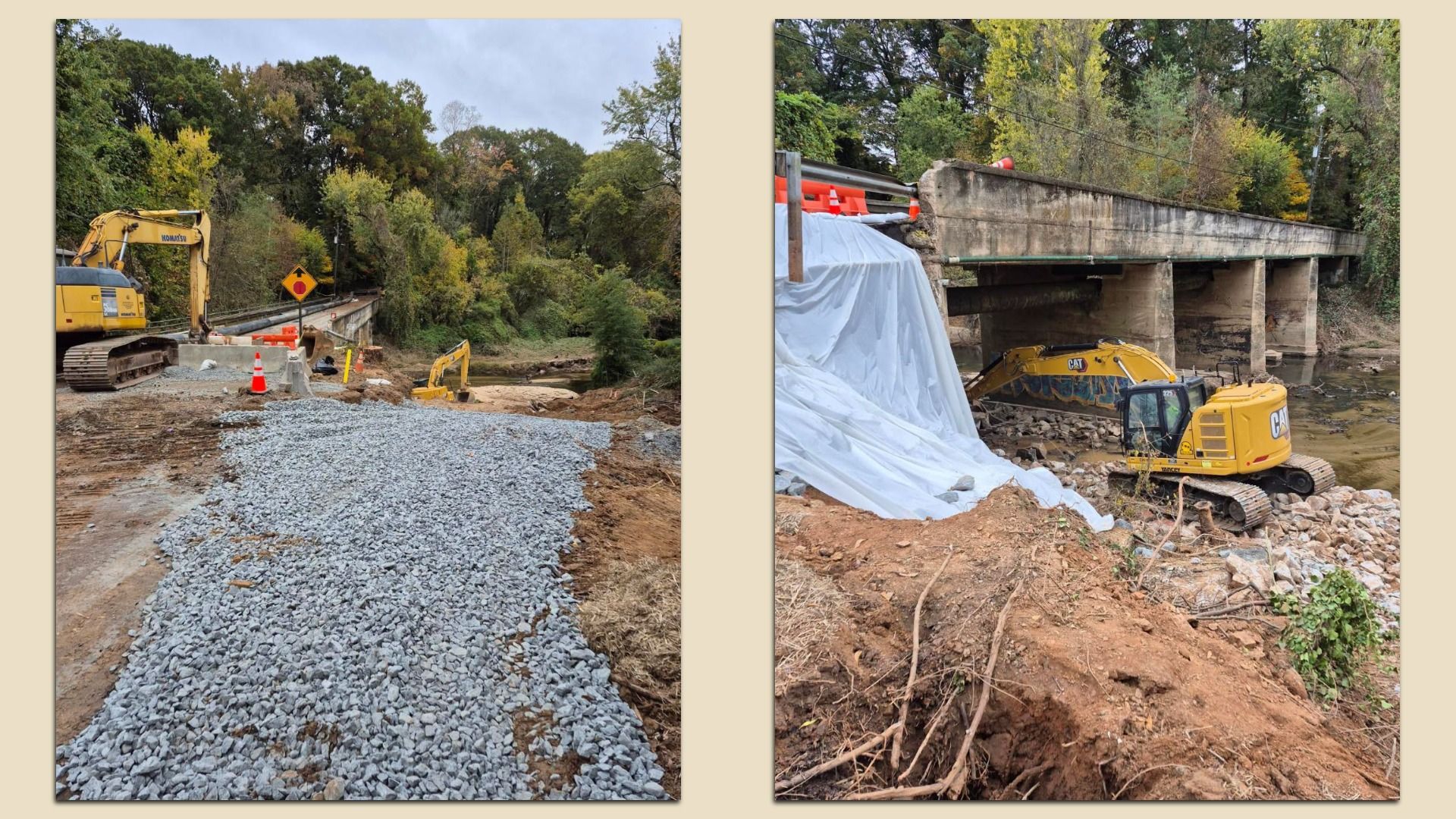
Last month's water valve break and buttress wall collapse that led to the closure of the Moores Mill Road bridge over Peachtree Creek have Atlanta officials thinking about other structures at risk of failing.
Why it matters: City leaders will have to set aside millions of dollars to update or replace critical infrastructure built in the 20th century just to keep up with 21st-century needs.
The latest: Atlanta City Council members will consider legislation on Monday directing the Department of Transportation to identify and rank the 15 bridges most in need of replacement.
- They will also consider expediting the replacement of the Moores Mill Road bridge over Peachtree Creek in Buckhead's Ridgewood Heights neighborhood. The bridge has been closed since Oct. 20 after a water valve failed and led to the collapse of a buttress wall.
Catch up quick: Council member Dustin Hillis told Axios a 67-year-old water valve on a 30-inch water main, which runs underneath the bridge and serves about 20% of the city, failed and began spewing water.
- The Department of Watershed Management initially said the water line was damaged after it was struck by a heavy vehicle.
What they're saying: Hillis told Axios the city hopes to reopen the bridge by Dec. 15, weather permitting.
- Department of Watershed Management crews have also been working overnight to replace the water valve, and contractors have been secured to begin rebuilding the buttress wall, wall wing of the bridge and the stormwater drain, the council member said.
- Hillis told Axios the citywide study of bridges will review how old they are, their roadway span, travel lane widths, if there are safety measures in place for bicyclists and pedestrians, and if they are in a floodplain.
What's next: Both resolutions will be placed on the Nov. 16 City Council agenda for final approval.
2. How the Delta helped secure Colom's win
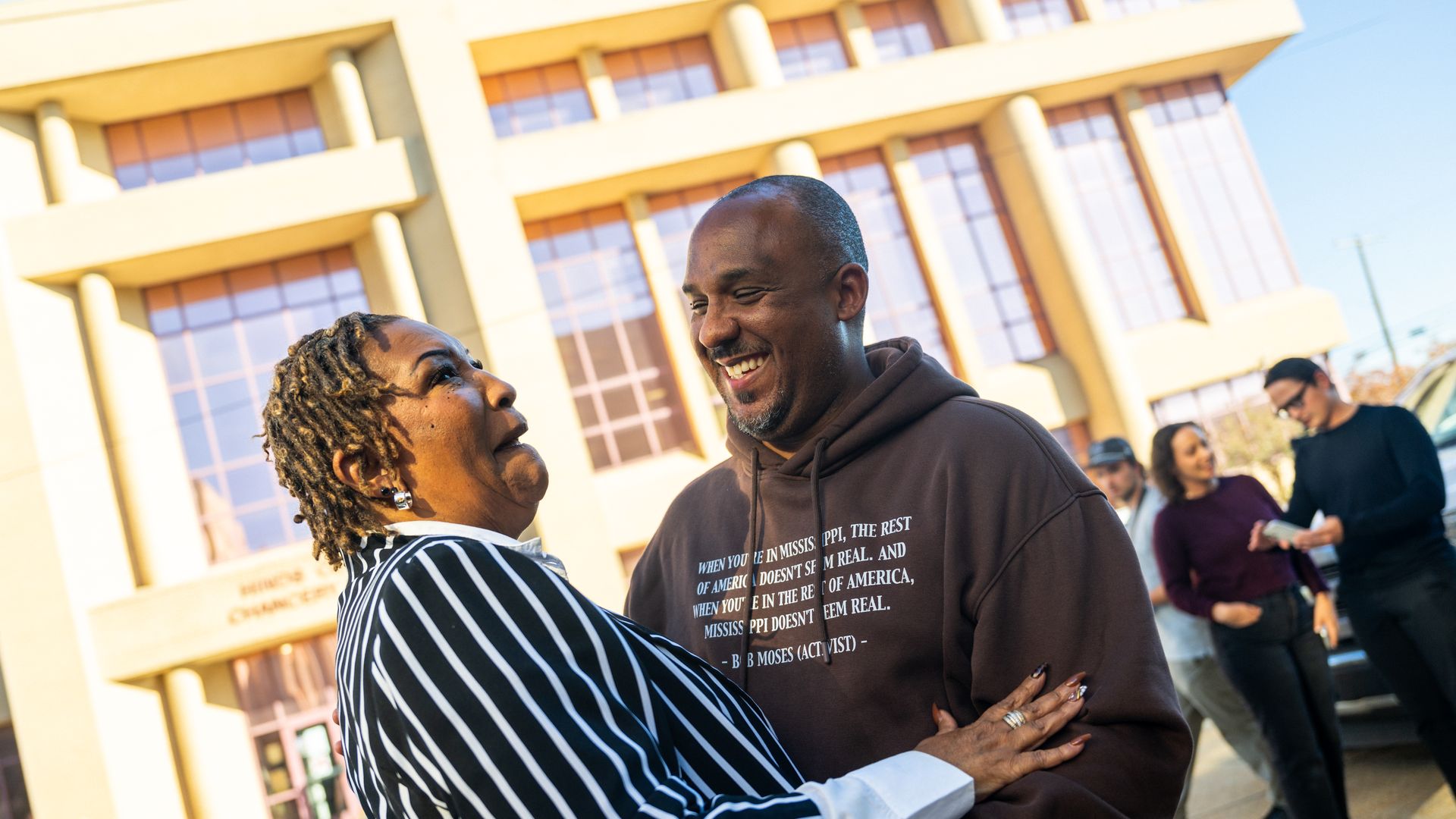
Scott Colom's path to a historic U.S. Senate upset ran through the Mississippi Delta — where Emmett Till was abducted, Fannie Lou Hamer fought for the ballot and the blues became an American art form.
Why it matters: Nearly 150 years after Reconstruction, Mississippi sent a Black American to the U.S. Senate for the first time since 1881, Axios' Russell Contreras reports.
- The votes pushing Colom toward that milestone came from communities where Black residents spent generations fighting for the ballot.
Driving the news: The Associated Press projected the race for Colom on Wednesday, handing Democrats a historic upset over Republican Sen. Cindy Hyde-Smith.
By the numbers: An Axios analysis of AP county returns found Colom ahead in 16 of the 18 counties in the Mississippi Delta National Heritage Area.
- Colom collected roughly 100,000 votes to Hyde-Smith's 62,000 — a 38,000-vote advantage.
- Statewide, Colom led Hyde-Smith by about 4,700 votes out of more than 962,000 counted when the AP called the race Wednesday — a margin of roughly half a percentage point.
What they're saying: "Mississippi voters made history because they refused to be intimidated, discouraged, or counted out," NAACP president Derrick Johnson said in a statement.
Zoom in: Colom's electoral map traces some of the most painful and defining chapters of Black American history.
- Coahoma County: Home to Clarksdale and the famed crossroads associated with the legend that bluesman Robert Johnson sold his soul to the devil. Colom led with about 4,700 votes to 1,300.
- Leflore and Tallahatchie counties: Emmett Till was abducted near Money in Leflore County in 1955. His body was recovered from the Tallahatchie River in Tallahatchie County, where an all-white jury acquitted his killers. Colom led by about 4,200 votes in Leflore and 1,300 in Tallahatchie, according to AP returns.
- Sunflower County: Fannie Lou Hamer, who lived in Ruleville, challenged Mississippi's racist voting restrictions. As late as the spring of 1965, only 155 Black residents had registered to vote in the county, according to the Mississippi Department of Archives and History. Colom led with about 5,300 votes to 1,700.
3. Where's Phoenix 3000?


👋🏽 Crystal here.
I was walking through my neighborhood with Phoenix 3000 when we spotted several giant ornaments floating in a retention pond.
- "Photo shoot!" he screamed before striking a pose on a bridge over the water. I must say, he was fierce.
Where was our impromptu photo shoot? Hit reply and tell us!
4. Five-ish Points: Ted Turner art collection heads to auction

🖼️ The late Ted Turner's Western art collection is headed to auction next year. Paintings from the CNN founder's Montana ranch will be sold by Christie's in January. (AP)
❄️ El Niño could bring colder, wetter weather — and possibly snow or ice storms — to Georgia and the Southeast this winter. (WABE)
⚖️ Cherokee County prosecutors are moving to drop charges against a woman who says a sheriff's deputy harassed her and her family online after arresting her on misdemeanor obstruction charges last year. (Fox 5)
🏳️🌈 The Georgia Rainbow History Project is proposing separate Atlanta and statewide halls of fame to honor LGBTQ people and organizations. (Rough Draft Atlanta)
🔵 Georgia's Latino voters shifted toward Democrats in this year's midterms, with turnout jumping 78% from 2022, according to polling and civic engagement group GALEO. (Georgia Recorder)
😎 Kristal is chilling.
✌️ Thomas is off.
This newsletter was edited by Crystal Hill.
Sign up for Axios Atlanta
