Axios AM

October 21, 2026

1 big thing: Nvidia's global power play

2. 📺 "To Catch a Predator" midterm ad wars

Republicans and Democrats are flooding the midterm airwaves with explosive TV ads accusing their opponents of protecting pedophiles and child sexual abusers, Axios' Alex Isenstadt writes.
- Why it matters: The advertising blitz underscores the lingering power of the Jeffrey Epstein scandal, which has fueled distrust of powerful figures and pushed allegations of child sexual abuse to the forefront of national politics.
The controversy over the Trump administration's handling of the Epstein files — including allegations that officials sought to protect powerful figures by not releasing all of the files — has kept the issue in the headlines.
- The midterm ads that have followed have been bipartisan and are playing out in state and federal races.
🧮 By the numbers: Since Sept. 1, candidates and outside groups have aired at least $70 million in TV ads mentioning pedophilia, Epstein and allegations related to child sexual abuse, according to AdImpact.
- Of the 118 ads identified, 63 were sponsored by Democrats, 52 by Republicans and three by independents. Keep reading.
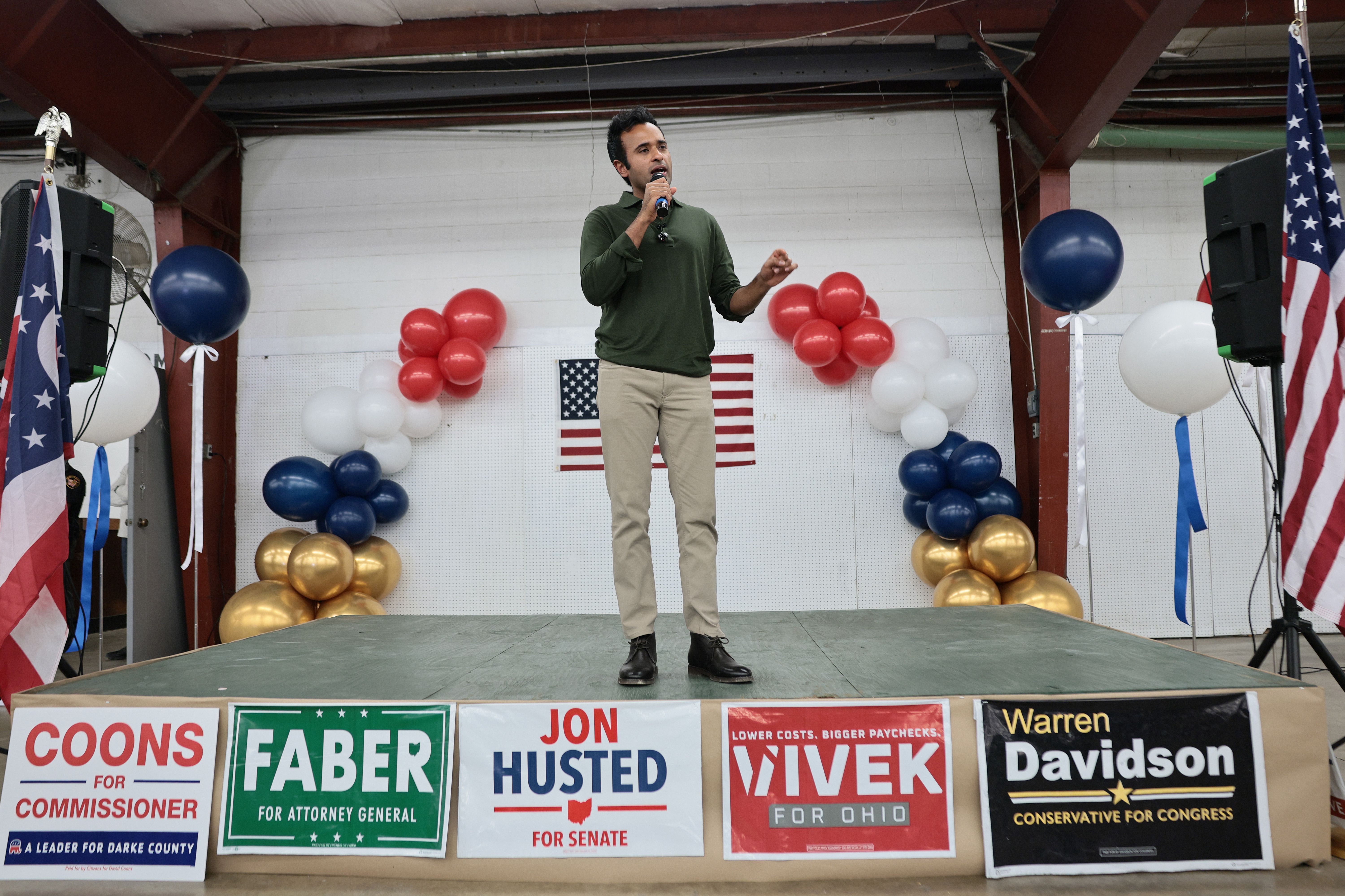
Vivek Ramaswamy's campaign for Ohio governor is pouring $4 million into a bombshell ad in which his opponent's estranged mother attacks her daughter — doubling down on the message despite fierce bipartisan backlash.
- Amy Acton has said her mom sided with her stepfather after he sexually assaulted Acton when she was 12.
After the ad began appearing yesterday on social media, many fellow Republicans urged Ramaswamy to distance his campaign from it.
3. 💰 Anthropic's unavoidable IPO

4. 🗳️ Where early voting is surging
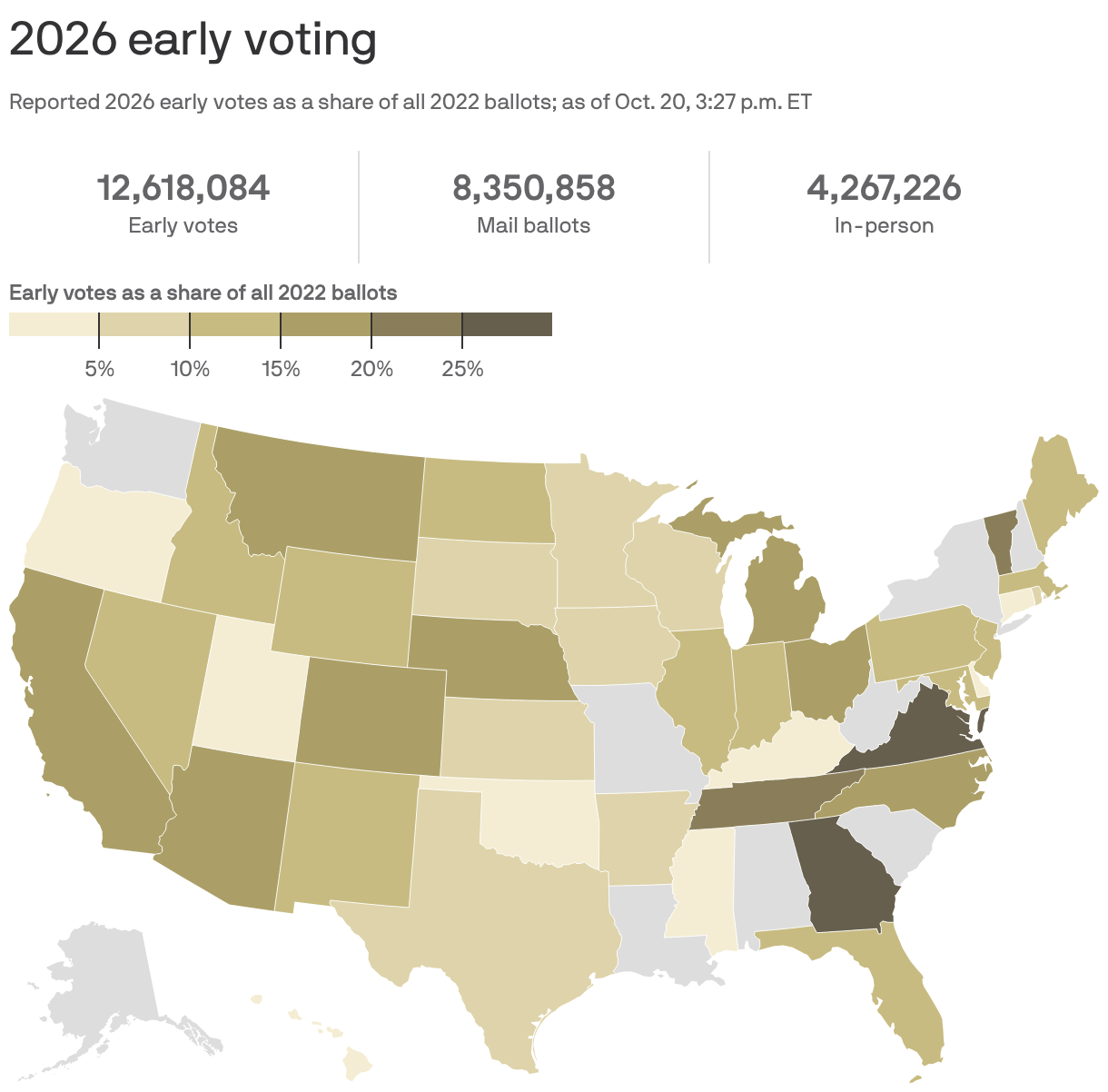
More than 12.6 million Americans have already cast ballots in the midterm elections, according to the University of Florida Election Lab's tracker.
- Georgia and Virginia lead reporting states in early turnout as a share of all ballots cast in the 2022 midterms, Axios' David Adkins and Herb Scribner write.
Signs of strong early turnout are also emerging in other states.
5. ✈️ Witkoff takes peace plan to Putin

White House envoy Steve Witkoff will meet Russian President Vladimir Putin in St. Petersburg today and present him with an updated proposal to end the war in Ukraine, Axios' Barak Ravid reports.
- President Trump's son-in-law and adviser Jared Kushner will join the meeting virtually.
Why it matters: The White House hopes Putin will show more willingness to compromise after Trump agreed to lift sanctions on Russian diesel sales and took other steps welcomed by Moscow.
Zelensky said yesterday that the next step should be a trilateral meeting between him, Putin and Trump — something Russia has refused to do so far.
6. 🤖 Execs trust AI over themselves

7. 🎤 Trump targets briefing room

President Trump is pushing aides to evict the press from the White House and has talked about replacing the briefing room with an indoor swimming pool, The New York Times' Maggie Haberman and Jonathan Swan write.
- Trump pitched the idea to former Press Secretary Karoline Leavitt in one of her final meetings with him in the Oval Office, telling her it'd be her "last legacy."

Trump has "told aides he would prefer to bring back the indoor pool President Franklin D. Roosevelt added in 1933 as therapy for his polio-afflicted legs; President Richard Nixon later covered it over to make room for the news media."
- Keep reading (gift link).
✈️ CNN is threatening further legal action against the Trump administration for denying its journalists access to Air Force One. The White House continues to bar the network from the pool that travels with the president. Keep reading.
8. ⚾ 1 for the road: Baseball's looming lockout
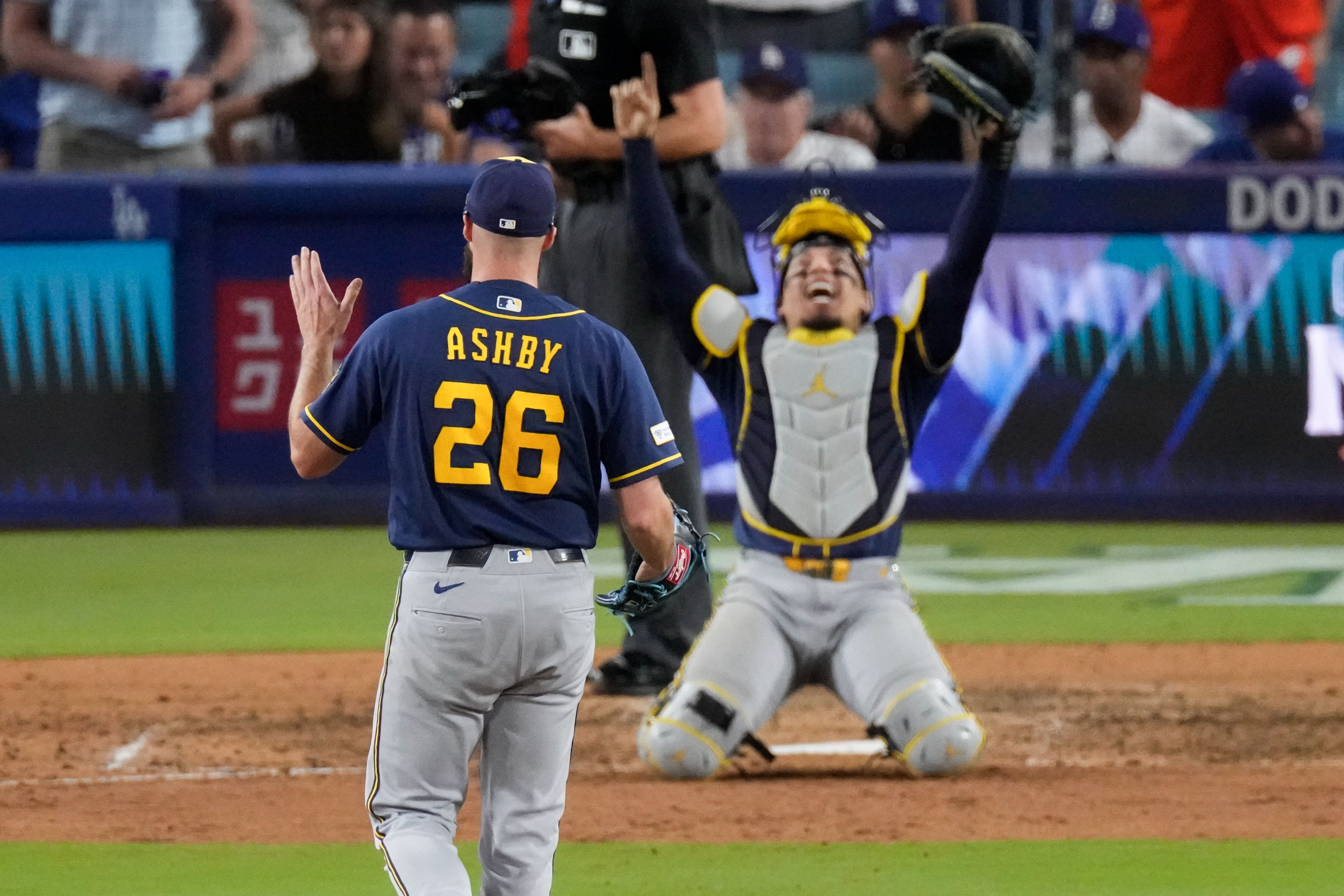
Beginning Friday, the Tampa Bay Rays will face the Milwaukee Brewers in a World Series featuring two of baseball's smallest spenders, just weeks before a labor standoff threatens to halt the sport, Axios' David Adkins writes.
- Why it matters: MLB owners argue that baseball needs a salary cap to give smaller teams a fighting chance. But a championship matchup between two budget teams gives players fresh ammunition to argue that the current system works.
🏟️ State of play: Owners proposed a salary cap and salary floor in May — the league currently has neither — which the MLB players' union is expected to reject outright.
- A work stoppage threatens to derail baseball's momentum after a season marked by rising TV viewership and the successful introduction of a system for challenging umpires' ball-and-strike calls.
Axios AM

Catch up with the most important news of the day