Axios AM

April 06, 2026

βοΈ Happy Monday! Smart Brevityβ’ count: 1,945 words ... 7Β½ mins. Thanks to Ben Berkowitz for orchestrating. Edited by Andrew Pantazi and Bill Kole.
ποΈ Driving the day: President Trump will hold a news conference with the military at 1 p.m. ET β¦ Artemis is expected to break Apollo 13's distance record for humans, set 56 years ago. Go deeper.
π³οΈ Trump endorsed Steve Hilton (R), a former Fox News host who's leading in polls for California governor: "Steve can turn it around." Keep reading.
1 big thing: Sam's superintelligence New Deal
OpenAI CEO Sam Altman is doing something no tech titan has ever done: He's publishing a detailed blueprint for how government should tax, regulate and redistribute the wealth from the very technology he's racing to build and spread, Axios' Mike Allen and Jim VandeHei write in a "Behind the Curtain" column.
- Why it matters: Altman told us in a half-hour interview that AI superintelligence is so close, so mind-bending, so disruptive that America needs a new social contract β on the scale of the Progressive Era in the early 1900s and the New Deal during the Great Depression.
π°οΈ The big picture: The threats of inaction or slow action are grave, Altman warns β widespread job loss, cyberattacks, social upheaval, machines man can't control. The two most immediate threats, he said, are cyberattacks and biological attacks:
- We've told you that top tech, business and government officials fear profound advances in soon-to-be-released AI models could enable a world-shaking cyberattack this year. "I think that's totally possible," Altman said. "I suspect in the next year, we will see significant threats we have to mitigate from cyber."
- AI companies know some random idiot, or some rogue nation, could use their models to conjure the next pandemic. "Wonderful things are going to happen there β we'll see a bunch of diseases get cured," Altman said. But he also knows terrorist groups could use the models to try to create novel pathogens: "[T]hat's no longer a theoretical thing, or it's not going to be for much longer."
Altman told us OpenAI's 13-page blueprint, "Industrial Policy for the Intelligence Age: Ideas to keep people first," isn't a prescription but a starting point:
- "We want to put these things into the conversation. Some will be good. Some will be bad. But β¦ we do feel a sense of urgency. And we want to see the debate of these issues really start to happen with seriousness."
π₯ Here are Altman's most provocative ideas:
- A Public Wealth Fund. OpenAI proposes giving every American citizen a direct stake in AI-driven economic growth through a nationally managed fund, seeded in part by AI companies themselves, that "could invest in diversified, long-term assets that capture growth in both AI companies and the broader set of firms adopting and deploying AI." This is the most radical idea in the document.
- Robot taxes. The document floats "taxes related to automated labor" and shifting the tax base from payroll toward capital gains and corporate income β since AI could hollow out the wage-and-payroll revenue that funds Social Security, Medicaid and SNAP.
- A four-day workweek. OpenAI suggests incentivizing companies and unions to run pilots of 32-hour workweeks at full pay, converting AI-driven efficiency to time back for workers β an "efficiency dividend."
- "Right to AI." The plan frames AI access as being as foundational as literacy, electricity and internet β and says access should be affordable for workers, small businesses, schools, libraries and underserved communities.
- Containment playbooks for rogue AI. In the most chilling passage, OpenAI acknowledges scenarios where dangerous AI systems "cannot be easily recalled" because they're autonomous and capable of replicating themselves. Their answer: coordination that includes government.
- Auto-triggering safety net. The blueprint envisions tripwires tied to economic data. When AI displacement metrics hit preset thresholds, temporary increases in public support β unemployment benefits, wage insurance, cash assistance β automatically kick in. When conditions stabilize, the measures phase out.
π Between the lines: Let's stipulate that Altman has every reason to hype the technology to raise more money at higher valuations β and to position himself as a thoughtful architect of a plan to protect us from the AI he's rushing to market. But his OpenAI models are among the best-funded, best-performing, fastest-selling on Earth.
- "There's many companies developing this," Altman told us. "I'm only one voice inside [this] company β obviously, a big one. But this is an unbelievable honor, cool thing, scary thing altogether to get to be in this moment."
The document is as much corporate strategy as policy paper. OpenAI is trying to position itself as the responsible actor in the room β the company that warned you and offered solutions β a lane Anthropic first filled.
- It's also a play to shape regulation before regulation shapes them.
The bottom line: The man betting everything on superintelligence is telling the world that this thing is coming so fast, and so hard, that capitalism as we know it won't be enough. Whether you believe the altruism or see the strategy, the admission alone is historic β and worth deep reflection.
- π Watch a video of Mike's interview with Sam β¦ Read the blueprint. β¦ Share this column.
(Disclosure: Axios and OpenAI have a licensing and technology agreement that allows OpenAI to access part of Axios' story archives while helping fund the launch of Axios into several local cities and providing some AI tools. Axios has editorial independence.)
2. πΊπΈ Inside harrowing U.S. rescue in Iran
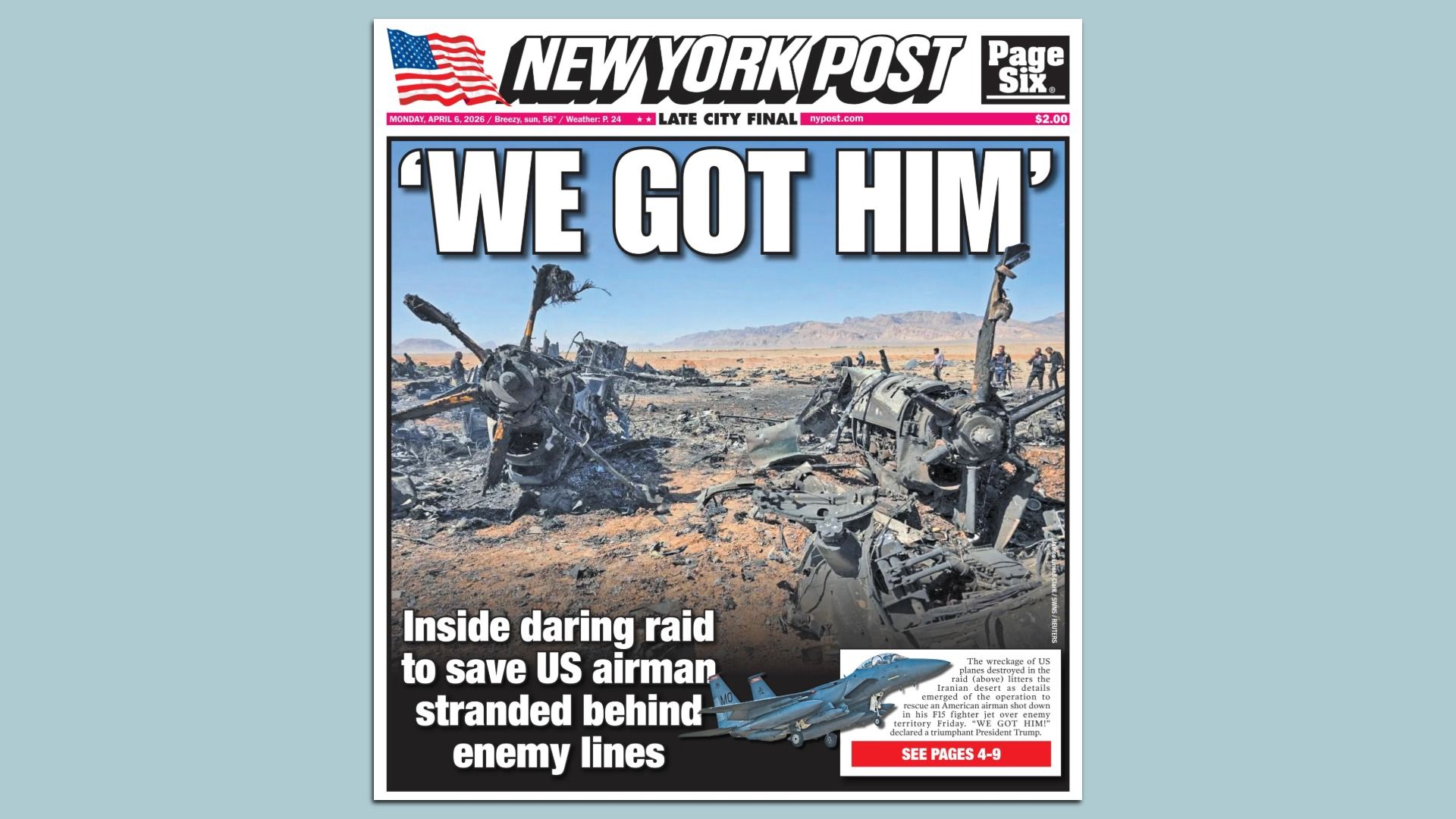
While the U.S. military hunted frantically for an Air Force officer who had bailed out of a fighter jet over Iran, the CIA spread word inside the country that American forces had already found him and were spiriting him out.
- The agency's deception campaign confused Iranian officials while the U.S. pulled off the rescue, senior administration officials say.
- President Trump called the rescued airman a "highly respected Colonel."
How it happened: "Word was spreading like wildfire inside Iran that the race wasn't to find the airman, it was to find the American effort to exfiltrate him," a source familiar with the details of the operation told me. "Was he in a ground convoy? Was he preparing a maritime escape? They were running around like chickens with their heads cut off."
- U.S. forces jammed electronics and bombed roads near the stranded airman to prevent Iranians from getting close, Reuters reports.
The American "evaded Iranian forces for more than 24 hours, eventually hiking up a 7,000-foot ridgeline and hiding in a crevice," The New York Times reports (gift link).
- The source told us that based on the airman's SERE (Survival, Evasion, Resistance, and Escape) training, he "only popped out for brief moments to send discreet signals that were unlikely to be detected by the enemy."
π± In an interview, Trump told Axios' Barak Ravid that the military had "beeping information" about the officer's location. After a radio message, officials feared he might be in captivity and Iran was "sending false signals" to try to lure U.S. forces into a trap.
- The CIA used a classified technological capability to find him. An administration official told The Times that the equipment used is unique to the agency.
"Our guys went up and got him and brought him down to the planes we'd sent in," the source said. "Things got a little dicey ... It's not like they were landing on the kind of surface Americans think about when they hear 'runway.'"
- The military had pre-positioned "smaller, lighter aircraft that could get back in there and pick everyone up when the heavy ones got bogged down," the source told Axios.
Back in Washington, the wait in the Situation Room was agonizing: The extraction planes "were on the ground for hours," the source said.
- Latest from Barak: Iran mediators make a last-ditch push for a 45-day ceasefire after Trump extends his deadline until Tuesday at 8 p.m. ET.
3. π War's grocery cost
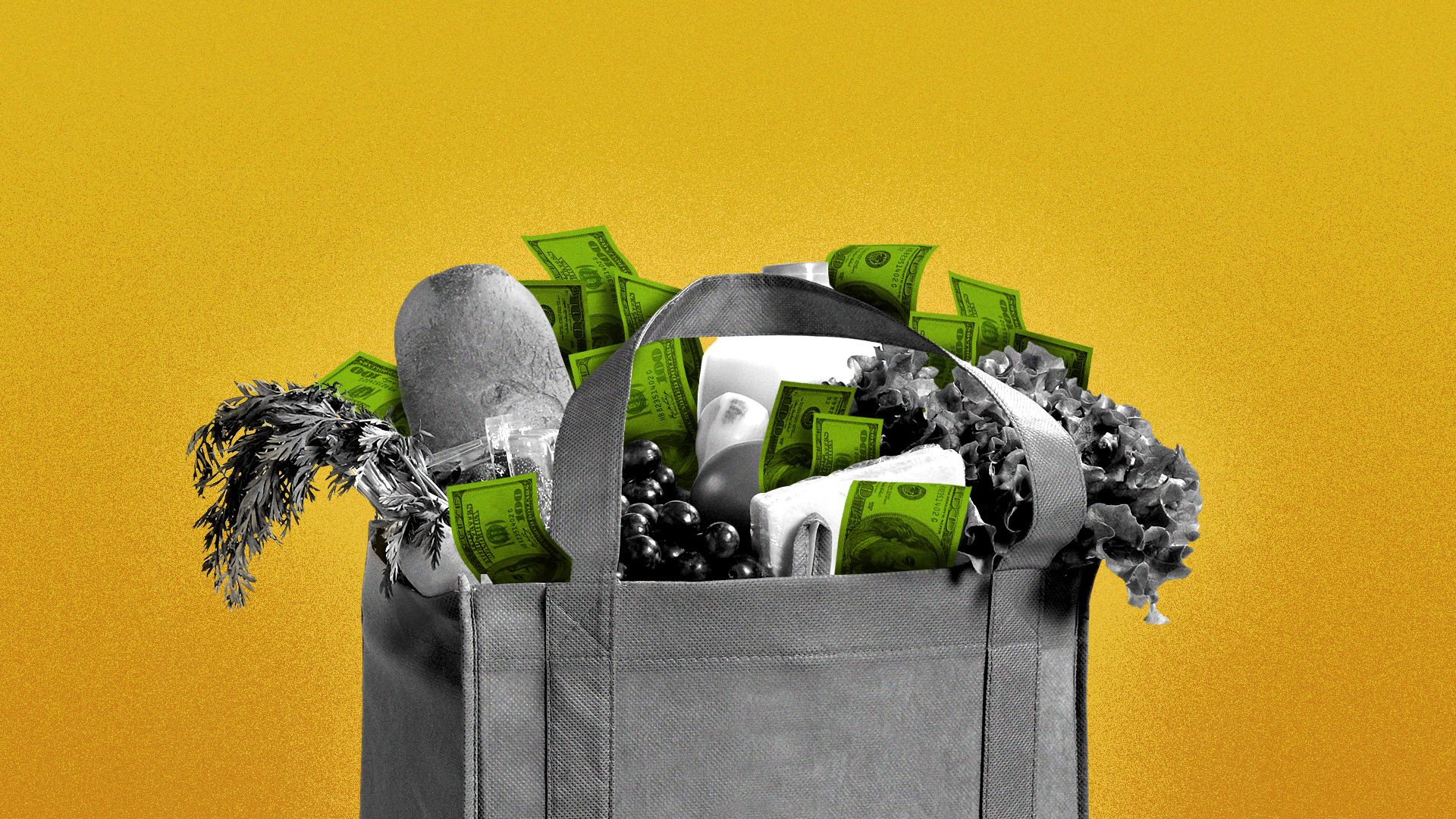
The wartime spike in gas and oil prices will likely push food prices even higher in the coming weeks, Axios Markets' Emily Peck reports.
- Why it matters: The war is just the latest stress on food inflation β on top of tariffs, rising electricity prices and an immigration crackdown that has driven up labor costs.
π How it works: The immediate shock on the grocery shelf comes via higher costs of transportation βΒ getting food from warehouses and farms to the store.
- Lots of fertilizer is shipped through the Strait of Hormuz. Those increases will take longer to filter down to food prices.
4. β‘οΈ Power bills rise faster than gas, groceries


Inflation-adjusted residential electricity costs rose 5.6% from 2019 to 2025 β faster than health care, gas and groceries, Axios Future of Energy's Ben Geman writes from a new Lawrence Berkeley National Laboratory report.
- But power costs as a share of total household spending on goods and services are near all-time lows.
5. ποΈ Dimon: Cities need to compete
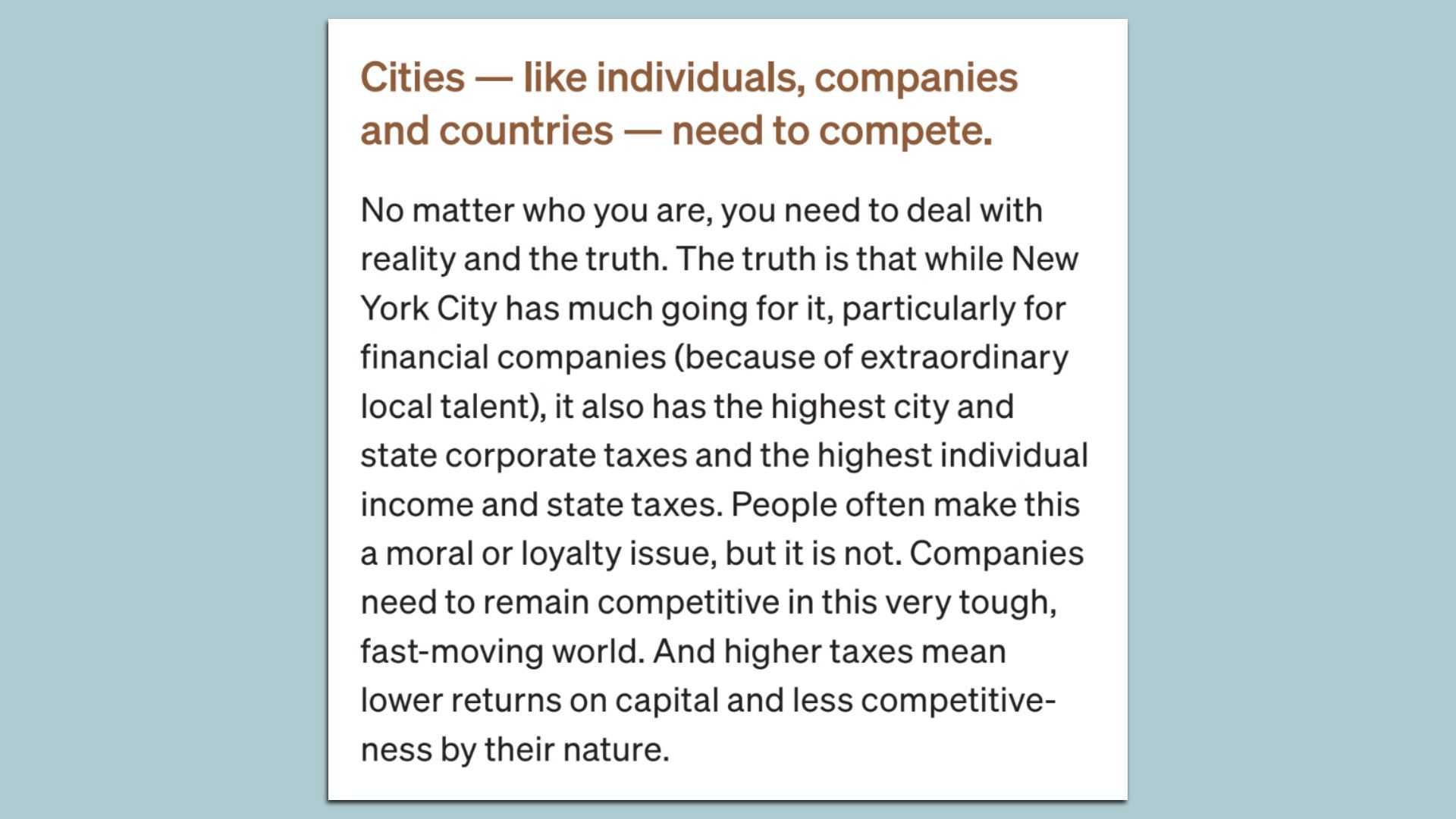
In his widely read annual shareholder letter, JPMorgan Chase chairman and CEO Jamie Dimon warns New York Mayor Zohran Mamdani that people "vote with their feet β you can already see a fairly large exodus of people and jobs out of some states with high taxes and high expenses."
- Dimon notes JPMorgan has shrunk its NYC headcount from 30,000 to 24,000 over the past decade while growing in Texas from 26,000 to 32,000. "This trend will likely continue," he writes.
- Dimon's 49-page letter says that if Europe commits to economic and military reforms, the U.S. should "negotiate one big, beautiful free trade agreement with all of Europe": "America needs Europe to succeed."
π Dimon, as ever, sounds optimistic: "Despite the unsettling landscape, the U.S. economy continues to be resilient, with consumers still earning and spending (though with some recent weakening) and businesses still healthy."
- Read the letter ... "The Axios Show": Watch Jim VandeHei interview Dimon.
6. π₯ Year's biggest film debut

"The Super Mario Galaxy Movie" scored Hollywood's biggest opening of 2026 after Universal Pictures released the animated sequel globally Wednesday, capitalizing on spring breaks leading up to Easter.
- It's the biggest debut since "Avatar: Fire and Ash" over Christmas. The Chinese movie "Pegasus 3," which wasn't a Motion Picture Association release, has the slight edge for the 2026 global record, AP reports.
"The Super Mario Galaxy Movie" played in 4,252 theaters in the U.S. and Canada, including 421 IMAX and 1,345 premium large-format screens.
- Mario ended the two-week reign of the Ryan Gosling-led sci-fi hit "Project Hail Mary." Third place went to A24's "The Drama," starring Zendaya and Robert Pattinson about an engaged couple grappling with an unnerving revelation.
7. π UCLA wins women's Madness

Gabriela Jaquez and Lauren Betts led UCLA to its first national championship of the NCAA era with a 79-51 rout of South Carolina, the third-widest margin in title-game history.
- The Bruins ended the season on a 31-game winning streak, Field Level Media reports.
Betts, a 6-foot-7 senior, was named Most Outstanding Player. On the stat sheet, she took a back seat to Jaquez, whose brother β the Miami Heat's Jaime Jaquez Jr., a former UCLA star β attended the game.
- Read Daily Bruin coverage (student paper) ... Go deeper: All UCLA championships.
πΊ Men's final: Michigan and UConn tip off at 8:50 p.m. ET (TBS) for the men's championship. Modern dynasty UConn is going for its third title in four years and seventh since 1999. Perennial powerhouse Michigan is after its first since '89. The matchup.
8. π«΄ America's top tippers

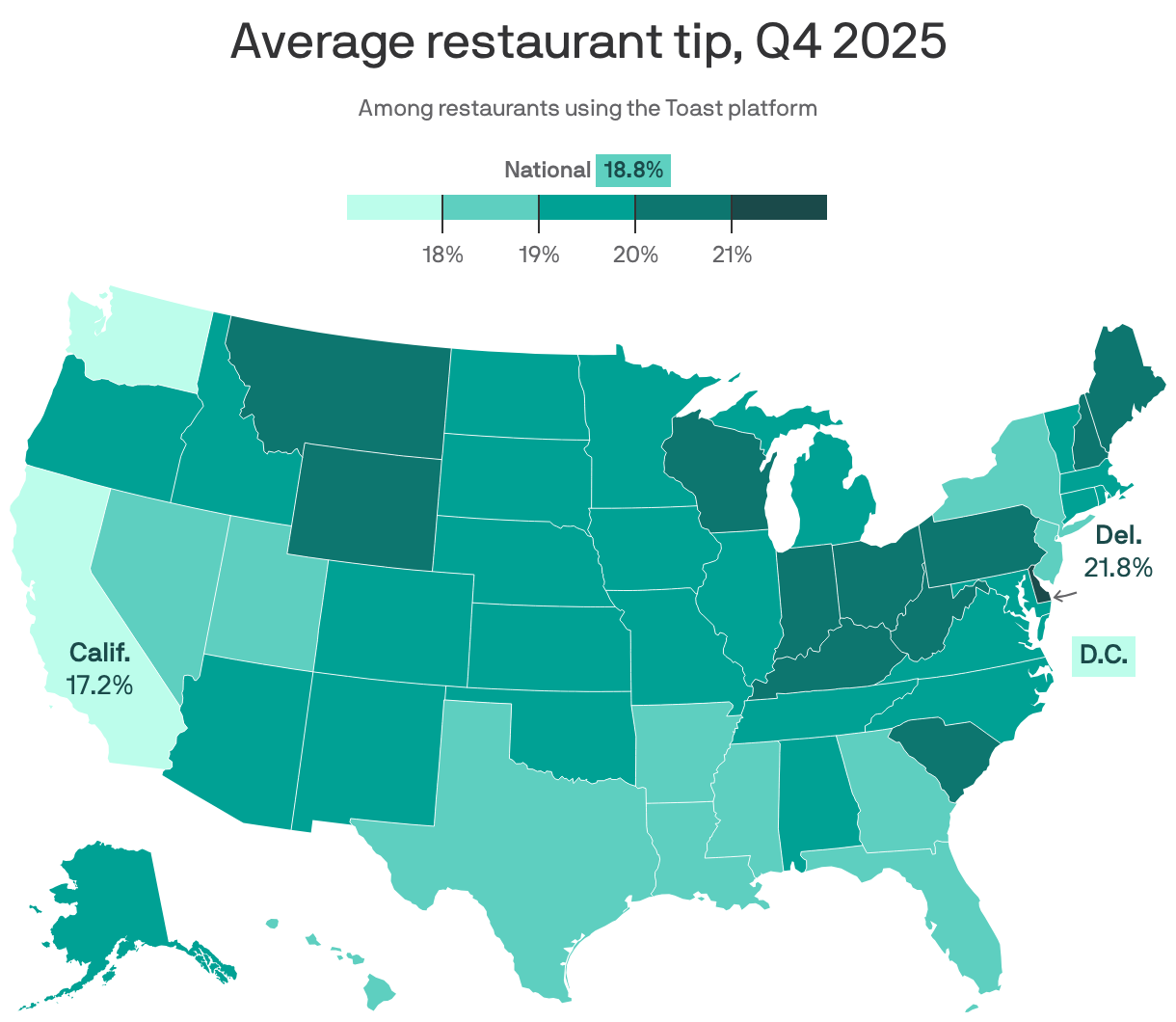
Delaware, West Virginia, New Hampshire and Indiana are home to America's best tippers, with diners leaving roughly 21% or higher on average, according to Toast data, Axios' Sami Sparber writes.
- Nationwide, tips at full-service restaurants averaged 19.2% in Q4 2025, the same as the previous quarter, per Toast's latest restaurant trends report.
At the bottom for overall tipping are California, D.C. and Washington state, where averages run under 18%.
- Sign up for Axios Local, now in 35 cities.
π¬ Thanks for starting your week with us! Please invite your friends to join AM.
Sign up for Axios AM