Axios AM

April 18, 2025

1 big thing: United States of Emergency
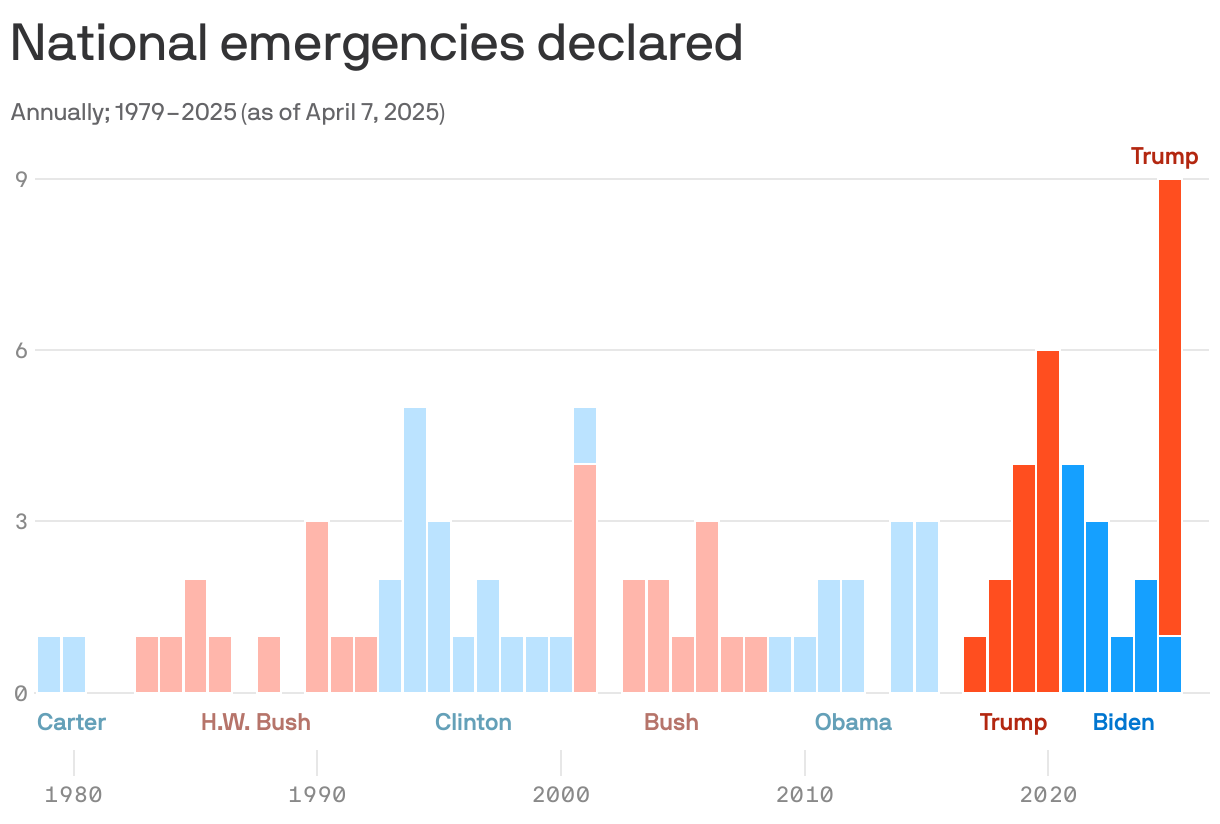
In the first 89 days of this term, President Trump has declared more national emergencies — more creatively and more aggressively — than any president in modern American history, Axios' Zachary Basu writes.
- Why it matters: Powers originally crafted to give the president flexibility in rare moments of crisis now form the backbone of Trump's agenda — enabling him to steamroll Congress and govern by unilateral decree through his first three months in office.
So far, Trump has invoked national emergencies to impose the largest tariffs in a century, accelerate energy and mineral production, and militarize federal lands at the Southwest border.
- Legal scholars fear that with his assault on the judiciary, Trump is exploiting loosely written statutes to try to upend the constitutional balance of power.
🧠 How it works: The president can declare a national emergency at any time, for almost any reason, without needing to prove a specific threat or get approval from Congress.
- The National Emergencies Act of 1976, which unlocks more than 120 special statutory powers, originally included a "legislative veto" that gave Congress the ability to terminate an emergency with a simple majority vote.
- But in 1983, the Supreme Court ruled that legislative vetoes are unconstitutional — effectively stripping Congress of its original check, and making it far harder to rein in a president's emergency declarations.
🖼️ The big picture: Since then, presidents have largely relied on "norms" and "self-restraint" to avoid abusing emergency powers for non-crises, says Elizabeth Goitein, senior director of the Brennan Center's Liberty and National Security Program.
- That precedent was broken in 2019, Goitein argues, when Trump declared a national emergency in order to bypass Congress and access billions of dollars in funding for a border wall.
President Biden stretched his authority as well, drawing criticism in 2022 for citing the COVID national emergency to unilaterally forgive student loan debt.
- But Trump's second-term actions have plunged the U.S. firmly into uncharted territory — redrawing the limits of executive power in real time, and fueling fears of a permanent emergency state.
🔎 Zoom in: Trump's justification for his tariffs cites the International Emergency Economic Powers Act (IEEPA), which can be invoked only if the U.S. faces an "unusual and extraordinary threat" to its national security, foreign policy, or economy.
- According to the White House, America's decades-old trading relationships — including with tiny countries and uninhabited islands — qualify as such threats.
- As a result, a 1977 law originally designed to target hostile foreign powers — and never before used to impose tariffs — is now being deployed to rewrite the global economic order.
White House principal deputy press secretary Harrison Fields said in a statement: "Troubling times call for serious responses. The previous administration left President Trump a nation in decline — financially vulnerable, with unsecured borders and dangerously unfair trade deals. The President is leveraging every tool the Constitution provides to Make America Great Again."
2. 🌐 Globalists echo Trump

3. 💊 Groundbreaking weight-loss pill

4. 🎒 Mapped: Where Head Start cuts would bite
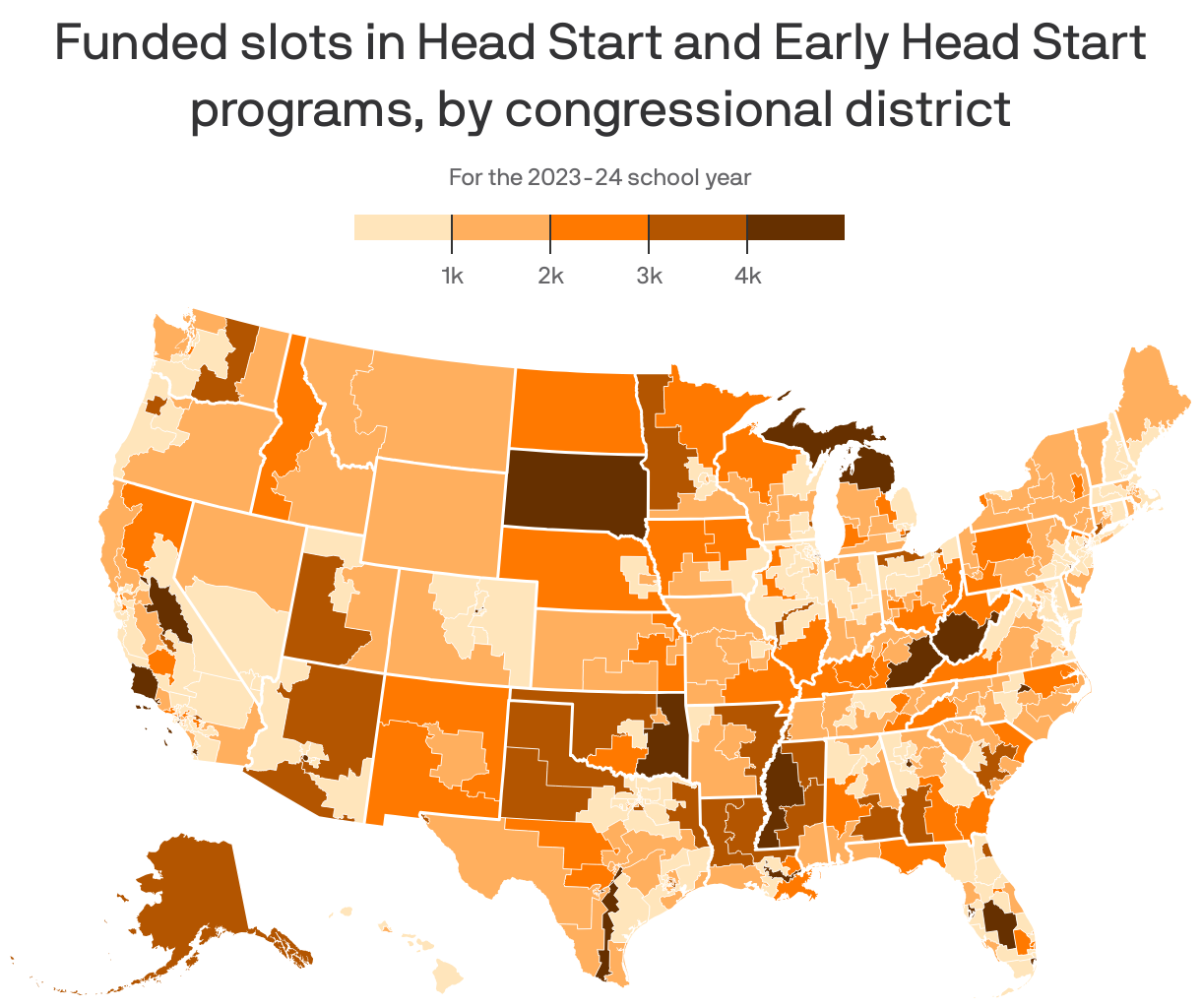
Drastic proposed cuts to the federal health budget are slamming into programs that are popular among many rural Republicans and some administration officials, Axios' Emily Peck writes.
- Why it matters: The Trump administration's potential elimination of Head Start — as outlined in budget documents that surfaced this week — would be particularly hard on rural America. The storied program provides child care and nutrition assistance to America's poorest families.
🧮 By the numbers: 46% of Head Start funding goes to rural areas, many of which voted heavily for President Trump, according to federal data analyzed by the liberal Center for American Progress.
- Only 22% is for urban areas.
- 47% goes to Republican districts, particularly in those rural areas.
Between the lines: Robert F. Kennedy Jr. said last month he had a "very inspiring tour" of a Head Start program in Virginia, and said children were "getting the kind of education and socialization they need."
- Dozens of Republicans in Congress have voiced support for the program in recent years.
5. Van Hollen meets wrongly deported man
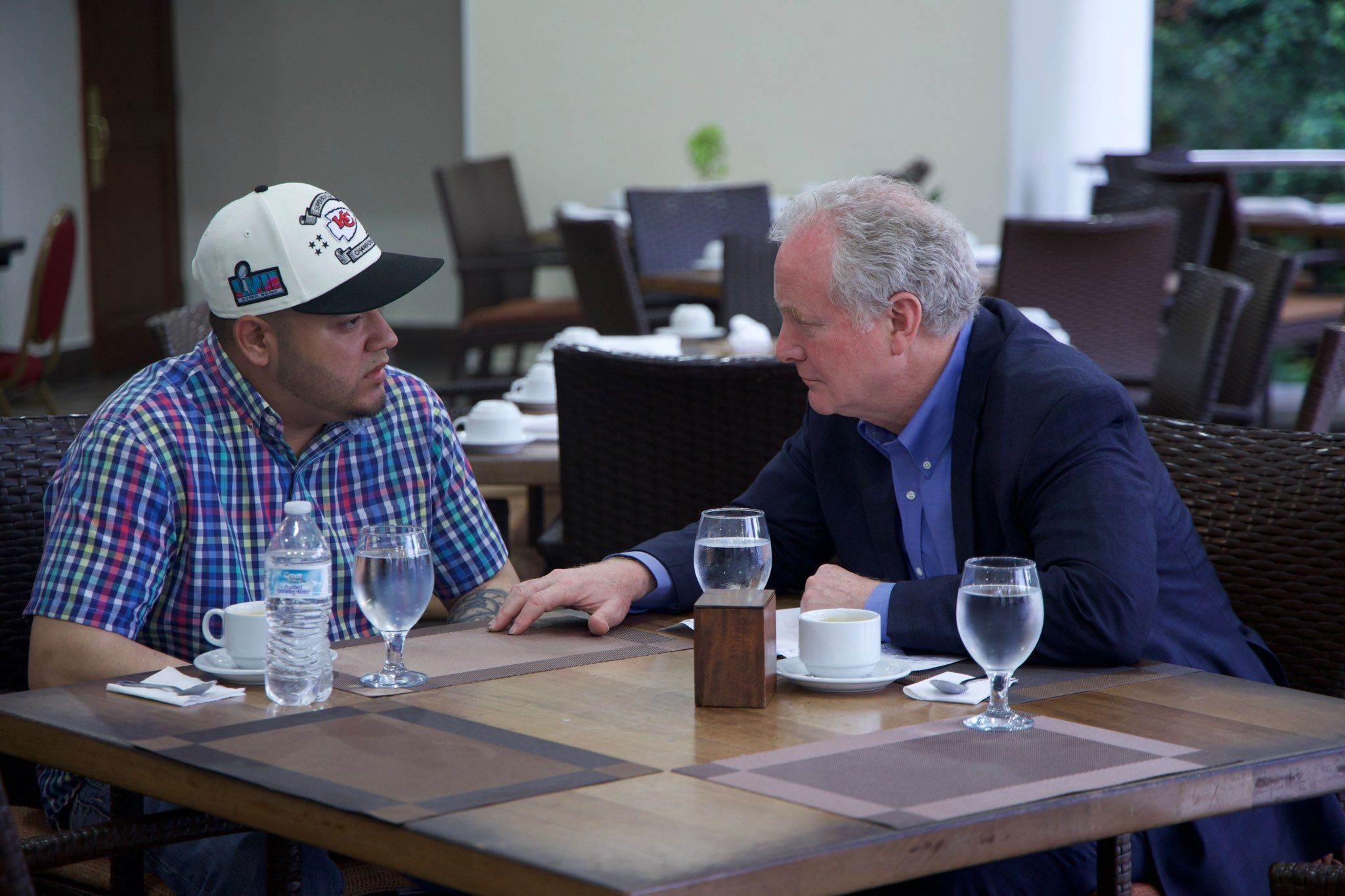
Sen. Chris Van Hollen (D-Md.) met yesterday with Kilmar Ábrego García — the Maryland resident who was mistakenly deported to El Salvador, Axios' Russell Contreras and Rebecca Falconer write.
- Why it matters: Ábrego García is being held in El Salvador despite a Supreme Court ruling last week that the Trump administration must "facilitate" his return.
Van Hollen said he had previously made two requests to visit Ábrego García at the high-security prison during his trip to El Salvador, but both were denied.
- "I said my main goal of this trip was to meet with Kilmar. Tonight I had that chance," Van Hollen tweeted last night.
- "I have called his wife, Jennifer [Vasquez Sura], to pass along his message of love. I look forward to providing a full update upon my return."
It's unclear how the meeting was arranged, where they met or what will happen to Ábrego García.
6. 🫏 House Dems fume at DNC official
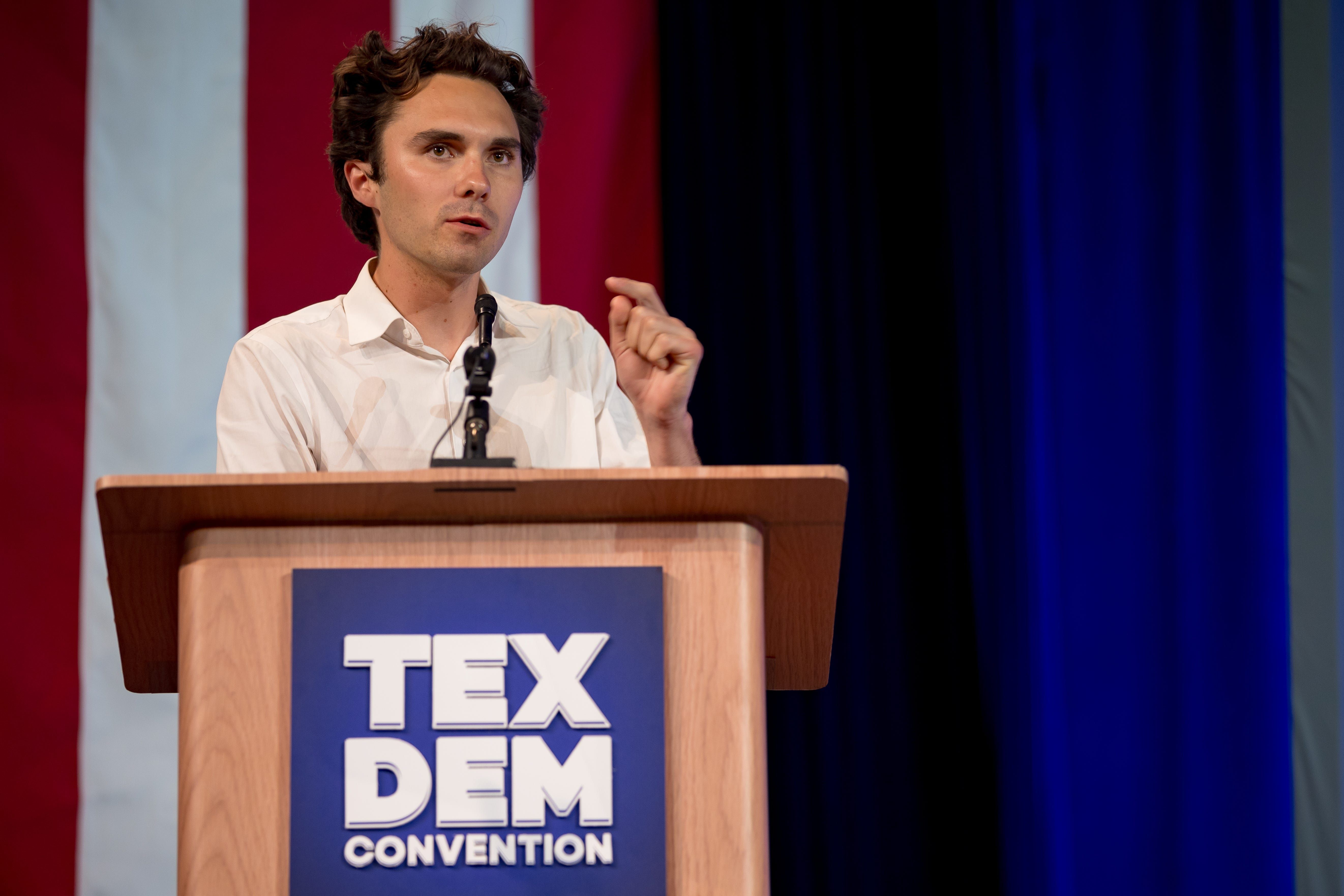
The plan by DNC vice chair and gun-control activist David Hogg to spend $20 million to primary older Democratic incumbents in Congress has sparked intense anger from some lawmakers, Axios' Andrew Solender writes.
- Why it matters: The skirmish between some lawmakers and a top DNC official comes at a time when Democrats are struggling to find a united strategy to fight Trump.
House Dems told Axios that, while Hogg isn't targeting battleground-district members, they believe he'll divert attention and resources away from their races and the fight to retake the House.
- "What a disappointment from leadership. I can think of a million better things to do with twenty million dollars right now," swing-district Rep. Hillary Scholten (D-Mich.) told Axios.
- "Fighting Democrats might get 'likes' online, but it's not what restores majorities."
7. 🇷🇺 Putin tests Trump's patience
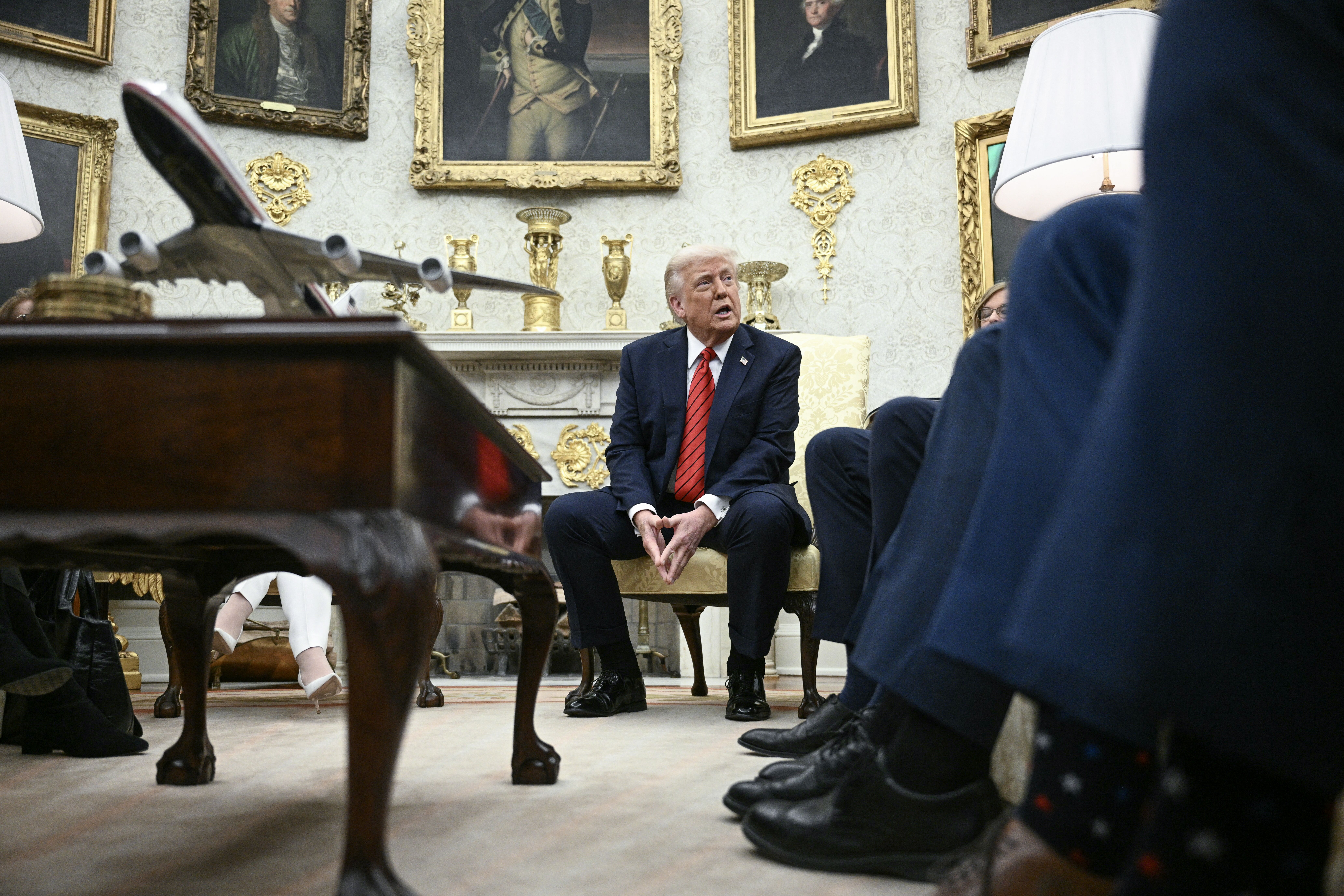
The Trump administration's informal end-of-April deadline for Russia to agree to a ceasefire in Ukraine is drawing near without any commitments from the Kremlin, Axios' Barak Ravid writes.
- Why it matters: U.S.-Russia talks have shown little clear progress and President Trump's promise of a swift peace deal appears nowhere near fruition.
Still, Trump insisted yesterday that a ceasefire was getting closer and that he'd be "hearing from Russia this week."
- U.S. officials have described the end of April as an informal deadline, after which Russia could face fresh sanctions.
👀 Behind the scenes: White House envoy Steve Witkoff met Russian President Vladimir Putin for more than four hours last Friday in St. Petersburg.
- Witkoff said he emerged with a clearer idea of Putin's demands for a peace settlement.
But he didn't get Putin's approval for a 30-day ceasefire plan Trump has been pushing for six weeks as a first step toward longer-term peace, and which Ukraine has signed off on.
8. 🍖 1 fun thing: First BBQ museum

"A feast for the senses": Kansas City, Mo., just stoked the fire in America's barbecue battle by opening what's believed to be the world's first museum dedicated entirely to the craft, writes Abbey Higginbotham — author of our forthcoming Axios Kansas City newsletter.
- Why it matters: For decades, Memphis, Austin and Kansas City have jockeyed for the title of BBQ capital. Now, KC isn't just claiming the crown — it's putting it behind glass.
The new Museum of Barbecue opened last week, turning a regional obsession into a full-blown cultural institution, with a championship mustard belt and a pit of plastic beans.
A self-guided walk through 4,200-plus square feet of exhibits includes:
- A scratch-and-sniff wall for spice nerds — lift the flap and guess the rub.
- "Meat" me in the bean pit, aka a pit of 8,000 plastic beans (yes, it's real).
- A massive mural dedicated to Memphis BBQ culture.
- Photo-ops and barbecue, dad puns galore. ("Why did the steak go to therapy? It had too much beef with others.")
Axios AM