Axios AM

December 04, 2023

1 big thing — Behind the Curtain: U.S. not ready for robotic, AI world wars
America's ability to remain the world's most lethal military hinges on two interrelated — and vexing — mysteries, Jim VandeHei and Mike Allen write.
- Can soon-to-retire four-star generals truly foresee the awesome power of artificial intelligence in time to break generation-old habits and shift warfare theories?
- If they do, can they convince the brightest coding minds to chuck lucrative gigs at Google to build AI-powered systems for America faster or better than their rivals in China?
Why it matters: Future wars will be won with Stanford nerds, faster chips, superior computing power and precision robotics on land, sea and air. Experts tell us that because of a lethal combination of congressional myopia and constipated Pentagon buying rules, America isn't mobilizing fast enough to prevail on future battlefields.
- "We are witnessing an unprecedented fundamental change in the character of war, and our window of opportunity to ensure that we maintain an enduring competitive advantage is closing," retired Army Gen. Mark Milley, who then was chairman of the Joint Chiefs of Staff, warned in a report he wrote shortly before retiring this fall.
What's happening: Eric Schmidt, the former Google CEO, said at last week's Axios AI+ Summit in Washington that with cutting-edge tech being deployed in Ukraine, a drone is no longer just an uncrewed flying object. It's a "potent software platform" that's a big step toward more automated war.
- "It's clear that drones and other weapons based on autonomy can replace tanks, artillery and mortars," Schmidt told us in a later interview. "The success of Ukraine and also Russia on the battlefield proves this point."
- But experts warn the U.S. is still spending too much time and money building aircraft carriers and other outmoded artifacts of analog war, because of the archaic restraints of what the late Senate Armed Services Chair John McCain called the "military-industrial-congressional complex."
Retired Army Gen. David Petraeus — former top commander in Iraq and Afghanistan, and former CIA director, who's author of the new bestseller "Conflict" — told us that tanks, ships and planes must be largely supplanted over time by a massive armada of much cheaper, smaller, uncrewed, algorithmically piloted systems.
- "Humans will be on the loop rather than in the loop," Petraeus said. "You will have a human at some point say: 'OK, machine. You're free to take action according to the computer program we established for you' — rather than remotely piloting it."
🖼️ The big picture: The answers to those two big questions are being determined now, as military experts sound the alarm about ways the tectonic shift in military power is threatening America in real time. Milley's report, "Strategic Inflection Point," is a 10-page wake-up call.
- "The American homeland has almost always been a sanctuary during conflict, but this will not be the case in a future war," Milley wrote. "Robust space and cyber capabilities allow adversaries to target critical national infrastructure."
- Milley is among those warning privately that too many four-star generals — typically in their mid-50s to early 60s — are too old and too connected to conventional warfare to shift fast enough, sources tell us.
- Army Gen. Erik Kurilla — commander of U.S. Central Command, which includes the Middle East — is seen as the most technologically innovative of the roughly 40 four-stars in the military today.
China — and AI — are the central focus of every future-of-defense conversation. Beijing knows technology alone can help leapfrog America, despite long being outspent by us (though the gap has mostly closed).
- Take hypersonic missiles. They move so fast that no modern defense system can come close to shooting them down until moments before they hit. China is far ahead of the U.S. in the hypersonic arms race — a potential scary edge in a conflict over Taiwan or beyond.
Quantum technologies — which include ultra-precise sensors and more secure communications — promise to vastly improve military targeting and encryption.
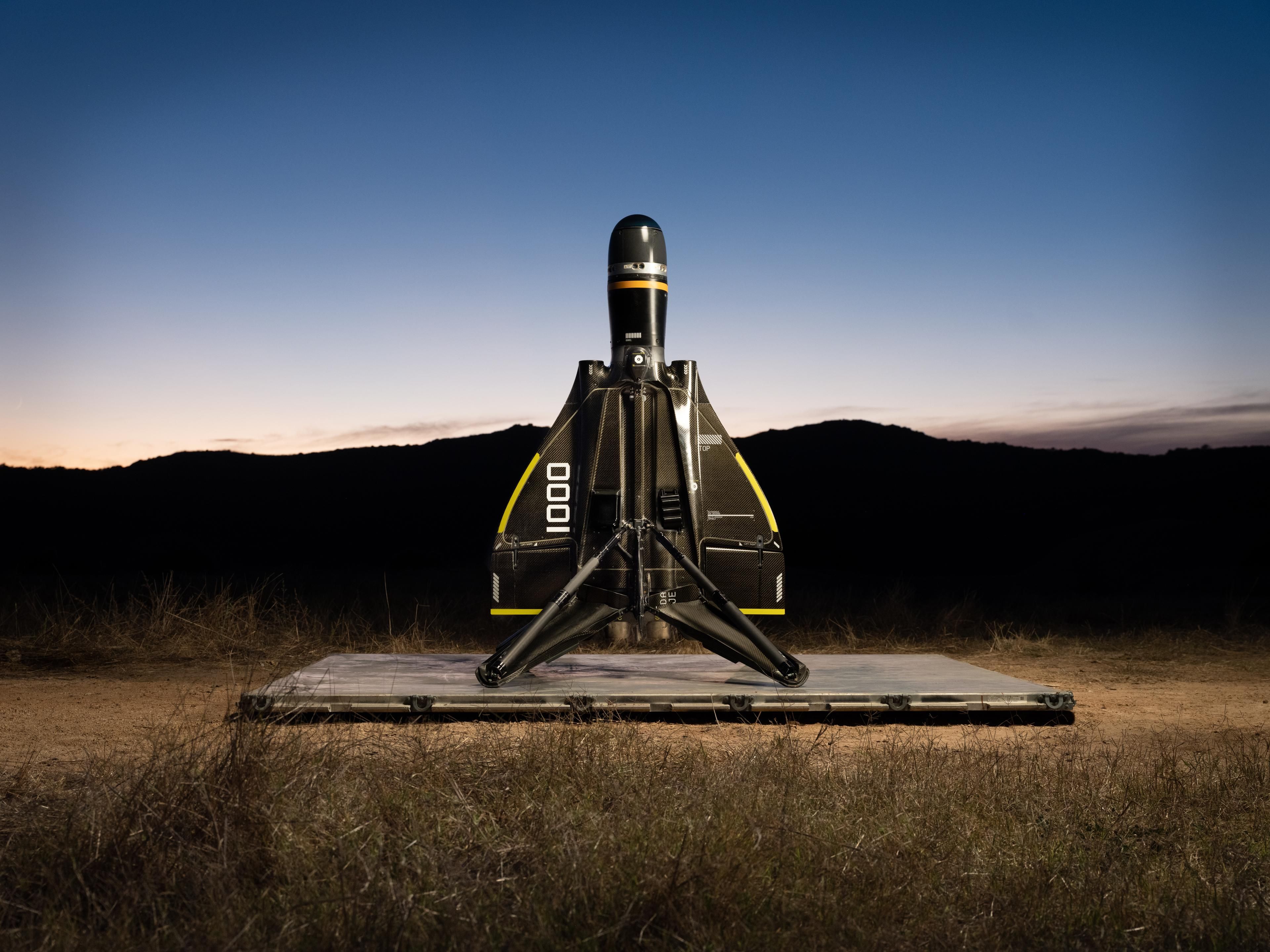
- Nimble next-gen defense startups are already vying with legacy giants. Anduril Industries — founded by Palmer Luckey, who designed the head-mounted Oculus Rift and sold the technology to Facebook — on Friday unveiled an autonomous weapons platform, Roadrunner, with a portable hangar so compact it looks like an outhouse. (YouTube)
Michèle Flournoy — former undersecretary of defense for policy, and now co-founder of WestExec Advisors — told us that while every branch of the military has an innovation hub, the risk-averse culture means these efforts "are still on the margins of the main acquisition and budget processes."
- "The Pentagon has gotten very good at tech-scouting and demonstrating and experimenting and prototyping," Flournoy said. "But actually moving things into production at scale has been a challenge."
2. Scoop: Kushners host Qatari PM, Jewish biz leaders

Jared Kushner and Ivanka Trump organized a private lunch in New York last week with Qatar's prime minister and a bipartisan group mostly of Jewish businessmen and billionaires, Axios' Barak Ravid reports.
- Qatari Prime Minister Mohammed bin Abdulrahman Al Thani has been a key player in hostage-release talks between Israel and Hamas.
Why it matters: Some attendees said they came away with an improved impression of Qatar.
A source who attended Wednesday's meeting said the Qatari prime minister spoke about his country's efforts to release the hostages in Gaza, and answered several questions about Qatar's relationship with Hamas.
- Sheikh Mohammed was the leading point of contact for the Trump and Biden administrations on Afghanistan when Qatar hosted a Taliban office.
- Kushner and the Qatari prime minister became close during the Trump administration, when they led negotiations on ending a rift between Qatar and other Arab nations in the Persian Gulf.
🖼️ The big picture: Qatar has been under increasing pressure and scrutiny by members of Congress and Jewish organizations over the nation's relationship with Hamas.
- Qatar is increasing its lobbying in Washington, concerned that Hamas' terrorist attack on Israel from Gaza — an enclave Qatar has helped to support — could damage Qatar's standing with the U.S. and particularly with Congress.
Behind the scenes: The lunch was at Coco's, a members-only restaurant in the General Motors Building in Manhattan. Among the participants:
- Bill Ackman, founder of Pershing Square Capital Management hedge fund.
- Robert Kraft, owner of the NFL's New England Patriots.
- Marc Lasry, CEO of Avenue Capital Group and former co-owner of the NBA's Milwaukee Bucks.
- Barry Sternlicht, chairperson of Starwood Capital Group.
- Dan Senor, co-author of the new "The Genius of Israel," and former Pentagon official and adviser on Republican presidential campaigns.
- Josh Kopelman, founder of First Round Capital.
- Gary Ginsberg, veteran corporate executive and confidant of Israeli Prime Minister Benjamin Netanyahu.
- Robert Thomson, CEO of News Corp.
- Josh Kushner, Jared's brother, founder of Thrive Capital.
- Lex Fridman, AI researcher from MIT who also has a podcast.
3. 📖 Liz Cheney exclusive: "Defend the republic"

Cover: Little, Brown
4. 💼 The great business book face-off

This time last year, we wondered who would win "the great business book matchup" of 2023.
The verdict is now in: Walter Isaacson, by a mile. His Elon Musk biography sold 228,521 copies in its first eight weeks in bookstores, Axios' Felix Salmon writes.
- That's more than three times the 72,860 books that Michael Lewis' "Going Infinite," about Sam Bankman-Fried, moved in the same period.
5. Wartime attacks rise on high seas

A U.S. Navy warship intervened after three commercial ships came under attack from drones and missiles in a Red Sea assault that was claimed by Yemen's Iran-backed Houthi rebels, U.S. military officials said.
- Why it matters: The attacks "represent a direct threat to international commerce and maritime security," said U.S. Central Command, adding that the strikes were "fully enabled by Iran" in response to the Israel-Hamas war.
6. 🦾 AI helps U.S. in chip race
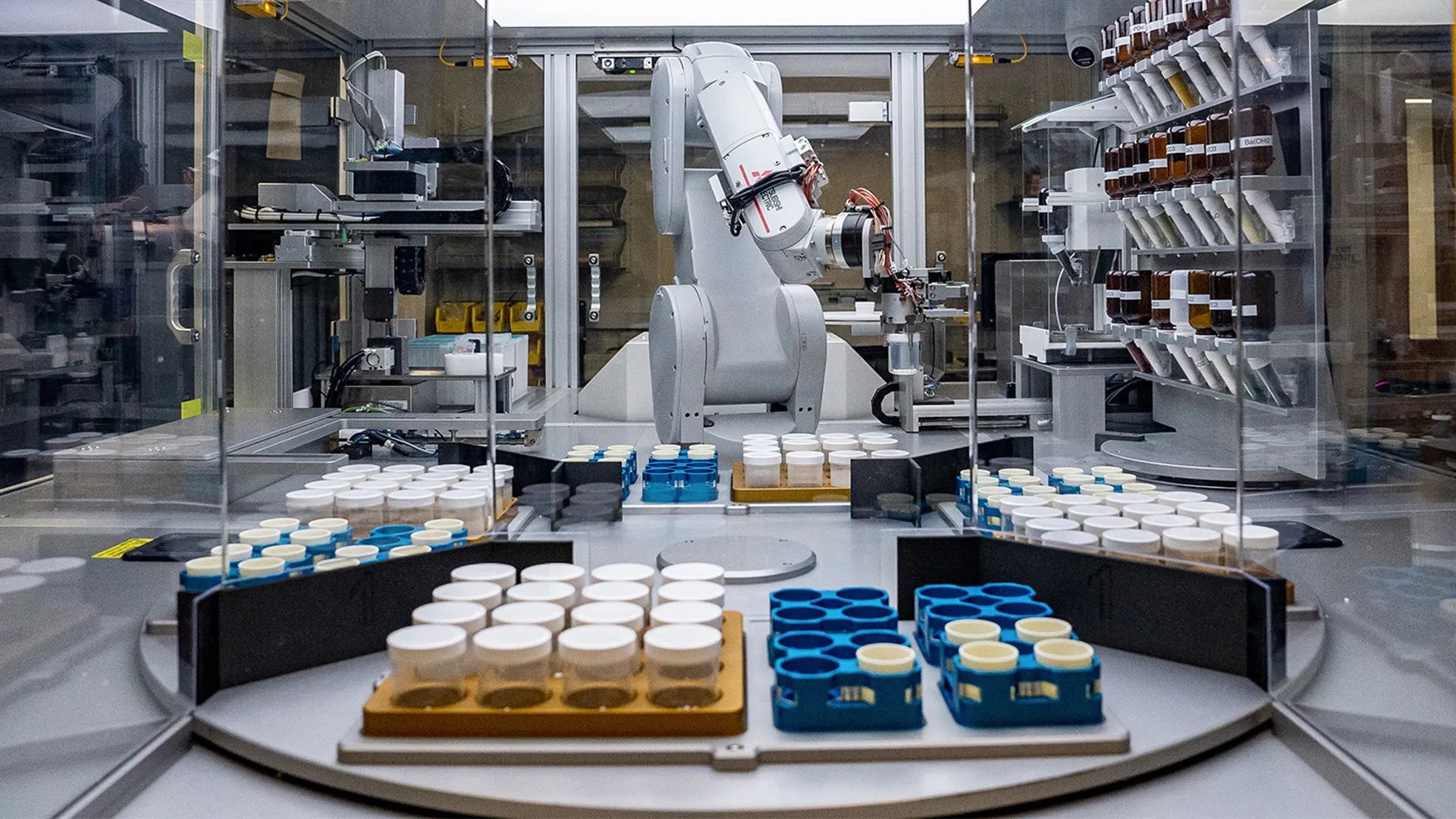
Robots at Berkeley Lab in California. Photo: Marilyn Sargent/Berkeley Lab
7. 🐘 First look: Next debate stage

Axios got an early look at the stage for the fourth Republican presidential primary debate, which will be hosted by NewsNation at the University of Alabama in Tuscaloosa on Wednesday at 8 p.m. ET.
- Megyn Kelly is among the moderators.
8. 🎞️ Beyoncé rules box office

Beyoncé's concert picture — "Renaissance: A Film by Beyoncé," focused on the tour for her Grammy-winning album — opened at No. 1 this weekend with $21 million in North American ticket sales, AP reports.
- Why it matters: The post-Thanksgiving, early December box office is notoriously slow — but "Renaissance" defied the odds. Not accounting for inflation, it's the first time a film has opened over $20 million on this weekend in 20 years (since "The Last Samurai").
Axios AM

Catch up with the most important news of the day