Axios AM

August 02, 2025

🏖️Happy summer weekend! Smart Brevity™ count: 1,865 words ... 7 mins. Thanks to Natalie Daher for orchestrating. Copy edited by Lauren Floyd.
🏈 Situational awareness: The NFL reached a multibillion‑dollar deal with ESPN to transfer control of key league properties — including RedZone and NFL Network — to ESPN in exchange for an equity stake in the network. An announcement is expected next week. Go deeper.
1 big thing: Trump authoritarian streak

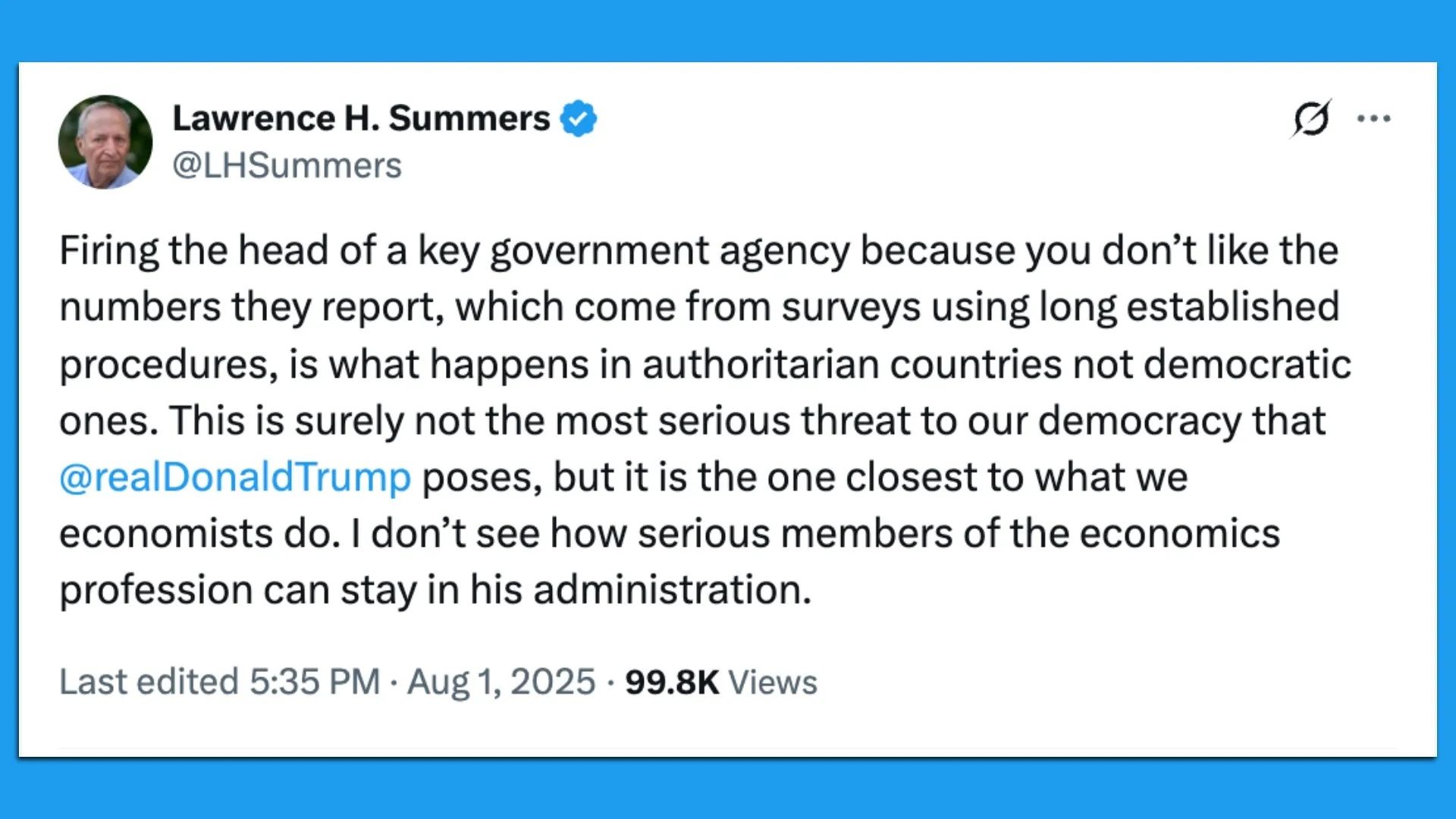
A five-alarm fire tore through the economic establishment yesterday after President Trump ousted the government's top labor statistician, accusing her — without evidence — of "rigging" a weak jobs report.
Why it matters: It's just one glaring example from a week that bore many authoritarian hallmarks — purging dissenters, rewriting history, criminalizing opposition and demanding total institutional loyalty, Axios' Zachary Basu writes.
- Vast swaths of society are falling in line. The Washington Post revealed this week that the Smithsonian quietly removed references to Trump's two impeachments from its presidential exhibit.
🔭 The big picture: The overwhelming, all-consuming nature of Trump-driven news cycles makes it difficult to discern partisan hysteria from true democratic backsliding.
- But apply any of these five developments to a foreign leader — or even a past U.S. president — and it reads like an authoritarian playbook:
1. Trump fired Bureau of Labor Statistics commissioner Erika McEntarfer, a 20-year government veteran, after BLS announced massive downward revisions for job growth in May and June.
- "We're doing so well. I believe the numbers were phony. ... So you know what I did: I fired her," Trump told reporters, without explaining why he believed past jobs reports were credible when they were positive.
- William Beach, who led the BLS during Trump's first term, blasted the firing as "totally groundless."
2. Eager to shift scrutiny from his handling of the Jeffrey Epstein scandal, Trump demanded his Justice Department prosecute former President Obama for "treason" over the 2016 Russia investigation.
- Top Trump aides are engaged in an all-out effort to rewrite the history of "Russiagate" and exact revenge on Obama-era intelligence officials, including through criminal referrals.
3. In his crackdown on liberal power centers, Trump has extracted more than $1.2 billion in settlements from at least 13 of the most elite players in academia, law, media and tech, according to an Axios tally.
- The Trump administration is reportedly eyeing up to $500 million from Harvard and $100 million from Cornell, paving the way for a cascade of other universities to follow suit.
4. Dozens of Venezuelan migrants deported to El Salvador's notorious CECOT megaprison say they were beaten, sexually assaulted and denied access to lawyers or medical care, a Washington Post investigation found.
5. Trump's months-long campaign to oust Fed Chair Jay Powell, or at least pressure him to cut interest rates, is still lingering.
White House response: "President Trump is holding the federal government and elite institutions accountable for their political games, longstanding corruption, and terrible incompetence," White House spokesperson Taylor Rogers said.
- With regard to CECOT, a White House official told Axios: "These are criminal terrorist illegal immigrants and the American people are safer with them as far away as possible."
Trump's consolidation of power comes at the same time he's attempting to unilaterally reset the global trading order — with tariff rates set to his personal whim.
- Brazil now faces 50% tariffs — among the highest rates of any country — due to its prosecution of former President Jair Bolsonaro, which Trump has denounced as a "witch hunt."
- The stakes of Trump's centralized command were accentuated yesterday, when he ordered two nuclear submarines repositioned in response to saber-rattling by former Russian President Dmitry Medvedev.
2. 🌡️ Stagflation fears are back

Inflation is running hotter, the job market is weakening, and economists warn both may worsen in the months ahead, Axios' Courtenay Brown writes.
- Why it matters: The word "stagflation" revives miserable memories of the 1970s — when Americans faced higher prices and few job opportunities.
📉 The big picture: This was the week mainstream economists were vindicated. Predictions of weaker growth and more persistent inflation — the "stag" and the "flation" — looked far-fetched, until now.
- The "stag": The economy added just 73,000 jobs last month, while historic downward revisions suggested the labor market added almost no jobs at all the previous two months.
Now consider the other indicators released in the past week:
- 💰 GDP: The economy expanded at a 3% annualized rate in the second quarter, boosted by the reversal of unprecedented importing activity in the first quarter. Dig into the report and the growth snapshot looks worse.
- 🛒 Inflation: The Fed's go-to inflation measure rose in the final two months of the second quarter, despite moderating underlying growth.
💬 For the record: "We've been here before when there was large-scale doom-mongering ... about the Tax Cuts and Jobs Act and about the President's tariffs on China in the first term," top White House economist Stephen Miran told Axios.
- The "doom-mongering" turned out to be wrong, Miran said.
3. 📁 '28 Republicans split on Epstein
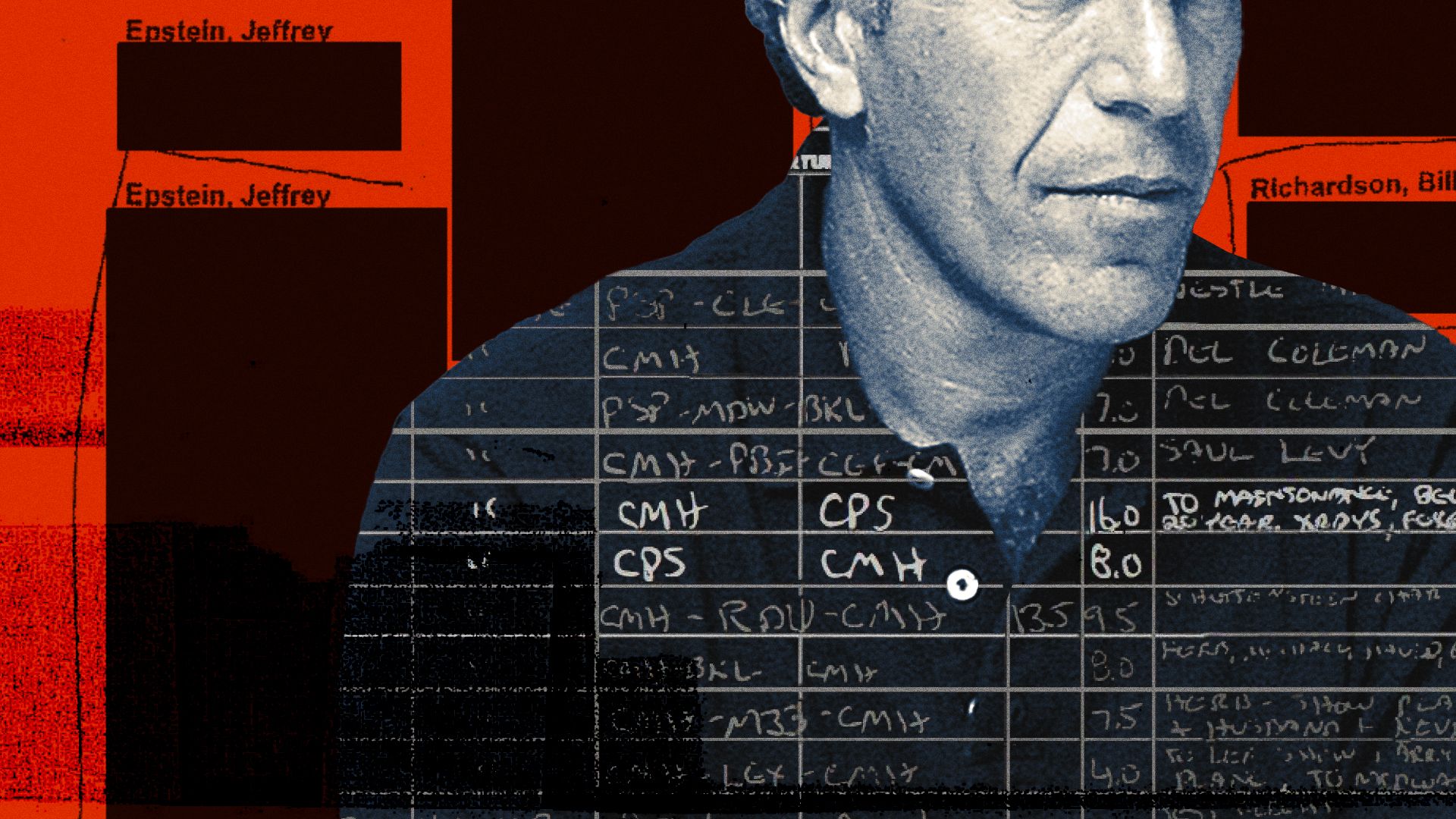
The Epstein Files are dividing the prospective 2028 GOP field, as MAGA influencers watch closely to see who's with them and against them, Axios' Alex Isenstadt reports.
- 🏛️ Administration officials won't get sideways with the president, and Republican governors aren't weighing in on the federal issue.
- But for Republican senators, the Epstein case is unavoidable, low-hanging fruit.
🔍 Zoom in: Sens. Ted Cruz (R-Texas), Josh Hawley (R-Mo.) and Rand Paul (R-Ky.) are aligning with the MAGA base that's infuriated by the Trump administration's decision not to release all Epstein-related documents.
- Cruz used his podcast last month to outline a four-point plan for dealing with the Epstein files.
- Hawley doubts the administration's claim the late financier had no client list, calling it "deep state talk."
- Paul called for the release of the Epstein files during an interview this week with MSNBC.
Cruz and Paul, in particular, are positioning themselves for possible 2028 runs.
4. 🧰 Blue-collar revenge
🚽 AI is supposed to displace millions of workers in the coming years. But when your toilet won't flush at 2 a.m., you're not going to call ChatGPT, Axios' Ben Berkowitz writes.
- Why it matters: The reshaping of the American economy promises to offer a kind of revenge for the blue-collar laborer, as white-collar workers become largely dispensable, but the need for skilled trades only grows.
🤖 The backstory: This story was inspired by an Axios list this week of the 10 jobs that are most- and least-threatened by AI, based on Microsoft research. (Our Top 10 ... Full list.)
🤔 The irony: Who's going to run the wiring for all these AI data centers? Or put the roof on the building.
- 🛠️ It's become a Trump administration economic talking point: Blue-collar wages are rising faster now than at the start of any other administration going back to Nixon.
The intrigue: There's already a labor shortage in many of these blue-collar professions, one that AI will, ironically, only make worse.
- Training is the answer. But that requires a large-scale, national effort —not just for up-and-coming students, but for mid-career folks forced into a pivot.
- Share this story.
5. 📜 Voting Rights Act's 60th anniversary
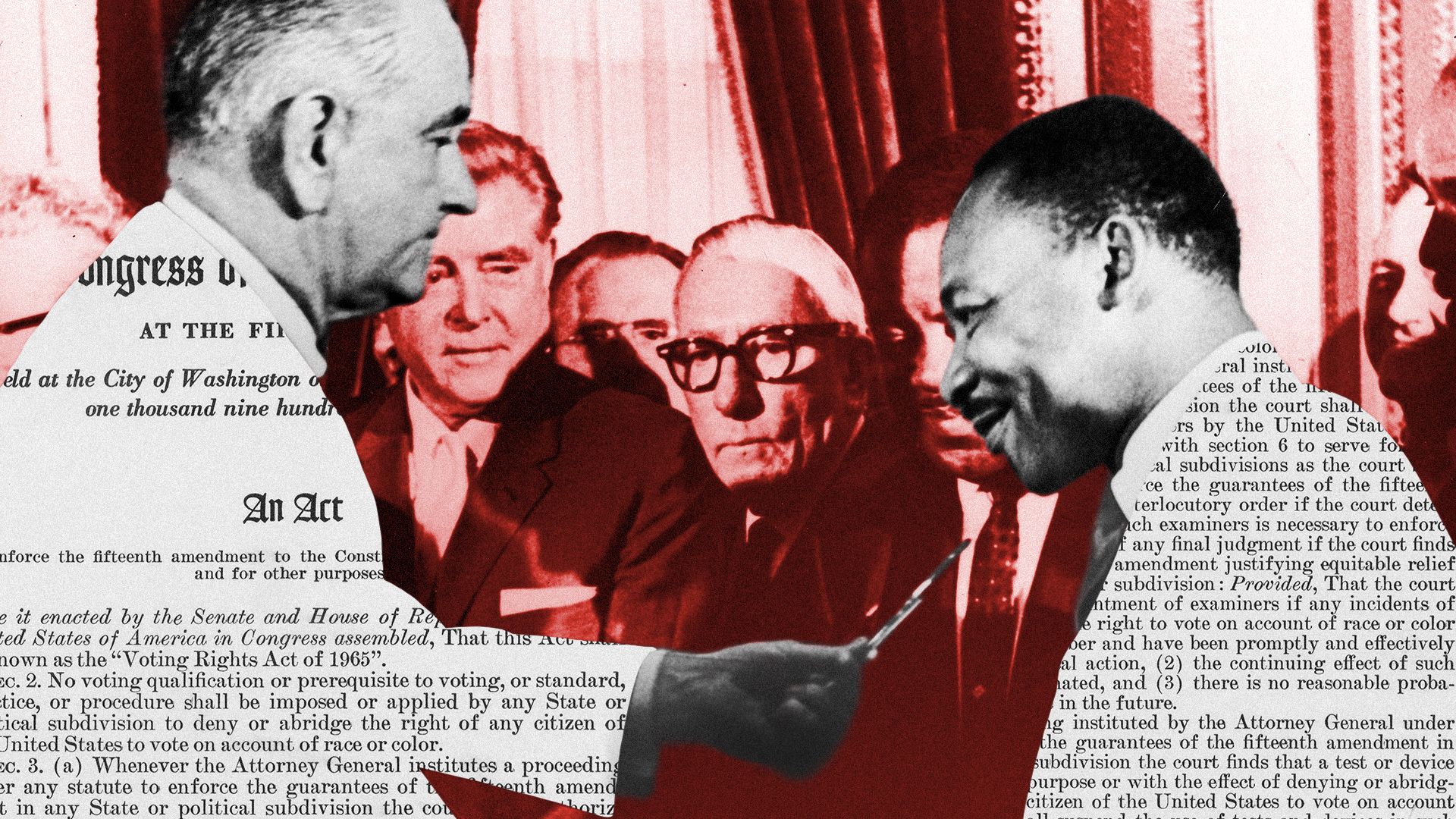
The Voting Rights Act of 1965 — once a cornerstone of American democracy — is facing modern threats as it approaches its 60th anniversary next Wednesday, Axios' Russell Contreras and Delano Massey write.
Why it matters: The barriers the law aimed to erase — like voter suppression and gerrymandering — are reemerging, often in new legislation or state-level restrictions.
- A backlash to the 2020 racial reckoning has made it almost impossible for any bipartisan effort to renew the Voting Rights Act — even though the country is more racially and ethnically diverse than ever.
⚖️ The latest: Earlier this week, Sen. Raphael Warnock (D-Ga.) reintroduced the John R. Lewis Voting Rights Advancement Act, backed by Senate leaders and civil rights groups.
- The bill would restore federal oversight of voting changes in states with histories of discrimination — and ban voter roll purges for missed elections.
- Multiple groups promoted its introduction to Congress, but it's unlikely to pass either of the GOP-controlled chambers.
🗳️ By the numbers: Since the passage of the Voting Rights Act, the number of Black Americans elected in the U.S. has shot up.
- The 119th Congress, which convened in January, was the most racially and ethnically diverse in history, with the percentage of Black House members (61 members, or 15%) roughly equivalent to that of the U.S. population (14%). Sixty years ago, when the Voting Rights Act was signed, there were six Black members of the House.
- Five U.S. senators are Black, including the first two Black women to serve simultaneously — Sens. Angela Alsobrooks (D-Md.) and Lisa Blunt Rochester (D-Del.)
- Read on.
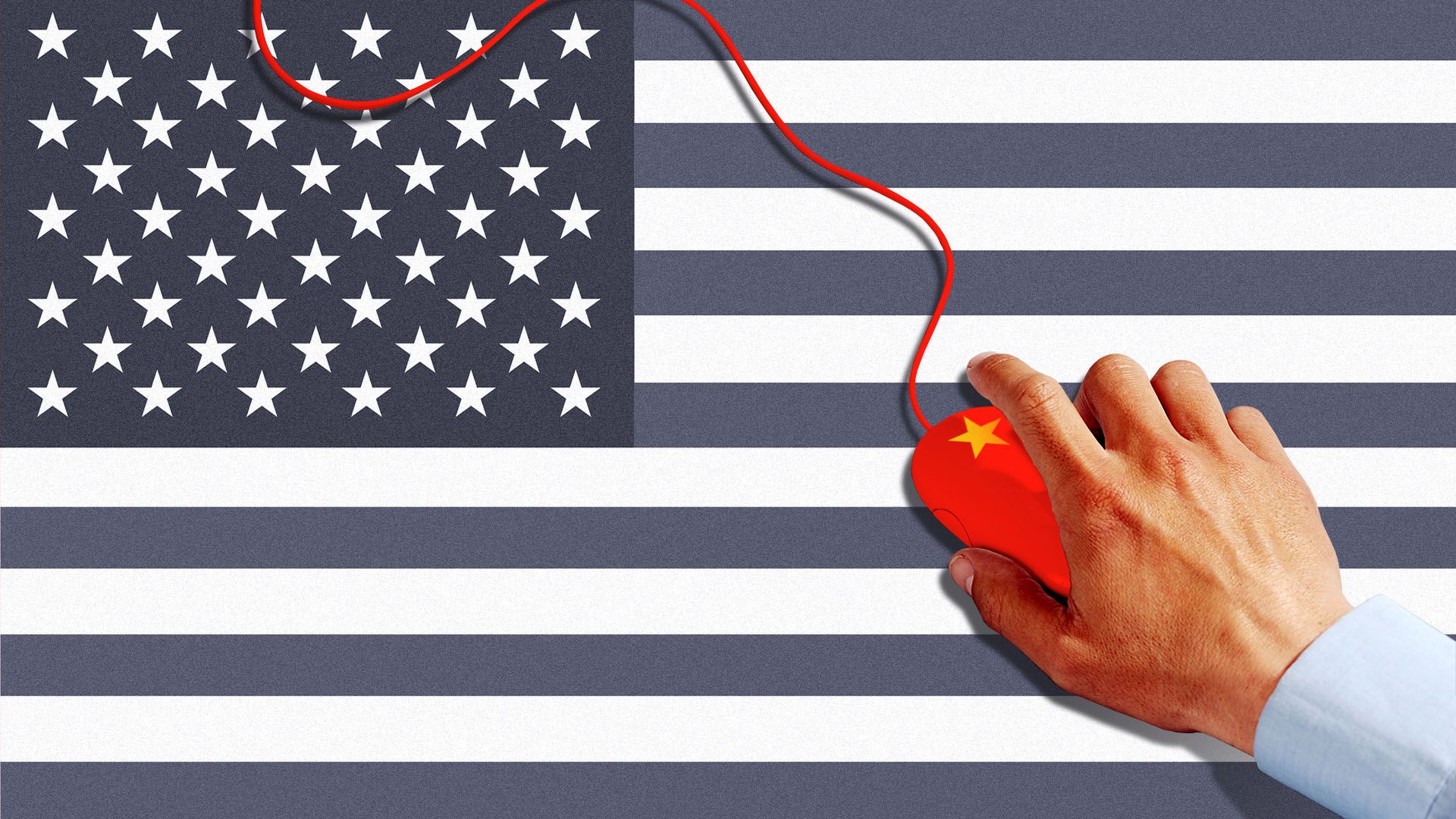
6. 🔐 Beijing hackers' long game
Chinese hackers are targeting more sensitive U.S. systems than ever — not to smash and grab, but to bide their time, Axios' Sam Sabin reports.
- Why it matters: Beijing is investing in stealthy, persistent access to U.S. systems — quietly building capacity to disrupt everything from federal agencies to water utilities in case of escalation.
The big picture: China's growing cyber prowess comes as the Trump administration has diminished resources for its own cyber defenses through workforce and budget cuts.
Yes, but: The administration is expected to invest heavily in its own offensive cyber powers — with $1 billion from the "One Big Beautiful Bill" heading to the Pentagon for just that purpose.
⚠️ Driving the news: At least three China-based hacking groups exploited vulnerable SharePoint servers in the last month, according to Microsoft.
- More than 330 China-linked attacks occurred last year, doubling 2023's total, according to CrowdStrike data shared with the Washington Post.
🇨🇳 Between the lines: At least three major Chinese government teams have been targeting U.S. networks in recent years.
Go deeper ... Sign up for Axios: Future of Cybersecurity.
7. 💳 Mapped: Credit scores by county

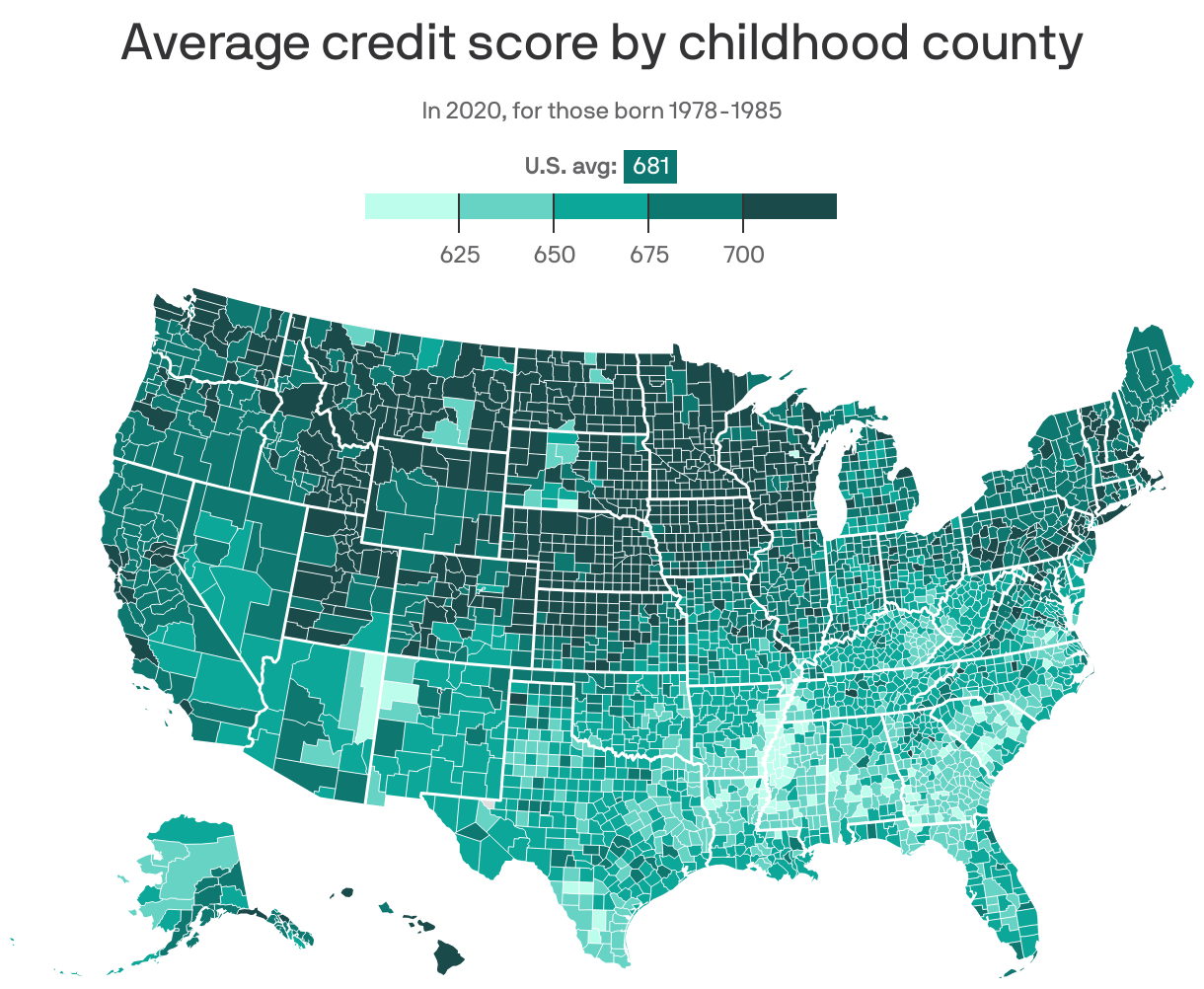
People who grew up in parts of the Upper Midwest and the Northeast tend to have relatively high credit scores in early middle age, Axios' Alex Fitzpatrick writes from newly released data.
- Those from the South tend to have lower scores.
🏦 Why it matters: Credit scores can determine people's access to loans, housing, better interest rates and more — despite their flaws and biases.
- Interactive map (county-by-county scores).
8. ⚓️ 1 summer thing: Midwest sea shanties

🌊 On a sweltering day in mid-July, over 120 strangers crammed into an Irish pub with pints of Guinness in hand to sing an unusual tune for a landlocked state: a sea shanty.
- For over 15 years, Minnesotans have been convening at Twin Cities pubs, parks and patios for Shanty Sings — dedicated spaces to sing traditional folk songs about oceans, lakes, fishing and other water-related topics, Axios Twin Cities' Audrey Kennedy reports.
This group has no official name, little online presence and, outside of the people who create the Facebook events, no leaders.
- 🍺 Its existence is spread by word of mouth and by those who happen upon the Sings in search of a pint.
How it works: Anyone is welcome to show up and lead the group in song, though their tune must be about water and have a repeating line.
- 🎶 "Singing shanties [by memory] at the top of your lungs … It's the best therapy I've ever had," longtime participant Doug McNair told Axios.
Share this story ... Watch our video ... Get Axios Local: Daily newsletters in 34 cities.
📬 Thanks for reading! Please invite your friends to join AM.
Sign up for Axios AM