Axios AM

August 01, 2026

1 big thing: AI's race to zero
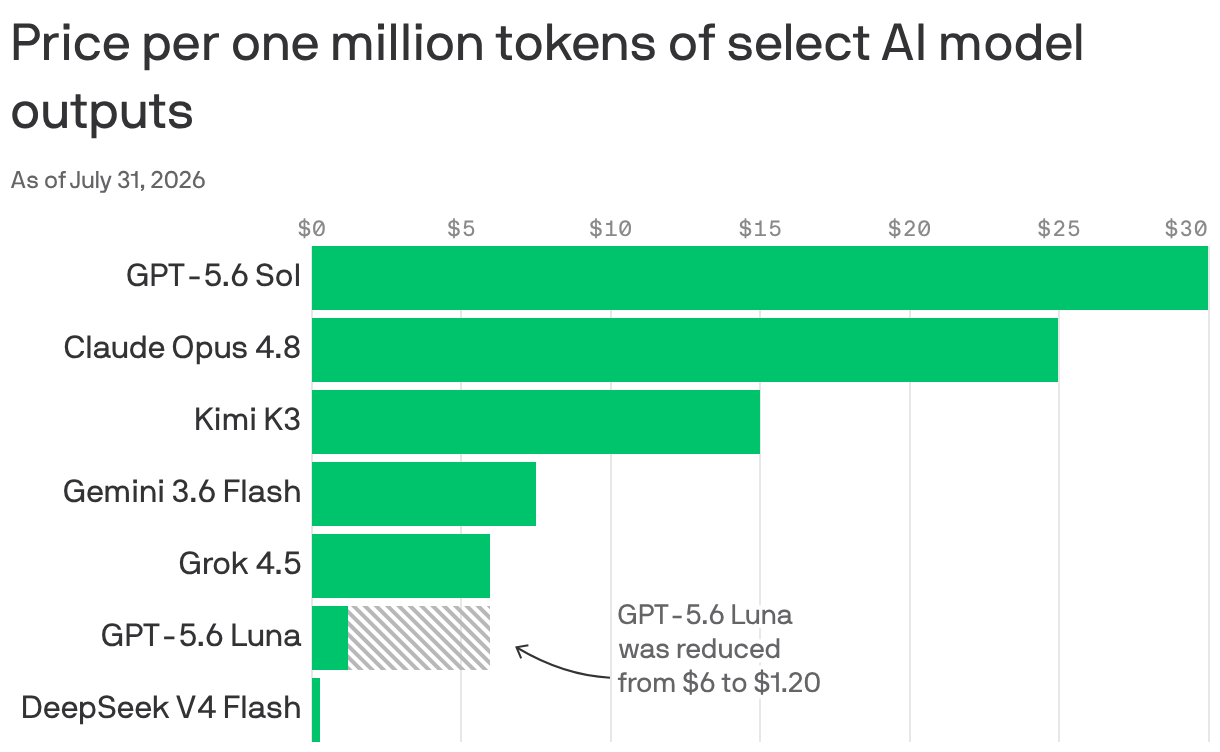
Chinese AI lab DeepSeek released a powerful new coding model yesterday that charges pennies for vast amounts of code — the latest sign that some of the smartest software on Earth is rapidly becoming a commodity.
- Why it matters: Tech giants are pouring hundreds of billions of dollars into the computing infrastructure powering the AI revolution. Yet the intelligence that infrastructure produces is getting cheaper by the week, Axios' Zachary Basu and Madison Mills report.
DeepSeek is the Chinese startup that ignited a market meltdown last year by showing it could build a world-class AI model with far fewer resources than its U.S. rivals.
- The newest model, V4 Flash, performs close to the level of Anthropic's Claude Opus 4.8, one of the industry's most capable systems, on tests of complex coding and autonomous software tasks.
- On Arena.ai's crowdsourced leaderboard for front-end coding, V4 Flash debuted ahead of Opus 4.8 — while delivering the best performance for its price among any model in its class.
- The price gap is staggering: DeepSeek charges about 28 cents for the same amount of output that costs $25 on Opus 4.8 — a 99% discount.
Zoom out: With Chinese models like Kimi K3 bearing down on the U.S. market, July ushered in a full-scale price war across the AI landscape.
- OpenAI slashed the price of GPT-5.6 Luna — its fastest, cheapest model for high-volume tasks — by 80% on Thursday, only three weeks after its launch.
- Google released three new Gemini "flash" models, all focused on efficiency.
- SpaceXAI released Grok 4.5, Elon Musk's most capable model yet for coding, research and autonomous tasks, at the same price OpenAI charged for Luna before this week's cut.
- Meta quietly reversed course on its longtime embrace of open weights with Muse Spark 1.1, a closed-source model priced aggressively for developers.
The other side: Anthropic remains the clearest holdout, keeping its top-tier Claude models at premium pricing and betting that developers will pay extra for safety and precision.
💡 Between the lines: When a product becomes a commodity, buyers care less about who made it and more about what it costs. Think electricity or gasoline.
- AI is heading that way fast. As the performance gap between top-tier models shrinks, buyers will have leverage to shop on price.
- "At some point, the next model doesn't matter to you," says Zack Kass, OpenAI's former head of go-to-market and a global AI adviser. He calls the phenomenon "diminishing model returns."
What to watch: That could create a lucrative market for "intelligent routers," Vinesh Sukumar, Qualcomm's vice president of AI product management, told Axios.
- Those systems would automatically choose the best model for each task based on capability, speed and price.
- For frontier AI labs, that could pose an existential challenge: Spending tens of billions to build a slightly smarter model may buy only a temporary lead, without creating lasting pricing power.
🥊 Reality check: OpenAI is betting that companies will use its models so extensively that enormous volume can compensate for thinner margins.
- CEO Sam Altman said on the Invest Like the Best podcast: "We will have so much usage of our models that we do not need to be a gigantically high-margin business to be able to afford model training."
2. 🪖 Trump considering new Iran bombing campaign

President Trump is seriously considering launching attacks against energy targets in Iran in the next few days, but hasn't given final orders, a U.S. official told Axios' Barak Ravid yesterday.
- Why it matters: A new U.S. bombing campaign in Iran against energy and infrastructure targets would aim to pressure the Iranians into accepting U.S. terms in ongoing ceasefire negotiations.
🔎 Zoom in: The strikes could also involve the Israeli military for the first time in many weeks, and such an escalation would likely lead to Iranian missile attacks on Israel.
- CBS News and The Wall Street Journal first reported about the potential strikes.
Between the lines: A U.S. official said the Iranians have been "very aggressive" in recent days.
- Some U.S. officials were stunned by how much the Iranians were willing to escalate. After their surprise missile attack against a U.S. base in Jordan on Wednesday, the Iranians launched additional attacks against U.S. forces in the region, a U.S. official said, declining to give more details.
3. 🏛️ Reflecting Pool charges dropped

The Justice Department moved yesterday to dismiss a criminal case charging a former Olympian with deliberately damaging the Lincoln Memorial Reflecting Pool, saying evidence prosecutors had recently received refuted the idea that vandals were to blame.
- U.S. Attorney Jeanine Pirro said in a 20-page court filing that additional documents provided by the Interior Department since the indictment of David Hearn show the damage was the result of a "botched installation and not vandalism."
- Hearn's lawyers said the dismissal doesn't "erase the abuse of government power in arresting and charging a patriotic American who did nothing wrong. The government's approach was ready, fire, aim."
4. 🩺 Rising pregnancy risk
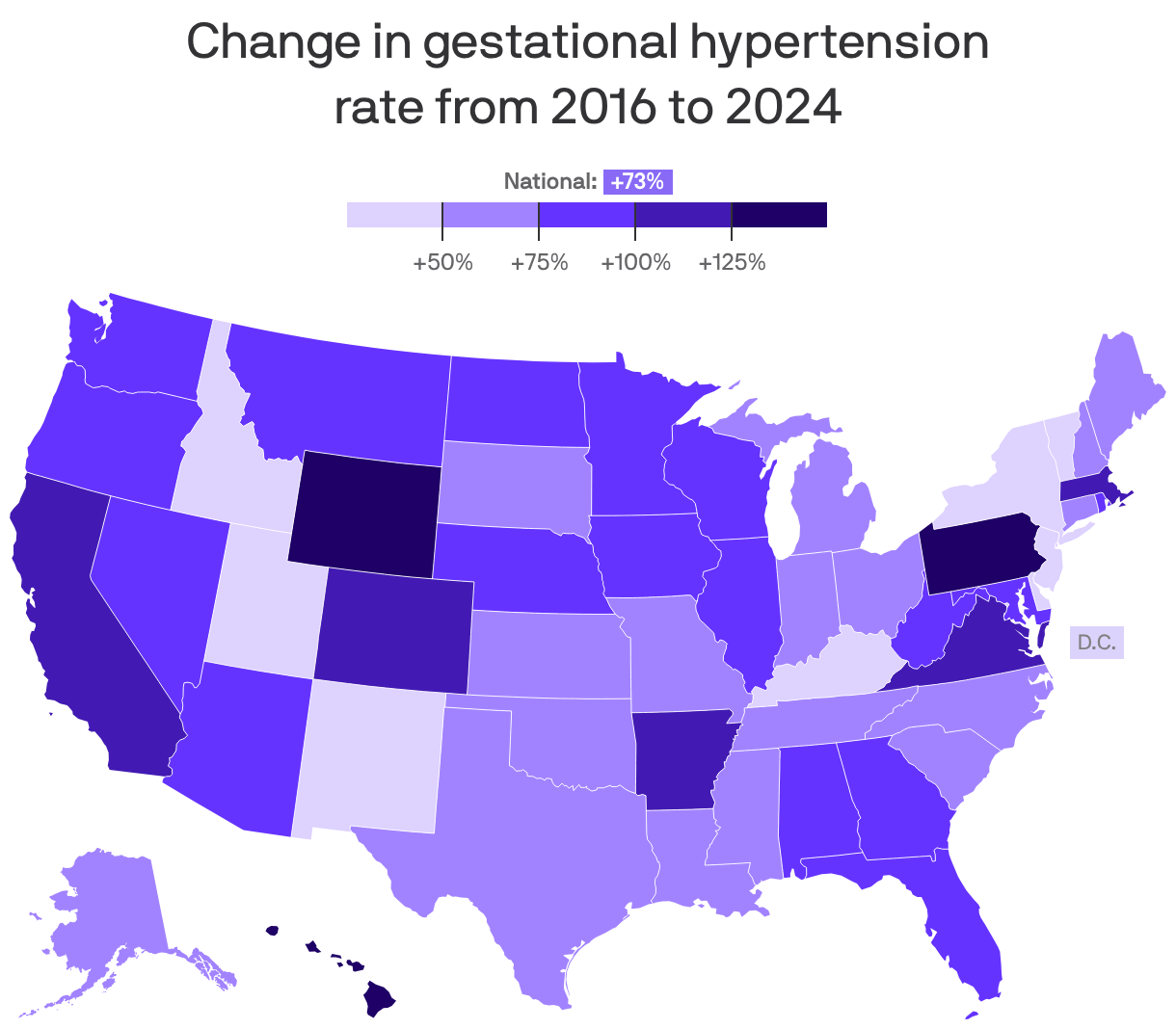
High blood pressure during pregnancy is rising in every state, Axios' Carly Mallenbaum reports from new CDC data.
- Why it matters: Gestational hypertension is associated with serious complications for mom and baby.
By the numbers: More than one in 10 mothers who gave birth in 2024 had gestational hypertension (a category that includes preeclampsia).
- That's a 73% jump from 2016, when about 1 in 17 mothers had it.
What to watch: The CDC report doesn't identify a specific cause. But researchers are examining whether pollution and microplastics may affect pregnancy health.
5. ⚡ Power grid under pressure

6. 🌊 Spain's new barrier
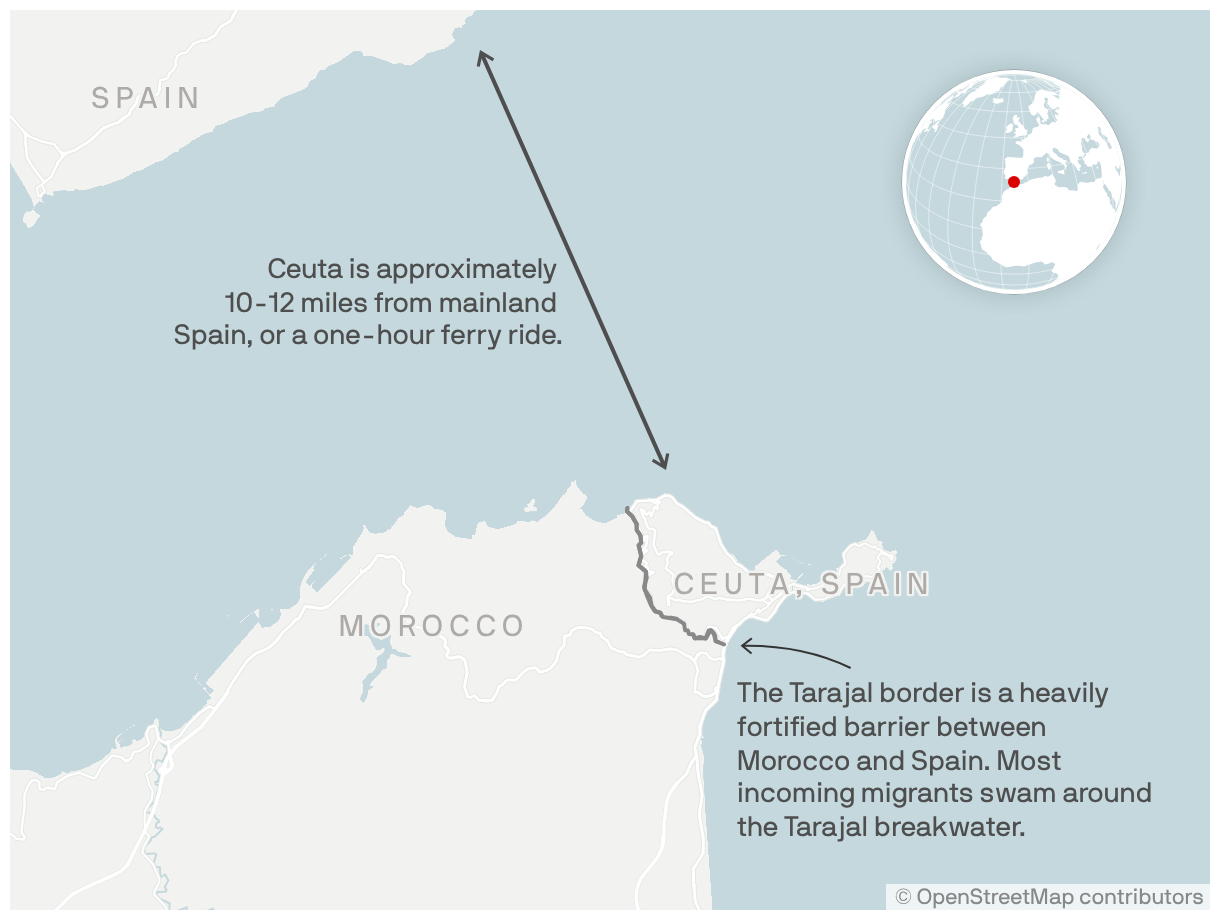
Spain said migrant crossings into its North African enclave of Ceuta stopped overnight.
- Today, police have been installing a 1,640-foot floating barrier off Spain's border with Morocco following a mass rush that killed at least 67 people, Reuters reports.
Spanish authorities said about 50,000 people — most of them young Moroccan men looking for work — crossed into Ceuta by land and sea beginning Thursday, an unprecedented surge at one of the European Union's only land borders with Africa.
- More than 48,000 of them returned to Morocco within 48 hours without major incident.
7. ✈️ 22-hour flight

Qantas, Australia's flagship airline, is planning to launch the world's longest commercial flight in October 2027, connecting Sydney and London on specially built Airbus jets.
- It's dubbed Project Sunrise. Flight time is expected to be 22 hours. Tickets go on sale in February.
🧘 Zoom in: The plane will have a "well-being zone" where passengers can get snacks and stretch, The New York Times reports (gift link).
- The airline is also looking at ways to reduce jet lag: caffeine and chili in breakfast meals, along with brighter lights to help the body wake up.
The customized Airbus jets can fly such long distances without refueling due to an additional rear center fuel tank, The Times notes.
- Airbus says the modification allows the jet to carry an extra 5,300 gallons of fuel and pushes its range to 10,000 miles.
8. 🍿 1 for the road: Mega movie weekend

This weekend's box office could be one of the biggest of all time, Axios' Nathan Bomey writes.
- With "Spider-Man: Brand New Day" poised to go gangbusters, and "The Odyssey" still going strong, Rentrak analyst Paul Dergarabedian says a top three showing is a serious possibility.


The biggest showing of all time was the weekend of April 26, 2019, led by the megahit "Avengers: Endgame," at $402 million.
- Box-office analysts expect $260 million to $280 million for "Spider-Man." (Variety)
Axios AM