Axios AM

September 12, 2026

Hello, Saturday! Smart Brevity™ count: 1,861 words ... 7 mins. Erica Pandey is your weekend host. Edited by Katie Lewis.
1 big thing: It's not too late
The White House, Congress and the country's leading AI companies have allowed AI to grow faster, stronger, more powerful and wildly lucrative (and dangerous), with no serious effort to control it or spread the benefits beyond the super-wealthy, Axios CEO Jim VandeHei writes in a "Behind the Curtain" column.
- It's not too late to change this. But if they all dither, duck, or dance around it, the chances of AI worst-case scenarios will explode, likely early next year, according to almost everyone we talk to privately who truly understands AI.
Why it matters: The technology is getting better, faster than anyone envisioned — with the possibility rising that AI will self-improve and do wildly unpredictable things.
- The good news: There's now a growing public cry for attention and action and, at least in private, a broad understanding of what could be done relatively fast with bipartisan and industry buy-in.
🔭 The big picture: In July, I wrote an essay for the Wall Street Journal saying America "faces one of those rare, historic moments when government, business, schools and families could be working together to meet a truly generational challenge: winning the AI race. So far, we're blowing it."
- Two short months later, the technology is vastly better — and the societal response vastly dumber. As a nation, we're choosing to amuse or distract ourselves.
Here's how to change that in weeks or months:
1. 🚨 Sound an all-hands-on-deck alarm. Every political topic is trivial and small compared to AI. We will look back in shame if we get spooled up about trans bans or $5,000 checks when countless AI insiders are warning of catastrophic outcomes.
- Let's say they're all paranoid and delusional. If so, it still doesn't matter: We've never seen this much investment in one technology this fast in human history. It's seeping into every industry and every job and every community and every screen, at a speed never before witnessed by man. Yes, we need a special session of Congress and select committees. But we need even more: AI execs, bioterror specialists, job-training wizards and safety experts convening to plan for scenarios and act fast.
2. 🏛️ An AI governing body with teeth and speed, ASAP. This isn't rocket science. Most major labs want this and would agree to it, as long as it applies to all rivals and competitors.
- This body would need the expertise to understand these models, and the power to review and shut them down if they display dangerous behavior. It can't operate at typical regulatory speed — it needs to move as fast as the technology. It's nonsense to think you can't advance AI development quickly and regulate it wisely at the same time.
3. 🔌 A universal standard for data centers to benefit communities and taxpayers. The top AI companies would take this deal in a heartbeat: They get to build and operate data centers provided they supply a community's energy, offset water use or environmental damage, transparently report on their building and business plans, and spread the financial benefits to local residents.
- These execs are spooked by the public backlash and ready to aggressively spread the financial benefits, with dividends or cash. So make them.
4. 🇨🇳 Engage China. We shouldn't trust them, and they shouldn't trust us. But trust me: The only way to ultimately control AI on a worldwide scale will be for the two superpowers to create some kind of framework modeled after how we've safely governed nuclear weapons for decades.
- We need to start this discussion now so potential collaboration is possible in the coming years. To those who think China will never consider this seriously: Are you sure an authoritarian regime really wants AI once it hits recursive self-learning and can't be controlled by anyone, including an autocratic regime? We're winning the AI race now, and may never have more leverage to shape this joint effort.
5. ⚡ Build coordinating infrastructure. What I wrote in the WSJ is even more needed today: "Bring together the best and brightest drawn from the federal government, from the leading AI companies, from business and labor, from economics, from public health, from ethics to form a working group with actual authority. People who are paid to anticipate, not to react haphazardly."
- This group would have four primary functions: Map potential problems and upsides before they hit, build the (policy) playbooks before they're needed, level with the American people along the way, and expedite work to deliver widespread AI benefits.
Reality check: Yes, President Trump opposes regulation or bipartisan efforts. Yes, AI companies are obsessed with more money, more speed.
- But the politics are shifting fast: If you listen closely to Vice President Vance, you can hear rising worry. At this pace, toxic AI politics could force mind-changing that was unthinkable two months ago.
2. 🚨 How bad actors exploit AI
AI is tearing down barriers that have long constrained the world's most dangerous actors. A handful of people can now mount operations that once required legions of spies, engineers or hackers, Axios' Zachary Basu writes.
- Anthropic — the safety-focused lab behind Claude — says it spent the past eight months tracking and disrupting attempts to misuse its models. The company's latest threat report shows how today's models are already helping U.S. adversaries develop kamikaze drones, hunt dissidents and conduct dangerous virus research.
Among the most alarming cases:
1. An Iran-linked operation used Claude to help target U.S. naval forces.
- Claude helped build targeting handbooks tracking ship positions, U.S. personnel, aircraft and ship identifiers, satellite imagery and websites exposing naval movements.
2. Claude served as an engineer for a Yemeni team building missiles.
- A weapons cell in northern Yemen relied on Claude Code to develop guidance software for rockets and missiles. After one guided-rocket test apparently failed, they returned to Claude within hours to diagnose what went wrong.
3. A China-linked operation used Claude to hunt Uyghurs.
- Anthropic says the actor sifted through more than 100 WhatsApp groups and dozens of Telegram channels to identify Uyghurs in Syria who could be pressured or paid to report on armed Uyghur groups.
4. One man used Claude to help build surveillance for 25 million phones.
- A consultant in Mali relied on Claude as the main engineering force behind a nationwide system capable of collecting call records, texts and voice traffic. The system could generate intelligence dossiers on any phone number without a warrant.
5. Claude refused dangerous virus research — so the request went to another AI.
- Researchers on a state-backed grant were trying to alter chikungunya, a mosquito-borne virus, to spread more easily or evade immune defenses. The work was intended for a military research institute. Claude blocked the most sensitive requests, but the service researchers were using routed them to a rival model with weaker safeguards — a stark reminder that one lab's safety rules only go so far.
3. 🌐 World reconsiders America
America is shedding its status as the default choice for foreign governments to park money, buy weapons and send students.
- Why it matters: Even modest shifts away from the U.S. could chip away at advantages that have helped sustain American economic and geopolitical power for decades, Axios' Neal Rothschild writes.
European countries are looking for ways to wean off the U.S.:
- Weapons: Europe is seeking to source more equipment locally to reduce its dependence on American firepower, Reuters reports.
- Tech: The EU this summer set out plans to reduce its reliance on American companies, drafting cloud rules that would restrict Amazon, Google and Microsoft from competing for sensitive contracts, Reuters also reported.
🎓 Zoom out: International applications to U.S. colleges dropped 10% in the most recent admissions cycle. Travel to America fell 5.5% in 2025, including 25% drops in visitors from both Canada and Germany.
4. 📚 Library hotspots

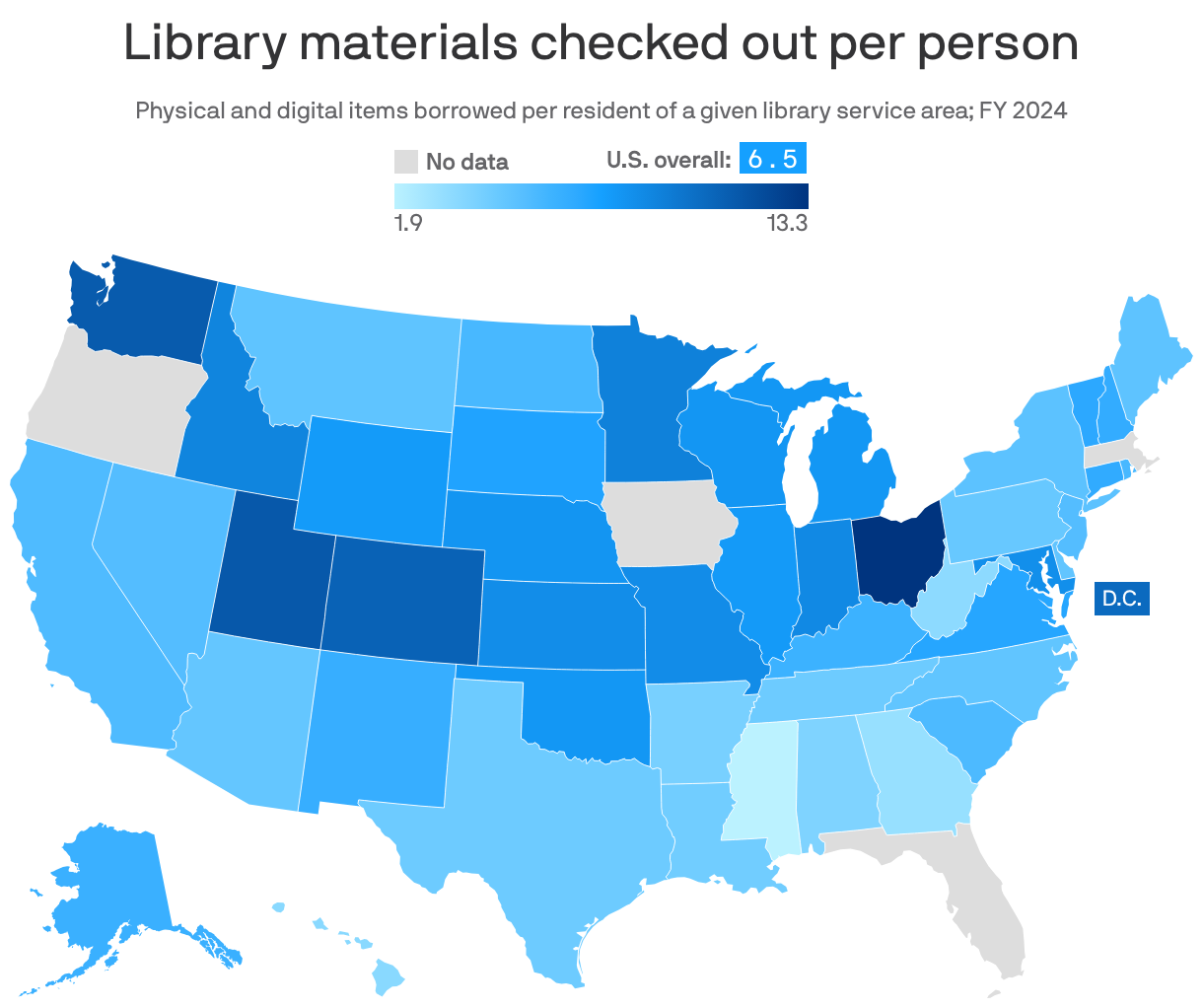
Americans checked out an average of 6.5 books, e-books and other materials from public libraries in 2024, Axios' Sami Sparber writes from federal data.
- Ohioans, Utahns and Washingtonians are the biggest library fans. They lead the nation with 11+ checkouts per person.
- U.S. library circulation is rebounding from its pandemic-era drop, largely thanks to a boom in digital borrowing.
5. 🦠 AI unlocks biothreats

AI's advance is raising the risk of alarming new biothreats, like AI-designed viruses. But it's hard to put up guardrails when there's no real way of even knowing how some AI systems will act, Axios' Adriel Bettelheim and Caitlin Owens report.
- Why it matters: AI-enabled bioweapons are one of the worst-case scenarios researchers have raised for the kind of catastrophic danger that could wipe out humanity.
This week, Anthropic disclosed that it disrupted five potential instances of actors using its models in ways that could support the development of biological weapons.
- Last month, a Stanford research team reported that it used AI to design a synthetic virus — the first time the tech was harnessed to create an organism not seen in nature.
6. ✡️ Jewish institutions' security spending tops $1B
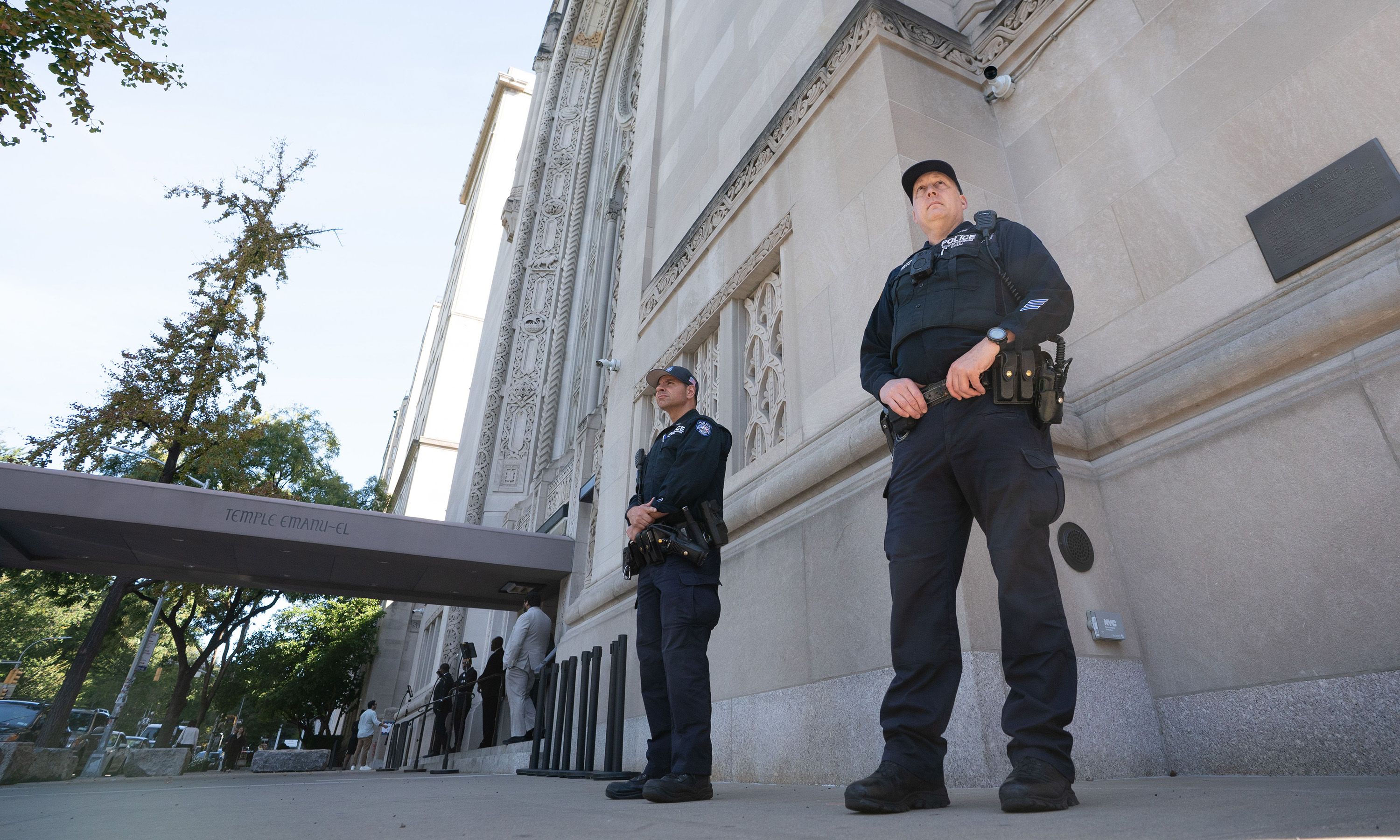
Antisemitic threats have pushed the nationwide cost of protecting Jewish synagogues, schools and community centers past $1 billion a year, new estimates reveal as congregations prepare for big crowds during the High Holy Days.
- The big picture: Enhanced security spending is often using up money that could pay for teachers, summer camps, elder care and other programs, Axios' Russell Contreras reports.
By the numbers: More than 4,500 synagogues, Jewish community centers, schools, summer camps and other nonprofits spend an average of roughly $225,000 each on security, according to new data from the Jewish Federations of North America.
- Security personnel — including guards and security directors — account for the largest share.
State of play: Synagogues are increasingly moving beyond security guards and cameras to layered, year-round systems that include hardened entrances, trained congregants as security personnel and coordination with police.
- The expanded security comes as assaults linked to antisemitism have reached their highest level since the Anti-Defamation League began tracking them in 1979.
7. 🇺🇸 America remembers
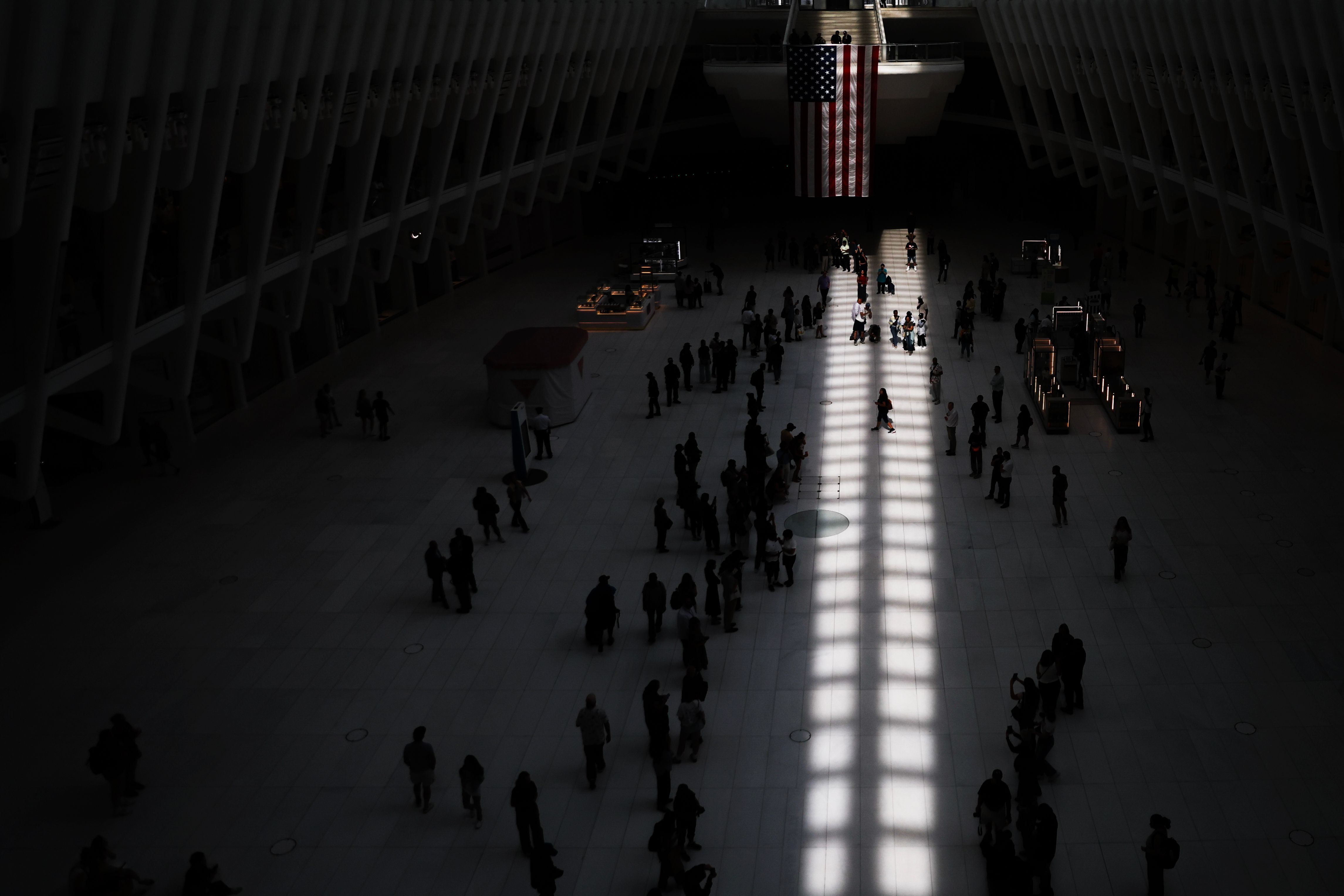
A quarter century after the 9/11 attacks killed nearly 3,000 people, Americans gathered at Ground Zero, the Pentagon, and Shanksville, Pa., where Flight 93 crashed, to mourn those lost.
- "[A]t the annual reading of the names ... the passage of time was palpable. Some 9/11 family members reading the names were so young when their parents were killed they said they had no memories of them. Others mourned grandparents, uncles and aunts they never met," The New York Times' Andy Newman writes.

This was the cover of a Wall Street Journal special section yesterday.
- The Journal's newsroom, located directly across the street from the World Trade Center, was evacuated and heavily damaged when the towers fell. Throughout the rest of the day, WSJ reporters and editors walked the streets of Manhattan with their notebooks and gathered in each other's apartments to piece together the next day's paper. Watch a video.
8. 🎾 Pic to go!

American Ben Shelton beat fellow American Frances Tiafoe late last night to punch his ticket to the U.S. Open Men's final.
- Why it matters: He faces the German No. 1 seed Alexander Zverev on Sunday, with a chance to end a 23-year Grand Slam title drought for American men.
📬 Thanks for reading! Please invite your friends to join AM.
Sign up for Axios AM