Axios AM

April 15, 2025

💰 Good Tuesday morning — it's Tax Day.
- Smart Brevity™ count: 1,489 words ... 5½ mins. Thanks to Noah Bressner for orchestrating. Copy edited by Bryan McBournie.
🎤 Situational awareness: Former President Biden returns to the national stage with an early-evening speech in Chicago to the national conference of Advocates, Counselors and Representatives for the Disabled (ACRD), elevating liberal concerns about threats to the health of Social Security. Keep reading.
1 big thing: Why Trump hates "E"s

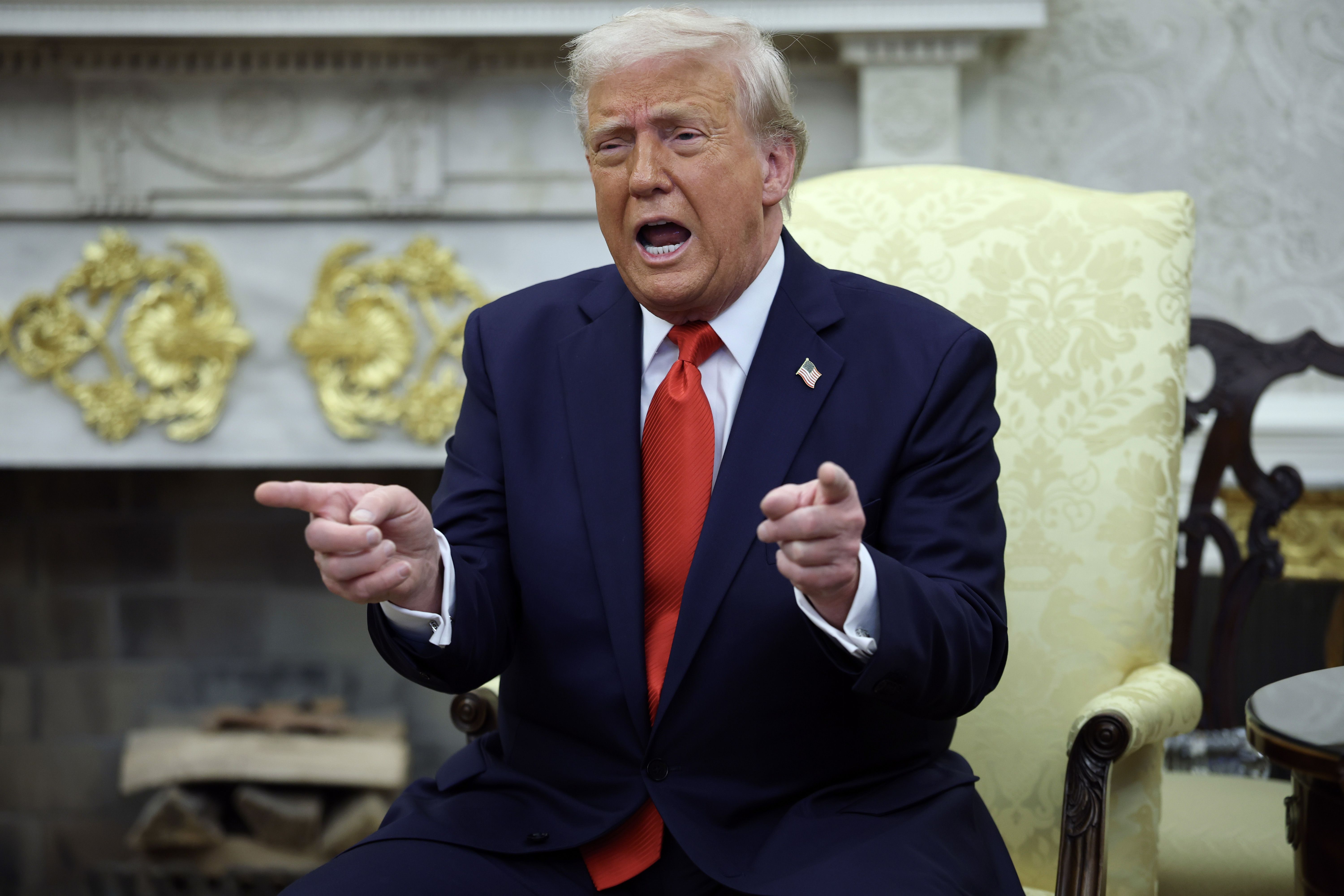
President Trump's abrupt walk-back of tariff exceptions for cellphones, computers and chips has Wall Street guessing. But it makes sense to those who know the president's thinking: He doesn't like the "E" words.
- "Exceptions and exemptions are weakness," said a Trump adviser who has discussed tariff policy with him. "Trump is for strength."
Why it matters: Trump's erratic, real-time tariff tweaking has confused investors, deflated the dollar and shaken the stock market, Axios' Marc Caputo writes.
- Investors and the nation's financial system crave stability and predictability — the opposite of what Trump's delivering.
🔎 Zoom in: The president's trade policies revolve less around traditional economic theories and more around semantics — and his desire to project power.
- "What's the real policy? Who knows?" the exasperated editorial board of the Wall Street Journal asked Sunday when it grappled with the mystery of what it labeled "Trump's Exceptional Tariff Weekend."
Trump is still talking about tariff exceptions, as he did yesterday for car companies. He just doesn't use an "E" word, and tries to frame the matter in a way that connotes control.
- "Look, I'm a very flexible person," Trump told reporters in the Oval Office. "I don't change my mind. But I'm flexible."
⏱️ The tick-tock: Trump's tariff two-step began at 10:36 p.m. ET Friday, when Customs and Border Protection issued a bulletin that spared cell phone and computer makers such as Apple from crushing tariffs on Chinese imports. The document used the word "exception" three times.
- 9:20 p.m. Saturday: The White House posts a video clip on X of the president on Air Force One ducking a question when asked about exceptions for iPhones and other electronics. "I'll give you that answer on Monday," he said. "We'll be very specific."
- 9 a.m. Sunday: Commerce Secretary Howard Lutnick appears on ABC's "This Week" and explains that the technology items are "exempt from the reciprocal tariffs, but they're included in the semiconductor tariffs" Trump wants to levy. "This is not like a permanent sort of exemption," Lutnick said.
- 3:36 p.m. Sunday: "There was no Tariff 'exception' announced on Friday," Trump posted on Truth Social, ignoring the administration's repeated use of the word in its Friday bulletin.
👀 The intrigue: Behind the scenes, White House officials asked Lutnick to go on TV on Sunday to push back against the idea of "exceptions." Reports about them were annoying Trump.
- "Trump didn't like the coverage about exceptions and exemptions. He didn't want to look like he was giving in to Apple," a White House official said.
2. 🤖 Tech's tariff playbook

U.S. tech giants are awkwardly navigating two paths through the minefield of President Trump's global trade war, Axios' Ina Fried and Scott Rosenberg write.
Why it matters: Companies such as Apple and Nvidia are altering their short-term supply chains and diversifying their product sourcing to minimize the cost of Trump's tariffs.
- At the same time, they're doing everything they can to get on Trump's good side, hoping it will pay off in carve-outs or other favors.
🔭 Zoom in: Tech companies began efforts to diversify their production beyond China during the first Trump administration, and those efforts expanded after the pandemic.
- Much of that production moved to countries (Vietnam, India) that are targets of Trump's now-paused reciprocal tariffs.
For tech's biggest firms, the game of Trump management involves rituals of appeasement in the form of public announcements of extravagant — and ostensibly new — investments. The game has four rules.
- Pick a crazy high investment number in the hundreds of billions of dollars, then hedge it by using terms like "up to" and "planned."
- Roll together projects that were already in the pipeline with new spending plans to boost the final tally.
- Be sure to credit Trump by name, or otherwise signal he made the deals possible, or just don't contradict him when he takes credit.
- In a few months or years, feel free to change course or back out as needed.
3. ⚖️ Vance allies set to flex antitrust muscle
Vice President Vance's allies and former aides are set to have a key role in pushing the Trump administration to move aggressively to break up big corporations — including tech companies, Axios' Alex Thompson and Ashley Gold write.
- Why it matters: It's the latest example of Vance leaning into an area that's popular with President Trump's MAGA base — and at odds with the pre-Trump GOP.
"We believe fundamentally that Big Tech does have too much power," Vance, a former Ohio senator who has called for breaking up Google, said in the first week of the new administration.
- Vance and his allies think dominant tech firms censor speech by conservatives, and control too much of Americans' daily lives.
🔬 Zoom in: Several of Vance's former aides are now in administration jobs that are key for setting antitrust policies that can break up large companies and block mergers.
- Gail Slater, Vance's economic policy adviser in the Senate, was confirmed to be assistant attorney general for the Justice Department's Antitrust Division.
- James Braid now heads the White House's office of legislative affairs as antitrust bills start to get reintroduced in this Congress. Braid worked for Vance when the VP was in the Senate.
- Vance's deputy policy director, James Lloyd, led the Antitrust Division in Texas Attorney General Ken Paxton's office, where he sued technology companies including Google.
- Vance's chief of staff, Jacob Reses, previously was a senior policy adviser to Sen. Josh Hawley (R-Mo.), who has introduced a slew of Big Tech antitrust bills.
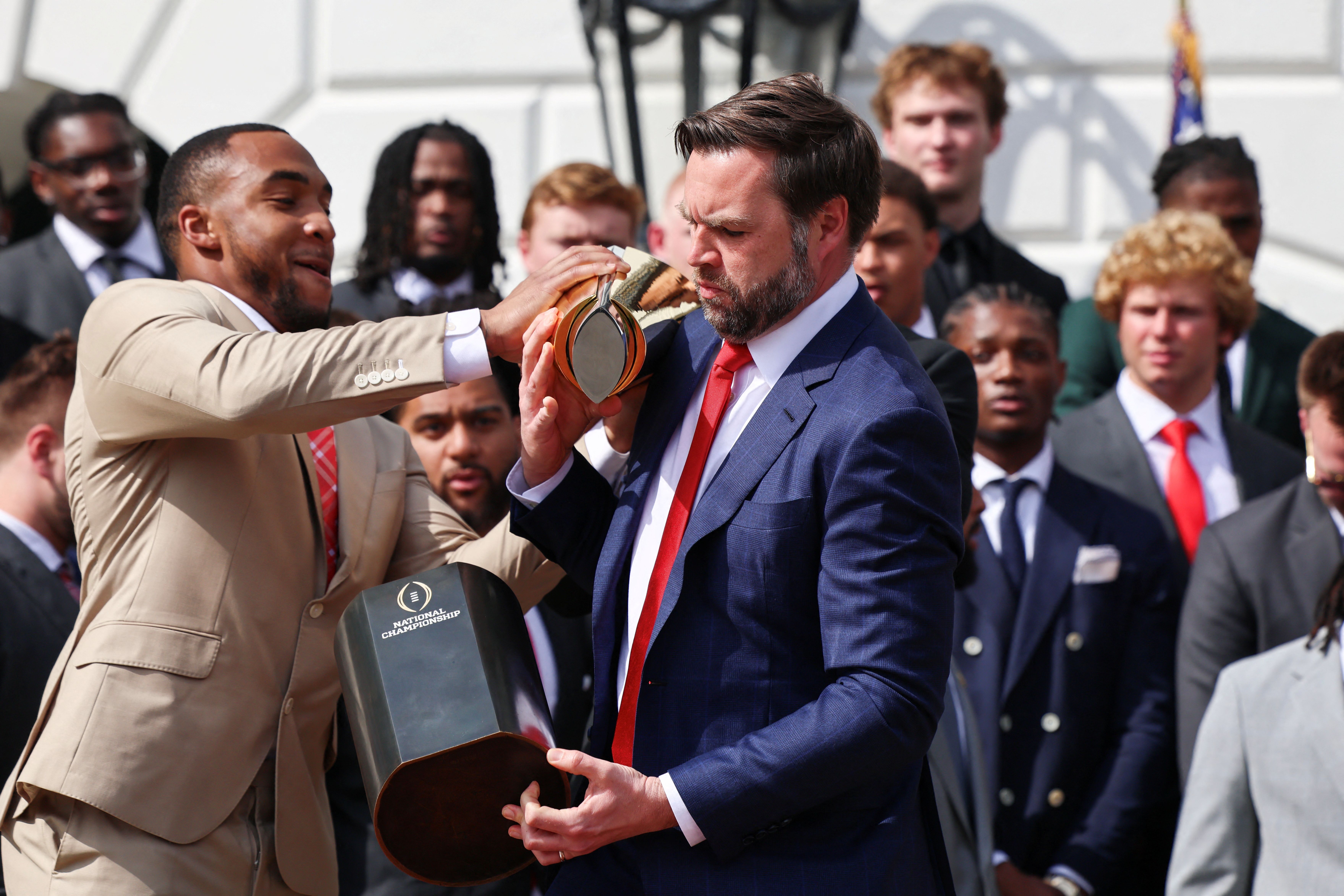
4. 🏈 Pic du jour: JD's fumble

Vice President Vance dropped the college football national championship trophy during Ohio State's visit to the White House yesterday.
- Running back TreVeyon Henderson, standing behind Vance, grabbed the top of the trophy while the base fell.
🥊 Vance — an Ohio State alum — wrote on X: "I didn't want anyone after Ohio State to get the trophy so I decided to break it."
5. 💡 Out today: New workplace data
Stark stat: Only 27% of senior leaders of organizations say their employees are aligned with (understand) business goals. Just 9% of employees say they get their company's goals!
- Today, Axios HQ — which helps workplaces communicate more — releases its 2025 State of Internal Communications report, digging into ways organizations can excel even in a tough year.
Why it matters: Five years into the workplace revolution, organizations are still struggling to adapt.
- To better understand what's going on, Axios HQ surveyed 450+ executives and 800+ employees across the country to dig into challenges they're facing, places they're investing, business performance they're seeing and cultural unknowns they're navigating.
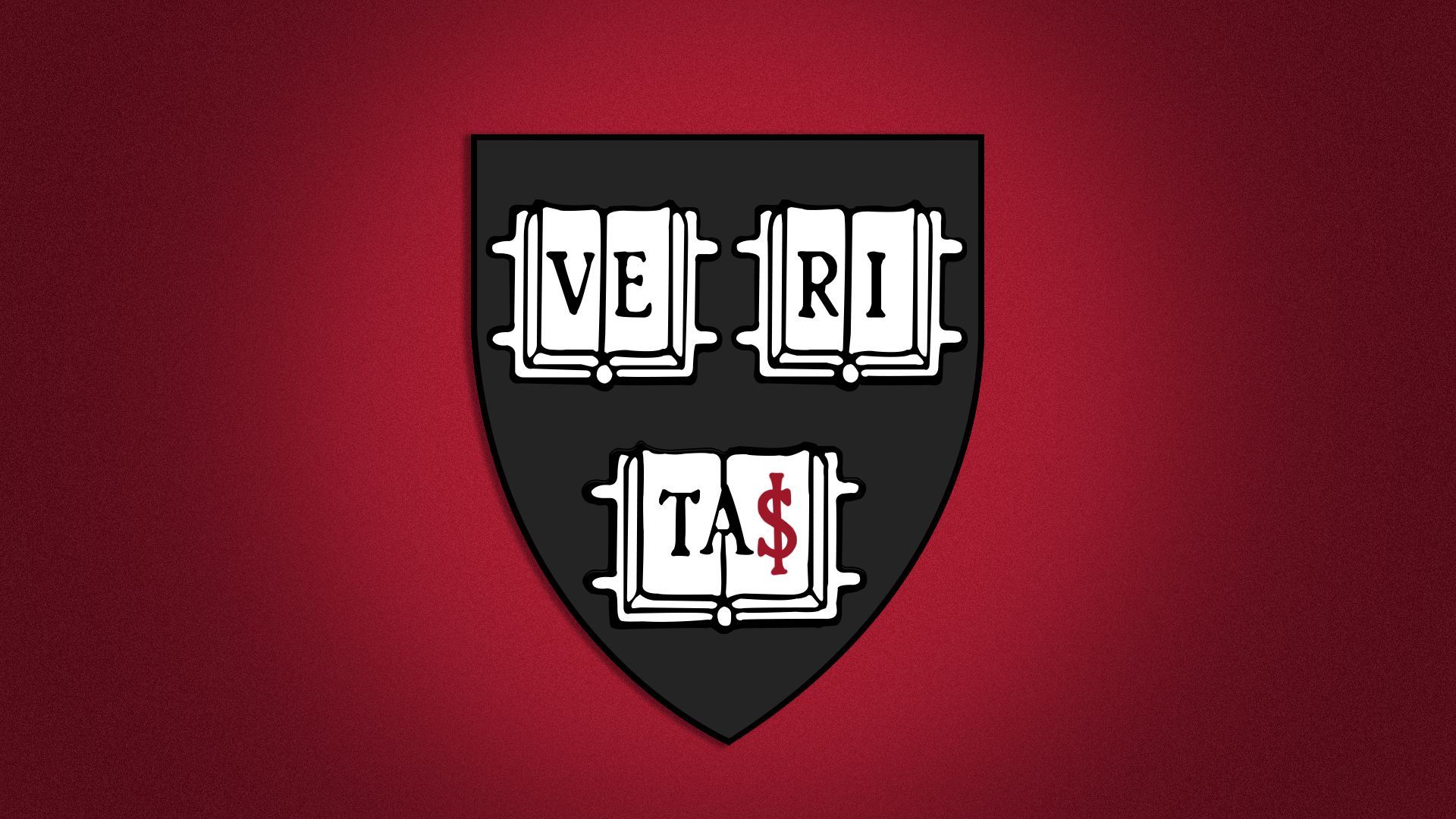
6. 🎓 Trump escalates Harvard clash
The Trump administration announced it'll freeze $2.2 billion in federal grants to Harvard hours after university officials said they wouldn't roll over to the government's demands, Axios' Dave Lawler and Steph Solis write.
- Why it matters: The administration's response shows what may be in store for colleges under scrutiny for DEI practices and alleged antisemitism.
While Trump's effort is officially about fighting antisemitism, Harvard president Alan Garber wrote in a letter yesterday that the demands are really about imposing "direct governmental regulation" of higher education.
- The Trump administration had asked for multiple audits of hiring, admissions and college practices.
🕵️♂️ The intrigue: Garber's letter was amended after publication to change a line stating that Harvard "will not negotiate over its independence or constitutional rights" to Harvard "will not surrender its independence or relinquish its constitutional rights."
- In a separate letter to Trump administration officials, lawyers representing Harvard said the university was "open to dialogue" but would not accede to demands that go beyond the government's "lawful authority."
Share this story ... Harvard's letter ... Administration letter to Harvard.
7. 💰 Mapped: Average tax refunds by state
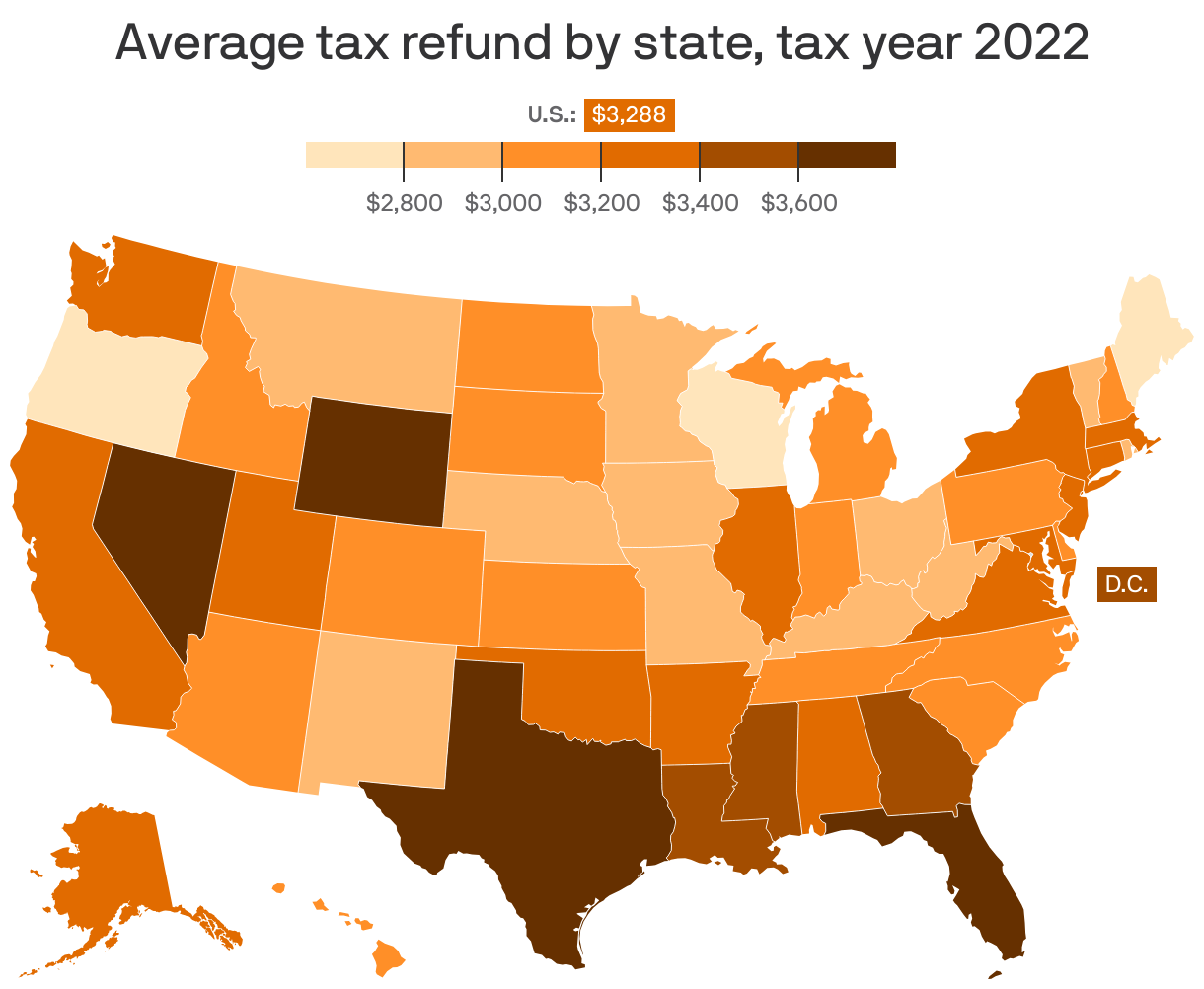
Average federal tax refunds by state range from $2,700 to nearly $4,000, Axios' Alex Fitzpatrick writes from IRS data.
- Florida (about $3,900), Texas ($3,800) and Wyoming ($3,700) had the biggest average tax refunds for tax year 2022, the latest data available.
- Maine ($2,700), Wisconsin ($2,700) and Oregon ($2,800) had the smallest.
Interactive map (state-by-state data).
8. ⛳ Final hole: Massive Masters ratings
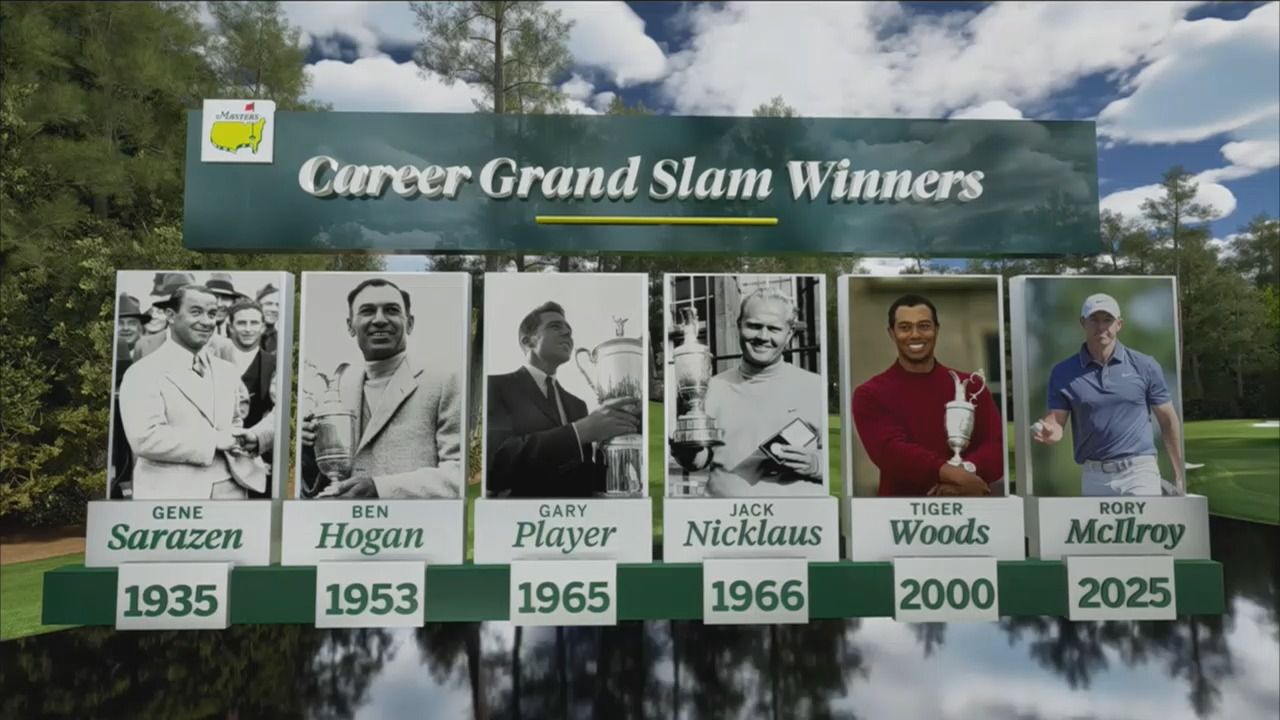
Rory McIlroy's dramatic Masters win on Sunday was the most-watched golf broadcast on any network since 2018, according to CBS.
- Why it matters: It surpassed even Tiger Woods' come-from-behind win at the 2019 Masters — one of golf's biggest moments in recent memory.
📺 The CBS broadcast of the Masters on Sunday averaged 12.7 million viewers, the network said.
- Coverage peaked with 19.5 million viewers between 7 and 7:15 p.m. — when McIlroy beat Justin Rose in a sudden-death playoff.
📬 Thanks for reading! Please invite your friends to join AM.
Sign up for Axios AM