Axios AM

May 19, 2026

1 big thing: Trumpworld's presidential gold rush
2. 🤖 New data: Republicans like AI more than Dems
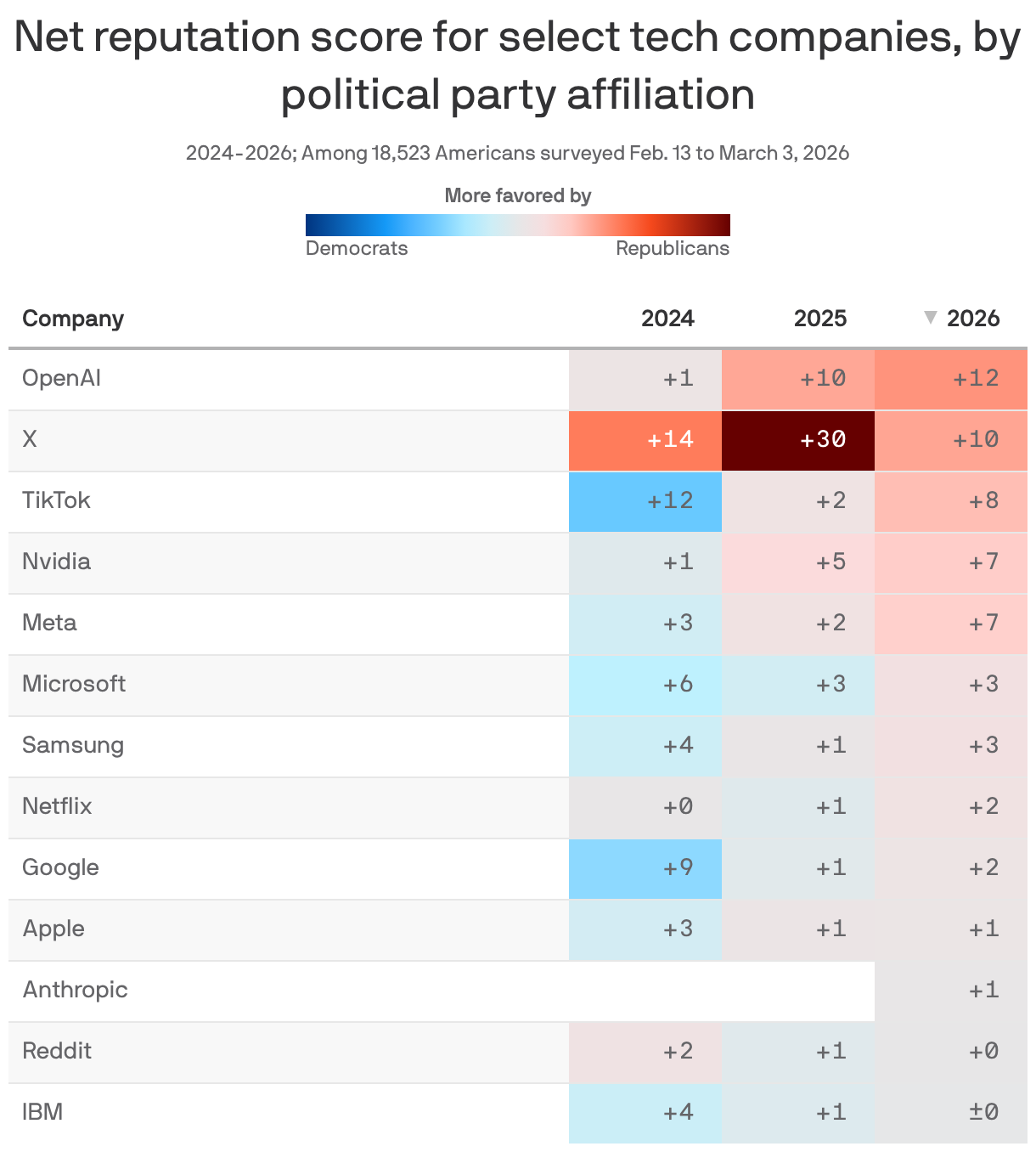
Democrats have become more skeptical of AI and the industry behind it, while Republicans are significantly more likely to trust most AI companies, according to our annual Axios Harris Poll 100 brand reputation rankings.
- Why it matters: This represents a significant shift in just two years, since the White House changed hands and AI advancements accelerated, Axios' Margaret Talev writes.
Sam Altman's OpenAI is the tip of the spear. its reputational score was just 1 point higher among Republicans than Democrats in 2024. That gap has widened to 12 points today.
- TikTok, Nvidia, Meta, X and other AI or AI-driven companies also show a widening partisan gap.


🔬 Zoom in: AI companies aren't viewed equally — and those with narrower partisan gaps generally received higher reputational scores.
- Anthropic ranks No. 15 in the overall reputation ranking of the most visible brands in America, with a 1-point partisan gap. OpenAI ranks No. 68.
By the numbers: 44% of Republicans say their opinion of AI has become more positive in the past year, compared with just 35% of Democrats.
- 40% of Democrats expect AI to greatly or somewhat harm their career opportunities and wages in the years ahead, versus 32% of Republicans.
3. ⚖️ Musk v. Altman's biggest loser
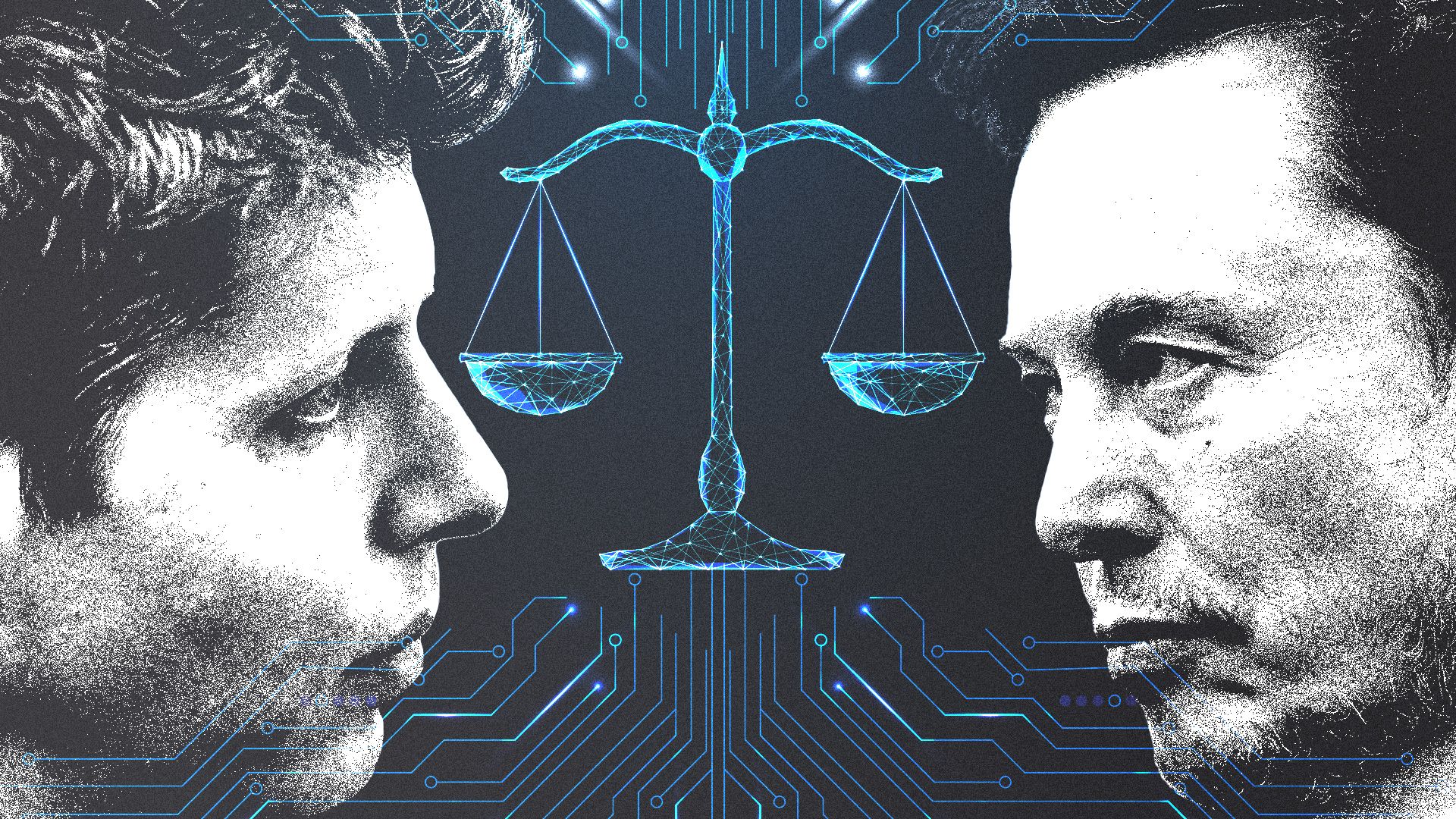
The biggest tech trial of the AI era — which ended anticlimactically on procedural grounds yesterday — revealed a sector consumed by the same power struggles and profit motives its leaders once warned would corrupt artificial intelligence, Axios' Madison Mills writes.
- Why it matters: The trial cemented a growing public fear about AI: that the people racing to control the world's most powerful technology are driven less by humanity-saving ideals than by money, power and personal rivalries.
The big picture: OpenAI's founders originally cast themselves as an alternative to Google DeepMind, fearing one tech giant would monopolize transformative AI systems.
- But testimony and internal documents showed those leaders quickly became consumed by power struggles.
- OpenAI executives worried in 2017 that Elon Musk "could become a dictator" and sent him an email with the subject line "honest thoughts." Musk replied that he'd "had enough" and later suggested the company be folded into Tesla.
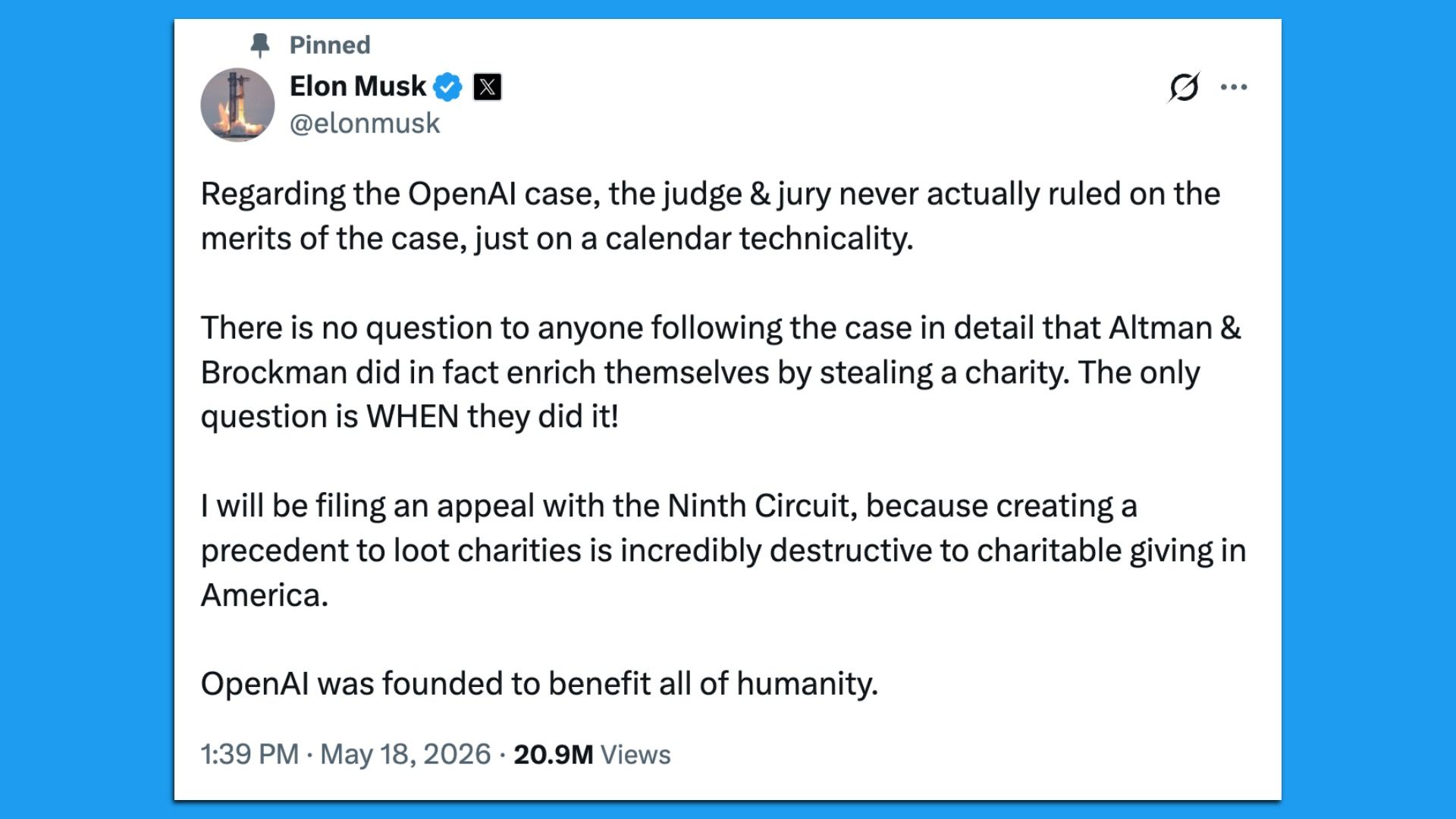
⚡ What happened: Jurors unanimously ruled Musk's lawsuit against OpenAI, Altman, co-founder Greg Brockman and Microsoft was barred by the statute of limitations.
- Musk's side argued OpenAI abandoned its founding nonprofit mission by accepting billions from Microsoft and creating a for-profit arm.
The trial ended with "a predictable whimper" over procedure, Ray Seilie, a tech and corporate trial attorney, told Axios.
- Musk vowed to appeal, writing on X that the verdict creates "a precedent to loot charities."
4. 🏠 The great exurban surge


The demographic landscape of the U.S. is undergoing a dramatic outward shift as growth moves from cities to exurbs, Axios' Russell Contreras writes from new census estimates.
- The data released last week and analyzed by Axios show the fastest-growing places since 2020 sit on the extreme outer edges of major metropolitan areas.
- This will affect congressional apportionment, federal funding formulas, school districts and political power for years to come.
🧮 By the numbers: Five of the 10 fastest-growing cities since 2020 are in Texas.
- Celina, Texas — an exurb north of Dallas — expanded 24.6% in a single year, the fastest growth among cities over 20,000 from July 2024 to July 2025.
5. 📈 Dems open massive House lead


Democrats have opened one of their biggest congressional polling leads since George W. Bush was president two decades ago:
- The latest N.Y. Times/Siena poll has Democrats up 50%-39% on the generic congressional ballot.
Why it matters: The GOP launched mid-cycle redistricting to save the House from a blue wave. Republicans fear the result if more polls land in this territory.
🗳️ Zoom in: Three very bad numbers for Republicans from the poll ...
- President Trump's overall approval sits at 37% — "his lowest approval rating in any Times/Siena survey in either term," the N.Y. Times' Nate Cohn notes.
- Just 19% of voters aged 18 to 29 approve of his job performance — a troubling sign for Republicans after Gen Z swung right in 2024.
- Only 20% of Hispanics approve. That's a stunning collapse from a group Trump made historic gains with last election.
Go deeper: A crack in the polling floor puts Trump in new territory (NYT gift link).
6. 🥊 Trump's revenge tour arrives in Kentucky
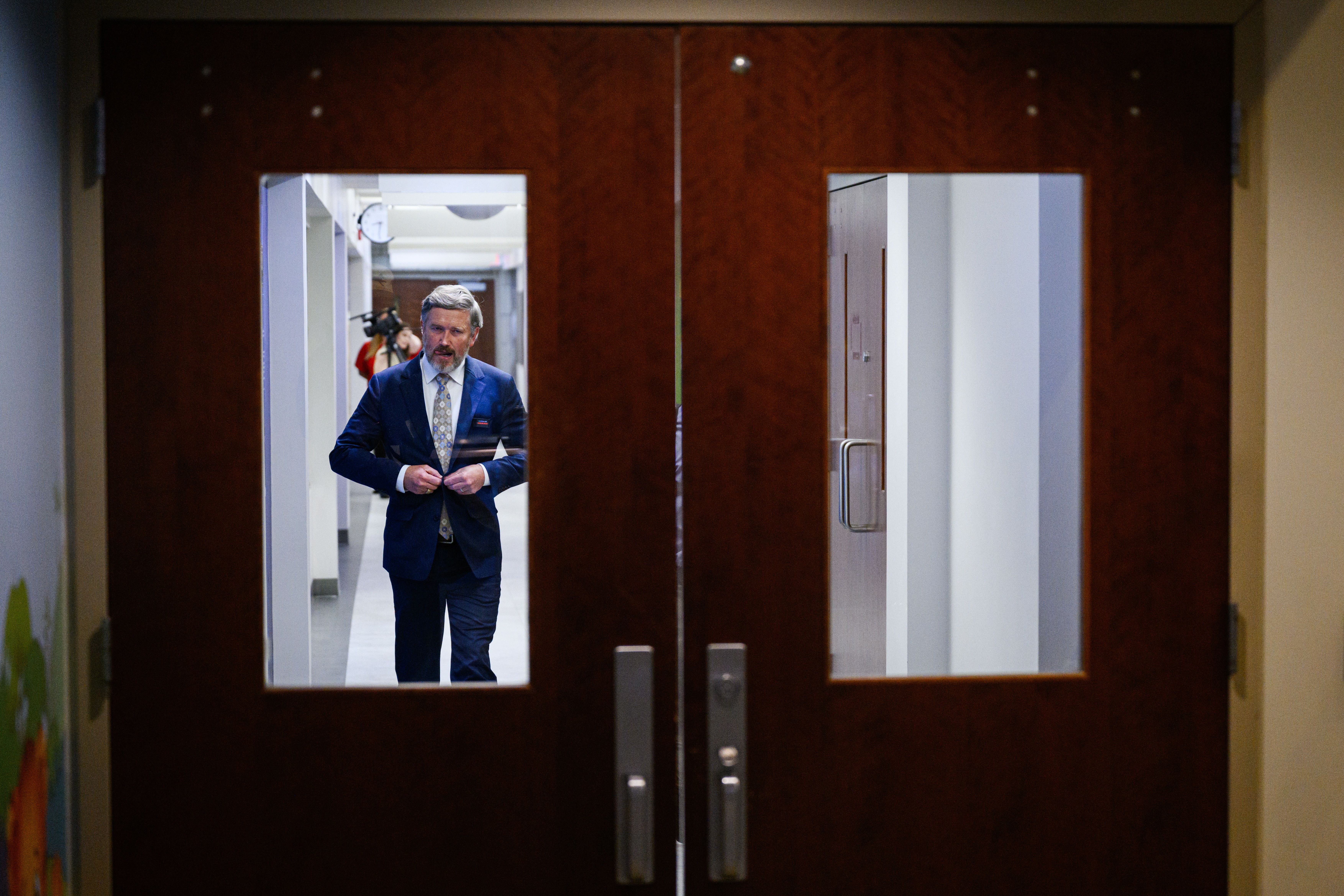
Today's Kentucky primary is President Trump's biggest test yet of whether his iron grip on the Republican base can hold even as war and inflation batter his national standing, Axios' Kate Santaliz writes.
- Why it matters: Trump is trying to take out longtime antagonist Thomas Massie in the most expensive House primary in history — a test of whether Massie's iconoclastic libertarian politics still has a place in the GOP.
Trump's political operation launched an aggressive effort to unseat Massie last year.
- The fight between Massie and Trump-backed rival Ed Gallrein has drawn more than $32 million in ad spending, according to AdImpact.
7. 📚 Out today: The Bonfire of the VCs

8. 🚁 1 for the road: Trump's next renovation
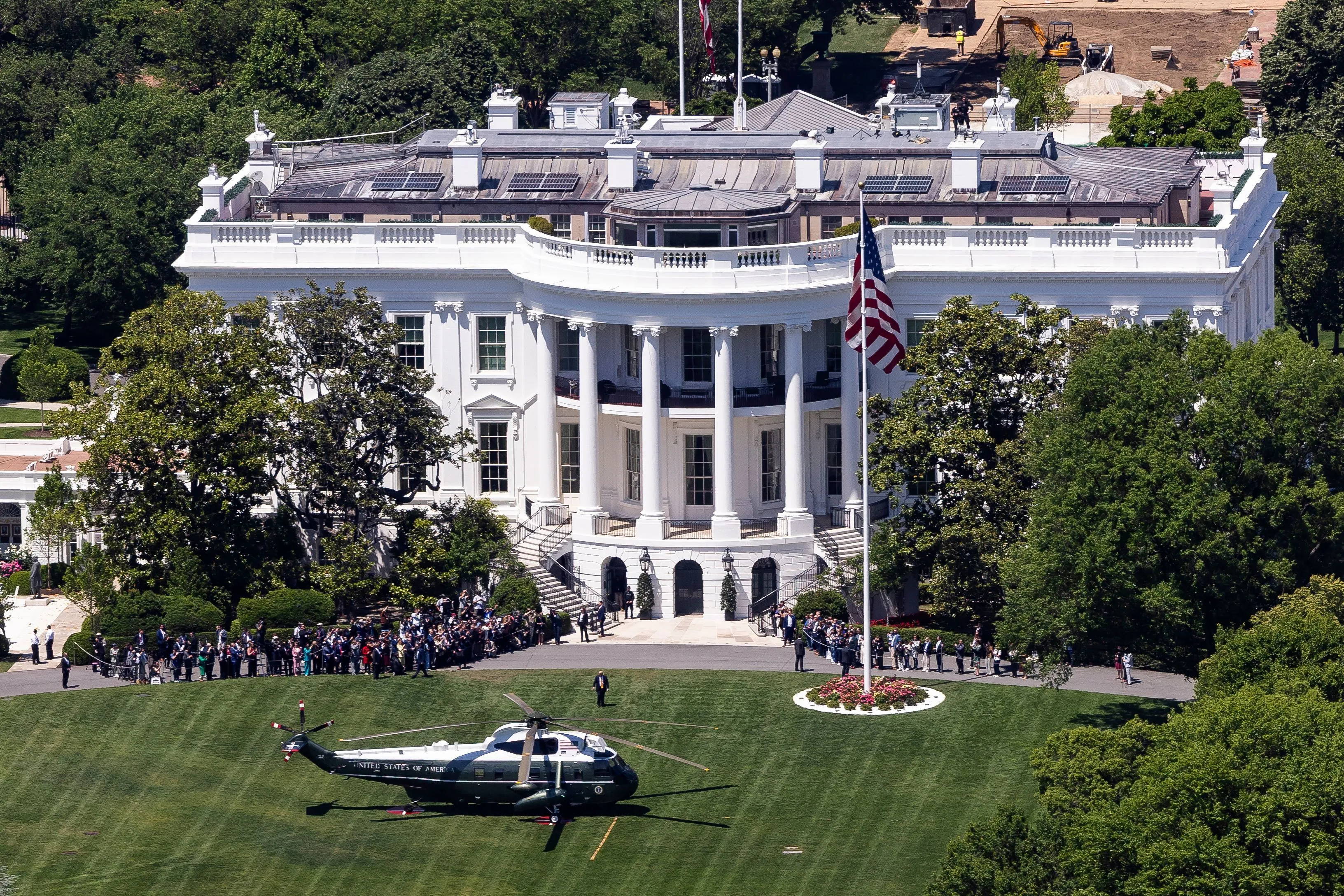
President Trump is planning to build a permanent helipad on the White House South Lawn to keep the powerful new Marine One helicopters from scorching the grass, The Wall Street Journal reports.
- The new VH-92A Patriot is much more powerful than the VH-3D Sea King it replaces. The old fleet has flown every president since Gerald Ford.
- Officials have known since 2018 that the new helicopter could damage the lawn.
- Presidents Biden and Trump have both flown on the new helicopters on trips outside of D.C., but never to and from the White House.
Trump is also expected to install a helipad at Mar-a-Lago while it's closed for the summer.
- Keep reading (gift link).
Axios AM