Axios AM

June 01, 2026

☀️ Good Monday morning! Smart Brevity™ count: 1,956 words ... 7½ mins. Thanks to Noah Bressner for orchestrating. Edited by Andrew Pantazi and Bill Kole.
1 big thing: The Rattled Generation
This column, which got a sneak peek over the weekend in Jim's C-Suite newsletter, is our long look at America's two-decade road to today's mood. Tomorrow, we'll unfurl Jim's idea to help CEOs and other leaders navigate this moment.
- Click here to watch a "Behind the Curtain" video of Jim and me discussing how we got here — and what's next.
We're living through the most disorienting societal moment since World War II. Almost nobody in a position of power is explaining why, or what to do about it.
- This is so much bigger than politics. It touches our jobs, our companies, our communities and our realities.
Why it matters: By most objective measures, it's an extraordinary time to be alive. Americans are wealthier, safer and longer-lived than at any earlier point in history. U.S. total wealth has soared. Violent crime sank to a 20-year low and is still falling. Life expectancy just hit 79 years — the highest in American history. The country produces more energy than ever after four straight record years.
And yet: University of Michigan consumer sentiment just hit its lowest reading in a half-century. Gallup finds most people think things will only get worse. Trust in every major institution — government, media, organized religion, higher education, science — is at or near record lows, both Gallup and the Edelman Trust Barometer find.
The gap between reality and feeling is the story of our era. A three-part shock helps tell it:
- Social media's rise.
- The chaos of COVID.
- The rise of AI, political extremism and information bubbles in the aftermath of both.
This produced a perpetually Rattled Generation, one too unsteady and uncertain to believe things are truly good or getting better. That's new for a typically optimistic, can-do society.
- It's hard to see this changing anytime soon for one big reason: For the first time, no one — even us, sometimes — knows what to believe or who to trust. Our brains are now constantly calculating: Is this AI? Is it a bot? Can I trust this, share this or act on it?
Only by making sense of how we got here can we begin to fix it:
Shock 1: The Social Era
We trace the inflection to 2007, the year we helped launch Politico. The same month, Apple unleashed the iPhone. Twitter was a growing infant. Facebook crossed 50 million users. In roughly 18 months, the infrastructure for an algorithmically amplified social life fell into place.
- Suddenly, anyone, anywhere, anytime could say anything on a public platform for free at scale and watch as others engage or enrage.
- What followed wasn't a coincidence. Anxiety, loneliness and institutional distrust rose in near-perfect parallel with smartphone penetration and screen time. It's a correlation so consistent across age groups, income levels and democracies that we strain to call it anything but causation.
The institutions made it easy. Church sex abuse scandals. Media blunders. The 2008–09 financial crisis and its unpunished architects. Iraq WMD claims. Academic failures. Epstein.
- Each, on its own, would have been a generational wound. Together, they landed one after another on people already disoriented by the speed of technological change. Citizens trusted institutions until those institutions failed them over and over, in public and up close. Once broken, that trust never reset.
- The result: People didn't abandon community. They migrated it, both closer to home and closer to their screens. Local leaders. Their own employer. People they know in person. Their phone.
Shock 2: COVID
Just as the country was trying to get its footing after the social media gut punch, COVID hit. Its effects went beyond a public health crisis, building an isolation and distrust machine by severing the in-person bonds holding people together. Churches closed. Local businesses shuttered. Offices emptied. Youth sports stopped. The very refuges people retreated to after their trust in big institutions collapsed were gone overnight.
- For millions of people, COVID stripped away the coping mechanisms they'd built to survive the first decade of digital disruption. It produced in our young people what psychologist Jonathan Haidt called the Anxious Generation. But the problems were hardly contained to one age group. They hit everyone.
And we never really recovered. We got vaccines and reopenings. We did not get a restoration of the social fabric. Loneliness was classified by the U.S. surgeon general as a public health epidemic. The share of Americans who said they had no close friends quadrupled from 1990 to 2021. Young men, in particular, have retreated from nearly every traditional institution — civic, religious, educational, relational.
- ⬇️ Column continues below.
2. 🫨 Shock 3: The aftermath
As if social media and COVID weren't enough, everyone got smacked with three once-in-a-generation tectonic changes — all at once, and all worse since COVID.
- Politics grew more omnipresent and mean. Terminally online politicians played to terminally online audiences, with algorithms egging everyone on. The rest got stuck in this feedback loop, which makes people seem nuttier and more hateful than most are.
- AI exploded across screens and work. Everything started moving faster everywhere — how and what you learn, how you work and how you get and share information. All have changed, and keep changing. Our species isn't wired to evolve at this velocity.
- People flocked to smaller and smaller information bubbles based on their age, politics and jobs. Suddenly, we had infinite "realities" instead of a shared one. Now, two people sitting next to each other on a plane likely get their "news" on platforms the other person has never visited and trust people the other person never heard of. Same plane. Adjacent seats. Two different worlds.
Short of hiding in the woods without the internet, all of this was unavoidable for all of us, all the time.
- The result of this 20-year daisy chain of events: a public with less hope, less trust, fewer friends and fewer people to look up to for help.
🔮 What comes next: This is hard to read, much less make sense of. But it also provides a basis to think through where we go from here. It might not be the reality we want, but it's the one we've got. You only change it by reverse-engineering it to spot the glitches and patterns and cures.
- We clearly need to restore trust in some binding leaders and institutions, lift competent people above the noisy ones, ease people through the AI transformation, find more common ground and common truth, and shift attention to what works, not just what sucks.
The bottom line: The repair won't come from politicians or media or brighter economic data. It'll come from government, religious institutions, communities, schools, parents, and business repairing the small threads that weave a complicated country together.
- We'll end on the happy note we flicked at up top: We're actually in exponentially better shape than people think, and than our rival nations. America's advantages are clear and real. We just need people to see this clearly again, and build back and up from there.
📱 Watch/share our video ... Share this column.
- Tell us about your experience: [email protected], [email protected].
📈 If you're a CEO or on a CEO's team: Ask to join Jim's new weekly Axios C-Suite newsletter.
3. 🦞 Dems' big test

Donald Trump shattered political norms when Republicans elected him twice despite scandals that would have sunk most candidates, Axios' Mike Zapler writes.
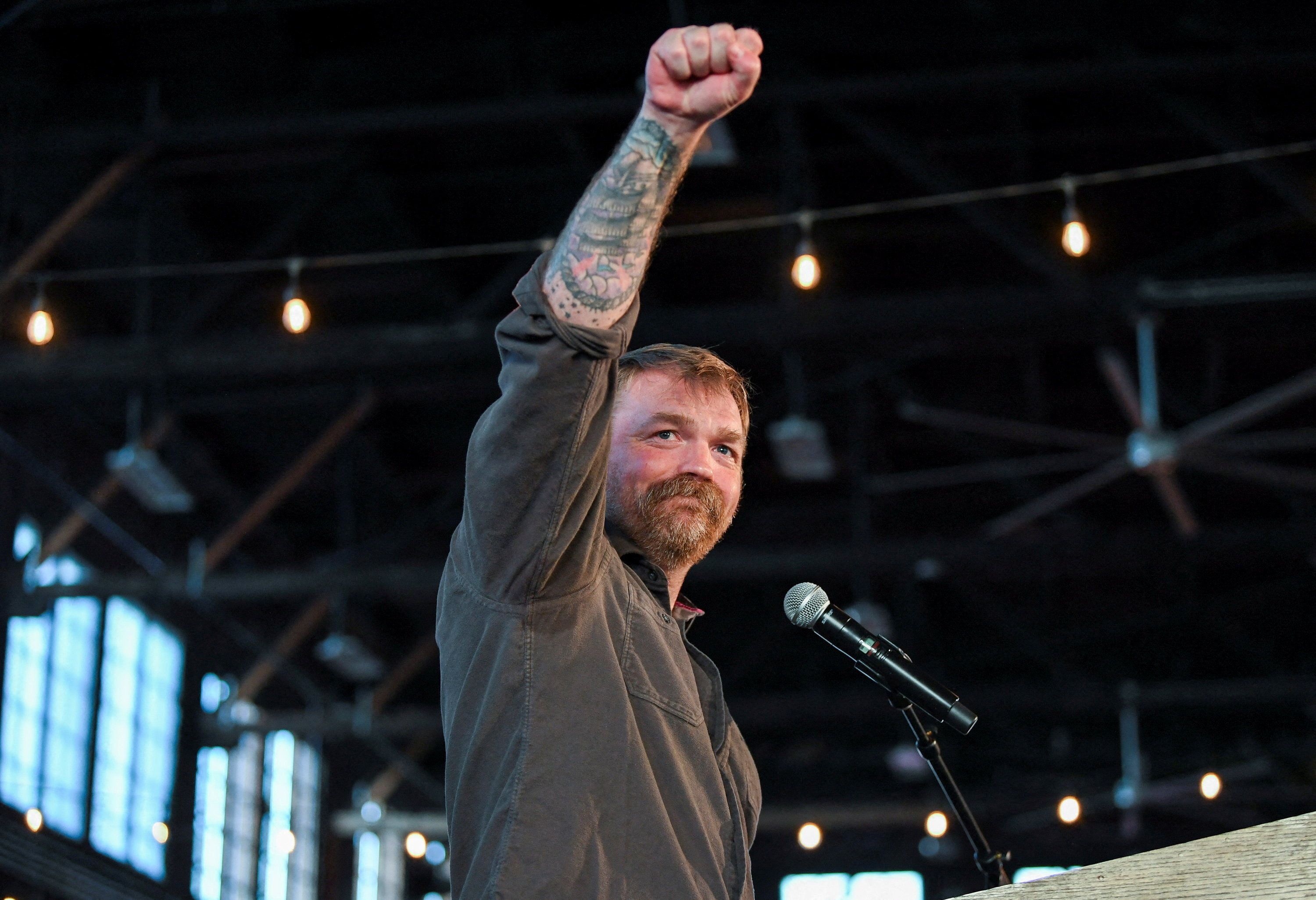
- Maine U.S. Senate candidate Graham Platner (D), 41, an oyster farmer and military veteran, is testing whether Democrats will play by the same rules.
Why it matters: The answer will show whether voters' tolerance for scandal — long thought to be a Trump-only phenomenon — is hardening into a broader feature of American politics.
Platner suffered the latest in a string of setbacks when The Wall Street Journal and New York Times reported he exchanged sexually explicit texts with at least a half-dozen women while married.
🔎 Zoom in: Platner has been dogged by one controversy after another — from old Reddit posts downplaying rape and insulting Black people to a tattoo of a Nazi symbol he had inked on his chest in 2007 and only covered up last year after becoming a candidate.
- But his campaign has only gained steam. His Democratic primary opponent, Maine Gov. Janet Mills, dropped out in late April after polls showed her losing badly.
- A late May survey by the University of New Hampshire had Platner up 9 points against Republican Sen. Susan Collins.
4. 🙏 AI stumbles on questions of faith


Artificial intelligence models are quietly shaping spiritual advice — often by leaving faith out, Axios' Russell Contreras writes from studies released last week by a new multi-university consortium.
- The studies — by researchers from Baylor, BYU, Notre Dame and Yeshiva — found Americans expected religion to appear in answers to moral and life questions 45%–59% of the time, depending on the topic.
- AI models mentioned religion only 5%–16% of the time.
5. 🤖 Inside the Democratic resistance on AI
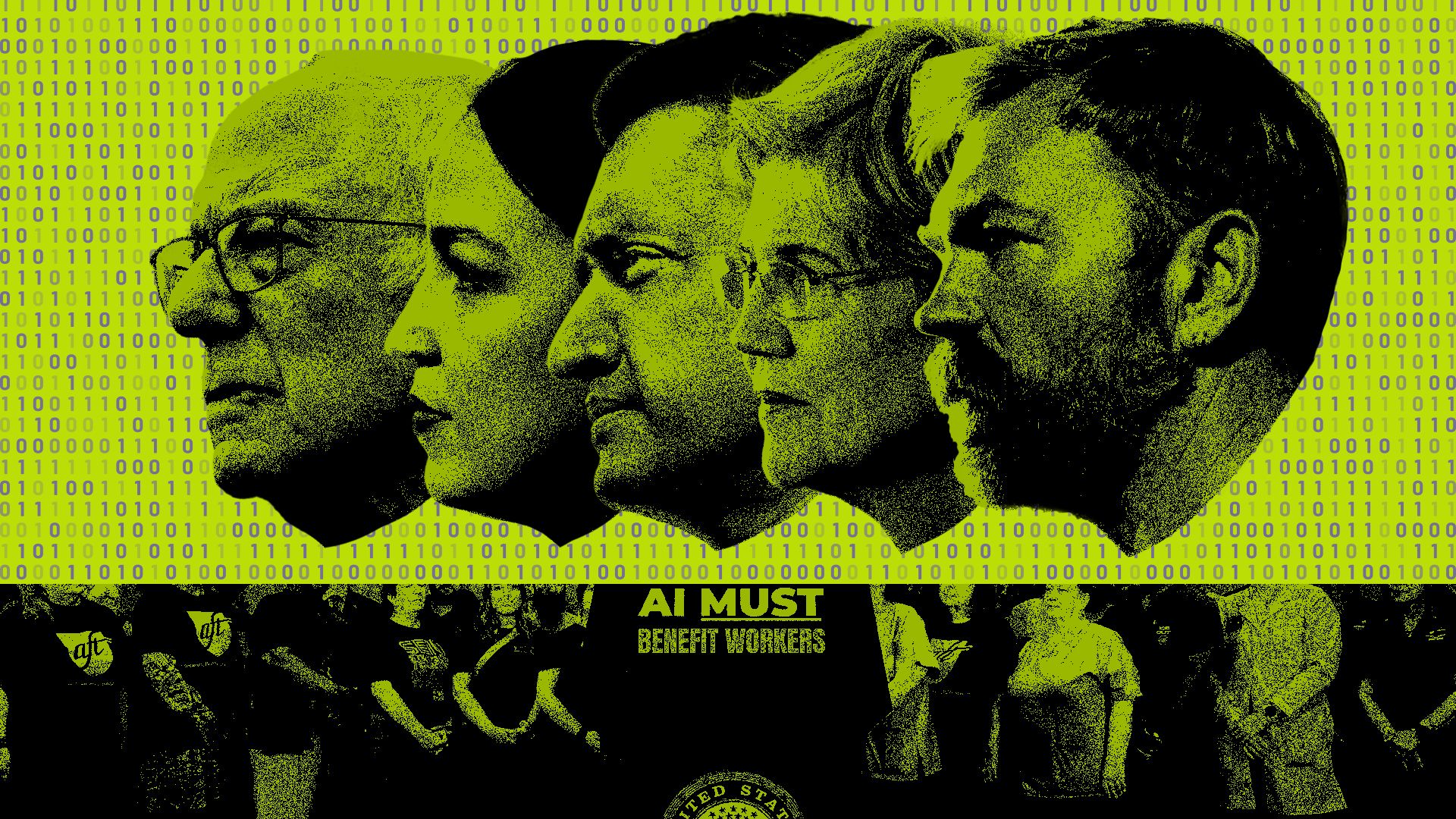
Five influential progressives are shaping a confrontational Democratic message on AI, challenging data centers and AI-linked political money, Axios' Maria Curi writes.
- Sen. Bernie Sanders (I-Vt.) has led the progressive anti-AI movement with proposals for a moratorium on data centers, collaborating with China on AI safety and protecting workers from AI-fueled displacement.
- Rep. Alexandria Ocasio-Cortez (D-N.Y.) is going all in on the data center moratorium push, holding up jars of brown, polluted water during a recent congressional hearing.
- Rep. Ro Khanna (D-Calif.) drew the ire of Silicon Valley when he came out in favor of a wealth tax.
- Sen. Elizabeth Warren (D-Mass.) has helped shape the Democratic playbook for 2028 and is now wading deeper into AI messaging. Just this week, she proposed taxing AI companies and data centers.
- Graham Platner, Democratic U.S. Senate candidate in Maine, aligned with Sanders and Khanna.
6. 🌐 Nvidia's real-world model
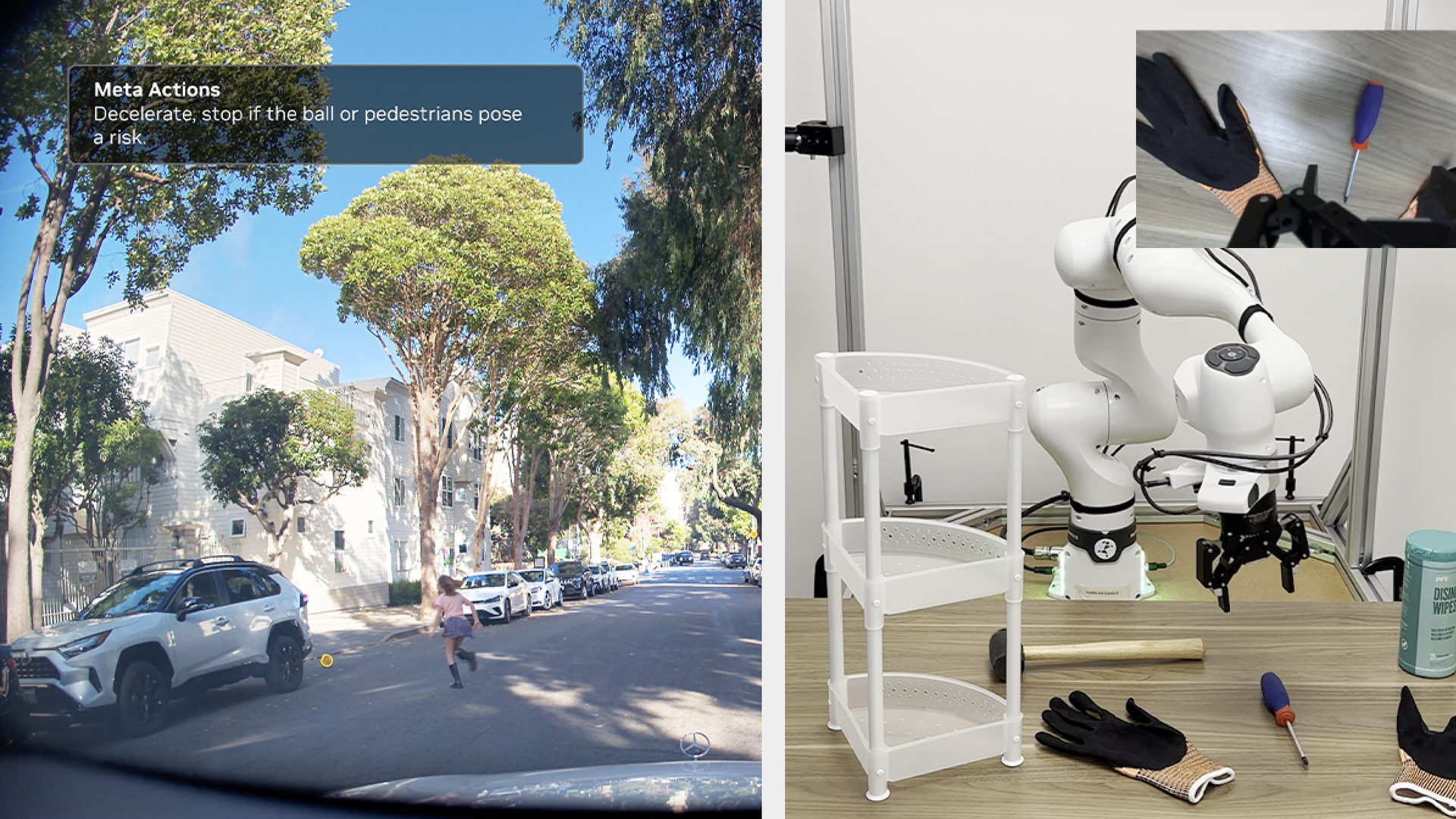
Nvidia unveiled Cosmos 3, an AI world model designed to help robots, autonomous vehicles and other physical systems better understand and predict real-world environments, Axios' Ina Fried writes.
- Why it matters: Nvidia's bet is that the next wave of AI won't just answer questions or generate images — it will need to predict, simulate and act in the physical world. The company wants its open models and infrastructure to be the place developers start.
The model is designed to generate action data to train machines to navigate and manipulate the physical world. Think robot joint angles or gripper positions.
7. 💰 Stat du jour: CEO pay bump
The typical CEO compensation package rose nearly 6% in 2025 to $17.7 million, as company boards rewarded top executives for bigger profits and higher stock prices, according to an AP survey of 337 executives at S&P 500 companies.
- Keep reading ... Methodology.
8. 🍿 1 film thing: Filmmakers in 20s top box office
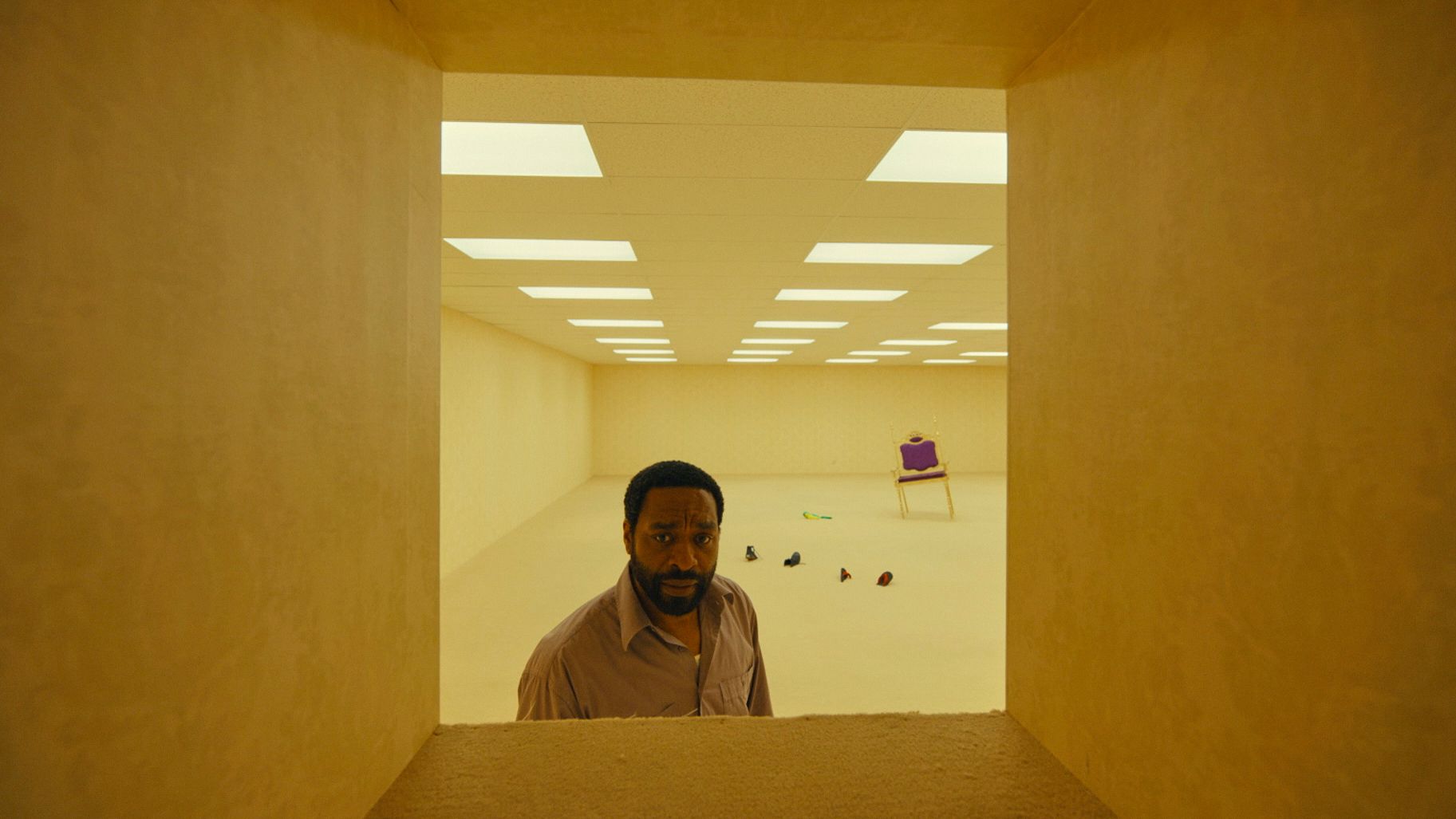
The top two movies at the domestic box office this weekend were low-budget horror films from filmmakers who first became stars on YouTube:
- "Backrooms" — based on a viral YouTube series by 20-year-old Kane Parsons — earned an astonishing $81.5 million in its first three days. Parsons is the youngest director by far to have the No. 1 film at the box office, Variety notes.
- "Obsession," directed by 26-year-old YouTuber Curry Barker, cost less than $1 million. It earned $26.4 million in its third weekend and has grossed $104.7 million domestically so far.
Between the lines: Theaters were packed with younger moviegoers. For "Backrooms," about 85% of ticket buyers were under 35. More than half were 25 or younger.
- About three-quarters of the audience for "Obsession" was under 35.
👀 The money quote, via The Wall Street Journal's Ben Fritz: "I've covered box office results literally hundreds of times in my career. The mind-blowing success of 'Backrooms' and 'Obsession' this weekend easily ranks in the top 1% as far as long-term significance for the movie business."
📬 Thanks for reading! Please invite your friends to join AM.
Sign up for Axios AM