Axios AM

September 24, 2026

π¨ Bulletin: A temporary restraining order from a federal judge early today ordered the White House to restore "hard pass" press credentials for CNN, MS NOW and Politico for at least 14 days. Read the ruling ... Get the latest.
π¦ Before we begin, check out this hot scoop from Axios' Maria Curi and Marc Caputo: A memo began circulating within the White House this week that seeks to paint Silicon Valley's "effective altruism" movement as a fringe, cultish collective out of touch with mainstream America. Read the scoop.
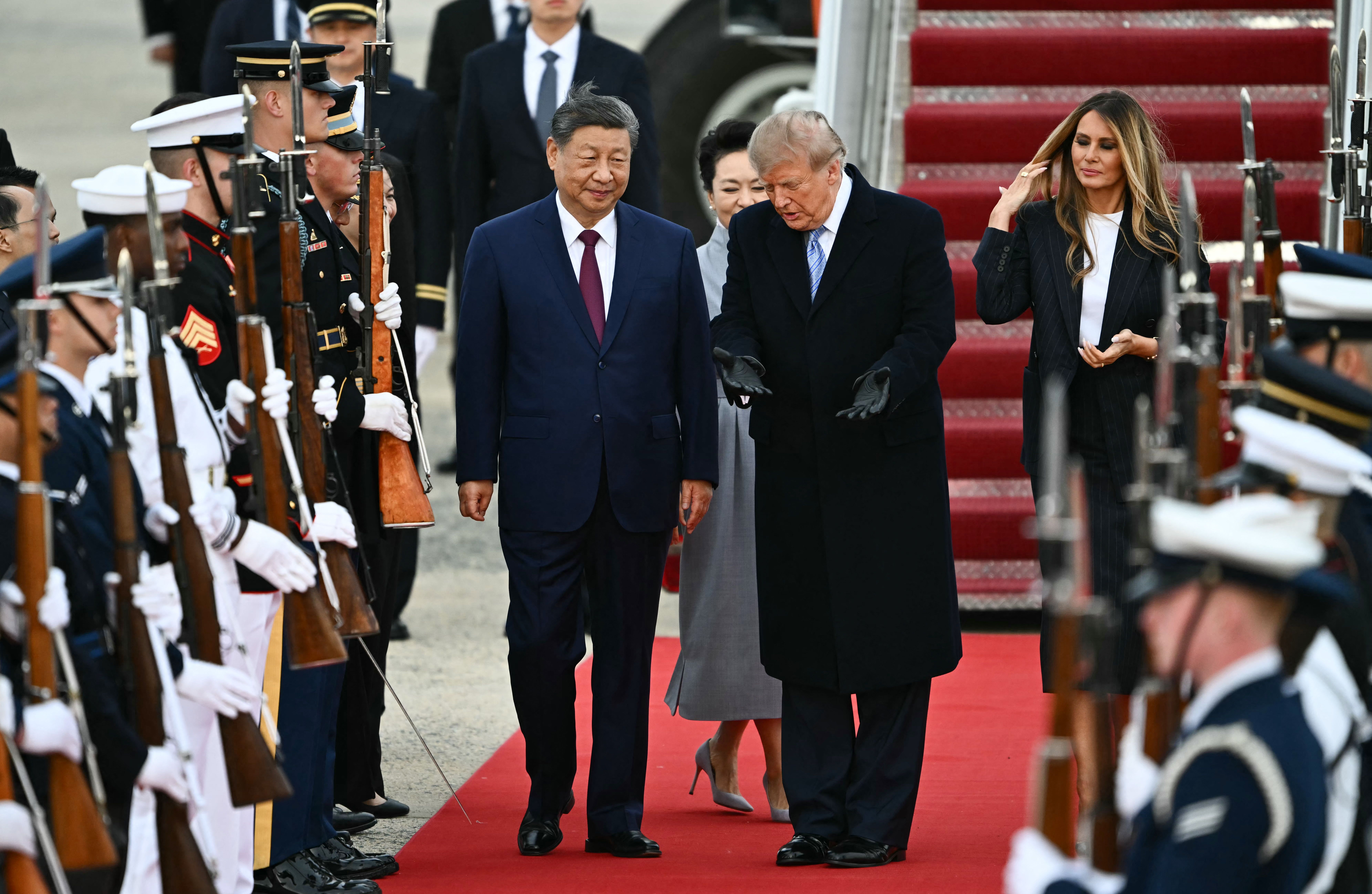
π‘ Ahead of today's state visit to Washington by Chinese President Xi Jinping, Axios CEO Jim VandeHei brings us this special takeover edition of Axios AM to take us inside the AI race between the superpowers.
- Smart Brevityβ’ count: 1,357 words ... 5 mins. Thanks to Shane Savitsky for orchestrating. Edited by Bill Kole.
1 big thing: Inside China's mind
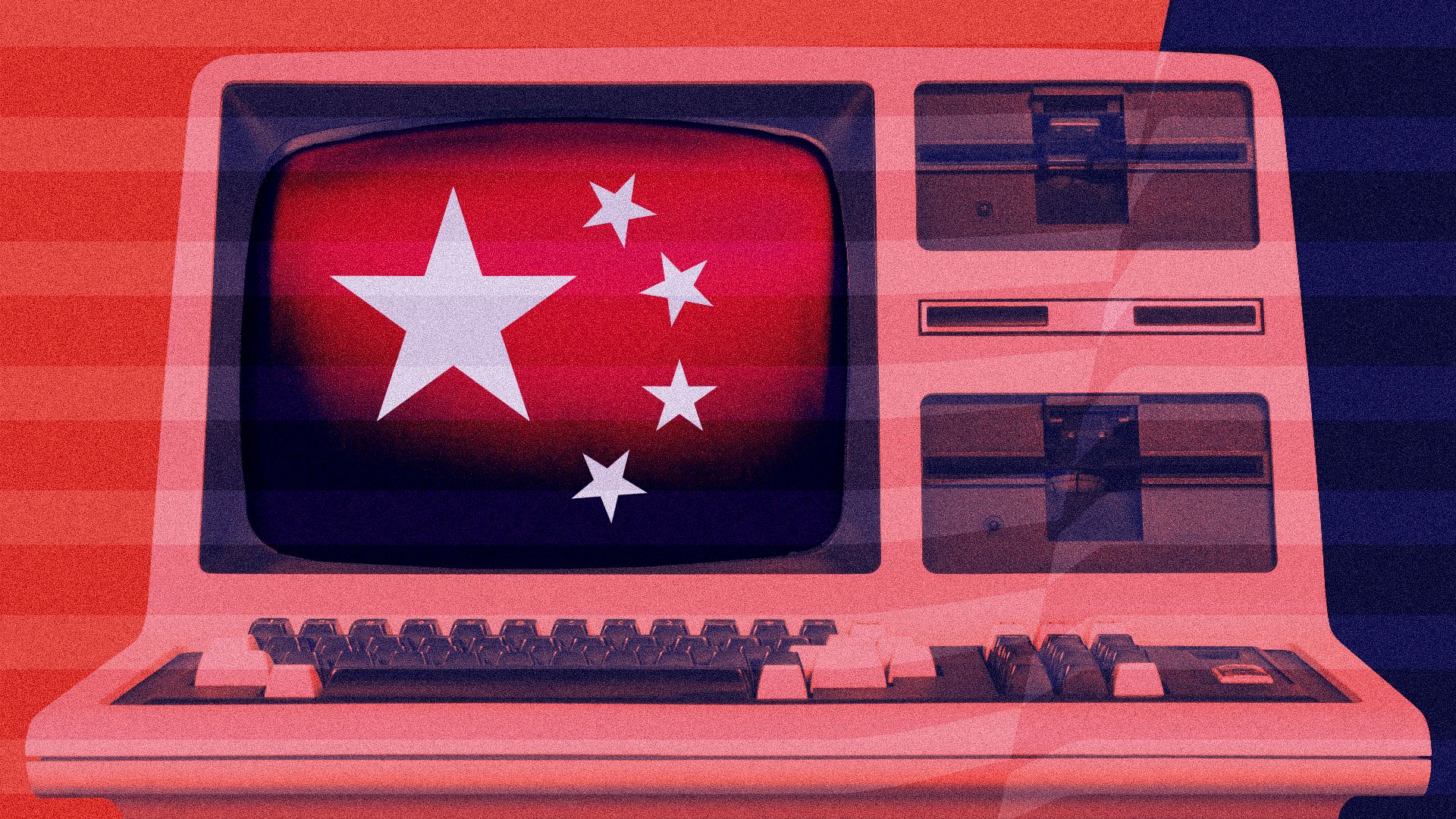
China is waging a much different war for AI supremacy than the U.S. is, Axios CEO Jim VandeHei writes.
Why it matters: China is obsessed with state control and adoption. Chinese officials are laser-focused on deep, widespread AI domestic use they can monitor and steer at every level of their economy.
- By contrast, America is obsessed with developing superior AI faster. Period. The U.S. thinking: The nation first to true super-intelligence wins everything.
π China and the U.S. agree on three AI certainties: The country with the most powerful AI holds power, sets global standards, and wins the coming decades economically and militarily.
From there, the two nations are on very different roads. China's 15th Five-Year Plan, released in March, is revealing:
- AI appears 52 times, 5x more than a half-decade earlier. Computing power gets its own full chapter.
- China's goal is clear: Integrate AI across 90% of the economy by 2030. America has no target like that.
The bottom line: China doesn't get spooled up about white-collar job loss or humanity-ending rogue AI. The regime is worried most about AI turning against ... the regime.
- Chen Yixin, China's spy chief, warned this month about AI's ability to launch public opinion wars and "cognitive warfare against China," threatening "political security, institutional security and ideological security."
Share this story ... π If you're a CEO or on a CEO's team: Ask to join Jim's weekly Axios C-Suite newsletter.
2. China's weaknesses

China's AI strategy aims to alleviate several big domestic problems.
- Why it matters: Americans tend to focus on China's growing strength β but much of its AI thinking flows from glaring weakness.
π± China is staring down:
- An aging population: China's population has shrunk for four years straight, and is very old. China has nearly as many people over 60 as America has in total. That helps explain the country's robotics obsession.
- Very high youth unemployment: China's rate sits at 19%, basically double that of the U.S. An angry, young population with powerful AI tools is a threat to power.
- Poor population outside major cities: This is a huge pain point. Then add in a five-year housing crisis, with prices falling for most people's most valuable asset.
- Inferior chip production: Nvidia is simply way better than anything they've got. You can't compete on AI with uncompetitive chips β and Huawei, their Nvidia, is way behind despite state-directed help.
- Export addiction: China is crushing it on exports, often flooding foreign markets with cheap cars, parts and technology. But its domestic economy is sucking wind β strong supply, weak demand.
3. China's strengths
China is America's only real AI competition β and, despite its weaknesses, it has some serious, structural advantages.
Why it matters: China leads in the physical ingredients for scaling AI: power, materials, robots and cheap models people actually use. These are the key ingredients for turning superhuman intelligence into real economic and military power.
- Think of it this way: If they catch up β or lap us β on AI capabilities and chip production, they're way better positioned to instantly impose and roll it out across society. In fact, they're beating us there, too (more on that below).
π¦Ύ Their edge exists thanks to:
- Power: Electricity is the biggest bottleneck on America's AI buildout, and China is swimming in it. BloombergNEF estimates China will add almost six times as much generating capacity as the U.S. over the next five years.
- Vital materials: China dominates the minerals AI hardware runs on. The IEA tracks 20 essential ones for building AI and adjacent tech β and China dominates all but one, usually by huge margins. They have applied export controls to half of them as a way to slow us down.
- Rolling out robots: This is where AI truly meets the real work. More than half of all industrial robots installed worldwide in 2024 went to China. They dominate us on this one. Better AI will equal better robots.
- Cheap, widespread adoption: Chinese open-source models are the world's default for developers building cheaply. Five of the six most popular models on OpenRouter, a leading AI marketplace, come from Chinese firms.
- Land-and-sky autonomy: They're simply crushing us on self-driving cars and self-flying drones. China's DJI alone has over 70% of the global drone market.
4. Understanding China's AI
China builds the world's best cheap open-source AI but trails America's most cutting-edge AI by about half a year, on a fraction of the investment.
- That's the consensus of most AI experts we talk to. Truthfully, there's no rock-solid way to measure it, and every model release resets the estimates.
Why it matters: Everyone agrees on this: Chinese models are very good, are gaining fast, and are much cheaper to use.
π€ The four you need to know:
- Kimi K3 (Moonshot): Widely rated as the best all-around open Chinese model. It's strongest on long, multi-step agentic tasks.
- Qwen3.8-Max (Alibaba): Also highly regarded and even tops some model rankings.
- GLM-5.3 (Zhipu / Z.ai): China's coding specialist. Its predecessor scored within a point of Anthropic's Claude Opus 4.8 on a key coding test, at under a fifth of the cost.
- DeepSeek V4 / V4.1-Flash: Among the cheapest to use. It's MIT-licensed and truly open.
The twist: U.S. officials and AI companies accuse Chinese labs of "distillation," covertly firing millions of questions at American models and training on the answers.
- Washington has threatened sanctions and blacklisting, but hasn't pulled the trigger.
Worth noting: U.S. frontier labs have lately focused far more on building powerful lower-cost models to try to make sure Chinese AI can't undercut them on price.
5. Using it vs. fearing it
China isn't big on dissent β or public opposition and hand-wringing about the regime's priorities.
- That helps explain why the Chinese public is far more bullish on AI than America's.
Why it matters: They use it, like it and trust it β by wide margins.
- 80% of Chinese people use AI weekly vs. 54% of Americans. It's in schools, public services and robots in hotels and stores.
- 84% of Chinese people say AI excites them. That's the highest of any country. Only 38% of Americans say the same.
- 87% of Chinese people trust AI, compared to just 32% of Americans. And 54% want more of it in daily life. That share is a measly 17% here.
Worth noting: Don't overread it. ChinaTalk, a sharp China tracker, argues the optimism is overstated and masks rising worry about AI wiping out jobs.
6. ποΈ 1 for the road: Hollywood icon embraces AI
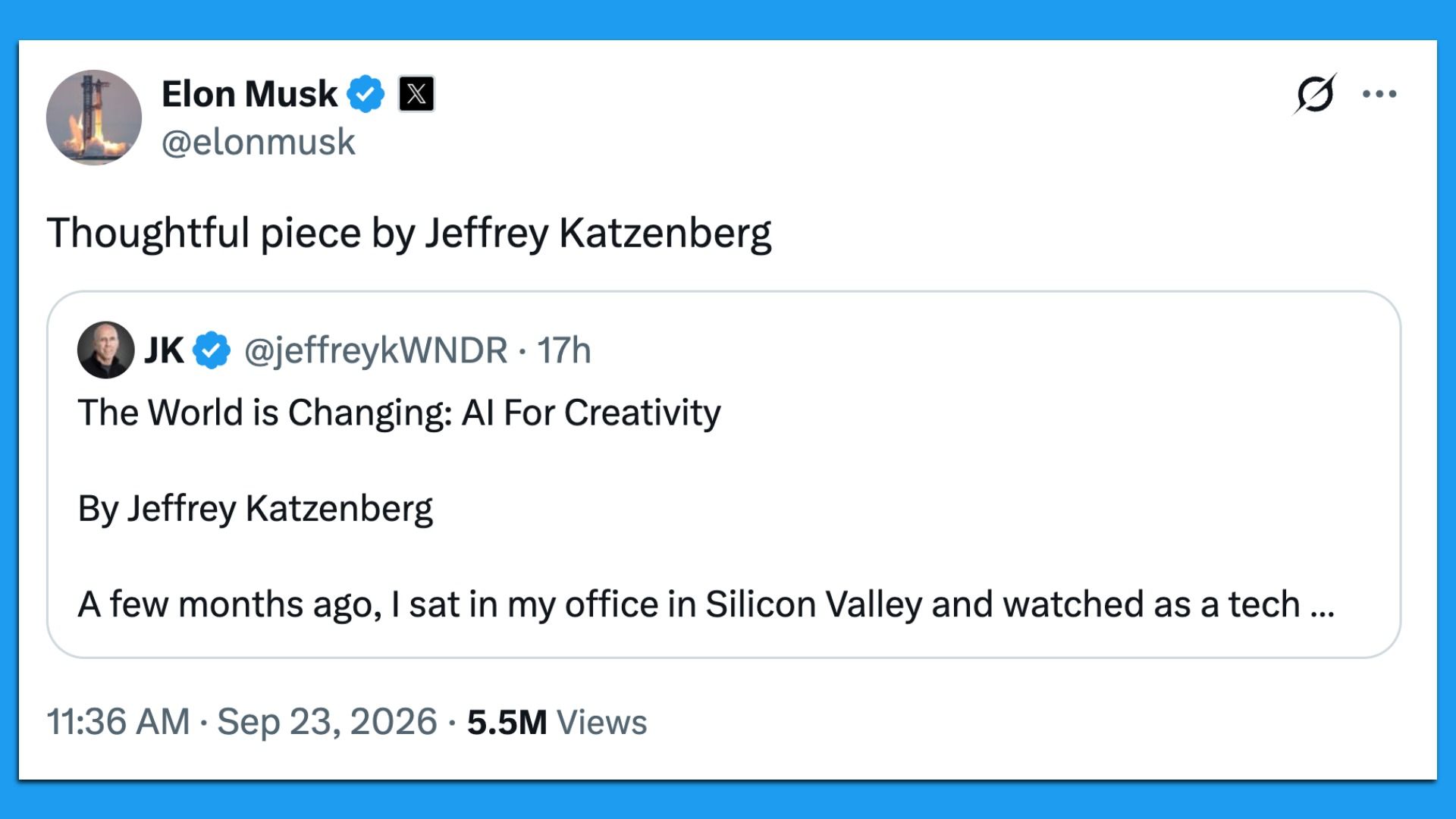
Jeffrey Katzenberg, legendary Hollywood pioneer and founding partner of the tech-focused WndrCo investment firm, writes in a manifesto on X that AI will expand creative opportunities and that as barriers and costs come down, "more films will get made, not fewer."
- "Hollywood needs to accept that AI is not going away," he writes in the essay, "The World is Changing: AI For Creativity."
- "The energy they are spending trying to make it disappear is energy they are not spending deciding the terms on which it will exist."
π§ Those terms include creativity, which Katzenberg says "takes a blank page and conjures a single right answer where there was none and has held audiences for a century. Without it, the most powerful reasoning engine ever invented will still be missing the only thing that makes a story worth telling."
The bottom line: "The artists who learn to wield these new instruments will do things the engineers never dreamed of."
π¬ Thanks for reading! Please invite your friends to join AM.
Sign up for Axios AM