Axios AM

May 29, 2026

1 big thing: Billionaires brace for pitchforks
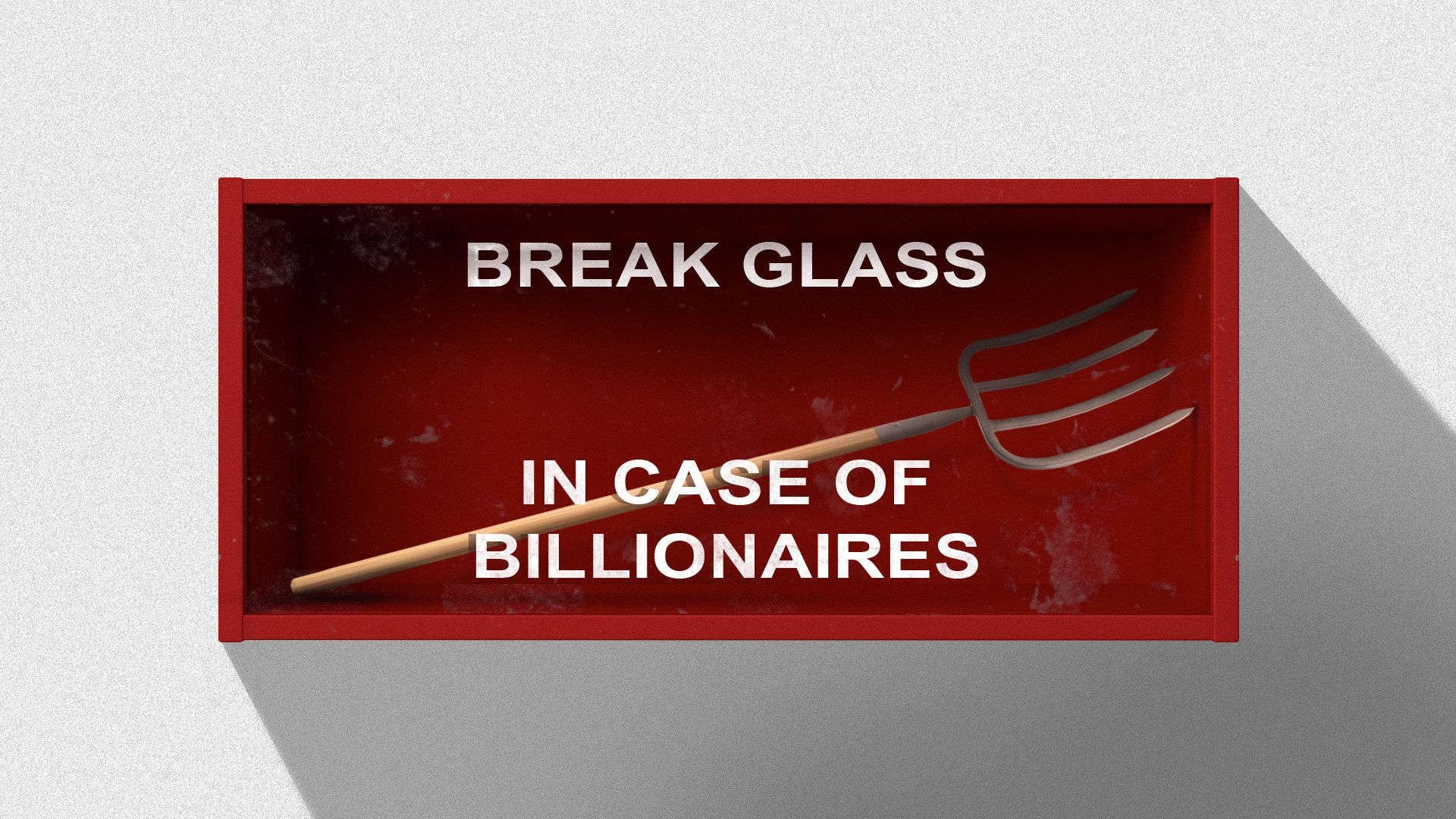
America's billionaires are developing their own prescriptions for AI-fueled inequality, anxious to defuse a populist revolt aimed at their ballooning fortunes, Axios' Zachary Basu writes.
Why it matters: The AI boom has dramatically raised the stakes of the wealth-tax debate, unleashing a technology that could wipe out millions of jobs while minting the world's first trillionaires.
- Populist politicians, particularly on the left, have cast this as capitalism's next great reckoning: an even deeper concentration of wealth and power in an economy already rigged for the elite.
🔬 Zoom in: Some of the richest men in tech have warned for years AI could destabilize the economy. Many suggest the answer is not deceleration or wealth taxes, but shared abundance.
- Jeff Bezos, the world's fourth-richest man, said on CNBC last week that the bottom 50% of earners should pay zero federal income tax.
- Sam Altman, the CEO of OpenAI and a longtime proponent of universal basic income, now favors "universal basic compute" — giving people access to AI's productive power instead of a fixed cash payment. OpenAI went further in April with a New Deal-style social contract.
- Elon Musk, whose SpaceX IPO could help make him the world's first trillionaire, has called for "universal HIGH INCOME" checks from the federal government — arguing robots will drive so much growth that inflation won't follow.
Between the lines: The billionaires and AI leaders floating these ideas are keenly aware that the politics of extreme wealth could turn dangerous fast.
- In a January essay, Anthropic CEO Dario Amodei made what he called "a pragmatic argument" for billionaires to support higher taxes on AI wealth. "If they don't support a good version," Amodei wrote, "they'll inevitably get a bad version designed by a mob."
- OpenAI named the same risk in its April policy blueprint, warning that AI could leave "power and wealth becoming more concentrated instead of more widely shared."
🎨 The big picture: Anti-billionaire politics has become an organizing principle for the Democratic Party, which remains in search of a durable post-Trump identity.
- In Congress, Sen. Elizabeth Warren (D-Mass.) called Wednesday for overhauling the tax code, including new taxes on wealth and data centers, to ensure Americans share in the economic gains of AI.
- New York state lawmakers this week passed Mayor Zohran Mamdani's pied-à-terre tax on luxury second homes above $5 million.
The bottom line: The billionaire tax fight is becoming a test of whether AI creates shared prosperity — or a level of wealth concentration that Amodei warns could "break society."
2. 🧫 Exclusive: OpenAI sees bio as the next cyber

3. ⛽️ Signs of gas relief


Pain at the pump is easing, with the U.S. average price for regular gas at $4.39 per gallon this morning, per AAA — down 16¢ over last week as the U.S. and Iran closed in on a possible deal to extend the ceasefire, Axios' Ben Geman writes.
- Prices are seeing their largest weekly drop of the year, Patrick De Haan, head of petroleum analysis at the fuel data and analysis firm GasBuddy, posted on X.
🥊 Reality check: Gas is still far above the roughly $3 that Americans were paying right before the war started.
Don't expect a quick return to pre-war prices or anything close for the foreseeable future — and prices could rise again.
- Even if a U.S.-Iran deal becomes official, it's not clear whether tanker owners will feel confident enough to transit the Strait of Hormuz in large numbers anytime soon.
4. 🏷️ CEOs go AI bargain hunting

Yesterday, Axios' Madison Mills told you about how corporate leaders are getting squeamish about ballooning AI bills. This morning, she explains how they're adjusting:
Corporations are looking to offload AI tasks to cheaper models as usage blows out IT budgets and returns on investment haven't solidified.
- Why it matters: The search for cheaper subscriptions could threaten the three biggest AI labs' near-trillion-dollar valuations right as they near record IPOs.
🚀 NEW: SpaceX is targeting a valuation of at least $1.8 trillion in its IPO, down from the original goal of $2 trillion, Bloomberg scoops (gift link).
- Anthropic raised $65 billion in its latest funding round, pushing its valuation to $965 billion yesterday and eclipsing OpenAI's latest valuation of $730 billion.
As executives grow concerned about their AI costs — closely monitoring usage or even switching to cheaper models — the tension could pressure the revenue projections of these AI companies.
5. 💰 Kirk critics win settlements

At least $2 million in settlements has been agreed to after employees and other critics were fired or penalized over their posts about Charlie Kirk following his killing, Axios' Avery Lotz and Rebecca Falconer write.
- Why it matters: Kirk's death became a catalyst for a free speech debate with repercussions that were backed by the Trump administration.
Ball State University this week agreed to pay $225,000 to settle a First Amendment lawsuit the ACLU brought on behalf of Suzanne Swierc, who was fired after posting about Kirk.
- The Florida Fish and Wildlife Conservation Commission settled a lawsuit last week with biologist Brittney Brown for $485,000 after she was fired for reposting a meme criticizing Kirk on her personal Instagram account.
- Retired police officer Larry Bushart secured an $835,000 settlement from a Tennessee county and its sheriff after he was arrested and held for 37 days in connection with a meme he shared on a post about a vigil for Kirk.
6. 📷 Blue Origin explosion

A Blue Origin New Glenn rocket blew up on the launch pad in Cape Canaveral, Fla., last night during an engine-firing test ahead of a satellite launch next week.
- No one was hurt. The explosion shook nearby homes and briefly painted the sky orange.
Jeff Bezos, Blue Origin's founder, wrote on X: "It's too early to know the root cause but we're already working to find it. Very rough day, but we'll rebuild whatever needs rebuilding and get back to flying. It's worth it."
7. ☀️ Summer travel pivot

Move over, Euro Summer — Americans are staying closer to home this year.
- Why it matters: Higher airfare and broader economic concerns have pushed many travelers to rethink long-haul trips, Axios' Sami Sparber writes.
Zoom in: Travel adviser Erica Christie says clients are shifting toward affordable weekend trips in the Carolinas, New England and California.
- Bookings to Asheville, N.C., jumped 174% in the past year, according to Fora, the global travel agency where Christie works.
- South Carolina bookings rose 157%.
✈️ Travelers still heading to Europe are swapping popular (and pricey) hot spots like the Amalfi Coast and Lake Como for lesser-known alternatives — including the Italian Riviera near the French border, the Tuscan coast, Montenegro and Malta, Christie tells Axios.
8. 🐝 1 for the road: Speedy spelling
🐔 Your AM editor Neal Rothschild had flashbacks to losing the 6th-grade spelling bee for proudly spelling "poultry" — when he was supposed to be spelling "paltry."
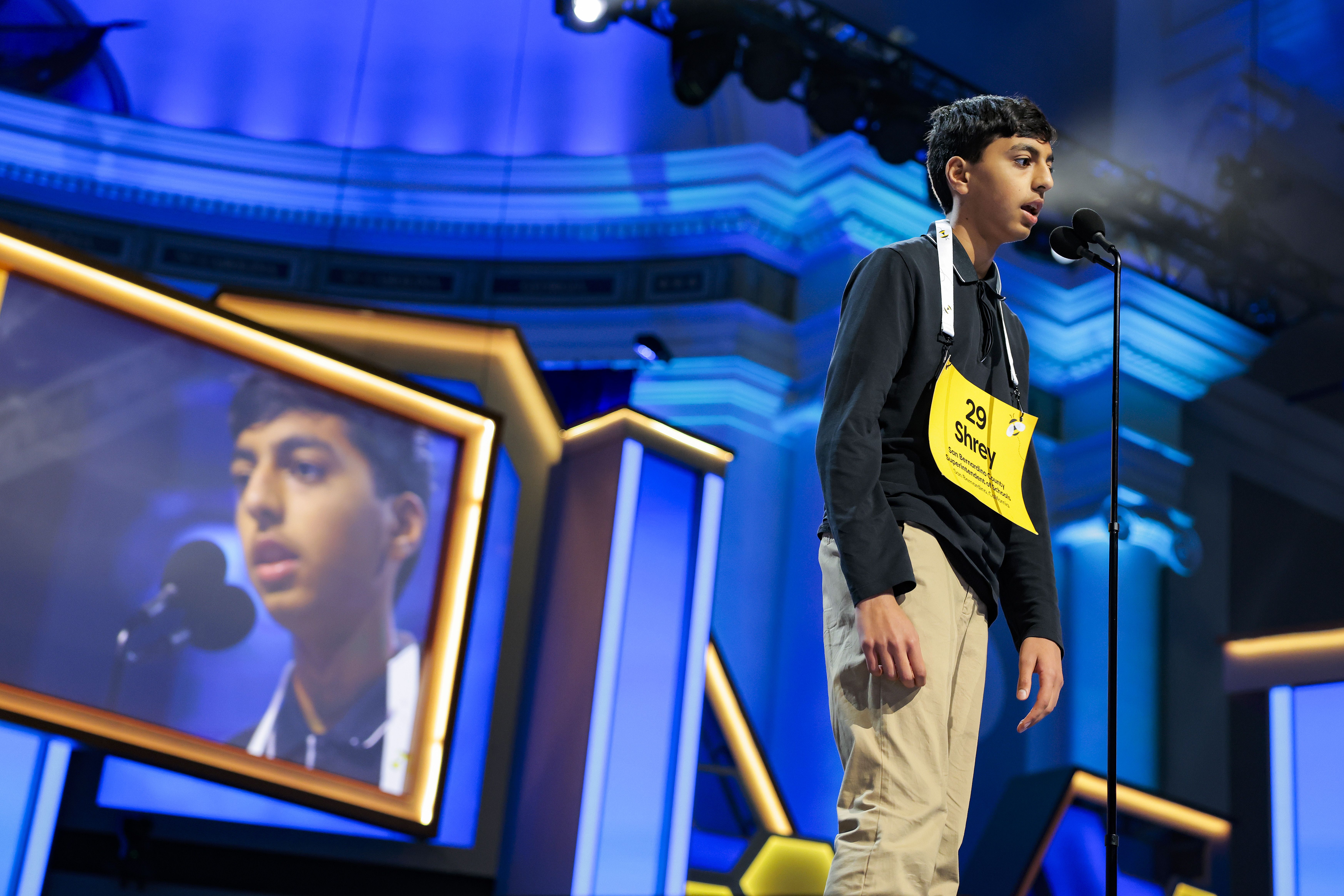
Shrey Parikh, a 14-year-old from Rancho Cucamonga, Calif., won the Scripps National Spelling Bee after correctly spelling 32 words during the spell-off, beating 12-year-old Ishaan Gupta's 25 words.
- In this format, finalists working from the same list spell as many correct answers as they can in 90 seconds, AP reports.
- Parikh won a $50,000 cash prize, a year after losing his school bee when he was battling a fever.
🎤 A new production team took over the bee this year to infuse more flavor into the program. It was led by "Jeopardy!" executive producer Michael Davies with ESPN commentator Mina Kimes as host.
Axios AM