Axios AM

October 19, 2026

1 big thing: AI attack-ad nightmare realized

AI is enabling reality-bending midterm ads about defaced Bibles, upscale dinners and a board game with a "Death to America" playing card.
- Why it matters: Warnings about deepfakes are coming true. Election laws haven't kept pace with a world where campaigns can put words in opponents' mouths and create realistic-looking scenes that didn't happen, Axios' Andrew Solender writes.
🤖 The Wesleyan Media Project found $137 million had been spent on 220 AI-generated ads through Oct. 11, mostly from Republicans.
- Four states have laws prohibiting certain uses of AI-generated deepfakes in political ads, while 27 more require some form of disclosure about their use.
- No federal law specifically regulates AI-generated political ads.
🤖 Axios found numerous political ads partly or fully made by generative AI, sometimes undisclosed:
🍑 Georgia Senate: Senate Leadership Fund, a super PAC aligned with Senate Republicans, has run a series of AI-generated deepfake ads depicting Democratic Sen. Jon Ossoff getting beauty treatments.
- The ads mock Ossoff's reported campaign spending on hair and makeup, saying he "talks pretty" but has "an ugly record" and "a lot to cover up."
- Ossoff said in a C-SPAN interview: "It is deeply troubling to see ... deepfake videos used to fabricate political advertising. And it's a slippery slope toward the destruction of truth in political debate, and the ad should come down immediately."
- The ads don't disclose AI use, which Georgia law doesn't require.
🧤 Michigan Senate: A super PAC called Front Line Action used AI in an ad depicting Democratic candidate Abdul El-Sayed in a fabricated family photo with podcaster Hasan Piker and four women wearing niqabs.
- Another AI-generated scene has El-Sayed playing a Risk-style board game with his half-sister, Eman Abdelhadi, and Piker. It depicts cards bearing statements that include "Death to America," "Do not Celebrate Thanksgiving" and "Celebrate 9/11."
- The ad features both a written and spoken disclosure that it was "created in whole or in part with the use of artificial intelligence."
🤠 Texas Senate: Democratic candidate James Talarico has been a consistent target of AI-generated ads from both Republican Ken Paxton's campaign and outside super PACs.
- A Paxton campaign ad (with an AI disclosure) depicts Talarico, a Presbyterian seminarian, defacing a Bible with crayon.
2. 💰 AI boom transforms philanthropy

3. 🇺🇦 Zelensky's olive branch
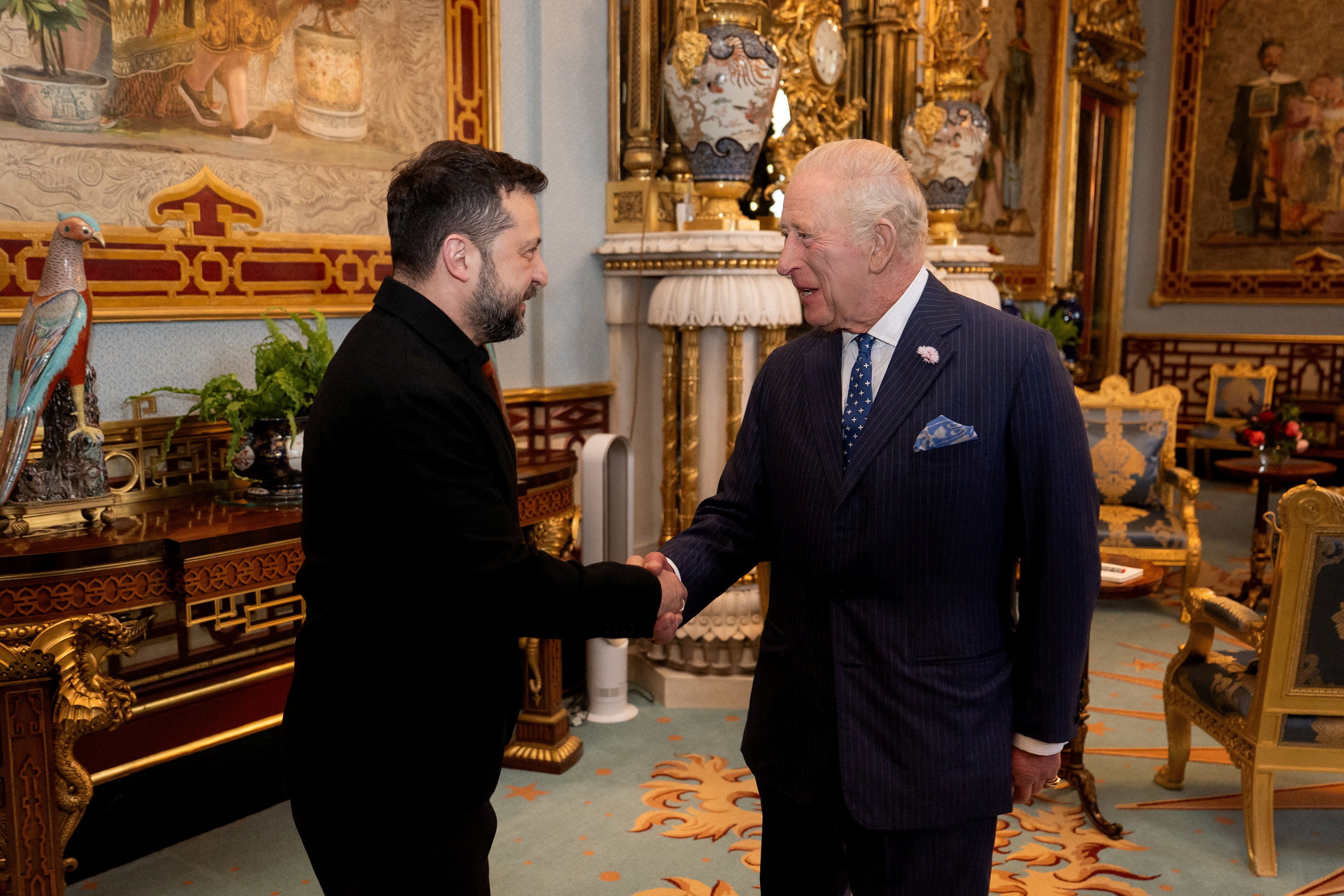
🇷🇺 Breaking: Vladimir Putin has proposed a three-way summit next month with President Trump and Chinese President Xi Jinping in an effort to negotiate an end to the Ukraine war on terms favorable to Russia, although Trump hasn't agreed, The Wall Street Journal reports (gift link).
Ukrainian President Volodymyr Zelensky spoke yesterday with Trump envoys Steve Witkoff and Jared Kushner about the crisis between the countries and U.S. efforts to resume peace talks with Russia, Axios' Barak Ravid reports.
- During the call, which lasted around 40 minutes, Zelensky discussed the possibility of holding an in-person meeting in the coming days.
Why it matters: It was the first call between Zelensky and senior U.S. officials since tensions spiked after Trump cut a diesel deal with Russia 10 days ago.
The latest: Trump defended his decision to grant a waiver related to sanctions pushed by the late Sen. Lindsey Graham (R-S.C.), saying the U.S. didn't want to jeopardize negotiations with Russia.
- "I am in the process of negotiating Peace in the war between Russia and Ukraine, and don't want to do anything that will drive, foolishly, Russia away from the bargaining table," Trump wrote on Truth Social.
4. 💊 Health stocks boom
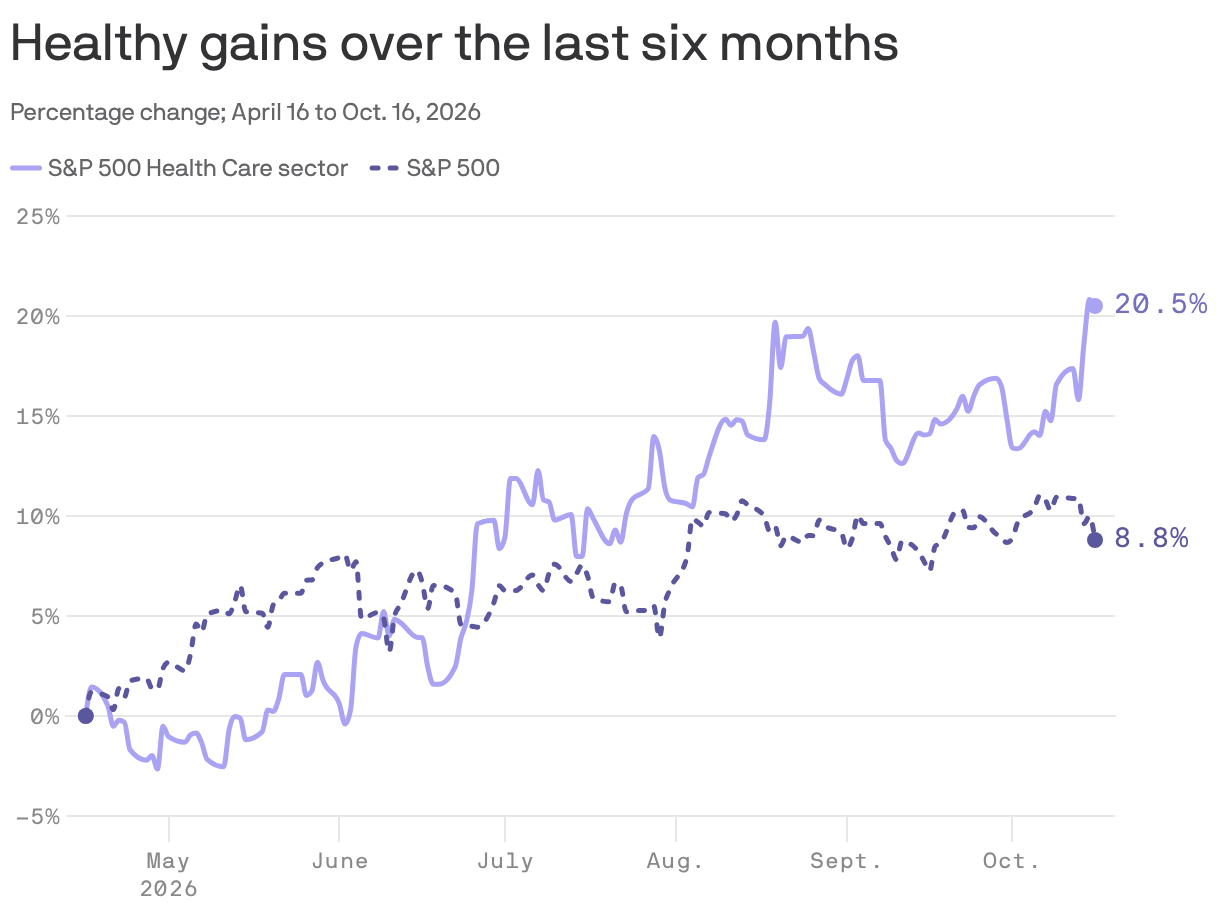
Health care stocks have done well in recent months as investors bank on Democrats gaining power in the midterm elections, Axios Markets co-author Matt Phillips writes.
- Why it matters: The prices suggest traders and investors see increasing odds that some cuts to federal health spending imposed by President Trump's big 2025 spending bill could be undone.
The S&P 500's health care sector is up more than 9% over the last three months, the second-best performer of the blue-chip index's 11 sectors. (Energy was the best.)
- Pharmaceutical shares like Eli Lilly, Merck and AbbVie were some of the strong contributors.
5. 🇮🇱 Netanyahu gets Trump endorsement
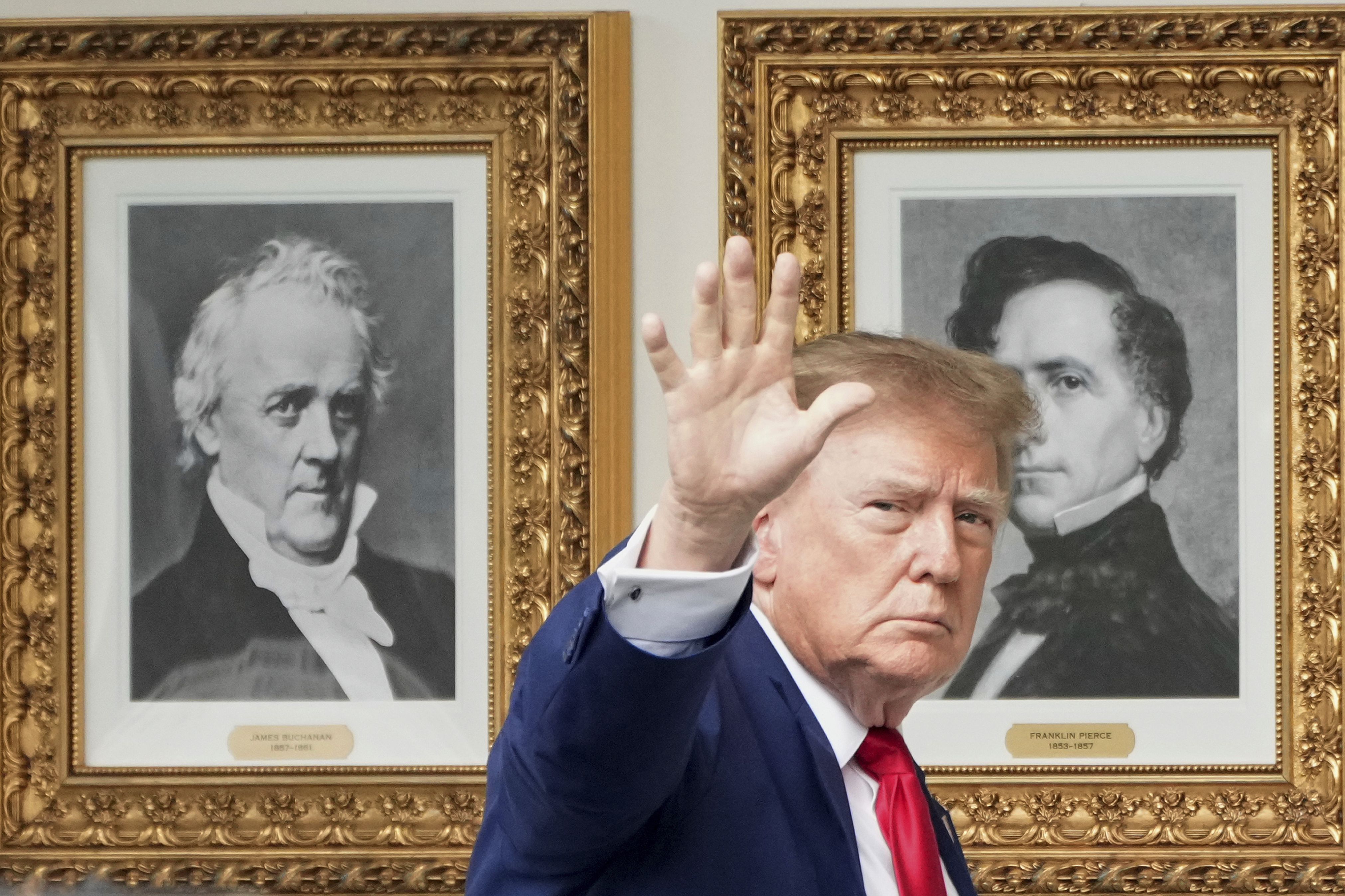
President Trump endorsed Israeli Prime Minister Benjamin Netanyahu yesterday, just nine days before Israel's Oct. 27 elections.
Why it matters: This is the first time a U.S. president explicitly and publicly endorsed a candidate in Israeli elections, Axios' Barak Ravid writes.
- It could give Netanyahu a boost at a critical moment in the Israeli leader's fight for political survival. Most polls show his coalition falling short of the 61 seats needed to form a government.
In yesterday's post on Truth Social, Trump called Netanyahu "a Great Warrior Prime Minister" and a "great partner" in the war against Iran.
- Trump had repeatedly declined to endorse Netanyahu in recent months. Some of Trump's closest advisers believed his Middle East agenda would fare better if Netanyahu lost and a different government formed.
📱 Trump told Barak in a short phone interview: "I was always going to do that. I just didn't want to do it too soon."
6. 🔎 Revealed: Woodward's "dream source"
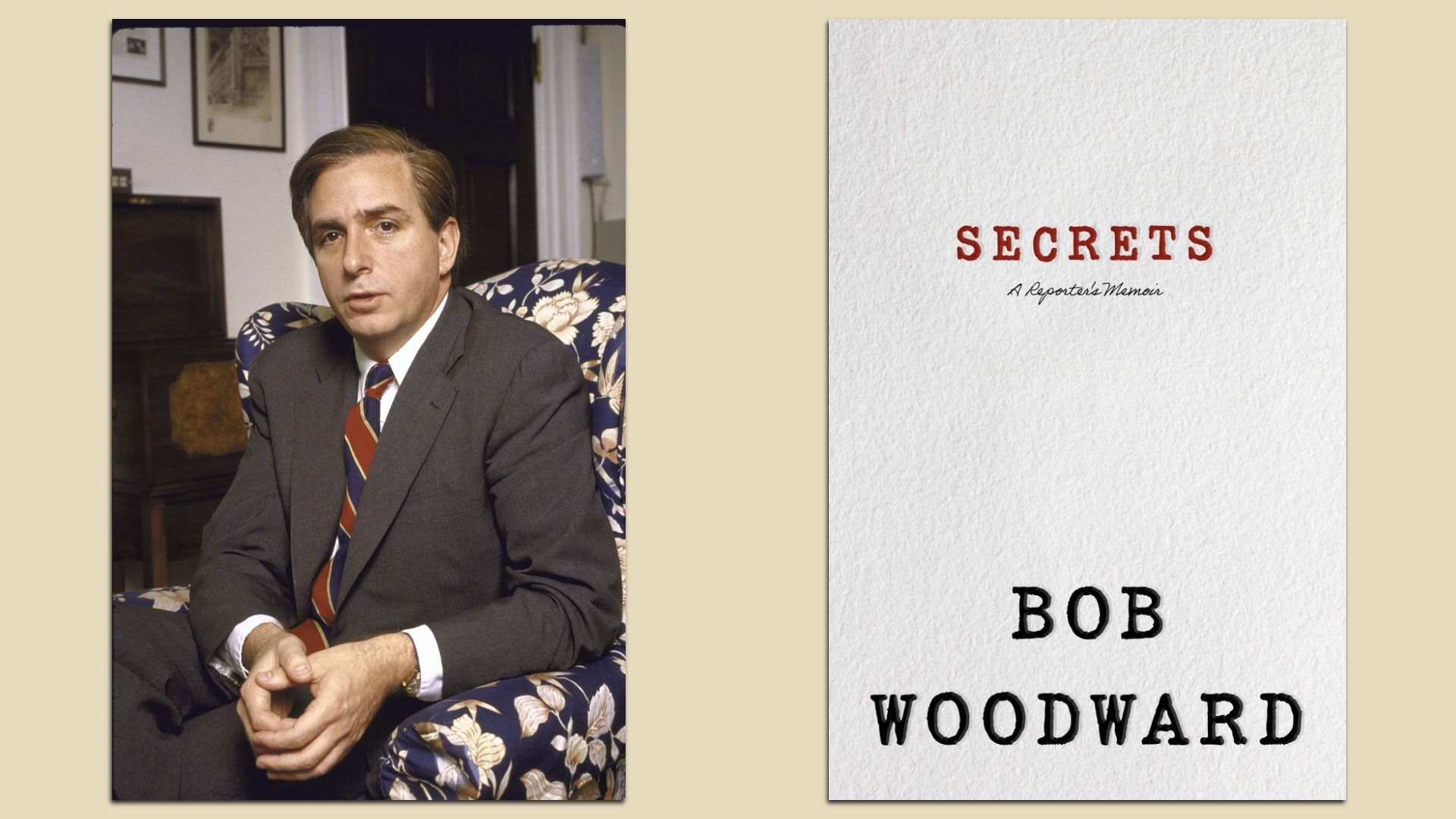
Bob Woodward — in an eye-opening excerpt from his forthcoming memoir, "Secrets," that's previewed in the new issue of The New Yorker — reveals that one of his best friends, the late Richard Darman, was also one of his best sources during the Ronald Reagan and George H.W. Bush administrations.
- "Darman was willing, even eager at times, to talk about the most sensitive intelligence matters, including N.S.A. intercepts and covert C.I.A. operations," Woodward writes in his book, out Nov. 15. "He was always careful not to talk about matters that would harm national security, I believed, but he would go right up to the edge — a reporter's dream source."
Why it matters: Woodward, 83 — who followed the blockbuster Watergate reporting of his youth with a shelf of revelatory books about American presidents — gives a searingly honest account of the collapse of his friendship with Darman after a Post series that was damaging to Bush. Woodward details a disappointment in his Washington Post career and, in the case of a story where he was the responsible editor, a "moral failing."
The New Yorker calls the Darman excerpt "A Dangerous Friendship," revealing the danger of "getting too close to a source." Woodward and Darman never reconciled, although "Secrets" describes their deathbed encounter.
📝 Woodward writes that he and Darman, who controlled the paper flow to Reagan as staff secretary and was budget director for Bush 41, "had countless long lunches together — Saturday or Sunday — at the Madison Hotel, across the street from the Post, discussing government, journalism, and ourselves":
"I felt like I was getting a master class in how government really operated. Plus, many scoops. In later years, Darman would drive out on weekends to our country house near Annapolis, Maryland, to spend large parts of the day with me and my wife, the journalist Elsa Walsh, who was particularly fond of him. Some people found him arrogant, but I loved his comfortable confidence as a friend and a source. It was part of what made him so extraordinary and valuable. He knew how to turn on the charm, and he did for both Elsa and me."
"From critical national-security information to the colorful office tales he shared, Darman provided me with a gold mine of information," Woodward recalls. "I interviewed him in at least fifty-eight meetings or phone conversations. I have boxes filled with hundreds of pages of notes on our discussions. After our most important conversations, as is my practice, I typed a memo of one to six pages, laying out in detail what he'd said."
- Detailing Darman's "hatchet man" role, Woodward reveals that the "hardest of Darman's targets to dislodge was the First Lady, Nancy Reagan. While Darman poured scorn on her in private, describing her to me as a 'mean bitch,' he could not find a way to drive a stake into her heart."
After a legislative victory, Darman told Woodward, Reagan said: "Whew! Ever feel like you shit a pineapple?"
7. ⛳️ Trump reveals golf course grand vision

President Trump announced controversial plans to renovate the public East Potomac Golf Course in D.C. to a "World Class Championship Golf Course," despite a federal judge's orders to pause plans.
- Trump said construction would begin in November and that the new course will open in about 15 months.
Friction point: Following Trump's Truth Social post, the U.S. district judge on the case ordered the administration to answer whether it still plans to argue that designs for East Potomac are just "preliminary."
8. 🍅 1 film thing: Holmes movie hits ratings heights
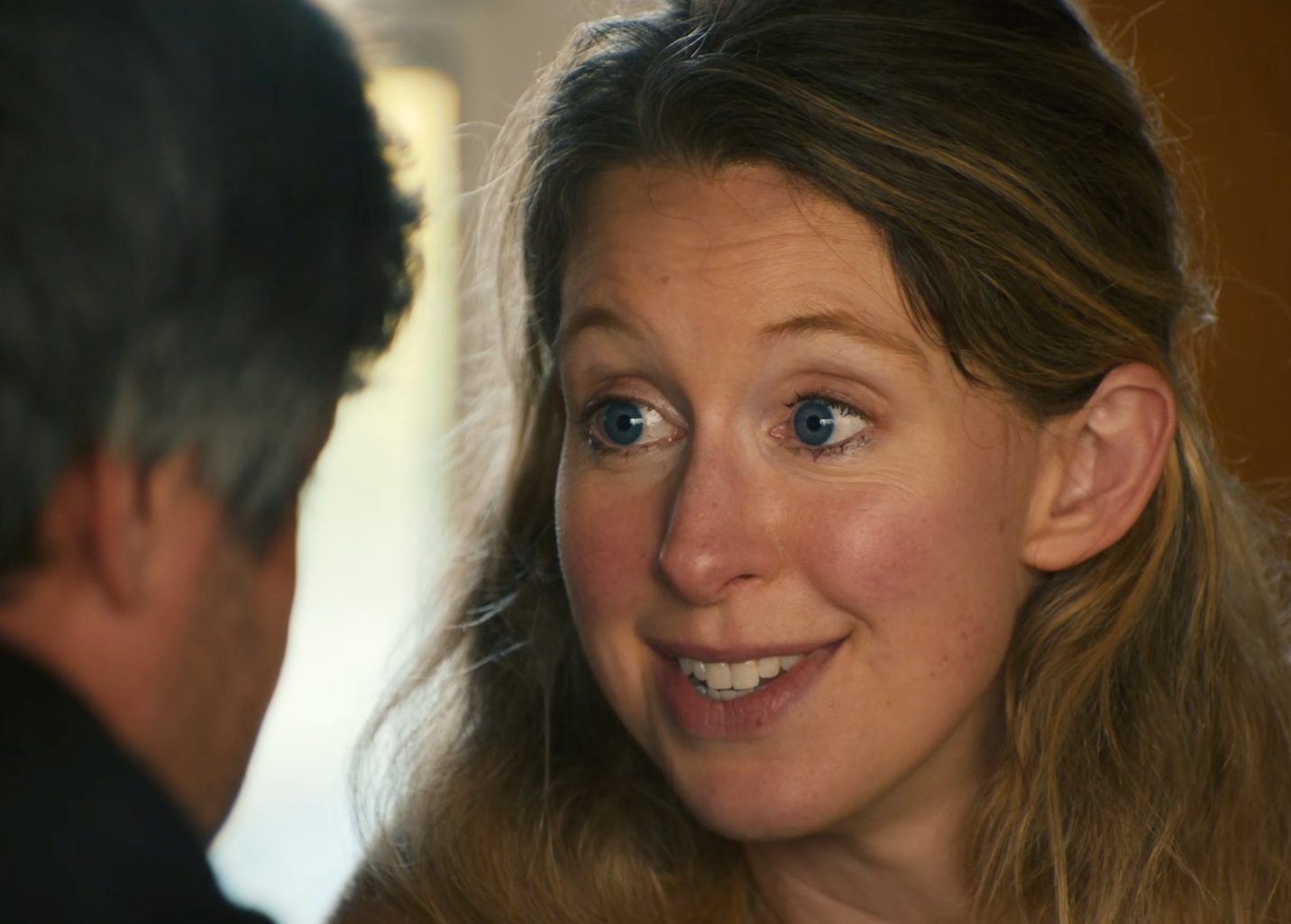
"You Can See Everything," the Elizabeth Holmes pseudo-documentary from Nathan Fielder, reached a 100% rating on Rotten Tomatoes, making it the highest-rated movie of the year on the review site, Forbes reports.
- Though a single negative review dropped the movie to 99% as of Sunday night, it still tops every other 2026 film.
- At the box office, the movie brought in $15 million in its debut weekend — remarkable for a documentary, Variety reports.
🍿 A particularly cringeworthy scene from the movie's trailer became one of the year's biggest internet memes, and it's being credited with driving young audiences to see the film.
Axios AM