Axios AM

November 16, 2024

🍳 Hello, Saturday! Smart Brevity™ count: 1,875 words ... 7½ mins. Thanks to Erica Pandey for orchestrating. Edited by Lauren Floyd.
🎞️ Situational awareness: Conan O'Brien, 61, late-night star turned podcast impresario, will host the 97th Academy Awards, on March 2 on ABC. The last two shows were hosted by Jimmy Kimmel, who declined to return. Watch a video of O'Brien finding out he's not getting an actual Oscar. Go deeper.
1 big thing: The wrecking-ball theory

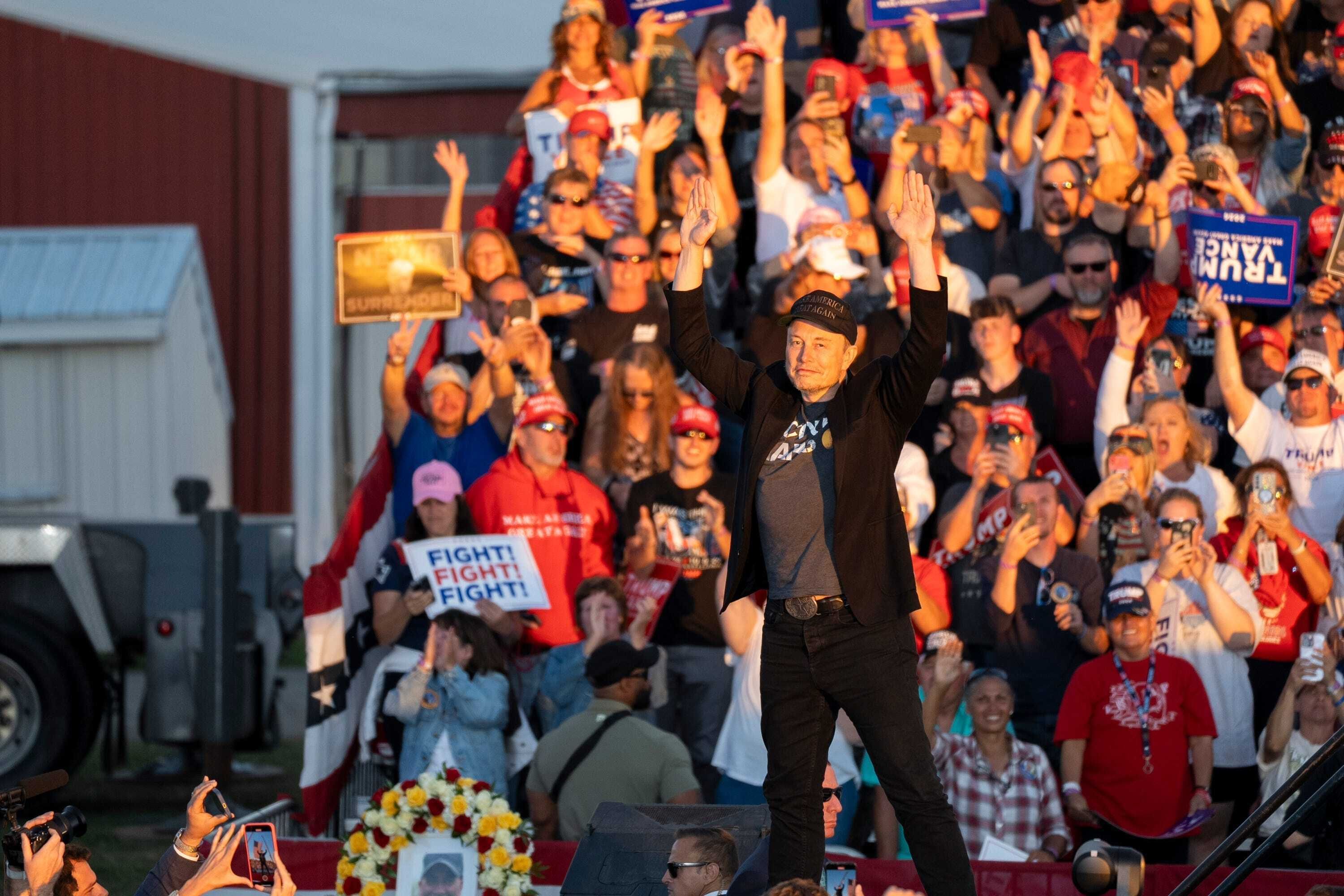
Elon Musk has persuaded President-elect Trump that government has grown so big, bloated, slow and sclerotic ... only a wrecking ball can fix it.
- Soon, that ball will slam into hard reality: Politicians like to giveth, not taketh away, Jim VandeHei and Mike Allen write in a "Behind the Curtain" column.
Why it matters: Trump is more fixated on a "deep state" blocking his ambitions, than cost savings, advisers tell us. But he has bought into the Musk concept of using AI and lean-business thinking to try to dramatically shrink a government he helped grow, they say.
🧱 The wrecking-ball theory holds that only a massive shock to the system will break a lifetime of build-up.
- Musk wants to be Trump's wrecking ball. Musk has vowed to cut $2 trillion from the federal budget — about 30% of annual government spending. But as this column will show you, that may be harder than Musk's signature mission of planting human life on Mars.
How it works: Trump announced this week that Musk and Vivek Ramaswamy, a Trump primary opponent, will head a new Department of Government Efficiency (DOGE — like the cryptocurrency).
- Sources tell us Musk wants to use AI and crowd-sourcing to hunt for waste, fraud and abuse. But DOGE isn't actually a government department: We're told Musk and Ramaswamy plan to set up a nongovernmental entity to try to pull off the entrepreneurial approach to government that Trump envisions.
- Trump aides are looking for ways the White House could bypass Congress and unilaterally adopt DOGE proposals, which "could trigger a constitutional showdown over a bedrock aspect of the federal government, the power of the purse," The Washington Post's Jeff Stein reports.
🔎 Behind the scenes: We're told Musk has been free-associating with Trump at Mar-a-Lago at just how deep the fat in the federal workforce runs. (Remember, this is the guy who vowed to cut 80% of Twitter employees.)
- DOGE already has its own X handle, with 1.5 million followers. A DOGE tweet seeks "super high-IQ small-government revolutionaries willing to work 80+ hours per week on unglamorous cost-cutting. ... Elon & Vivek will review the top 1% of applicants."
The big picture: Talk to anyone in government, and they'll bemoan how process, habit, special interests and innate human fear of change have left us with a wildly inefficient bureaucracy.
- In an era of AI, a race for space and growingly complex cyber fears, the inefficiencies become threats.
But changing it is so hard that both parties stopped trying years ago. During the campaign, Trump and Vice President Harris didn't even pretend they wanted to shrink it, if you take their policy proposals seriously.
- Mandatory spending programs — Social Security Medicare, Medicaid, the Supplemental Nutrition Assistance Program (SNAP) — are governed by laws laying out formulas for how benefits are paid, Axios chief economic correspondent Neil Irwin pointed out to us.
- Legally, Elon can't just stop cutting checks. Trump would have to get changes through Congress in which he is going to have only a modest majority in the Senate and a minuscule majority in the House.
- Plus Trump, attentive to his huge base of older voters, opposes entitlement reform.
💡 So DOGE will have few viable targets. The biggest will be so-called "nondefense discretionary" programs — money Congress approves annually for programs not mandated by existing laws, including Social Security, Mike and Jim write.
- Chris Krueger, a Washington expert for TD Cowen, warns lobbyists: "This will require attention & focus — and compete with the Appropriations Committees. Every budgetary sacred cow will now likely hire an additional lobbyist."
- Even on the discretionary side, Congress has the power of the purse. Each of the agencies and functions that survive year after year have important constituencies — many of them part of the Trump coalition. Farm interests won't be too happy if you slash the USDA, and its many subsidies, for example.
Column continues below.
2. 🎯 Part 2: DOGE targets

Stare at the budget numbers and you see how little room Musk has to maneuver, Jim and Mike write.
- In fiscal year 2023, the federal government spent just over $6 trillion, equating to $18,406 per person.
- This spending was 38% higher than the revenue collected, resulting in a once-unfathomable $1.7 trillion deficit. The budget covers the pay for roughly 5 million federal employees, including civilian jobs, military personnel and postal workers.
- The easiest money to cut is the discretionary spending we mentioned above. But it's less than 30% of the total budget — and half of it goes to defense, which members of Congress would rush to protect.
💰 Lots of people over the years have identified absurd spending or bureaucratic walls — but presidents and Congress simply let them stand. AI might help. But reality is the biggest obstacle. The vast majority of spending goes to:
- Social Security: This popular program eats up 20-25% of total federal spending. It supports retirees, disabled individuals, and survivors. Trump has promised to never cut it. In fact, he wants to eliminate taxes on benefits, which would increase the deficit.
- Health care: Think Medicare (for seniors) and Medicaid (for low-income individuals). This is another 25% of the budget. Trump has promised to protect Medicare and a lot of his working-class base benefits from these programs.
- Defense: The Defense Department and related military spending constitute about 13-15% of the federal budget. Republicans typically want more defense spending, not less. And it's hard to see the shift to space-based warfare costing less.
- Interest on the national debt: This one sucks the most for America because you get nothing in return. Interest payments are growing rapidly, now around 8-10% of federal spending. The only way to save money here is to radically cut the debt. Trump's agenda does the opposite.
- Safety-net programs: Programs like food benefits (SNAP), unemployment insurance and housing assistance collectively make up about 10%. Trump won with the support of people who get these benefits, so cuts could be a hard sell.
💼 Case in point: The expense for entitlement programs goes almost entirely to the benefits themselves, not any administrative bloat involved in issuing checks. For example, the administrative cost of Social Security is only about 0.5% of outlays, $7.2 billion last year, Neil Irwin points out.
- So even if somehow you magically cut that in half, you've only cut $3.6 billion in spending — trivial in the context of the federal budget.
- And if that streamlining resulted in even a few seniors not getting their monthly benefits, there'd be holy hell to pay politically.
What to watch: The aspiration of trillions of dollars of savings will run headlong into the unspoken governing theory of both parties: It's easier and more popular to give than to take away.
3. 🩺 Stat du jour
Since 1990, the rate of obesity has doubled among adults to 40%, a study published this week in The Lancet found.
- Nearly three-quarters of adults in America and more than a third of children are now overweight or obese, The New York Times reports.
🥤 Among the factors driving the increase is the wide availability of ultra-processed foods, like chips and sugary cereals, which now comprise 73% of America's food supply.
4. 🎤 Trump's voice

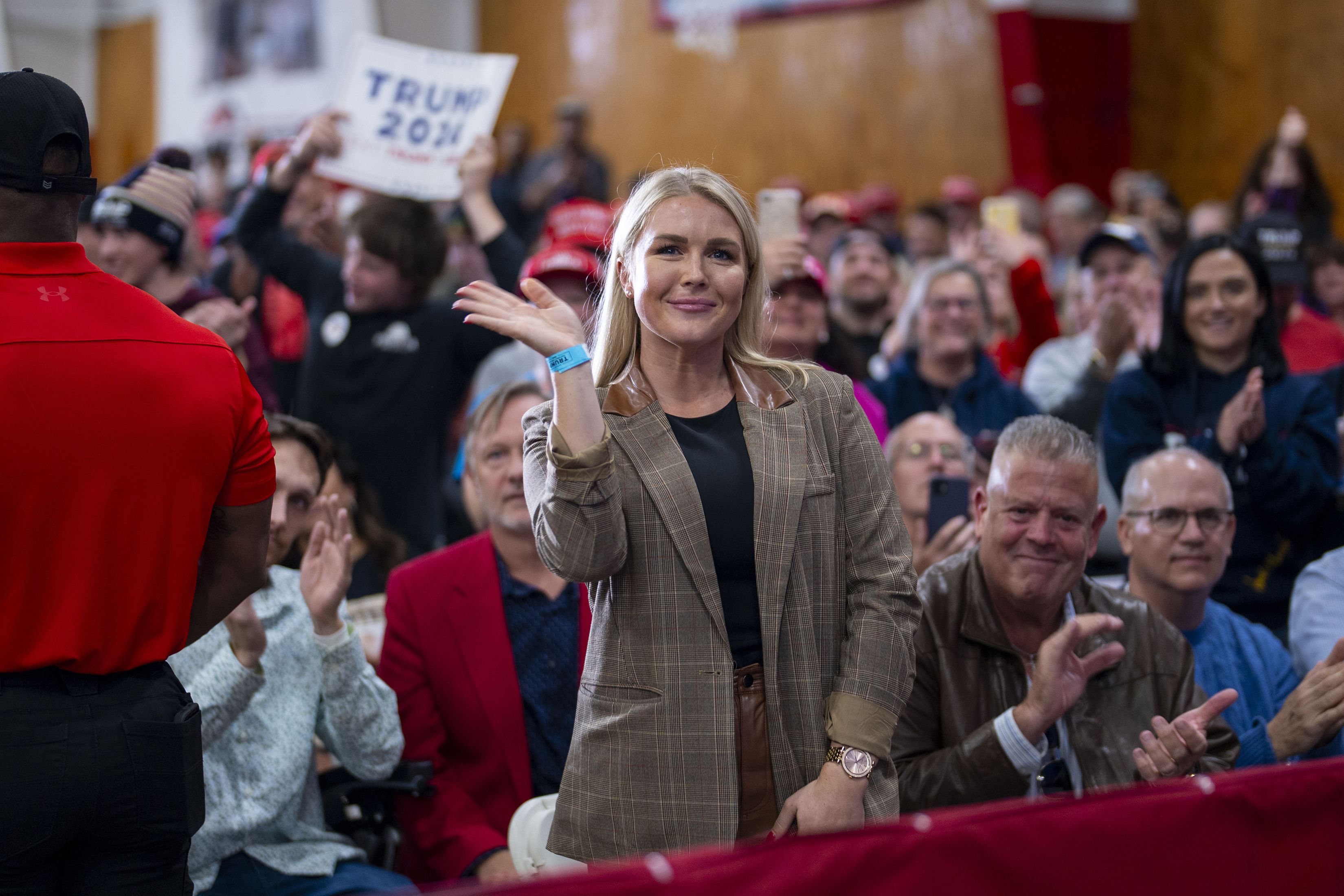
Karoline Leavitt, a New Hampshire native, will be the new White House press secretary in the Trump administration. At 27, she'll be the youngest ever person in the job.
- Previously that distinction went to Ron Ziegler, who was 29 when he took the position in 1969 in Richard Nixon's administration.
Leavitt was the Trump campaign's national press secretary, and was assistant press secretary in the Trump White House.
- Trump's announcement says: "Karoline is smart, tough, and has proven to be a highly effective communicator. I have the utmost confidence she will excel at the podium."
5. 📈 Musk's biz boom
Elon Musk's businesses — with one key exception — are ballooning in value.
- Why it matters: Musk's newfound alliance with President-elect Trump is likely giving investors confidence that the government won't get in the way of the growth ambitions of his business empire, Axios' Nathan Bomey writes.
Musk's AI startup xAI, maker of the chatbot Grok, is raising up to $6 billion at a $50 billion valuation in a fund-raise that kicked off before the election.
- Musk's SpaceX, meanwhile, is prepping a tender offer that would value the rocket company at more than $250 billion, up from $210 billion earlier this year, the Financial Times reported.
The public markets have been kind:
- Tesla stock has been on a roll since Trump was reelected, jumping more than 25% since closing at $251.44 on Nov. 5, adding around $225 billion of market value.
X is a lone exception. Since Musk bought it two years ago, one existing investor, Fidelity, has marked its value down by 79% amid an advertiser exodus.
6. 🧪 Partisan science split


Americans are divided on scientists' role in shaping public policies, with Democrats far more likely than Republicans to say they should play an active part, Axios' Alison Snyder writes from a new Pew Research Center survey.
- Why it matters: A partisan split over trust in scientists is growing as the world faces climate change, new pathogens and AI.
Overall, nearly 90% of Americans said scientists are "intelligent." 65% said they're working on solving "real-world problems." Just 65% of Americans said scientists are "honest."
7. 🏦 Bank of Mom and Dad

Parents tell Axios they're still helping their kids pay for new houses.
- By the numbers: As housing costs soar, 26% of younger people who recently bought homes say they used family cash for down payments, up from 23% last year, Axios' Sami Sparber writes from Redfin research.
Parents have maxed out annual gift tax limits or lent their children money to win bidding wars.
- Deb Sen of St. Paul tells Axios she's giving her married son money each year to help him and his partner purchase a property in Chicago.
- Even so, she expects it will take the couple around three years to afford a down payment.
🥊 Reality check: Those "who don't have family money are often shut out of homeownership," Redfin chief economist Daryl Fairweather said in a research report.
- This could widen the homeownership gap between Black and white families, an Urban Institute analysis notes.
8. 🐶 1 for the road: Terriers dominate

Terriers have that extra something that gives them a leg up on the competition at the National Dog Show, Axios Philadelphia's Mike D'Onofrio writes.
- Hundreds of canines will compete at the annual event in Philadelphia this weekend, but only one will be crowned "Best in Show."
Terriers have won seven "Best in Show" titles since 2002, the most of any breed during that stretch.
- That includes last year's winner, Stache, a Sealyham Terrier from Pennsylvania.
📺 The competition will be taped today and tomorrow to air at noon ET on Thanksgiving Day on NBC.
📬 Please invite your friends to join AM.
Sign up for Axios AM