Axios AM

October 10, 2022

🇷🇺 1 big thing: Russia's revenge

It's being called Russia's biggest barrage against Ukraine since the invasion 7½ months ago:
- Russia fired cruise missiles at cities across Ukraine during this morning's rush, killing civilians and knocking out power, water and heat, Reuters reports.
Vladimir Putin declared the "mass strike" to be revenge for Ukrainian attacks, including an inferno that hit his prized bridge to Crimea this weekend.
- In a televised address, Putin said he ordered strikes against energy, command and communication targets, with missiles fired from air, sea and land.
- "The Kyiv regime ... has put itself on the same level as international terrorist organizations," Putin said, threatening future strikes.
What's happening: The missiles tore into busy intersections, parks and tourist sites in the center of downtown Kyiv with an intensity not seen since Russian forces tried to capture the capital early in the war.
- Explosions were also reported in Lviv, Ternopil and Zhytomyr in western Ukraine ... Dnipro and Kremenchuk in central Ukraine ... Zaporizhzhia in the south ... and Kharkiv in the east.
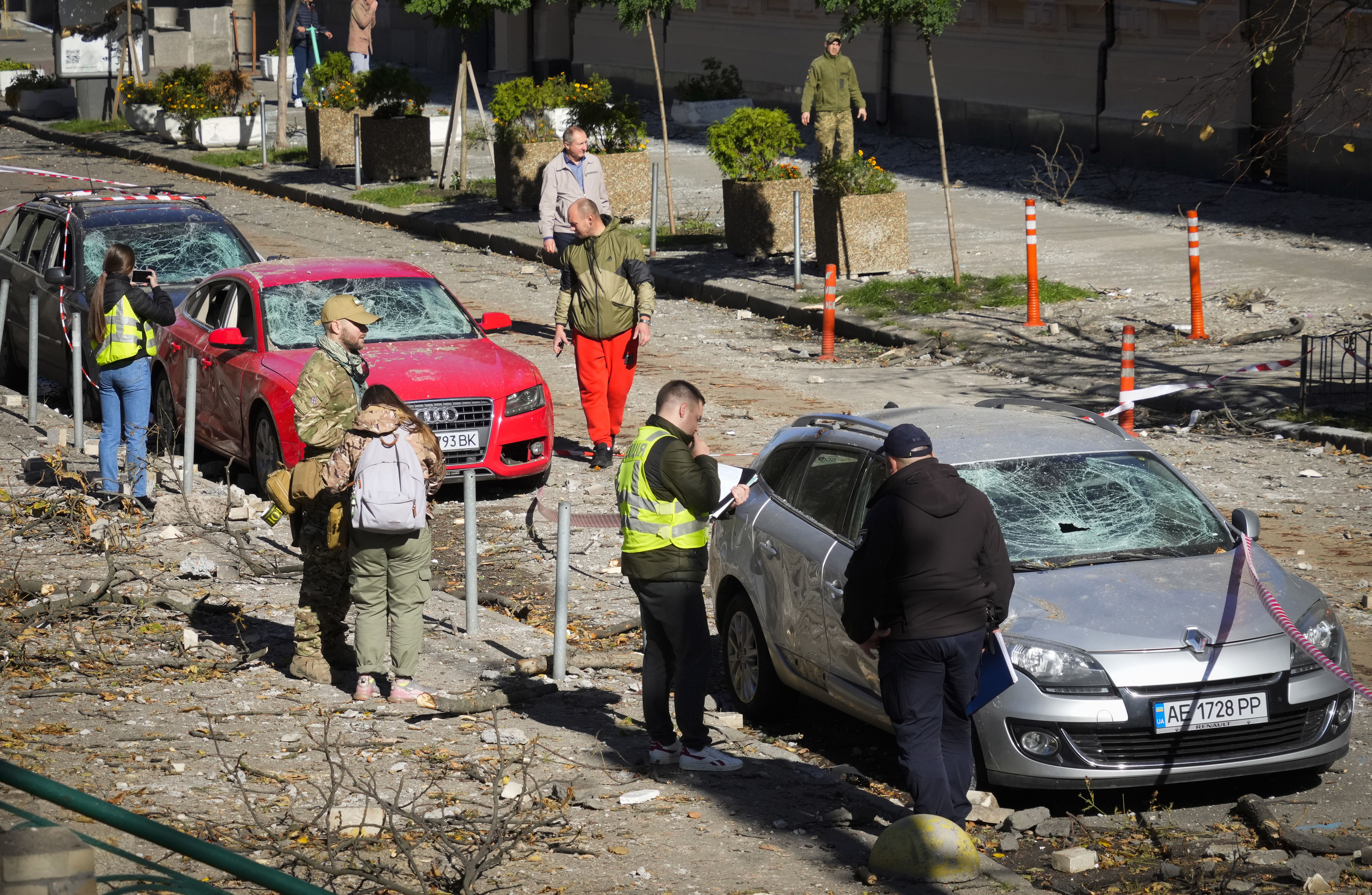
🇺🇦 Ukrainian officials said at least 10 people were killed.
- The strikes tore a huge crater next to a children's playground in one of central Kyiv's busiest parks.
President Volodymyr Zelensky said the rush-hour attacks were deliberately timed to kill people.
- "They are trying to destroy us and wipe us off the face of the earth," Zelensky said on the Telegram messaging app.
Ukraine's defense ministry said Russia had fired 81 cruise missiles, and Ukraine's air defenses shot down 43 of them.
2. 📊 Fraud suspicions spread
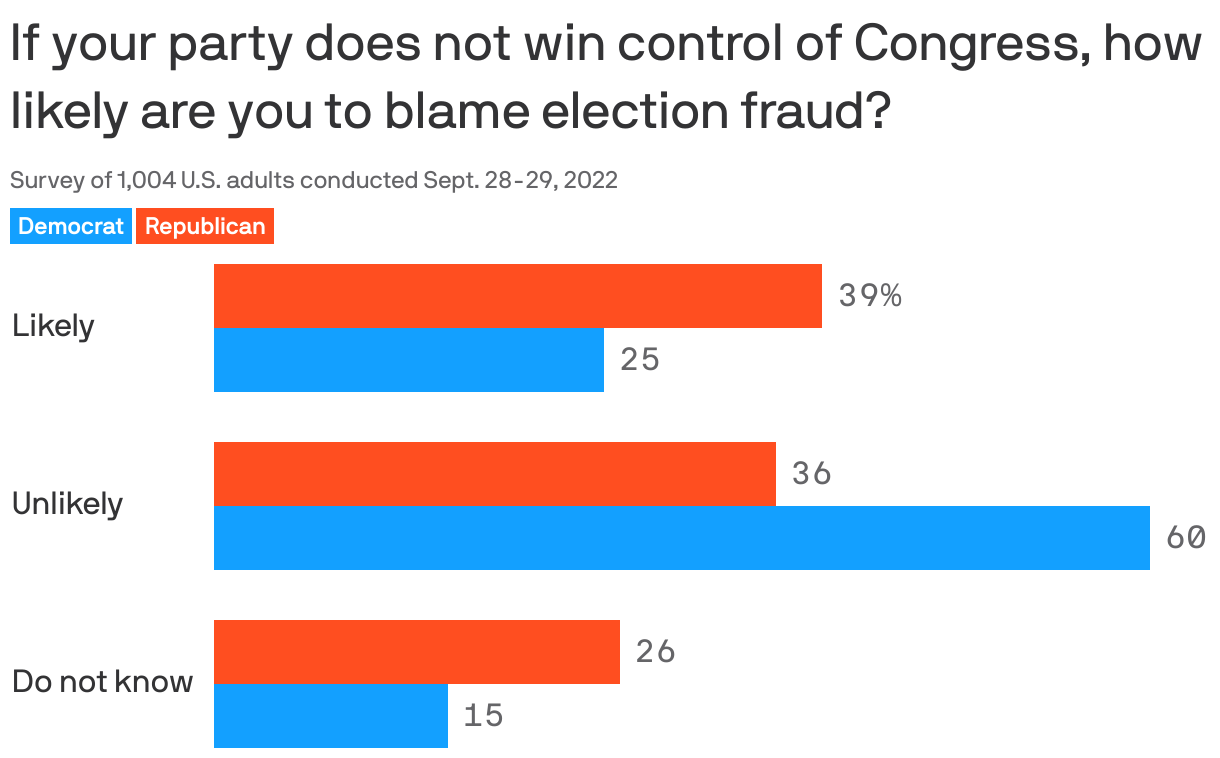
4 in 10 Republicans — and 1 in 4 Democrats — say they'll blame election fraud if their party doesn't win control of Congress next month, Margaret Talev and David Nather write from the Axios-Ipsos Two Americas Index.
- Why it matters: 29 days from the 2022 midterms, 2020's Big Lie is alive and morphing into a broader distrust of institutions and elections.
🍽️ Between the lines: The survey found that Americans who'd shared a meal in the past month with someone with a different political affiliation would be more skeptical about jumping to conclusions about fraud.
3. New focus on Indigenous enslavement

Photo illustration: Aïda Amer/Axios. Photos: Hulton Archive, Culture Club, Library of Congress/Corbis/VCG, Ann Ronan Pictures/Print Collector/via Getty Images
4. 📷 1,000 words

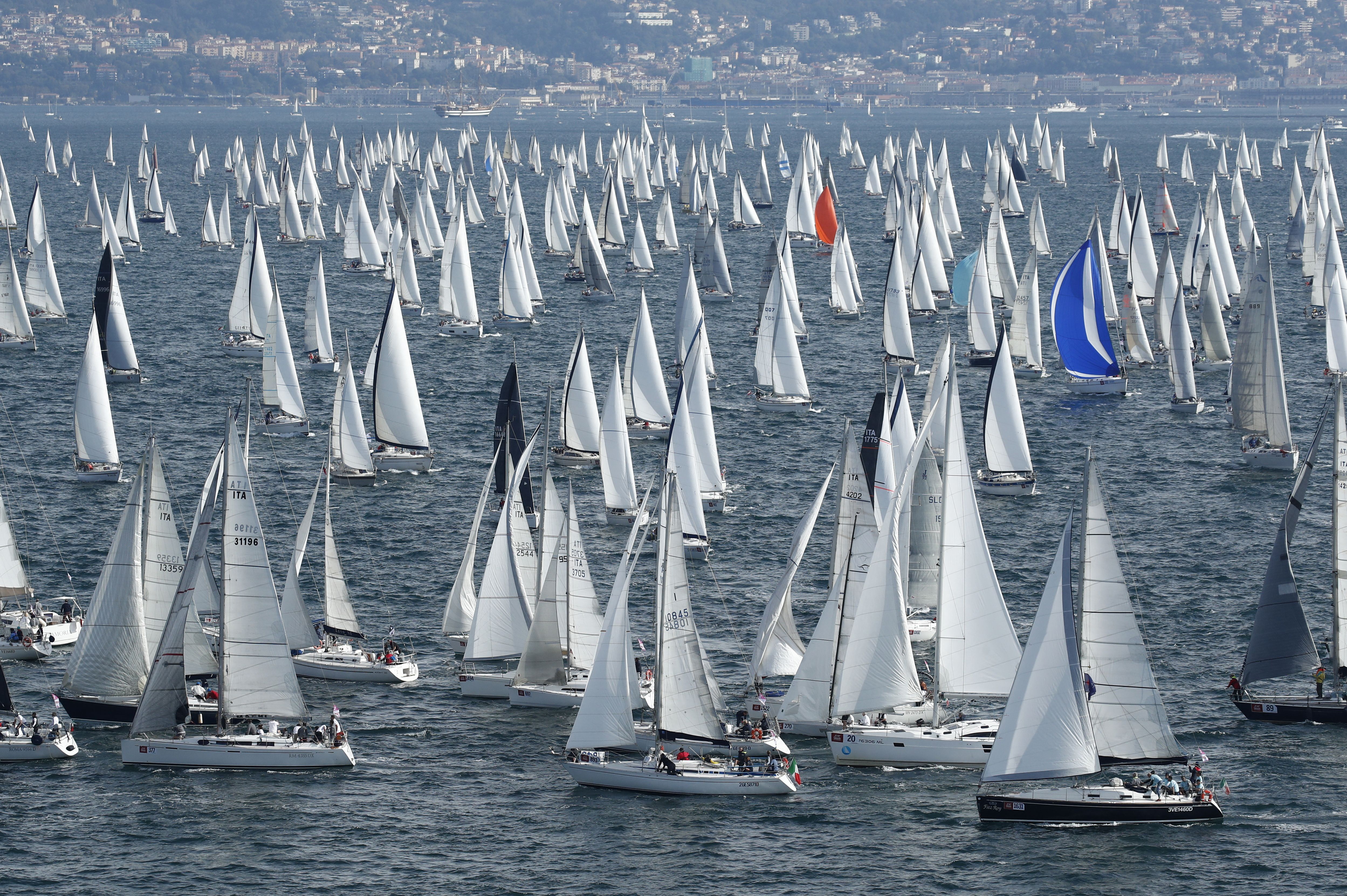
Hundreds of boats joined the 54th annual Barcolana — which calls itself "the largest sailing race in the world" — yesterday in the gulf of Trieste, northeastern Italy.
- Deep Blue, with Wendy Schmidt at the helm, won the 13-nautical-mile regatta with a time of 57 minutes and 47 seconds.
5. ⚖️ Justices seen as pols
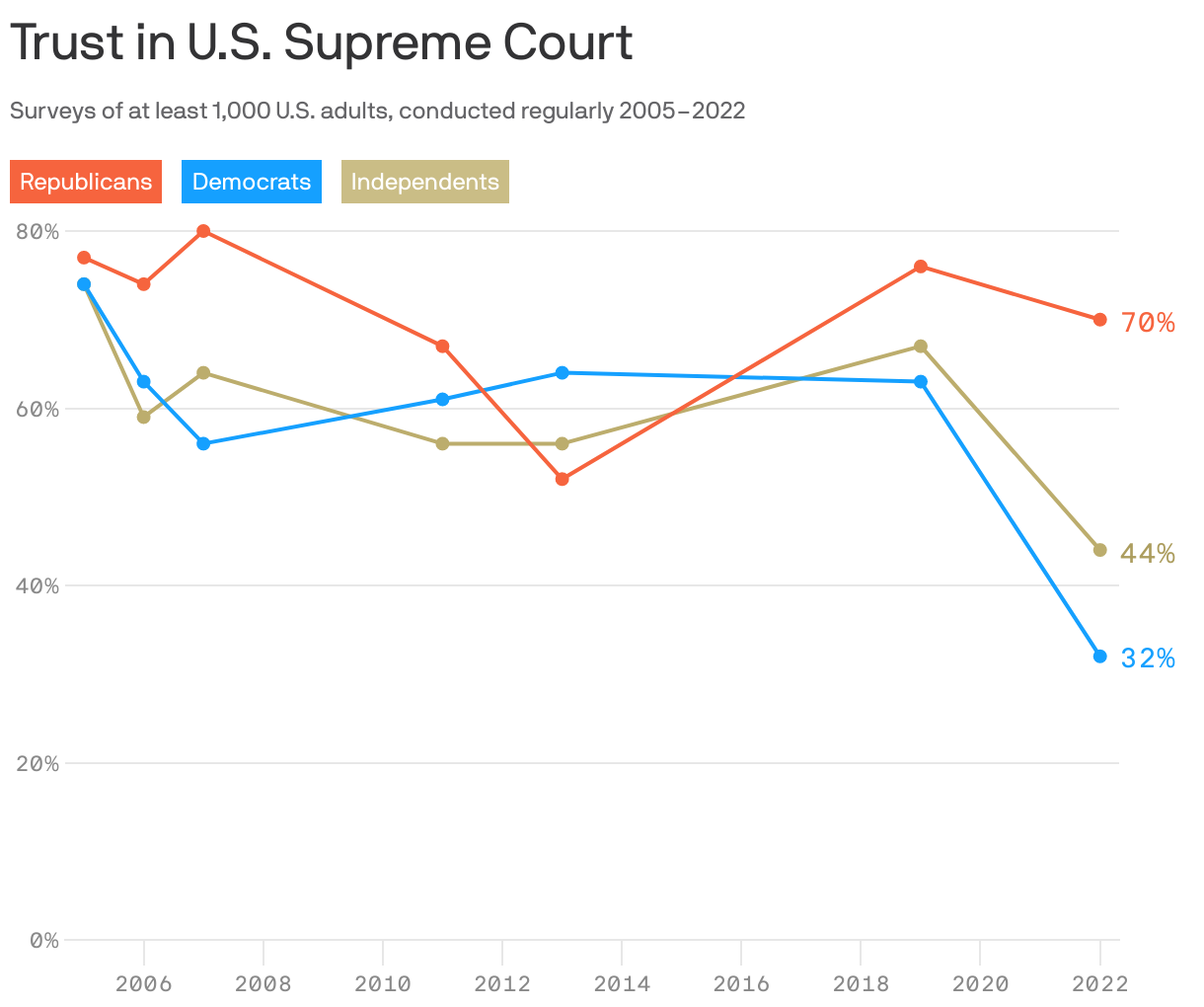
Out this morning: The perception is growing that Supreme Court justices are partisans, just like any other politicians, according to the Annenberg Public Policy Center of the University of Pennsylvania.
- Why it matters: The center, which has tracked opinions about the court over 17 years, says that in most years, "differences in trust in the court by party affiliation have not been meaningful. That changed in 2022, with a wide gap separating Republicans from Democrats and independents on some attitudes toward the court."
Trust is driven by party: 70% of Republicans — but only 32% of Democrats — have a "great deal" or "fair amount" of trust in the court.
6. Teens shot outside N.Y. candidate's home

Cover: N.Y. Post. Photo: Gregory P. Mango
7. 💵 Bernanke shares Nobel
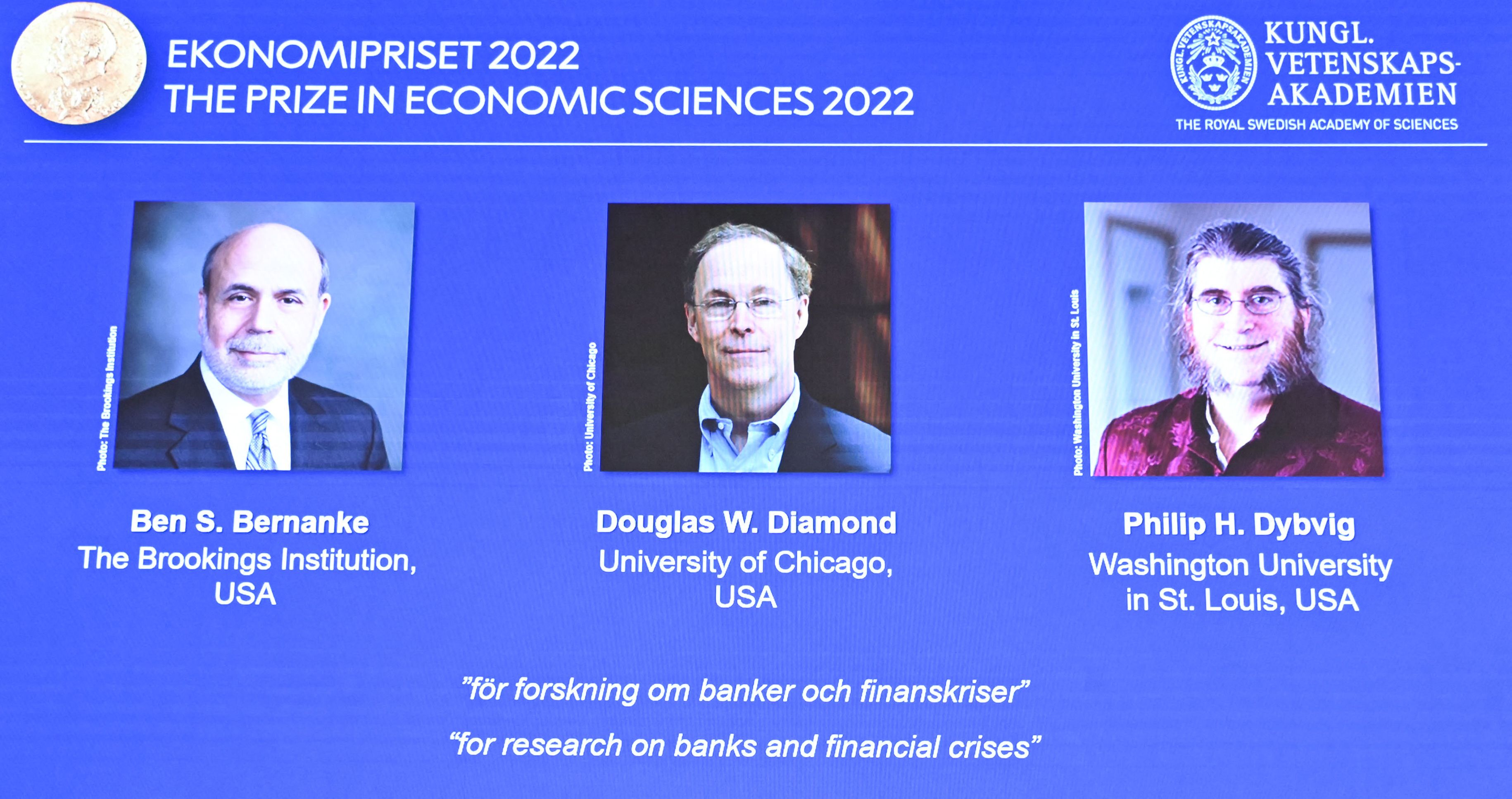
When an economy collapses, that country's banks tend to fail. But the opposite is also true: Bank failures can cause economic collapse.
- That insight won this year's economics Nobel prize for former Fed Chair Ben Bernanke, now of Brookings ... Douglas Diamond of the University of Chicago ... and Philip Dybvig of Washington University in St. Louis.
Why it matters: Bernanke was able to put his theory into practice as Fed chair during the financial crisis of 2008-9, Axios chief financial correspondent Felix Salmon writes.
- By using extraordinary powers to prevent a broad wave of bank implosions, Bernanke prevented the Great Recession from becoming a second Great Depression.
💡 Our thought bubble, from Axios chief economic correspondent Neil Irwin:
- Banks matter for the rest of the economy. That’s the basic insight of Bernanke, Diamond and Dubig.
- Bernanke showed that when banks fail, the ripple effects are profound, as shown most clearly 1930-33. His landmark paper on the Great Depression was published in 1983.
It's a remarkable accident of history that a man with that particular intellectual backing was in place to prevent it from happening again.
- Read the citation ... MIT release on Nobel for "Ben Bernanke PhD ’79" ... Share this story.
8. 📺 New record for network morning team

After nearly 13 years at the helm of ABC's "Good Morning America," co-anchors Robin Roberts and George Stephanopoulos, both 61, are the longest-ever network morning-show pair, AP's David Bauder reports.
- A handful of hosts had longer tenures — Katie Couric, Bryant Gumbel, Matt Lauer and Joan Lunden. But each had more than one partner.
- Lunden and Charles Gibson lasted 10 years together on "Good Morning America." Couric and Lauer had a nine-year run on "Today."
🧮 By the numbers: Like most TV shows, "GMA," "Today" and "CBS Mornings" have lost viewers — from 12.4 million cumulatively in 2010 to 8.7 million this year. "GMA" leads, but is down 26% in that time.
- The shows, including "GMA," are producing more material for different formats, especially podcasts.
- "GMA" is trying to appear less New York/L.A.-centric by featuring more guests and experts from other parts of the country, executive producer Simone Swink said.
Stephanopoulos said he initially turned down then-ABC News President David Westin when the network was replacing Diane Sawyer.
- Stephanopoulos, who started at ABC News on Inauguration Day 1997, was a Washington insider from his days in the Clinton administration and as anchor of "This Week," a job he retains.
- Westin said: "When you put things together you don't think about how long it will last ... You're never sure."
Roberts said she knew of doubts among some ABC execs because her background was in sports broadcasting: "I get weepy when I think of how I beat the odds."
- Roberts had chemotherapy and was off the air for five months starting in 2012 after a bone marrow transplant to treat MDS. She contracted the blood and bone marrow disease from treatment for breast cancer. She still keeps a close watch on her immune system.
Axios AM
Catch up with the most important news of the day