Axios AM

October 21, 2025

🏛️ Good Tuesday morning. Today is Day 21 of the shutdown — three full weeks.
- Smart Brevity™ count: 1,842 words ... 7 mins. Thanks to Noah Bressner for orchestrating. Copy edited by Bryan McBournie.
⚾ The World Series will be Dodgers vs. Toronto Blue Jays, beginning Friday night in Toronto, with LA's Blue Crew heavily favored to repeat as champs. Full schedule.
1 big thing: Dems torch leaders
Democratic congressional candidates nationwide, feeding off voter fury, are raging against their leadership and vowing ruthlessness against their own establishment, Axios' Andrew Solender writes.
- "I am not a 'when they go low, we go high' [person]. I'm not that kind of girl," Texas state Rep. Jolanda Jones, running in a November special election for a safely Democratic U.S. House seat, told Axios. "If they go low, I'm going to the gutter."
🗳️ Axios interviewed dozens of Democratic congressional candidates — some challenging longtime Democratic incumbents, others running in open primaries in blue or purple seats.
- What was consistent across many of those interviews was a notion that the Democratic party establishment hasn't met the moment since President Trump returned.
That echoes what Democratic elected officials have heard from their constituents, particularly their liberal grassroots, for the last nine months.
- And it signals a headache ahead for Democratic leadership, which may have to grapple with its own version of the Tea Party wave that wreaked havoc on GOP leadership.
👓 Between the lines: Dozens of Democratic candidates for U.S. House are refusing to commit — or outright declining — to vote for House Minority Leader Hakeem Jeffries (D-N.Y.) as speaker or leader.
- Many of the leading Democratic candidates in key battleground primaries are Jeffries loyalists or recruits. But it may only take a handful of renegades to frustrate leadership if he wins a small majority next year.
The nearly dozen House Democrats retiring or seeking higher office this cycle have left a slew of crowded Democratic primaries in their wake that leadership will have difficulty controlling.
2. ⚡ Venezuela operation expands in the dark

The U.S. military has killed at least 32 people in seven strikes off the coast of Venezuela without telling Congress or the American people who was killed, or on what evidence, Axios' Dave Lawler and Marc Caputo write.
- Why it matters: The U.S. is eight weeks into a military campaign in the Caribbean Sea with twin aims of stopping drugs and, potentially, toppling Venezuelan dictator Nicolás Maduro.
"Officially, our position is we're there to stop narco-terrorists," a senior administration official said. "We're going to blow up their boats. And we're going to be patient about it. No one is in any rush."
- At least some insiders think Trump ultimately will launch some sort of land-based attack. "It's hard to see sending all these assets over there and then just retreating after blowing up some drug boats," one source said.
🪖 The scene: The Trump administration has deployed an unprecedented number of warships, spy planes, fighter jets, bombers, drones, and U.S. Marines off the coast of Venezuela.
- Last week, Trump confirmed he'd authorized CIA covert operations on Venezuelan soil. Overhead, the U.S. conducted a "Bomber Attack Demonstration" with B-52s.
- "It's not just the CIA — it's all of our intelligence capabilities," said an insider involved in discussions about the operation. "The U.S. knows where Maduro is, where he stays, where he goes. If we wanted to kill him with a missile, we could have done it by now."
🔎 The intrigue: After the unexplained departure of SOUTHCOM Commander Adm. Alvin Holsey, the cadence of strikes at sea — and on land in Venezuela — could increase.
- Holsey was reportedly concerned about the legality of the strikes and was moving more cautiously than SecDef Pete Hegseth wanted.
- The Pentagon denied Holsey raised objections, but hasn't said why he stepped down one year into his command.
🏛️ At a congressional briefing earlier this month, details were scant.
- Sen. Rand Paul (R-Ky.), who has led an unsuccessful push to get the administration to seek congressional authorization for the strikes, said the U.S. should "know someone's name at least" before killing them.
👀 What to watch: Trump and his team hope the naval flotilla and covert operations eventually make the situation untenable for Maduro.
- Trump administration officials profess a near-unshakeable belief that Maduro either will be deposed or realize he needs to move into exile, even as experts contend he has coup-proofed his regime.
3. 🏛️ Thune wants Trump nominee pulled after texts exposed
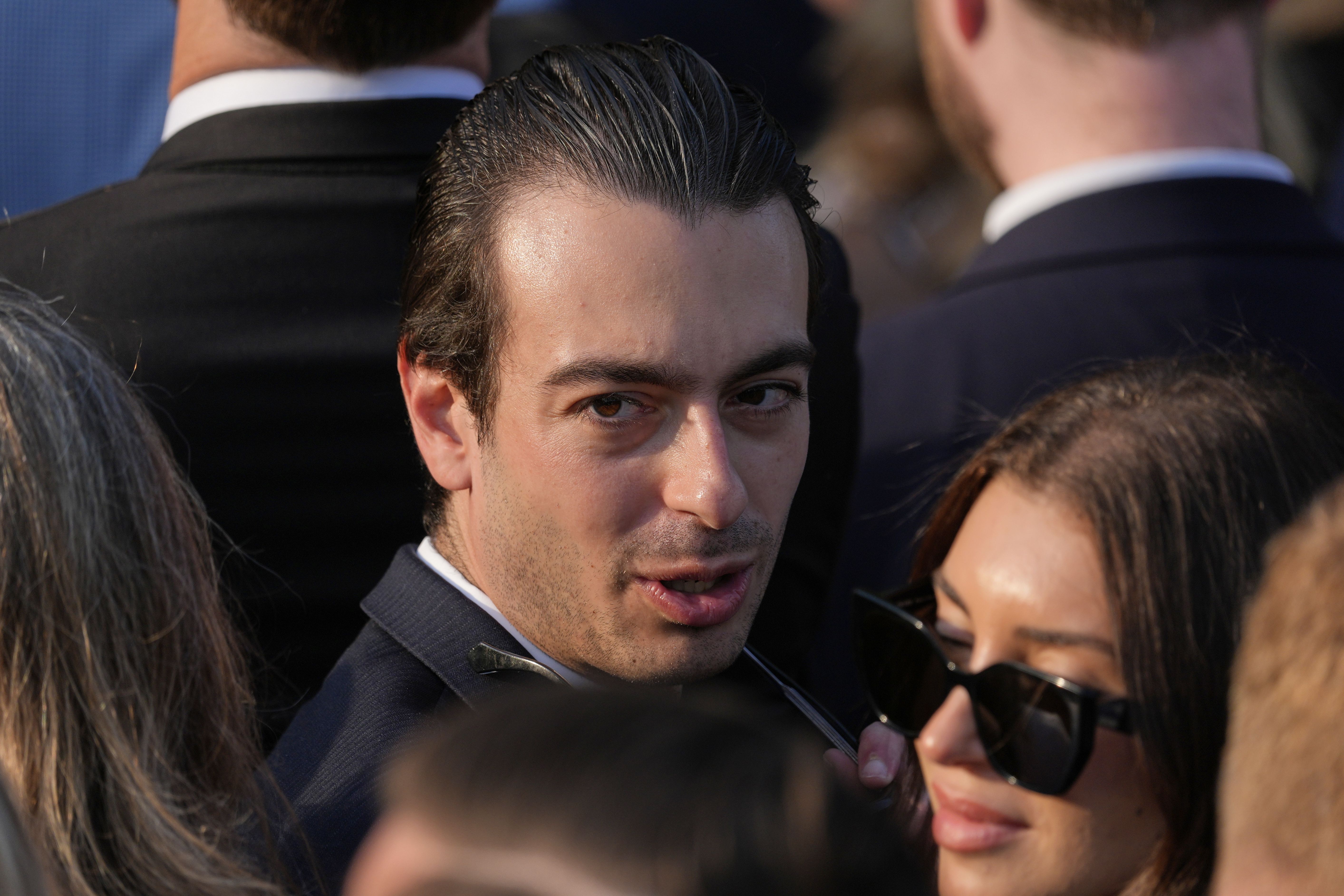
Paul Ingrassia, President Trump's nominee to head the Office of Special Counsel, said on a GOP text chain last year that he has "a Nazi streak in me from time to time, I will admit," and that the Martin Luther King Jr. holiday should be "tossed into the seventh circle of hell," Politico revealed.
- After the story posted, Senate Majority Leader John Thune told reporters he hopes the White House withdraws Ingrassia's nomination: "He's not gonna pass."
- Ingrassia's Senate confirmation hearing is Thursday. The OSC is an independent agency that investigates whistleblower complaints.
💬 According to Politico, a participant in the text chain, which included a half-dozen Republican operatives and influencers, warned Ingrassia he was "coming across as a white nationalist which is beneficial to nobody."
- Ingrassia responded that "defending our founding isn't 'white nationalist.'"
The other participant said: "You're gunna be in private practice one day this shit will be around forever brother."
- Ingrassia: "We should celebrate white men and western civilization and I will never back down from that."
Earlier, Politico cited five officials who said Ingrassia, as White House liaison for the Department of Homeland Security, told a lower-ranking female Trump appointee she'd be staying with him at the Ritz-Carlton in Orlando during a business trip.
- The two shared a room, sleeping in separate beds. The officials said the woman complained Ingrassia was making her feel uncomfortable and was hurting her ability to do her job.
4. 🚧 East Wing demolition day
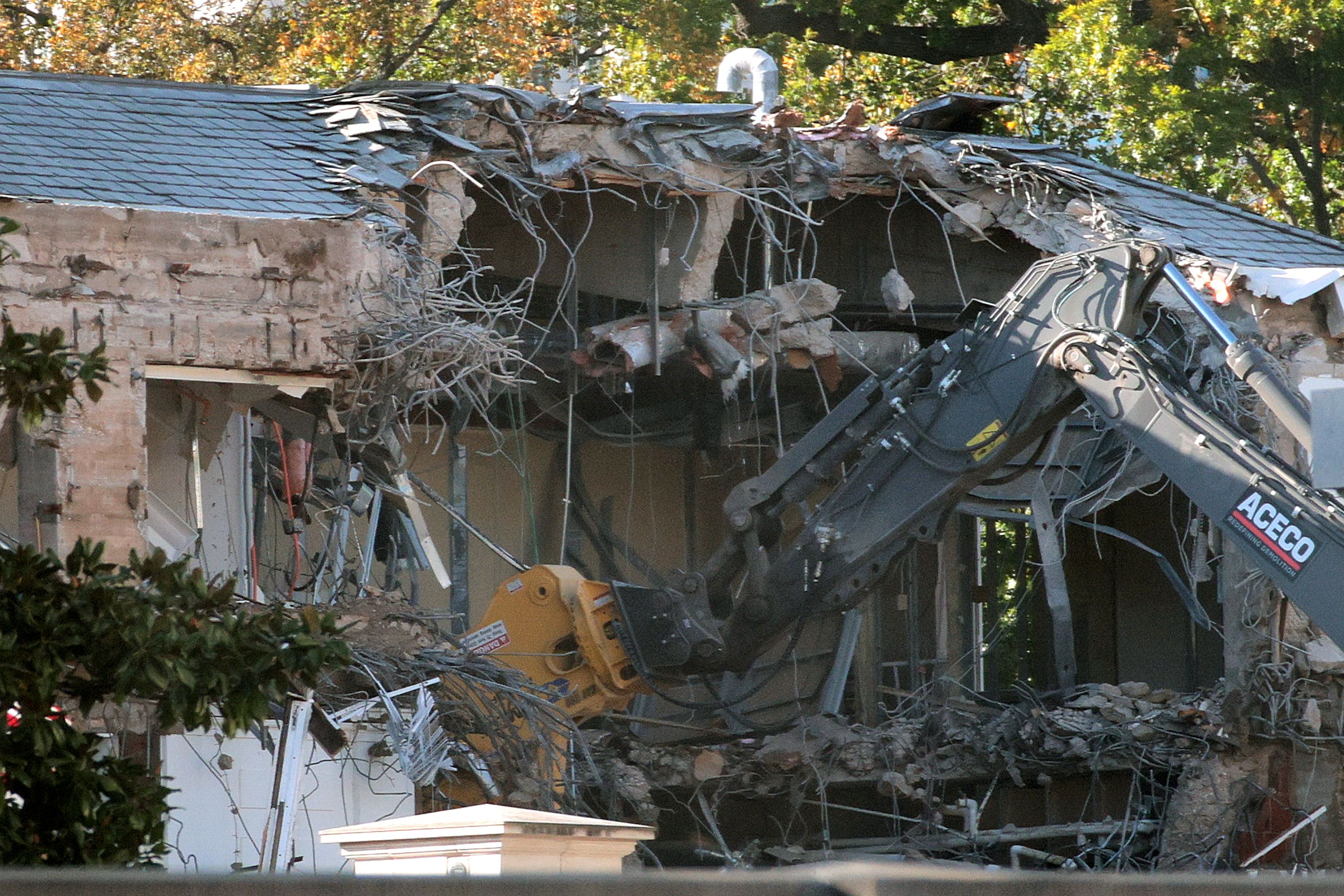
A backhoe ripped through part of the East Wing, the traditional base of operations for the first lady, yesterday as the White House began making way for President Trump's 90,000-square-foot ballroom, estimated to cost more than $200 million. Trump has said he and private donors will pay the full tab.
- "I am pleased to announce that ground has been broken on the White House grounds to build the new, big, beautiful White House Ballroom," Trump wrote on Truth Social, saying the East Wing "is being fully modernized as part of this process, and will be more beautiful than ever when it is complete!"
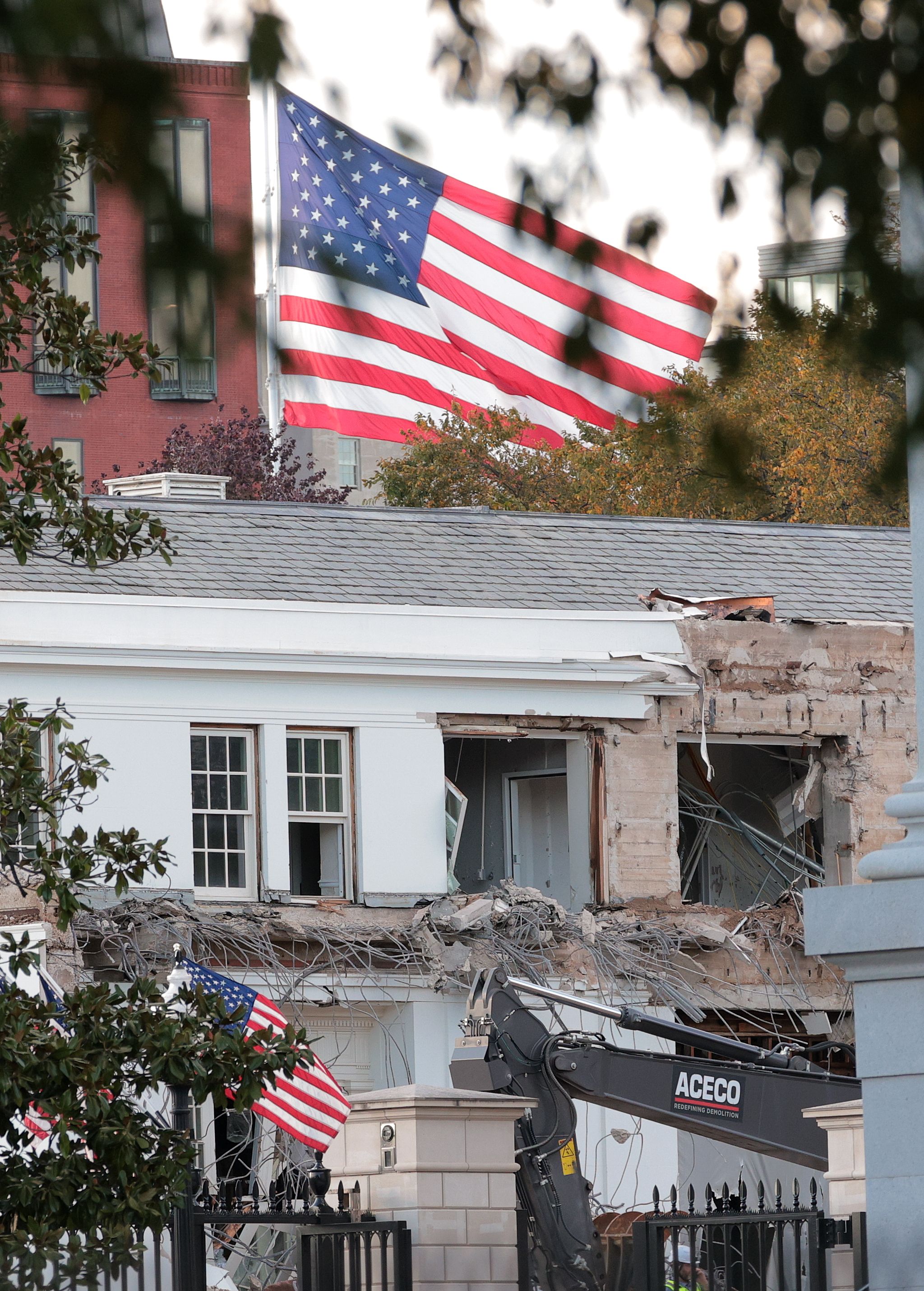
Dramatic photos show construction equipment tearing into the East Wing façade and windows, and other building parts in tatters on the ground, AP reports.
- The ballroom is the Executive Mansion's biggest structural change since the Truman Balcony was added in 1948. The East Wing was built in 1902 and has been renovated over the years, with a second story added in 1942.
Plans call for the ballroom to be ready before Trump leaves office in January 2029.

White House communications director Steven Cheung posted a split screen (above) of the construction and a rendering of the ballroom.
- "Construction has always been a part of the evolution of the White House," Cheung wrote, with a photo of President Harry Truman's demolition, expansion and renovation from 1948 to 1952.
- "Losers who are quick to criticize need to stop their pearl clutching and understand the building needs to be modernized. Otherwise you're just living in the past."
📸 47 more pics ... WashPost gift link.
5. 👁️ ICE spends big on surveillance tech
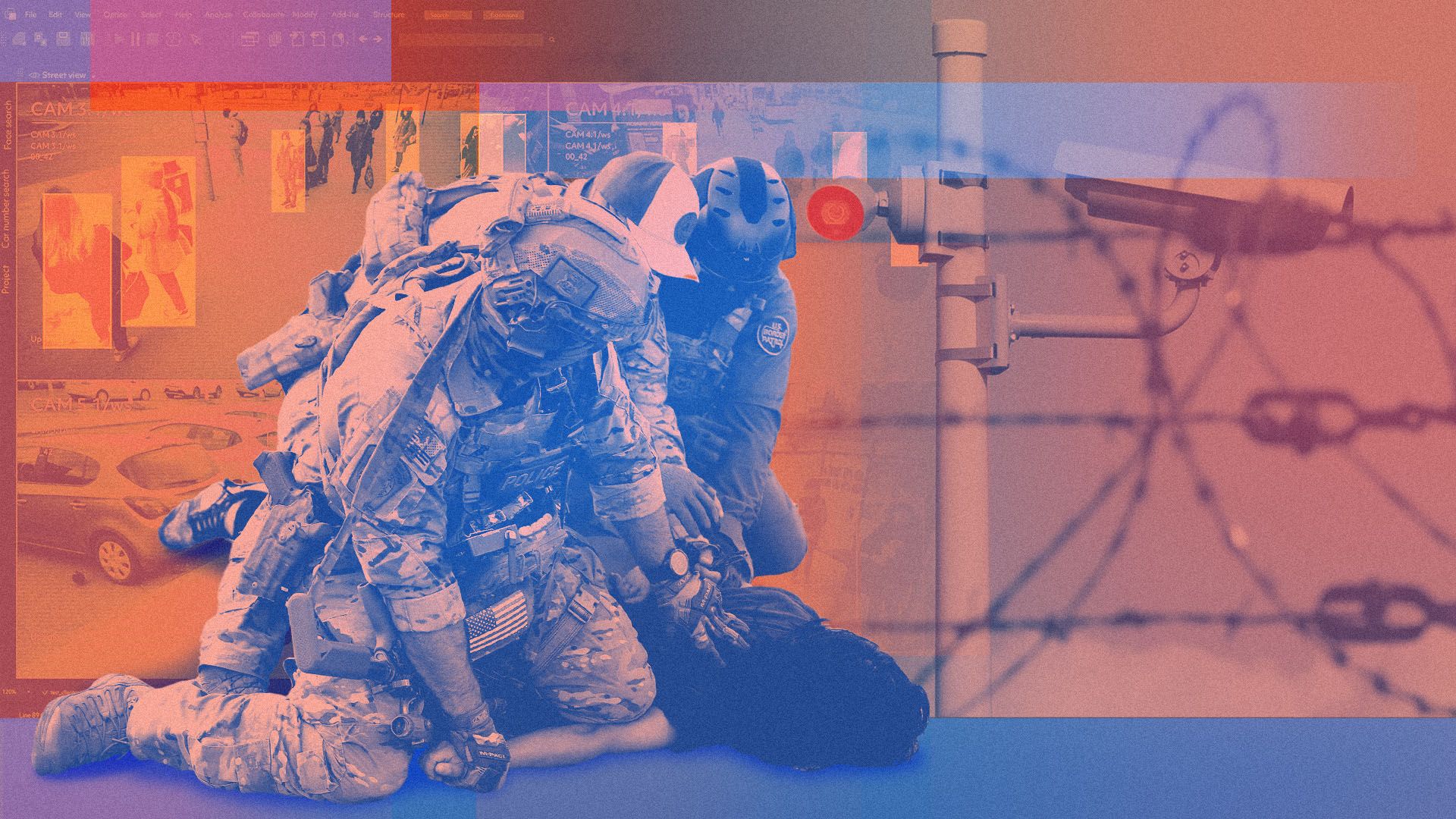
Immigration and Customs Enforcement (ICE) is on a surveillance spending spree:
- The agency is using much of its windfall from this summer's One Big, Beautiful Bill Act to fund a major expansion of biometric identification, cellphone tracking and other electronic capabilities, Axios' Brittany Gibson reports.
Why it matters: The megabill's $75 billion cash infusion for ICE was sold by Congress as a way to speed up hiring new agents and adding detention space. But ICE is also going big on surveillance.
The new surveillance spending includes:
- A contract with Clearview AI, which provides a facial recognition algorithm.
- A multimillion-dollar contract with BI² for its biometric data system IRIS, which promises a real-time identification of a person after taking a photo of their eye, according to the company website.
- A restarted contract with Paragon Solutions, which provides software that can remotely access smartphone data, as The Washington Post reported. The Biden administration had banned Paragon as an unethical spyware company.
- Buying access to a real-time smartphone location tracking system from the digital intelligence company Penlink, as 404 Media reported.
Cooper Quintin of the Electronic Frontier Foundation, a civil liberties nonprofit, said ICE could say: "Who owns all of the phones that have been outside of the ICE facility every night for the last three nights? And let's send them all to HSI for investigation." HSI (Homeland Security Investigations) is the investigative arm of ICE.
6. 📚 First look: Jon Karl's "Retribution"

ABC News' Jonathan Karl reports in "Retribution: Donald Trump and the Campaign That Changed America," out next Tuesday, that Hunter Biden was furious with former President Obama for tugging President Biden's arm to lead him off the stage at a Hollywood fundraiser last year.
- Why it matters: The snippet went viral, reinforcing the impression that Biden was doddering.
"I almost jumped up on the stage and said, 'Don't ever f--king do that to the president of the United States again — ever," Hunter Biden, still furious months later, told Karl in one of their extensive interviews.
- The younger Biden insisted his dad was simply taking some time to acknowledge the crowd. "I knew that that was going to be a meme," Hunter recalled. "That really, really, really, really pissed me off."
"Retribution" — deeply reported by Karl, ABC's chief Washington correspondent and a co-anchor of "This Week"— shows why Trump's second term "is more radical and consequential than the first — changing America in ways that will far outlive the Trump presidency," a book preview says.
- Karl, who has written three previous bestsellers on Trump, told me that "Retribution" — now commonly used in news stories, was his plan for the title from the day that Trump was reelected.
More on the book ... Excerpt from The Atlantic, "Steve Bannon and the Murderers and Hitmen Who Became His 'Besties': What the man who has Trump's ear learned in prison."
7. 🗞️ Mapped: Independent newspapers disappear
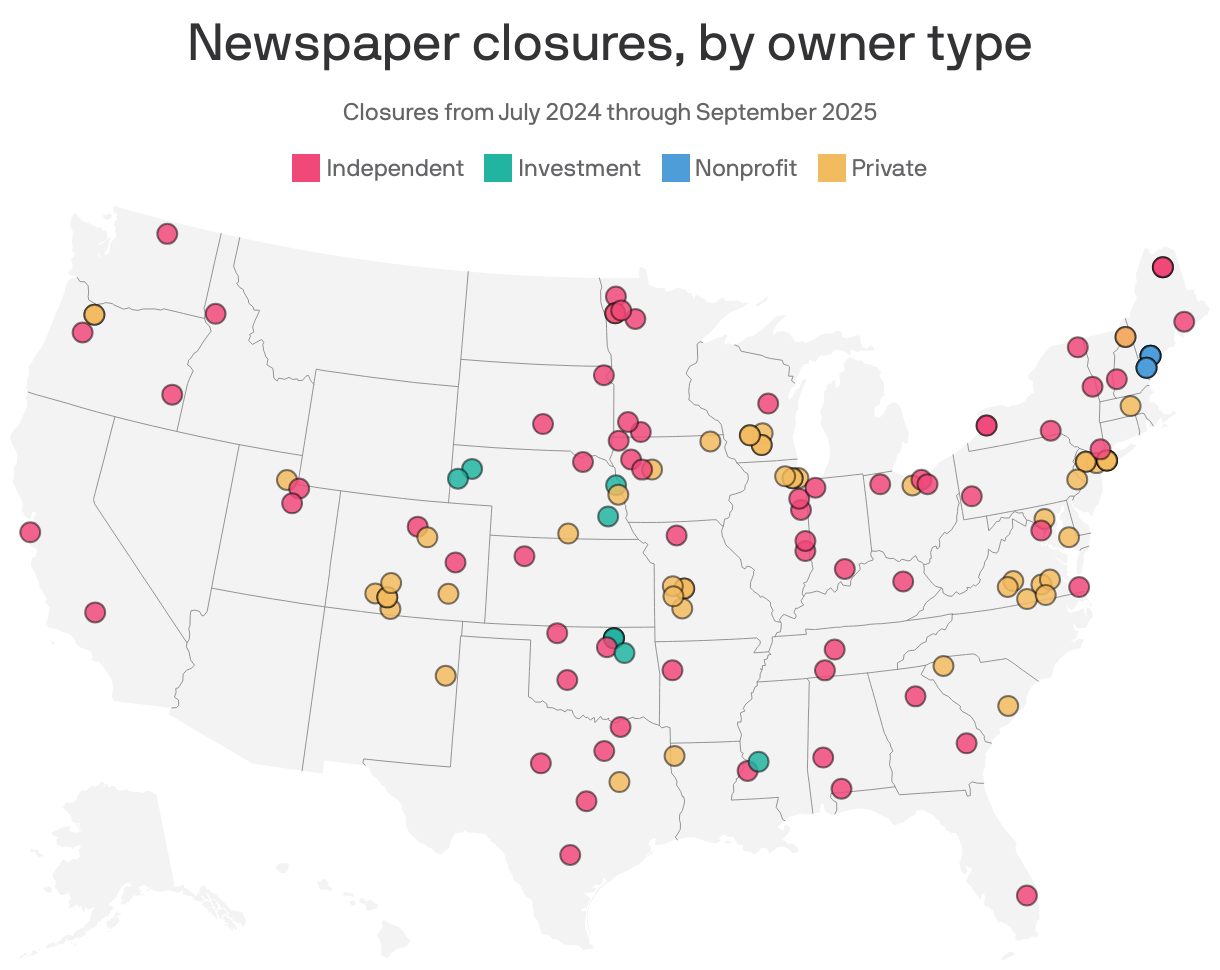
Newspapers owned by small, independent groups — often families or businesses invested in their local communities — are shuttering at an alarming pace compared to those owned by large investment companies, Axios Media Trends author Sara Fischer writes from a new report by Northwestern's Medill School of Journalism.
- Why it matters: Independent newspapers are more likely to represent rural communities that are at greater risk of becoming a "news desert," or an area with extremely limited or zero access to a local news source.
The erosion of small, independent newspapers means that the majority of remaining papers in the U.S. will be even more heavily concentrated among larger hedge funds and private equity-backed groups.
8. 🍬 Mapped: America's candy corn belt

Mississippi, Nebraska and Kentucky residents order the most candy corn compared to the national average, Axios' Alex Fitzpatrick writes from Instacart data.
📬 Thanks for reading! Please invite your friends to join AM.
Sign up for Axios AM