Axios AM

April 03, 2021
Hello, Saturday! Smart Brevity™ count: 865 words ... 3 minutes.
✈️ TSA screened 1.6 million fliers yesterday, the most yet during the pandemic. Go deeper.
1 big thing: CEOs, the new lawmakers
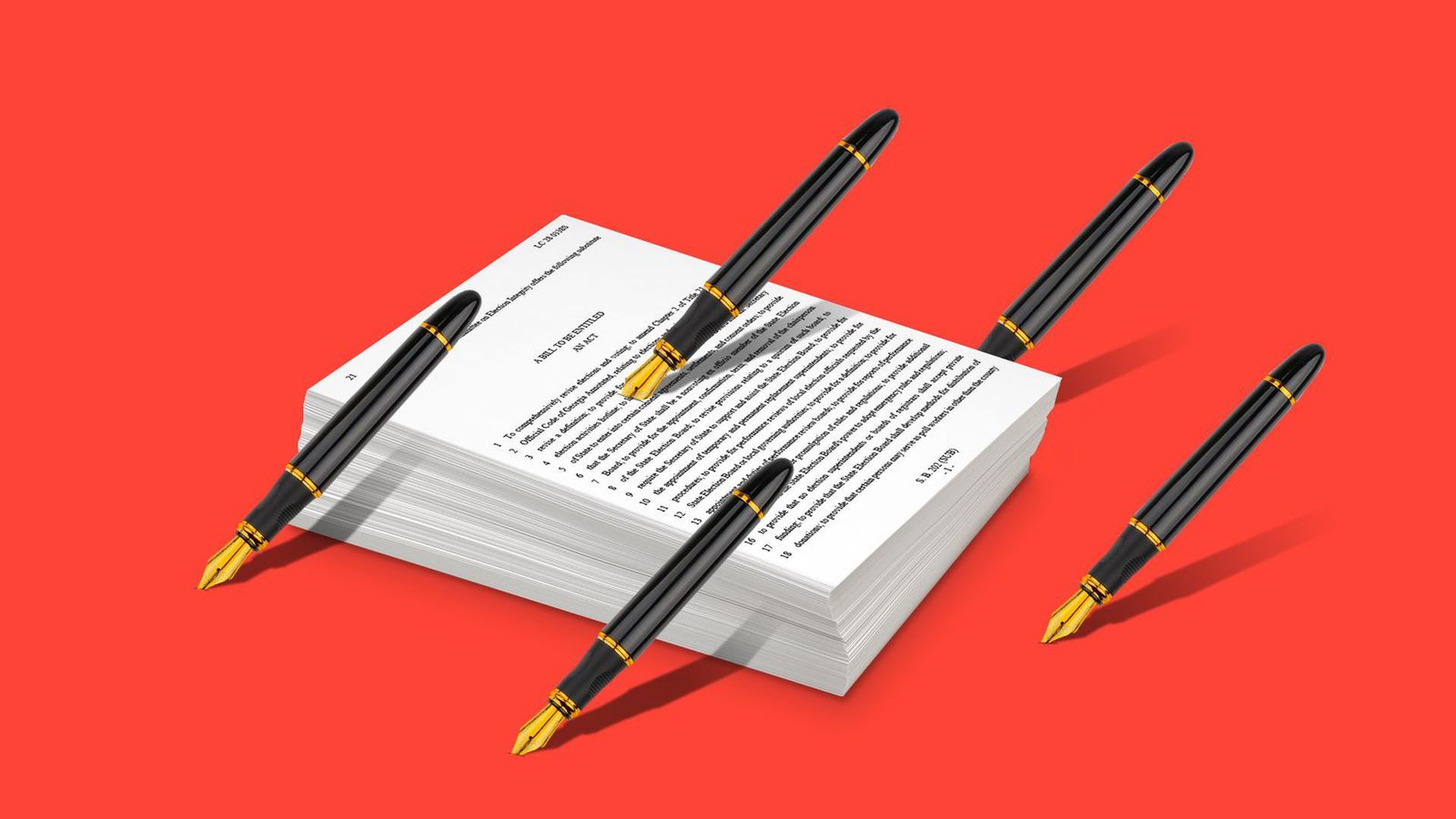
Illustration: Aïda Amer/Axios
American CEOs, forced into politics by cultural trends and staff demands in recent years, are hitting a new phase — actual lawmakers and rule-shapers, Axios CEO Jim VandeHei writes.
- Why it matters: Every CEO has been hit by the radical transformation of what the country demands of its corporations. And with each controversy comes CEOS scrambling, sometimes clumsily, to handle a power many would rather not have.
It's not just Georgia: Corporate America is under growing pressure to put its muscle behind voting rights around the country, Axios' Courtenay Brown and Sara Fischer write.
- Texas is shaping up to be the next big battleground: American Airlines, based in Fort Worth, said in a statement it is "strongly opposed" to a state bill with "provisions that limit voting rights." Dell CEO Michael Dell tweeted against another voting bill.
Between the lines: Employees and customers are increasingly looking to corporations to take on a bigger role in social and political issues. Many of them have leaned into that role — and gotten results.
- Big companies, entertainers and ultimately the NBA and NCAA canceled big-ticket events in North Carolina after the state passed its anti-LGBTQ "bathroom bill" in 2016. The state lost roughly $3.8 billion in business and ended up repealing that measure less than a year later.
- The MLB yesterday yanked the All-Star Game from Atlanta.
- Go deeper: What the Georgia law actually does.
2. Supersonic travel could be just 6 years away

Illustration: Sarah Grillo/Axios
In just six years, it may be possible to fly from D.C. to Paris in four hours — instead of eight — or from San Francisco to Tokyo in just six hours, aboard a new crop of supersonic jets, Joann Muller writes in Axios Future.
- Why it matters: High-speed air travel promises to shrink the planet — putting faraway vacation destinations in reach, and enabling business travelers to meet on another continent and return the same day.
Flashback: British Airways and Air France flew the Concorde from 1976 to 2003 on international routes — New York to London in three hours.
- But the "great white bird" was terrible for the environment and couldn't make a profit, even with round-trip fares averaging $12,000.
What's next: Several startups hope a fresh approach — lightweight materials, efficient engine technologies and cleaner fuels — will make supersonic jets cheaper to operate, and thus economically viable.
- Boeing-backed Aerion is developing a supersonic business jet that will begin production in Florida in 2023, and should be ready for customer delivery by 2027.
- NetJets, Warren Buffett's fractional jet company, this week ordered 20 of the planes for $120 million each.
3. Attack renews fear at Capitol

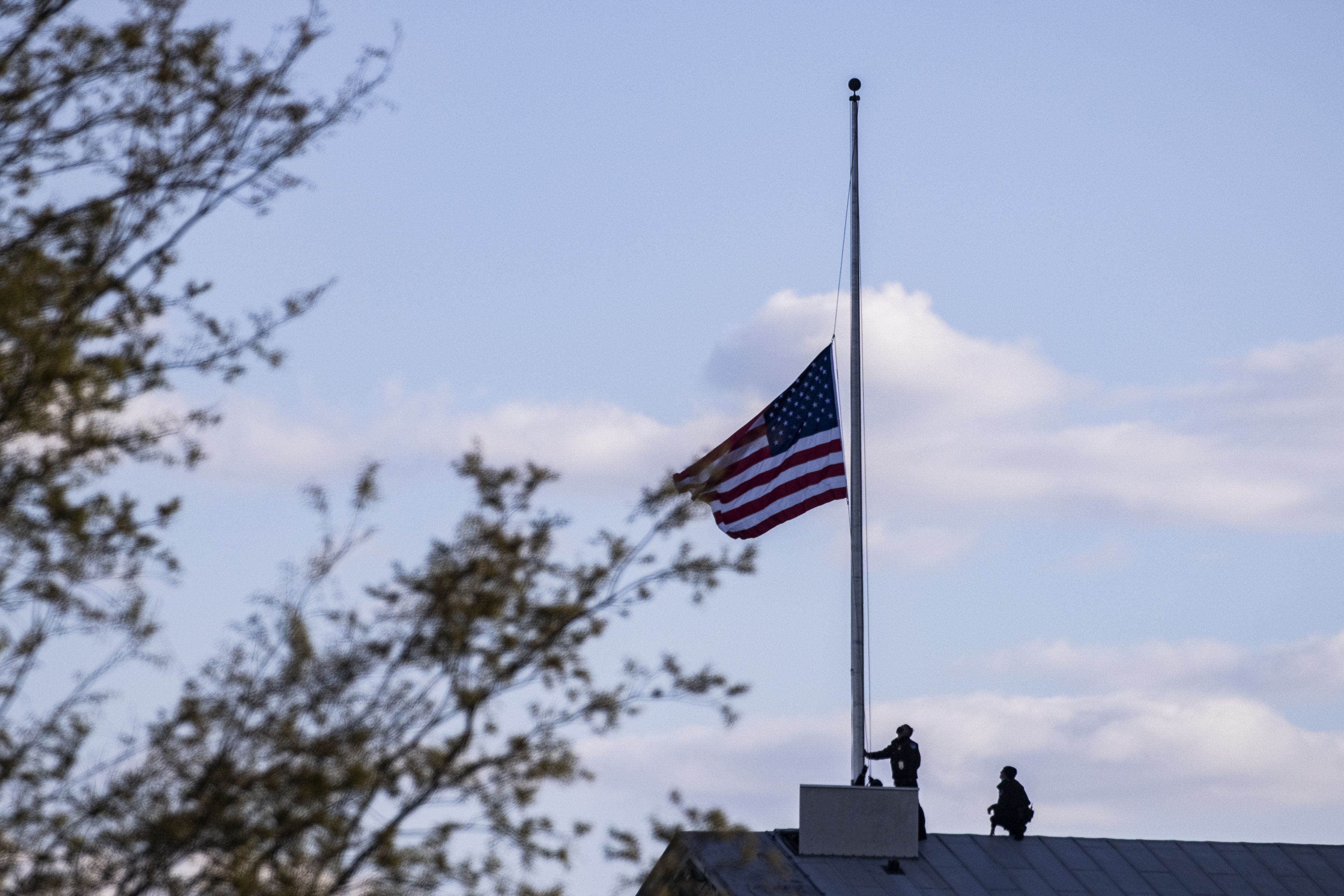
Capitol Police officers lower the flag over the U.S. Capitol to half-staff in honor of William "Billy" Evans, an 18-year Capitol Police officer. Evans died yesterday after a 25-year-old rammed his sedan into a barricade.
- The attack once again put the city on edge, after threats stemming from the deadly insurrection in January had started to wane, the WashPost reports.
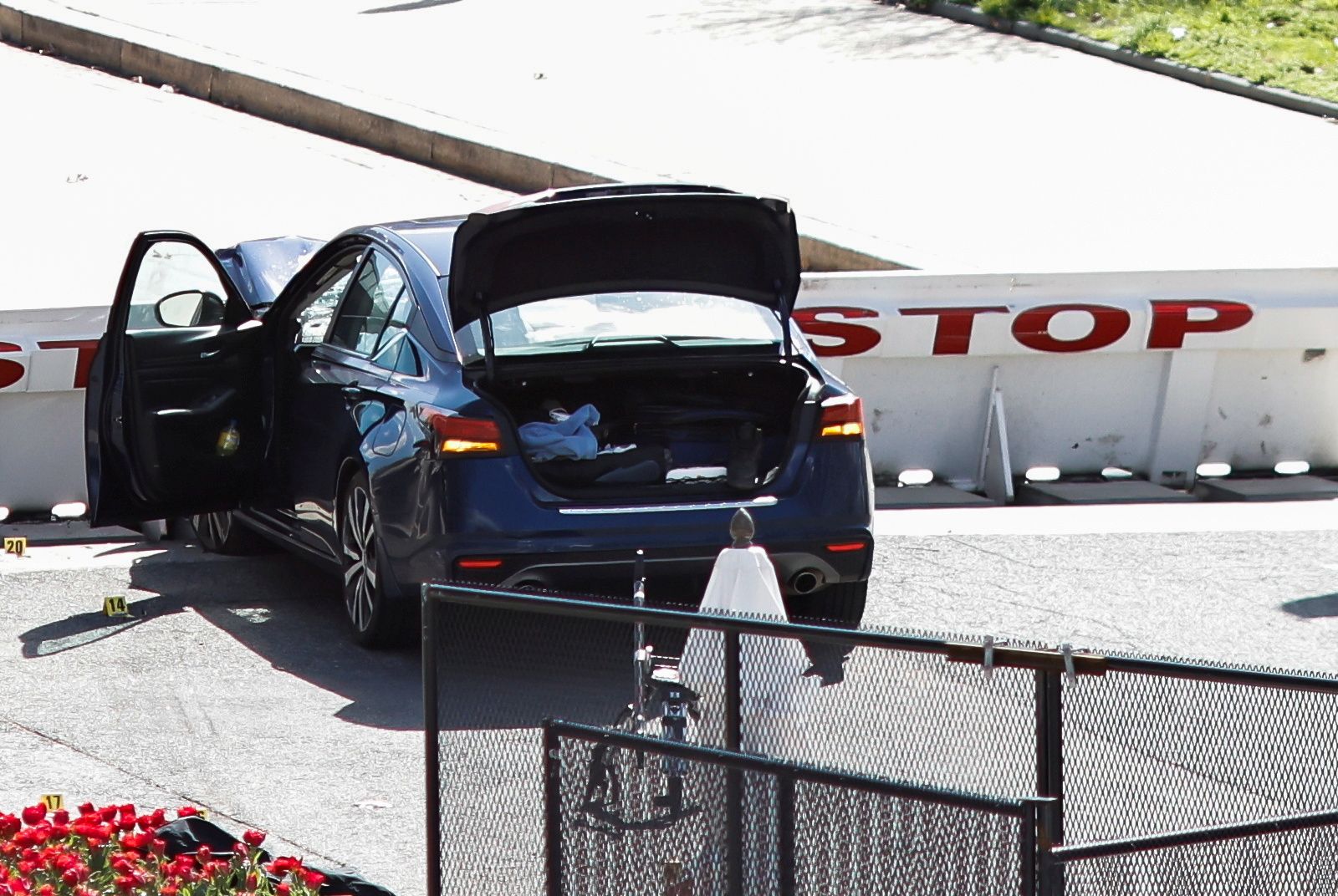
The driver emerged with a knife, and started running at two officers. Authorities shot the suspect, who died at a hospital.
- The suspect, Noah Green, described himself on Facebook as a follower of Louis Farrakhan, leader of the Nation of Islam, per the N.Y. Times.
4. Pic du jour
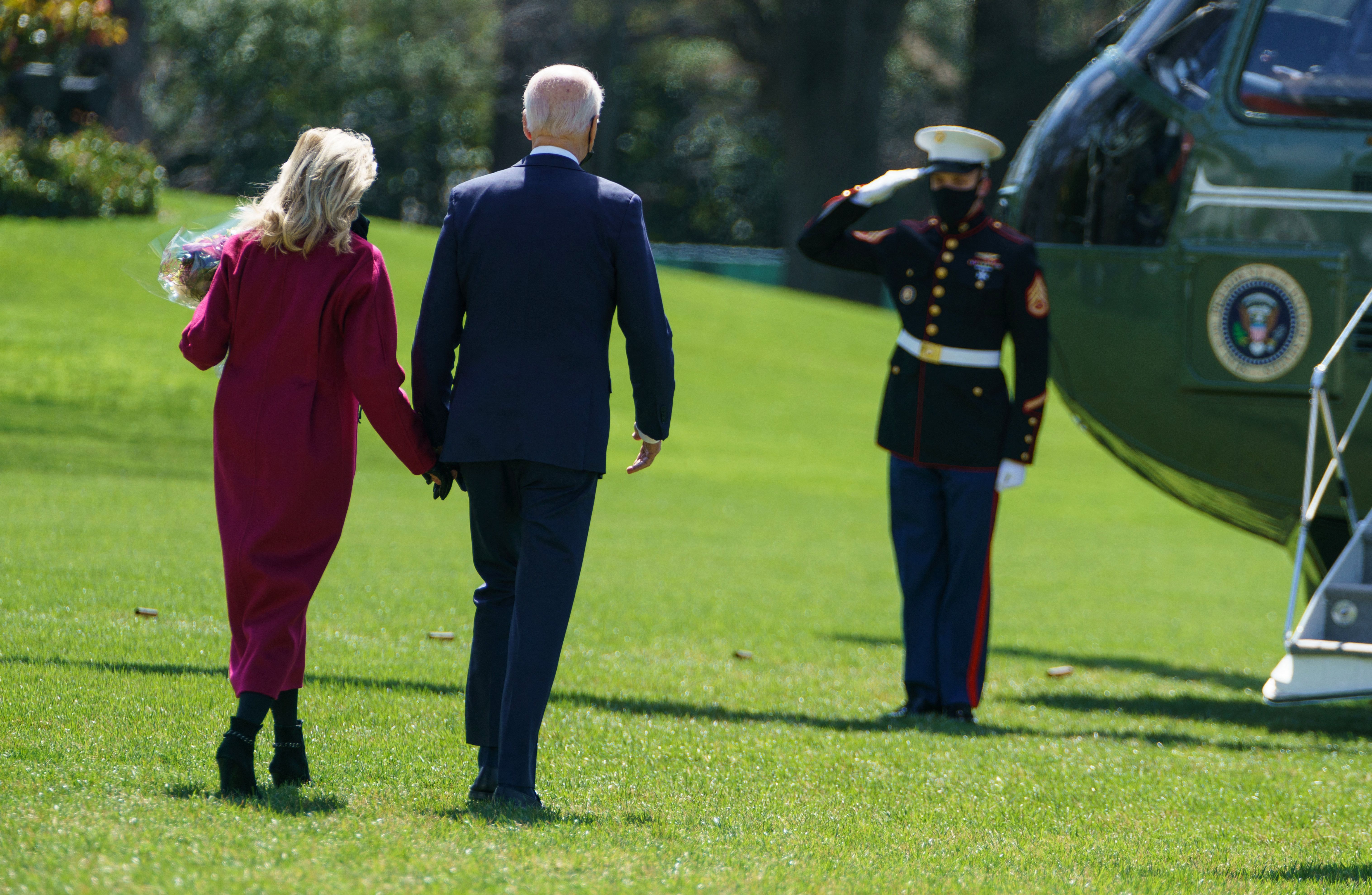
Dr. Jill Biden carries an Easter bouquet as she and President Biden board Marine One on the South Lawn, en route Camp David for the weekend.
5. Two sides of the COVID year: Stocks boom ...
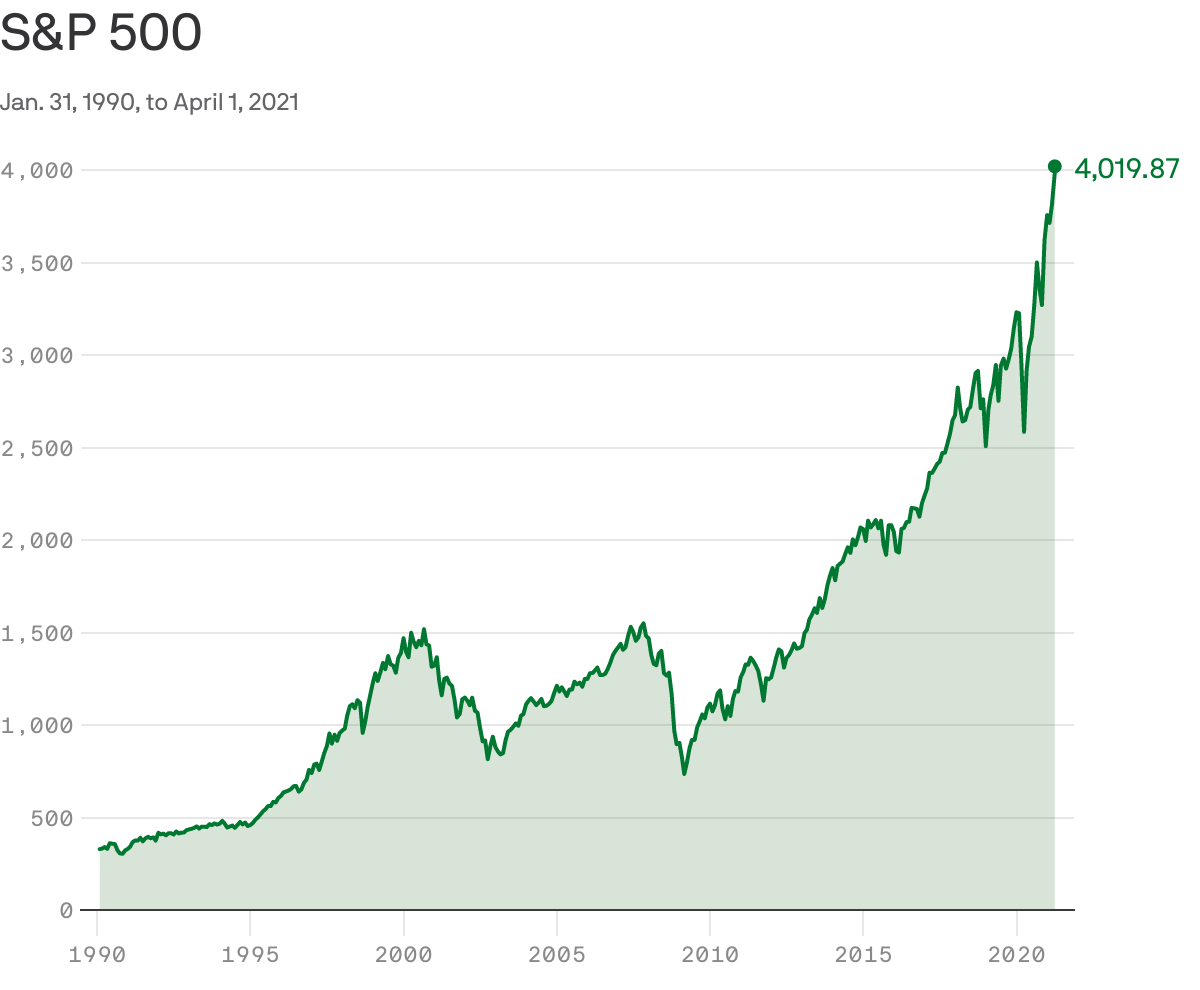
The S&P 500 closed over 4,000 this week for the first time — nearly doubling its COVID low of 2,192 in March 2020.
6. ... while much of America scrimps
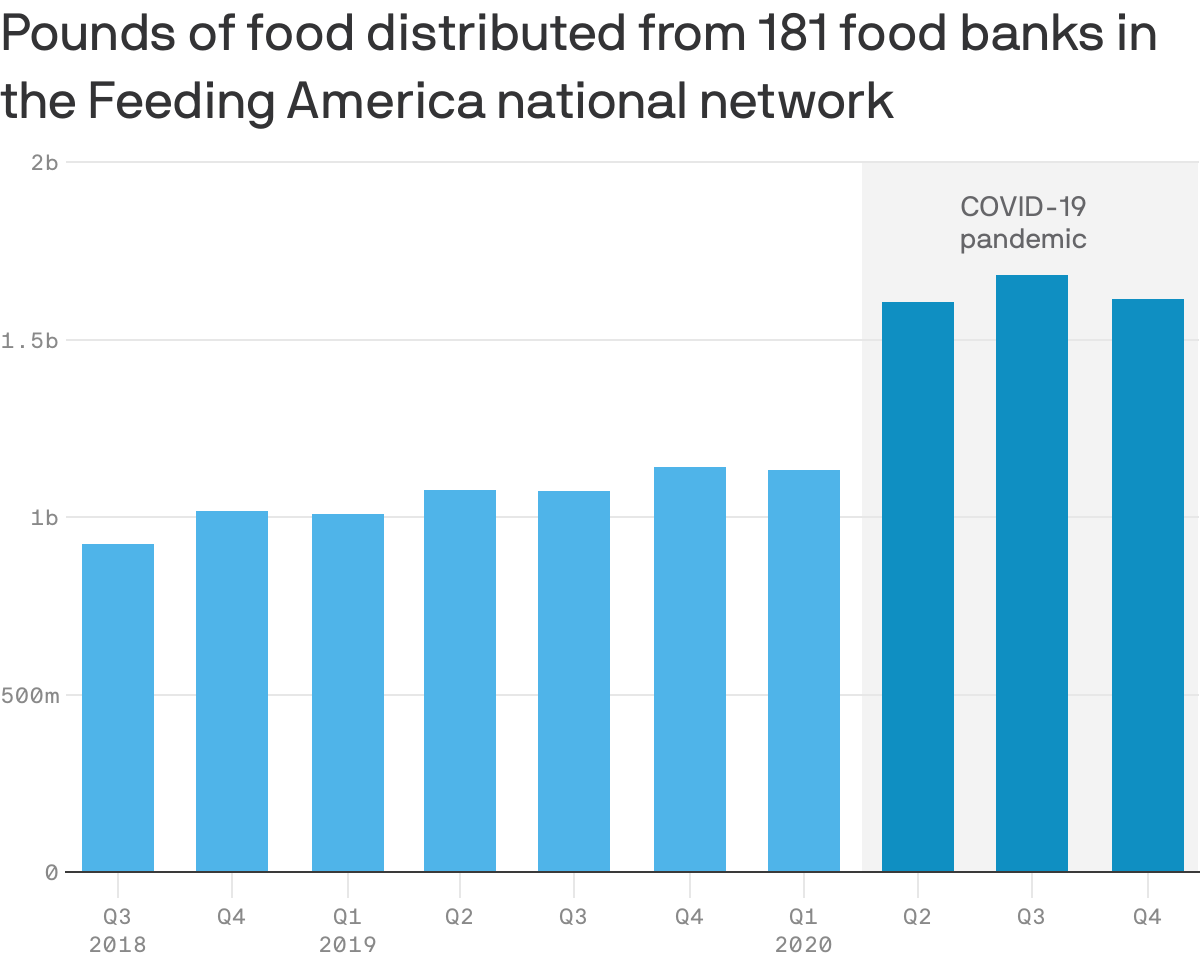
Food banks continue giving away far more canned, packaged and fresh provisions than they did before the pandemic forced many to scramble for food for the first time, AP reports in a "Hunger in America" series.
7. Brace for 17-year cicadas

Adult cicadas in Reston, Va., during their last visit in 2004. Photo: Richard Ellis/Getty Images
In a few weeks, billions of periodical cicadas are predicted to emerge in parts of the eastern U.S. after 17 years underground, managing editor Alison Snyder writes in Axios Science.
- Brood X is one of the largest of 15 groups of cicadas that come out en masse in the U.S. at various intervals.
- Once the soil temperature reaches 64°F, typically in late April or early May, billions of noisy cicadas will emerge, mate and lay eggs — all within four to six weeks.
What we're watching: D.C. could be the "main stage" for the 17-year swarm, the WashPost reports:
Georgia and other Southern states will probably be where they first emerge around the end of March, experts say. But residents of the Washington area are standing at ground zero. The District, Maryland and Virginia are likely to host more of these animals than any other of the 14 states that share the experience.
8. 1 fun thing ... No bubblegum: Sports cards go virtual

Photo: Dapper Labs
Digital basketball cards — "NBA Top Shot Moments" —appear onscreen as spinning, floating digital cubes featuring a video highlight of a star.
- They launched just five months ago, after the Canadian tech startup Dapper Labs convinced the NBA that it could prevent cheap knockoffs and help the league make money, AP reports.
- Most "Moments" cost around $20, and often below $10. But a LeBron James dunk recently went for $210,000, and a virtual card of Dallas Mavericks forward Luka Dončić is listed at $150,000.
How it works: Each Top Shot card comes with a non-fungible token (NFT) that confirms ownership. Blockchain allows the creation of permanent certificates of ownership that can’t be copied or deleted.
- "Grab & Open Packs" try to conjure the excitement of old-school cards.
Go deeper: Explainer from Axios Sports editor Kendall "Busted Bracket" Baker.
💡 This newsletter is written in Smart Brevity®. Learn how your team can communicate in the same smart, clear style with Axios HQ.
Sign up for Axios AM

Catch up with the most important news of the day