Axios AM

March 27, 2026

1 big thing: Vance's big role
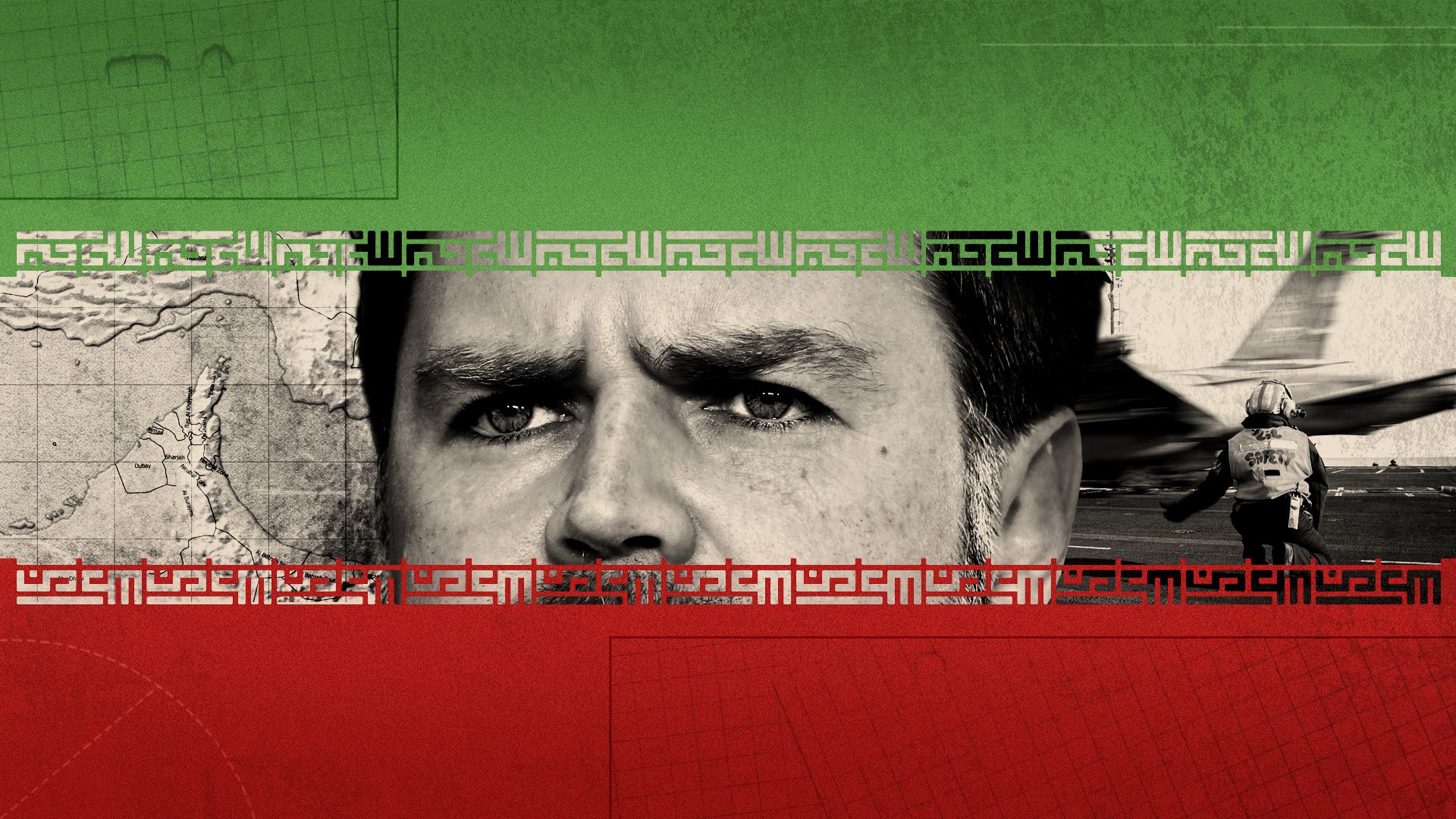
Vice President JD Vance is preparing to take on the most important assignment of his career: steering U.S. efforts to end a war he'd been concerned about waging in the first place, Axios' Marc Caputo and Barak Ravid report.
- Why it matters: Vance has already had multiple calls with Israeli Prime Minister Benjamin Netanyahu, met Gulf allies about the war and been involved in indirect communications with the Iranians. He's expected to be the top U.S. negotiator in potential peace talks.
Vance was highly skeptical of Israel's rosy prewar assessment of how the war would unfold, and currently expects the war to continue for another few weeks, according to U.S. and Israeli sources.
- Vance advisers think some in Israel are trying to undermine the VP, possibly because they find him insufficiently hawkish. Israeli officials deny that.
- President Trump made Vance's role official in a Cabinet meeting yesterday, asking the VP to give an update on Iran, and noting that he was working with Steve Witkoff and Jared Kushner on the negotiations.
🔬 Zoom in: Vance's seniority in the administration and his well-documented opposition to open-ended conflicts overseas, White House officials say, make him a more attractive interlocutor for the Iranians than Witkoff and Kushner, who oversaw the two previous rounds of failed talks.
- Partly for those reasons, Witkoff recommended Vance as lead negotiator.
- "If the Iranians can't strike a deal with Vance, they don't get a deal. He's the best they're gonna get," a senior administration official said.
- Vance is prepared to "take his place onstage" — but only if and when direct negotiations commence, according to a White House official.
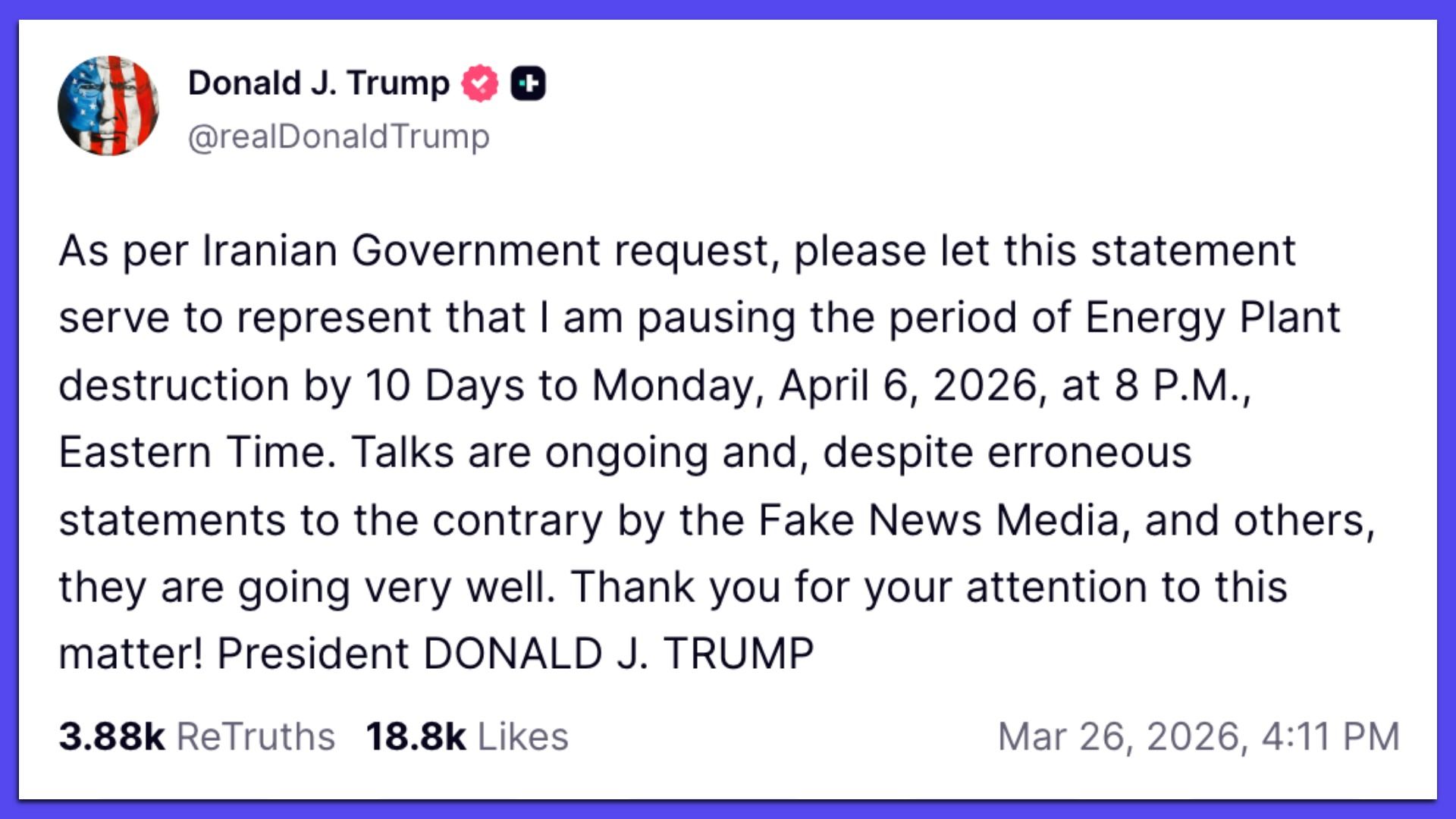
State of play: Trump extended his deadline for negotiations with Iran yesterday, as Pakistani, Egyptian and Turkish mediators keep trying to organize in-person talks.
- Iranian officials told the mediators they're still waiting for a green light from "top leadership." If such a summit happens, Vance could sit across the table from Iran's speaker of parliament, Mohammad Bagher Ghalibaf.
- The administration is also considering a major military escalation if diplomacy fails.
Between the lines: During the lead-up to war, Vance was one of the more skeptical internal voices, raising questions about its duration, purpose and impact on U.S. munitions stockpiles, sources say.
- Once Trump decided to go to war, though, Vance advocated for using overwhelming force to achieve victory as quickly as possible.
- Vance advisers say he's supportive of Israel, but is concerned about potential gaps between the U.S. and Israeli objectives as the war continues.
- 🪖 An Iraq War veteran, Vance told The Washington Post two days before bombs dropped on Tehran: "I do think we have to avoid repeating the mistakes of the past. I also think that we have to avoid over-learning the lessons of the past."
2. ⚖️ Judge's reprieve for Anthropic

3. 💊 China threatens U.S. pharma

China's emergence as a second hub of pharmaceutical innovation could trigger massive changes to the global drug market, including how treatments are regulated and priced in the U.S., Axios' Caitlin Owens reports.
- Why it matters: More cutting-edge therapies are generally a good thing for patients, regardless of where they come from. But the new world order could spark questions over who'll access those therapies and where money flows.
🇨🇳 By the numbers: China went from being the country of origin for just 8% of the world's drug development in 2015 to 32.3% in 2024, according to a new study published yesterday in JAMA.
- 🇺🇸 The U.S., on the other hand, lost ground. In 2015, 48.2% of new programs originated here. By 2024, that number dropped to 37.4%.
- During that time, the number of U.S. drug development programs grew from around 5,000 to around 7,000 — but the Chinese programs skyrocketed from fewer than a thousand to more than 6,000.
🧑🏼🔬 Between the lines: The more China succeeds at getting drugs beyond early stages of development, the more likely it is that U.S. regulators will have to make tough decisions about how to evaluate the products.
- And Chinese companies could eventually compete with Western ones on price, undercutting today's lucrative financial model.
4. 🎬 Exclusive: Newsom on AI doom
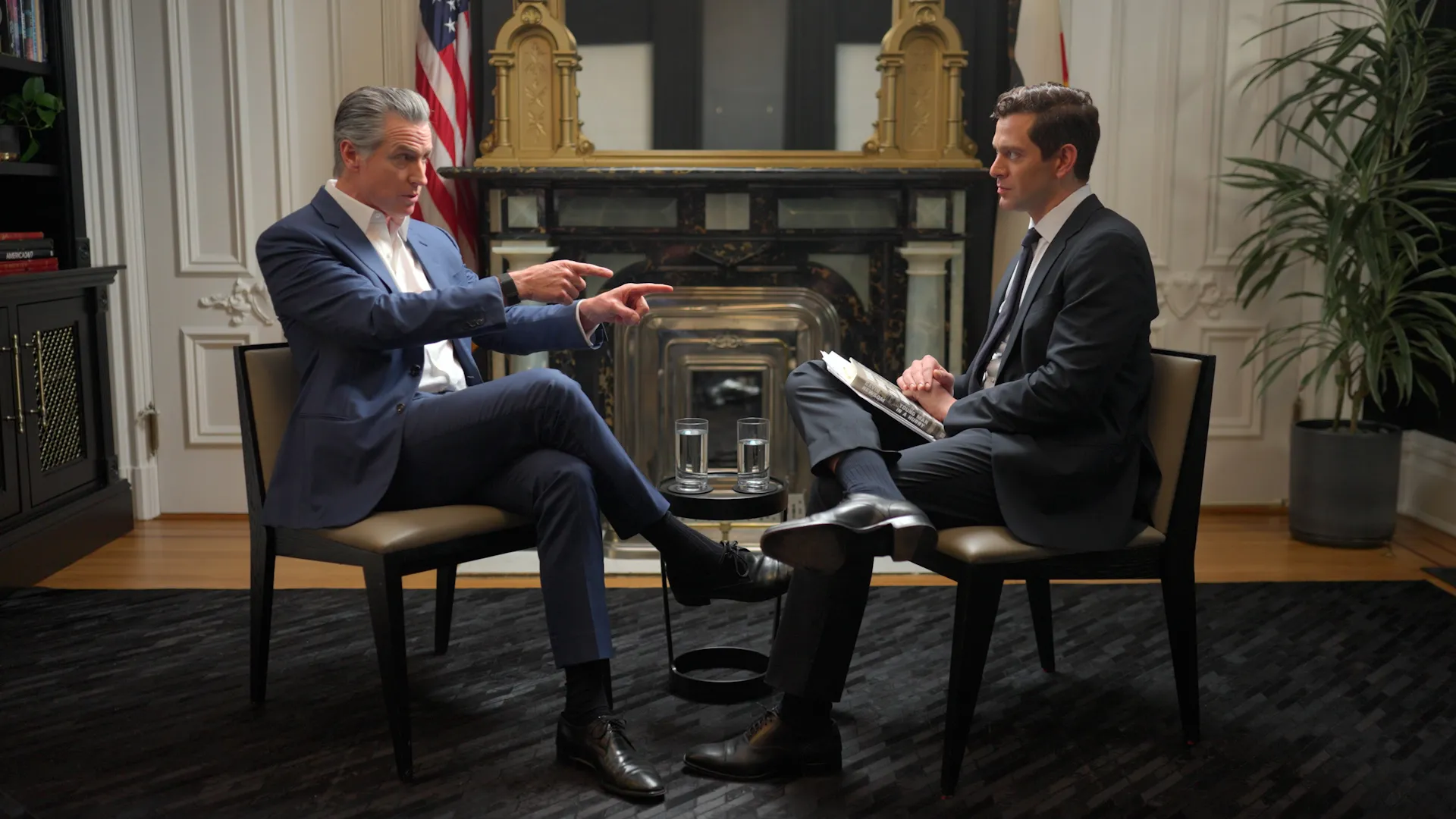
California Gov. Gavin Newsom (D) told "The Axios Show" he doesn't believe AI will lead to an apocalypse for humanity.
- "I'm not a 'doomer.' I can't live like that," he told Axios' Alex Thompson at the Governor's Mansion in Sacramento this week.
"We have to manifest a brighter future," he said. "We're not victims. We're not bystanders. We can shape the future."
- "I also believe in guardrails. And I also believe in steering the debate, which we failed to do with social media," he added. "Let's not make the same mistakes with AI."
Newsom acknowledged that being called "slick" bothers him — but said that if he were to change to satisfy critics, "then I'm fake."
5. 🚨 New inflation warning
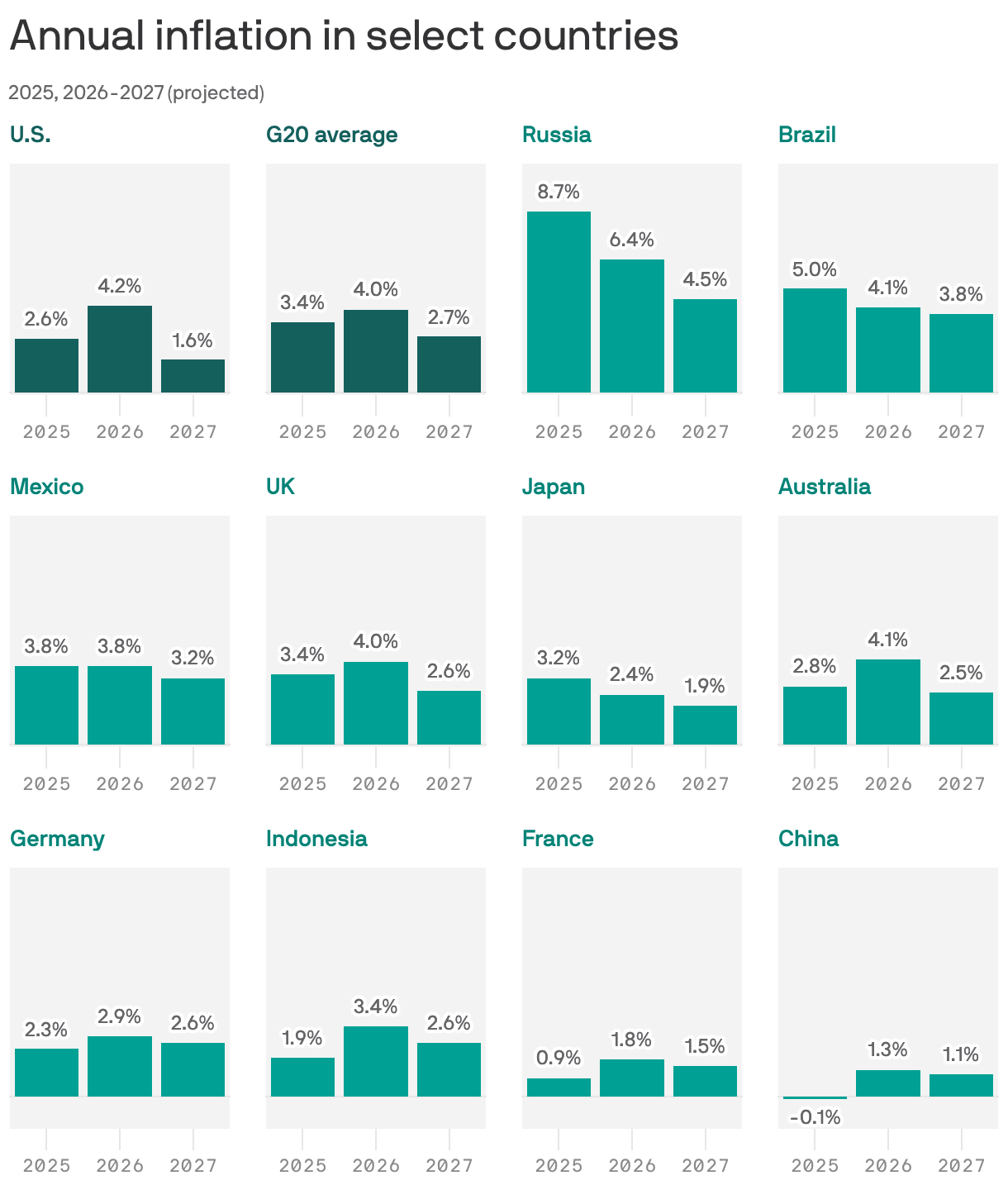
The OECD projects that U.S. inflation will edge up to 4.2% this year — up 1.2 percentage points from its previous forecast in December, Axios' Courtenay Brown writes.
- Why it matters: All over the world, a stabilizing inflation picture has been upended by the most severe global energy shock in decades.
📉 Wall Street suffered its worst losses yesterday since the war began, with the S&P 500 declining roughly 1.7%.
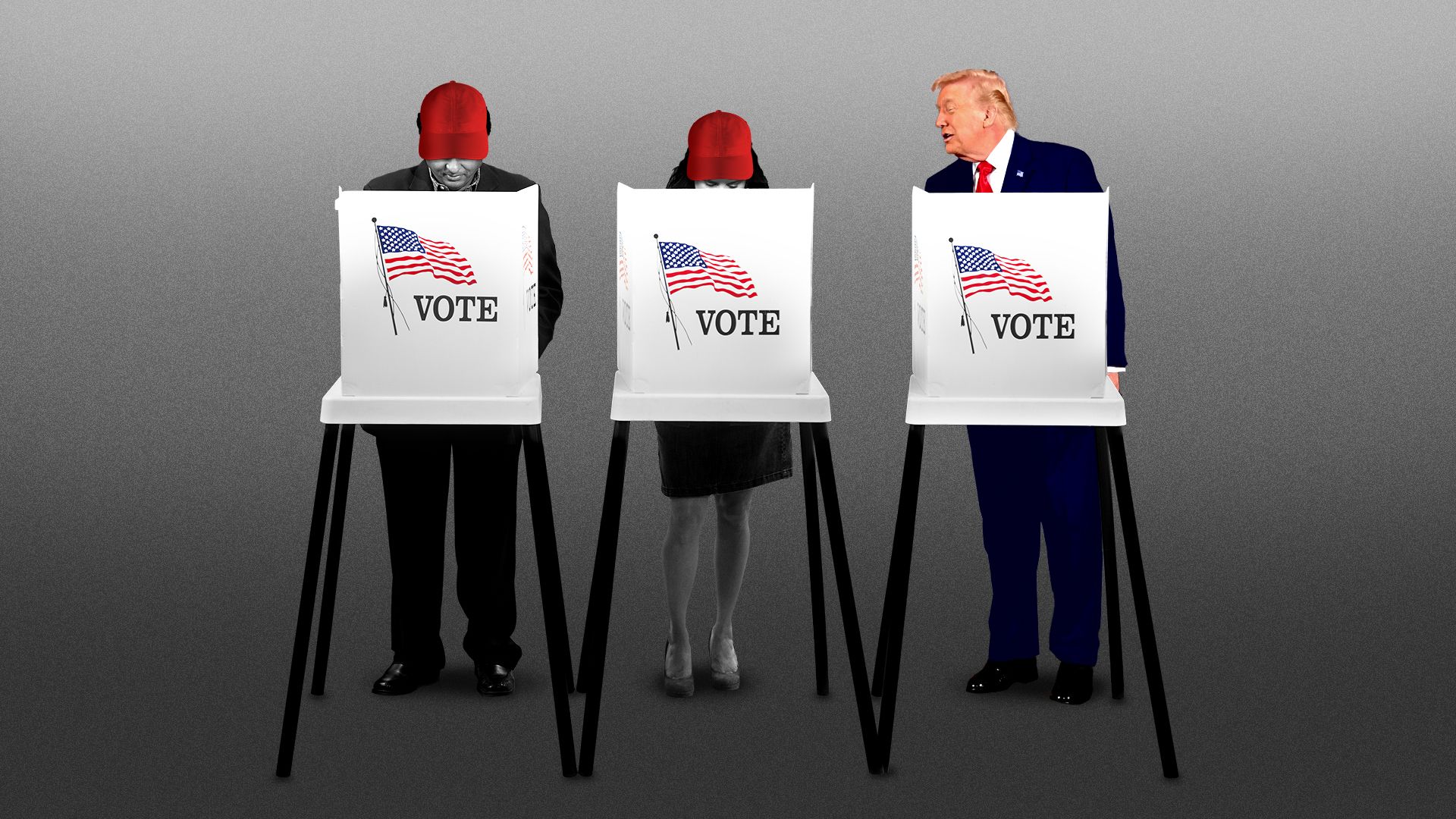
6. 🐘 MAGA stress tests
7. 🖊️ Trump to sign greenbacks
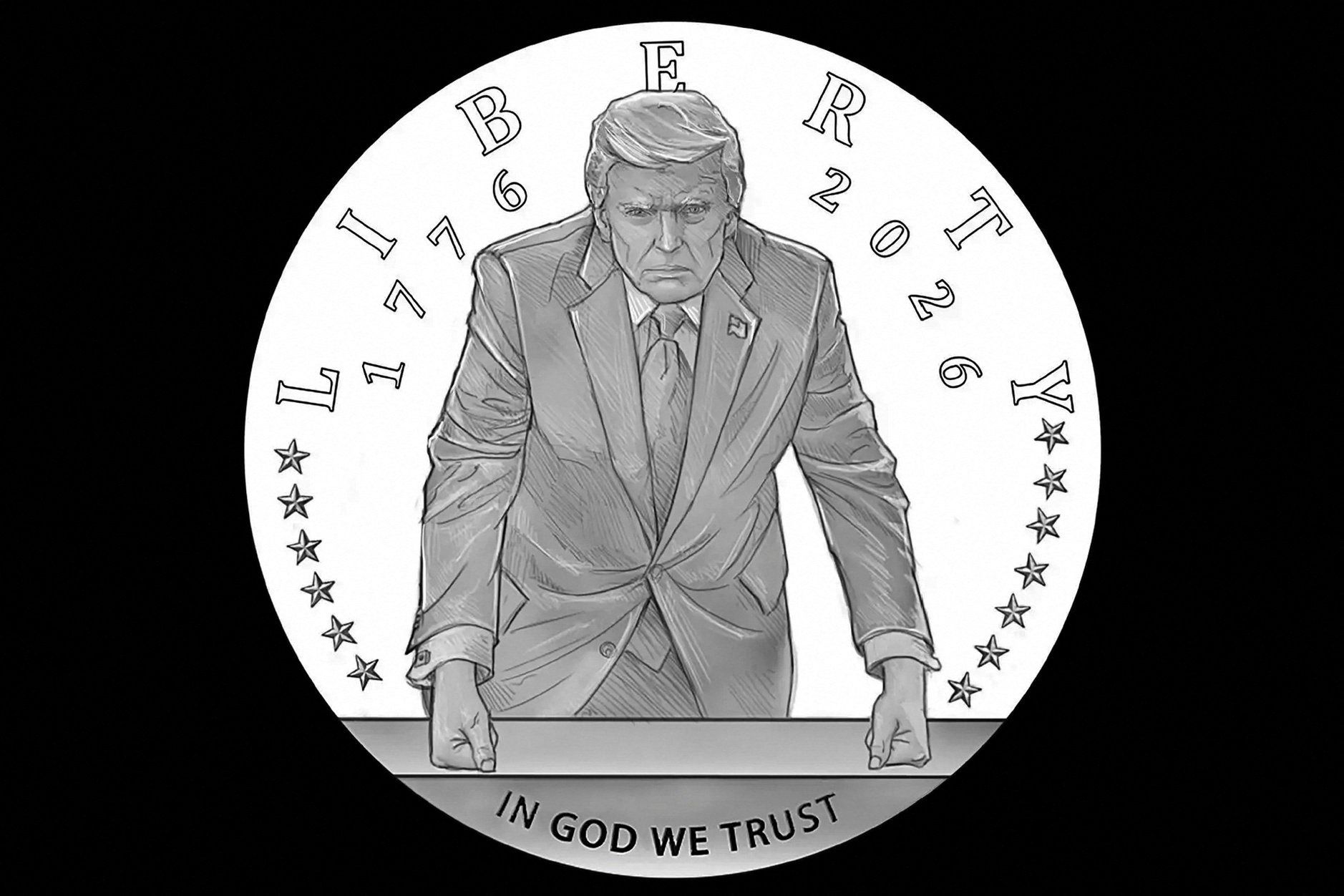
Since 1914 — 112 years ago — U.S. currency has carried the signatures of the Treasury Secretary and the U.S. treasurer. The Treasury Department announced yesterday that, for the first time, a sitting president's signature will appear on future U.S. paper currency alongside the Treasury secretary's, supplanting the treasurer, in honor of America's 250th birthday celebration. Go deeper.
- Last week, the U.S. Commission of Fine Arts approved a 24-karat gold commemorative coin bearing President Trump's image — also tied to the 250th anniversary. That cleared the way for the U.S. Mint to begin production. Go deeper.
🛠️ As Trump continues to reshape Washington's architecture, he has discussed turning the White House Treaty Room, on the second floor of the presidential residence, into a guest bedroom with an en suite bath, the N.Y. Times' Luke Broadwater and Maggie Haberman report.
8. 🌸 1 for the road: Sign of the times
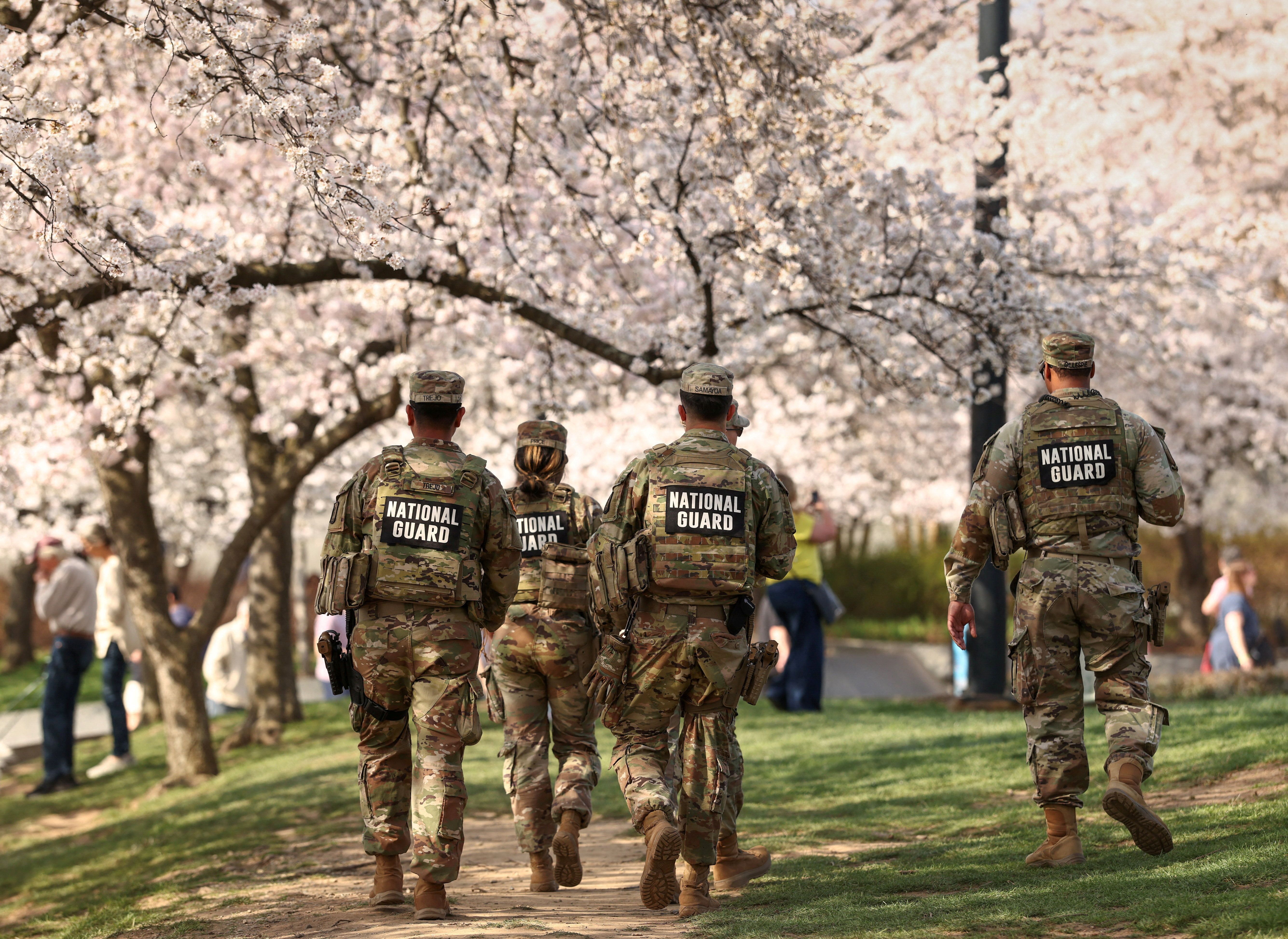
National Guard members patrol amid cherry blossoms along the Tidal Basin in Washington yesterday.
- "Peak bloom" started yesterday and typically lasts 3-7 days.
👑 D.C. readers: Help crown a replacement for Stumpy, a beloved (albeit diminutive) cherry tree that fell victim to seawall repairs. Take the Axios poll.
Axios AM