Axios AM

January 29, 2022
Happy Saturday! Smart Brevity™ count: 1,196 words ... 4½ minutes. Edited by Jennifer Koons.
1 big thing: We're tipping more
Illustration: Sarah Grillo/Axios
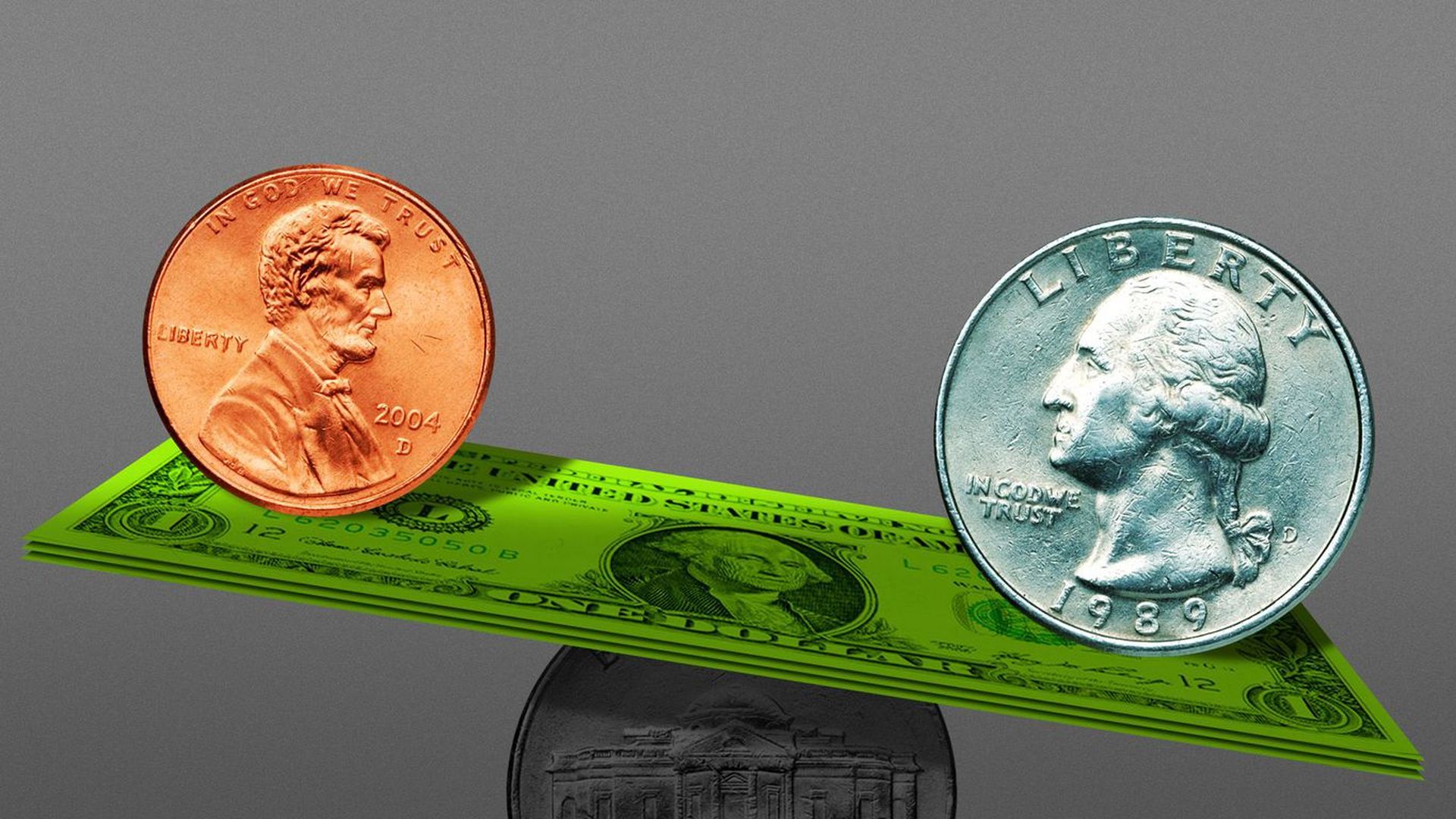
From restaurants to ride-sharing, Americans are tipping a lot more than they did before the pandemic, according to experts and data provided to Axios by digital payments company Square.
- Why it matters: America is undergoing a cultural shift, with tipping permeating areas of life where it was previously uncommon, writes Nathan Bomey, co-author of Axios Closer.
What's happening: We're leaving tips much more frequently, in part because a lot more transactions are prompting us to — sometimes before the service we're tipping for has been completed.
- Tipping on remote transactions — things like ordering takeout — has become far more common.
- The percentage of remote transactions in which the consumer tipped (when the chance was offered) has soared from about 46% before the pandemic to about 86% now, according to Square.
Zoom out: The average person tips 20% at a sit-down restaurant, 17% for food delivery and 15% for carryout, according to a June survey by CreditCards.com.
- Before the pandemic, people tipped on about 63% of in-person credit-card transactions that provided an option to tip, according to Square. By August 2021, they were tipping on about 66% of such payments.
- The average tip amount was about 20%, pre-pandemic. It has risen slightly, to about 21%.
Zoom in: Uber is now prompting riders to tip before the ride is over. That option was always available, but the app previously didn't send a prompt until the end of the ride.
- Uber now routinely offers 30% as a tip option.
- "Customers have gone out of their way to support drivers, with the average tip increasing throughout the pandemic in the U.S.," Uber spokesperson Harry Hartfield tells Axios.
The other side: Tipping opponents have advocated for ending the practice at restaurants and service destinations by raising prices to enable businesses to pay workers a fair wage.
- But the trend hasn’t extended beyond a couple hundred restaurants — many of which soon reversed their policies.
- Even New York restaurateur Danny Meyer, who famously ended tipping at his restaurants in 2015, reversed himself in 2020.
💰Get Axios Closer, your happy-hour business briefing from Nathan Bomey and Hope King ... Share this story.
2. 📊 Hybrid desk work passes 50%
llustration: Eniola Odetunde/Axios
For the first time since the start of the pandemic, most knowledge workers ("work with data, analyze information or think creatively") are in hybrid work arrangements — partly remote and partly in-office, Axios Markets co-author Emily Peck writes from a new survey.
- 58% said they now work this way, in a survey of 10,000 knowledge workers from the U.S., Europe, Australia and Japan, conducted last November by Future Forum, a research group backed by Slack.
Why it matters: These hybrid arrangements could deepen work inequities for parents, especially mothers and workers of color — groups that are more likely to work remotely.
- Yet caregivers need and want the flexibility and workers of color do, too: The survey finds that underrepresented groups overwhelmingly prefer flexible, remote arrangements.
State of play: 75% of working parents are remote or hybrid, compared to 64% of non-parents.
- Executives are more likely to come into the office, the survey found.
Zoom out: The risk is proximity bias — executives favoring workers they see in the office.
- Brian Elliott, executive leader of Future Forum, said: "If we apply the old models of presenteeism and hustle culture, we run the risks of widening the cracks of DEI across organizations."
- 💸 Get Axios Markets, your pre-opening briefing from Emily Peck and Matt Phillips ... Share this story.
3. Russian buildup includes blood
Employees of essential city industries and services attend a military training session outside Lviv, Ukraine, this week. Photo: Roman Baluk/Reuters
A Russian troop buildup along its border with Ukraine includes supplies of blood for the wounded, Reuters reports.
- Why it matters: The disclosure adds to growing U.S. concern that Russia could be preparing for a new invasion of Ukraine as it has amassed more than 100,000 troops near its borders.
4. Weekend quiz: What city is this?

The sun sets last night behind ... where?
- Answer at Item 7.
5. Worthy read: Spyware wars
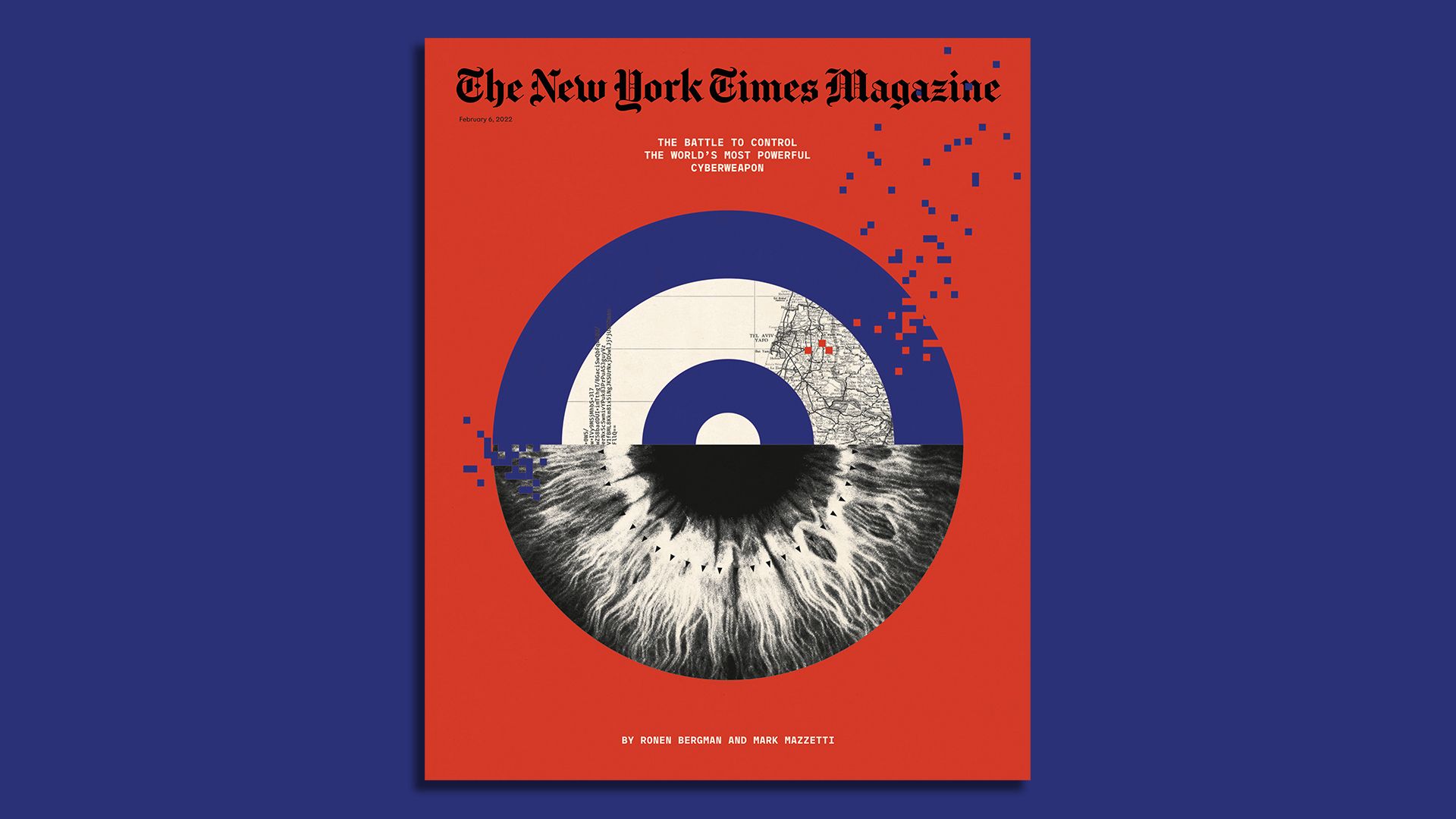
Photo illustration by Cristiana Couceiro. Source photographs: Dennis Cooper/Getty Images; Library of Congress, Geography and Map Division.
Coming in next weekend's New York Times Magazine — a yearlong investigation into Israel's hacker-for-hire NSO Group, which claims its Pegasus tool can crack the encrypted communications of any iPhone or Android smartphone that's not in the U.S.
- Ronen Bergman and Mark Mazzetti write that the U.S. has responded by "secretly acquiring, testing and deploying the company’s technology, even as it has denounced the company in public."
Why it matters: "[G]overnments increasingly view powerful cyberweapons the same way they have long viewed military hardware like fighter jets and centrifuges ... as a currency ... to buy influence."
Context: Pegasus has been used by other governments against journalists, political dissidents, and civil- and women's-rights activists.
The article's opening scene reveals that the FBI purchased a test of Pegasus, bringing NSO engineers to New Jersey in 2019 for a demo:
F.B.I. employees bought new smartphones at local stores and set them up with dummy accounts, using SIM cards from other countries — Pegasus was designed to be unable to hack into American numbers.
Then the Pegasus engineers ... opened their interface, entered the number of the phone and began an attack.
"What they could see, minutes later," The Times reports, "was every piece of data stored on the phone as it unspooled onto the large monitors of the Pegasus computers: every email, every photo, every text thread, every personal contact."
They could also see the phone’s location and even take control of its camera and microphone.
Last summer, the FBI decided not to deploy the NSO weapons.
- In November, the Commerce Department put export controls on NSO for "malicious cyber activities" and enabling "foreign governments to conduct transnational repression."
6. 🏈 Flag football eyes '28 Olympics

The NFL is backing an effort to get flag football — one of the faster growing options for the sport, in the U.S. and worldwide — into the 2028 Summer Games in L.A., AP NFL writer Barry Wilner reports.
- Why it matters: Flag football attributes include gender balance, smaller rosters, quick turnaround between games, and low cost to play.
State of play: 71 nations on five continents are members of the International Federation of American Football. The flag version will be among 30 sports on display at the World Games in July in Birmingham, Ala. — a key step in popularizing the game.
- Damani Leech, the NFL's COO of international, said: "[W]e share a common interest in increasing opportunities for athletes to play football at all levels."
👀 What we're watching: Competition is tight for Olympic additions. Baseball and softball are expected to return after sitting out 2024 in Paris. Lacrosse and cricket are also interested in L.A.
7. 🧠 Quiz answer

That's the banking district in Frankfurt, Germany, which calls itself "the smallest metropolis in the world." Metro area: 800,000.
8. 📷 Parting shot
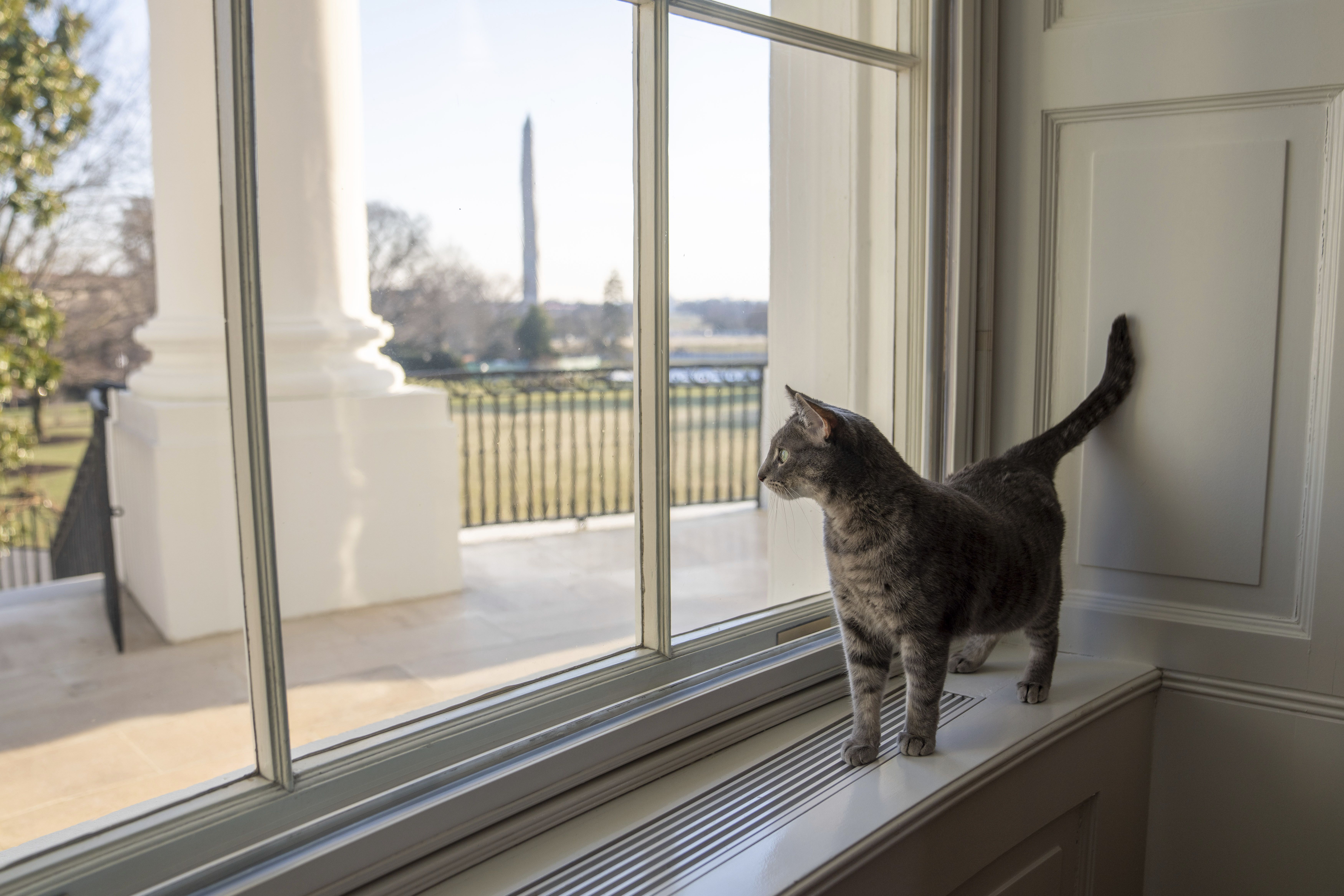
For the first time in 13 years, a cat roams the White House:
- Willow is a 2-year-old, green-eyed, gray-and-white farm cat from Pennsylvania, who caught First Lady Jill Biden's eye on the campaign trail, AP's Darlene Superville writes.
Willow is named after the first lady’s hometown of Willow Grove, Pa.
- More Willow pics ... Pics of Socks (at the podium) and other previous presidential pets.
📬 Was this email forwarded to you? Sign up here for your own personal copy of Axios AM and Axios PM.
Sign up for Axios AM

Catch up with the most important news of the day