Axios AM

March 24, 2026

1 big thing: America's next class war — AI fluency
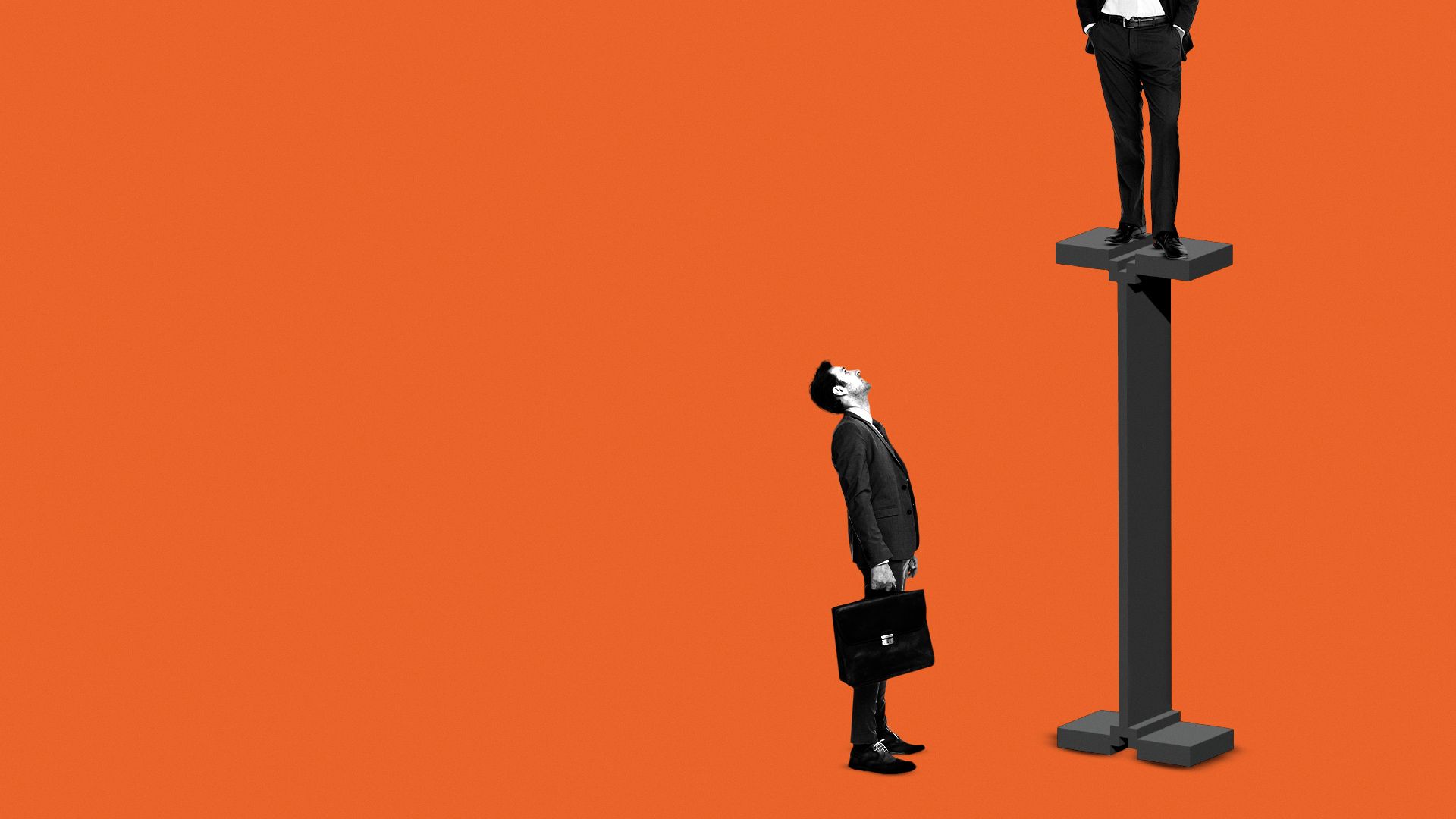
Anthropic just dropped the most granular data yet on who's actually using AI and how — and the findings should rattle anyone thinking the AI gains will be evenly distributed, Jim VandeHei and Mike Allen write in a new "Behind the Curtain" column.
- It won't. In fact, it's creating a new form of economic inequality: AI fluency.
Why it matters: The Anthropic data, out this morning, reveals something subtler and more consequential than the "robots take your job" narrative.
- The real divide isn't between people who use AI and people who don't. It's between experienced AI users and newcomers to AI.
AI continues to pose a serious risk to any automatable jobs, which Anthropic CEO Dario Amodei has warned could wipe out half of entry-level white-collar work.
- Two workflow categories doubled in prevalence between November and February: automated sales and outreach, and automated trading.
But AI will also be a growing threat to casual or unsophisticated users who fall behind their more AI-savvy peers, regardless of role or level.
- "Much of the discussion focuses on how AI is something that happens to you," Peter McCrory, Anthropic's head of economics, told us from the company's headquarters in San Francisco.
- "This analysis shows you can develop skills that make you better at getting value out of Claude or whatever large language model you want to use."
💡 Some context: Anthropic's new report, "Anthropic Economic Index: Learning Curves," studied over 1 million conversations on the company's Claude platform last month.
- The headline finding: Experienced AI users get better results out of an AI model than newcomers. And the gap isn't explained by what tasks they're doing, what country they're in, or what model they're using.
- People who've used Claude for six months or more have a 10% higher success rate in their conversations with AI. "The longer you've been using it, the stronger this effect," McCrory says.
🏛️ Adoption of Claude in hypereducated Washington, D.C., is four times the adoption rate you'd expect for a city of its size.
- Globally, inequality in usage has persisted since Anthropic's last report, in January, in the 20 higher-income countries with the most Claude use.
That's a skills gap hardening into a class gap in real time. But you can escape it by experimenting, getting comfortable, getting deft, getting fluent.
- Anthropic's researchers are candid that this could be early-adopter selection bias or survivorship — maybe sophisticated users simply signed up first.
- But Anthropic's finding certainly mirrors our personal experience.
🧠 Between the lines: People think of AI as a tool, when you should think of it as a never-before-imagined toolbox — it allows you to not just automate a boring task, but stretch your abilities across most things you touch at work. But only once you start to master prompts, and pushback, and persistence when unsatisfying or unilluminating answers come back.
- Jim started using the models like most — like a search engine. But then they became his best researcher ... then idea stress-tester ... then builder of prototypes for new businesses. He's basically at the six-month mark Anthropic describes, and discovering new use cases every week.
🪜 You have to move up the AI proficiency ladder. Using a large language model as a search engine or copy editor is dumb AI. Even having it draft emails for you is like having a celebrity chef boil your water.
- The report divides tasks into "automation" (do this task) and "augmentation" — more polished, sophisticated inputs like using the LLM as a thought partner that spits out ideas and feedback, or writes a business plan, or stress-tests a business plan, or coaches and teaches you.
- Think how much more valuable AI dexterity will make you to your current organization — or how much more marketable it'll make you to a future employer.
🤔 The big picture: This report lands in the middle of the most anxious era Americans have experienced about AI and jobs since OpenAI's ChatGPT moment after the model's release in late 2022.
- An NBC News poll from earlier this month found that 57% of registered voters believe AI's risks outweigh its benefits.
- Only 26% have positive feelings about the technology — a net favorability lower than that of any other topic polled, except the Democratic Party and Iran. (AI was two points less popular than ICE.)
AI users are getting better, while AI anxiety surges and the job market deteriorates. It's a reality that Washington isn't confronting with consistency and seriousness.
- Washington is debating AI in the abstract: Should we regulate it, should we race China, should we worry about superintelligence?
- But the Anthropic report makes the near-term problem concrete: Signs of a two-tier workforce are already emerging. And neither party has a plan for people on the wrong side of it.
- What Anthropic found in observing real-world use: Skilled AI users are getting better at collaborating with Claude to do a wide variety of work, not just automate specific activities.
The bottom line: The people already using AI for high-value work may pull further ahead, with real implications for who captures the economic benefits of this technology.
- If you're not an early adopter, today's your chance.
🎬 Watch our "Behind the Curtain" YouTube, "The AI Gap." (Executive producer: Jimmy Shelton)
2. 🦾 Axios AI+ DC summit kicks off with focus on defense
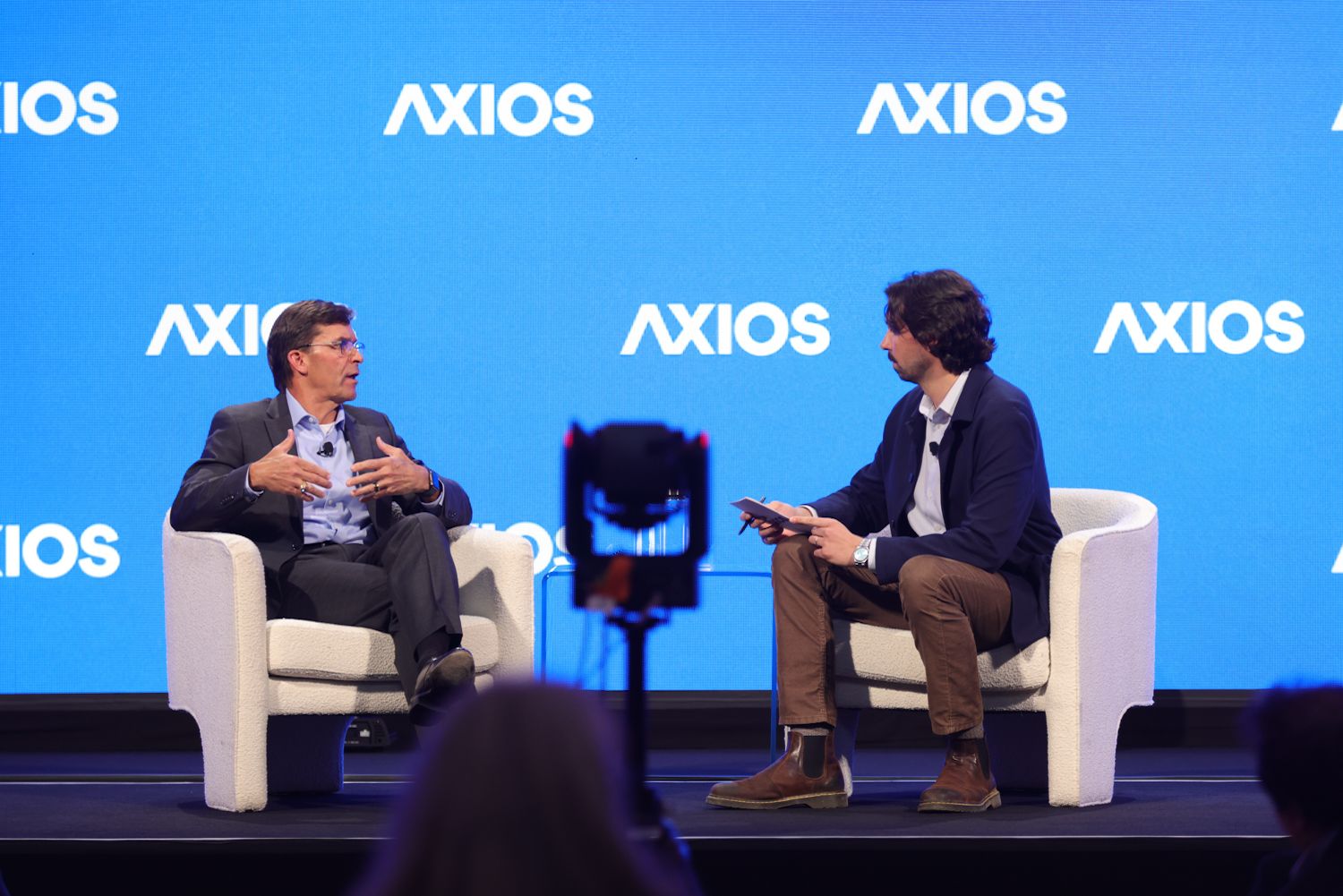
Former Defense Secretary Mark Esper warned at last evening's kickoff of the three-day Axios AI+ DC summit that America's military is "not moving fast enough, in terms of getting robotics, autonomous systems, into the department, into the active duty Army, Navy, Air Force, Marines."
- "We have the technology, we have the doctrine, the know-how. We have to get there before the Chinese," said Esper, who headed the Pentagon in the first Trump administration and is a former Army secretary.
🔮 What's next: This is our fourth annual AI+ DC Summit. Today, we'll explore the "New Wave of the AI Economy."
- Watch here at 6 p.m. ET to see interviews with Rep. Deborah Ross (D-N.C.) and District of Columbia CTO Stephen Miller.
3. 📚 Coming this fall: Bob Woodward's "Secrets"

4. ⚖️ Rubio to testify in former housemate's trial
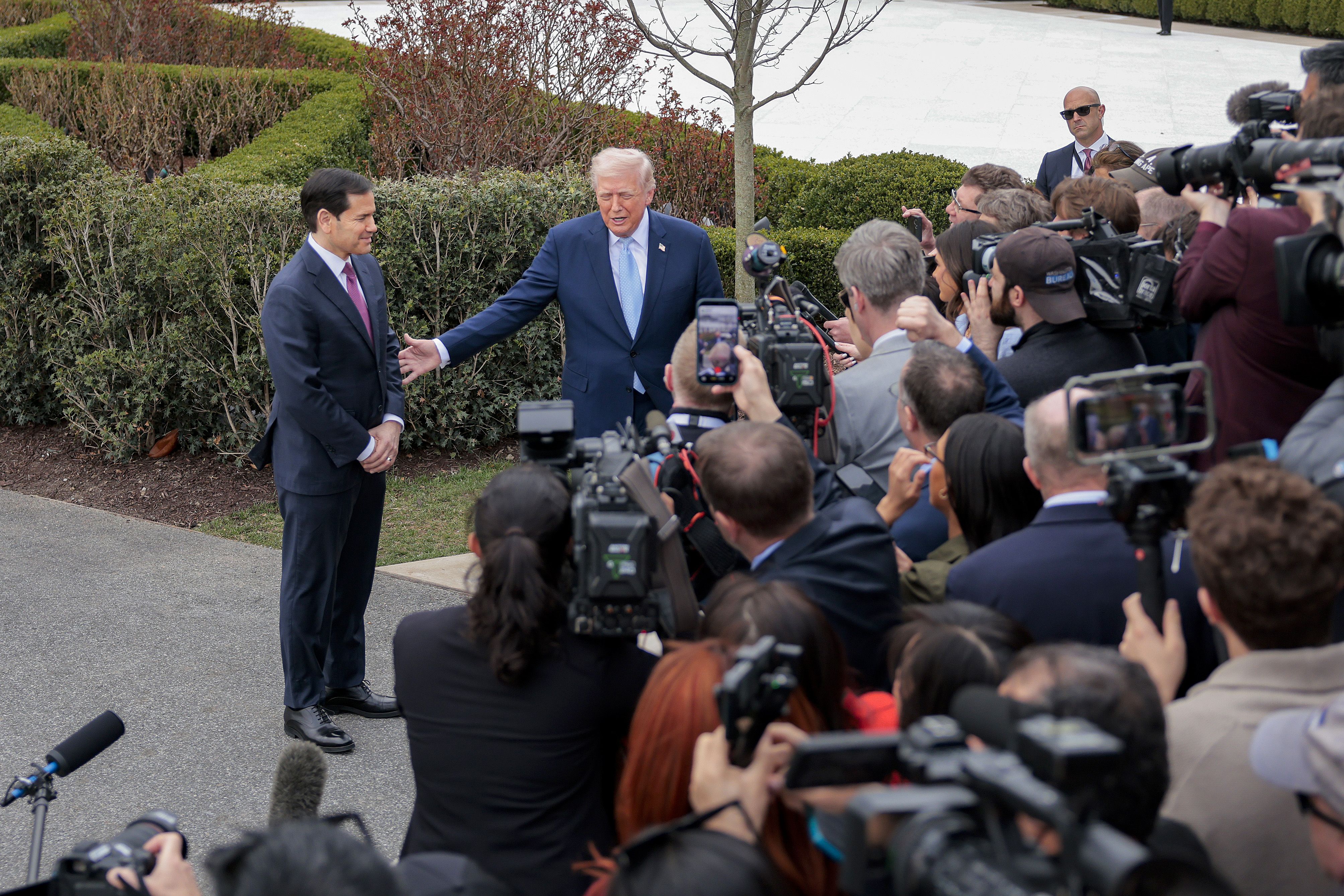
Secretary of State Marco Rubio is scheduled to testify today in the federal trial of former U.S. Rep. David Rivera (R-Fla.), a longtime political ally, friend and former housemate who's accused of secretly lobbying for Venezuela's government, Axios' Marc Caputo writes.
- Why it matters: The timing of the trial comes at an inconvenient time for the secretary of state. He's helping President Trump manage the fallout of the Iran war, the replacement of Maduro's government in Venezuela and the planned takeover of Cuba.
🛢️ The only-in-Miami trial sheds light on the unseemly world of shadowy, big-dollar foreign influence efforts in Latin America — and underscores how politically toxic Rivera has been to Rubio's career.
- Rubio asked to be called as a prosecution witness after it became clear that Rivera's team planned to call him as a defense witness — a potential embarrassment for the secretary, three sources tell Axios.
Rivera and his associate Esther Nuhfer are charged in an 11-count indictment with alleged money laundering and failing to register as a foreign agent on behalf of Nicolás Maduro's government in Venezuela.
5. ✈️ ICE spotted at airports

ICE agents have appeared this week at airports in Atlanta, New York City, Houston, New Orleans and more after President Trump ordered them to help fix hourslong security lines.
- Many of the agents seen at airports yesterday appeared to be milling about or keeping watch, not working as screeners.

What's next: This Friday would mark TSA's second missed paycheck, adding pressure on Congress to end the shutdown.
- Lawmakers have a two-week break coming up — and may want to unclog the airports before getting stuck themselves.
6. 🎰 Kalshi to preemptively block athletes, pols from insider bets

Prediction market Kalshi is preemptively blocking athletes, coaches and officials from betting on their sports and political candidates from trading on their campaigns, Axios' Nathan Bomey reports exclusively.
- Kalshi rules already prevented athletes from trading on their games and politicians from trading on their campaigns.
- This move prevents people in those positions from making any trades in the first place.
🛑 Robert DeNault, head of enforcement at Kalshi, tells Axios that the company will have a better shot at blocking illicit efforts with preemptive bans.
7. 📀 "Flexible" data centers

Nvidia and startup Emerald AI are working with major U.S. energy companies to develop a new class of data centers designed to flex their power use, Axios' Amy Harder reports.
- The effort reflects a push to turn AI data centers from massive power consumers into more dynamic grid participants, as electricity demand from AI surges.
🔌 The companies — including AES, Constellation, NextEra Energy, Invenergy and Vistra — plan to collaborate on energy and infrastructure approaches to support "flexible AI factories."
- These facilities could ramp their power use up or down during periods of high demand, rather than running at constant full capacity.
8. 📱 1 tech thing: iPhone keyboard fix coming

An upcoming iPhone update will return your typing prowess, MacRumors reports.
- Some users have been complaining lately about inaccurate typing, especially when quickly tapping out messages.
⌨️ MacRumors writes: "There was a bug in iOS that caused some characters to be missed when a user was typing quickly. ... The missed characters could impact how auto-correct worked."
- "In its notes for the software, Apple says iOS 26.4 offers 'improved keyboard accuracy when typing quickly.'"
Axios AM