Axios AM

August 28, 2026

1 big thing: Nvidia almighty
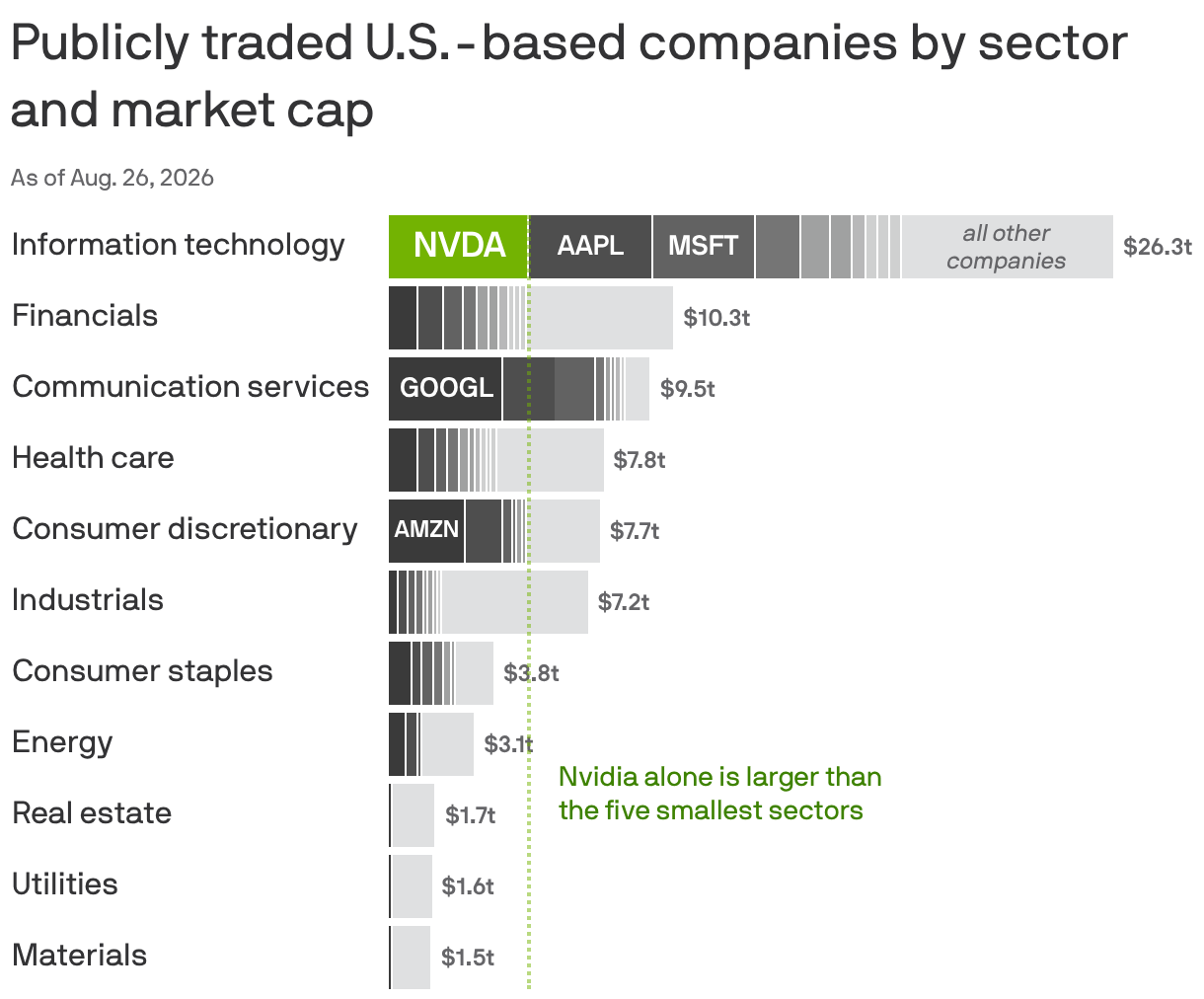
Nvidia made billions selling AI's essential ingredient: chips.
- Now the company is plowing those riches straight back into the AI ecosystem, betting on a buildout that craves ever more compute, Axios' Madison Mills writes.
Why it matters: Nvidia has become the AI industry's supplier, banker and kingmaker, feeding a self-reinforcing cycle in which chip profits finance the next wave of chip demand.
State of play: Already the world's most valuable company, Nvidia is now worth more than five of the 11 sectors that make up the S&P 500.
- The chipmaker reported nearly $60 billion in quarterly profit Wednesday, prompting The Kobeissi Letter to call the results "the most impressive earnings in history."
- Nvidia believes its reign is far from over, telling investors to expect roughly 70% revenue growth even from today's extraordinary heights.
🔭 Zoom out: Nvidia's vast chip windfall has enabled the company to take on a new role as financial patron of the entire AI industry.
- Nvidia is involved in more than $750 billion worth of AI investments, financing deals and partnerships, according to PitchBook — a staggering footprint for a company whose core business is still selling chips.
- That figure does not include this week's reported $13 billion acquisition of Hugging Face, which would give Nvidia control over one of the industry's most important model-distribution hubs.
- CEO Jensen Huang has enlisted Wall Street to mobilize more than $500 billion for AI infrastructure, channeling outside capital toward the data-center buildout that drives more than 90% of Nvidia's quarterly revenue.
🎡 Between the lines: The strategy creates a powerful flywheel: The more money Nvidia helps pour into AI, the more compute the industry builds — and the more chips it needs.
Reality check: Critics say Nvidia's flywheel looks uncomfortably circular.
- The company is helping finance customers and infrastructure projects that then spend heavily on its own hardware, raising questions about how much demand is being supported by Nvidia's own balance sheet.
- Huang has dismissed those concerns, telling CNBC Wednesday that Nvidia's investments will generate "tremendous returns" and that "the risk is low."
Threat level: The cozy relationship between Nvidia and its biggest customers is becoming increasingly competitive.
- OpenAI, Google, Amazon, Microsoft and others are pouring billions into custom chips designed to reduce their dependence on Nvidia. OpenAI claims its new Jalapeño chip outperforms Nvidia hardware on some workloads.
- Nvidia, meanwhile, is spending billions developing its own open-source AI models, aiming to become the American champion in a field increasingly dominated by Chinese models.
The bottom line: The result is an unusually tangled ecosystem in which Nvidia is simultaneously supplier, investor, partner — and increasingly competitor — to AI's biggest players.
2. 🇮🇷 U.S. strengthens Hormuz hand
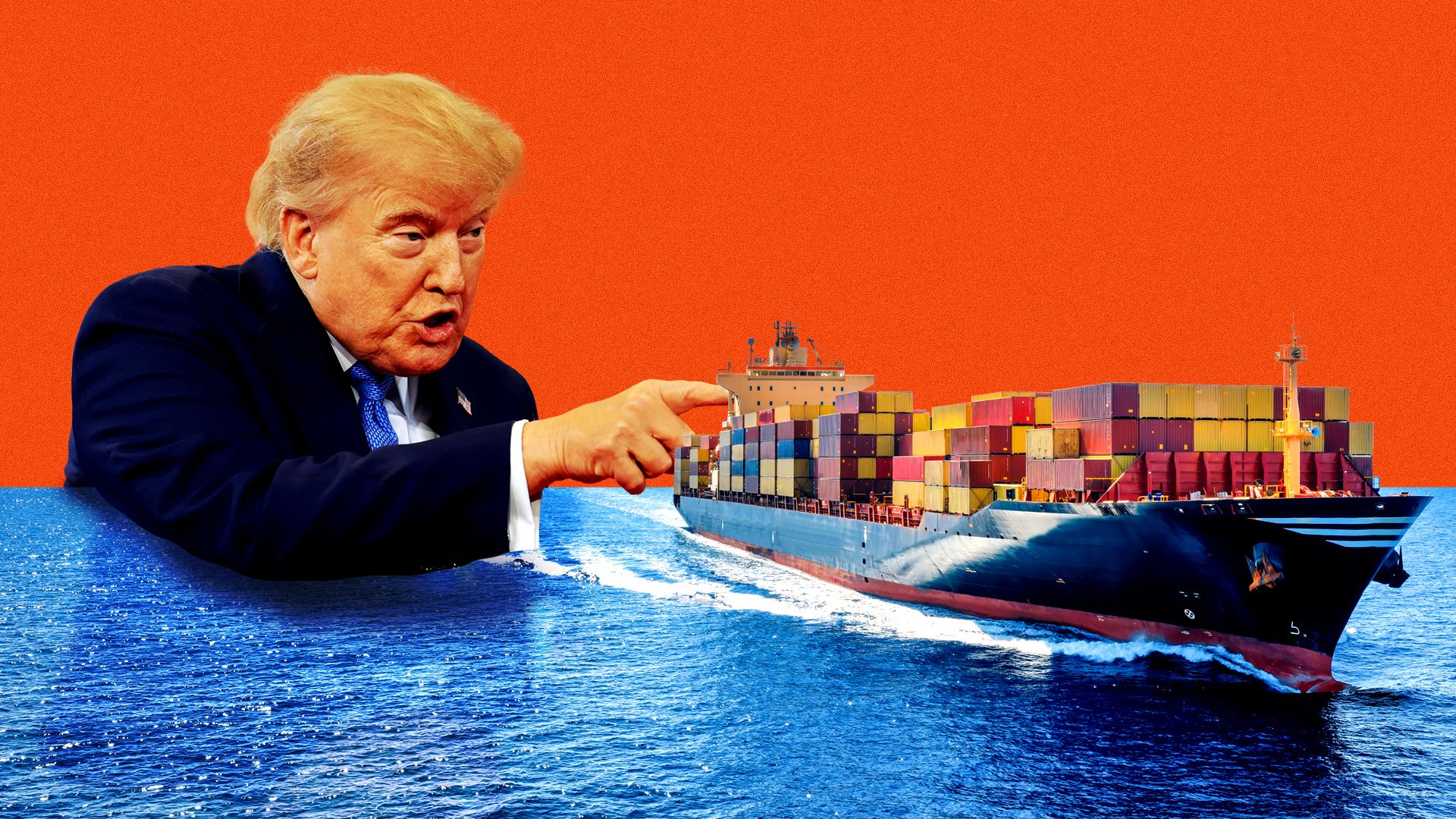
Today marks six months of the Iran War, which began Feb. 28. Axios' Barak Ravid reports the U.S. is improving its position in the waterway at the center of the quagmire:
The Strait of Hormuz has been Iran's most powerful card since the start of the war in late February. U.S. officials say that over the past six months, the American military has steadily eroded Iran's leverage over the crucial waterway.
- Why it matters: What began six months ago with the goal of degrading Iran's missile capabilities and destroying what remained of its nuclear program has evolved into an open-ended fight over the world's most important energy chokepoint.
U.S. officials say they've turned the tide in the strait and believe it could be a watershed moment in the war, bringing gradual relief to the world economy and a better deal with Iran.
- "The Iranian response is very mild," President Trump told Axios in a phone interview yesterday. "They don't want us to go back at them. That's the whole ball game. The rest doesn't matter."
🚢 Zoom out: The number of ships crossing the strait — and the amount of oil exported through it — remain far below prewar levels. But Iran has lost much of its control over the strait, U.S. officials said.
- Iran is still firing at ships. But its ability to target them accurately is limited.
- More than 200 mine-like objects have been swept from the main lane of the strait. U.S. officials say only 11 of them were actual mines and just a few were properly deployed.
- In recent weeks, traffic through the southern channel has grown to 20 to 30 tankers every night, carrying an average of 9 million to 10 million barrels, per U.S. officials. That's roughly half the prewar volume.
🛢️ Yes, but: Oil experts and tanker trackers are skeptical that the actual figures are that high. U.S. officials say they're undercounting.
- Periodic reports of oil tankers being struck by projectiles also raise questions about the safety of commercial shipping through the strait, despite U.S. assurances.
Trump told Axios: "That sucker is open."
3. 📺 GOP convention runs into NFL openers

Republicans will have some stiff competition for eyeballs when they hold their first-ever midterm convention on Sept. 9-10 in Dallas: The NFL, American television's undisputed champion of ratings, will be kicking off Week 1.
- Some GOP operatives are privately incredulous that a convention designed to draw attention to the party's fall candidates was scheduled opposite the NFL, Axios' Alex Isenstadt writes.
- They fear the GOP will struggle to persuade voters — particularly men, who powered President Trump's 2024 comeback — to choose politics over football.
👀 What to watch: The convention's opening night will overlap with the New England Patriots playing the Seattle Seahawks in a Super Bowl rematch. In Dallas that night, Vice President Vance will deliver the convention's keynote speech.
- The convention's second night will coincide with a rivalry matchup between the San Francisco 49ers and the Los Angeles Rams. Trump is the keynoter that night.
📱 Convention planners tell us they're well aware of the competition from the NFL. But they argue they'd be fighting for eyeballs even without football, given how dramatically Americans' media habits have changed.
- So they're planning a faster-paced, social media-focused convention designed to produce moments that can break through online, whether or not voters are watching live.
Social-media influencers will be distributing content on Facebook, X, TikTok and more.
- Organizers plan commemorations to mark the one-year anniversary of pro-Trump activist Charlie Kirk's assassination and the 25th anniversary of the Sept. 11 terror attacks.
- Entertainers and sports figures, including UFC fighters, will be spotlighted.
4. 🏔️ Driving the day: All eyes on Warsh
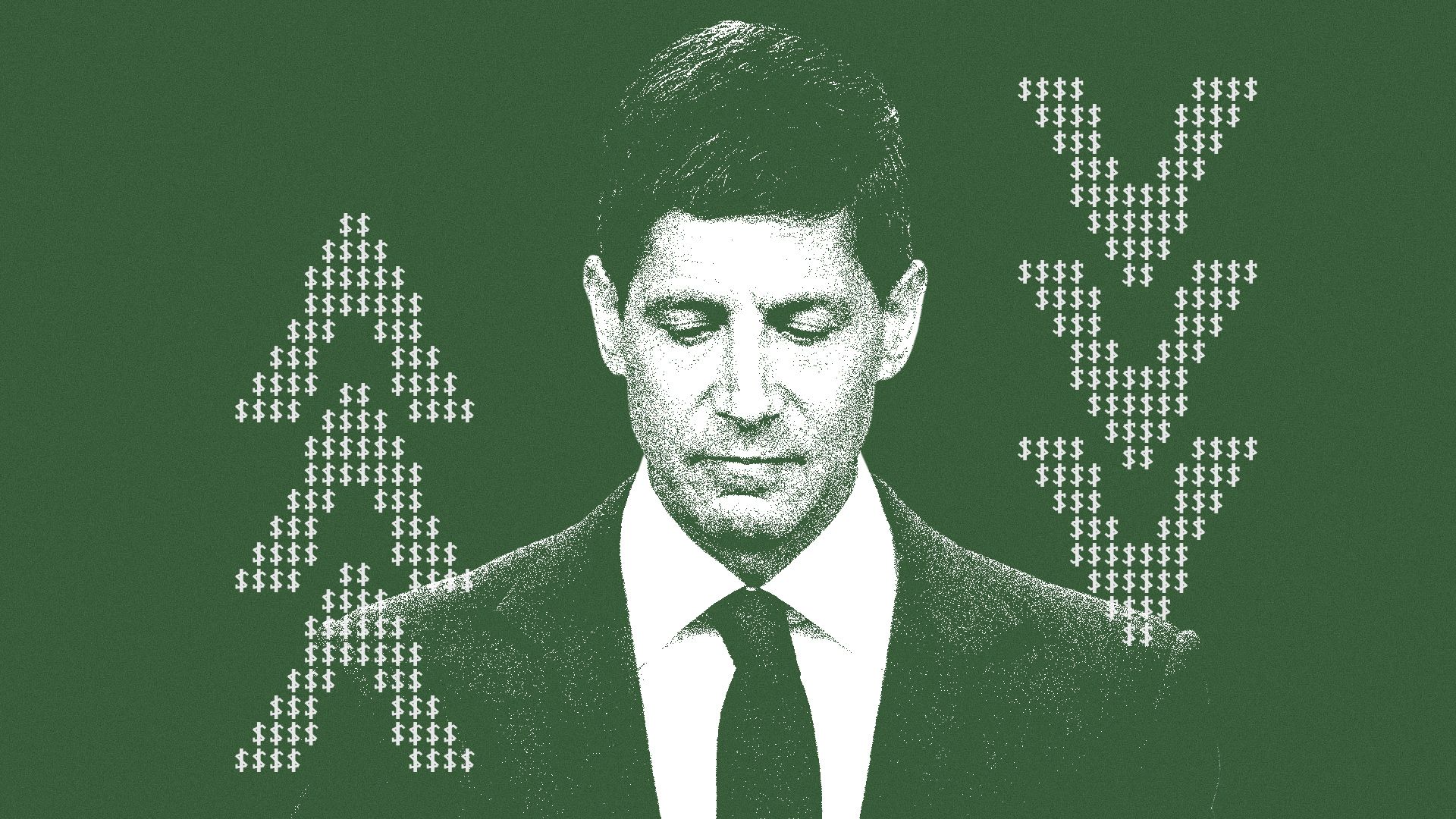
Fed chair Kevin Warsh will step up to a lectern beneath elk antler chandeliers this morning to deliver the most consequential public appearance of his young chairmanship, Axios' Neil Irwin writes.
- Warsh's address in Jackson Hole, Wyo., comes amid a surge in longer-term interest rates worldwide and U.S. Treasury interventions in bond and currency markets — and ambiguity about the Fed's relationship with the Treasury.
Go deeper ... Watch Warsh speak at 10 a.m. ET.
5. 🦁 Software roars back


AI was going to obliterate the software sector, or so investors believed earlier this year, but it turns out that this stuff is hard to quit, Axios' Emily Peck writes.
- State Street's Software and Services ETF, which tracks about 130 software and IT stocks, rose 5.2% yesterday, hitting a new all-time high.
📈 Zoom in: Investors really liked Salesforce's second-quarter earnings report Wednesday.
- The company, arguably the SaaS master, announced an expansion of a deal with Anthropic, which was taken as a sign that AI would be a complement to its business — rather than its death knell.
- Salesforce stock soared 22.6% yesterday, and is now trading close to where it was before the whole SaaSpocalypse got underway.
6. ⚠️ Climate catastrophe risk rising

7. 📷 Pic du jour: Leavitt's last day
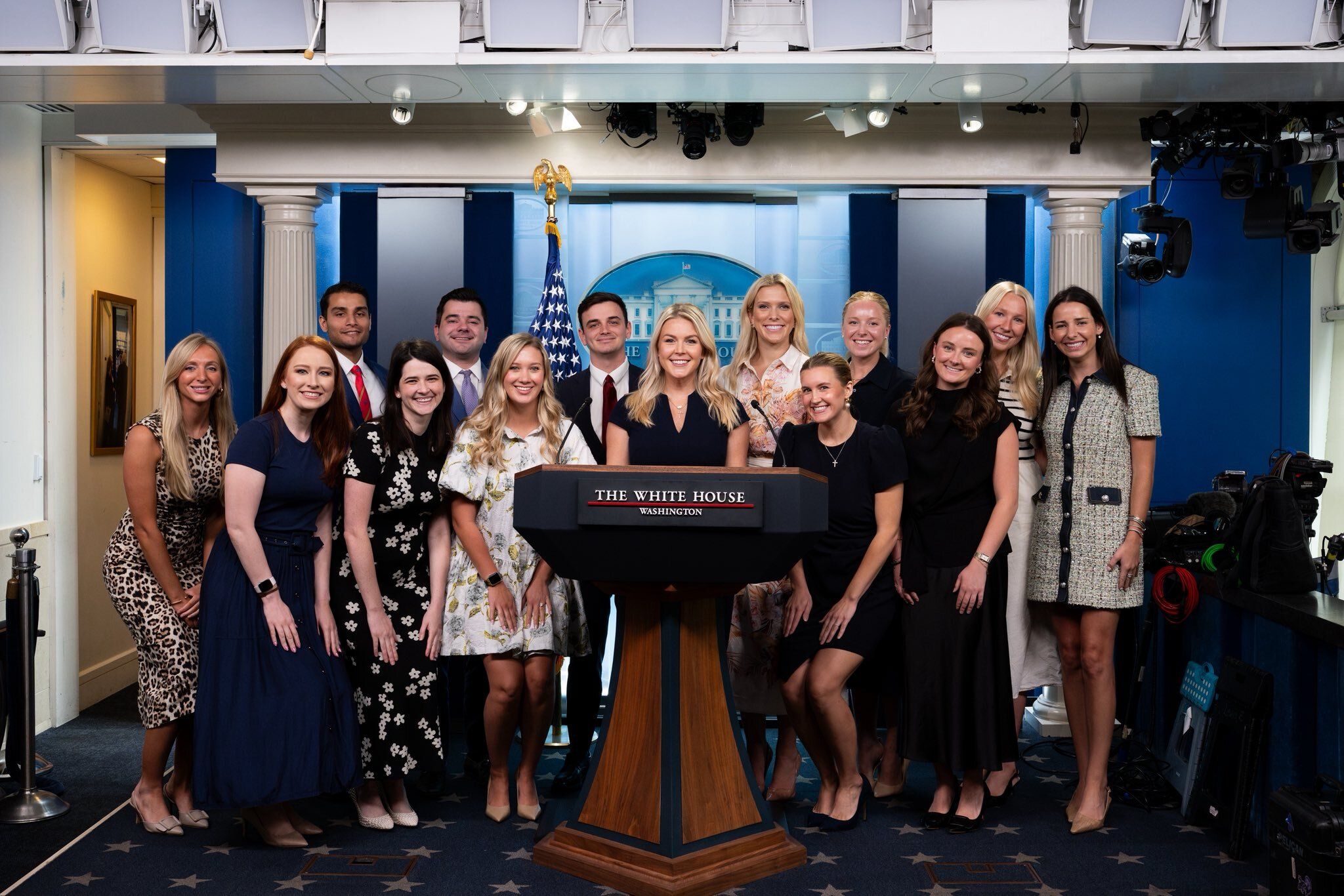
Karoline Leavitt, on her last day as White House press secretary, posted this photo with her team.
8. 🐊 1 swamp thing: Return of gator hunting
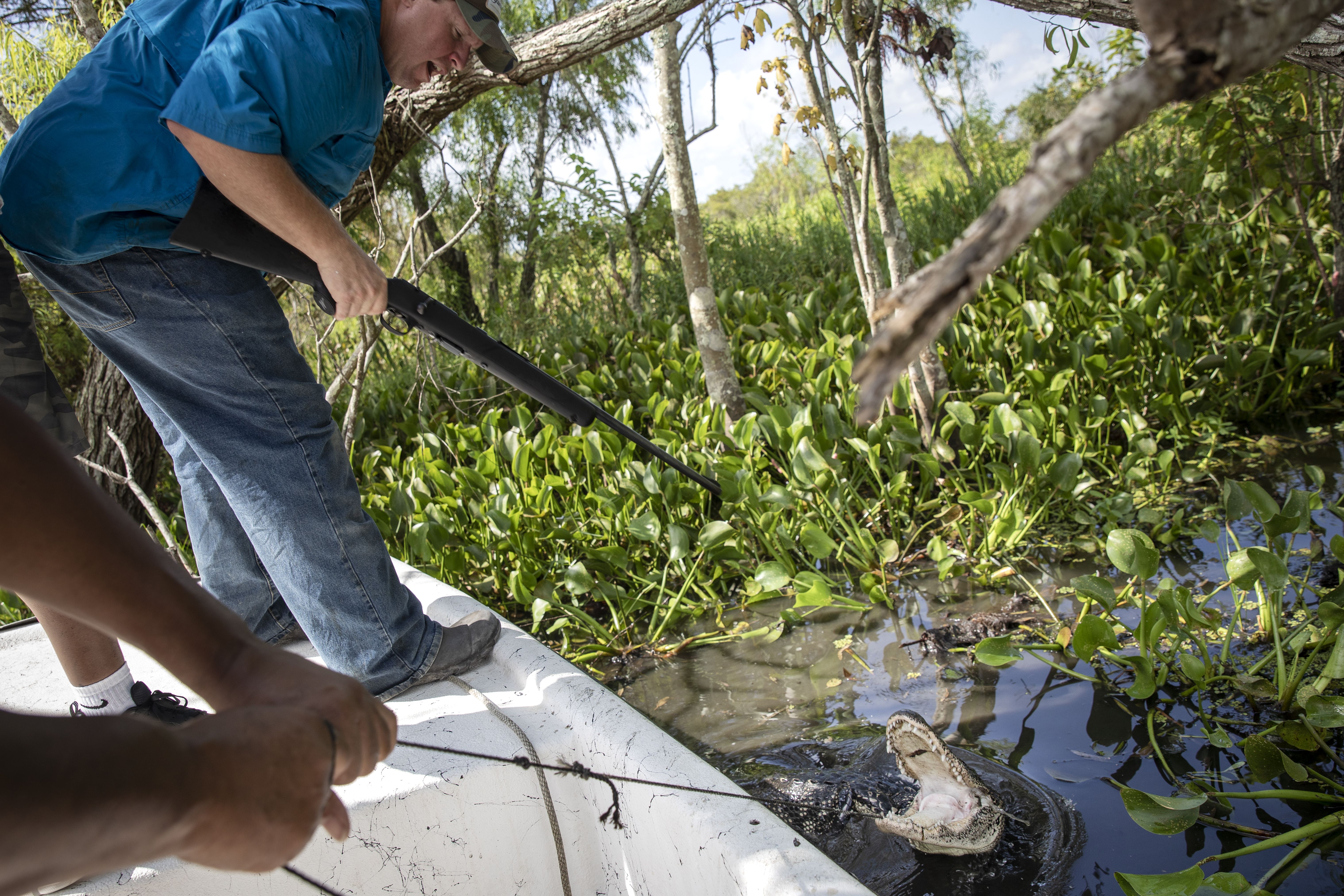
Louisiana is reopening gator hunting for the first time in more than 60 years following a resurgence from endangered status, Axios New Orleans' Chelsea Brasted writes.
The big picture: The state's gators had been hunted since the 1800s, eventually resulting in a severely depleted population.
- Louisiana banned gator hunting in 1962 to allow the species a chance to naturally rebound.
- It worked. And a strategy of targeted farming and limited hunting helped alligators make a "full recovery," according to the Louisiana Department of Wildlife and Fisheries.
Axios AM