Axios AM

September 02, 2026

π« Hello, Wednesday! Smart Brevityβ’ count: 1,746 words ... 6Β½ mins. Thanks to Noah Bressner for orchestrating. Edited by Bill Kole.
π³οΈ Big night for gerontocracy: Sen. Ed Markey (D-Mass.), 80, won convincingly (65% to 35%) over primary challenger Rep. Seth Moulton, 47. Two other Massachusetts incumbents in their 70s β Democratic Reps. Richard Neal and Stephen Lynch β beat back challenges from a pair of 39-year-olds. Go deeper.
π Apple pay: Tim Cook clearly plans to remain very active as Apple's executive chairman. He was awarded a target compensation package of $47 million for fiscal '27, compared with $58 million for John Ternus, his successor as CEO.
1 big thing: Hegseth's Pentagon storm

The Pentagon has entered a period of profound institutional turmoil, as a crisis of leadership at home converges with a crisis of capacity abroad, Axios' Zachary Basu writes.
- Why it matters: Six months into the Iran war, Pete Hegseth presides over a Pentagon with fewer senior leaders, fewer critical weapons and less public accountability than at any point in President Trump's two terms.
π Zoom in: The most striking departure yet came Monday with the resignation of Army Secretary Dan Driscoll β Vice President Vance's close friend and Yale Law classmate, once viewed as a potential successor to Hegseth himself.
- Driscoll, a rising star tapped by Trump for sensitive diplomacy in Ukraine, is stepping down after months of clashes with Hegseth over the Army's leadership and modernization.
- Driscoll's exit, following Hegseth's firing of Army chief Gen. Randy George last spring, leaves the service without Senate-confirmed civilian or uniformed leadership in the midst of the Iran war.
π Zoom out: Hegseth has fired or forced out senior officers across nearly every service, including the chairman of the Joint Chiefs, the Navy's top admiral and the Army chief of staff.
- The Washington Post counts more than two dozen top officers dismissed under Hegseth, who has remade nearly the entire Joint Chiefs. Only the Marine Corps and Space Force chiefs Hegseth inherited are still serving.
- The New York Times reports that Hegseth has personally removed at least 45 officers from promotion lists this year β an extraordinary intervention in a system traditionally insulated from political leadership.
- NBC News reported yesterday that Hegseth has blocked more promotions in recent weeks, including more than a dozen Black, Hispanic or female officers across the services.
π Between the lines: The cumulative effect is a thinner senior command at the precise moment the Iran war is testing the limits of what the U.S. military can sustain.
- The WashPost reports that the commanders overseeing Europe, the Pacific and Latin America β along with the replacement top admiral β formally objected to extending forces for the Iran war. They warned that prolonged deployments are degrading their ability to confront threats elsewhere.
- Adm. Daryl Caudle, chief of Naval Operations, told Hegseth that barely one-quarter of U.S. destroyers are ready to deploy, according to the Post. The only dedicated Pacific carrier has also been diverted to the Middle East.
- The war has consumed 65% of the U.S. Patriot interceptor inventory, squeezing supplies for NATO and forcing the Pentagon to preserve weapons that would also be critical in a war with China. (AP)
2. π¦Ύ Axios interview: Lutnick's summit flex
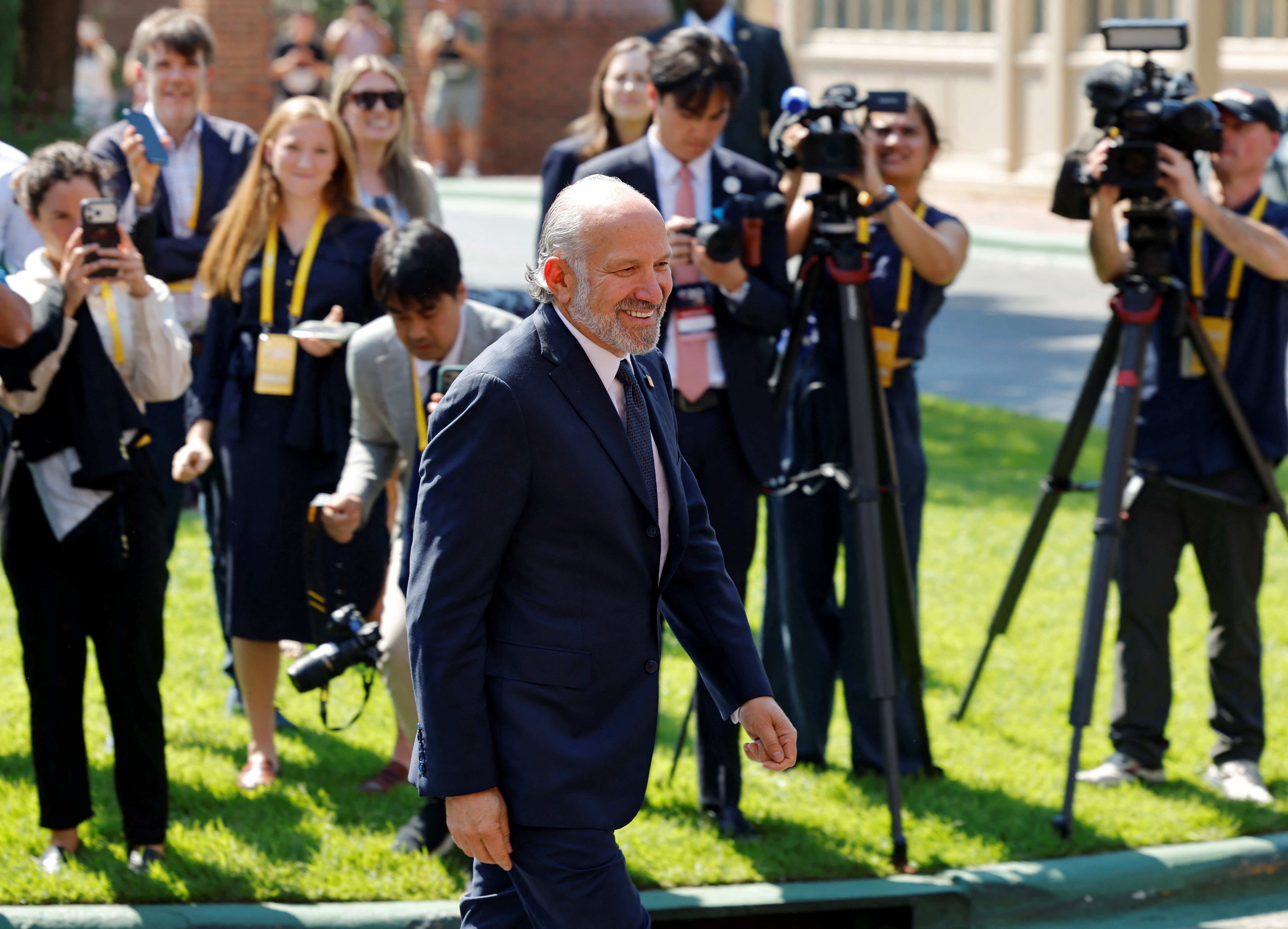
CHAPEL HILL, N.C. β Commerce Secretary Howard Lutnick, who'll preside over a parade of tech tycoons at today's G20 innovation summit, tells me he's confident the U.S. will stay ahead of China in the AI race by continuing to define the frontier.
- "It's teacher-student," Lutnick said yesterday in a sunny conference room at the Carolina Inn, between meetings with Chinese and Turkish officials.
- China's open-weight models, he told me, "study off of the large language models of America. ... The teacher is the smartest person in the world, and relentlessly pushing to the frontier."
Why it matters: Lutnick, a late-night confidant of President Trump, will use today's G20 Innovation Ministerial to project American brio on the world stage, at a time when China sees openings to best the U.S. and Silicon Valley faces an escalating populist revolt.
When I asked Lutnick if he sees the administration taking a heavier hand in regulating AI releases, imports and exports, he said instantly: "No, the opposite."
- He sees the temporary June controls on Anthropic's most powerful models as a one-off, with the takeaway that models should be allowed to compete if they're guardrailed "reasonably."
- "I think it's going, actually, well," he said of the administration's current approach.
π€ Nevertheless, the White House showed it's willing to intervene aggressively. So when Lutnick asked some of the world's most powerful tech moguls to appear with him today for fireside chats, he got a hearty response.
- Lutnick will open with a breakfast conversation with Nvidia CEO Jensen Huang, then interview Anthropic co-founder Tom Brown, OpenAI CEO Sam Altman (lunch) and Palantir CEO Alex Karp.
3. π€ AI tensions surface at summit

Axios' Maria Curi writes from the G20 innovation summit in Chapel Hill, N.C.:
Trump administration officials came to this week's innovation summit to project a united front on U.S. AI leadership. But tensions between the Commerce Department and the White House's tech policy shop are playing out behind the scenes.
- Why it matters: The Trump administration wants the world to follow its lead on AI policy, even as it grapples with divisions at home.
The two-day G20 Innovation Ministerial, which culminates today, features some of the tech industry's heaviest hitters and officials from the world's most powerful countries.
- Officials and executives pitched the U.S. as a model for other countries on AI, contrasting its lighter regulatory approach with the European Union's heavier hand.
π Between the lines: The Commerce Department and OSTP are jockeying for control over the administration's AI policy agenda as key regulatory decisions remain unsettled.
- Commerce holds many of the administration's most important AI policy levers, including the Bureau of Industry and Security and the Center for AI Standards and Innovation.
4. πΊ AI's tricky safety dance
OpenAI and Anthropic are trying to strike a delicate balance: convincing Wall Street that their businesses are sound and fast-growing, while assuring governments and the world that their models don't pose unacceptable risks, Axios' Ina Fried writes.
- Why it matters: Both companies are aiming for potentially record-breaking initial public offerings soon.
OpenAI announced yesterday it will soon release its Astra model broadly. But the company said the model has reached a "critical" level of cybersecurity capabilities, meaning its most powerful cyber features will be initially limited to a small group of trusted testers.
- Anthropic debuted updated versions of its latest Fable and Mythos models. The changes are designed to address major complaints about their initial release, including cost, data sharing and a tendency to reject legitimate requests.
π¬ The intrigue: Anthropic is striking a commercially friendly note with its release. OpenAI is sounding more sober on the safety front.
- In addition to limiting the release of Astra, OpenAI's head of strategic futures, Dean Ball, penned an essay saying the Hugging Face breach is likely only the beginning of AI systems escaping human containment measures.
- "They will pay their own bills for the compute they run on," he predicted. "If they answer to humans at all, they will only do so partially, for example by providing services to humans in exchange for pay."
5. π₯ "Tanker for tanker" strikes begin
The U.S. military attacked two Iranian government tankers as part of yesterday's round of strikes, Axios' Barak Ravid writes.
- Why it matters: This is the first time the U.S. military has struck Iranian tankers in retaliation for Iranian attacks on ships in the Strait of Hormuz β rather than to prevent them from violating the naval blockade.
A U.S. official said the move was part of a new "tanker for tanker" policy approved by President Trump to further deter Iranian attacks on tankers that move through the strait.
6. ποΈ Rogue Dems face push for punishment

Two centrist House Democrats who voted to help Republicans get a procedural motion across the finish line now face possible punishment from party leaders who say they were blindsided by the move, Axios' Andrew Solender writes.
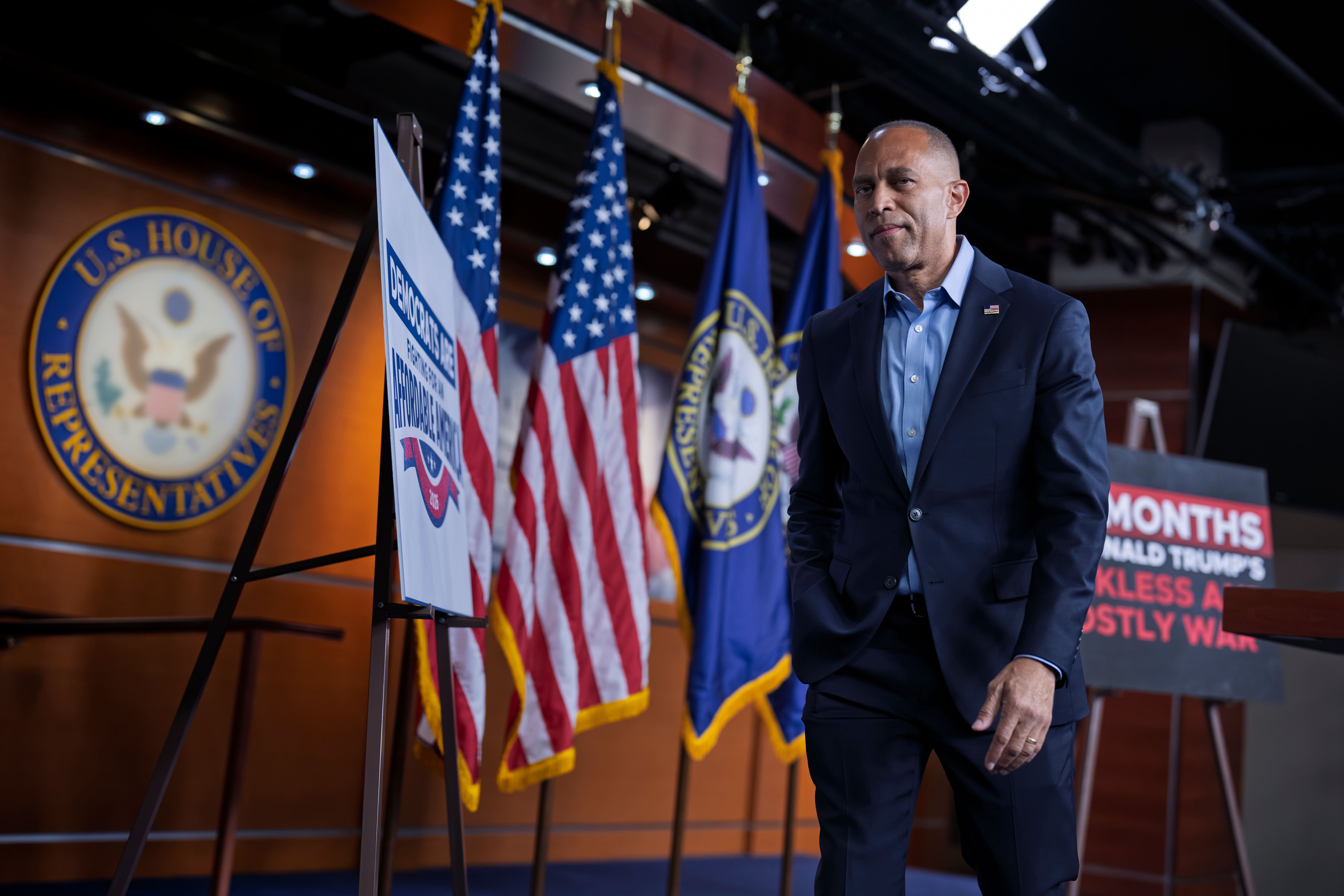
- Why it matters: House Minority Leader Hakeem Jeffries (D-N.Y.) is taking an uncharacteristically aggressive public approach to the defections, to the delight of some of his members.
Reps. Jared Golden (D-Maine) and Marie Gluesenkamp Perez (D-Wash.) voted with Republicans to pass a "rule" β a procedural measure that sets the terms for House debate on a package of bills.

Axios' Kate Santaliz, who broke the story on Rep. Chuck Edwards' conduct toward female staffers, writes:
Rep. Chuck Edwards (R-N.C.) was censured by the House yesterday after the Ethics Committee found he failed "to adhere to the spirit of rules prohibiting sexual harassment of and unwanted advances to House staffers."
- The vote amounts to a remarkable bipartisan rebuke, with the GOP leadership team and the vast majority of Edwards' own party joining Democrats to impose one of the House's most serious punishments.
The Ethics Committee's findings follow Axios reporting that Edwards singled out two young female staffers in their 20s for special attention that multiple sources described as inappropriate.
- Edwards and Rep. Ralph Norman (R-S.C.) were the only GOP "no" votes on the censure resolution, which passed 413-2.
Keep reading ... Get Axios Hill Leaders, our weeknight newsletter from Capitol Hill.
7. βοΈ Death penalty resurgence


Florida yesterday executed its 14th prisoner this year, adding to a post-COVID surge in capital punishment that drove more executions last year than any year since 2009, Axios' Avery Lotz writes.
- Even as fewer courts sentence defendants to death and more than half of the states have banned or at least temporarily halted the practice, the Trump administration has overtly cheered on the death penalty.
By the numbers: 47 people were executed last year, 19 in Florida.
- 24 people have been executed this year, with 10 more scheduled.
8. π 1 for the road: Campus robot wars
A new cohort of fresh-faced delivery robots is arriving on college campuses this fall after the leading incumbent left the market, Axios Future of Mobility author Joann Muller writes.
- Why it matters: College students are a surprisingly good test audience for delivery robots. They're hungry at weird hours, impatient, tech-friendly β and live in a compact environment where walking 15 minutes for dinner can feel like an intolerable burden.
Starship Technologies, which pioneered college robot delivery, announced in May it was shifting its U.S. focus to more lucrative grocery deliveries.
- Universities accustomed to the roving robots moved swiftly to recruit replacements. Avride operated robots on four campuses last year. Now it's adding 21 that were previously served by Starship.
- Robot.com just signed a seven-year agreement with food service company Sodexo.
π¬ Thanks for reading! Please invite your friends to join AM.
Sign up for Axios AM