Axios AM

December 18, 2024

1 big thing: Biden ratchets up AI chip war

2. 📈 Exclusive: Young America's wealth boom
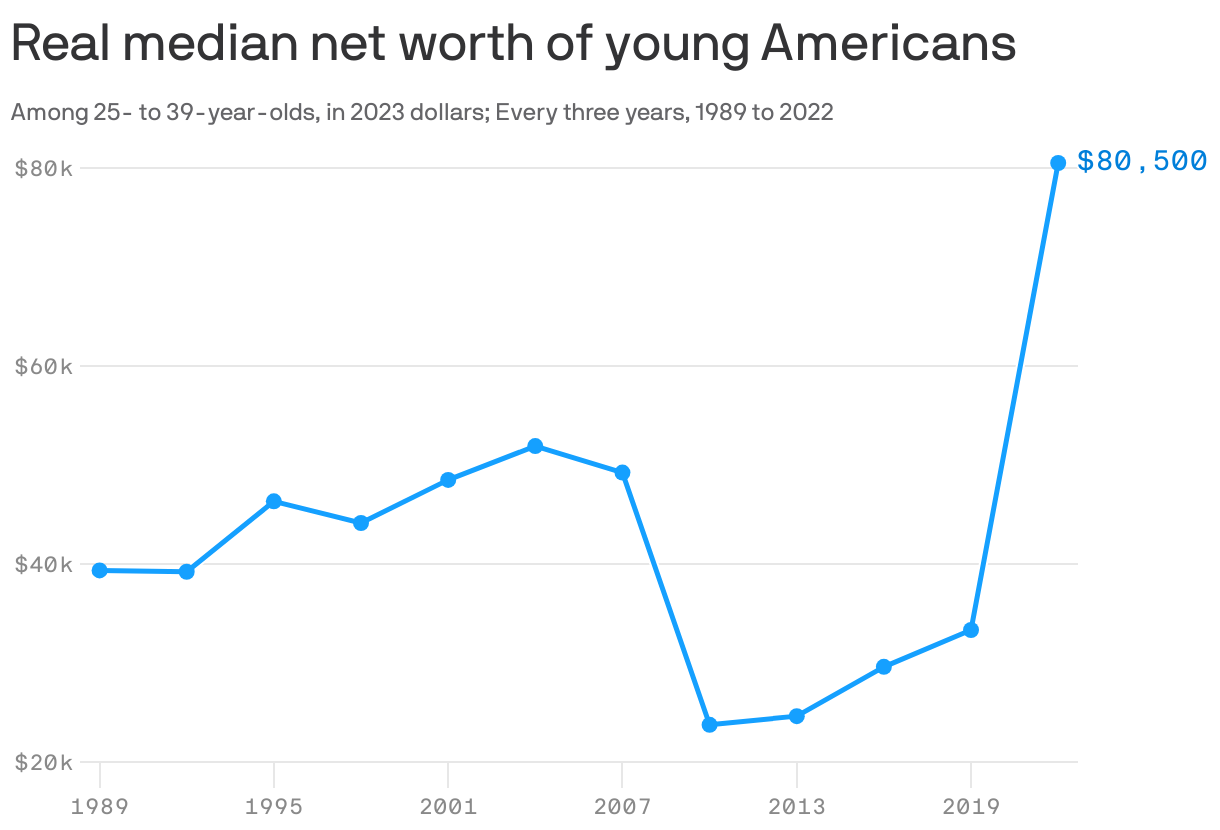
Americans under 40 are richer than ever — but still feel "an increasing sense of economic fragility," according to detailed new research released by the Treasury Department this morning.
- Why it matters: Disaffection and despair, especially among young men, are on the rise — and economic factors are playing an important role in that phenomenon, Axios' Felix Salmon writes.
The big picture: The report points to "expanded education, less discriminatory workplaces, cheaper goods, and more household wealth" as examples of how young Americans' lives are improving.
- For Americans between 25 and 39, median wealth hit $80,500 in 2022, the Treasury Department calculates — up from just $23,750 in 2010. And that's in 2023 dollars, after accounting for inflation.
🥊 Reality check: While wealth was turbocharged by the stimulus checks and roaring bull market following the 2020 pandemic, careers were not.
- Mentorship and on-the-job learning are much harder when working remotely. And demographic changes mean that younger workers are increasingly competing with their more experienced elders for desirable jobs.
Costs have been rising faster than young Americans' incomes for education, childcare, healthcare, and — most pressingly — shelter.
3. 🤖 "Peak AI bubble"
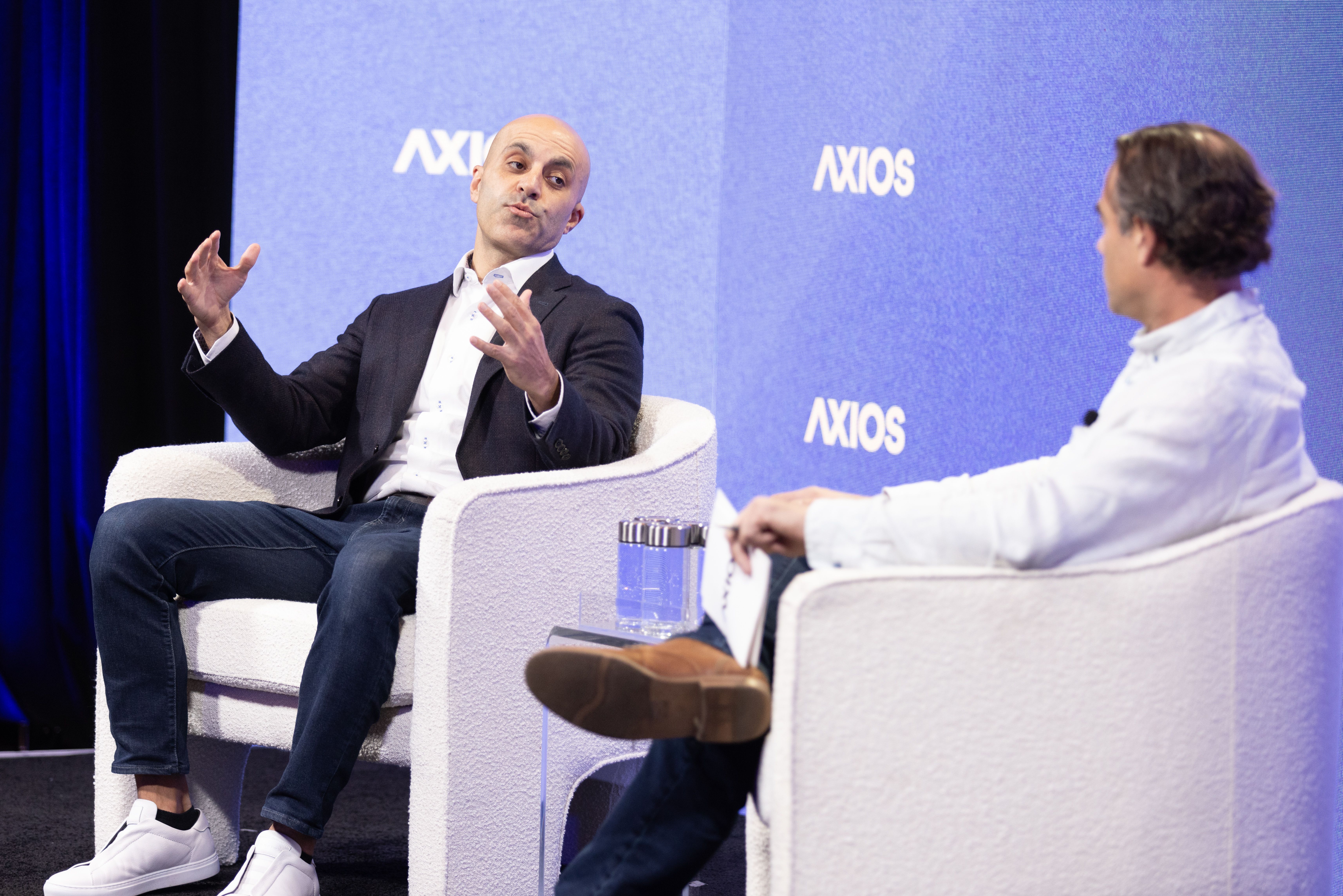
Ali Ghodsi — CEO of Databricks, one of tech's fastest-growing startups — told Axios' Dan Primack at our AI+ Summit in San Francisco yesterday that we're in "peak AI bubble."
Why it matters: Earlier yesterday, Databricks announced it had secured up to $10 billion in new funding — one of the largest investment rounds in Silicon Valley history — at a $62 billion valuation.
- "When you get billion-dollar valuations on companies that have nothing, that's a bubble," Ghodsi said, referring to other companies.
🔎 Behind the scenes: The 11-year-old company initially intended to raise $3 billion to $4 billion, at approximately a $55 billion valuation, Ghodsi said.
- But as the press reported on news of the raise, investors started calling and the prices went up, he told Primack.
🔬 Between the lines: When asked what one thing he'd like David Sacks to do as President-elect Trump's AI czar, Ghodsi said: "Be careful with regulation. Look at use cases, but don't hold research back."
4. 📈 Trump effect: CEOs, investors embrace agenda
5. 💰 Dow dips as stocks remain on tear


The Dow Jones Industrial Average is on its longest losing streak in 46 years, Axios' Ben Berkowitz and Felix Salmon write.
- Why it matters: Long losing streaks for a well-known index sound bad. In this case, it's mostly a technical matter that doesn't entirely reflect what's happening in the market.
The Dow has now fallen nine straight trading days, its worst streak since 1978.
- Of the 30 stocks that go into the average, UnitedHealth Group has the second-largest weighting. It also happens to be down 21% since one of its executives was shot in the back earlier this month.
- Nvidia, which recently joined the Dow, is also down 10%, a small pullback in the context of more than doubling this year.
🔭 Zoom out: The S&P 500, a much broader and more important index, hasn't had the same losing streak and is down just 0.6% over the same period.
- Stocks remain on a tear. The S&P is up more than 25% this year and the Dow is still up more than 15%.
6. 🏛️ Pelosi loosens grip on House Dems
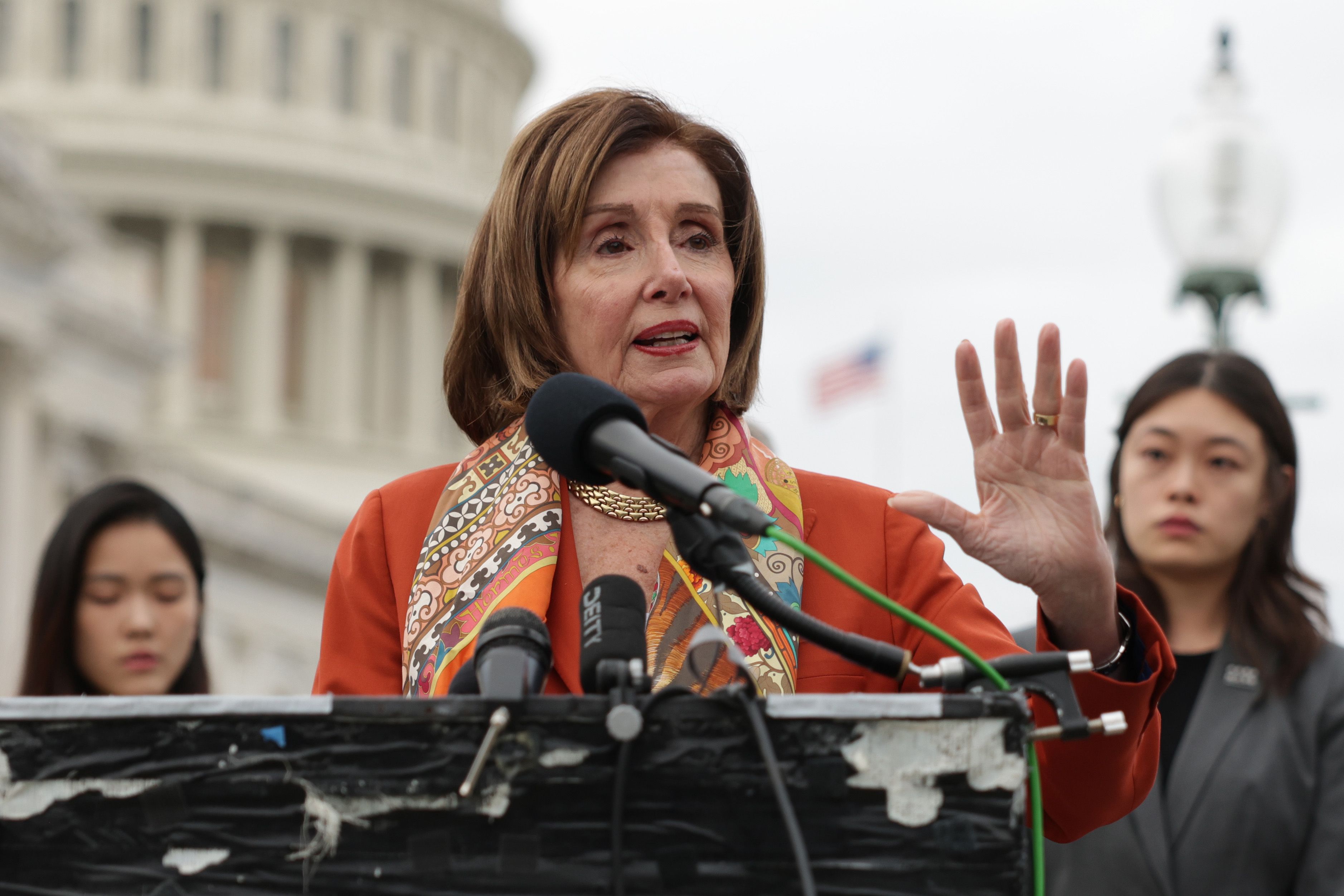
Rep. Nancy Pelosi (D-Calif.) is charting a new, more detached course for working her will on the Democratic caucus she once ruled with an iron fist, numerous lawmakers familiar with the matter tell Axios' Andrew Solender writes.
- Why it matters: Pelosi's colleagues described a laissez-faire approach to backing candidates in committee leadership elections that gives House Minority Leader Hakeem Jeffries (D-N.Y.) space to settle into his role.
During her reign, Pelosi "would actively have her hands on these races" and would "prevent them from even happening" in some cases, said one veteran House Democrat.
- "That's not what happened here. I think it is a different model," the lawmaker added.
Pelosi encouraged several candidates for ranking member on committees to jump in. Her choices racked up a mixed record yesterday when House Democrats met to vote on contested roles.
- Pelosi was physically absent from the elections due to a hip replacement surgery she received in Germany over the weekend after a fall during a congressional trip.
7. Shock poll on CEO killing


Registered voters between the ages of 18 and 29 were far more likely than their elders to accept the recent killing of UnitedHealthcare CEO Brian Thompson, Axios' Natalie Daher writes from a new Emerson College poll.
- Online America remains fascinated by Luigi Mangione, who was charged yesterday with murder as an act of terrorism. The event exposed public outrage toward the insurance industry, and a blatant lack of empathy from people online.
🧮 By the numbers: Few voters in the poll (17%) said they thought the killing was acceptable.
- Young voters were far more split: 41% found the killer's actions acceptable; 40% said they were unacceptable — a statistical tie.
8. 🏟️ D.C.'s massive football milestone
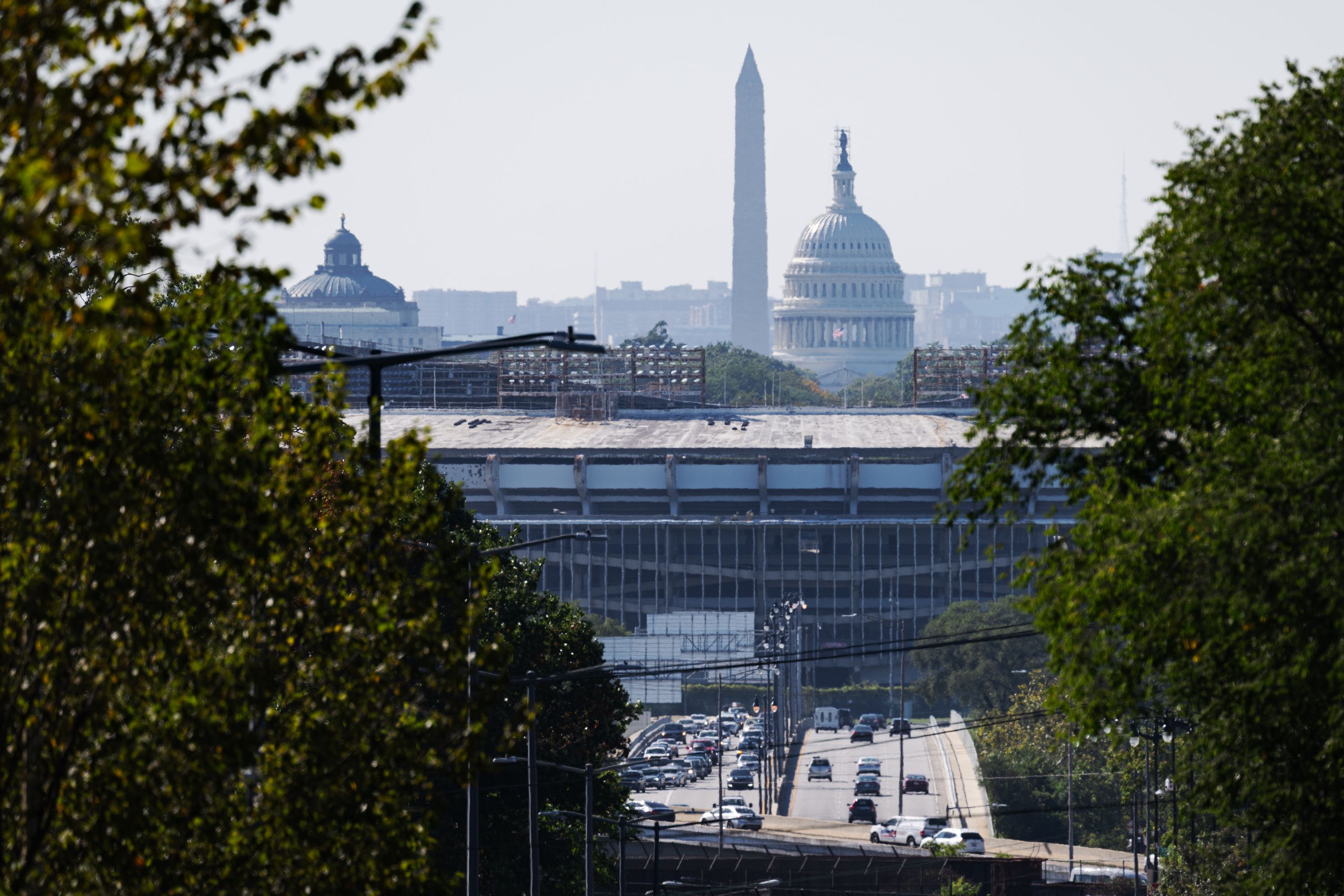
Congress is on track to give D.C.'s government long-term control of the federal RFK Stadium site, Axios D.C.'s Cuneyt Dil writes.
- Why it matters: The move enables a marquee redevelopment project that could lure the Washington Commanders back to the city from Maryland.
The RFK legislation is attached to the must-pass spending bill Congress released last night. Lawmakers are expected to approve the package by midnight Friday to avert a government shutdown.
- The legislation will allow D.C. to transform 170 acres on the Anacostia River into a sports and entertainment district, with a new stadium, parkland, shops and homes.
It has taken over a year of lobbying from the franchise, NFL, and District to get here.
Axios AM