Axios AM

August 21, 2026

1 big thing: America's debt explosion

America is caught in a historic capital squeeze, Axios' Zachary Basu writes.
- On one side: Trillions Washington must borrow to pay for the past.
- On the other: Trillions the economy needs to build the future.
Why it matters: The next president will inherit a fiscal reckoning decades in the making. The price it exacts — on taxes, benefits, borrowing and investment — could shape America's prosperity and power for generations.
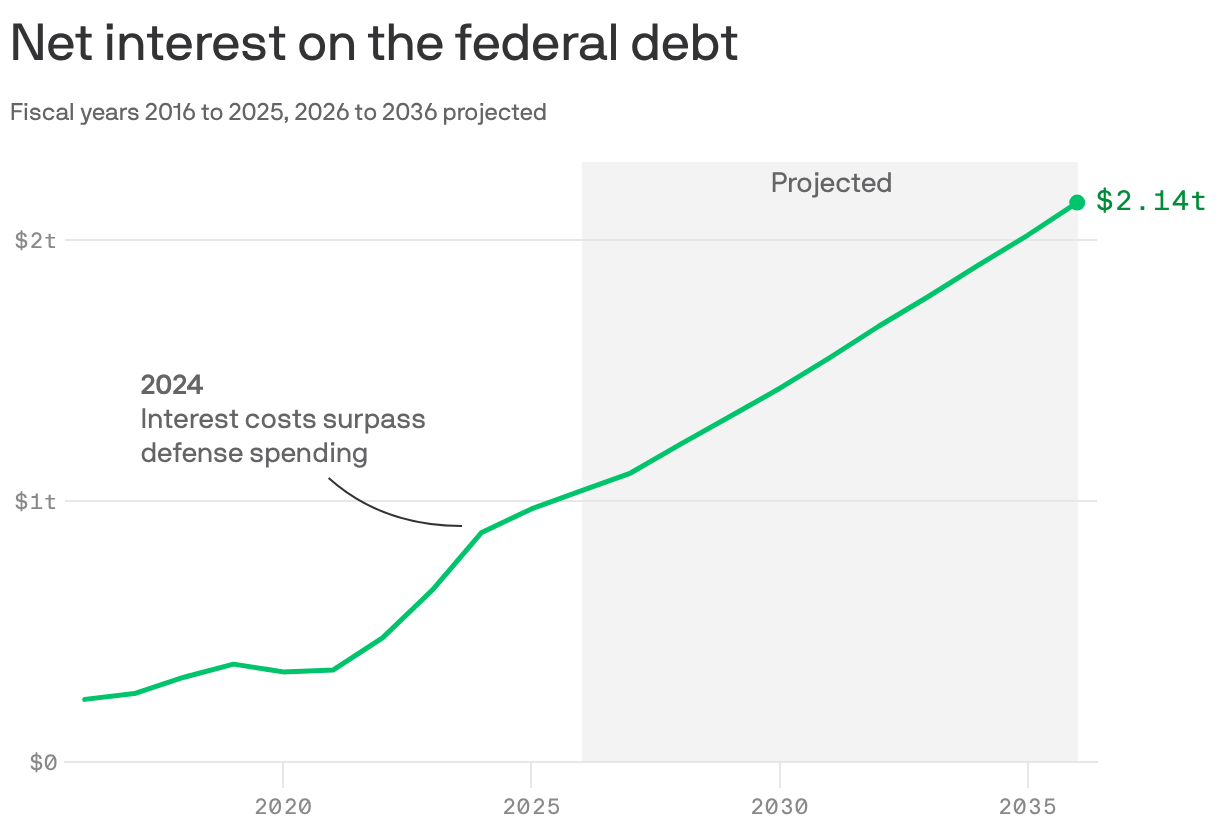
🔎 Zoom in: President Trump said in 2016 that he could eliminate what was then roughly $19 trillion in national debt within eight years. On Tuesday, the debt crossed $40 trillion, after growing by $3 trillion in the past year alone.
- About $32 trillion is owed to investors and other outside holders. The rest is debt the government owes to its own accounts, including Social Security and other federal trust funds.
- Treasury must refinance $9.7 trillion in debt coming due this fiscal year while covering a deficit the Congressional Budget Office now projects at roughly $2.1 trillion.
That creates a punishing cycle: Old debt comes due, Washington replaces it with more expensive debt, and the resulting interest bill feeds future deficits.
- CBO projects annual deficits will average $2.4 trillion through 2036, pushing debt held by the public to 120% of GDP — above the record set after World War II.
- The U.S. has already spent $963 billion on interest in the first 10 months of this fiscal year, $200 billion more than it spent on the military over the same period.
🔭 Zoom out: For years, Silicon Valley's AI buildout was financed almost entirely with cash. Now Big Tech is becoming one of the biggest new forces in global debt markets.
- Bond sales by the "hyperscalers" building AI infrastructure are on pace to roughly double in 2026. Goldman Sachs projects debt will fund more than a third of the AI buildout by next year.
- Nvidia is working with BlackRock, Goldman Sachs, KKR and other Wall Street giants on plans to marshal more than $500 billion for AI infrastructure.
💰 Stunning stat: Nine major tech companies have already spent roughly $600 billion on capital projects over the past year.
- A Wall Street Journal analysis found they have another $3 trillion in future commitments, mostly tied to AI, that aren't yet reflected on their balance sheets.
👀 What to watch: America's fiscal options are narrowing as its political ambitions expand.
- On the left, democratic socialism and economic populism are surging, pairing promises of cheaper housing, health care and child care with calls for higher taxes on the wealthy.
- On the right, the Trump-era GOP has protected Social Security and Medicare politically while pursuing tax cuts and higher defense spending, including Trump's push for a $1.5 trillion Pentagon budget.
2. 🛢️ Oil markets tune out Trump
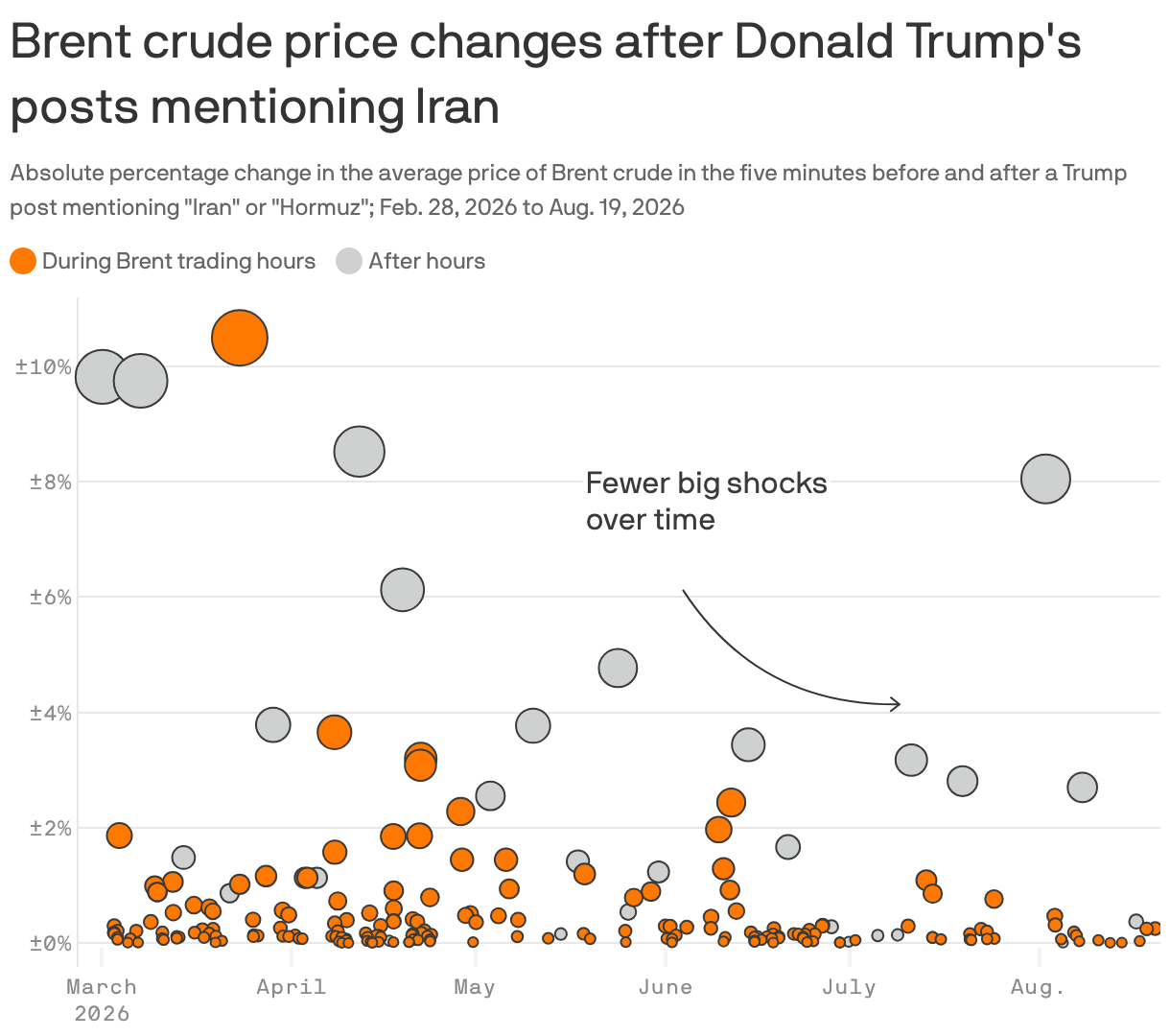
President Trump's social media posts about the Iran war are losing their power to move oil markets, according to an analysis by Axios' Erin Davis and Ben Geman.
- Why it matters: Oil price changes ripple throughout the U.S. and global economies — and the conflict has brought unprecedented supply disruption.
⏱️ By the numbers: Axios tracked 269 posts on Truth Social between Feb. 28 and Aug. 19 that mentioned Iran or the Strait of Hormuz.
- In the five minutes after these Truth Social posts appeared, or in the five minutes after the next market open, the average change (0.73%) was almost four times higher than normal.
- That effect is now diminishing (charted above).
Zoom out: In the early weeks, there was an "information vacuum" and high uncertainty about U.S. policy and objectives, said oil analyst Ben Cahill.
- Markets often "overreacted" in response, he said.
👀 What we're watching: Trump's waning power to "jawbone" oil markets has political consequences, as Democrats use energy prices as a cudgel against Republicans in the midterm elections.
3. 🥊 Washington's economic collision course
4. 🐊 Florida Dem shakes off "socialist" label
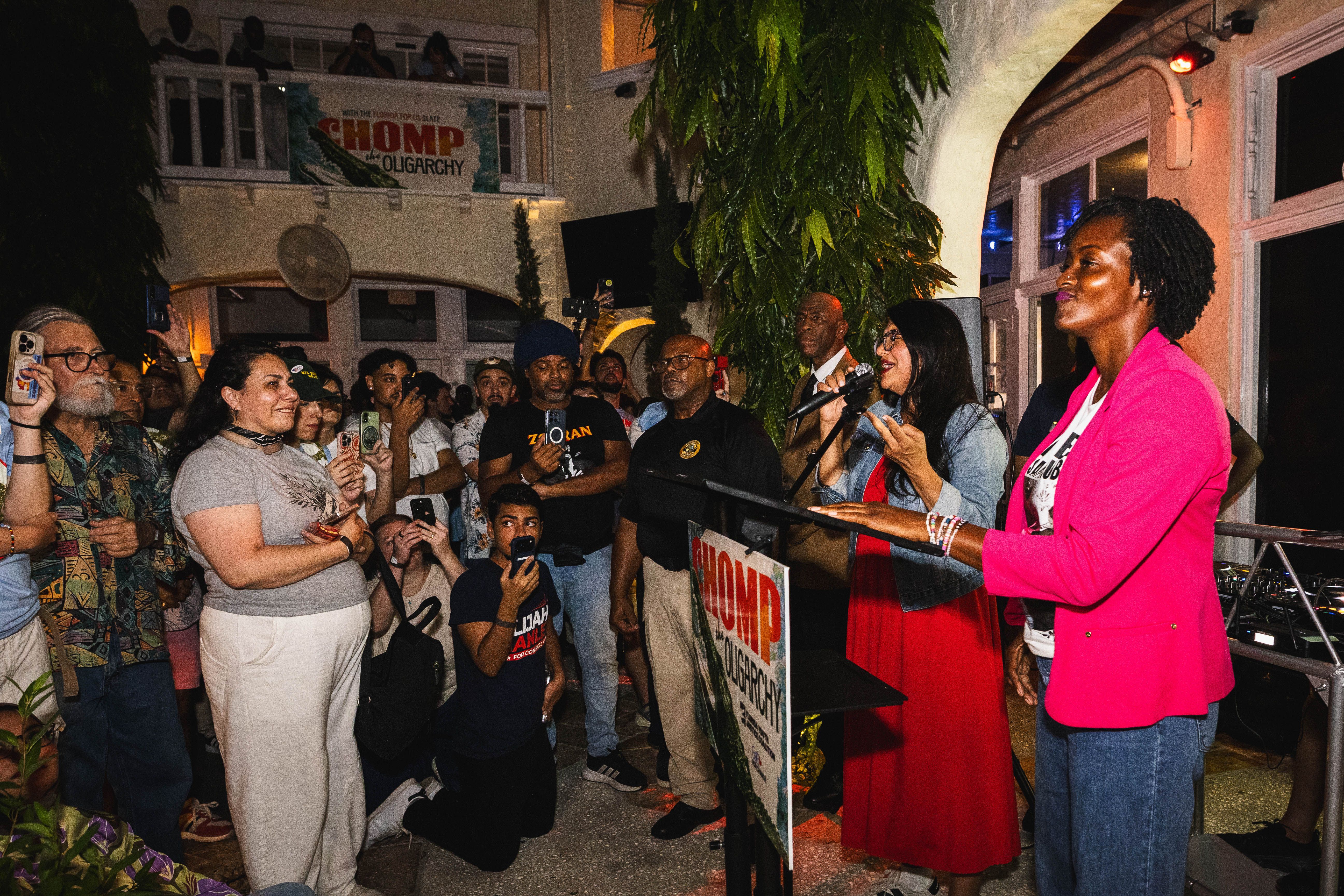
Immediately after her shocking upset in Florida's Democratic Senate primary, state Rep. Angie Nixon told Axios' Andrew Pantazi and Marc Caputo that she isn't really a socialist — even though she'd just joined the Democratic Socialists of America.
- Why it matters: Nixon's win is being cast as a DSA victory, but the organization neither endorsed her nor saw it coming. She ran as a big-tent leftist, linking progressive movements and party institutions in unlikely alliances.
Since winning, Nixon has moved fast to separate herself from DSA orthodoxy.
- "No," she laughed, when asked if she's a socialist. "I own a business." (It's a bookstore called Cafe Resistance.)
- "No," she doesn't back abolishing all prisons — just for-profit ones. Nor does she support "defunding" police or having so-called "open borders."
- "No," she said, "I do not celebrate [Fidel] Castro" — and she disagreed with the national DSA's controversial commemoration of the late Cuban dictator.
- "Yes," she will campaign with progressives and moderates, including David Jolly, the ex-Republican now running as the Democratic nominee for governor.
🖼️ The big picture: Socialism is gaining with the Democratic base and younger voters. But in Florida, it's been seen as general election poison.
- There's particularly strong antipathy in South Florida's sizable Cuban, Venezuelan, Colombian and Nicaraguan communities that equate socialism with oppression and violence.
- Pro-Israel Jewish voters tend to oppose the DSA because of its opposition to Israel's treatment of Palestinians, a cause Nixon embraces. She calls Israel's prime minister, Benjamin Netanyahu, a war criminal.
5. 🗳️ Big races move toward Ds
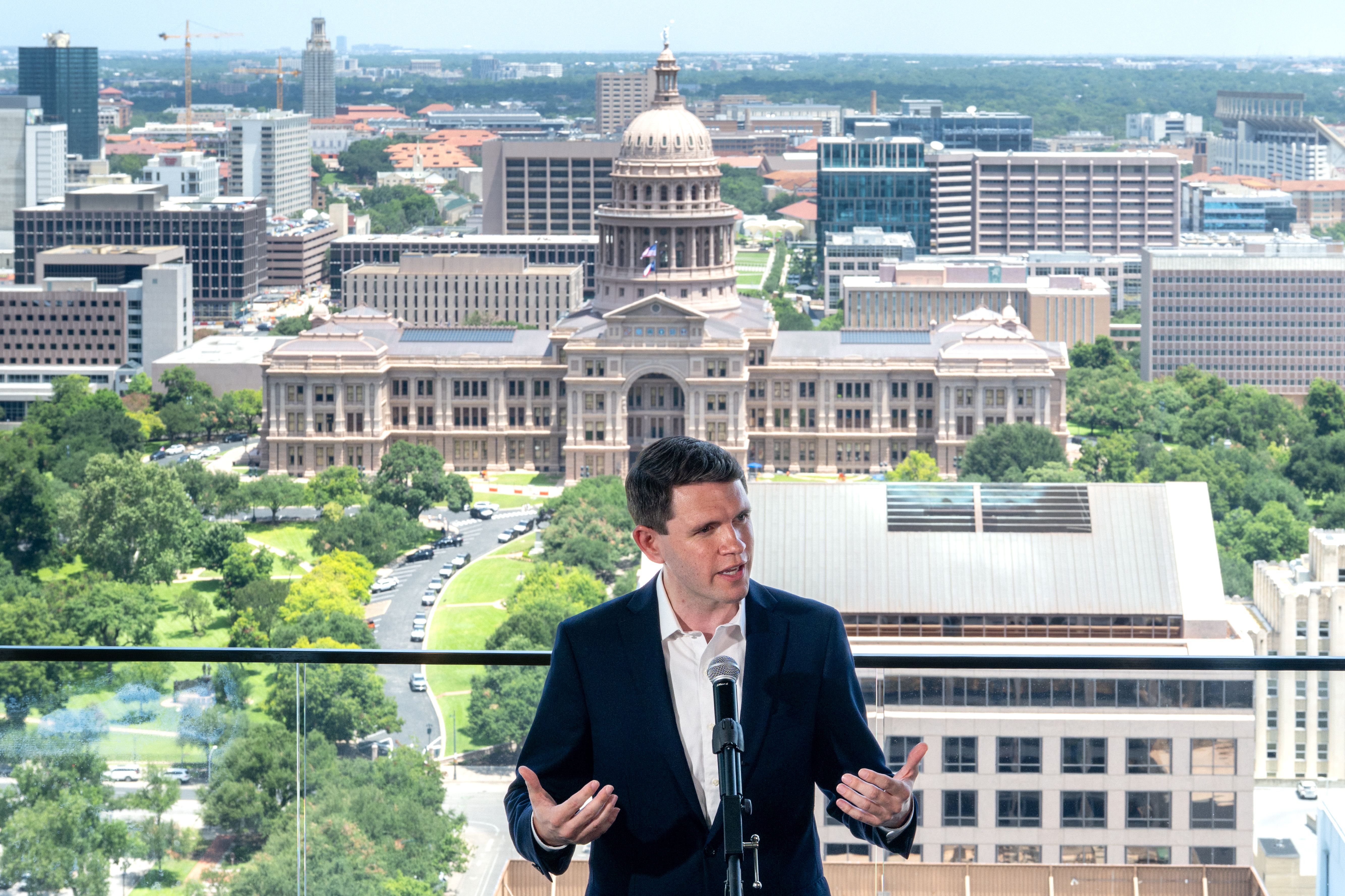
🗳️ Midterms shocker: Cook Political Report moved both Texas and Iowa's Senate races from lean Republican to toss-up yesterday, Axios San Antonio's Megan Stringer writes.
- In Texas, the race for the open Senate seat between state Attorney General Ken Paxton, a Republican, and state Rep. James Talarico, a Democrat, has proven competitive. Texas hasn't elected a Democrat statewide in more than three decades.
- In Iowa, the political environment is getting tougher for Republicans as farmers face tariffs, stagnant crop prices and high input costs. "Republicans are worried about both Texas and Iowa, but the Hawkeye State slightly more so," Cook's Jessica Taylor writes. She notes that the GOP nominee, Rep. Ashley Hinson, is one of the party's best recruits. But some "private Democratic polling has Democratic state Rep. Josh Turek up within the margin of error."
The governor's races in both states also shifted: Iowa moved from toss-up to lean Democrat, and Texas from solid Republican to likely Republican.
6. 📈 Another year of health insurance pain

7. 🤖 New poll: Data center reckoning
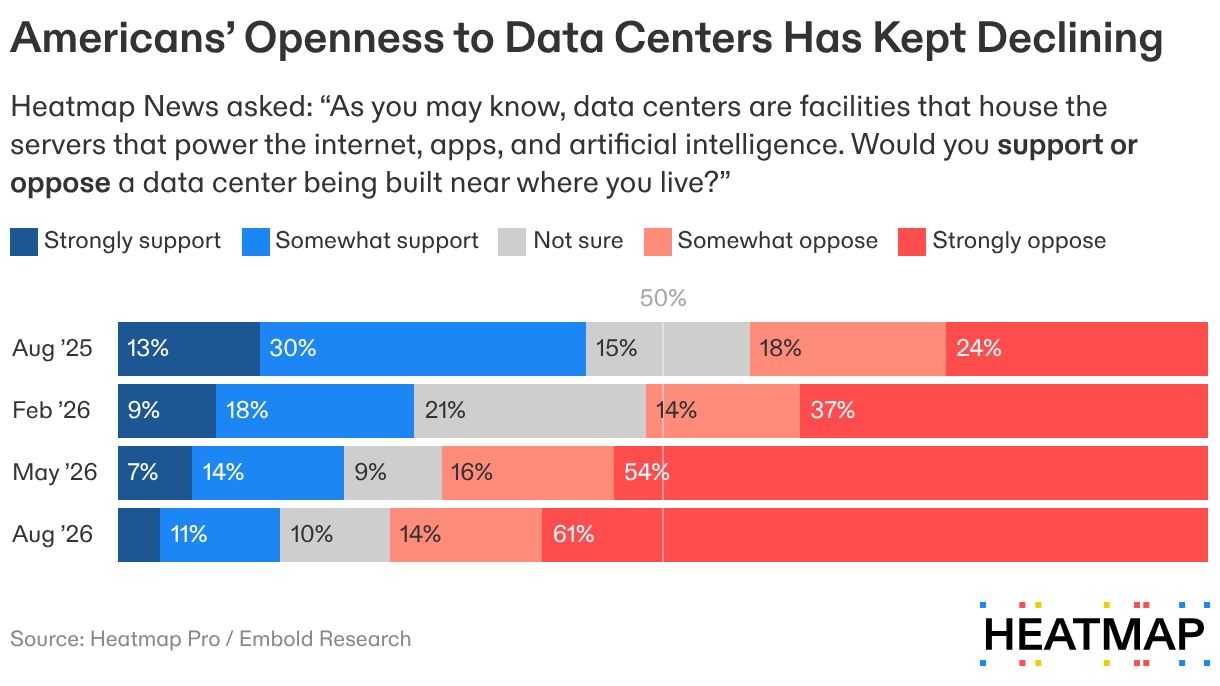
New polling by Heatmap News — an outlet focused on climate change — shows a massive shift in public opinion about data centers over the past year.
- Last August, Americans were split: 43% supported a data center being built near them, while 42% opposed one.
- Now, 75% say they'd oppose one — a swing of more than 30 points. Go deeper ($).
🗳️ In Michigan, Republican U.S. Senate nominee Mike Rogers told The Detroit News ($) he backs a one-year moratorium on new data centers.
- His Democratic opponent, Abdul El-Sayed, has made data-center restrictions a major issue.
8. 🏎️ Pic to go: D.C. racetrack reflection
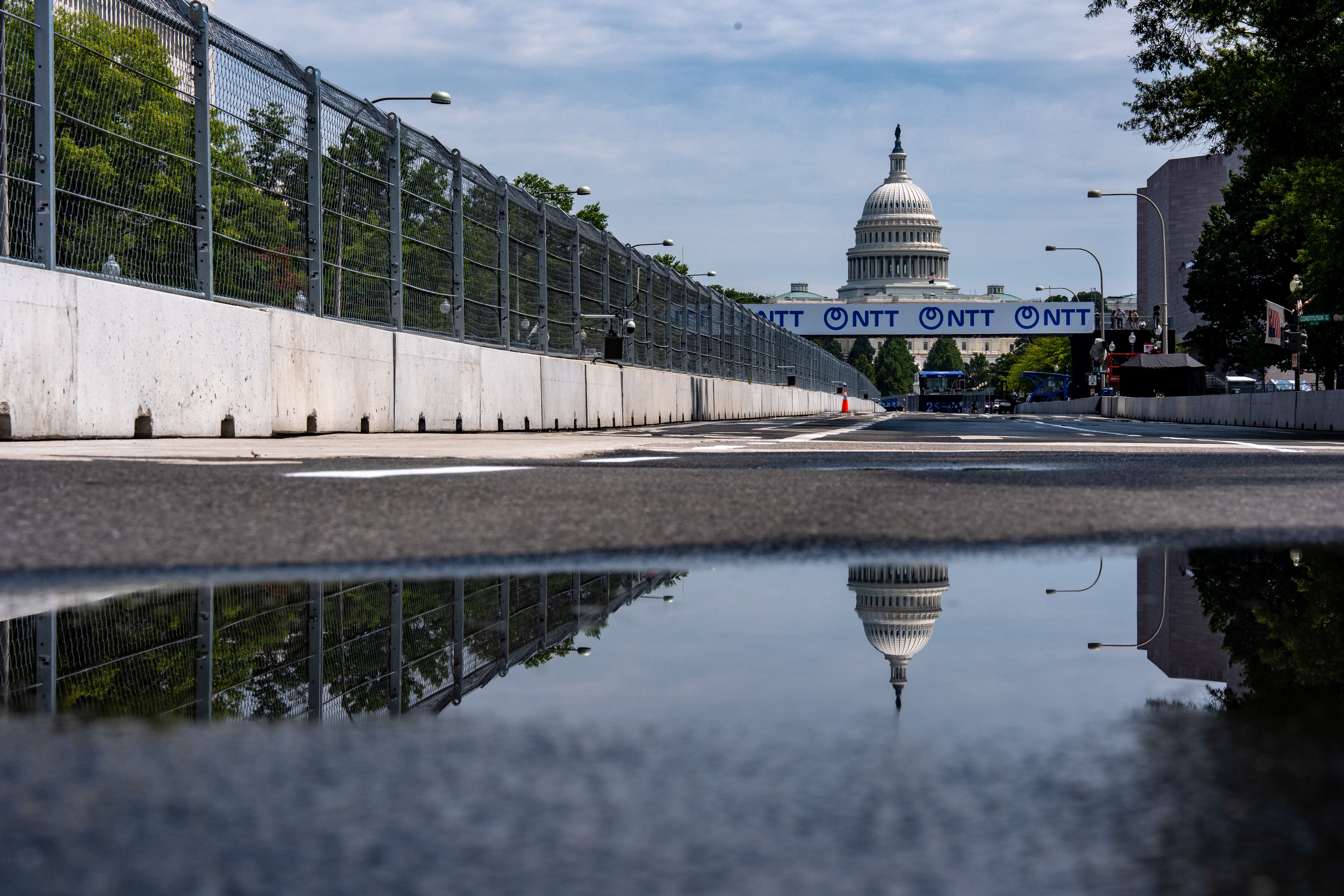
The Capitol dome is reflected in a puddle along the 1.7-mile, seven-turn street circuit for this weekend's Freedom 250 Grand Prix in D.C.
- The slogan: "Let Freedom Rev!"
- Practice and qualifying races are scheduled for tomorrow, followed by the main race on Sunday.
Watch: Time-lapse tour of the circuit.
Axios AM