Axios AM

February 21, 2026

1 big thing: 🚫 Trump hits SCOTUS red line
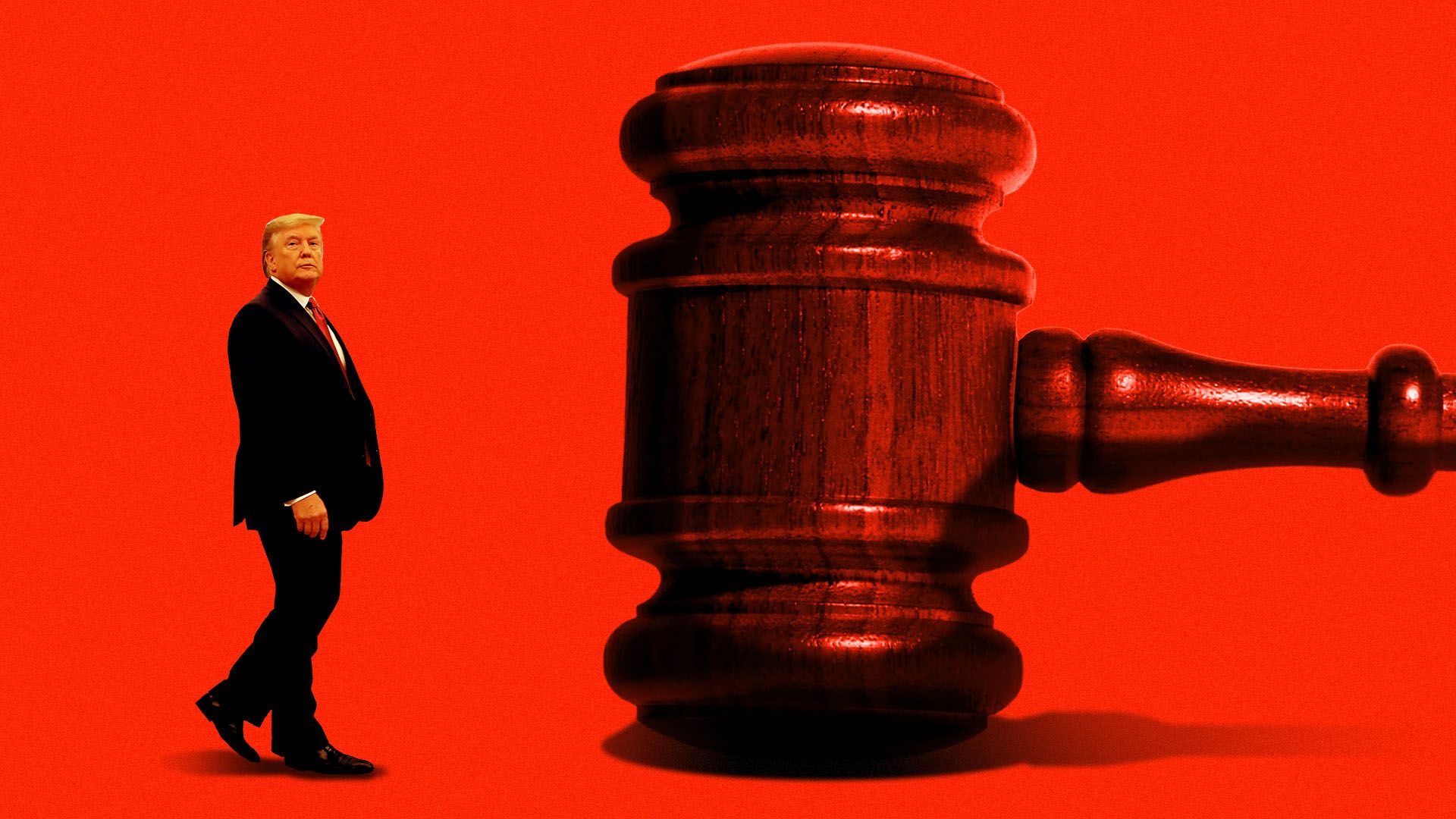
The Supreme Court's 6-3 tariff ruling is the first time the high court has clearly slammed the door on one of President Trump's policies, Axios' Emily Peck writes.
- Three conservative justices — John Roberts, Amy Coney Barrett and Neil Gorsuch — joined the court's three liberals in finding Trump's tariffs unconstitutional.
- The court ruled that Trump can't use the International Emergency Economic Powers Act (IEEPA) of 1977 to impose tariffs on imports.
🥊 An editorial in today's Wall Street Journal calls the ruling "arguably the worst moment of his Presidency."
- Gorsuch, a Trump nominee, wrote in a blunt concurring opinion:
"[M]ost major decisions affecting the rights and responsibilities of the American people (including the duty to pay taxes and tariffs) are funneled through the legislative process for a reason. Yes, legislating can be hard and take time. ... But the deliberative nature of the legislative process was the whole point of its design."
💵 Stunning stat: Last year, the court issued 26 rulings on challenges to Trump policies and actions — and sided with the administration 21 times, almost entirely on the "shadow docket," where justices don't have to explain their reasoning, the Financial Times' Brooke Masters notes.
🏛️ What to watch: The ruling sets up an awkward tableau for the president's State of the Union on Tuesday night. The justices sit up front, in his line of sight.
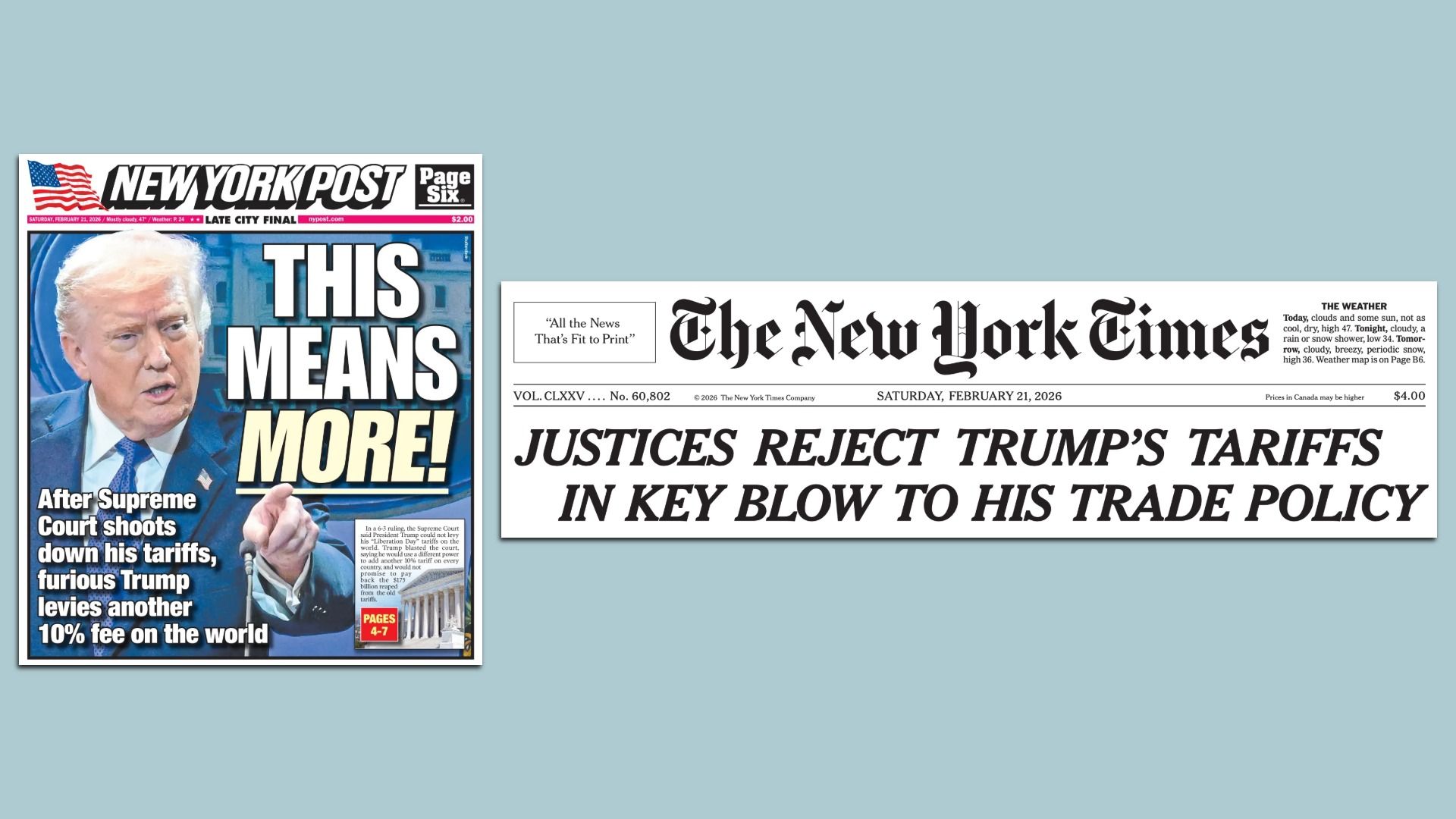
What's next: President Trump quickly pivoted to what he called "great alternatives" that could "take in more money" in tariffs, including Section 122 of the Trade Act of 1974, Axios' Herb Scribner and Courtenay Brown write.
- "Foreign countries that have been ripping us off for years are ... dancing in the streets, but they won't be dancing for long," Trump said in the White House press room.
- "The good news is that there are methods, practices, statutes and authorities, as recognized by the entire court in this terrible decision ... that are even stronger than the IEEPA tariffs."
🔭 The big picture: Section 122, designed for short-term emergencies, will allow Trump to reimpose some tariffs, at least temporarily. The section has never been invoked. So it's a historic moment for presidential economic policy.
- Trump said he'll sign an executive order to impose 10% tariffs on all nations. Trump pointed to other measures to impose tariffs, including Section 232 of the Trade Expansion Act of 1962 — the statute that underpins the administration's levies on aluminum and steel.
2. 🦾 Claude: "Thank U, Next"

3. ☢️ Exclusive: Trump's new Iran option
The Trump administration is prepared to consider a proposal that allows Iran "token" nuclear enrichment if it leaves no possible path to a bomb, a senior U.S. official told Axios' Barak Ravid and Marc Caputo.
- Why it matters: This suggests an opening, if only a small one, for a deal to constrain Iran's nuclear capabilities and prevent war.
🪖 At the same time, Trump has been presented with military options that involve directly targeting Supreme Leader Ali Khamenei.
Between the lines: Some of Trump's advisers have counseled patience. They argue that as time passes and the U.S. military build-up grows, Trump's leverage will grow along with it.
- But even some of Trump's closest advisers admit they don't know what he will decide to do, or when.
🚨 Iranian Foreign Minister Abbas Araghchi told Joe Scarborough on MS NOW's "Morning Joe" yesterday that an Iranian proposal would be finalized in the next two or three days.
- U.S. and Israeli officials have told Axios that Trump could strike as soon as this weekend.
A senior U.S. official said Trump's envoys Steve Witkoff and Jared Kushner told Araghchi that Trump's position was "zero enrichment" on Iranian soil.
- But the official said that if the proposal includes "small, token enrichment," and if the Iranians offer detailed proof that it poses no threat, the U.S. will study it.
⏳ The U.S. and Iranian public positions on enrichment seem incompatible. But comments from Araghchi and the senior U.S. official suggest there may still be some room for a deal.
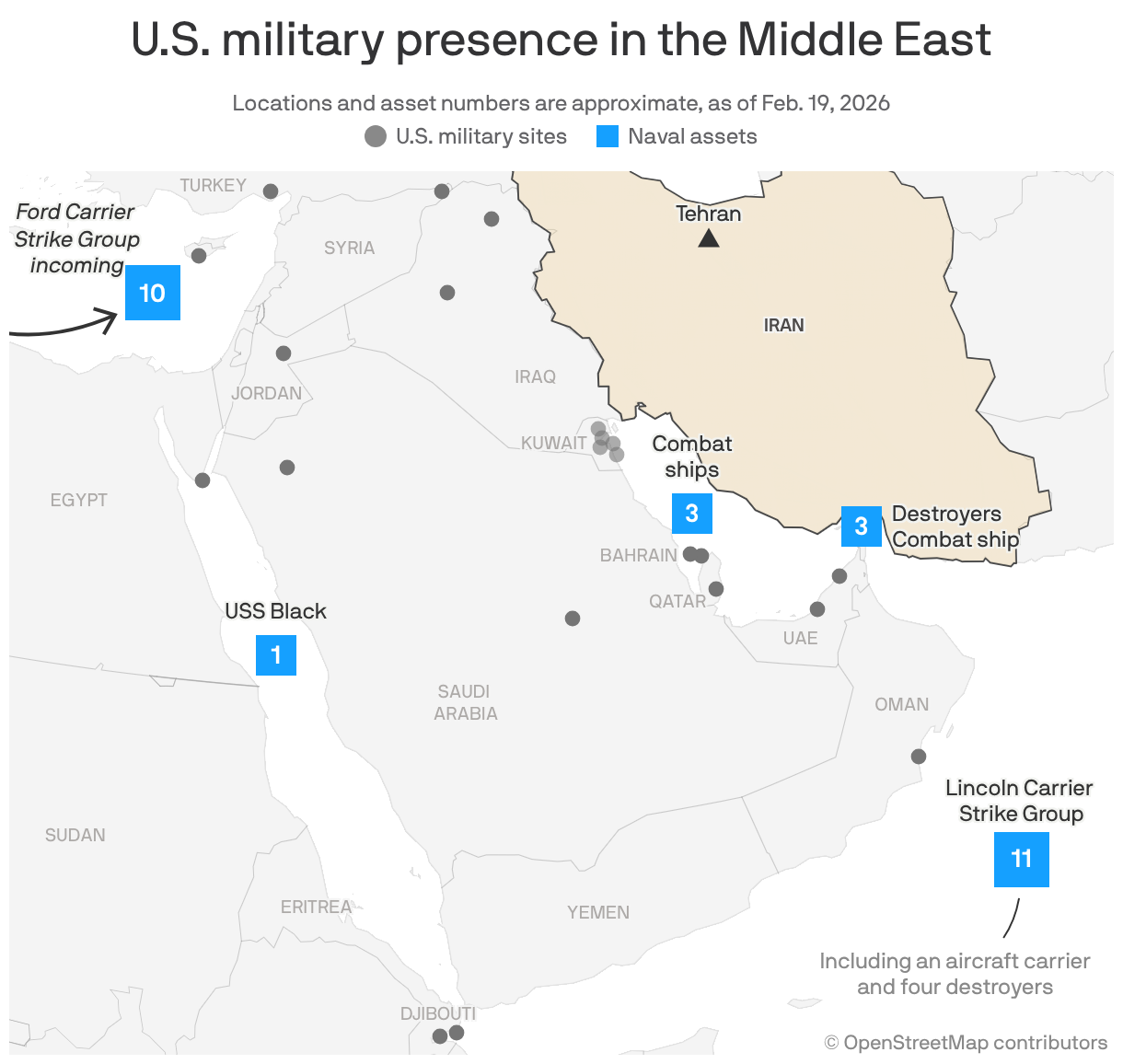
⛴ An incredible amount of U.S. firepower is amassing in the Middle East, suggesting the U.S. is readying for a prolonged fight, Axios' Colin Demarest writes:
- The USS Abraham Lincoln and USS Gerald R. Ford carrier strike groups.
- A-10, F-15, F-16, F-22 and F-35 warplanes, plus surveillance, communications, refueling and transport aircraft.
- Hundreds of Tomahawk missiles.
👀 What we're watching: The role Israel would play, both offensively (with strikes) and defensively (with missile countermeasures).
- The latest: Ford carrier group arrives in Mediterranean.
4. 💓 Charted: Our resting heart rates
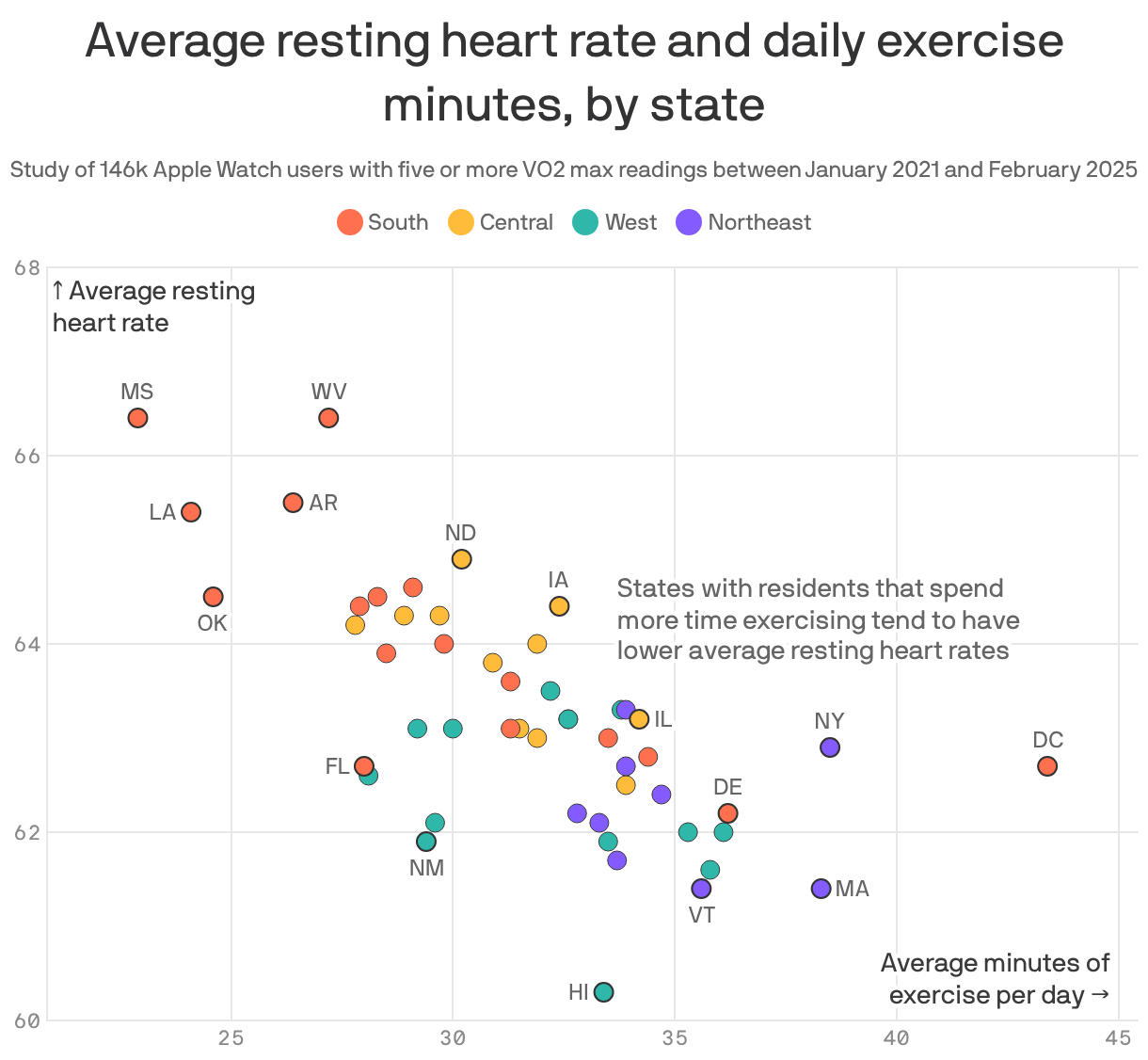
In states where Americans exercise more, resting heart rates are lower. The reverse is also true, Axios' Carly Mallenbaum writes from new Apple data.
- A lower resting heart rate is associated with better cardiovascular health and decreased risk of heart disease.
💪 Geographical differences in resting heart rate reflect regional differences in fitness, stress, sleep and diet.
5. 💼 ChatGPT gets personal


OpenAI released new data showing people are using ChatGPT's consumer version for more personal tasks and fewer work tasks, Axios' Madison Mills reports.
- 💕 If Chat is being used as a buddy rather than a coworker, that could bolster OpenAI's emerging ad business, even as it keeps pursuing lucrative business customers.
6. 📷 Time-capsule photo
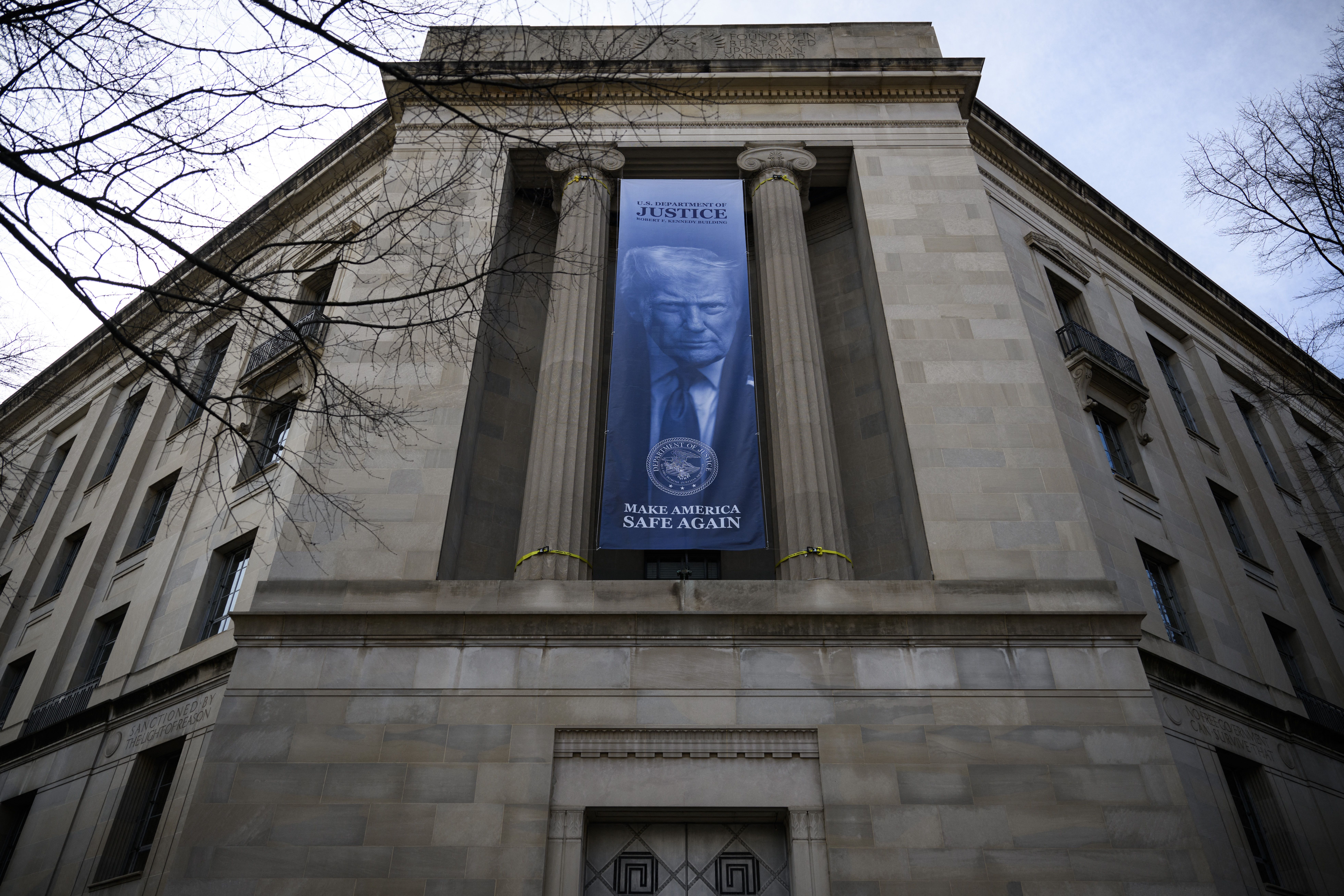
A long banner featuring President Trump's face was hung on the exterior of Justice Department headquarters on Thursday, in a physical display of his power over the law enforcement agency that once investigated him.
- Trump banners have been hung outside other agencies across Washington, including the departments of Agriculture and Labor, AP notes.
The Justice Department said when asked about the banner: "We are proud at this Department of Justice to celebrate 250 years of our great country and our historic work to make America safe again at President Trump's direction."
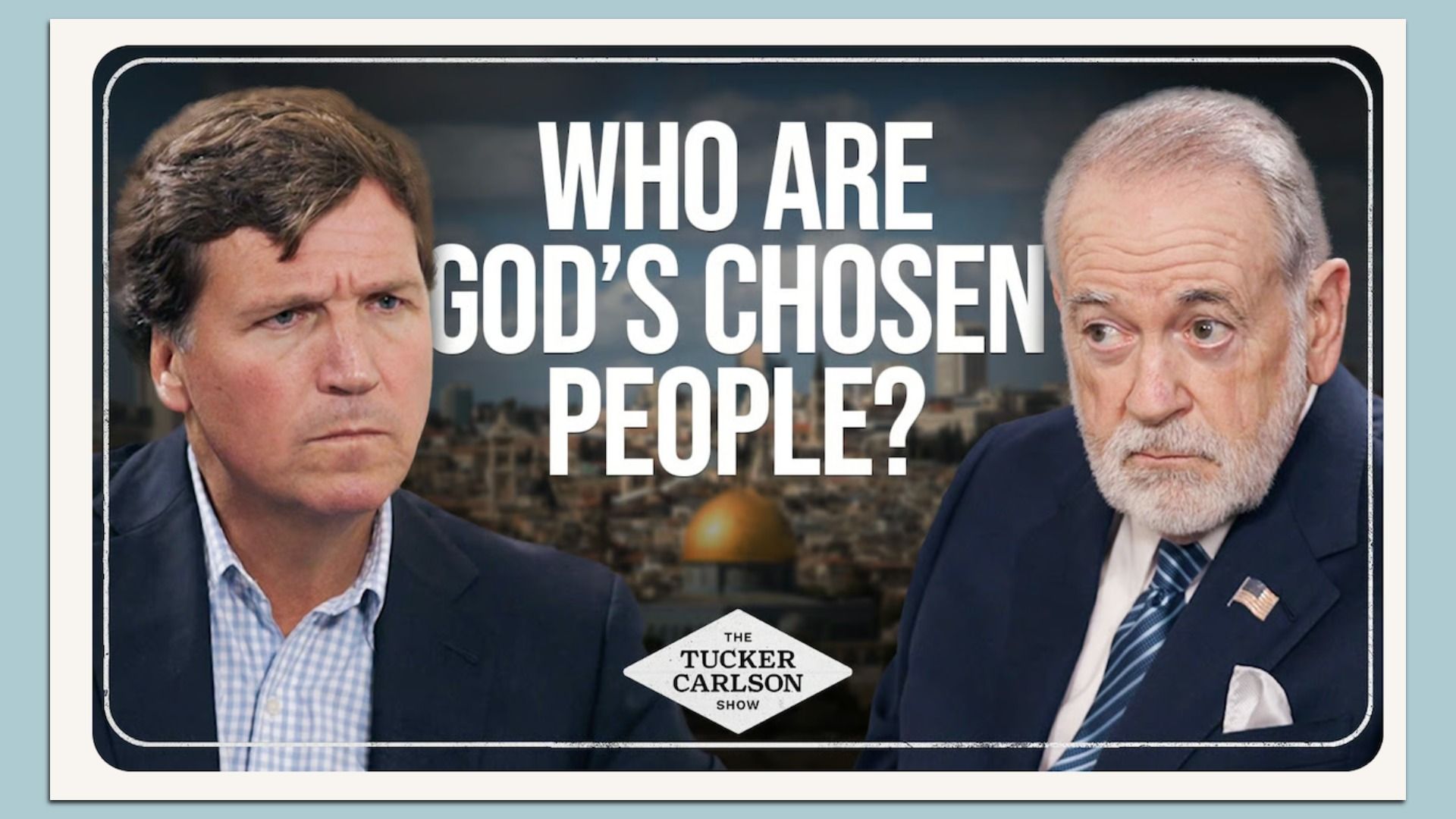
7. 🎙️ Huckabee to Tucker: Israel has Biblical right to Middle East
8. 🪞 1 for the road: Inside the Internet Archive
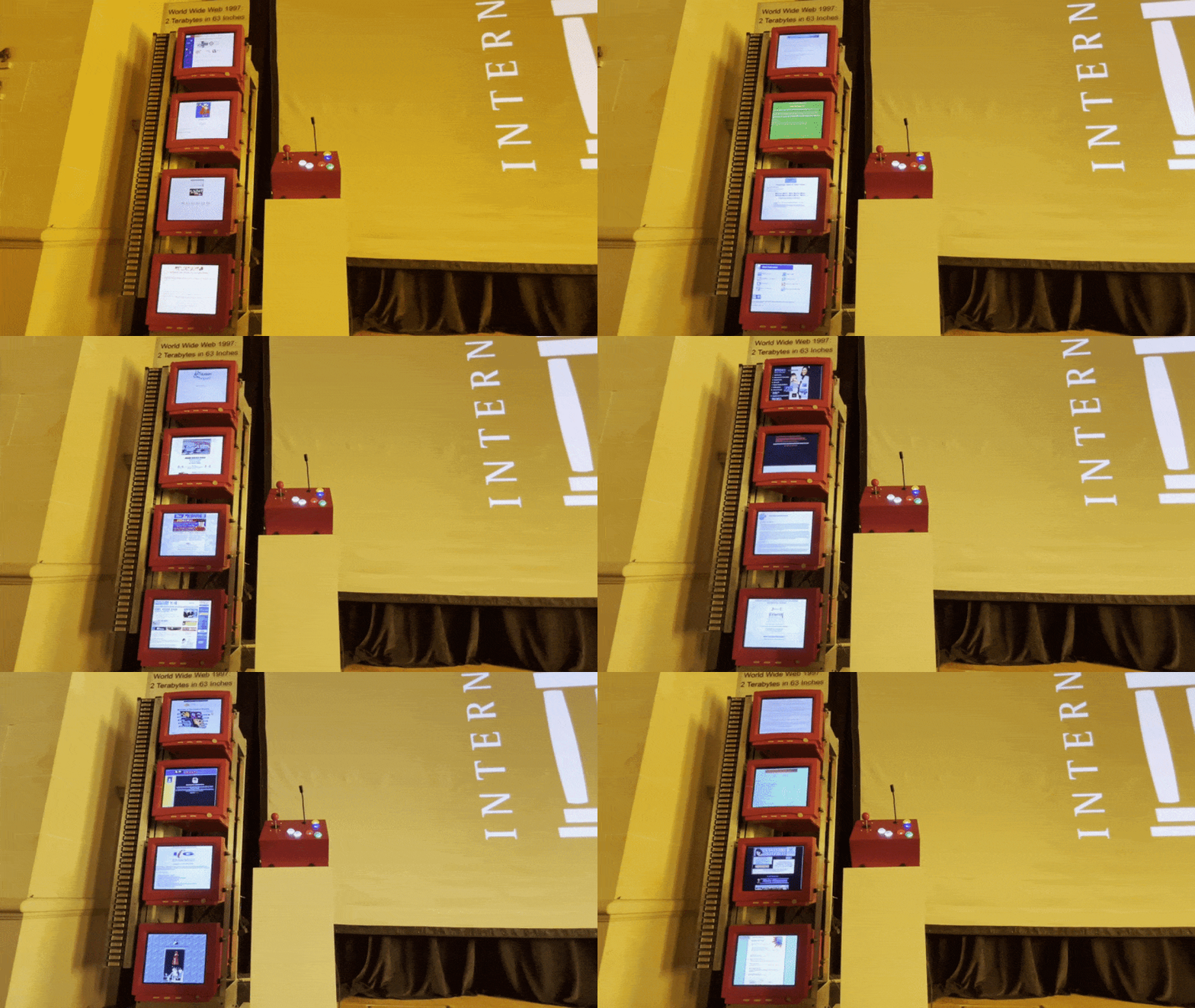
In an era when government information can disappear with a click, the Internet Archive is racing to preserve a digital paper trail, Axios San Francisco's Shawna Chen writes.
- 🥳 The San Francisco-based Internet Archive is celebrating its 30th birthday as a digital library. It gained newfound prominence last year when the Trump administration began taking down and changing federal websites en masse.

🔎 How it works: Every day, hundreds of the group's automated web crawlers capture snapshots of public webpages — over a billion URLs a day — and store timestamped versions in the Wayback Machine, allowing users to see how they're revised.
Axios AM