Axios AM

March 25, 2025

1 big thing: Signal fiasco
Trump administration true believers are closing ranks to try to protect top national security officials from being pushed out over yesterday's Signal scandal, insiders tell Axios' Marc Caputo.
- Why it matters: Democrats and critics of President Trump want him to fire National Security Adviser Mike Waltz. That's a major reason he could survive. So far, insiders are defiant.
📱 Four top administration officials tell Axios they expect the controversy to die down and Waltz to remain. Four outside advisers concurred.
- "We don't care what the media says," a Trump adviser said. "We can easily handle what would kill any other administration. This will blow over."
- A senior White House official added: "Trump certainly wasn't pleased with this. But all this talk you see about Waltz not lasting is just way premature. There's a Washington feeding frenzy. And we all know that you don't give the mob what it wants."
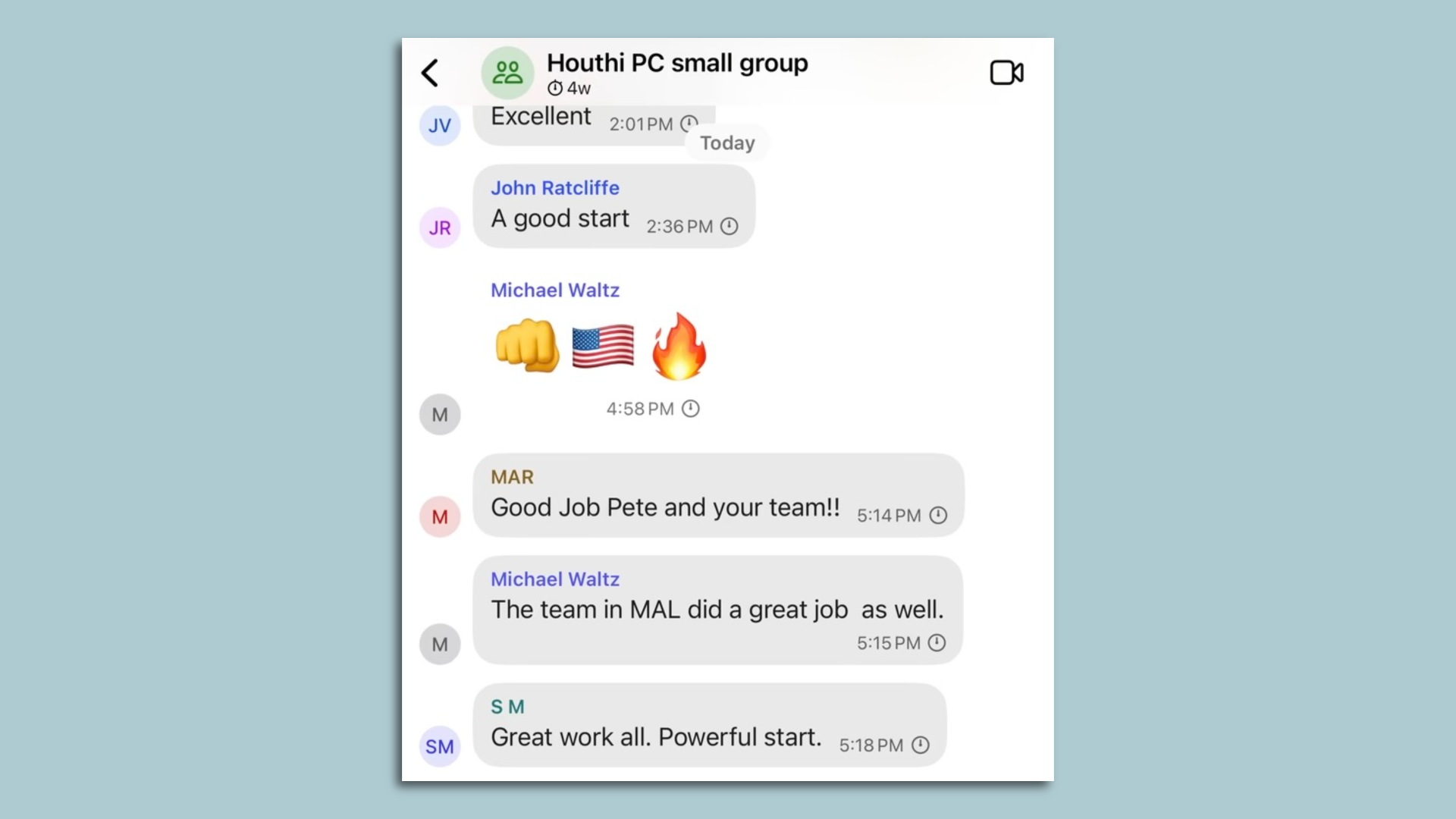
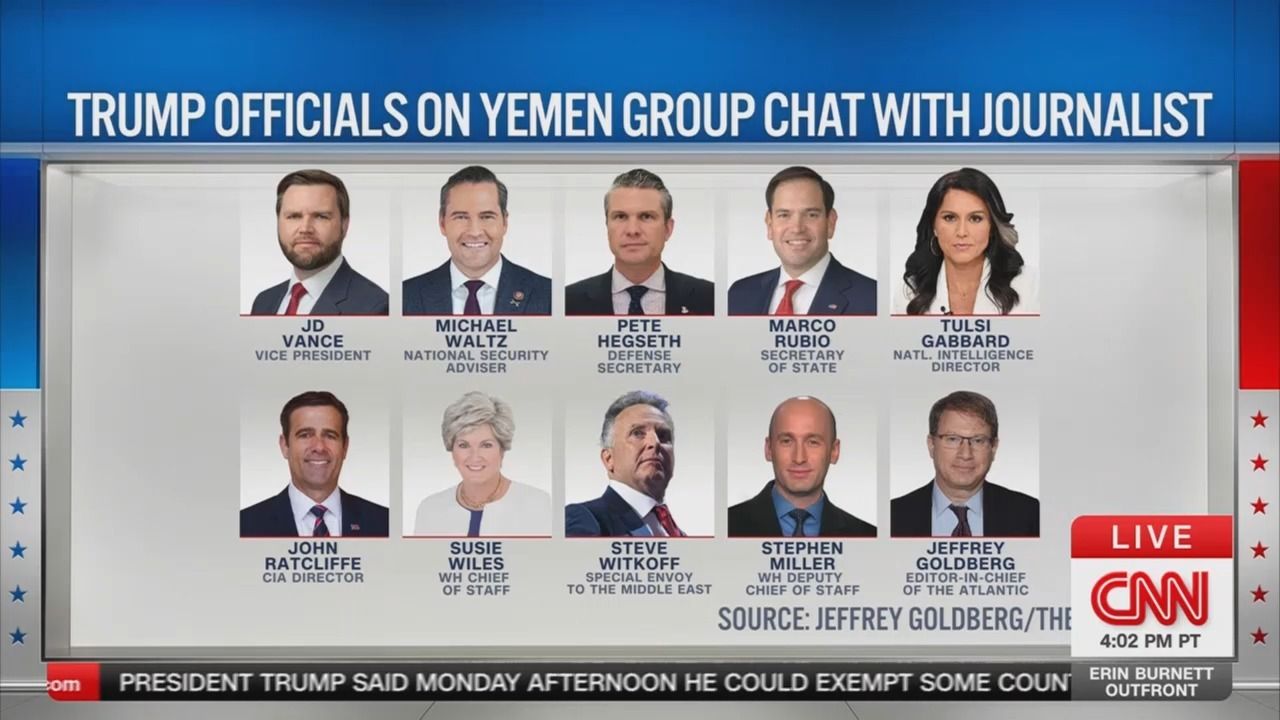
Still, there's a debate in Trumpworld over whether Waltz will ultimately get sacked after accidentally adding Jeffrey Goldberg, editor-in-chief of The Atlantic, to an 18-member Signal group chat, "Houthi PC small group" (for Principals Committee, the National Security Council's top officials).
- Goldberg reports he was mistakenly sent messages that contained "war plans" for strikes on Houthi militants in Yemen: "The plan included precise information about weapons packages, targets, and timing."
The group chat, on the commercial messaging app Signal, included more than a dozen top Trump officials.
- Defense Secretary Pete Hegseth posted "operational details of forthcoming strikes on Yemen, including information about targets, weapons the U.S. would be deploying, and attack sequencing," Goldberg writes.
👂 What we're hearing: "The main thing Mike [Waltz] is definitely gonna get sh*t about is that it was The Atlantic. Man, the boss hates The Atlantic," an outside adviser told Axios, laughing.
- "But seriously, this was horrible. Just really embarrassing."
"Waltz is utterly humiliated by the whole thing. He probably wants to die," said a longtime ally of Trump and Waltz, a former Florida congressman.
- "I wouldn't be surprised if Mike offered his resignation and if Trump refused it."
- However, a ninth top Trump adviser told us this morning that they were "unsure" about Waltz's fate.
Between the lines: Administration officials concede the episode was deeply embarrassing, and put top Trump Cabinet members in the blast radius of a humiliating story about a sloppy security failure.
- Waltz now has a bunch of top officials, and their teams, who are annoyed at him for drawing bad publicity.
🥊 Reality check: No one can say for sure how Trump will feel going forward. Trump could sour on Waltz if coverage of the blunder continues to saturate cable TV — especially if a small faction of outside advisers who dislike Waltz can get to the president.
- But Trump instinctively resists giving adversaries a win.

👀 Behind the scenes: Goldberg writes that after he accepted the Signal connection request on March 11, he and Atlantic colleagues "discussed the possibility that these texts were part of a disinformation campaign, initiated by either a foreign intelligence service or, more likely, a media-gadfly organization."
- "I had very strong doubts that this text group was real," he added.
Goldberg writes that after seeing Waltz on ABC's "This Week" on Sunday, he concluded the Signal chain "was almost certainly real."
- The editor says he removed himself from the Signal group, "understanding that this would trigger an automatic notification to the group's creator, 'Michael Waltz.'"
- Yesterday morning, Goldberg emailed top officials with questions about the thread. The NSC spokesman replied two hours later that the thread "appears to be authentic."
✈️ Landing in Hawaii as he began an Indo-Pacific swing, Hegseth bashed Goldberg as a "deceitful and highly discredited so-called 'journalist' who's made a profession of peddling hoaxes time and time again."
- Goldberg responded last night on CNN: "No, that's a lie. He was texting war plans. He was texting attack plans."
🔮 What's next: Two members of the Signal chat — CIA Director John Ratcliffe and Director of National Intelligence Tulsi Gabbard — are scheduled to testify before the Senate Intelligence Committee at 10 a.m. ET.
- Both then face questions at House Intel tomorrow. Axios' Hill crew reports Dems plan to focus heavily on the Signal debacle at both hearings.
2. 🫵 America's biggest cyber threat

3. 📈 Axios Pro Deals expansion

We're expanding our Axios Pro Deals subscription offering:
- Starting next Monday, in addition to our current coverage areas, subscribers will get in-depth, expert reporting on biotech, enterprise software, M&A and supply chain deals.
What's new: The latest deals news will hit your inbox throughout the day, as it happens.
- Plus if you depend on Dan Primack's Pro Rata every morning, we'll now offer a PM companion! Lucinda Shen, a stalwart of our deals coverage, will lead Pro Rata Premium — a new subscriber-only afternoon newsletter that closes out every day with what dealmakers need to know.
4. 💡 Charted: DOGE job hunters


Job applications from federal workers inside DOGE-targeted agencies have surged this year, Axios' Emily Peck writes from new data out by Indeed.
- Why it matters: This is a highly educated bunch, spread around the country — and they're entering the job market at a time when hiring for those with advanced degrees has stalled out.
🔬 Zoom in: Indeed compared job search activity to 2022 levels. Back then, lots of federal employees were job hunting — along with many American workers, as the hiring market was hot.
- This year, for most federal employees, applications aren't back to that 2022 level yet.
The big exception is among those working at DOGE-targeted agencies like USAID, the Consumer Financial Protection Bureau and the USDA.
- Applications from workers at these agencies spiked more than 75% above 2022 levels in February.
5. ⚡ Heritage Foundation's deportation blueprint
6. 🇨🇳 Tesla falls to BYD
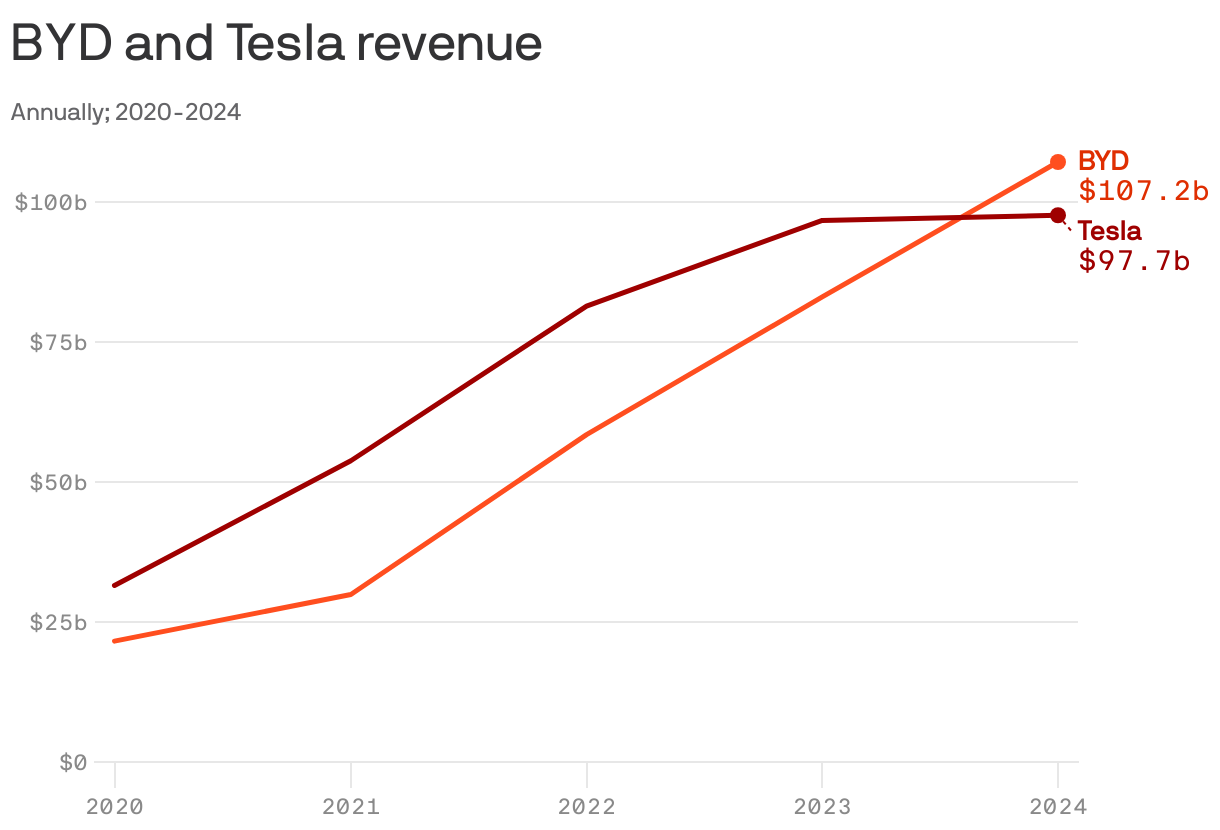
Chinese automaker BYD is expected to surpass Tesla in EV sales this year — but it's already surpassed Tesla in total revenue, Axios' Nathan Bomey writes.
- Why it matters: The two companies are the far-and-away global leaders in EV sales.
🧮 By the numbers: BYD today reported about $107 billion in 2024 revenue, topping Tesla's $98 billion for the first time.
- BYD — which already sells more vehicles than Tesla when plug-in hybrids are included — also recorded net income of about $5.6 billion.
- That's nearly 2.5x Tesla's profit for 2024.
Get Axios Business Suite: Three daily newsletters.
7. 🎨 Trump disappears "distorted" painting
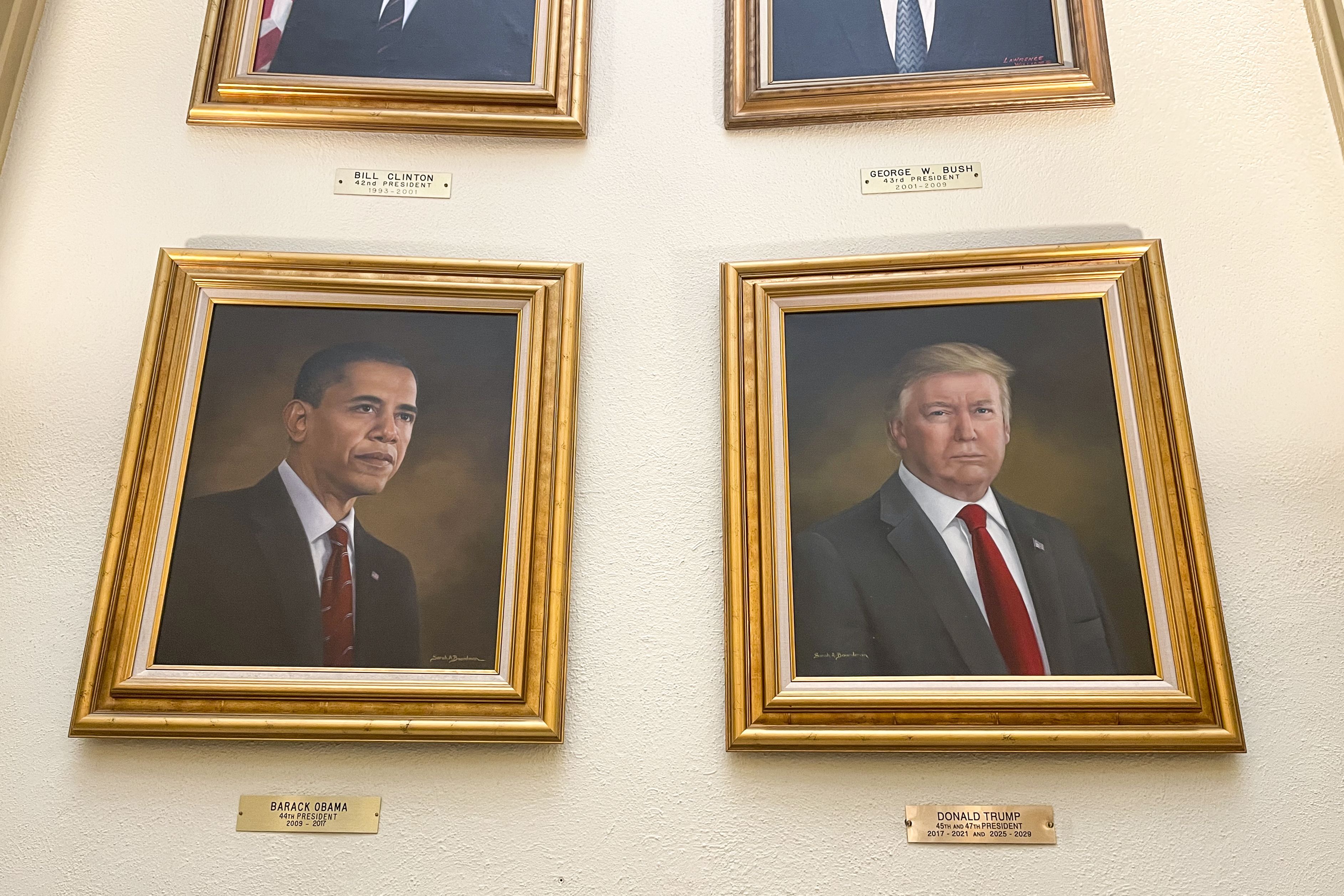
A portrait of President Trump at the Colorado state Capitol will be removed after he publicly slammed the painting, Axios Denver's Esteban L. Hernandez writes.
- Trump claimed the oil painting was "purposefully distorted" and said in a post on Truth Social that the artist "must have lost her talent as she got older."
- "I would much prefer not having a picture than having this one," he added.
8. 🏰 1 fun thing: Airbnb castle

A Georgia man opened up an Airbnb castle that blends medieval décor with modern appliances and amenities, Axios Atlanta's Kristal Dixon writes.
- Think "Game of Thrones" vibes, but with electricity, plumbing and a modern kitchen.

The Castle at Kingston, about an hour from Atlanta, has been five years in the making.
- Keep reading ... Get Axios Local: Daily newsletters in 31 cities.
Axios AM