Axios AM

September 25, 2026

1 big thing: GOP rescue plan
With midterms 39 days away and the outlook for President Trump's party looking increasingly bleak, top Republicans tell Axios' Alex Isenstadt their three big questions for the final stretch:
📺 1. Are their attack ads working? Republicans expect a wave of private polling in early October to reveal whether their massive financial advantage is cutting into Democrats' leads.
- GOP groups had spent more than $450 million through Sept. 23, more than twice what Democrats had spent, according to campaign finance expert Rob Pyers.
- But Republican strategists say they aren't sure yet whether the barrage is working amid voter anger over high prices, data centers and Trump's war in Iran.
- Trump's political operation didn't begin pouring its $416 million war chest into attack ads until around Labor Day, and Republicans argue the ads need time to sink in.
- 🤠 Strategists are particularly watching the Texas Senate race, where national GOP groups have sunk more than $100 million into helping Ken Paxton against Democrat James Talarico.
✂️ 2. Who gets cut loose? Republicans concede they'll have to make painful spending decisions by early October.
- That could complicate things for GOP Senate contenders Mike Collins in Georgia and Michael Whatley in North Carolina, who have consistently trailed Democrats Jon Ossoff and Roy Cooper despite millions in Republican spending.
🇺🇸 3. What does Trump do? The president and his political team remain one of the midterms' biggest question marks.
- Trump's team said early this year that he'd campaign weekly for GOP candidates. That didn't happen. He now says he'll spend the final 30 days campaigning for candidates in 35 key Senate and House races.
- By early October, Republican strategists expect to see whether he'll follow through — and, if he does, where he goes. And of course, plenty of GOP candidates hope he'll stay away.
2. 🎤 Candidates get debate-shy
3. 💸 AI capital vacuum

A new analysis shows the AI buildout's staggering scale: $10.3 trillion in estimated AI infrastructure investment through 2032, Axios Macro co-author Courtenay Brown writes.
- 🤯 That amounts to 3.6% of GDP a year, dwarfing the investment booms that built America's railroads, highways, electric grid and telecom networks.
Why it matters: The AI boom has become far too big and costly for even the largest tech companies to finance alone, triggering trillions in demand for outside capital, according to new research being presented today at the Brookings Papers on Economic Activity.
- Financing the buildout will mean tapping bond markets, banks and private credit on a massive scale, adding to the flood of debt competing for investors' money at a time when borrowing costs are already surging.
💰 The more capital the buildout absorbs, the greater the potential pressure on borrowing costs elsewhere in the economy.
- In effect, any entity that needs capital, from the U.S. government to an Axios reader seeking a home mortgage, is in competition with hyperscalers.
4. 🍽️ Pic du jour: Wining and dining
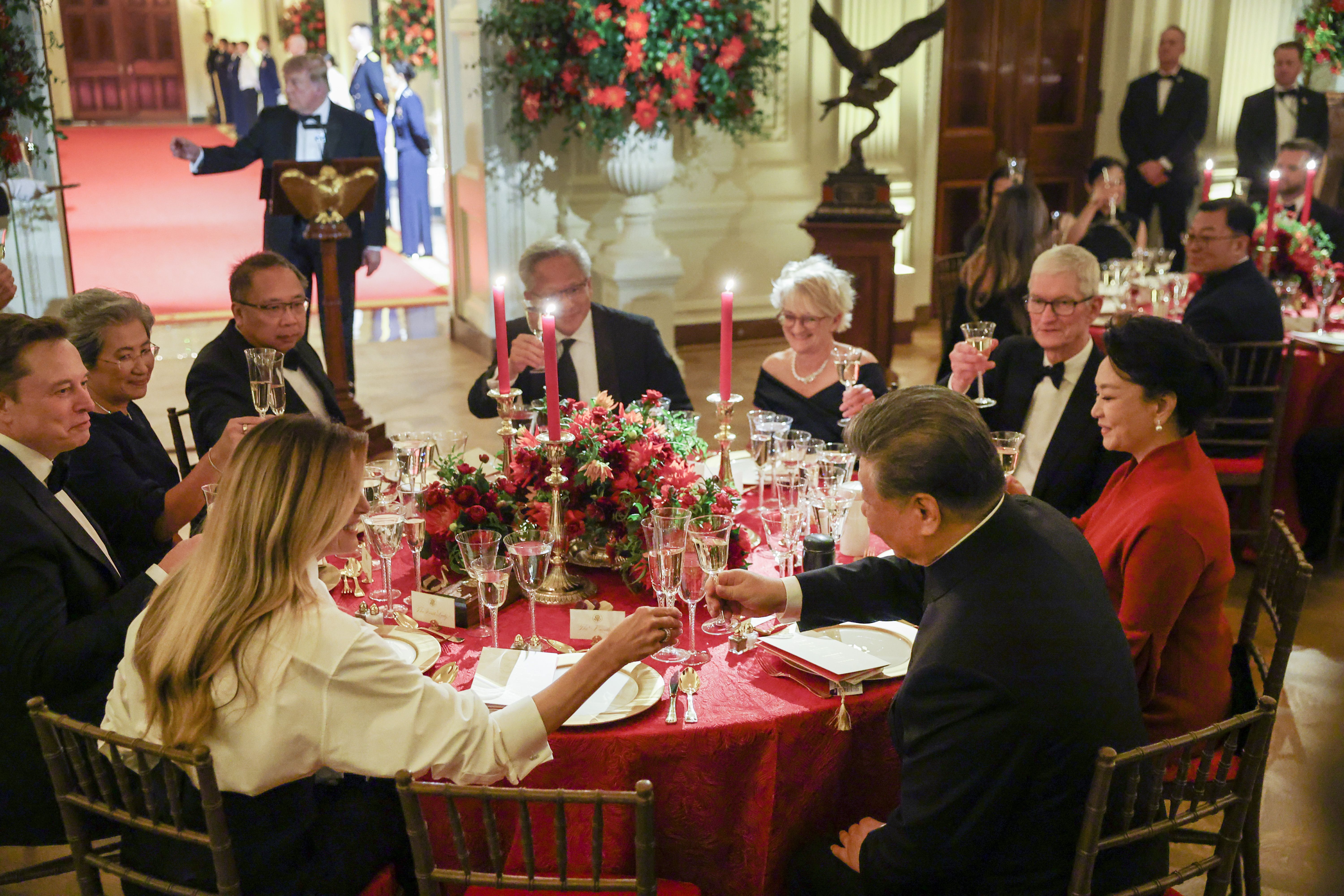
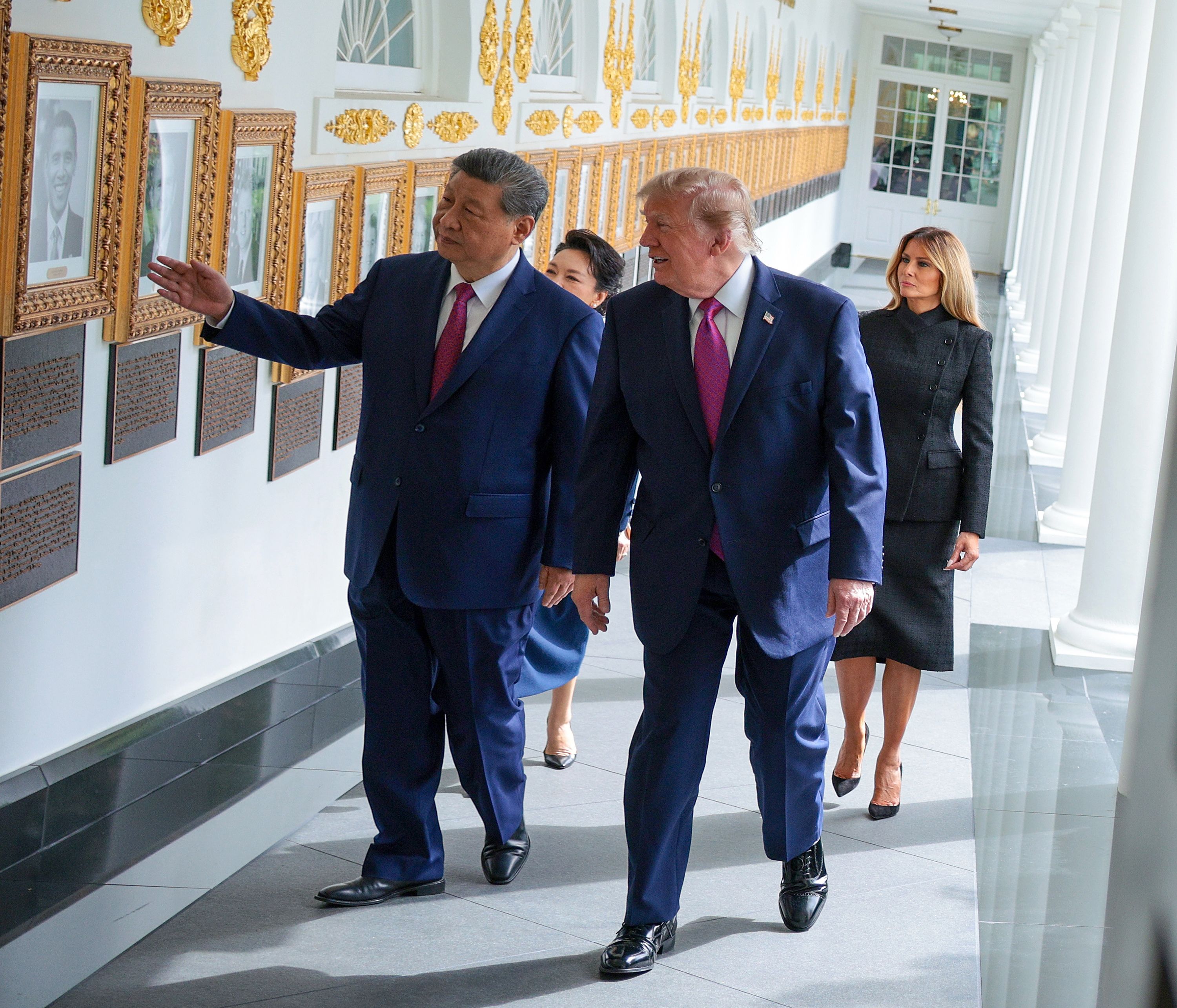
Last night's state dinner honoring Chinese President Xi Jinping drew a cavalcade of billionaires, Washington power brokers, tech titans and business leaders to the East Room.
- The meal was served on red china from Ronald Reagan's presidency. The main course: sesame-crusted sea bass with braised baby bok choy and roasted garden eggplant, finished with a vibrant sauce verte of fresh herbs.
- Trump wore a tuxedo and Xi a black suit. First lady Melania Trump, who shaped the menu, chose a tuxedo-style outfit: a white Saint Laurent cotton poplin blouse with a black silk cummerbund and black brocade pants, both from Dolce & Gabbana. China's first lady, Peng Liyuan, wore a red gown. (AP)
📈 CEOs at the dinner included Paramount Skydance's David Ellison, OpenAI's Sam Altman, Nvidia's Jensen Huang, Meta's Mark Zuckerberg, SpaceX/Tesla's Elon Musk, Alphabet/Google's Sundar Pichai, Microsoft's Satya Nadella, Dell's Michael Dell, Qualcomm's Cristiano Amon, Citigroup's Jane Fraser, JPMorgan Chase's Jamie Dimon, Goldman Sachs' David Solomon, BlackRock's Larry Fink, Blackstone's Steve Schwarzman, GM's Mary Barra, Exxon's Darren Woods, Pfizer's Albert Bourla, GE Aerospace's Larry Culp, Boeing's Kelly Ortberg, Lockheed Martin's Jim Taiclet, Mastercard's Michael Miebach and Visa's Ryan McInerney.
- Also at the dinner: OpenAI president and co-founder Greg Brockman, Amazon founder Jeff Bezos, Google co-founder Sergey Brin, Apple executive chairman Tim Cook, Goldman Sachs' John F.W. Rogers, NYSE president Lynn Martin and Jeff Yass, co-founder of Susquehanna International Group.
Full menu ... Guest list.
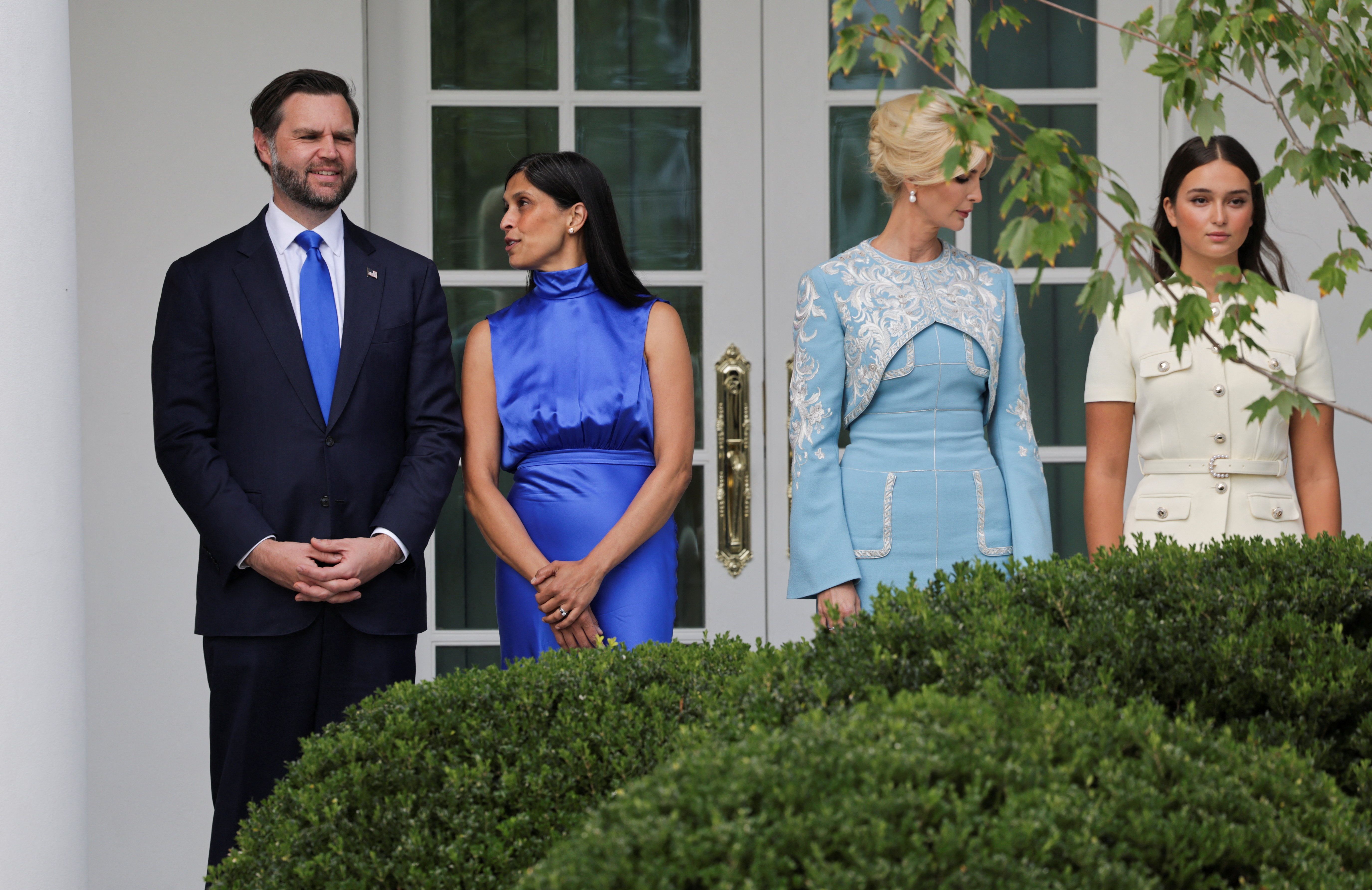
Above: Vice President JD Vance, second lady Usha Vance, Ivanka Trump and her daughter, Arabella Kushner, watch a military review in the Rose Garden yesterday.
5. 🇨🇳 Chummy with China
Americans' feelings toward China have warmed over the past five years, according to a Pew Research Center survey released this week:
- The share of U.S. adults with a warm view of China has jumped from 11% in 2021 to 19% today.
- The slice with a cold view has fallen from 68% to 54%.
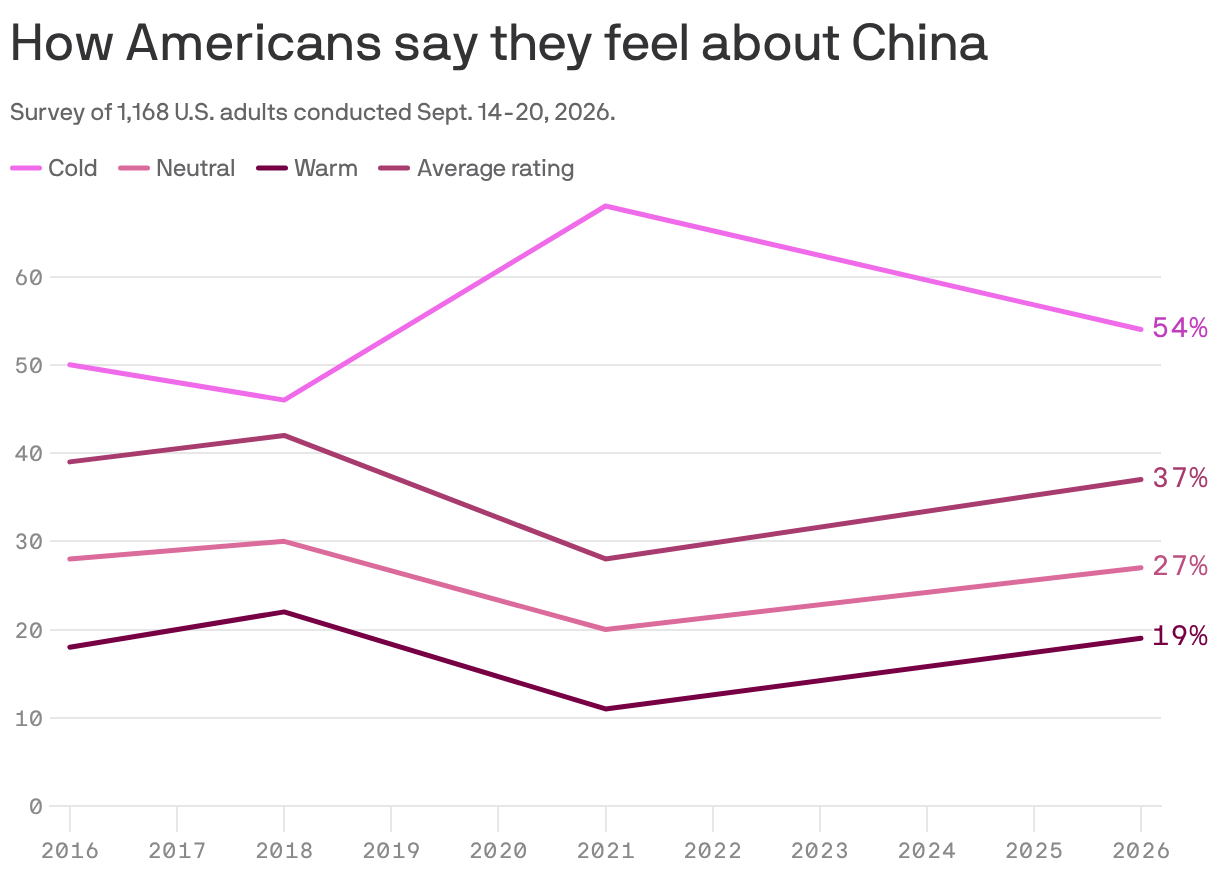
🥊 Below that lukewarm feel, tensions over trade, Taiwan, China's ties with Iran and a high-stakes AI race threaten to freeze over a precarious economic thaw between Beijing and Washington.
🐼 Return of panda diplomacy: Xi said China will send two pandas to Zoo Atlanta, calling them an "envoy of friendship." Keep reading.
6. 🏛️ Scoop: Tech summit next week
7. 👁️ Meta's privacy pitch
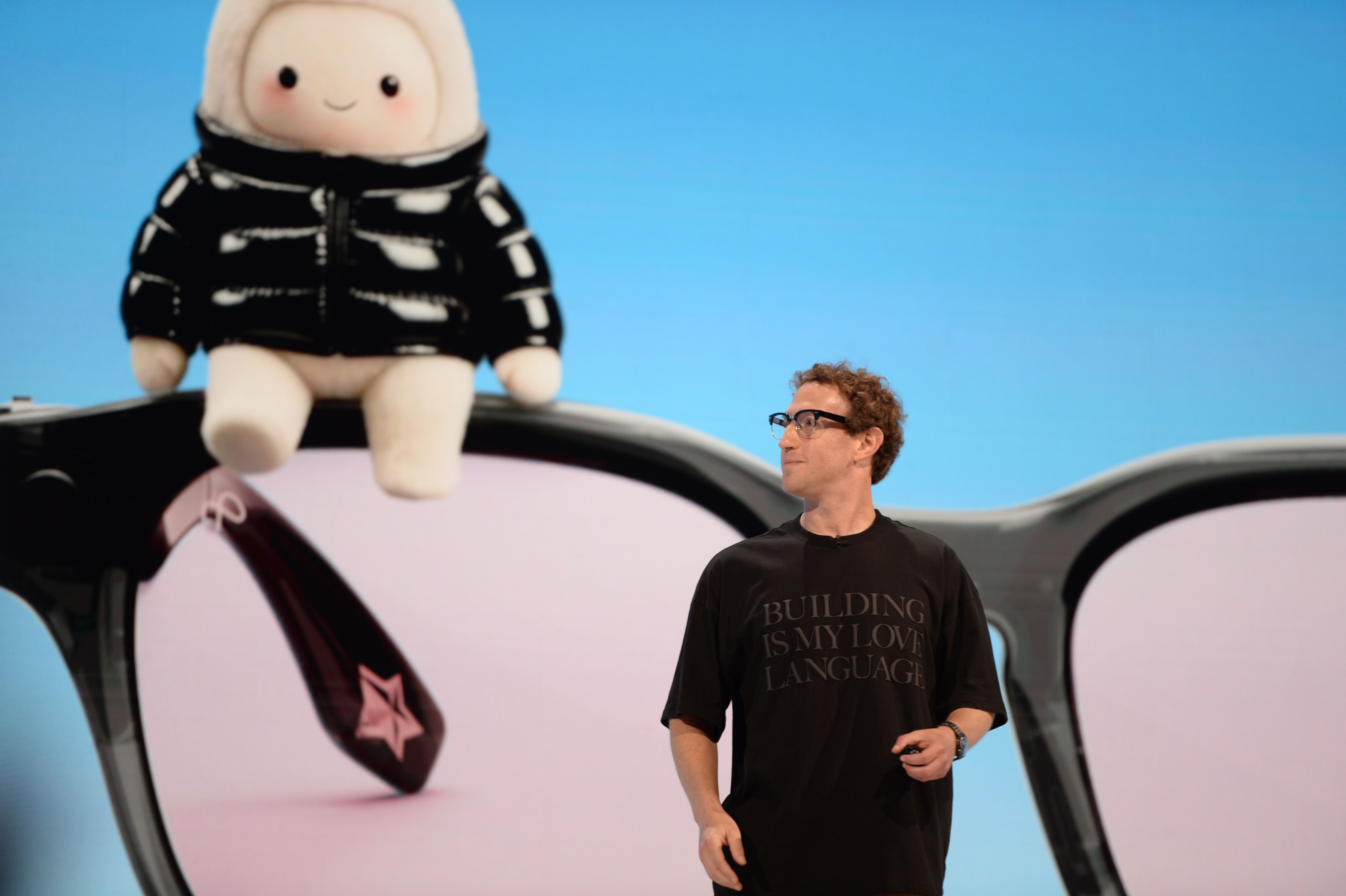
Meta is seeking to make privacy protections a centerpiece of new products, including its viral assistant Muse, marking a major shift for a company built on extensive use of customer data, Axios technology correspondent Ina Fried writes.
- The turnaround is an acknowledgment that the winner of AI's new assistant race will have to reassure users that they can turn over their emails, finances, health data and other sensitive information.
📝 CEO Mark Zuckerberg laid out a broad promise in his 6,500-word August manifesto: "We believe that people should have a fully private mode for personal agents where even Meta or any other service provider cannot see or grant access to your information."
- With Muse, the company is offering all customers their own personal virtual machine. A soon-to-be-available option would ensure that even Meta won't have access to the data.
- Still, customers have to pay close attention to minimize the amount of data shared with Meta: On Muse, the default setting allows interactions to be used for training the company's AI models, though that can be turned off.
Meta has spent years building a thriving business based on tapping extensive knowledge about its customers to serve up content and ads that are right up their alley.
- Go deeper ... More on Muse.
8. 🎃 1 for the road: Retail zombies
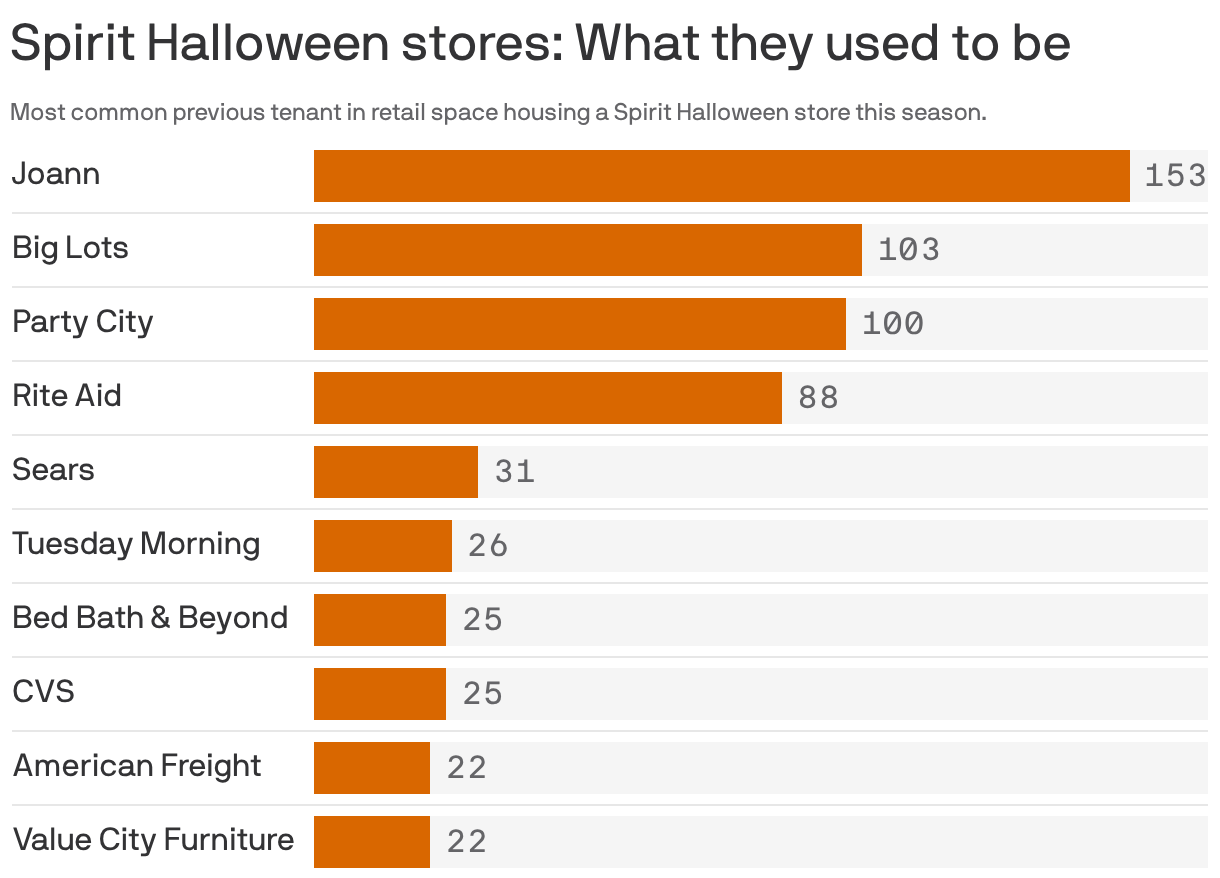
Spirit Halloween is haunting the shells of dead big-box stores again this fall as it opens 1,500+ locations across North America, Axios' Brad Jennings writes.
- 👻 The Halloween retailer relies on temporary leases to transform vacant storefronts into seasonal shops, an arrangement that gives property owners exposure and a few months of rent while they hunt for long-term tenants.
🧵 Of the locations analyzed by Axios, 153 — just over 1 in 10 — were labeled "Former Joann" stores in Spirit's locator. The bankrupt arts-and-crafts retailer closed last year.
- Former Big Lots stores ranked second with 103 locations, followed by Party City with 100.
Axios AM