Axios AM

December 17, 2024

☀️ Good Tuesday morning! Smart Brevity™ count: 1,663 words ... 6½ mins. Thanks to Noah Bressner for orchestrating. Copy edited by Bryan McBournie.
🦾 Our Axios AI+ Summit in San Francisco today runs from 2 to 5:20 p.m. PT. Guests include OpenAI chief strategy officer Jason Kwon, Instagram co-founder Mike Krieger, Sierra AI co-founders Clay Bavor and Bret Taylor & more. Tune in here.
1 big thing — Scoop: Top editors stiff WashPost

The situation at The Washington Post is so dire that two candidates to run the paper — Cliff Levy of The New York Times and Meta's Anne Kornblut, a former Post editor — both withdrew from consideration for the top newsroom job over the paper's strategy, sources involved in the process tell us.
Why it matters: The Post is scrambling to find a new executive editor, the chair once held by Ben Bradlee, amid shrinking paid readership and revenue. Publisher and CEO Will Lewis, handpicked by owner Jeff Bezos to save The Post, hasn't impressed the candidates with his vision for the future, the sources tell us.
- One person involved in the search told us Lewis' pitch was foggy and uninspiring.
🔬 Zoom in: Levy, who pulled out last week, and Kornblut, whose conversations ended in September, declined to comment. Other candidates include current interim executive editor Matt Murray. But it's hard to imagine this monthslong process unfolding so publicly — only to end with the same guy in charge.
- A few candidates were asked to write six-page memos — a hallmark of Amazon culture — about their journalistic vision for the paper, using AI and how to grow The Post's audience.
- Levy is a two-time Pulitzer winner who was an early advocate for digital innovation, and now is deputy publisher of two prized Times properties, The Athletic and Wirecutter. He started talking to The Post in August after the paper's search firm, Egon Zehnder, reached out.
Kornblut, who declined to move forward with the process after initial conversations, is Meta's VP of global product content operations.
- She had a formidable newspaper career before moving to the Bay Area as a tech executive: She was a Washington correspondent for The Boston Globe and The New York Times before becoming a Washington Post reporter and editor for eight years.
- Kornblut rose to deputy assistant managing editor for national news, where she was the lead editor on Pulitzer-winning coverage of Edward Snowden's NSA revelations.
Matea Gold — a respected, popular managing editor many reporters wanted in the top job, and who conceived of and ran The Post's Pulitzer-winning investigation into the Jan. 6 attack on the U.S. Capitol — announced last week that she's moving to The New York Times as Washington editor, making her deputy to the bureau chief.
- There's lots of anxiety in The Post newsroom right now about whether the paper is still committed to that kind of fearless accountability reporting.
- Axios confirmed that the search firm also reached out to Kevin Merida and Steven Ginsberg, two former Washington Post managing editors. Neither expressed interest in the role.
🖼️ The big picture: Bezos has said little about what he wants for a revived Post. He is scheduled to dine with President-elect Trump at Mar-a-Lago this week — two months after killing a Post endorsement of Trump's rival, Vice President Harris.
- Bezos' various business interests — Amazon and the Blue Origin space company — stand to gain or suffer from Trump's presidency.
- The Post has announced no major shifts or innovations under the Lewis regime. Toss in a demoralized staff and invigorated labor unions, and you have a mighty challenge for the next top editor.
🔎 Between the lines: The Post has lost a ton of talent this last year, and several stars are talking to competitors about leaving soon. One hot rumor inside The Post: The Atlantic is licking its chops over political writers who are increasingly poachable. Other Posties are eying The New York Times, long known at the Post as "Brand X."
- People involved in the process say Bezos has been mostly MIA at the Post, leaving matters to Lewis, who is unpopular in the newsroom.
Several people familiar with The Post's search were baffled by the apparent absence of editorial vision or business strategy. "I'm not sure it's salvageable," one of them said.
2. 🌋 Geothermal's massive untapped potential

Geothermal energy — steam or very hot water from underground reservoirs — eventually could meet up to 15% of the growth in global power demand. But a lot has to break right, Axios' Ben Geman writes from a new analysis.
- Why it matters: Technological advances — including horizontal drilling and hydraulic fracking, honed through oil and gas breakthroughs in North America — could help geothermal to shed its niche status, the International Energy Agency says in a new report.
🔬 Zoom in: Making geothermal competitive means greater government policy support, specialized labor and major cost declines.
- "Up to 80% of the investment required in a geothermal project involves capacity and skills that are common in the oil and gas industry," the report notes.
- IEA finds that with the "right support," next-generation geothermal could get 80% cheaper by 2035. That could make costs on "par or below hydro, nuclear and bioenergy."
Reality check: Geothermal currently provides 1% of global electricity, and is concentrated in a few countries — the U.S., Iceland, Indonesia, Turkey, Kenya and Italy.
3. 🚁 Feds insist drones are benign

Four federal agencies — the Pentagon, FBI, DHS and FAA — doubled down last night on declaring that there are no credible threats from drones flying over civilian airspace, saying in a statement:
"We assess that the sightings to date include a combination of lawful commercial drones, hobbyist drones, and law enforcement drones, as well as manned fixed-wing aircraft, helicopters, and stars mistakenly reported as drones."
The agencies added that while "there have been a limited number of visual sightings of drones over military facilities in New Jersey and elsewhere ... such sightings are not new."
🎨 The big picture: Homeland Security Secretary Alejandro Mayorkas told Axios' Ina Fried (whose birthday is today) that thousands of registered drones fly each day in the U.S.
- "They might be more visible now, I'm not exactly sure," he said, adding that people are also mistaking small aircraft for drones and that the online chatter is intensifying the situation.
- "I am concerned it is feeding on itself," he said, but also added he understands that "people are nervous."
4. 🌡️ Mapped: Where winter's warming most
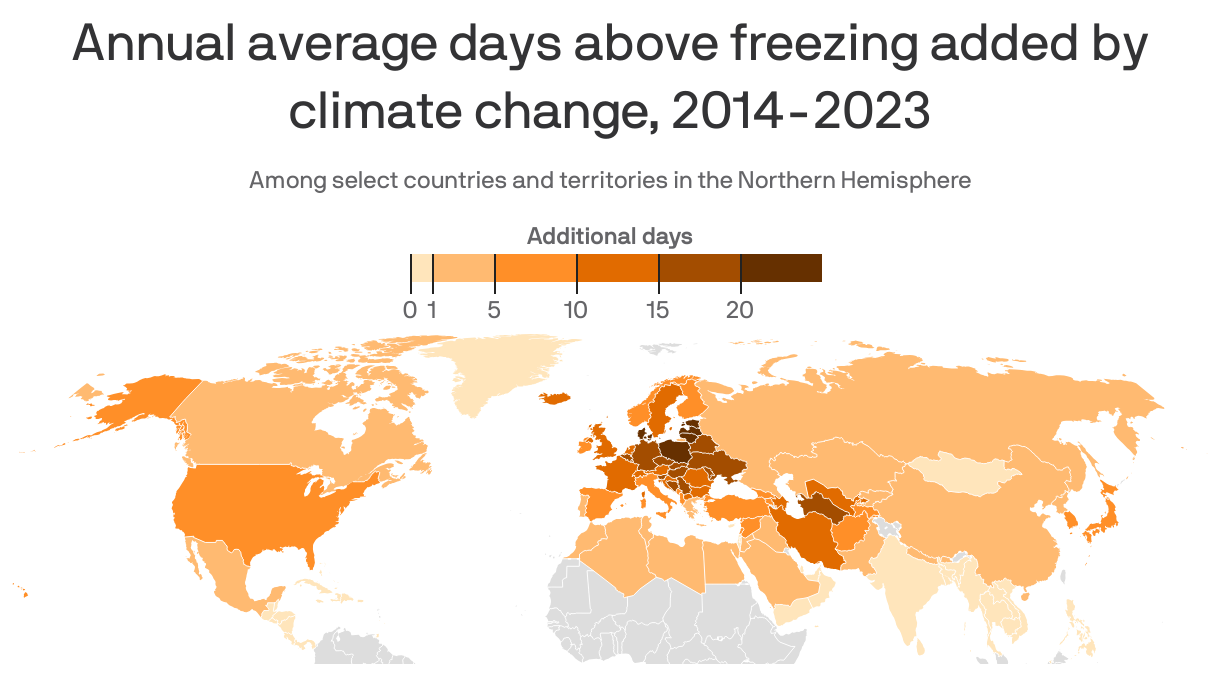
Winters are rapidly warming across the Northern Hemisphere because of human emissions of greenhouse gases from burning fossil fuels, Axios' Andrew Freedman writes from a new report by Climate Central.
- Why it matters: About 44% of cities analyzed saw at least an additional week's worth of days above freezing each year due to human-caused climate change.
The cities with the greatest increase in warm winter days are located in Europe, the world's fastest-warming continent, and Asia.
5. Police ID teen girl in Wisconsin school shooting

A 15-year-old girl was identified last night as the student who opened fire in a study hall at a Christian school in Madison, Wisc. — killing a teacher and another teen.
- Madison police named Natalie Rupnow, who went by Samantha, as the shooter at Abundant Life Christian School. She was declared dead on the way to the hospital.
At least six others were injured in the shooting, first reported by a second-grader.
6. 🚘 $0 electric vehicle
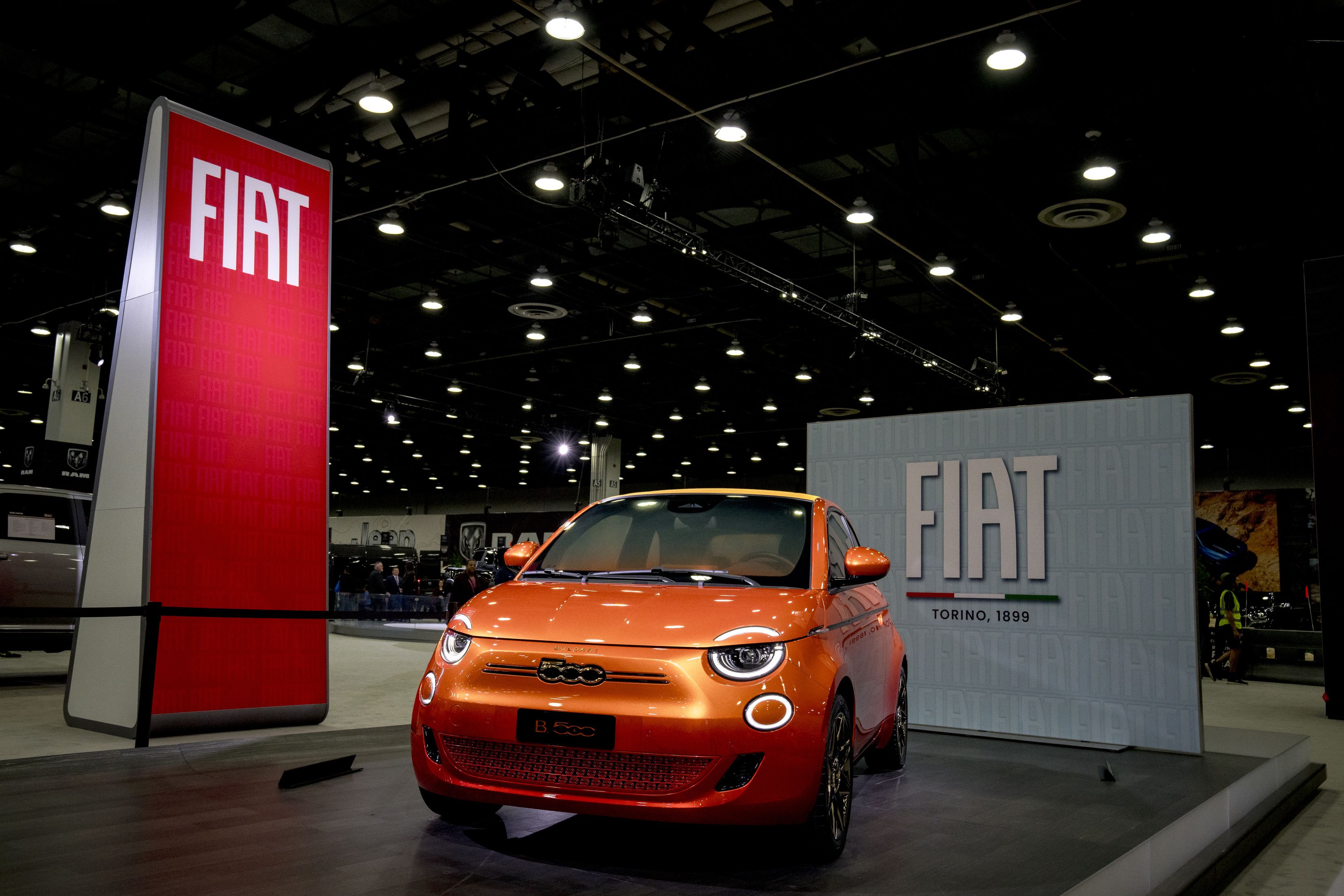
You can get an electric vehicle for very close to free, Axios' Nathan Bomey writes.
- Why it matters: The environmental benefits of EVs notwithstanding, demand for smaller vehicles remains muted — and regulations are causing some automakers to offer aggressive incentives to get them off the showroom floor.
A Fiat dealership in Colorado is turning heads by offering a 27-month lease on a 2024 Fiat 500e for $0 per month and no down payment.
🛣️ Between the lines: Stellantis, Fiat's corporate parent, doesn't have many electric vehicles and likely needs to sell the vehicle to accumulate zero-emission vehicle credits, iSeeCars.com analyst Karl Brauer tells Axios.
- Once the cars are available for sale at dealerships, they're depreciating assets, and dealers have every incentive to sell them quickly.
7. 💡 "Great work happening everywhere"
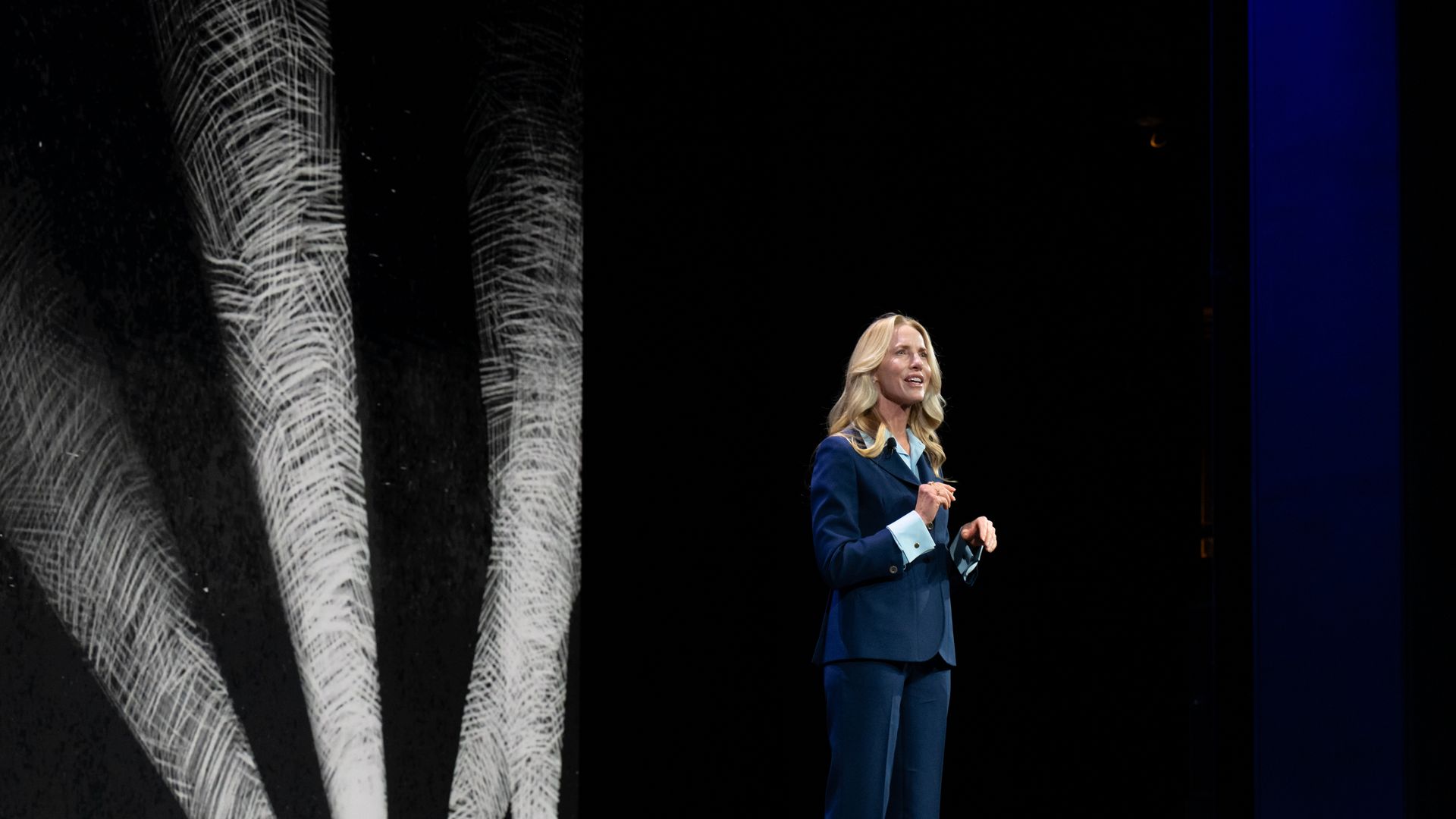
Laurene Powell Jobs, founder and president of Emerson Collective, writes in her year-end letter that "humans have never stopped proving, in good times and bad, that we possess the abilities and the skills to carry the world forward":
"There is an abundance of noise in our country, but if we listen closely, we can hear the hum and buzz of all the original work that is always taking place in our midst."
Why it matters: Powell Jobs, an early Axios backer, is signaling optimism amid global turbulence by supporting and promoting "entrepreneurs and innovators who are working to create a world of abundance for future generations."
Powell Jobs' letter highlights scientists and engineers, educators and entrepreneurs, artists and creators who presented last month at Emerson Collective's annual Demo Day in San Francisco.
- AI and other advanced technologies, she writes, "are poised to shape the next era of human history. These forces will transform industries, societies, and daily life in profound ways — but to harness their benefits, we must also find new, sustainable methods for powering our world."
The bottom line: "Amid the rhythms of daily life," Powell Jobs writes, "we catch the syncopated beats of ingenuity."
8. 🔥 1 fun thing: "Flamethrower" lights
An unquestionably explosive Christmas lights display — with lights, projections, fire and a 20-foot Santa — popped up in Pleasant View, Utah, Erin Alberty writes for Axios Salt Lake City.
- The full show is 18 minutes long.
📬 Please invite your friends to join AM.
Sign up for Axios AM


/2024/12/17/1734407135414.gif?w=3840)