Axios AM

June 16, 2026

1 big thing: Campaign ad fakery

Campaign ads featuring AI-generated clips and images are now everywhere, with attack ads that place candidates in a wide variety of compromising and fictitious situations, Axios' Andrew Solender writes.
- Why it matters: This largely unregulated practice is blurring the line between truth and fiction.
The latest spot to push the envelope is an attack ad against Texas Democratic Senate nominee James Talarico from a Trump-aligned group called Citizens for Sanity.
- The ad depicts Talarico in a dress singing an abridged version of "Favorite Things" about transgender children.
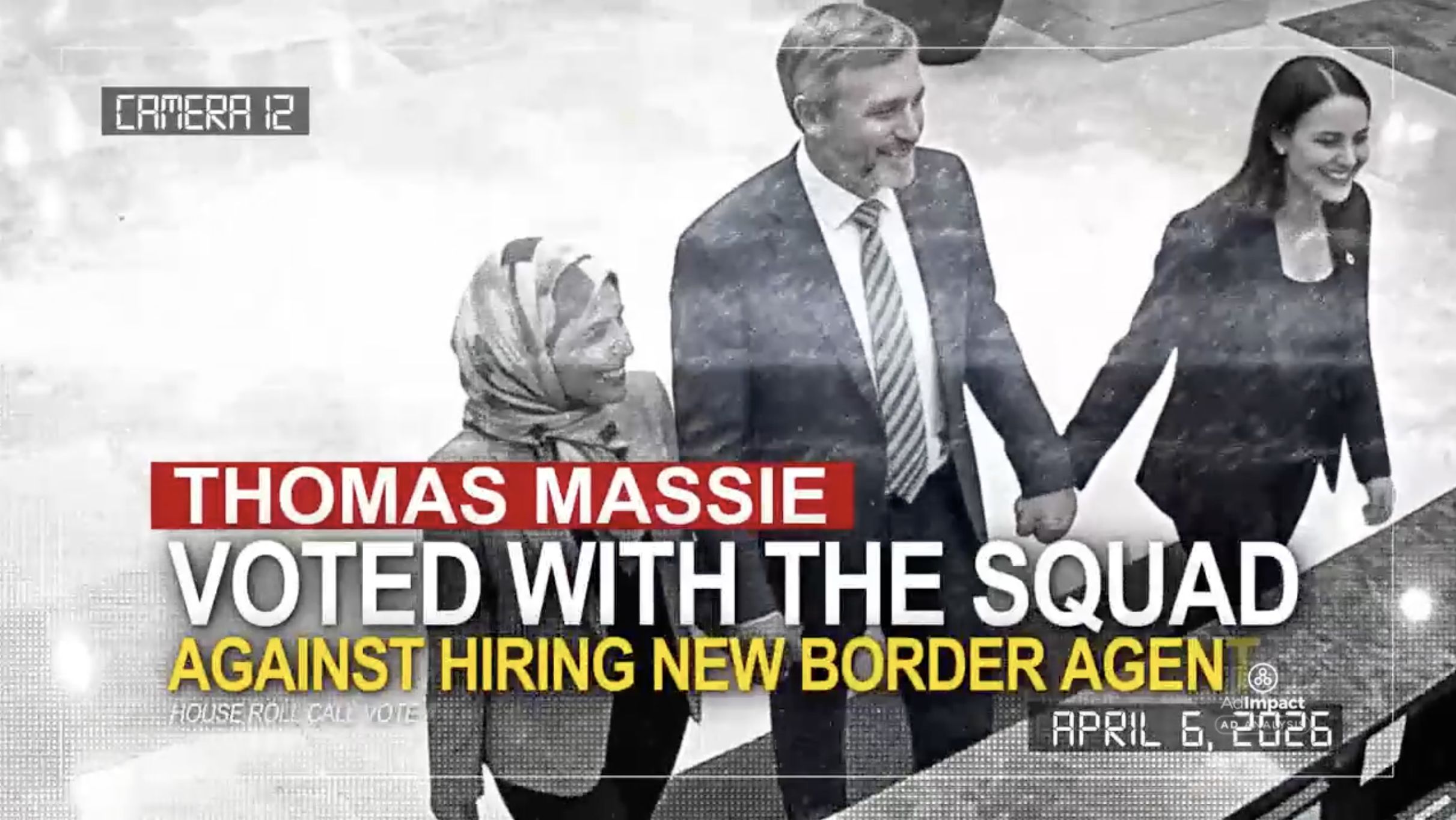
🔎 Zoom in: Last month's GOP primary in Kentucky's 4th district, which Rep. Thomas Massie (R-Ky.) lost after being savaged by President Trump, saw widespread AI use by both sides.
- That included a "throuple" ad containing deepfakes of dining, checking into a hotel and holding hands with Reps. Ilhan Omar (D-Minn.) and Alexandria Ocasio-Cortez (D-N.Y.).
- Pro-Massie spots used AI to depict an elephant with Trump-like hair and a MAGA cap, and Ed Gallrein, Massie's challenger, abandoning Trump in a foxhole.
🍑 In Georgia, gubernatorial candidate Brad Raffensperger used AI in multiple ads to depict his GOP primary opponents wildly shooting guns in the air and fighting each other with pugil sticks.
- A new ad from another Georgia gubernatorial candidate, Burt Jones, is entirely AI-generated and portrays his GOP primary runoff opponent, Rick Jackson, shoveling money into a furnace.
Democrats are also using AI:
- In Texas, Crockett used AI to inflate the crowd size in one of her ads and posted an AI video to social media of herself, Trump and others as babies.
- In New York City, Andrew Cuomo used AI in the mayoral election in an ad that portrayed him performing various jobs, including subway conductor, stockbroker, stagehand, and window washer.
🔮 What's next: Some campaigns voluntarily disclose this AI use, but it's not required. Democrats want to change that if they retake control of Congress in November.
2. 💡 Brad Smith on AI-era jobs: "Let's not panic"
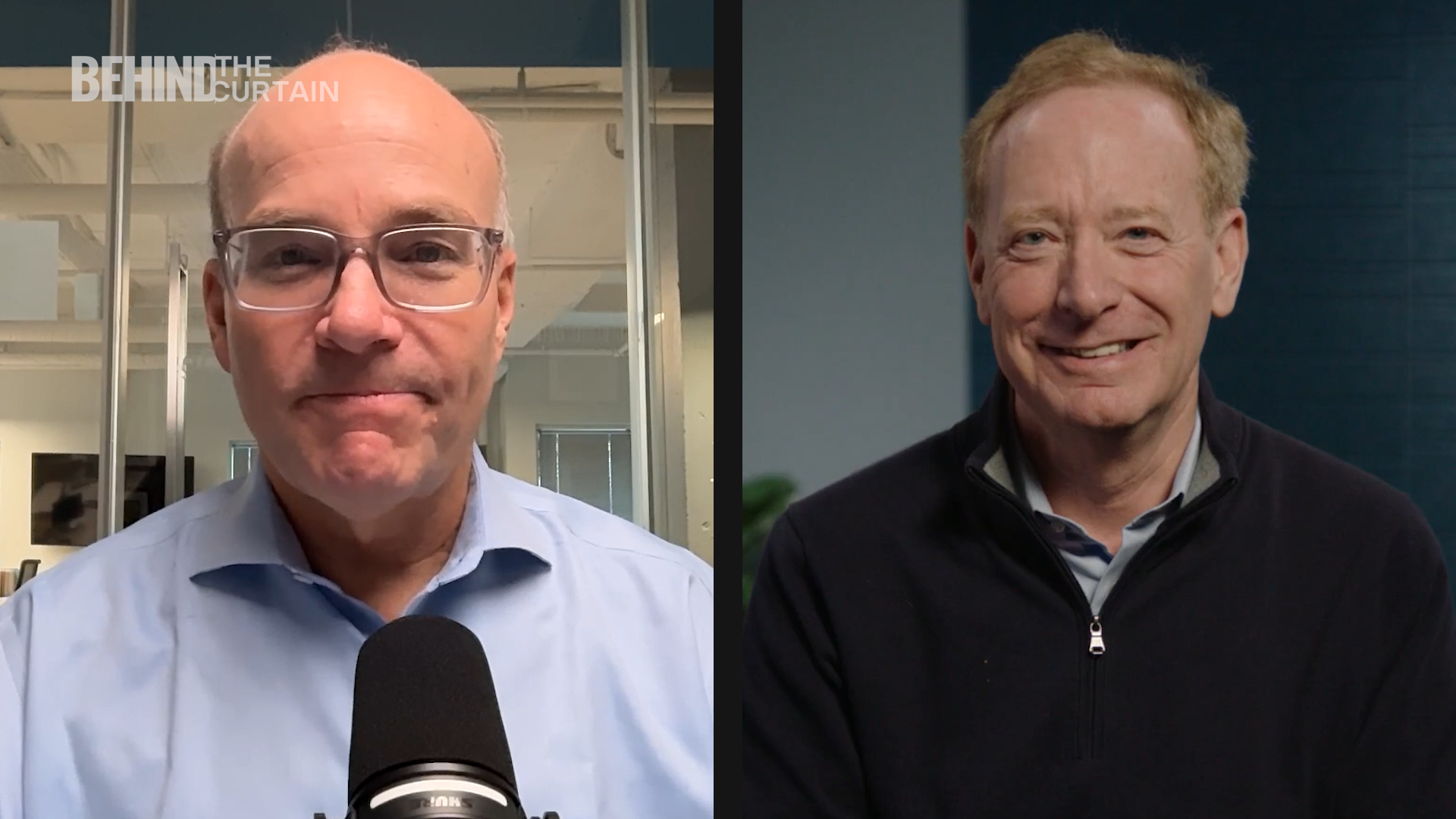
Brad Smith, vice chair and president of Microsoft, slammed tech moguls for hypocritical, grandiose warnings that are alienating Americans at a time of huge workforce opportunity.
- "Nobody knows for sure, but let's not panic," Smith, who has been with Microsoft for 33 years, said from the tech giant's headquarters in Redmond, Wash.
Why it matters: Smith is among the tech leaders who think dire predictions about AI's threat to entry-level white-collar jobs are souring young Americans on a miraculous technology.
In our interview, Smith said tech leaders have botched the conversation about AI and jobs:
- Hypocritical warnings: In an essay this month, Anthropic pointed to benefits of slowing AI development "to give ourselves more time to deal with its immense implications" — a so-called global pause. Smith told me: "If somebody says, 'This technology is so powerful that we need a global treaty to slow it down,' then I would say: Then take your foot off the accelerator yourself if you think it's moving too fast."
- Scaring grads: Echoing points Jim VandeHei and I made in our recent "Rattled Generation" column, Smith noted that this year's graduates were in high school during COVID and have done much of their socializing through screens, against a backdrop of political turmoil. "Now, they finally get to enter the workforce and here comes AI?" he said. "Too often, this is being presented to them as something that is going to happen to them, not for them."
- Short-term distortion: "This is going to unfold over 25 years, not two-and-a-half," Smith said. "But look, if you're trying to raise money as entrepreneurs need to do, it's easier to raise money if people think it's going to happen sooner rather than later."
- Unrealistic hype: "Tech leaders tend to repeat two mistakes," he said. "One is: They overestimate the impact of technology, especially the pace at which it will arrive. And second: The tech leaders often underestimate people."
- Fake certainty: "You find that the same folks who made the wrong predictions a decade ago keep making them with extraordinary conviction," Smith said. "And it makes great fodder for people who generate stories for a living."
- Hollow calls for regulation: He said we're seeing a flashback to the past decade's debates over social media legislation. "You had some companies that said, 'We want legislation,' and then they basically opposed every bill in Congress because they never liked it specifically." He said that on AI policy, beware "ideas that are so grandiose that the chance of them being adopted is zero."
Watch our interview ... Read Brad Smith's post, "AI, jobs, and the next generation."
3. ⚡ Scoop: CIA director's Iran doubts
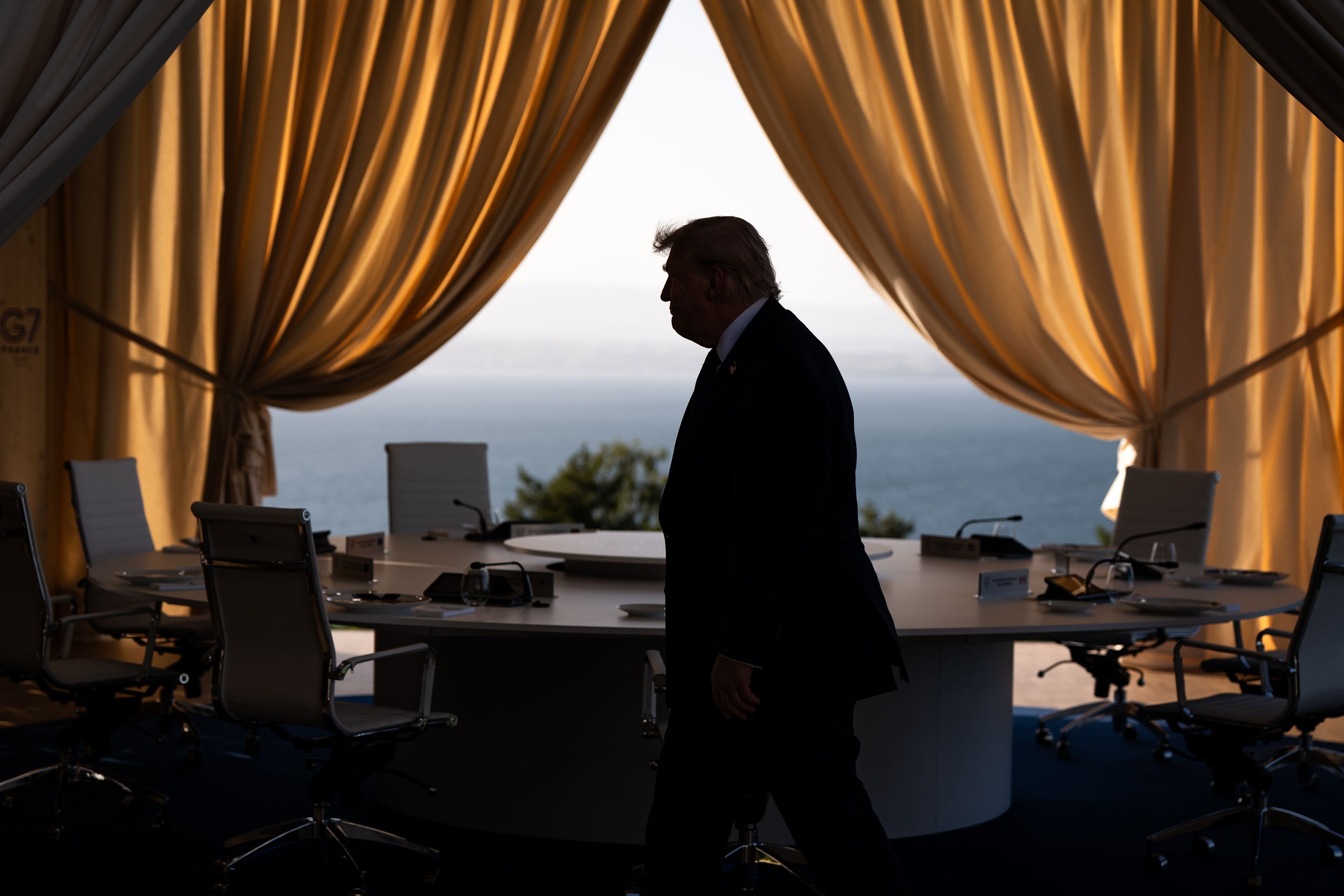
CIA Director John Ratcliffe told President Trump and other senior officials that intelligence gathered by U.S. spies raises serious doubts about Iran's willingness to make the nuclear concessions the U.S. is seeking in any final deal, Axios' Barak Ravid reports.
- Ratcliffe isn't the only skeptic on Trump's top team. Secretary of State Marco Rubio and Secretary of Defense Pete Hegseth have both expressed concerns and raised questions about the deal in internal discussions.
- Vice President Vance and U.S. envoys Steve Witkoff and Jared Kushner advocated for it. Vance will attend Friday's formal signing ceremony in Geneva.
👀 Behind the scenes: Trump and his advisers held a series of high-level meetings in the lead-up to Sunday's announcement of the deal.
- During those meetings, Trump and his team discussed the intelligence: Iranian officials were discussing the deal among themselves in a way that was inconsistent with what they were telling the mediators and the U.S., two sources said.
- Ratcliffe and Rubio said that based on that intel, they doubted the Iranians would agree to take the nuclear steps the U.S. was seeking, according to two sources.
- "The intelligence reflects that the Iranian intentions are not in line with their commitments under the deal," the source said.
Zoom out: The nuclear elements of the memorandum of understanding (MOU) that was signed electronically on Sunday depend on the parties reaching a more detailed nuclear deal over the next 60 days.
- Vance, Witkoff and Kushner are expected to meet on Friday with Iranian Parliamentary Speaker Mohammad-Bagher Ghalibaf and Foreign Minister Abbas Araghchi, along with Pakistani and Qatari mediators, to discuss that next phase.
👓 Between the lines: The text of the 14-point initial deal has yet to be published. A source familiar with the text contended that the Iranians will get more than they give under the MOU — unless they agree to sign a nuclear deal that meets the U.S. objectives.
4. 🛢️ Charted: 43-year low


The U.S. oil stockpile is at its lowest level since July 1983, Axios' Emily Peck writes.
- The U.S. now has 340.3 million barrels in the stockpile — below the low reached during the Biden administration.
- The previous administration drew criticism when it drew down the reserves to help keep oil prices lower after the Russian invasion of Ukraine.
5. 🤖 Anthropic crackdown's hidden risk
6. 🦊 Fox's new era
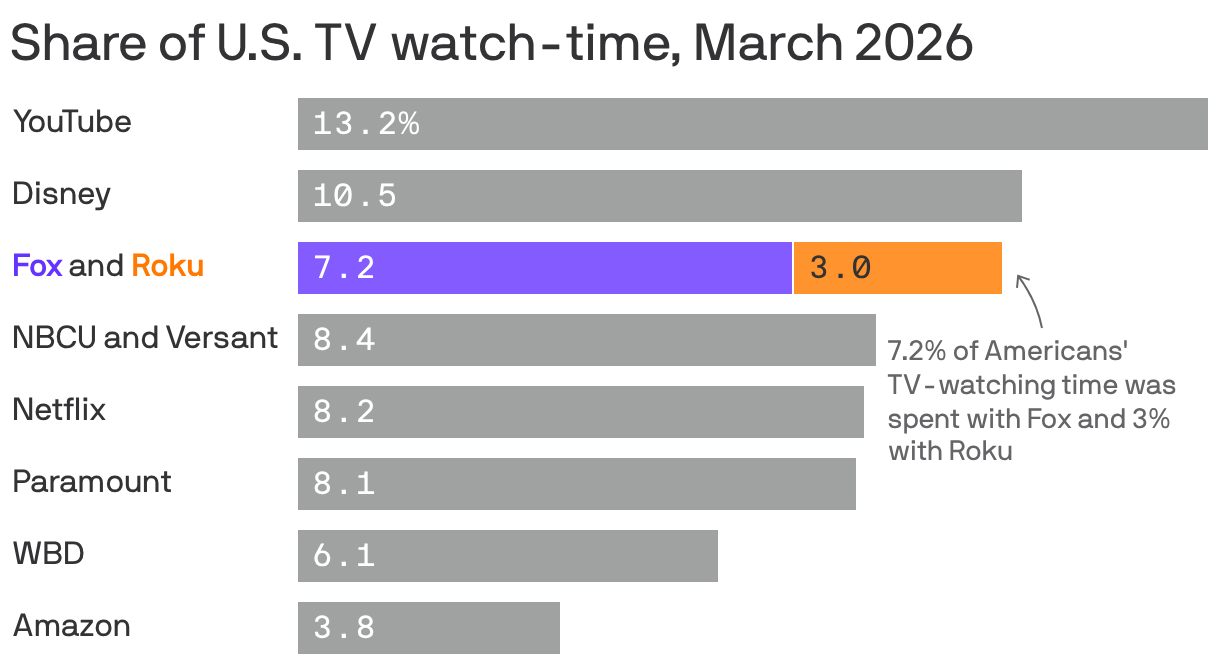
Fox's $22 billion deal to buy Roku marks a turning point in the streaming wars and a new era for the Murdoch media empire, Axios Media Trends author Sara Fischer writes.
- Why it matters: The agreement represents the biggest bet made by Lachlan Murdoch since he was named Fox's chairman and CEO in 2019.
The big picture: Streaming is no longer a paid subscriber race. It's an opportunity for entertainment giants to accelerate other parts of their businesses where they have a competitive edge against Netflix.
- For Apple, Amazon, Disney and Comcast/NBCUniversal, that means selling devices, e-commerce subscriptions, parks/movie tickets and broadband, respectively.
- For Fox, it means bringing more eyeballs to its live programming and selling more digital TV ads.
📺 How it works: The merger would make Fox the owner of the top digital TV operating system in the U.S.
- Fox could promote its content and apps to the 100 million global households that subscribe to Roku. It would have global distribution to leverage in sports rights deals.
7. 🙏 Vance's new book lifts up Catholic converts
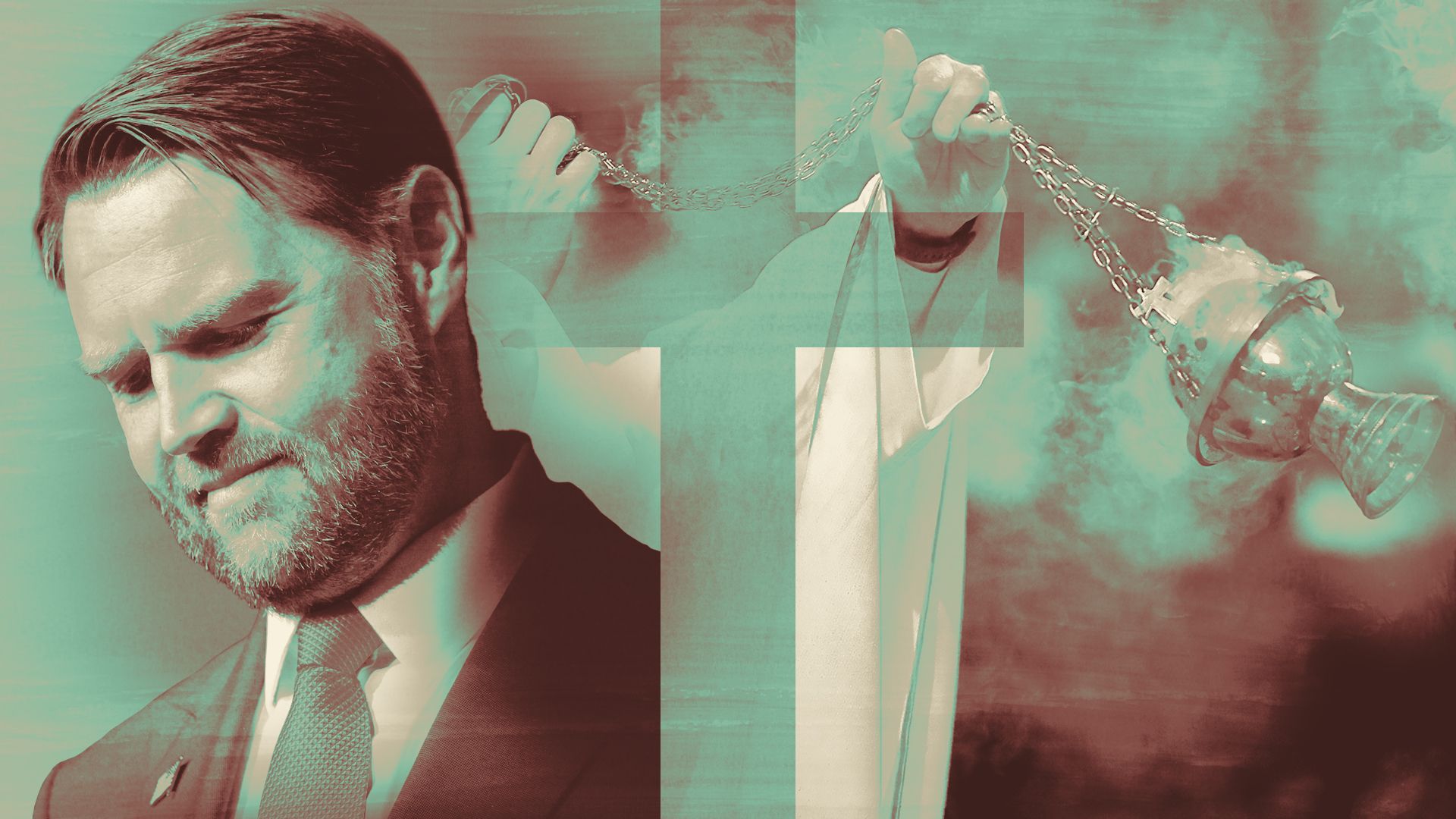
Vice President JD Vance's new memoir about his conversion to Catholicism — "Communion," out today — puts a high-profile face on a small but distinctive slice of Roman Catholics in the U.S., Axios' Russell Contreras writes.
- Data shows the church's converts tend to be whiter, more conservative, and more observant than "cradle Catholics," or those born into the faith.
📚 "The story of how I regained my faith," Vance writes in his book, shared with Axios, "only happened because I had lost it to begin with. ... I'm glad I found my way back to the Church. I learned much along the way. But if you believe as I do, you know I've been fortunate and touched by God's grace.
- "Many people like me, once lost, never return. This is what worries me and so many other Christians, and it's why I will spend so much time on what led me to discard my faith."
🧮 By the numbers: Catholic converts are more observant by some measures. 38% attend Mass weekly, compared with 28% of cradle Catholics.
- 58% say they receive Communion every time they go to Mass, compared with 34% of cradle Catholics.

Recounting his conversations about faith with his friend Charlie Kirk before his assassination, Vance writes:
"Charlie taught me to love all parts of our Christian communion. I take from Charlie a certain charity about the body of Christ — the Church, defined very broadly. I am proud of my denomination, and I follow its (very strict!) rules as well as I can. When I fail, I go to confession and get back on the proverbial horse."
8. 👨🍳 1 fun thing: Oscars of food

Axios AM