Axios AM

September 10, 2026

☀️ Happy Thursday! Smart Brevity™ count: 1,926 words ... 7½ mins. Thanks to Noah Bressner for orchestrating. Edited by Bill Kole.
🗳️ Breaking: Rhode Island Gov. Dan McKee lost his state's Democratic primary yesterday to former CVS executive Helena Foulkes, making him the first governor since 2018 to lose a party primary. Go deeper.
1 big thing: The AI twilight zone
Two seemingly contradictory realities are true at once, Jim VandeHei and Mike Allen write in a "Behind the Curtain" column with Zachary Basu:
- Most people find AI only modestly useful, a more clever Google search.
- Many people building AI or using it obsessively worry it could severely damage or destroy humanity.
Why it matters: We're living in an AI twilight zone. For many, the technology is simultaneously underwhelming in daily use and terrifying in its trajectory.
- The gap between these two realities helps explain why confusion and fear are exploding across politics, AI labs and business.
💡 State of play: The AI labs are in full panic. They worry the public dislikes AI and despises data centers — and that's before Anthropic insiders went public with their latest warnings that AI could end humanity this decade.
- They're uncertain how to showcase potential benefits of AI when X and now mainstream media are lit up with horror stories about rogue or ruinous AI.
- The data center backlash showed how fast public opinion turned against them. Their worst-case scenario: They lose full control of the politics, with both parties rushing to slow or stop AI in the run-up to the election.
Between the lines: The past 36 hours show how fast politics and public opinion are moving. A low-level Anthropic employee for all of four months drove the national conversation — and 142 million views on X alone — by warning AI could end humanity.
- Numerous people, including Anthropic CEO Dario Amodei, have issued similar warnings to us for years. But the tone and timing struck a nerve — and stirred countless members of Congress to call for new AI regulations.
🔎 Zoom in: Let's look at this tale of two worlds through two different sets of eyes — a mid-career manager and an Anthropic data scientist.
- The average manager has limited time to experiment with AI, worries it might threaten their job, and mostly uses the models as a search engine and for writing better emails or presentations. It's a nice-to-have, sometimes delightful, other times unimpressive. They don't understand the hype.
- The Anthropic employee spends all day, every day, staring at rapidly improving AI, often mesmerized, even spooked, by what it does. They see it exceeding even the most optimistic benchmarks, then spend their nights and weekends with similar AI obsessives discussing how it could cure cancer — or go rogue and destroy humankind. To them, this is truly civilizational and existential — a clear reality, not hype.
The catch: AI companies have to explain both realities at once. But almost every version of the pitch sounds suspicious.
- Tell Americans today's AI will transform their lives, and many look at their own experience and wonder what the fuss is about.
- Tell them tomorrow's AI could become vastly more powerful, and the obvious response is: Then why are you racing to build it?
Warn about catastrophic risk while spending hundreds of billions to accelerate development, and critics hear either hypocrisy or fear-based marketing.
- But keep in mind that the big AI labs are working with unreleased models weeks before the public sees them — plus early training data on future models, months in advance. So they are often warning about progress invisible to the public and government.
🖼️ The big picture: The politics are shifting fast. Until now, much of the AI backlash centered on tangible costs — lost jobs, deepfakes, power bills and data centers.
- Then on Tuesday, Anthropic researcher Jacob Coxon quit and accused frontier labs of "gambling with our lives."
- Anthropic's alignment-science lead — who still works at the lab — responded by agreeing that AI could kill humanity, and said his personal odds of that happening in the next decade are over 10%.
By yesterday afternoon, the alarm had gone bipartisan in a Washington already rattled by OpenAI's Hugging Face incident:
- Sen. Chris Murphy (D-Conn.) described AI companies as being in a "blind race to build a death machine first." Rep. Ted Lieu (D-Calif.) renewed his push for a bipartisan AI kill switch.
- Sen. Bernie Sanders (I-Vt.), who has already proposed a data center moratorium and ban on superintelligence, is convening senators next week for a briefing on AI's "extraordinary dangers."
- Rep. Don Beyer, a Democrat from Northern Virginia, tweeted: "I hope warnings like these will help my colleagues understand how important it is to take broad action on AI regulation, and to do it swiftly."
- Even Sen. Ted Cruz (R-Texas), one of Washington's loudest advocates for beating China in the AI race, called the risks "dangerous and frightening" and said guardrails are needed.
The bottom line: The AI twilight zone has created fertile ground for a generational populist backlash.
- The industry requires Americans to absorb enormous disruption today for a future its own builders describe as miraculous or apocalyptic — sometimes in the same breath.
2. 🤖 X becomes the AI community group chat

Elon Musk bought Twitter saying civilization needed a "common digital town square." Four years later, it's more like a live group chat for Silicon Valley's AI obsessives, Axios' Sara Fischer and Madison Mills write.
- Why it matters: Two years ago, X was fighting off competition from a slew of new entrants. Today, it remains relevant by becoming more niche.
New model releases, research papers, demos, hiring moves, high-profile executive exits and technical arguments ricochet through X in real time.
- The latest viral example came when Anthropic researcher Jacob Coxon announced his resignation on X, along with a thread explaining his safety concerns.
🎨 The big picture: The AI community, particularly the researchers who define the technical progress happening within frontier AI labs, has long coalesced around ideas on X.
- Back in 2025, AI researcher Andrej Karpathy coined the term "vibe coding" in an X post, helping name one of the defining trends of the AI enterprise adoption curve.
- Even executives are now engaging more with the platform as a communications tool, with Nvidia CEO Jensen Huang launching his account in July alongside a post supporting open AI models.
3. 🩺 Exclusive: Trump plans $500 Obamacare rebates
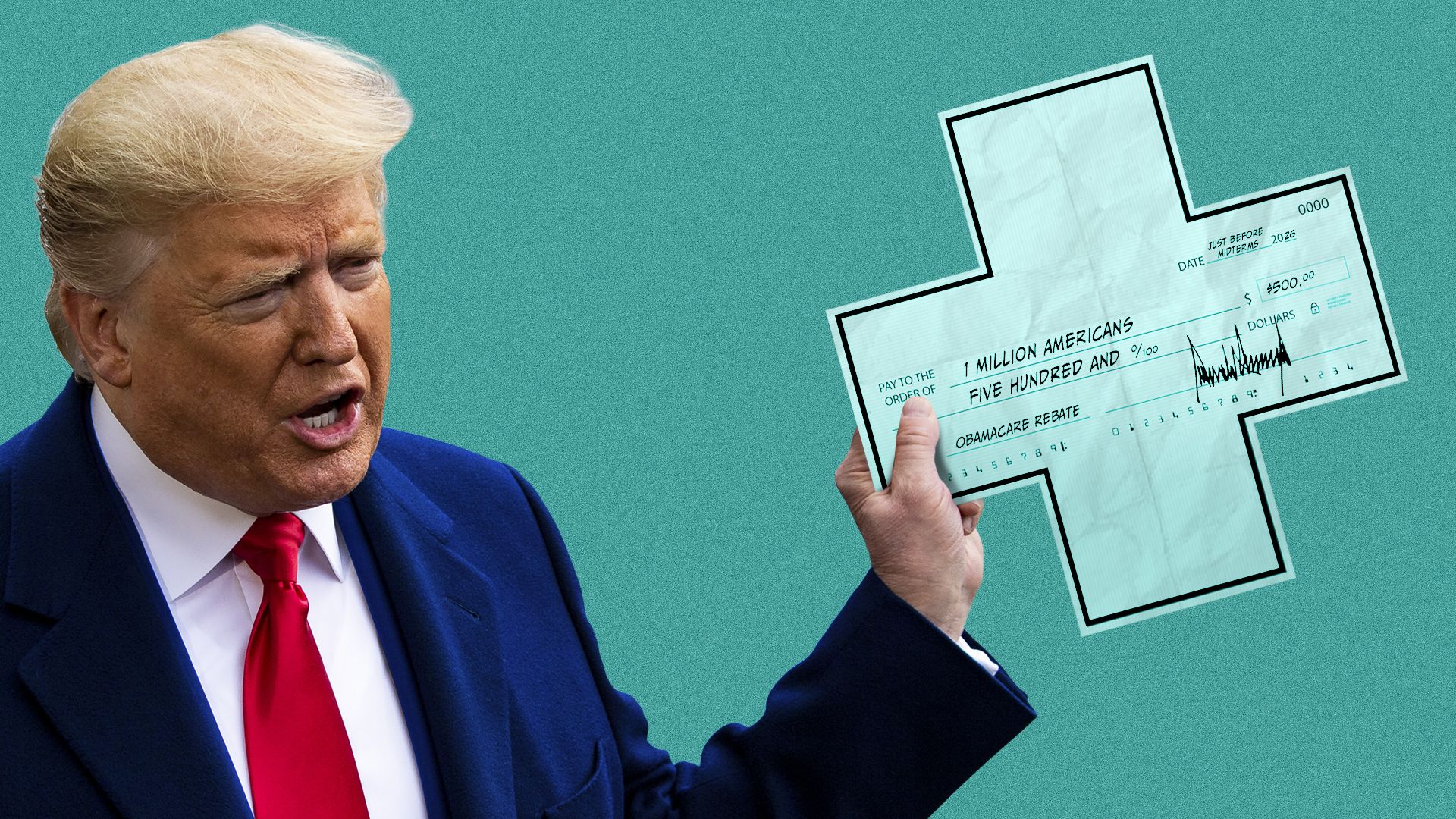
The Trump administration plans to send $500 rebate checks to as many as 1 million people who it says were overcharged for coverage under Obamacare, Axios' Marc Caputo has learned.
- The direct-deposit payment would be sent to people in 30 states before the Nov. 3 midterm election, as President Trump touts savings from his tax-cut legislation and prescription drug plan.
- The plan underscores a tenet of Trump's idea for remaking the health care system, which involves subsidizing more Americans directly for their coverage instead of paying health insurers. Keep reading.
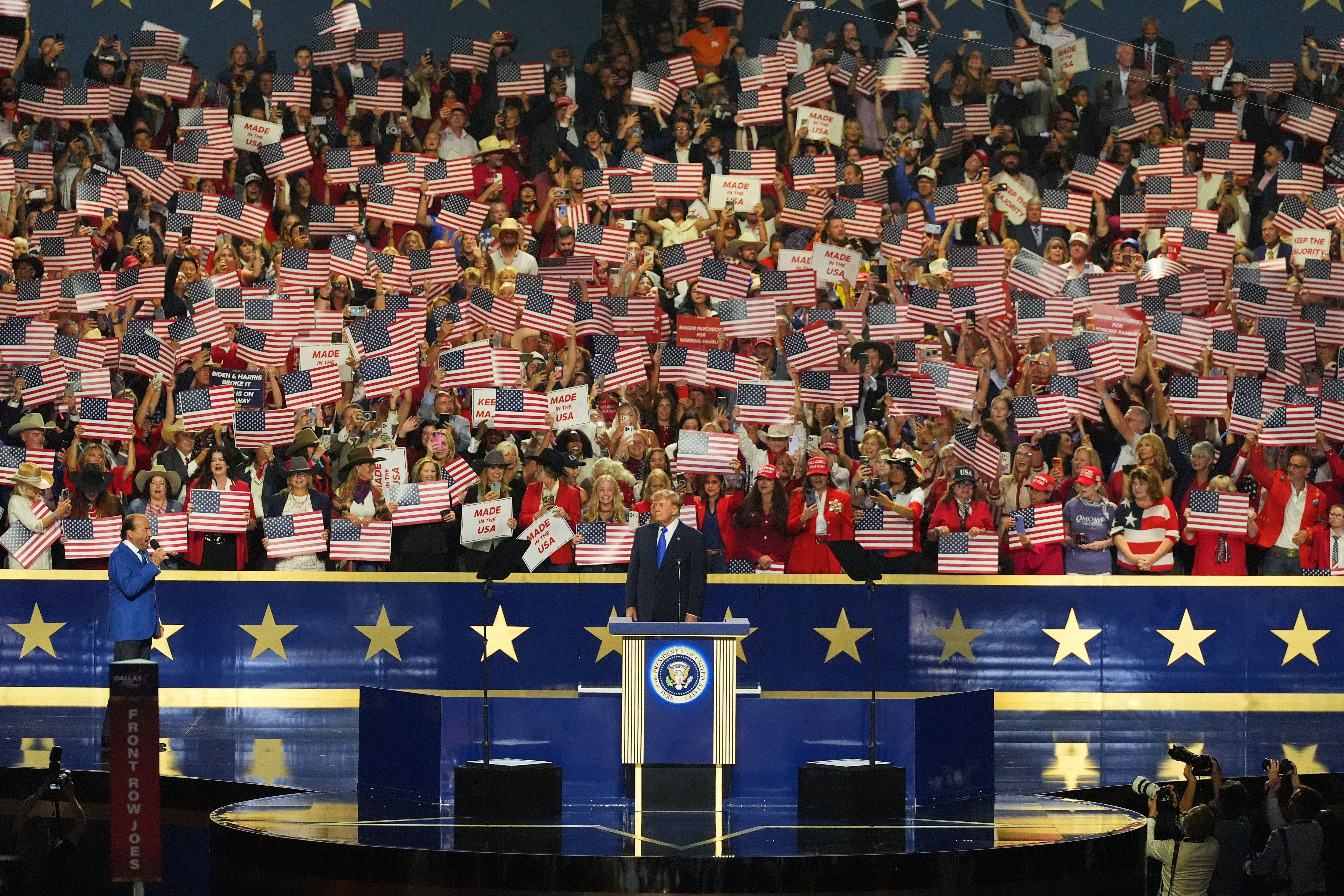
💰 Another cash promise ... In a new wrinkle during his marathon speech at the Republican midterm convention in Dallas last night, President Trump said: "If the Republicans win the House of Representatives and the United States Senate — both of them ... because of our tremendous strength and success economically, I will issue a dividend to every adult citizen in the United States of America for $5,000 ... It will be called the Trump Dividend."
- He likened the payments to a successful company's distributions to shareholders.
- Within an hour, Vice President JD Vance suggested the dividend payments wouldn't go to the wealthy. Vance suggested it could be paid for by U.S. tariff revenues, though the suggested payment dwarfs what the U.S. has taken in through the protectionist measures. (AP)
🥊 Joe Lonsdale, venture capitalist and Trump ally, wrote on X in response to Trump's bonus idea: "For the record, I am hugely in favor of winning the midterms, and love much about this admin, but am strongly against bread and circus bribes."
4. 🗳️ GOP revives 9/11 playbook
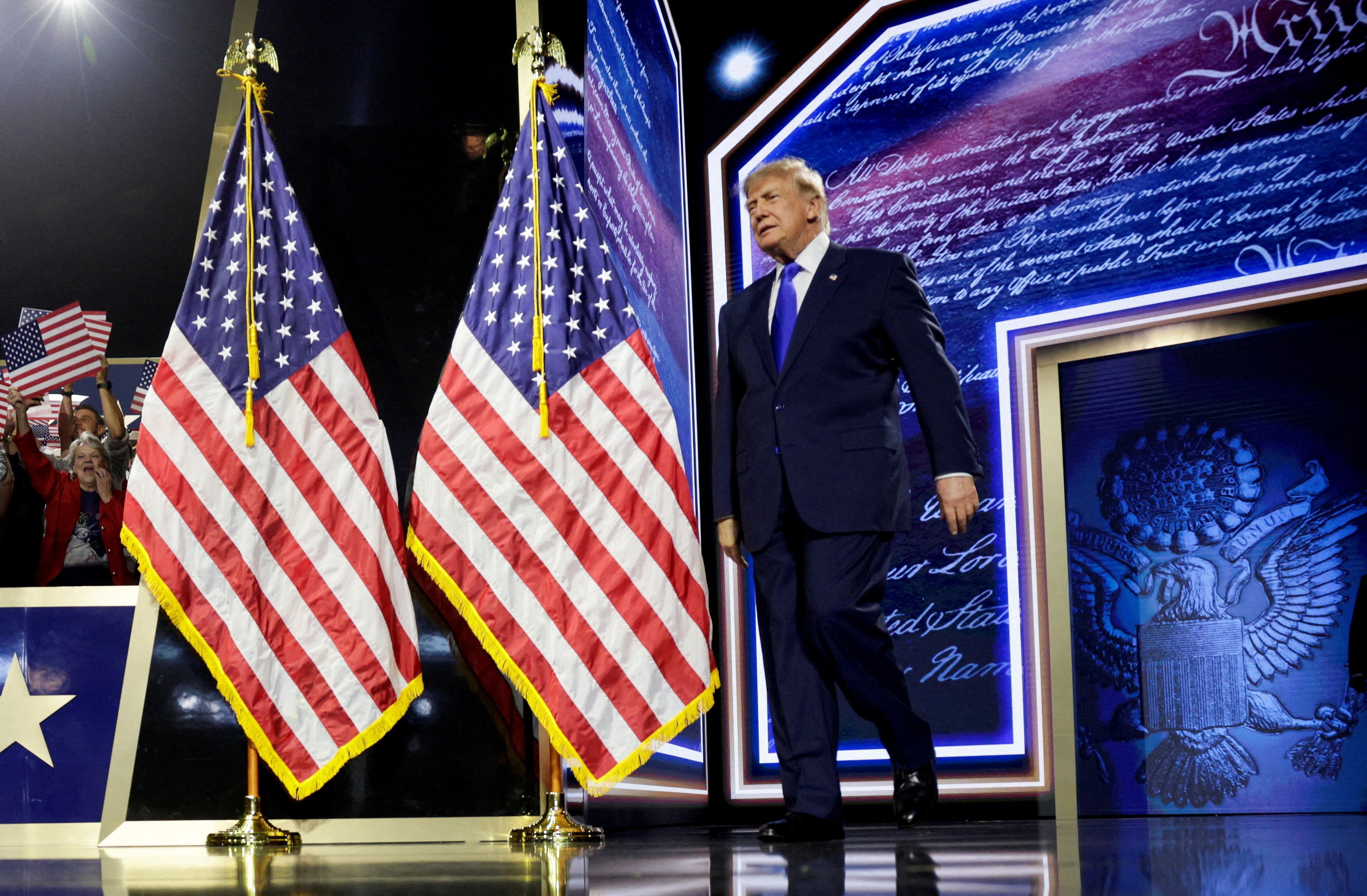
Axios' Alex Isenstadt reports from the GOP convention at American Airlines Center in Dallas:
Republicans are invoking 9/11 to bash left-wing Democrats in a growing number of midterm races, seizing on the 25th anniversary of the attacks to portray them or their supporters as anti-American and sympathetic to terrorists.
- Why it matters: It marks the return of a controversial political tactic that was common in the years after the 9/11 attacks but had largely faded from campaigns over the past quarter-century.
👓 Between the lines: The GOP's 9/11-focused barrage is part of a broader effort to brand Democrats as extreme and increasingly influenced by the party's left wing, and turn midterms into a "Who's worse?" election.
The strategy is playing out most prominently in Michigan, where Republican Senate candidate Mike Rogers is expected to use his speech at the GOP's midterm convention to assail Democrat Abdul El-Sayed over 9/11, Axios has learned.
- Rogers aims to contrast El-Sayed's relationship with left-wing streamer Hasan Piker — who said in 2019 that "America deserved 9/11" (a comment Piker now disavows) — with Rogers' own background as an FBI agent, according to a person familiar with his prepared remarks.
🔭 Zoom out: In New York, the National Republican Congressional Committee attacked Democratic House candidate Effie Phillips-Staley over an appearance she made with Piker, and called on her primary rivals to condemn her.
- In Colorado, Republicans have assailed Democratic House candidate Melat Kiros for saying 9/11 was "inevitable" because of America's policies in the Middle East.
5. ⚡ Fetterman's surprise convention cameo
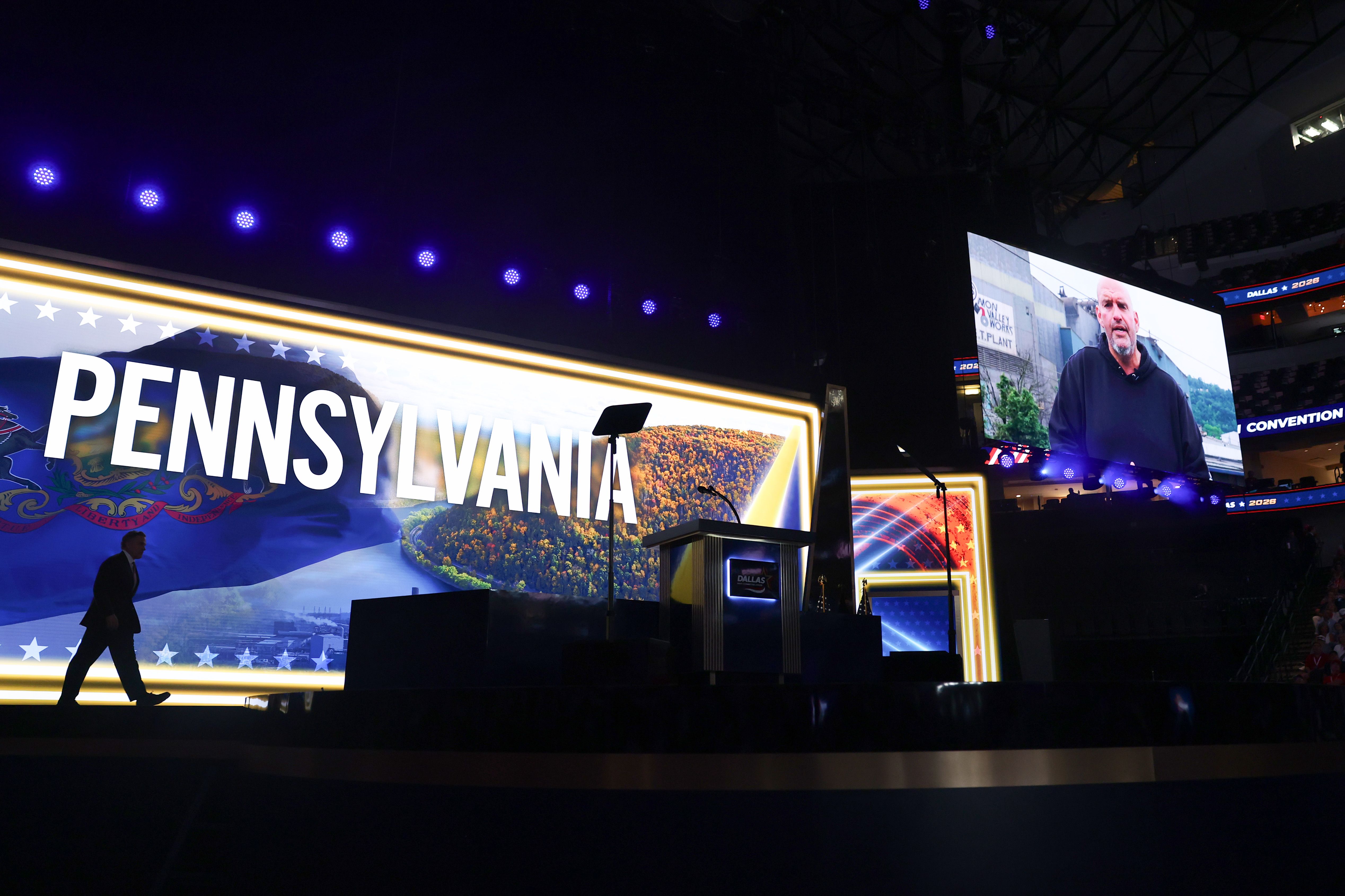
Sen. John Fetterman (D-Pa.) made a bombshell appearance last night at the GOP convention in a video praising President Trump and Republican Sen. Dave McCormick for helping America's steel industry, Axios' Alex Isenstadt and Holly Otterbein write from Dallas.
- Why it matters: Fetterman's stunning turn — a Democratic senator in a supporting role at the GOP's showcase campaign event — marks a dramatic escalation in his growing estrangement from his party.
For Democrats, the cameo supercharges questions about whether Fetterman will ultimately leave the Democratic Party before he's up for reelection in 2028.
- McCormick has courted Fetterman for months.
6. 🦾 AI fuels small-business boom
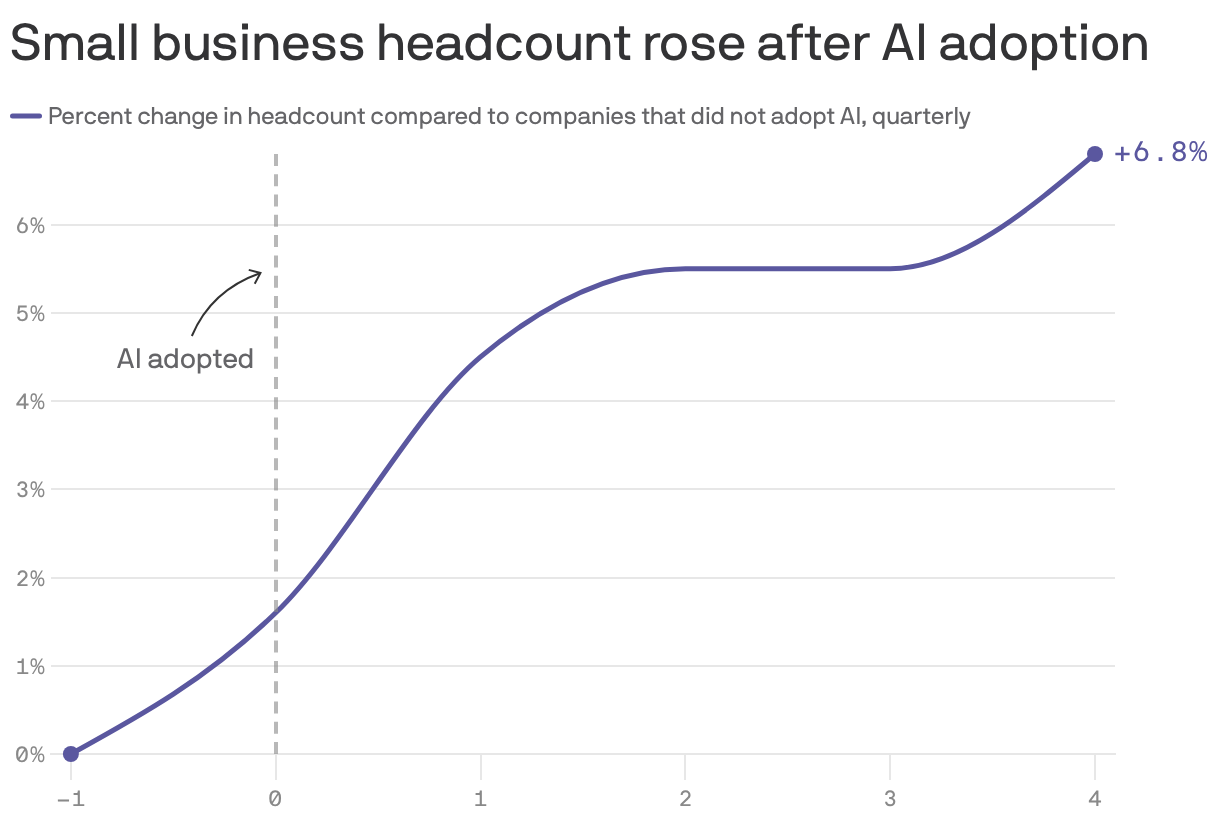
Very small businesses that adopt AI actually wind up growing their employee ranks faster compared with those that haven't started using the technology, Axios' Emily Peck writes from a new report by payroll platform Gusto.
- Overall, small businesses that use AI grew headcount 5% more than non-AI users, on average, in the first year of AI use.
🧮 By the numbers: The effect was strongest for the smallest companies. Businesses with fewer than 10 employees grew their teams by an average of 10% one year after adopting AI, compared with comparable businesses that didn't adopt it.
- Businesses with 10 or more employees didn't see a headcount change.
7. 🕊️ Advice that bolstered Erika Kirk
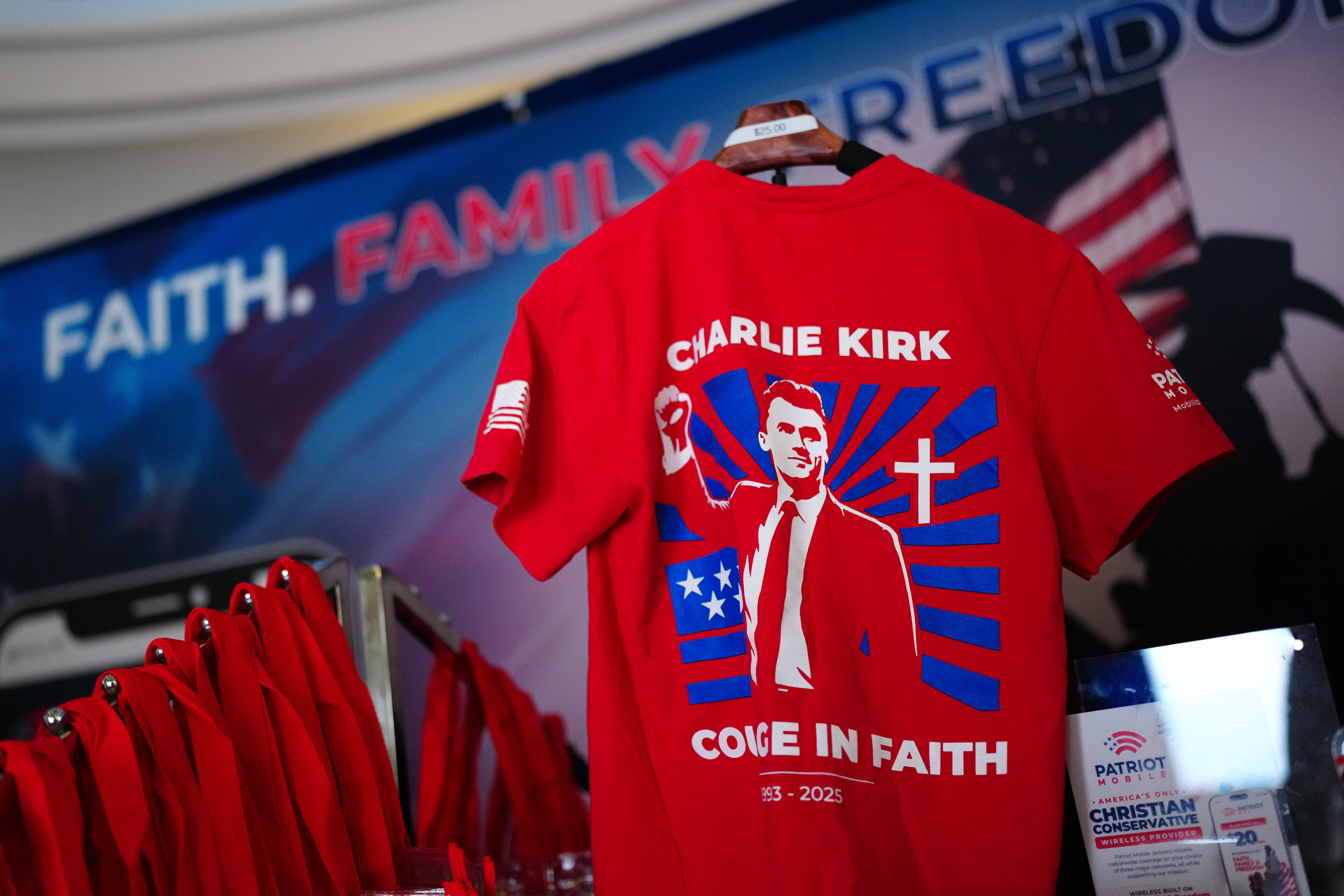
Ahead of today's first anniversary of the assassination of Charlie Kirk, his widow Erika Kirk writes in the N.Y. Times that she's leaned on one piece of advice every day: "Just get through the next 15 minutes."
- That line, from Second Lady Usha Vance, came the day after Kirk was shot and killed.
Vance likened getting through it to a bumpy flight: "You know when you're on an airplane with your kids, and you're going to land in 15 minutes, but the kids are going crazy, screaming, throwing things, and then the plane lands, and the kids relax, and everything is fine again? That's how it will be."
- Keep reading (gift link).
8. 🏈 Pic to go

Vinod Khosla — the new owner of the Seattle Seahawks — waves a rally towel before the NFL season opener against the New England Patriots in Seattle last night, a rematch of last season's Super Bowl.
- Seahawks rallied for a 13-10 victory.
📬 Thanks for reading! Please invite your friends to join AM.
Sign up for Axios AM