Axios AM

January 19, 2026

Good Monday morning โ it's MLK Day, honoring the Rev. Dr. Martin Luther King Jr.
- Smart Brevityโข count: 1,777 words ... 6ยฝ mins. Thanks to Noah Bressner for orchestrating. Edited by Mark Robinson.
๐๏ธ We're live from Davos, Switzerland, at 8:30 a.m. ET. Our Axios House lineup today includes my interview with new Meta president and vice chairman Dina Powell McCormick (her first since the announcement), plus conversations with actor and Water.org co-founder Matt Damon, HPE CEO Antonio Neri & more. Tune in.
๐ต๐น Situational awareness: The leader of a populist party placed second in Portugal's presidential election, a stunning outcome that could bring another breakthrough for Europe's growing far right. Runoff is Feb. 8. Go deeper.
1 big thing: Musk's bet on space-based AI

Elon Musk and his SpaceX team believe they've cracked the code on building orbiting data centers to power the future of AI โ and plan to use the company's upcoming public offering to help fund the audacious vision, people briefed on the plans tell Jim VandeHei and Mike Allen for a "Behind the Curtain" column.
- Why it matters: Musk and top executives at other AI giants believe that earthbound data centers will become politically toxic and less efficient than space, which they see as the inevitable answer.
The intrigue: Sources tell us OpenAI CEO Sam Altman agrees with Musk on the physics, but knows the two men are unlikely to work together while they're battling in court.
- Altman has explored a deal with Stoke Space, a Seattle-area startup building fully reusable rockets, as a potential acquisition to build his own orbital fleet.
Altman "lights up" when he discusses space, and is prepared to spend billions to stake an off-planet claim, sources tell us.
- A Silicon Valley investor told us that space is such an essential frontier in the AI race that OpenAI has to "do something relatively quickly. Otherwise, they run a real risk of being left behind. Sam's not going to allow that to happen. ... He's thinking very long-term."
๐ฐ๏ธ The scorecard: Google owns roughly 7% of SpaceX โ an investment worth around $100 billion at the company's rumored $1.5 trillion valuation. So Google wins big if Musk is right, even as it pursues its own rival moonshot called Project Suncatcher.
- The money at stake here is hard to comprehend. The biggest data center companies are already expected to spend more than $500 billion just this year on expansion. Now add the cost of satellites and launches.
Here's how it works: Musk plans to use SpaceX's Starship โ the most powerful launch vehicle ever built โ to create a huge satellite constellation, much like today's Starlink constellation, as the data centers of the future.
- Today's rockets can't lift the heavy cooling systems that AI chips require. Starship can. It will carry massive next-generation Starlink satellites that function less like internet routers and more like supercomputers in the sky.
By positioning these satellites in a high orbit that stays in constant sunlight, they can harvest solar power around the clock. No night. No clouds. No electric bills.
- And instead of sending data through fiber-optic cables under the ocean, information travels between satellites via laser beams through the vacuum of space โ faster and without the infrastructure.
๐ฅ Reality check: Cooling computers in space is brutally hard. On Earth, air carries heat away from processors. In the vacuum of space, there's no airโso chips overheat and die.
- Musk claims SpaceX has designed massive, foldable radiators that unfurl in orbit to vent heat into the cold of deep space. Skeptics call it the biggest engineering hurdle since the reusable rocket.
Between the lines: This isn't just about AI. It's about energy.
- Earth's power grids are maxed out. Data centers are already competing for electricity with factories and homes. Musk is betting the only way to scale AI without crashing the grid is to move the computing off the planet entirely.
๐ฅ Friction point: On Earth, upgrading a data center is easy โ just replace some hardware. Skeptical technology watchers will gladly tell you the obvious: It's not so simple in space.
- Massive robotics innovations will be necessary to maintain a fleet of space data centers, unless companies want to launch all-new satellites and somehow dispose of the old ones every time there's a hardware failure or an upgrade cycle.
The bottom line: If Musk pulls this off, SpaceX won't just own transportation to space. It'll gain a huge edge on the computing power of the future.
2. ๐ธ Scoop: Musk's shock donation
Elon Musk has cut a massive $10 million check to bolster Nate Morris, an outsider, pro-Trump candidate running to succeed retiring Sen. Mitch McConnell (R-Ky.), Axios' Alex Isenstadt has learned.
- Why it matters: The stunning gift is the biggest sign yet that Musk plans to spend big in the 2026 midterms, giving Republicans a formidable weapon in the expensive battle to keep their congressional majorities.
After a bitter falling out with President Trump last year and threatening to start a third party, Musk is now firmly back in the GOP camp.
- Musk, the world's richest person, also recently gave major contributions to the pro-House and Senate GOP super PACs, Axios reported last month.
Those donations followed a November dinner Musk had with Vice President Vance, White House Chief of Staff Susie Wiles and former White House Deputy Chief of Staff Taylor Budowich.
- Musk has indicated privately to Republican operatives that he plans to give more.
๐ Zoom in: Musk's $10 million donation to the pro-Morris Fight for Kentucky super PAC, delivered last week, is the biggest single contribution he's ever given a Senate candidate.
- Musk was the biggest donor during the 2024 campaign, contributing nearly $300 million to pro-Republican causes. The vast majority of the funds went toward supporting Trump.
The intrigue: During a recent conversation with Morris, 45, Musk came away impressed with Morris' business background and anti-establishment message.
- Musk also liked that Morris, a ninth-generation Kentuckian, is presenting himself as anti-McConnell, according to a person familiar with the conversation.
- Musk is close to Vance, who counts Morris as a personal friend.
๐ The backstory: Morris, an entrepreneur and tech executive, launched his campaign during an appearance last year on Donald Trump Jr.'s podcast, and is running as an anti-immigration hardliner.
- Morris was endorsed by conservative activist Charlie Kirk before his death last year. Morris also has the support of Sens. Bernie Moreno (R-Ohio) and Jim Banks (R-Ind.) and MAGA podcaster Steve Bannon.
Trump hasn't yet endorsed in the Bluegrass State primary, which also includes Rep. Andy Barr and former state Attorney General Daniel Cameron.
- Republicans are heavily favored to keep the seat.
Morris founded Rubicon, one of America's largest waste and recycling companies, starting with a $10,000 line of credit in 2008.
- He plans to largely self-fund his campaign through the May primary, according to a person familiar with his plans.
3. โก Troops on standby for Insurrection Act

The Pentagon has ordered about 1,500 active-duty soldiers to be ready for possible deployment to Minnesota, where federal authorities have been conducting a massive immigration enforcement operation.
- Why it matters: A defense official told AP the troops are standing by to deploy to Minnesota should President Trump invoke the Insurrection Act, which would allow him to use active-duty troops for law enforcement.
Officials said two infantry battalions of the Army's 11th Airborne Division have been given prepare-to-deploy orders. The unit is based in Alaska and specializes in operating in arctic conditions.
4. ๐น In case you wonder where you are

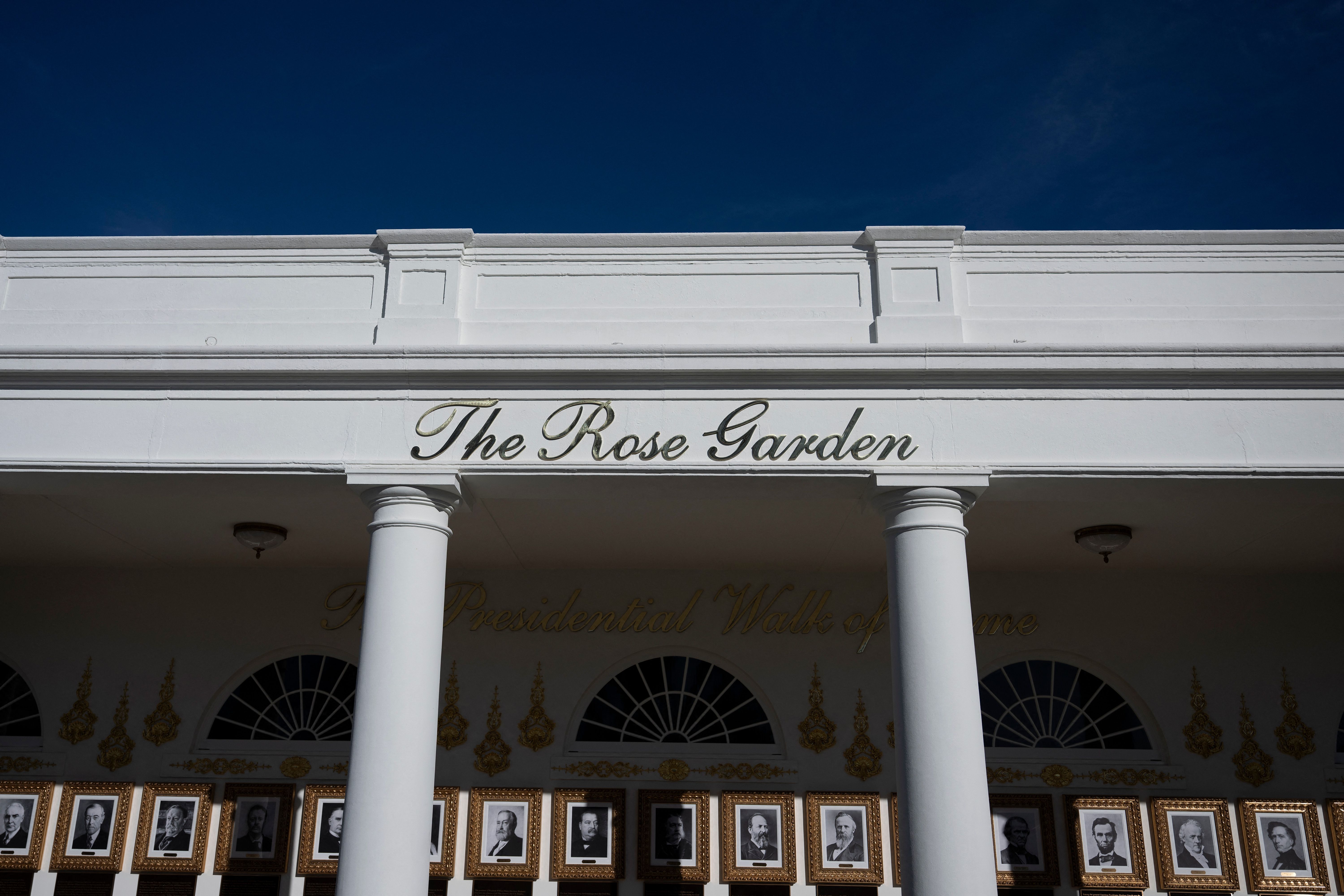
A newly installed cursive sign marks the Rose Garden outside the West Wing.
- Tomorrow will mark one full year of President Trump's second term.
Go deeper: "Trump isn't waiting for future generations to name things after him."
5. ๐จ๐ณ China birthrate lowest in 76 years

China's birthrate last year was the lowest on record since 1949, the year that Mao Zedong's Communists took over, according to data out today.
- Why it matters: It's the fourth straight year of decrease, leaving the second-most populous country (after India) "smaller and older ... as policymakers failed to slow a demographic crisis," the N.Y. Times notes (gift link).
China's population in 2025 stood at 1.4 billion, down 3 million from 2024.
6. ๐ก Youth lose touch with Civil Rights era

The Civil Rights era is no longer the central reference point for how many young Americans understand race, justice and power โ a generational shift reshaping politics, education and activism in the U.S., Axios' Russell Contreras writes.
- Why it matters: America's racial conversation is moving from a shared historical narrative to a fragmented, individualized one, increasingly shaped by social media, personal identity and real-time events.
The last of the Civil Rights-era activists are aging. At the same time, most Americans today struggle to name important leaders in the movement or identify important moments in the struggle beyond Dr. Martin Luther King Jr.
- Even then, the share of Americans who say they know a great deal or a fair amount about King's "I Have a Dream" speech is dropping, especially among younger Americans, suggesting that those words are fading from memory.
๐ผ๏ธ The big picture: Younger Americans are now several generations removed from the Civil Rights Movement's defining moments, encountering its history less through classrooms or legacy media and more through algorithms and short-form video.
7. ๐ฆพ Davos sneak peek: OpenAI warns of "capability overhang"

In Davos this week, OpenAI will unveil plans to help everyday users get as much out of ChatGPT as the most prolific AI adopters, Axios' Erica Pandey writes.
- Why it matters: ChatGPT is improving fast โ roughly doubling the length and complexity of tasks it can handle every seven months, according to OpenAI. But most users tap only a fraction of its power.
OpenAI calls this disconnect the "capability overhang," and it's the company's focus for the World Economic Forum in Davos, Switzerland.
- In a report set to be released Wednesday at an OpenAI event, "Ending the Capability Overhang," execs will argue that the capability gap must be closed for AI to deliver social and economic benefits.
- Without that shift, the biggest gains from AI will flow to the countries, companies and workers who are testing and pushing AI's limits.
๐ฎ What's next: With AI innovation outpacing adoption, OpenAI execs will make the case to business and government leaders in Davos this week that closing this gap is central to realizing AI's full economic benefits.
- OpenAI for Countries aims to help national leaders close the gap.
- Go deeper: "AI for self-empowerment" ... Share this story.
8. ๐ฎ 1 fun thing: Sphere in D.C.!

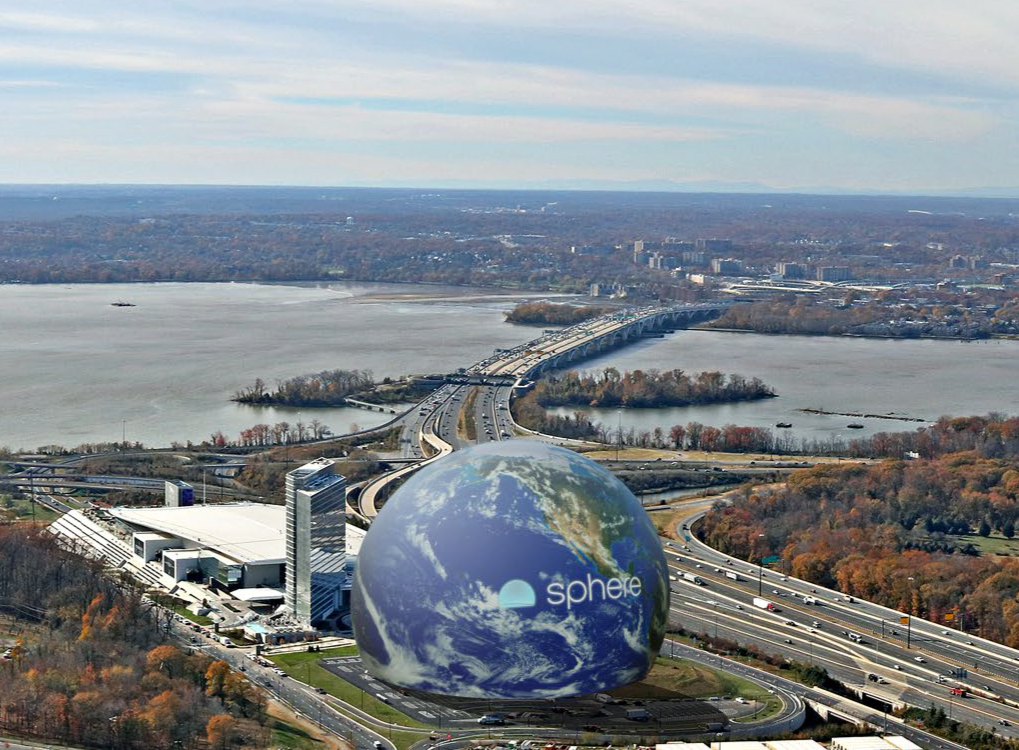
The builder of the Sphere in Las Vegas is planning to construct a "mini-Sphere" just outside D.C. at National Harbor in Maryland.
- The smaller Sphere, announced yesterday, would hold 6,000 people and open in 2030, The Washington Post reports (gift link).
The new venue is part of a planned "global network of Spheres" and would include a similar exterior LED display as the original in Las Vegas.
๐ฌ Thanks for reading! Please invite your friends to join AM.
Sign up for Axios AM