Axios AM

March 17, 2026

1 big thing: Nvidia's race against physics
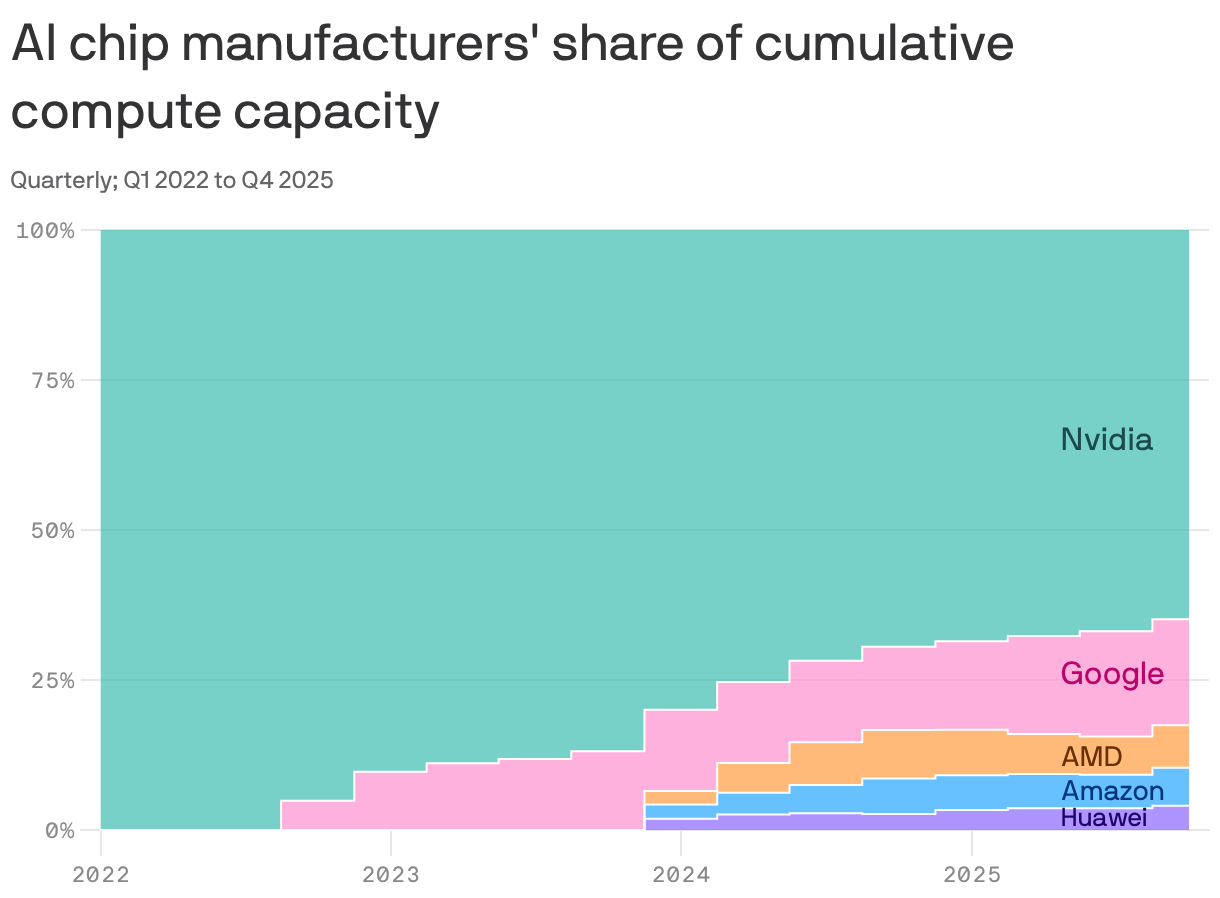
Nvidia's chips are improving at such a staggering pace that it defies any historical comparison, Axios Future of Energy co-author Amy Harder writes.
- Why it matters: Without these gains, physics would slam the brakes on the data center boom.
It's like going from a Model T to a Tesla in under a decade — instead of more than a century.
- If fuel efficiency in cars had improved as swiftly as chips, "we'd be driving to the moon and back in one gallon of gas," said Josh Parker, head of sustainability at Nvidia, the world's leader in AI computation.
- Nvidia this week is showcasing industry innovation at GTC — the company's annual developers conference, known as AI's Super Bowl — in San Jose.
🖼️ The big picture: The AI boom runs on electricity — and Nvidia's chips determine how far that power goes.
- Chips — flat, stamp-sized squares — are the beating heart of data centers.
- New generations deliver dramatic gains in performance per chip, even as total AI energy demand keeps surging.
Nvidia CEO Jensen Huang wrote in a rare blog post last week: "Chips are being redesigned because efficiency determines how fast intelligence can scale. Energy becomes central because it sets the ceiling on how much intelligence can be produced at all."
- Each generation of Nvidia's chips, named after famous scientists, posts massive efficiency gains over the last.
The Nvidia chip hitting the market today — called Blackwell — redesigned the whole architecture of computing to get more performance and efficiency, said Dion Harris, senior director of AI infrastructure at Nvidia.
- Blackwell generates up to 50 times more performance per watt compared to Hopper, Nvidia's first big AI chip, introduced in 2022.
💡 Reality check: Nvidia's chips were built to train AI models, a task where raw power mattered most. But now the industry is running the models, something called inference computing, which rewards efficiency and low cost.
- "All this inference stuff is incredibly threatening to Jensen, because it's all efficiency-driven," Paul Kedrosky, a venture investor and fellow at MIT's Initiative on the Digital Economy, told The Wall Street Journal (gift link). "He's desperately trying to find a way to extend the franchise into inference."
The bottom line: If we went from a Model T to a Tesla in the past decade, imagining what comes next — in just the next few years — feels almost absurd.
- Go deeper: GTC keynote ... Share this story.
2. ⚡ Trump's Hormuz struggle
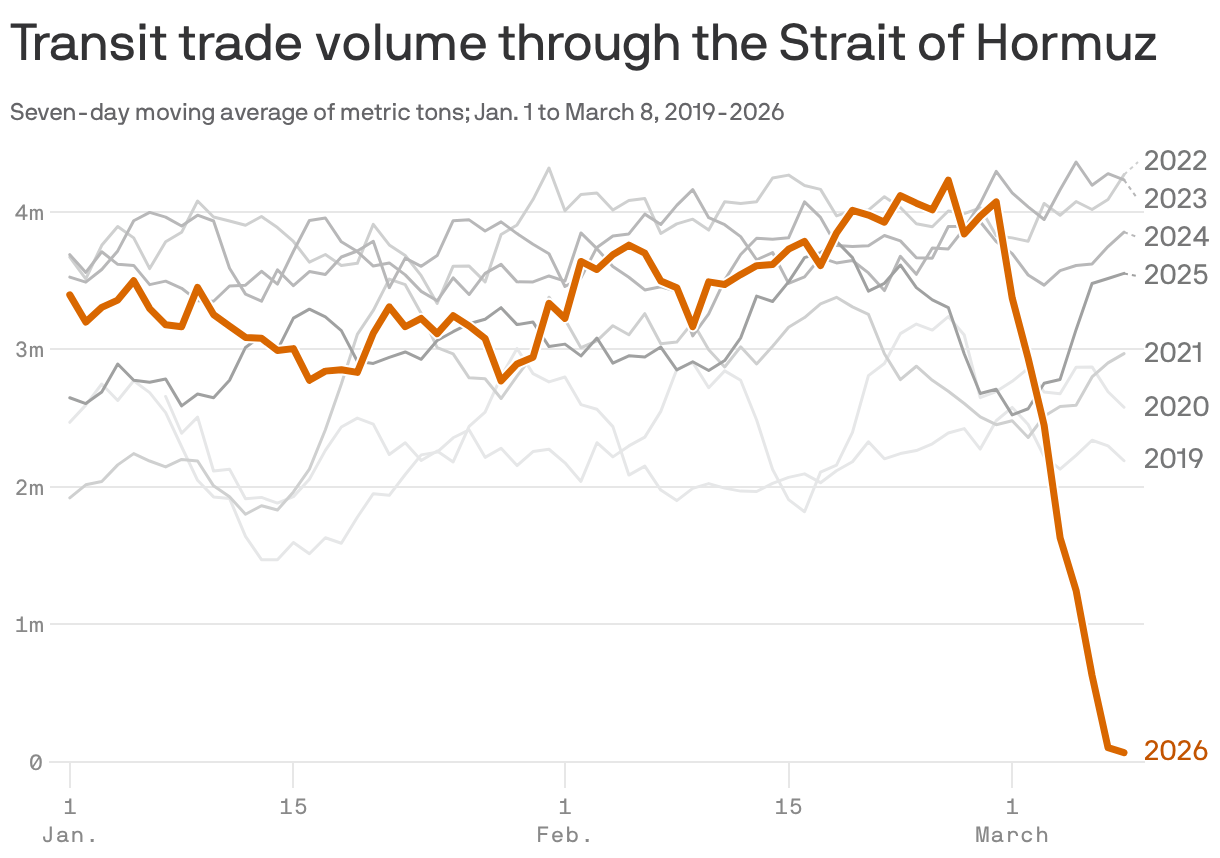
U.S. allies are resisting the Trump administration's pressure to join an international coalition to reopen the critical Strait of Hormuz, Axios' Barak Ravid writes.
- While the U.K. has circulated a plan among potential coalition members, responses from several other countries have ranged from skepticism to "hell no," according to sources familiar with the diplomatic talks.
Why it matters: The closure has become the war's central crisis for the White House. As long as the Iranian blockade holds and Gulf oil remains trapped, Trump can't end the war and declare victory, even if he wants to.
🔎 Zoom in: A source said the Trump administration wants the U.K., France, Germany, Italy, Australia, Canada, the Gulf countries and Jordan to be part of the coalition. The U.S. has also approached Japan and South Korea.
- But the leaders of several countries — including Germany, Italy and Japan — have already ruled out sending naval vessels.
On Sunday, Trump pitched U.K. Prime Minister Keir Starmer and French President Emmanuel Macron.
- A source said that while Starmer was forward-leaning, Macron was noncommittal. "Macron didn't give a final no, but at the moment it's a no," a second source said.
3. 🌐 Economic world war
4. 💉 Axios poll: RFK's vaccine trust fall
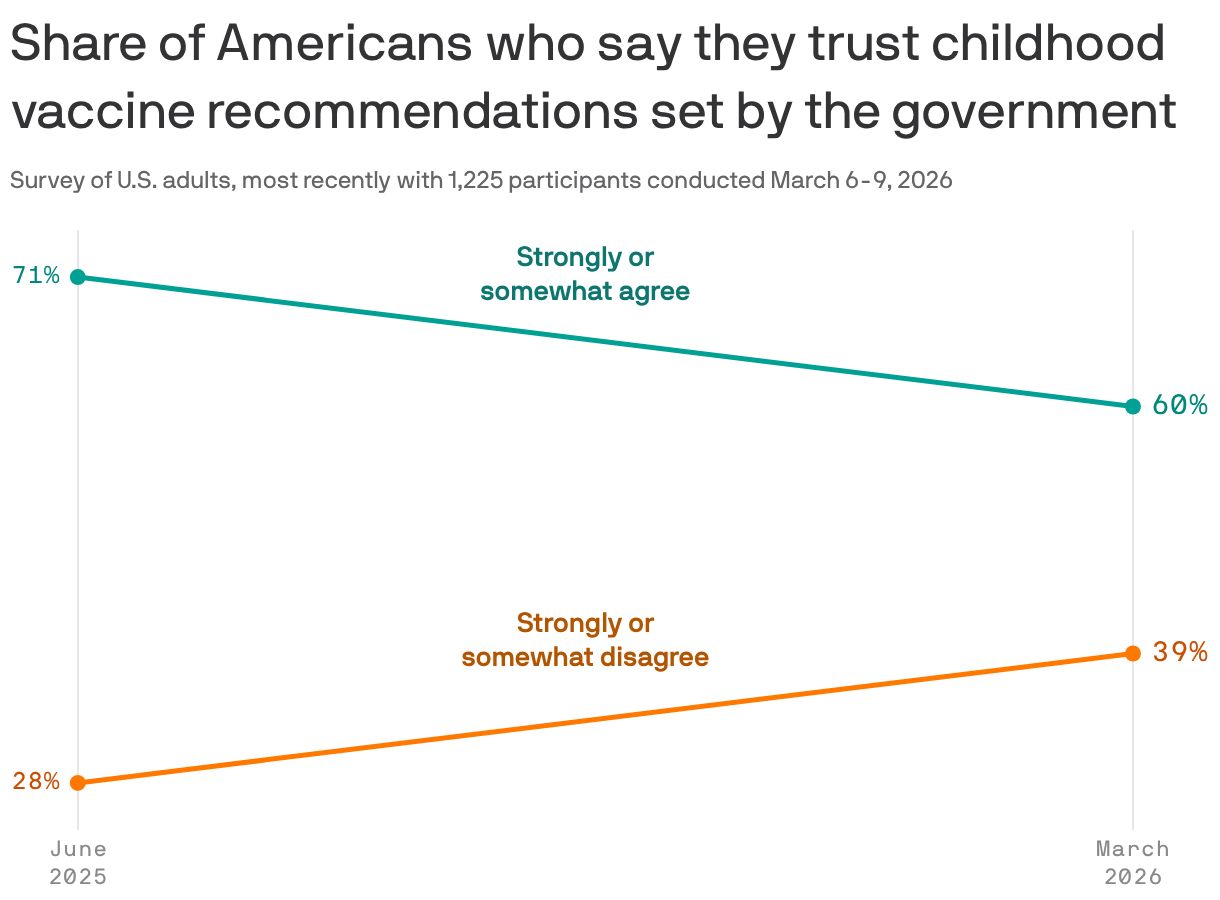
Just 6 in 10 Americans now trust the government's childhood vaccination recommendations, according to the Axios-Ipsos American Health Index, Axios' Adriel Bettelheim and Margaret Talev write.
- That's down from 71% when we asked the question last June — reflecting the dramatic erosion of public trust during the tenure of Health Secretary Robert F. Kennedy Jr.
Nearly 1 in 3 Americans say they personally identify with Kennedy's "Make America Healthy Again" movement.
5. 🗞️ War fuels press squeeze
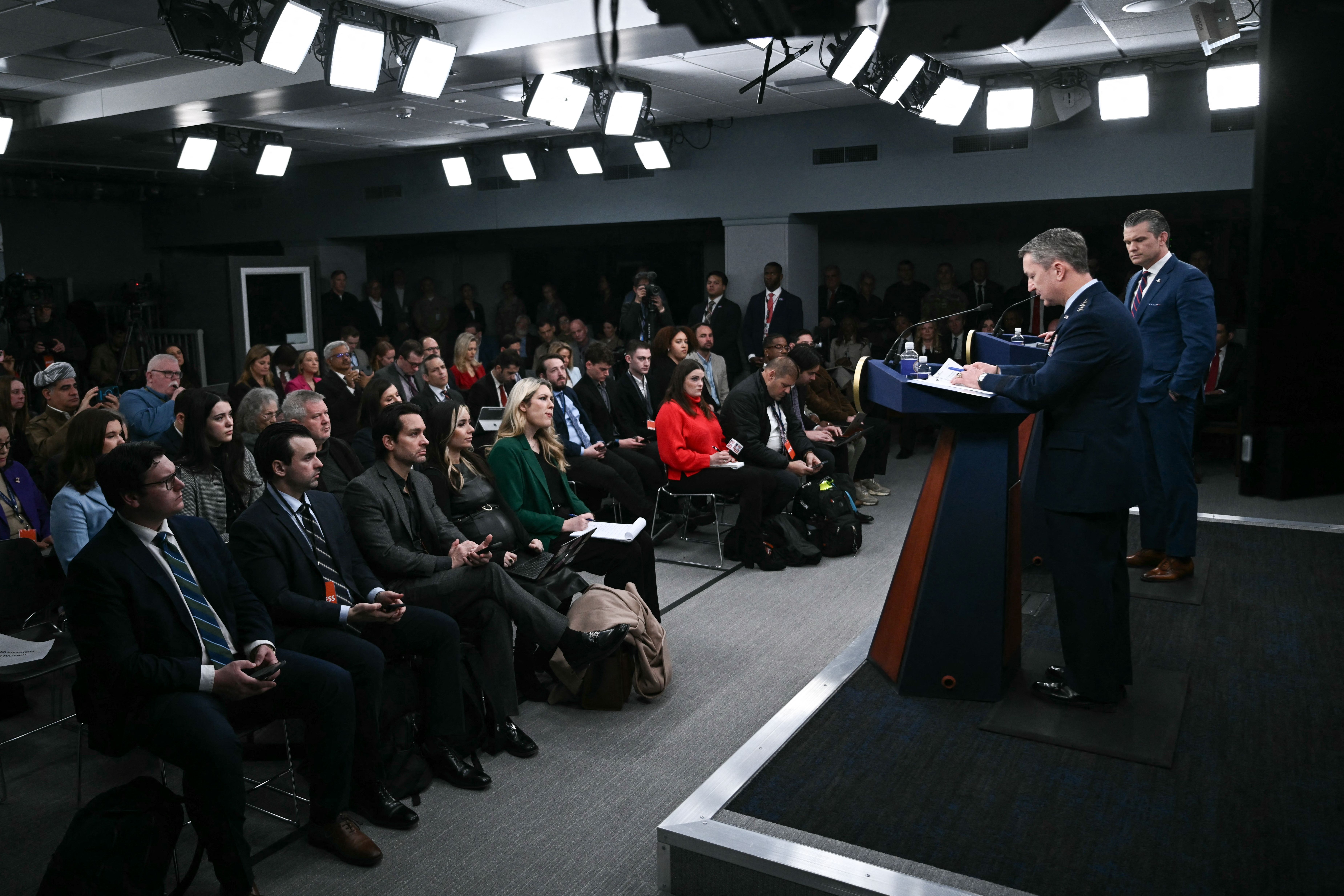
The Trump administration is ramping up its attacks on the press as it struggles to control its messaging about the war in Iran, Axios Media Trends author Sara Fischer writes.
- Why it matters: History suggests that when press freedoms are targeted during times of war, they're rarely reinstated.
Over the past few weeks, the administration has threatened news outlets with regulatory retaliation and blocked access to their war coverage.
- FCC chair Brendan Carr on Saturday threatened to revoke broadcast licenses if war coverage did not "operate in the public interest."
- His comments came shortly after the president criticized the press on Truth Social for its coverage, alleging the media "actually want us to lose the War."
The Washington Post reported the Defense Department barred photographers from briefings after Hegseth's staff objected to unflattering photos of him from a previous briefing.
- Hegseth later called out CNN for a story headlined, "Trump administration underestimated Iran war's impact on Strait of Hormuz."
6. 💰 $1M to be a top Georgia contender
7. 📸 1,000 words

A man stands on the roof of a car to look over a protective screen at RAF Fairford in southwest England, which is used by the U.S. Air Force.
- "The area has become popular with plane spotters since USAF bombers began arriving at the base earlier this month," the BBC reports.
Officials have installed screens and blocked nearby roads in an attempt to stop people from filming activity on the base.
8. 🏀 1 for the road: Bots pick brackets

Axios AM