Axios AM

February 11, 2026

1 big thing: Stunning crime crash


Violent crime plunged across America's biggest cities in 2025, Axios' Russell Contreras writes from new data from the Major Cities Chiefs Association.
- Why it matters: If these staggering drops in major cities are reflected in broader national figures that'll come later, "the U.S. homicide rate in 2025 would be the lowest observed since at least 1900," the independent Council on Criminal Justice said.
🔎 Between the lines: Experts say a complex tangle of technological and social factors has curtailed homicides since the surge during COVID. Research credits "policing strategies and incarceration rates" and very long-term trends that include "mental health treatment and gun laws, the beautification of vacant lots and the phasing out of lead, which impairs brain development, from gasoline in the 1970s," the N.Y. Times reports.
- "Improvements in life-saving medical care have also reduced the homicide rate."
The big picture: The report shows declines across every major violent-crime category in 2025 compared to 2024. The report covers 67 of the nation's largest police departments and confirms other studies that reported big declines last year.
- Cities report that homicides overall fell 19%.
- Robberies dropped about 20%.
- Aggravated assaults were down nearly 10%.
🌞 Zoom in: Southern and Sun Belt cities saw some of the biggest homicide declines.
- Orlando and Tampa headlined the list with more than a 50% decline in homicides.
- Western cities such as Denver, Seattle and Honolulu also posted large homicide drops.
- These cities were among the hardest hit during the pandemic-era crime surge and are now seeing some of the fastest reversals.
Chicago and Baltimore both experienced around a 30% drop in homicides last year.
- Memphis and Portland both saw about a 25% decline.
👀 The intrigue: The White House has changed its tone and begun touting the declines, while crediting its policies.
- The White House said Monday: "After the Trump Administration surged federal resources into crime-plagued Washington, D.C., the District went three weeks into the new year before recording its first homicide — the first time the nation's capital had gone more than ten days into a new year without a murder in at least three decades."
2. 💰 AI boom belongs to capital
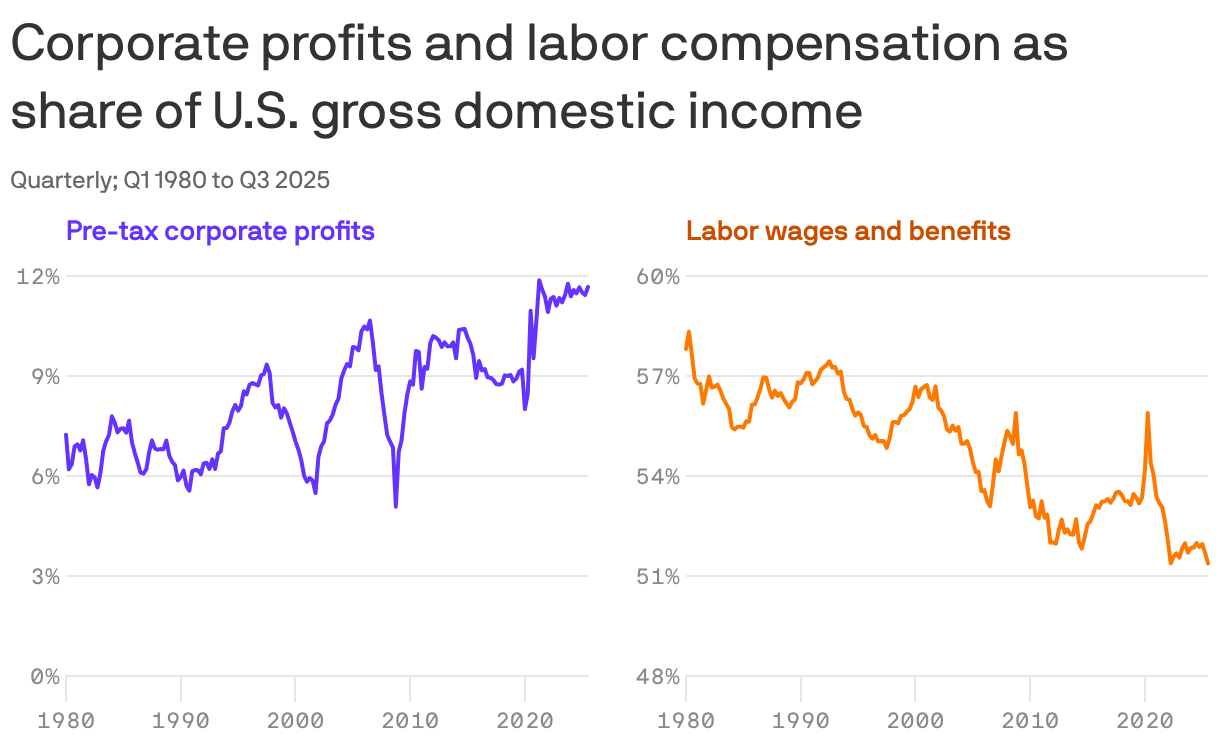
The U.S. is experiencing an investment boom from AI and the infrastructure that makes it possible — but much of those economic gains aren't reaching workers, Axios Macro co-author Neil Irwin writes.
- Why it matters: Job openings have become scarce, and workers' wages are no longer rising that rapidly.
That disconnect between strong growth and comparatively anemic results for workers may sound like a unique challenge of 2026. In fact, it's part of a longer-run phenomenon that the AI boom is poised to exacerbate.
- Since the 1980s, the share of national income accruing to labor has fallen markedly, and the share going to capital has risen.
- The lopsided distribution of the economic pie helps explain why public opinion on the economy remains in the toilet despite decent overall data.
🔬 Zoom in: The Wall Street Journal's ace economic columnist Greg Ip writes (gift link) that the "divergence between capital and labor helps explain the disconnect between a buoyant economy and pessimistic households."
- "It will also play an outsize role in where the economy goes from here."
As Ip points out, the share of gross domestic income going to' wages and benefits was 51.4% in the third quarter, down from 58% in 1980.
- Over the same span, the share going to corporate profits rose from 7.2% to 11.7%.
💡 Stunning stat: If workers reclaimed their 1980 share of national income, it would mean an extra $2 trillion in annual compensation — an average of $12,000 a year more for each employed American.
3. 💥 Axios interview: Trump's Iran buildup

4. 📺 Charted: 2nd-biggest Super Bowl


NBC's Super Bowl LX broadcast drew 124.9 million viewers — a 2.2% drop from last year's matchup between the Philadelphia Eagles and Kansas City Chiefs, Axios' Kerry Flynn and Sara Fischer write from new Nielsen data.
🧮 By the numbers: The game was the second-most-watched Super Bowl and TV event in U.S. history, behind last year's game. It is also the most-watched show in NBCUniversal's 100-year history.
- NBCU said the halftime performance averaged 128.2 million viewers in the U.S. from 8:15–8:30 p.m. ET.
- That's down from 133.5 million for Kendrick Lamar's performance last year.
Explore the data ... Share this story ... Get Axios Media Trends.
5. 📈 Monster game for prediction markets

6. 🫏 Biden = '26 pariah
7. 🤖 AI's $610 billion buildout
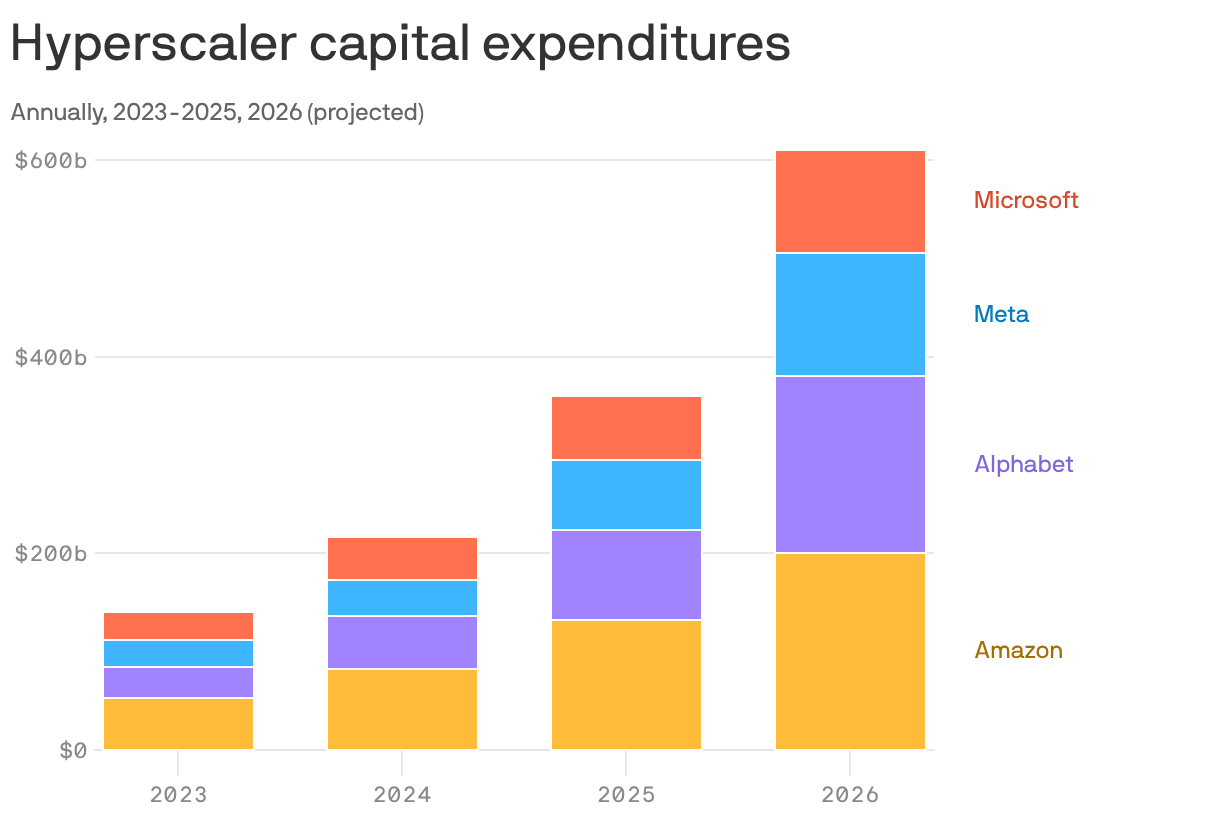
Spending by hyperscalers, the tech giants leading the AI revolution, is expected to total $610 billion at the mid-range of company guidance estimates, Axios AI+ co-author Madison Mills writes.
- That's about triple their spending from just two years ago.
8. 🚁 1 fun thing: The drone Olympics
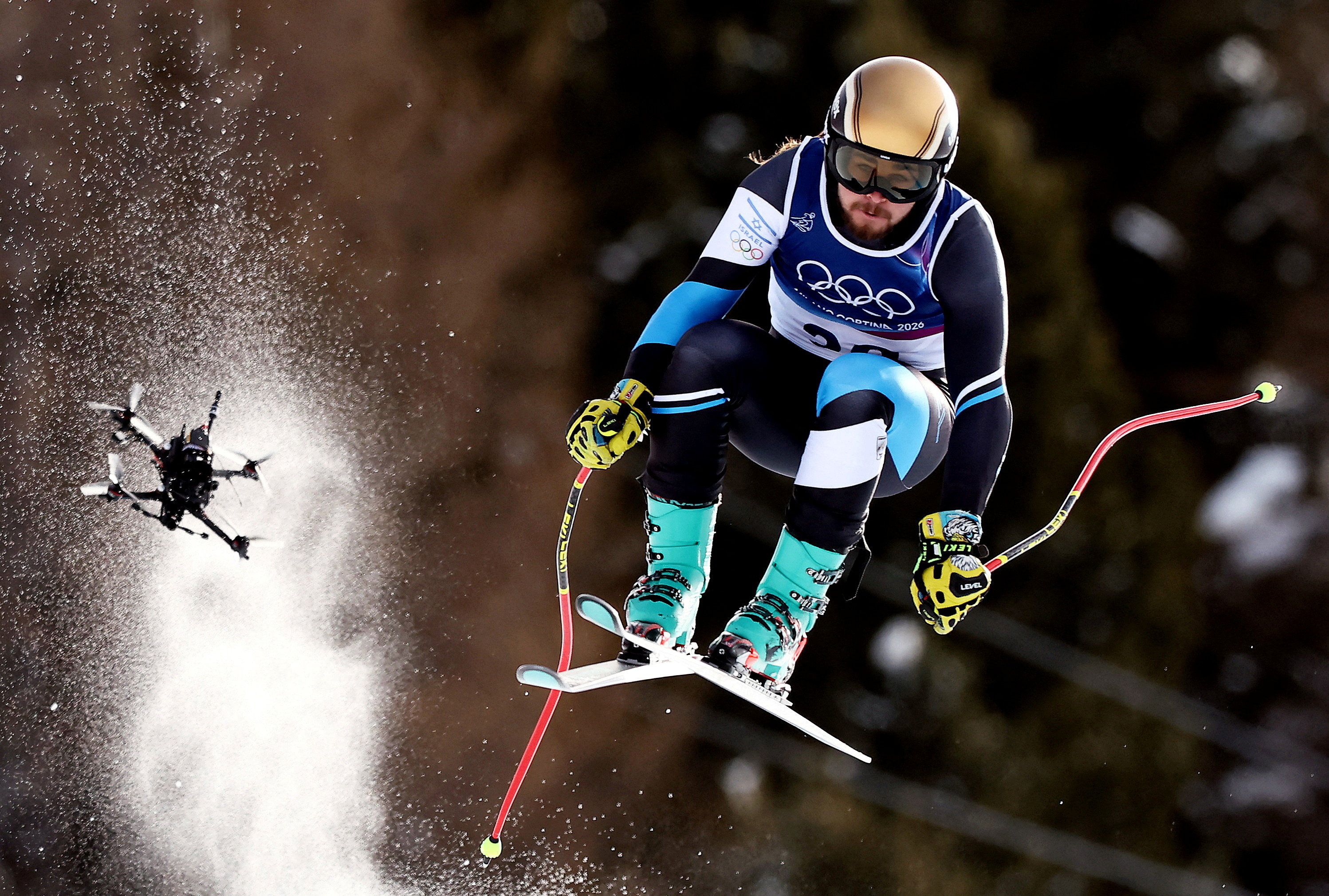
MILAN, Italy — Drones and other tech advances are reshaping how viewers experience the Winter Olympics, Axios' Ina Fried writes.
- Why it matters: New camera angles can pull the audience into the athlete's perspective, making the sheer intensity and speed of events like skiing and bobsled easier to grasp.
One of the most obvious tech advances at this year's games has been the extensive use of drones by the Olympic Broadcasting Services, the group that provides camera feeds to NBC and other broadcasters.
- OBS has more than two dozen drones in use for these Olympics, with the flying cameras being used indoors and outdoors — basically at all sports other than ice hockey and curling.

Pilots with deep knowledge of the sports control the drones, using goggles that allow them to see what the drones see.
- In some cases, the pilots are former athletes — including Jonas Sandell, a former ski jumper currently filming the sport.
Keep reading ... Today's events ... Medal count.
Axios AM