Axios AM

April 11, 2025

1 big thing: World sells America
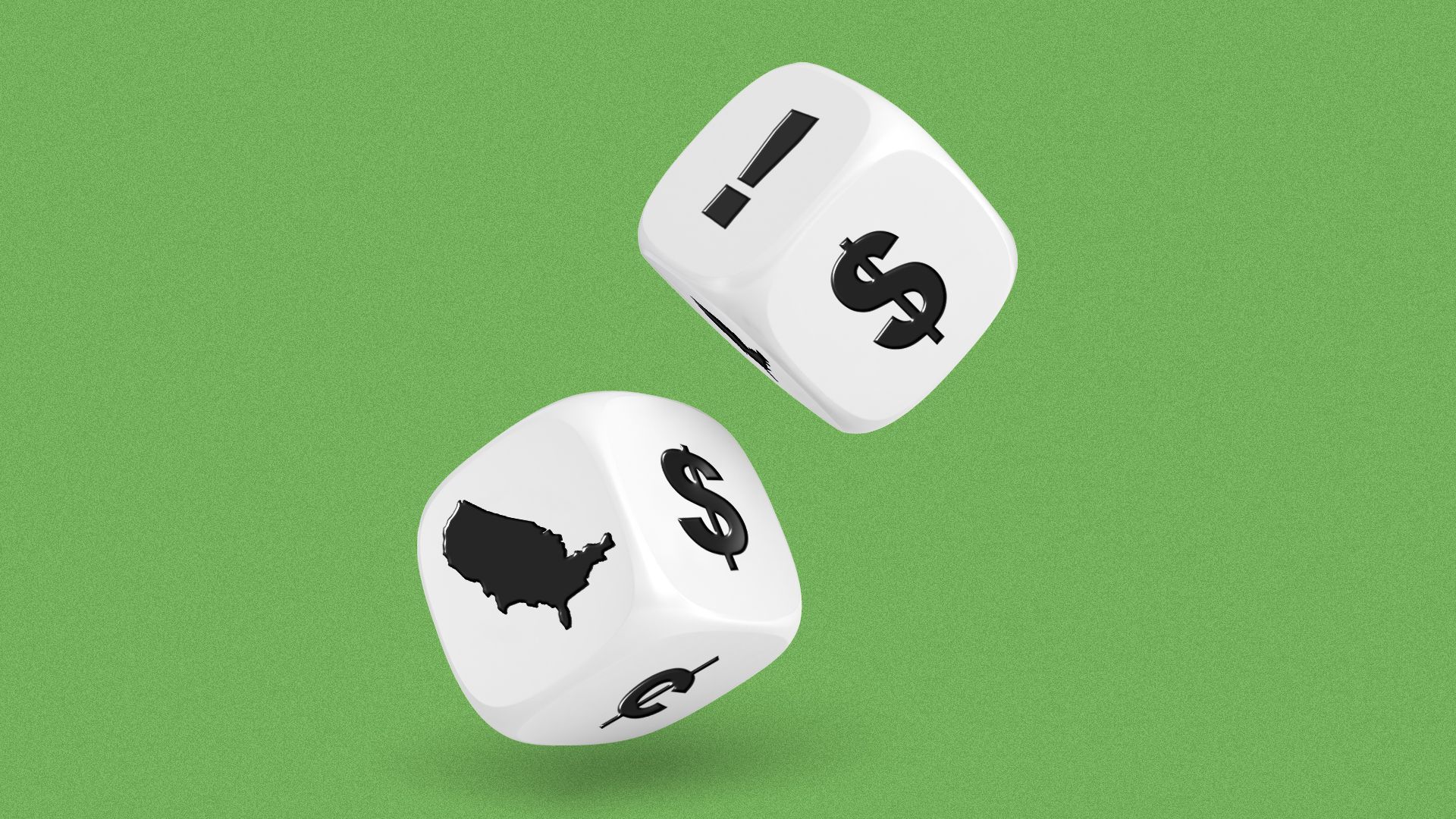
President Trump's whiplash tariffs may have inadvertently achieved his goal of reordering the global economy — by inspiring investors to sell U.S. assets and move their money elsewhere, Axios' Ben Berkowitz writes.
- Why it matters: For decades, the world has invested in America. Now, a global moment of clarity threatens to redirect trillions of dollars of capital inflows and diminish the U.S. in the international economic order.
🖼️ The big picture: The U.S. receives nearly $2 trillion each year in foreign capital inflows.
- That includes investments in businesses and bank lending, as well as foreign investors buying U.S. stocks and bonds.
- America's share of global capital flows has nearly doubled from where it was just before the pandemic, to 41%.
Then came the tariffs.
- The U.S. dollar — which should strengthen in a tariff environment, all other things being equal — weakened steadily.
- "This suggests foreigners have been and are continuing to sell U.S. stocks and sending their money elsewhere," write Howard Ward and John Belton, co-chief investment officers of value at Gabelli Funds.
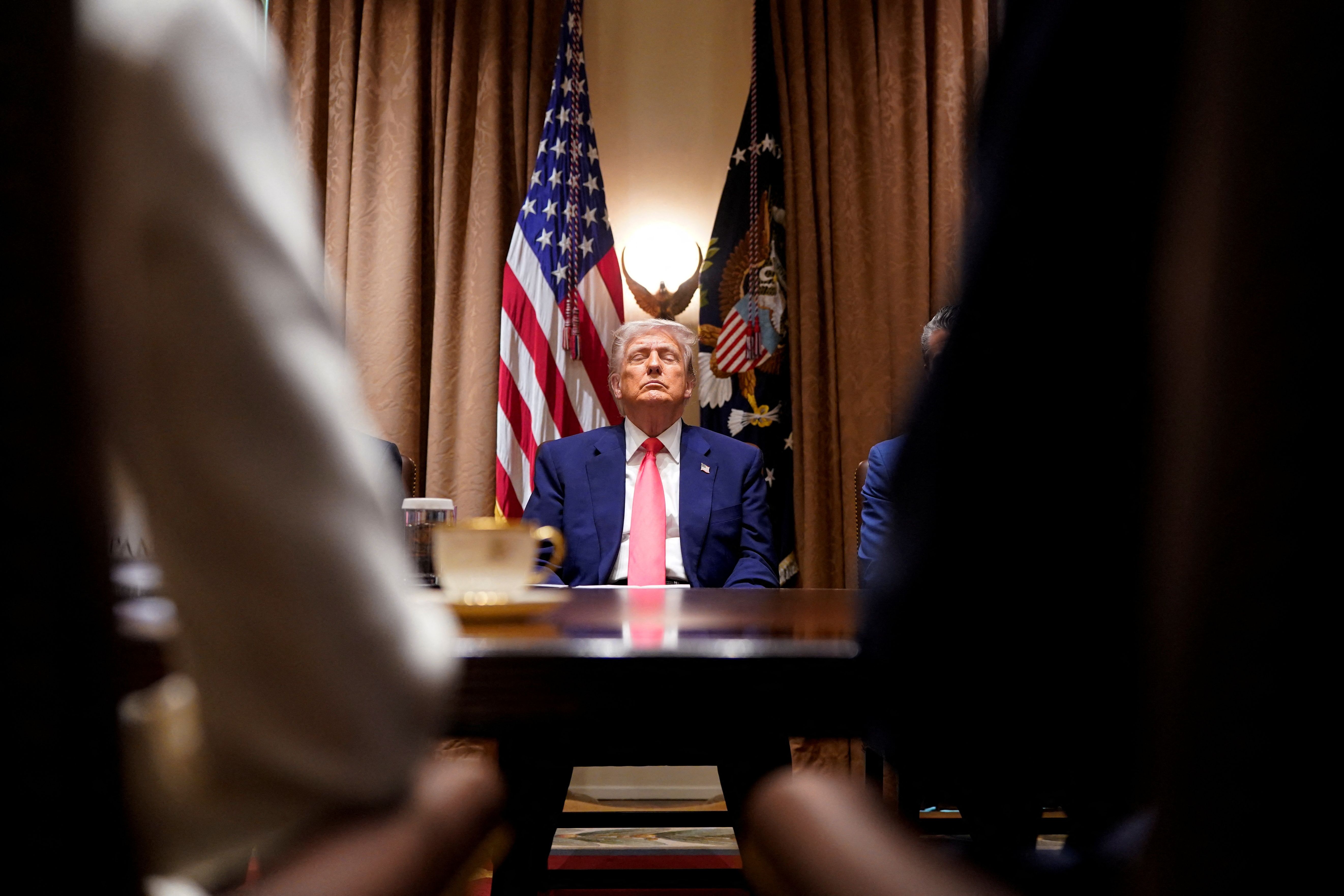
The intrigue: A strong U.S. dollar has been orthodoxy for decades. Investors have counted on knowing the government would act to preserve the greenback as the world's reserve currency.
- But Stephen Miran, chair of Trump's Council of Economic Advisers, on Monday gave a speech in which he portrayed the strong dollar as fraught with downsides, denting U.S. competitiveness and labor.
- If the government isn't going to stand as firmly by the dollar, investors may reason it's a good time to look elsewhere, too.
Between the lines: The tariff blowback only accelerates a trend that started not long after Trump took office, with investors preferring foreign markets over the U.S.
- The S&P 500 is one of the world's worst-performing major indices so far this year.
- Asian and European shares rallied sharply yesterday — and U.S. stocks sank.
🥊 Reality check: For all the anxiety, the U.S. economy is still the world's largest and remains attractive to plenty of investors.
- Billions of dollars are still pouring into the U.S. to build new auto factories and data centers.
2. 🇨🇳 Xi counterpunch
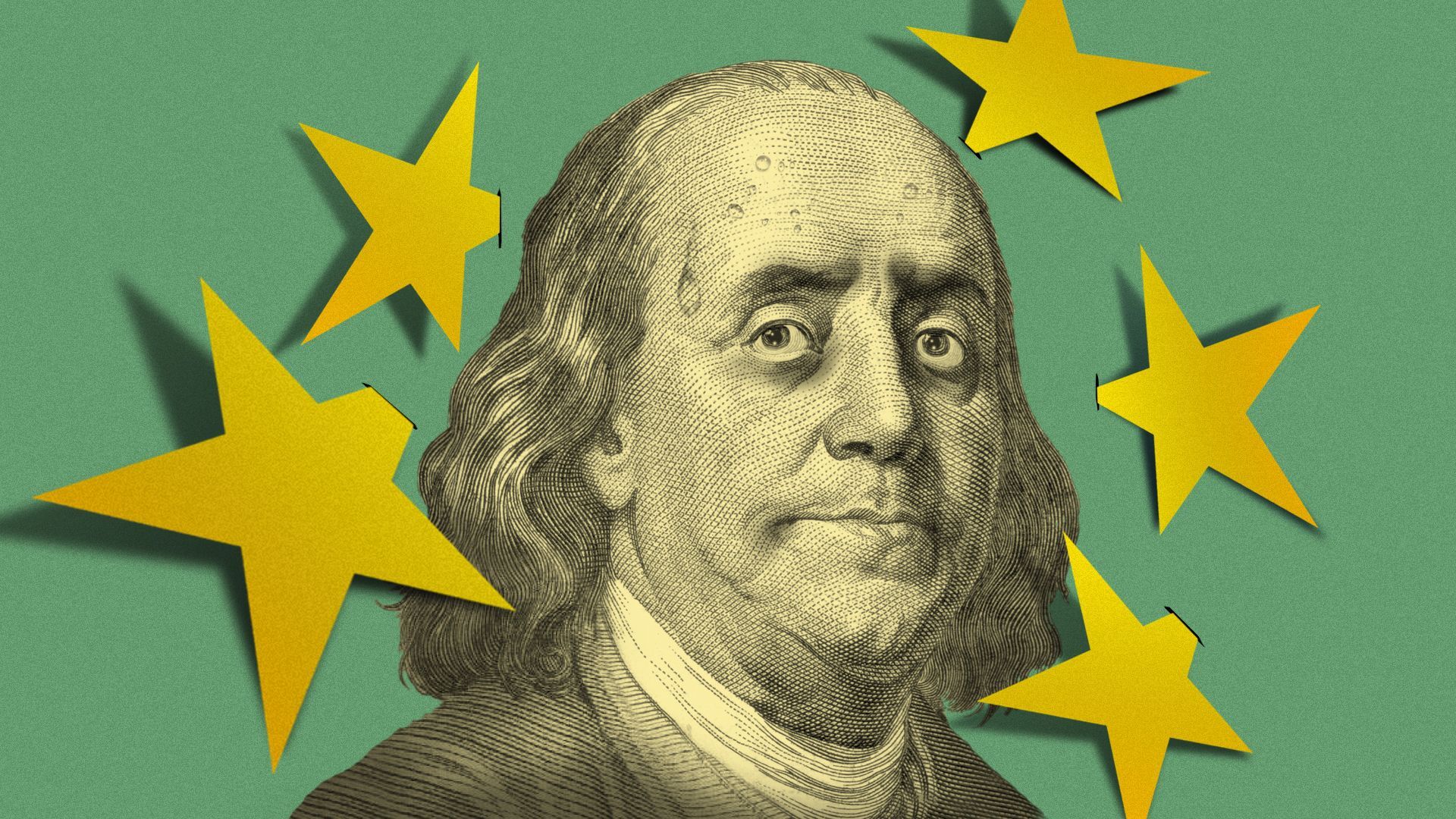
3. 💰 Bonds 101: Why the market spooked Trump


A warning from the world's largest and most powerful financial market did what few others could: force President Trump to pivot on a key aspect of his trade agenda, Axios Macro co-author Courtenay Brown writes.
- Why it matters: The U.S. Treasury market is the heart of the global financial system. The rapid selloff fueled by Trump's tariffs was seen as a ticking economic time bomb that risked bringing the world economy to a screeching halt.
Between the lines: The U.S. government funds its $36 trillion national debt with bonds, which it sells to investors around the world — individuals, pension funds, other nations, you name it.
- The price they're willing to pay determines the interest rate on government debt, which in turn ripples through to all other forms of borrowing, like home mortgages or corporate lending.
- Treasury securities are the bedrock of financial transactions around the globe — a store of value for German banks, Middle Eastern sovereign wealth funds, and countless other key roles in the underpinnings of the global financial system.
🚨 Threat level: There's a reason why the high-flying stock market gets all the headlines. The bond market is boring and unsexy when it is working well.
- That wasn't the case this week. The moves in the Treasury market suggested global investors were becoming less confident in U.S. government bonds, which in turn pushed up borrowing costs across the board.
The yield on the 30-year Treasury bond — the rate of interest the government pays its lenders — skyrocketed by as much as 0.6 percentage points since the start of the week.
- Sound small? It's a magnitude not seen since the pandemic, according to TD Securities.
4. 🌐 Charted: U.S. tariffs vs. the world
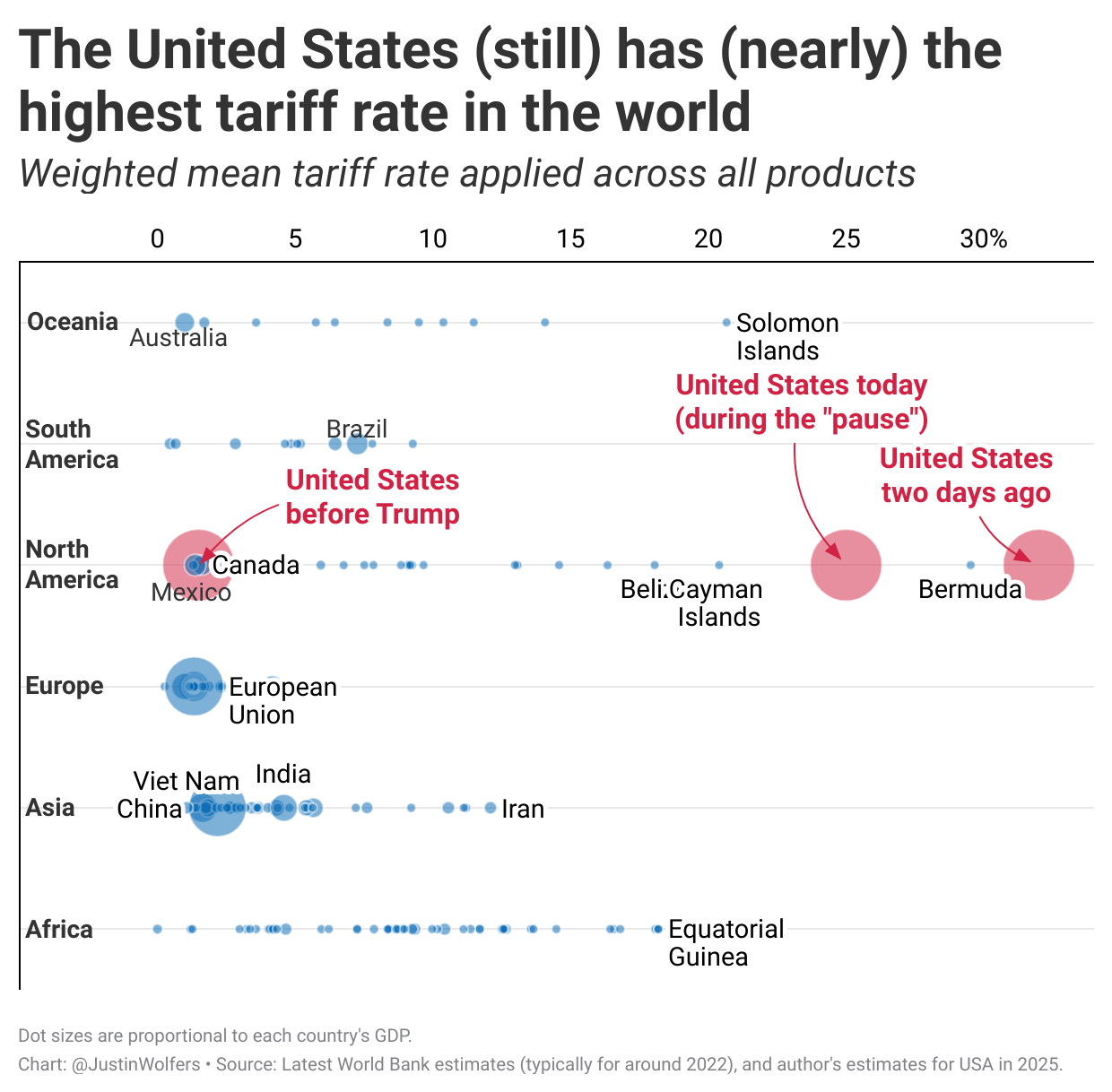
America's tariff rate is now the second-highest in the world, behind Bermuda, after President Trump implemented a 90-day pause, University of Michigan economist Justin Wolfers tells Axios' Erica Pandey.
- For roughly 13 hours on Wednesday, they were the highest.
Why it matters: U.S. rates are still higher than the Depression-era Smoot-Hawley tariffs.
- The other nations with high tariffs are "mostly small, developing and politically unstable countries," Wolfers says.
5. 🏛️ SCOTUS sides with deported migrant
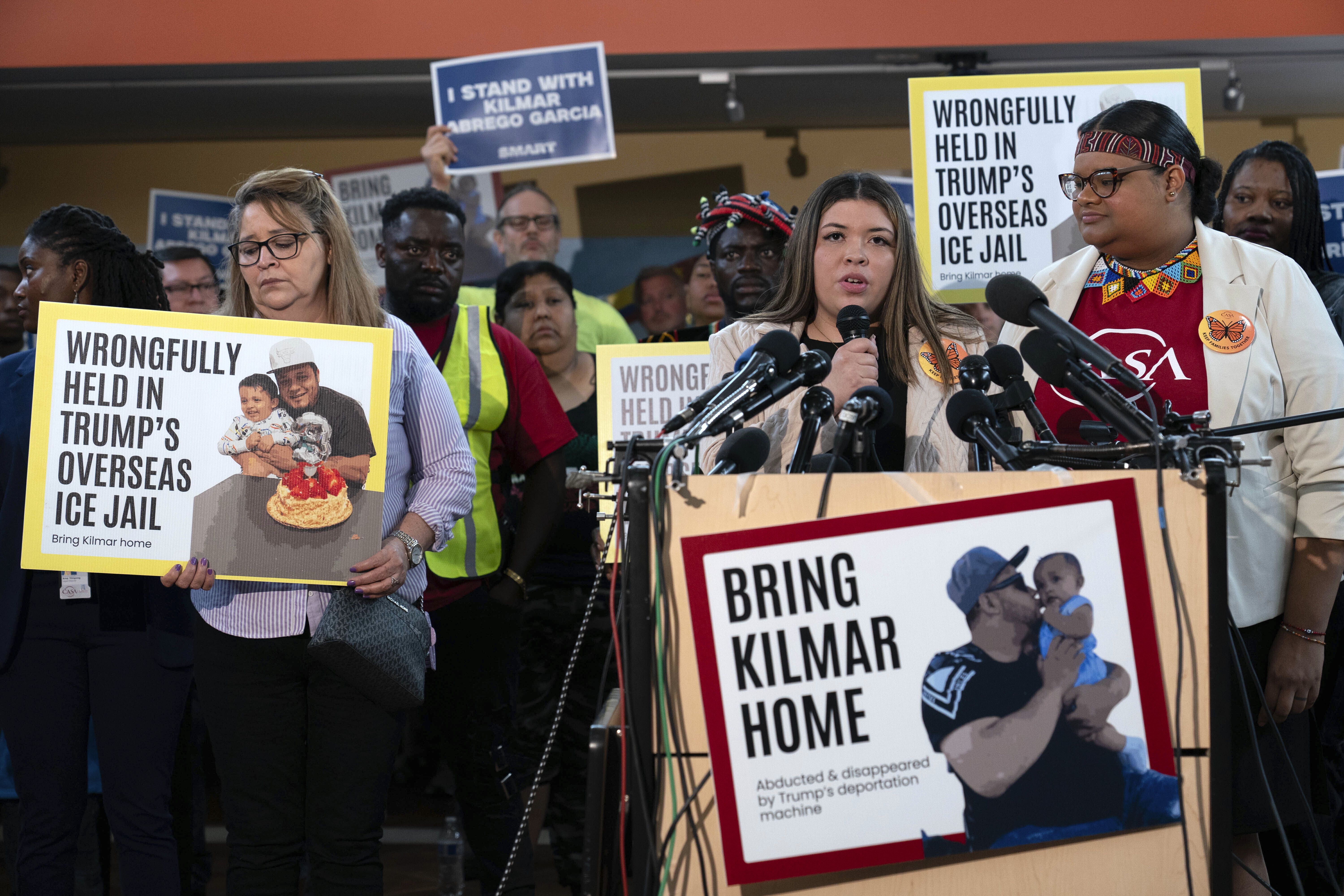
The Supreme Court ruled last night, with no noted dissents, that the Trump administration must take steps to return a Maryland resident who was mistakenly deported to El Salvador, Axios' Sareen Habeshian writes.
- The Trump administration fought a lower court order to bring back Kilmar Abrego Garcia, a Salvadorian national, arguing the judge's order imposes on the president's foreign policy powers.
The government accused Abrego Garcia, who was legally living in Maryland, of being a member of MS-13, even though he has not been convicted of gang-related crimes.
- Abrego Garcia's lawyers argued in their response Monday evening that there is no credible reason for the U.S. to withhold his return, as it was the government's error that led to his deportation.
6. ☢️ Scoop: Iran eyes interim nuclear deal
7. 🎙️ Young Americans' favorite podcasts
8. ⛳ Pic to go: Masters leader
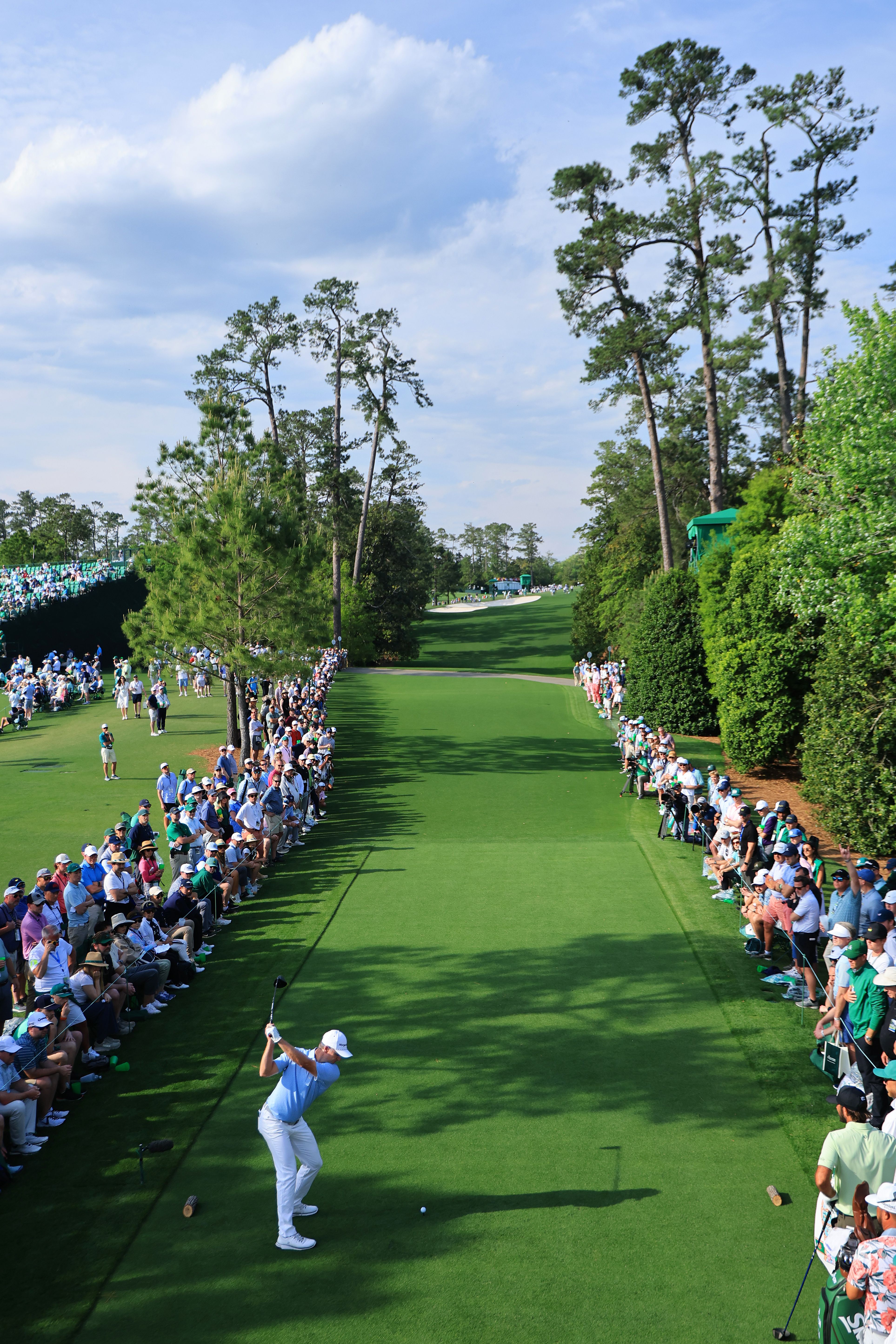
Justin Rose tees off on the 18th hole during the first round of The Masters in Augusta, Ga., yesterday.
- He holds a three-shot lead after shooting a 7-under 65. Full leaderboard.
Axios AM