Axios AM

January 21, 2026

1 big thing: Living history — and the future

DAVOS, Switzerland — In a 24-hour span in the Swiss Alps, we're witnessing what future historians might mark as a hinge moment: The people building civilization-altering AI, a prime minister declaring America's global order dead, and an expansionist, defiant American president all sharing the same tense global stage, Jim VandeHei and Mike Allen write.
- Why it matters: It's hard to overstate the seismic shifts shaking this week's World Economic Forum in Davos.
First, Anthropic CEO Dario Amodei bluntly warned of vast job loss and absurd concentration of wealth as AI capability escalates. With the tech world enthralled by his Claude Opus 4.5, Amodei slammed President Trump for allowing China to buy American chips.
- Then at the Davos podium, Canadian Prime Minister Mark Carney delivered a historic rebuke to the U.S. under President Trump, declaring the rules-based order led by America "a pleasant fiction": "This bargain no longer works."
- That was before Trump addresses Carney and world leaders in Davos today, then holds a reception with Amodei and other top American CEOs. (Air Force One briefly returned to Joint Base Andrews because of "a minor electrical issue," about an hour after leaving for Switzerland. Get the latest.)
📜 The big picture: We've covered a lot of "historic" moments that turned out to be noise. This week feels different.
- The people building the most powerful technology ever created are saying — calmly, matter-of-factly — that it gets smarter than us very soon.
- America's closest ally, Canada, is publicly breaking away. And all of it lands on one Alpine town, at one moment, while the most powerful person on Earth prepares to speak.
🧊 What's next: With European leaders before him, Trump is expected to demand that Greenland be handed over to America by Denmark, a NATO ally, with punitive tariffs threatened for nations that stand in his way.
- "Greenland is imperative for National and World Security," Trump wrote yesterday on Truth Social. "There can be no going back — On that, everyone agrees!"
- Some of America's closest allies are warning that the issue could shatter the NATO alliance, which once looked unshakable.
- Trump plans to tout American dominance, unveil housing reforms, and sign the charter for his Board of Peace — an alternative to the U.N. that critics say could rival the institution itself.
🦾 Most every conversation among the Davos elites centers on two topics: AI and Trump. The Trump conversation is mostly speculation and, among many in this crowd, trepidation. On AI, we're hearing mind-bending revelations:
- Amodei, in an interview with Wall Street Journal editor-in-chief Emma Tucker, painted a potential "nightmare" scenario that AI could bring to society if not properly checked. He said 10 million people — 7 million in Silicon Valley, with the rest scattered — could "decouple" from the rest of society, enjoying as much as 50% GDP growth while others were left behind.
- Amodei told Bloomberg that Trump's decision to allow sales of advanced AI chips to China has "incredible national security implications" and is "crazy. It's a bit like selling nuclear weapons to North Korea."
- Demis Hassabis, co-founder and CEO of Google DeepMind, said the path to human-like artificial general intelligence is becoming clearer, although there are still some "missing ingredients."
🔮 Reality check: These aren't sci-fi writers. They're leading companies that are close to building what they're describing. They're telling you the future is fast approaching, if not here.
As for geopolitics, Carney invoked Czech dissident Václav Havel's essay on life under communism — the greengrocer who puts up a sign he doesn't believe in, just to get along. Canada, Carney said, had been that grocer. He spoke of an America no longer worthy of trust or reliable partnership: "Friends, it is time for companies and countries to take their signs down."
- Last week, Carney flew to Beijing — the first Canadian PM there in eight years — and announced China has recently been more "predictable" than America. He cut a trade deal with Xi.
Between the lines: Carney ran the Bank of England. He ran the Bank of Canada. He's not a bomb-thrower. When someone like that says the old alliance is over — not pausing, not wobbling, over — that's a seismic marker.
📊 Market mood: Investors processed all this in real time. The S&P 500 dropped 2% yesterday — its worst day since October — after Trump threatened tariffs on eight European allies over Greenland.
- A Danish pension fund announced yesterday it's exiting U.S. Treasuries over concerns about American debt.
The bottom line: Future historians won't need to reconstruct this week. They'll have the footage. The question is whether we understand what we're watching.
- Go deeper: "The great Davos divorce," by Axios' Zachary Basu and Barak Ravid.
2. 💰 Trump 2.0 market underperforms 1.0


U.S. stocks performed worse during the first year of President Trump's second term than during the same period of his first term, Axios Pro Rata author Dan Primack writes.
- The S&P 500 also underperformed the first year of the Biden and Obama presidencies.
🧮 By the numbers: The S&P 500 climbed 15.7% between Trump's second inauguration day and last Friday, which marked the final trading day of his first year in office.
- It was up 24.1% during the first year of his prior term, and up 19.3% during Biden's first year.
Obama outperformed them both with a 35.3% gain.
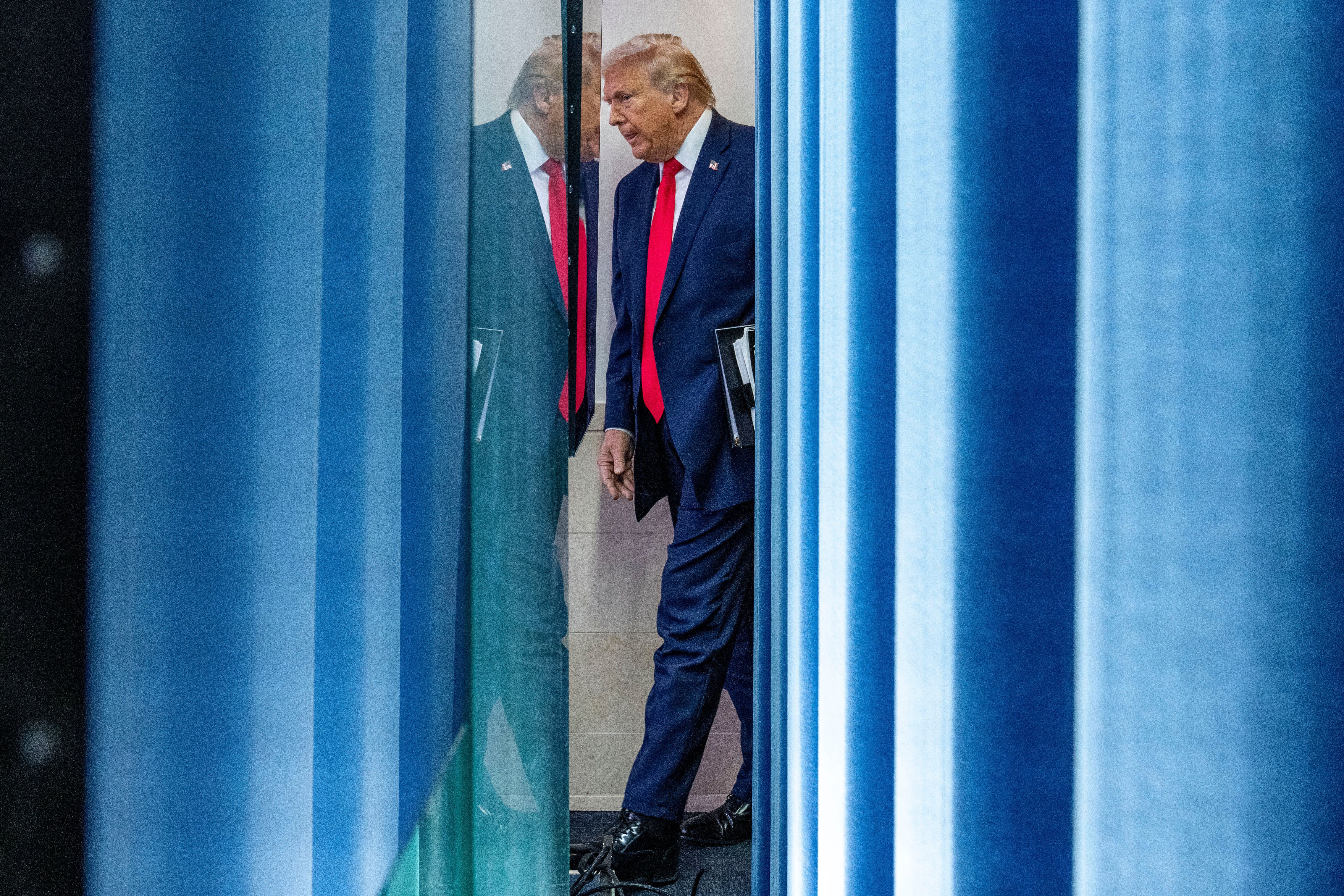
🇬🇱 Between the lines: Stocks experienced a major sell-off yesterday, with the S&P 500 shedding more than 2% as Trump doubled down on his desire to take control of Greenland. It was the index's worst day since October.
Go deeper: Trump's affordability message keeps running into trouble, by Axios' Madison Mills.
3. 🎒 AI heavyweights fight to win teachers
4. 🤖 AI future: "human in the lead"
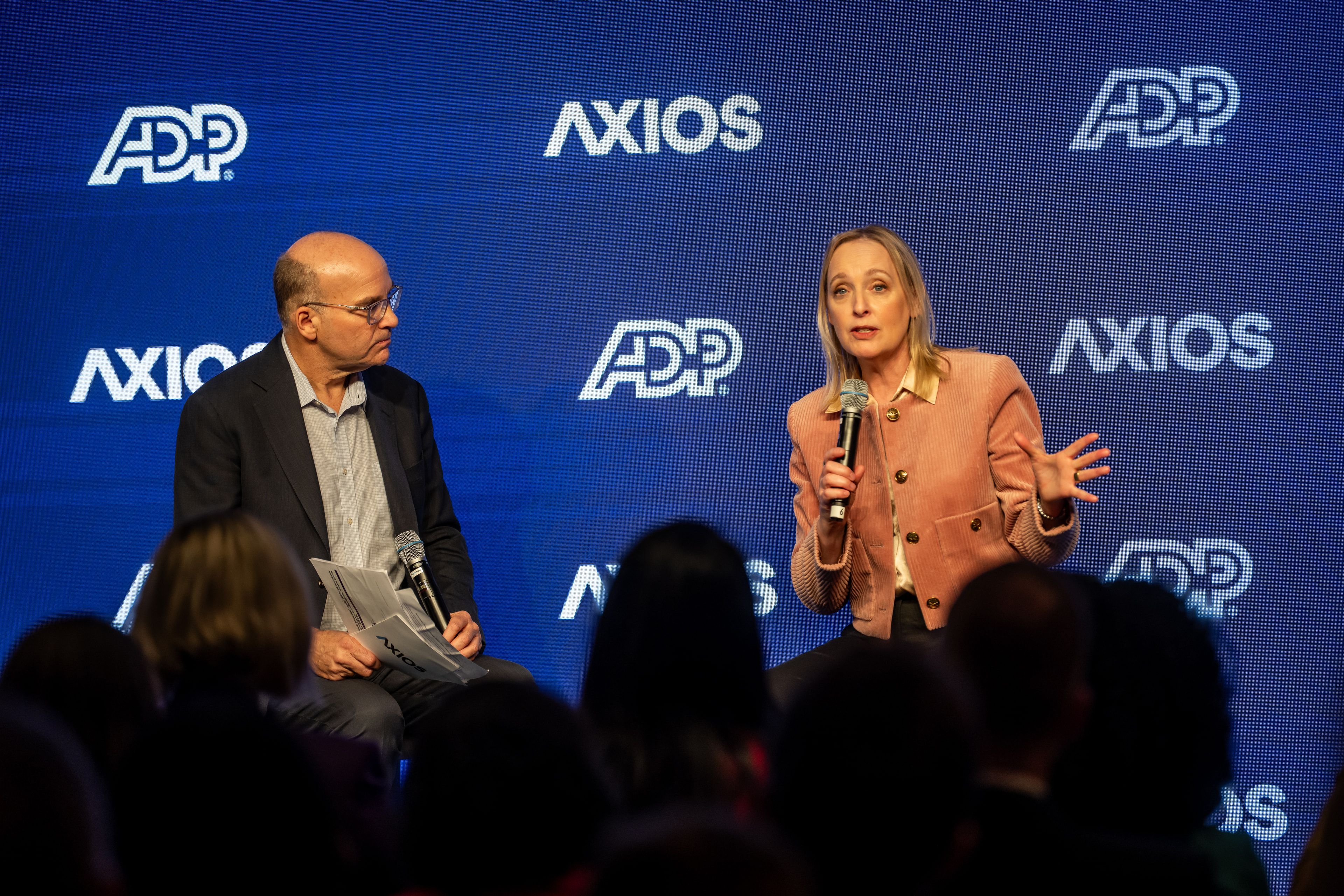
Accenture CEO Julie Sweet told me at an Axios Live event in Davos yesterday that business leaders see AI as a path to growth, not just cost-cutting.
- Sweet, who has line of sight into the AI thinking of her company's 9,000+ clients in 120 countries, said the best case for the future of AI is "human in the lead," rather than "human in the loop."
- "I think we have to actually get rid of that narrative," she said, "because it's not inspiring to people to be a human in the loop."
🧠 A new Accenture Research "Pulse of Change" survey of 7,000 C-suite and non-C-suite workers found that more than three-quarters of leaders think the greater promise for AI is growing revenue, rather than saving dollars, Axios' Avery Lotz reports.
- 83% of non-C-suite employees expressed confidence that if there were to be an AI bubble burst, their organization "would continue investing in AI in ways that benefit employees and business performance."
- Just 20% reported feeling like active co-creators in "shaping how AI changes the way we work."
5. 🏆 Fortune's most-admired companies
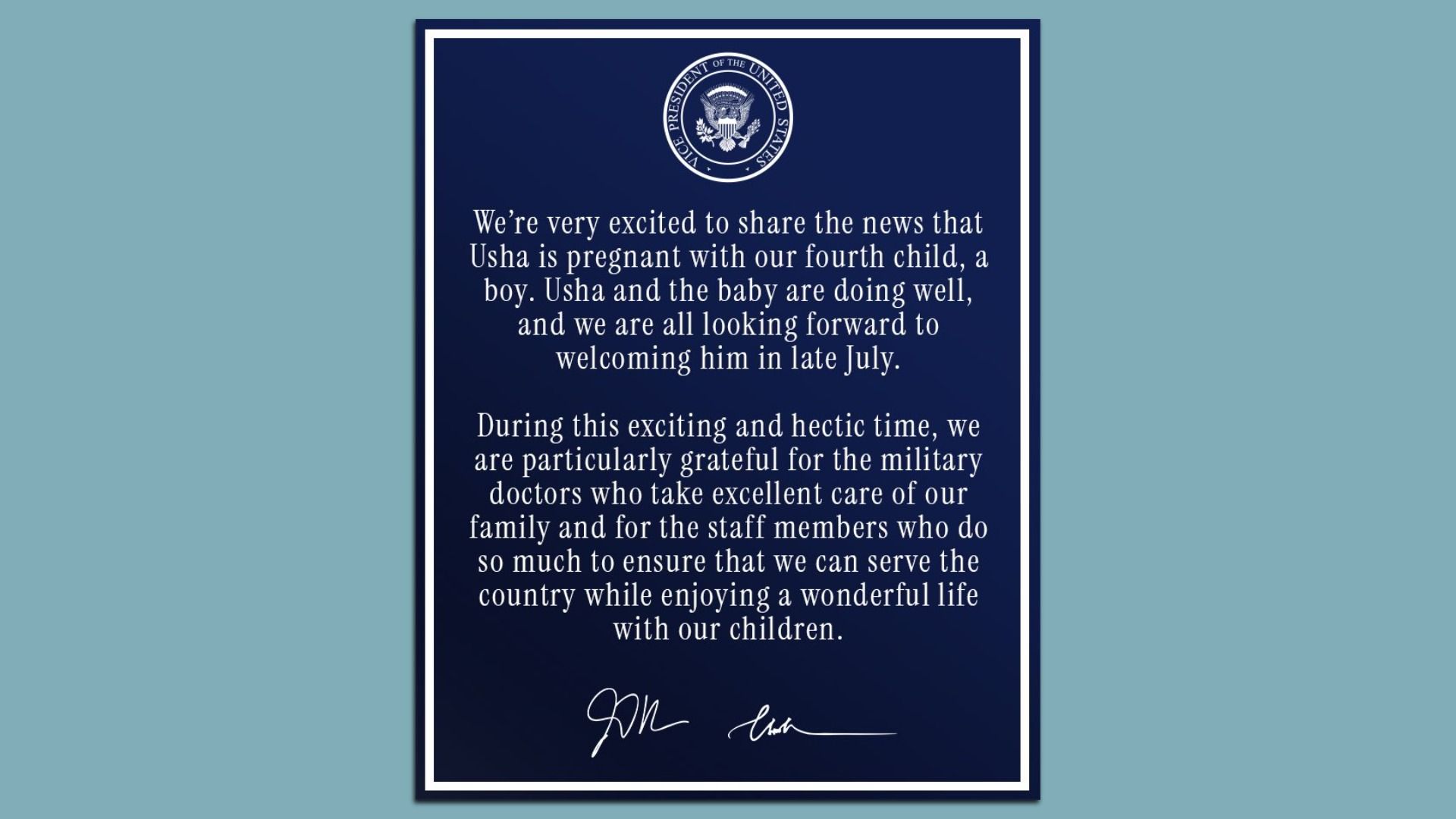
6. 🐣 Vance expecting No. 4
7. 🎓 First look: Gene Sperling unveils Economic Dignity Lab
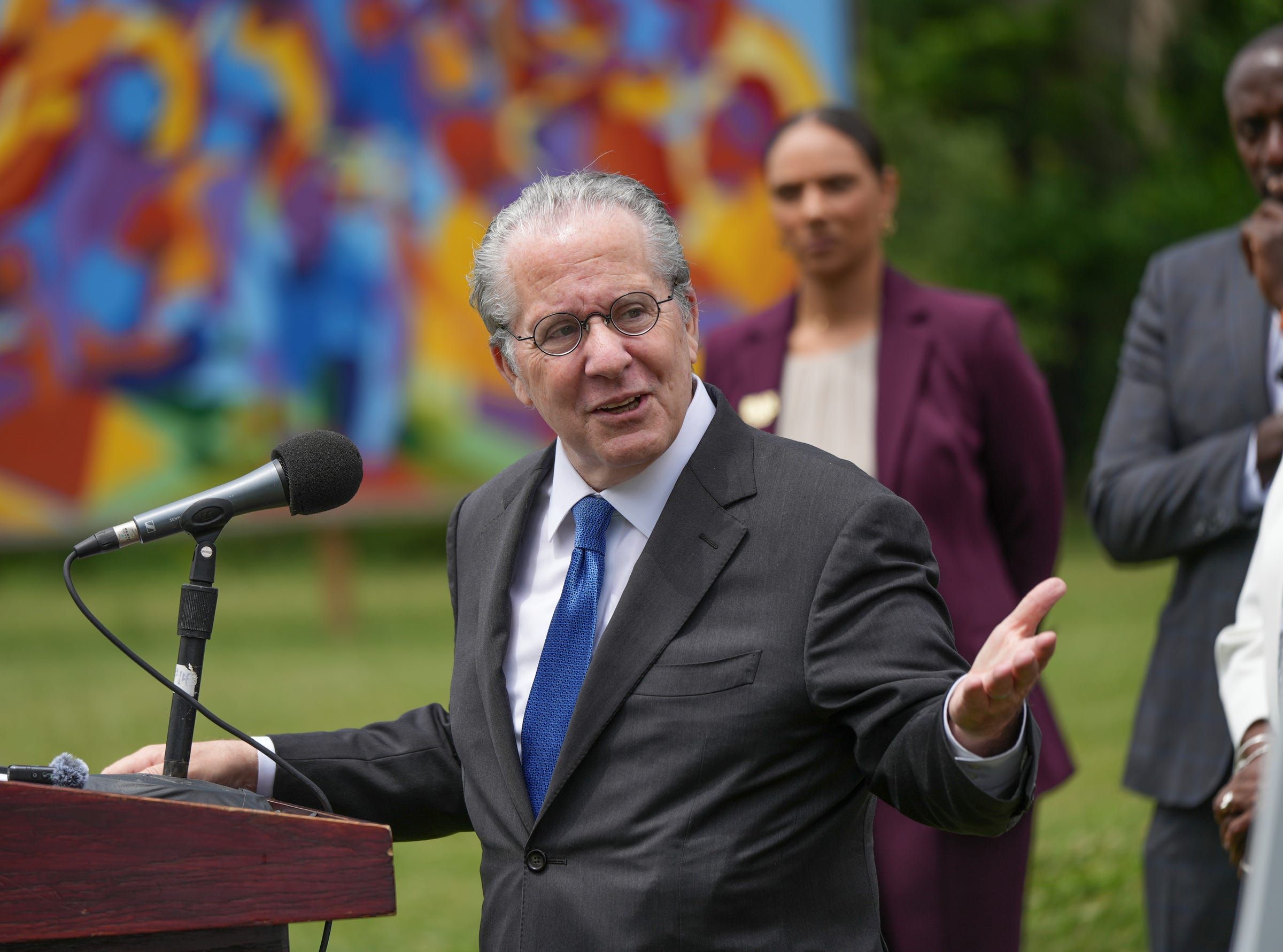
Gene Sperling — a top economic adviser to Presidents Clinton, Obama and Biden — tells Mike he's starting an Economic Dignity Lab at the McCourt School of Public Policy at Georgetown University.
Why it matters: Sperling, who'll be founder and executive director, tells me his lab will develop concrete, viable policy proposals that "provide an economic dignity response to AI job and economic disruption."
- Sperling sketched the undergirding principles in his critically acclaimed 2020 book, "Economic Dignity."
To kick off the Lab, Sperling is publishing a detailed argument in the journal Democracy today, "An Economic Dignity Compact for the AI Age," that's written as a sharp alternative to proposals like UBI (universal basic income) and UBC (universal basic capital).
- Sperling writes that proposals like UBI and UBC ignore the dignity of work and the connection between work and purpose, potential and social connection.
Sperling argues that spreading out equal, unconditional cash payments to Americans, regardless of need, could preclude more effective policies that could help provide true economic dignity.
- Go deeper: Sperling's article for Democracy ... Share this story.
8. 🌕 1 fun thing: Fly (your name) to the moon
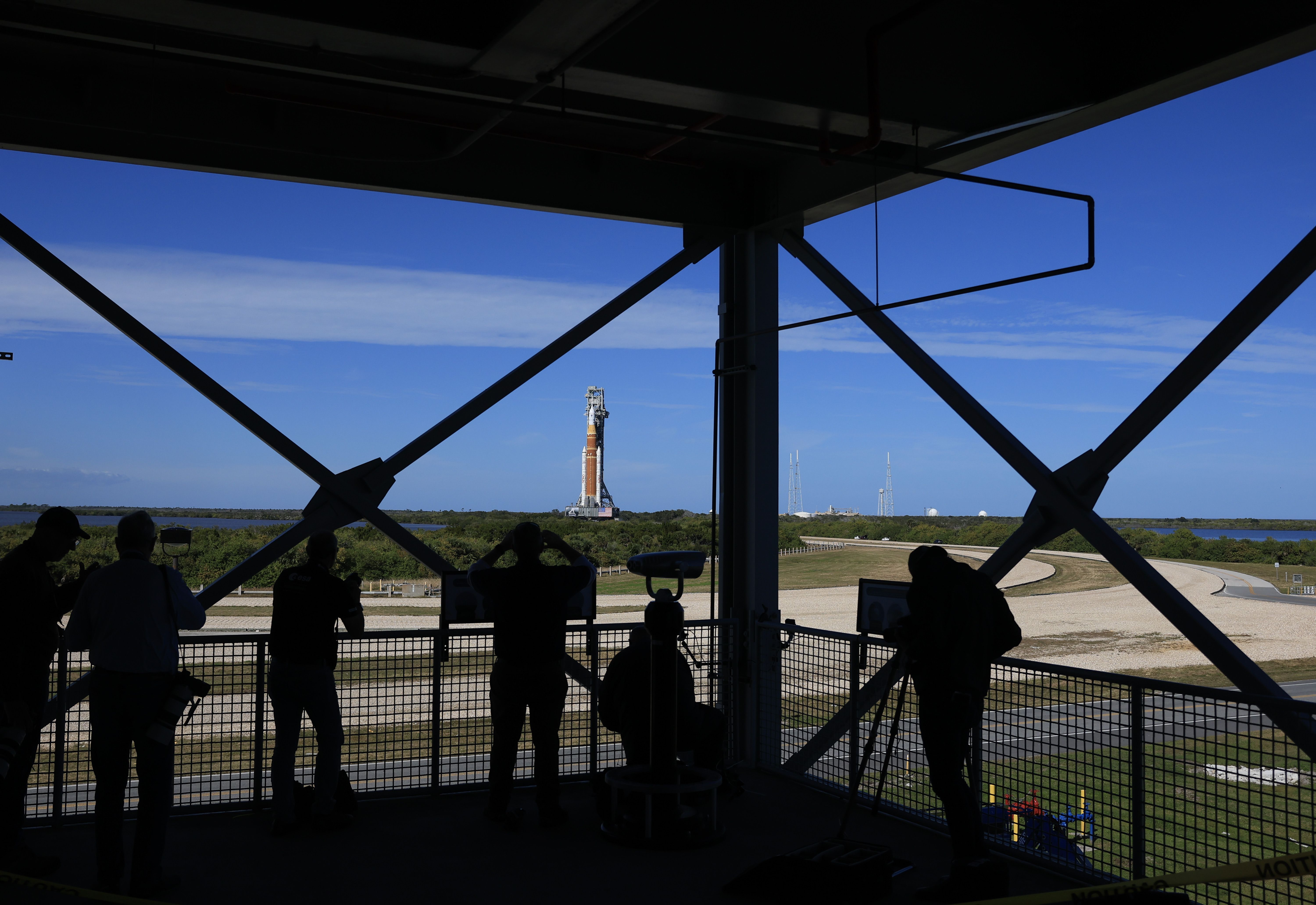
NASA's upcoming moon mission has room for one more thing: your name, Axios Houston's Shafaq Patel writes.
- NASA is inviting the public to add their names to an SD card aboard Orion, the spacecraft slated to orbit the moon during the Artemis II mission possibly as soon as next month.
- Over 2 million people have signed up.
🌌 The big picture: Artemis II is scheduled to launch as soon as Feb. 6 and no later than April, carrying four astronauts — and millions of names — into lunar orbit.
- It'll be the first mission to fly astronauts to the moon since Apollo 17 in 1972.
Share this story ... Get Axios Local: Daily newsletters in 34 cities.
Axios AM