Axios AM

October 24, 2025

🍻 Happy Friday! Smart Brevity™ count: 1,944 words ... 7½ mins. Thanks to Noah Bressner for orchestrating. Copy edited by Bryan McBournie.
1 big thing: Ever-growing AI inequality gap

Good news: U.S. tech companies are attacking the AI race like a modern Manhattan Project — spending unfathomable money and time to beat China to superintelligence, Jim VandeHei and Mike Allen write in a "Behind the Curtain" column.
- Bad news: The U.S. government, even if it weren't shut down, is doing nothing to prepare Americans for the coming, in some areas already-unfolding, economic and jobs shock.
Why it matters: The gap between the AI giants, employees and investors and ordinary Americans is growing by the month. This gap, if it persists, will increasingly define American political debate in the coming months and years.
🎬 "This is an enormously transformational moment," Sen. Bernie Sanders (I-Vt.) told Axios' Alex Thompson on our new episode of "The Axios Show," out this morning.
- "Do I think that the American people and Congress have begun to even discuss the implications of this? I don't."
Elon Musk, an AI architect and optimist, and Sanders, an AI skeptic, agree about little. But both are warning that AI-powered robots could soon take so many jobs, America might need to pay U.S. workers not to work.
- "AI and robots will replace all jobs," Musk wrote on X this week. "Working will be optional, like growing your own vegetables, instead of buying them from the store." Yes, Musk is mass-producing robots at Tesla, so he has reason to hype the possibility. But he's also been right on many of the modern tech shifts.
- Sanders agrees. "I don't often agree with Elon Musk, but I fear that he may be right when he says, 'AI and robots will replace all jobs,'" the senator wrote on X. "So what happens to workers who have no jobs and no income?"
🖼️ The big picture: Yes, robots, superintelligence and paying people not to work are all hypotheticals right now. But all three are hot topics: AI companies are burning through unprecedented sums of investment in order to will human-exceeding intelligence into quick existence.
- What's not debatable is how AI and AI-adjacent investment are propping up the U.S. economy. AI accounts for the vast majority of stock market growth, private investment and new infrastructure projects, like data centers. So the rich are getting a lot richer, and are positioned to get even richer if AI hits superintelligence.
But most Americans aren't big investors in the stock market, and definitely aren't privy to secondary investments in private AI companies like OpenAI. Those outside of AI are experiencing higher prices for staples like energy and tougher times finding jobs, especially entry-level ones for college grads.
- Therein lies the tension that everyone from Sanders, on the left, to Steve Bannon, on the right, believes could cause a revolt among the working class — and shake up politics. If AI reaches its potential, but U.S. workers stagnate or suffer, tensions will surely rise. The working class, the backbone of the Trump coalition, would suffer most, Bannon warns.
- That's the current trajectory. President Trump and Congress have no interest in regulating AI. And most politicians aren't eager to scare voters by telling them robots or AI could wipe away their jobs in a few years, even if they think it's true.
The bottom line: Given Trump's vow to win the AI race, and the indifference or ineffectiveness of Congress, it's likely AI will keep growing more powerful with little national preparation for the consequences.
2. 🎥 "The Axios Show": Sanders wants OpenAI broken up
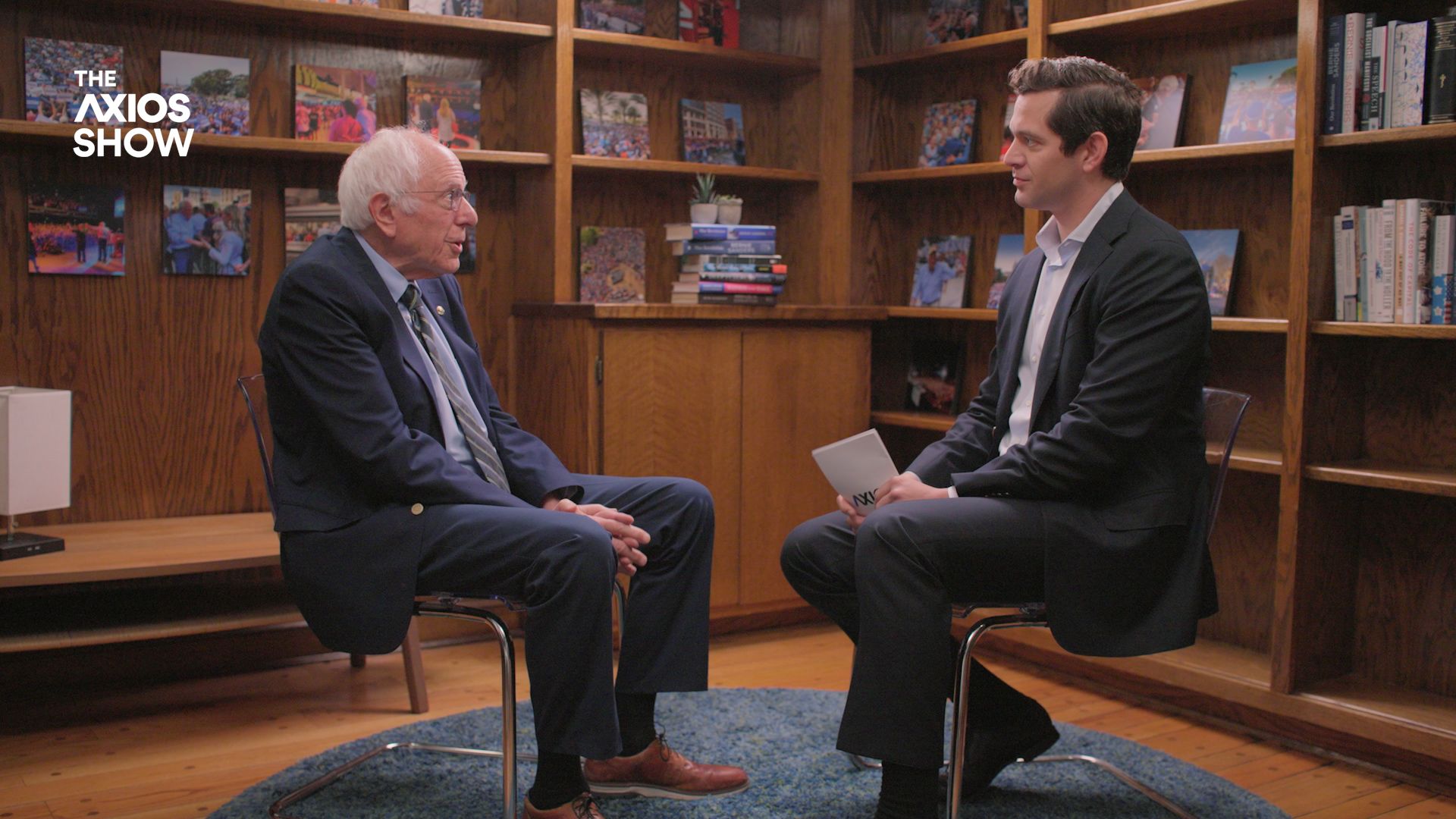
Sen. Bernie Sanders (I-Vt.) thinks the government should break up OpenAI, he told Axios' Alex Thompson on Episode 5 of "The Axios Show," which drops this morning.
- Why it matters: OpenAI is making a bid for total tech supremacy with new products like its web browser and social media app, bringing it closer to the same antitrust territory that has haunted Microsoft and Google for decades.
The big picture: Sanders is the first prominent Democrat to suggest that the government should intervene in OpenAI.
- Given his popularity, the senator's thoughts on regulating AI companies could quickly become a 2028 litmus test for Democrats.
🎞️ What Sanders said: Asked if he thought OpenAI and ChatGPT should be broken up, he said, "I do."
- "But it's a deeper issue than that," Sanders added. "We gotta be prepared to deal with it in all of its complexity."
- He laid out a full serving of all of his AI worries, including loss of jobs, atrophied communication skills, problematic AI companions and superintelligent AI that supersedes human intelligence and can take over.
- "This is not science fiction," he said.
The other side: It would be unprecedented to split up such a young company in a hyper-competitive market.
OpenAI's head of policy communications, Liz Bourgeois, told Axios that the company "is building in a field shaped for decades by a few large technology companies with deep resources and structural advantages."
- "Our growth reflects something simple: people find what we're building useful. This is what healthy competition looks like in the U.S. — offering better choices," she added.
3. ⚠️ New AI warning for parents, kids

A new threat is emerging for children and their parents: AI-generated child pornography based on publicly available photos from social media.
- Why it matters: A wave of fake but socially destructive images is overwhelming parents, schools and law enforcement across the country.
🔬 Zoom in: This week, a Virginia man was sentenced to 35 years in prison for copying photos of kids he knew and using an AI tool to create pornographic images. He used a messaging app called Kik to share them.
- Similar incidents have popped up everywhere from Iowa to suburban Philadelphia and Long Island.
- Earlier this year, a Kentucky teen died by suicide after being blackmailed with AI-generated images, according to ABC News.
Between the lines: It's not just adults. Teens are becoming both targets and creators of AI-generated sexual images.
- In 2023, a firestorm erupted in a New Jersey town after a group of high school boys shared AI-generated nude photos of female classmates in a group chat, The Wall Street Journal reported.
🧮 By the numbers: One survey by Thorn, a nonprofit that creates software that can detect and address child sexual abuse content, found that 10% of teens said they personally knew someone who had deepfake nude imagery created of them.
- A separate report by the Center for Democracy and Technology found that 15% of students in high school were aware of at least one case of a deepfake nude image.
4. ⚡ Scoop: Inside Trump's security scare
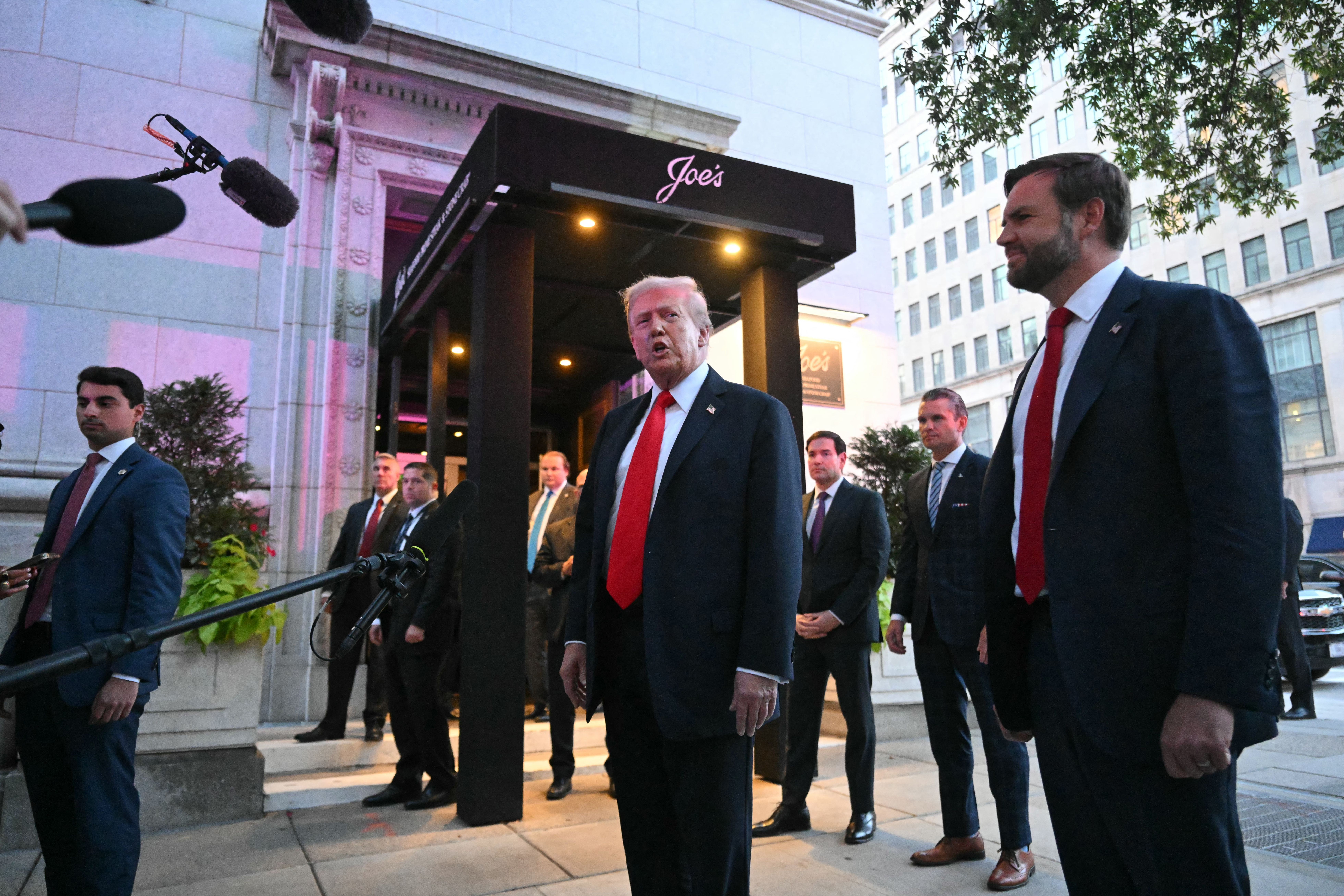
After protesters got within a few feet of President Trump at a D.C. restaurant last month, his team was so alarmed it had a tense talk with Secret Service officials about Trump's security, Axios' Alex Isenstadt has learned.
- Trump rarely makes such unannounced appearances in D.C. But top advisers say the Sept. 9 incident at Joe's, a seafood restaurant near the White House, has made surprise pop-ins by Trump much less likely.
Why it matters: The episode illustrates how Trump's security remains a major — and especially sensitive — concern 15 months after he narrowly escaped an assassination attempt while campaigning in Butler, Pa.
🔭 The fallout: Trump and White House chief of staff Susie Wiles were infuriated by the incident. White House officials were particularly alarmed that knives on the restaurant's tables were near the protesters.
- Trump aides say that for now, they have quashed any plans for Trump to do any "OTRs" — the internal code used to describe events that aren't pre-announced to the public.
5. 👀 Pro-Trump tech investor blasts crypto pardon
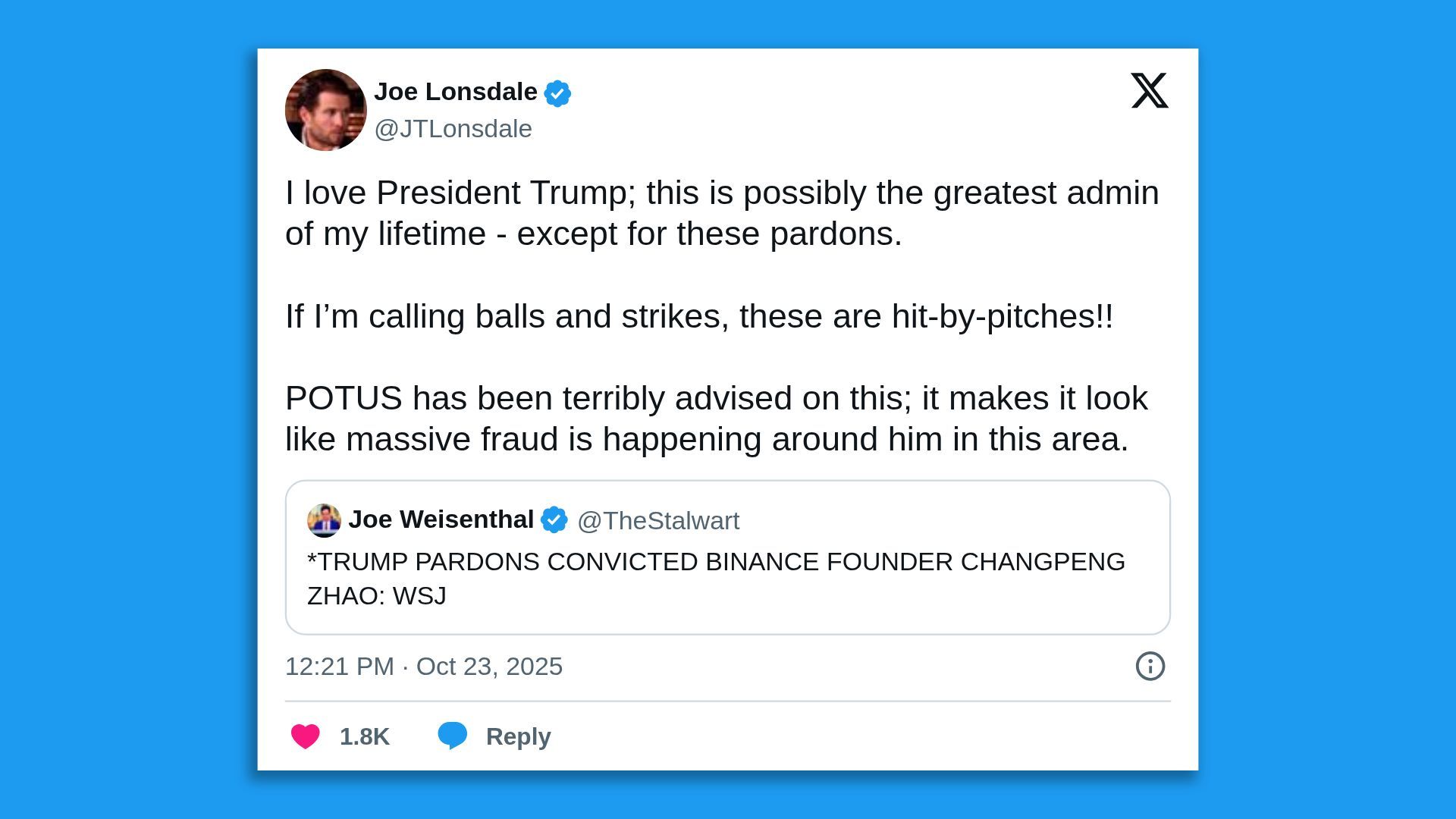
Joe Lonsdale, one of President Trump's loudest and richest supporters, spoke out against yesterday's pardon of crypto billionaire Changpeng "CZ" Zhao, who had been convicted of violating anti-money laundering laws and sentenced to four months in prison, Axios Pro Rata author Dan Primack writes.
- Why it matters: The call is coming from inside the MAGA house, which is unusual on its own, and reflects quieter complaints about the Trump family's crypto empire.
Lonsdale, a Texas-based venture capitalist and Palantir cofounder, tweeted: "I love President Trump; this is possibly the greatest admin of my lifetime - except for these pardons. If I'm calling balls and strikes, these are hit-by-pitches!! POTUS has been terribly advised on this; it makes it look like massive fraud is happening around him in this area."
- In response to a commenter, Lonsdale added that "the goal of this post is to influence future policy in a positive direction," and that he was also concerned about an earlier pardon for disgraced Nikola CEO Trevor Milton.
The intrigue: Trump's family has business ties to Binance, the world's largest crypto exchange, which Zhao founded and led before his conviction.
- Earlier this year, Trump's SEC dropped charges against the company.
6. 📚 Exclusive: How Alex Karp went full MAGA
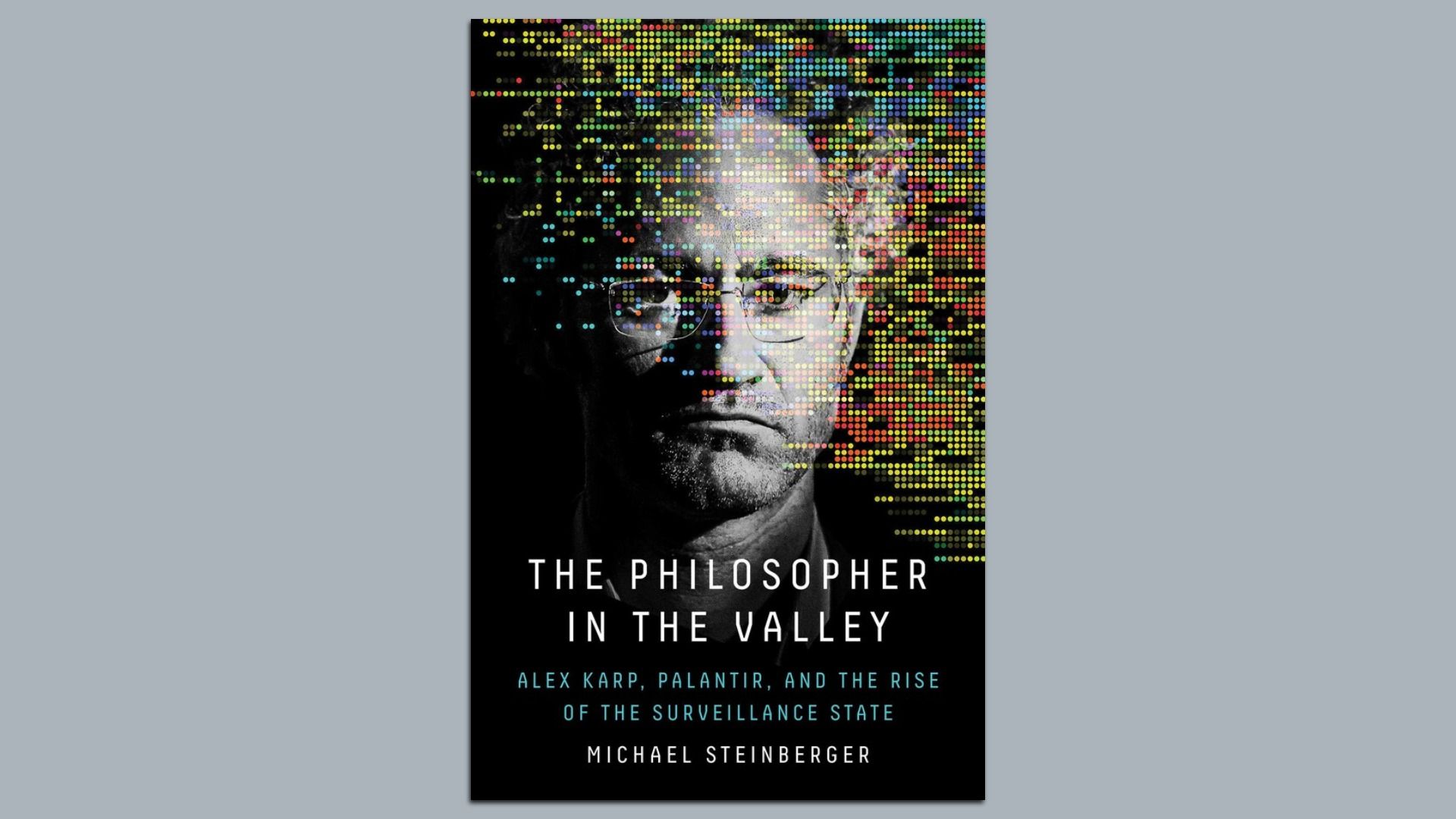
In a new book about Palantir and its CEO Alex Karp, journalist Michael Steinberger chronicles how a self-described leftist who said his "biggest fear is fascism" became one of the tech leaders powering President Trump's agenda, Axios' Maria Curi writes.
- Why it matters: Karp is among a host of tech billionaires who were once harsh critics of Trump, but now fully embrace him.
The company has been at the center of issues dominating Trump's presidency, including DOGE, ICE deportations, Gaza, Iran and AI.
🦾 Behind the scenes: In "The Philosopher in the Valley," shared first with Axios and out Nov. 4, Steinberger offers extraordinary access to the CEO of one of the most powerful data software companies.
- He interviewed Karp during his workouts, met him in cities across the country and abroad, and picked the brains of the people who surround him.
"I don't want to have endless conversations about Trump because the other side is totally irresponsible," Karp says in the book.
- "They won't do anything on immigration or Iran. They talk all the time about racism but won't talk about antisemitism," Karp, who is biracial and Jewish, told Steinberger.
- "I'm sick and tired of left-wing people fostering right-wing populist movements because they won't be adults about these issues."
Steinberger wrote that Karp welcomed liberal scorn: "Being unpopular pays the bills," Karp told him.
7. 🔋 Charted: Green stock rebound


Green energy stocks are making a comeback despite political headwinds, Axios' Amy Harder writes from new data by research firm Rystad Energy.
- Why it matters: Conventional wisdom suggests that clean-energy companies are down and out, with President Trump repealing a raft of policies supporting them. But the stock reality says otherwise.
The green energy index, a collection of 83 public companies in the cleantech space, is up by 40% this year, beating the total return of the S&P 500 by 25 percentage points.
8. 🛰️ 1 for the road: East Wing satellite pics

New satellite images taken yesterday show the demolition of the White House East Wing, which workers completed yesterday to make room for President Trump's $300 million ballroom. (Look to the right of the main building!)
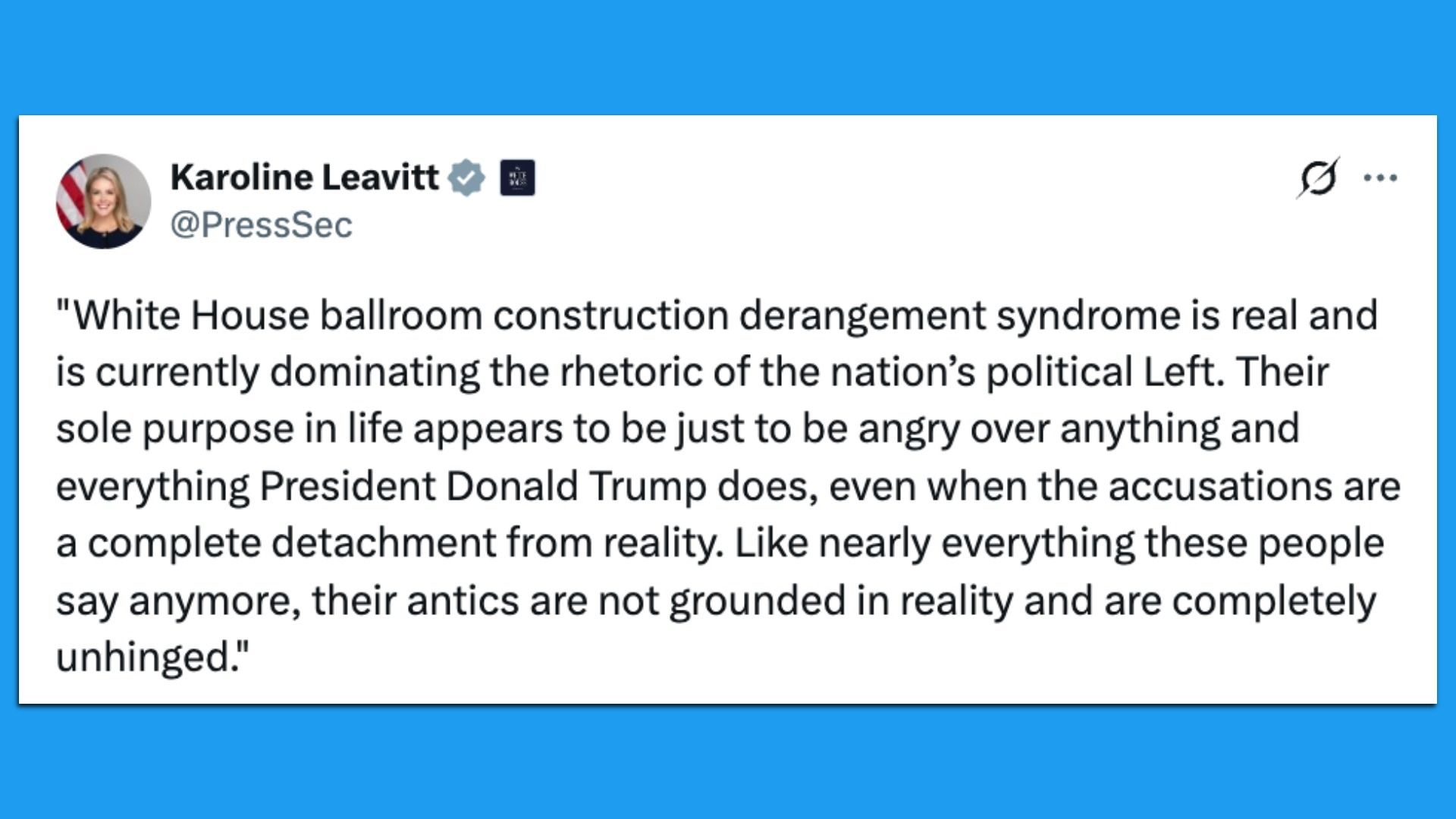
The privately funded addition (planned for 90,000 square feet) could dwarf the main structure (55,000 square feet).

📜 123 years of history: In what's essentially an obit for the East Wing, the N.Y. Times' Elisabeth Bumiller writes that the ground floor "housed the White House visitors' office and the Office of Legislative Affairs, while the second floor was home to the White House Military Office and the offices of the first lady, her staff and the calligraphers."
- "Presidents watched the Super Bowl and showed movies before their release in the theater in the colonnade, which was used as a coat check for big events. During holiday parties, a band would often play Christmas carols just outside the East Wing entrance as guests arrived."
Keep reading (gift link).
📬 Thanks for reading! Please invite your friends to join AM.
Sign up for Axios AM