Axios AM

June 06, 2026

👟 Hello, Saturday! Smart Brevity™ count: 1,407 words ... 5½ mins. Thanks to Erica Pandey for orchestrating. Edited by Katie Lewis.
🏀 The New York Knicks beat San Antonio again last night, squashing a late fourth-quarter comeback by the Spurs to win Game 2, 105–104. The series moves to Madison Square Garden on Monday.
- Today's N.Y. Post cover: "HALFWAY TO HEAVEN."
1 big thing: Revenge of the AI bubble

The AI bubble debate has lurched through at least three frenzied phases in the span of three years, Axios' Zachary Basu writes.
- Suspicion: Historic sums of capital poured into AI before anyone proved it could reliably automate work. A violent market correction felt inevitable.
- Mania: Claude Code and autonomous agents made the early skepticism look outdated, fueling a corporate scramble to embed AI everywhere and maximize usage.
- Reckoning: Companies discovered that AI can be extraordinary when aimed precisely — and ruinously expensive when treated as a universal productivity machine.
Why it matters: The first phase doubted the technology. The second phase worshipped it. The third phase — currently gaining steam across Corporate America — questions whether AI's immense power is worth the price.
🔎 Zoom in: The case against AI used to come from outsiders — Luddites, "doomers," short sellers betting on a crash. Its newest skeptics are emerging from inside the boom.
- Uber capped employee AI usage after burning through its annual Claude Code budget in four months. A top executive said the spending was getting "harder to justify," with no clear link between token use and more useful consumer features.
- Amazon shut down an internal token leaderboard after employees gamed it with throwaway tasks to climb the rankings. An Amazon executive told staff, "Please don't use AI just for the sake of using AI."
- GitHub moved Copilot, the AI coding assistant used by millions of developers, to usage-based billing as part of its effort to create a "sustainable" business. The change shocked users who were suddenly confronted with the true cost of heavy AI usage.
- Bain surveyed 951 large companies and found AI savings falling well below projections, even as most firms planned to spend more. "The technology worked. The value didn't arrive," the report concluded.
The intrigue: Even OpenAI CEO Sam Altman has acknowledged the new concerns, calling the question of whether AI spending will show up in revenue "the most fair criticism" of the moment.
🎯 Reality check: The companies sounding the alarm are the early adopters. Most of the economy is still at the starting line, while the pioneers are the ones absorbing the cost shocks, wasted tokens and employee backlash.
- AI is already creating real value for chipmakers, model labs and some power users. The harder question is whether that value spreads across the companies paying to deploy it.
By the numbers: Wall Street got a fresh reminder yesterday of how much AI optimism is baked into markets.
- The Nasdaq plummeted 4.2%, recording its worst day and worst week in more than a year. The Philadelphia Semiconductor Index plunged 10.3%, its worst day in more than six years.
- One culprit was Broadcom: The chipmaker reported explosive AI growth, but failed to raise its longer-term AI revenue outlook — disappointing investors looking for signs that demand was still accelerating.
The bottom line: AI can make the right worker dramatically more productive, but those gains depend on knowing exactly where and how to apply it. The real bubble may have been the assumption that AI could be sprayed across companies, employees and workflows and reliably pay for itself.
2. 🦾 Trump: U.S. stake in AI giants could be "beautiful thing"
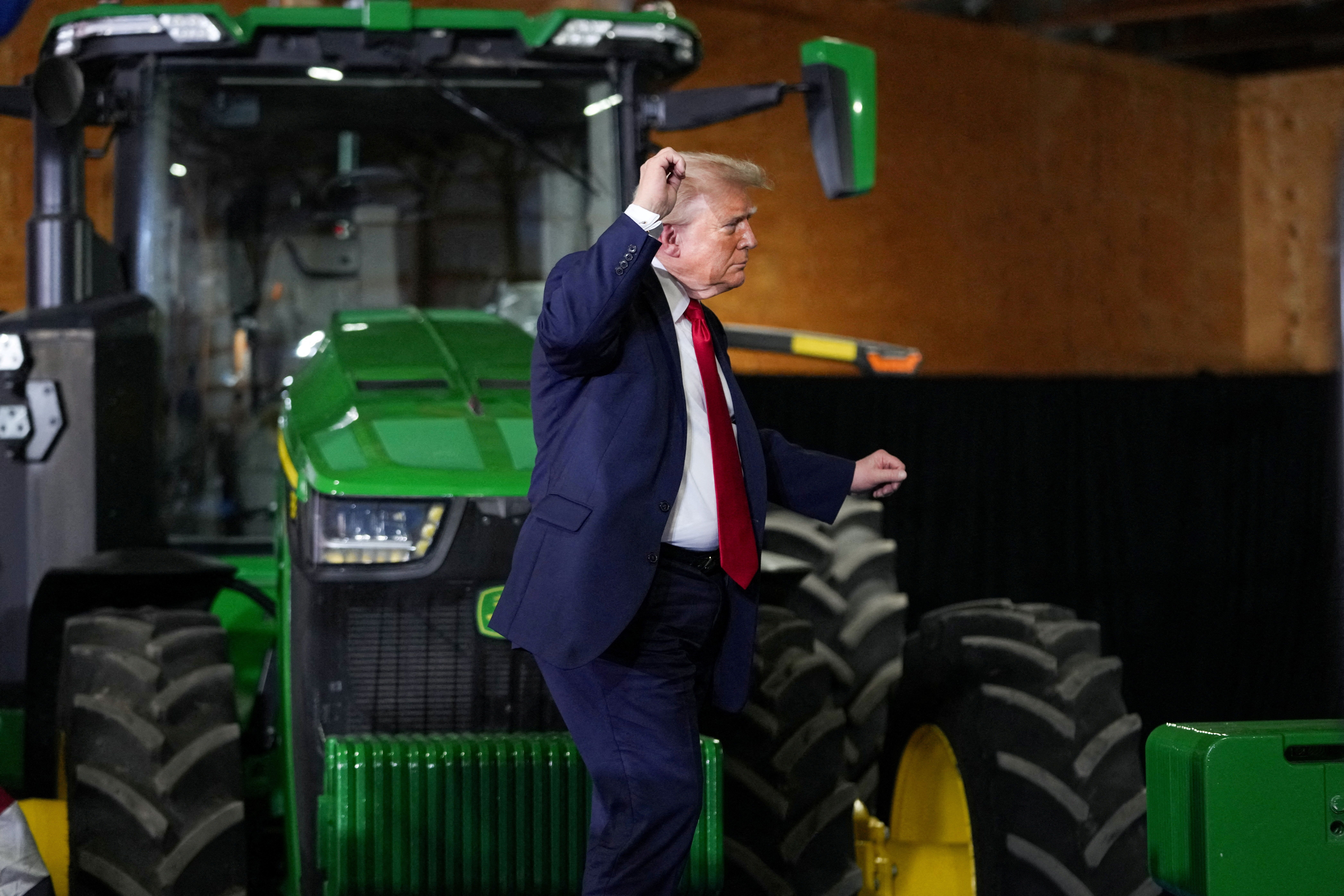
President Trump surprised tech CEOs by suddenly pushing the idea of the U.S. taking a small ownership stake in AI giants, so the American people share in the upside of what will be trillion-dollar companies.
- "There's something very interesting about it, where it almost becomes a partnership with the American public," Trump told reporters aboard Air Force One yesterday. "It's like you make them [partners] in this revolution. It would be a beautiful thing. ... It would make 'em rich."
Why it matters: OpenAI CEO Sam Altman has pushed this idea with the Trump administration over the past year. Sen. Bernie Sanders (I-Vt.) reignited the conversation this week when he proposed giving the public a "direct ownership stake" in top AI companies via a one-time 50% tax, paid in stock.
- Of course, industry advocates of the idea would favor giving up much less for an AI public wealth fund — 1%-5% stakes have been kicked around.
Between the lines: AI is broadly unpopular in the U.S. Some industry leaders, and now clearly Trump, think the technology's image would improve if all Americans participated in this mind-boggling wealth creation.
Ahead of the expected stock offerings by Anthropic, SpaceX and OpenAI, Trump said there's "so much money, and it's so big, that there are concepts where pieces could be given to the American public, where the American public essentially becomes a partner ... with the companies."
- "We'll look into that," Trump said. "We're talking about it, where the American people can benefit from the success of AI. And by doing that, they're gonna like it better. ... We're leading China. We're leading everybody in the world with AI, and we want to keep it that way."
💡 The backstory: Altman has pushed the concept in private conversations with administration officials, then in a proposal for an AI New Deal, then on Capitol Hill this week when he visited Sanders and leaders of both parties.
- A "Public Wealth Fund" was one of the provocative ideas in OpenAI's "Industrial Policy for the Intelligence Age," out in April.
🤝 When a reporter asked Trump about embracing a proposal by Sanders, a democratic socialist, the president touted his economic populism. "As far as economics is concerned," Trump said, "we have certain things that aren't that far apart. People are surprised."
3. 🤖 RSI 101: AI unleashing itself

AI giants are beginning to discuss "recursive self-improvement" (RSI) — when AI builds itself. Brian, an AM reader in Alexandria, Va., asked us for an explainer. Voilà:
AI could soon take control of its own development, eliminating the need for a human in the loop.
- Why it matters: The concern is that AI designing, training and improving itself — "recursive self-improvement" or RSI — will outpace the ability of humans to monitor, control or govern the technology, Axios' Maria Curi writes.
🛠️ How it works: Instead of the sci-fi scenario of AI writing its own code, a more likely scenario is the automation of AI R&D.
- This is already happening: AI labs are using current models to build future ones.
4. 💰 Chart du jour


The S&P 500 (-2.64%) and Nasdaq (-4.18%) each had their worst single-day drops of the year yesterday after a stronger-than-expected jobs report triggered a market selloff.
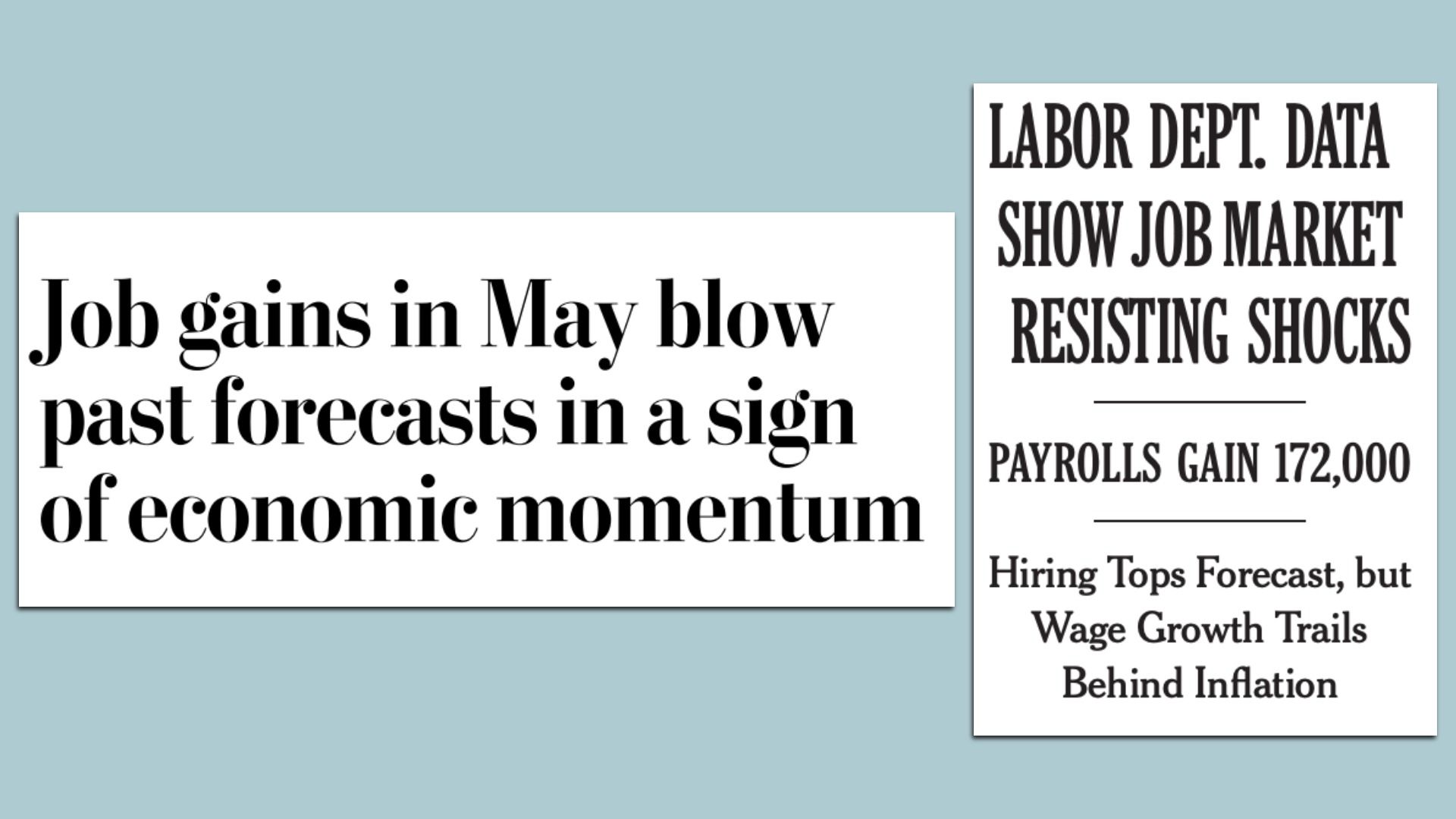
- More on markets ... Jobs Day.
5. 🗳️ Becerra makes California runoff
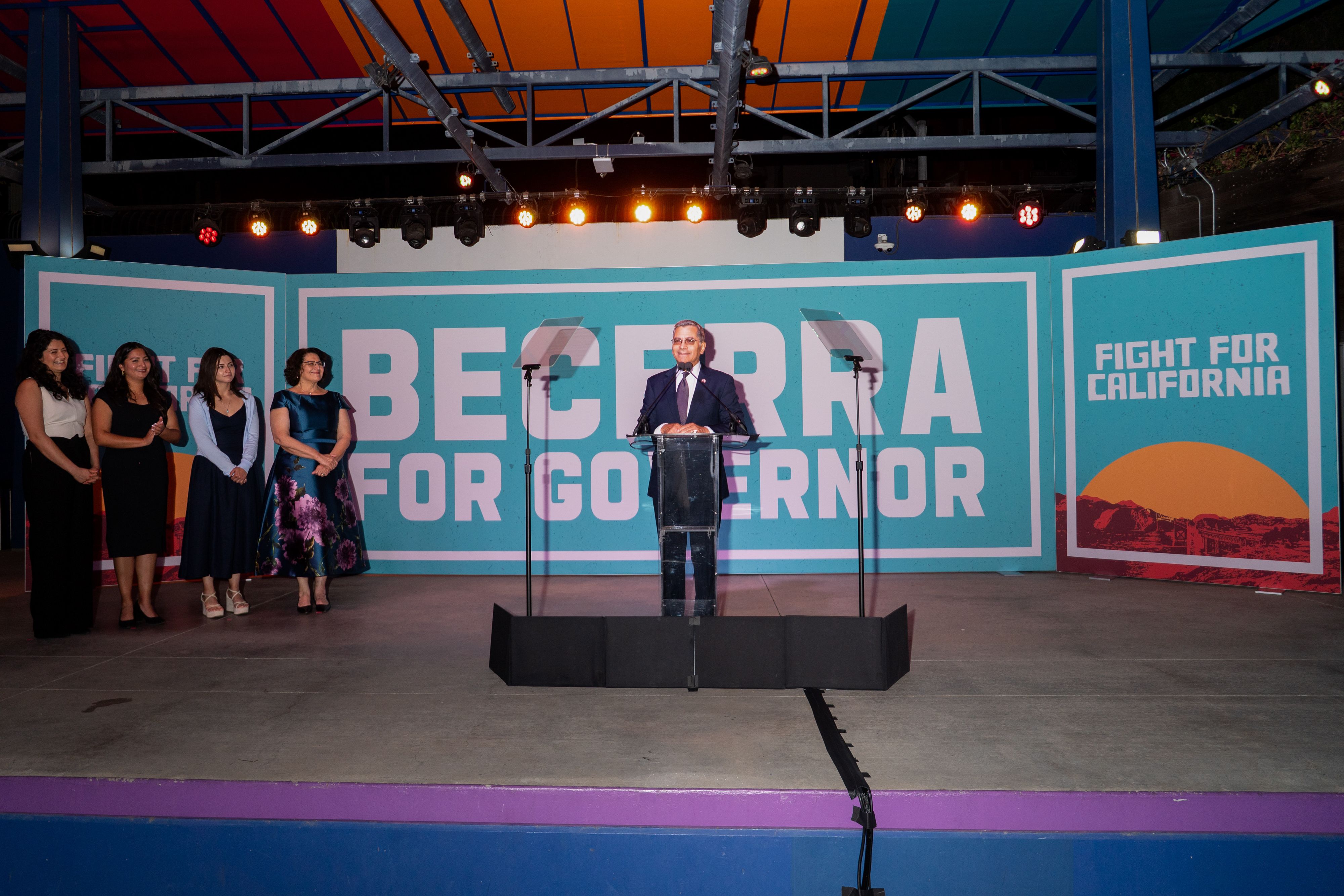
Democrat Xavier Becerra advanced to the general election for California governor yesterday after pitching himself as an experienced choice to lead the nation's most populous state and succeed term-limited Democratic Gov. Gavin Newsom.
- Republican Steve Hilton, a former Fox News commentator backed by President Trump, remains in second place and appears on track to face Becerra in November.
6. ⚽ Trump's immigration enforcers play host
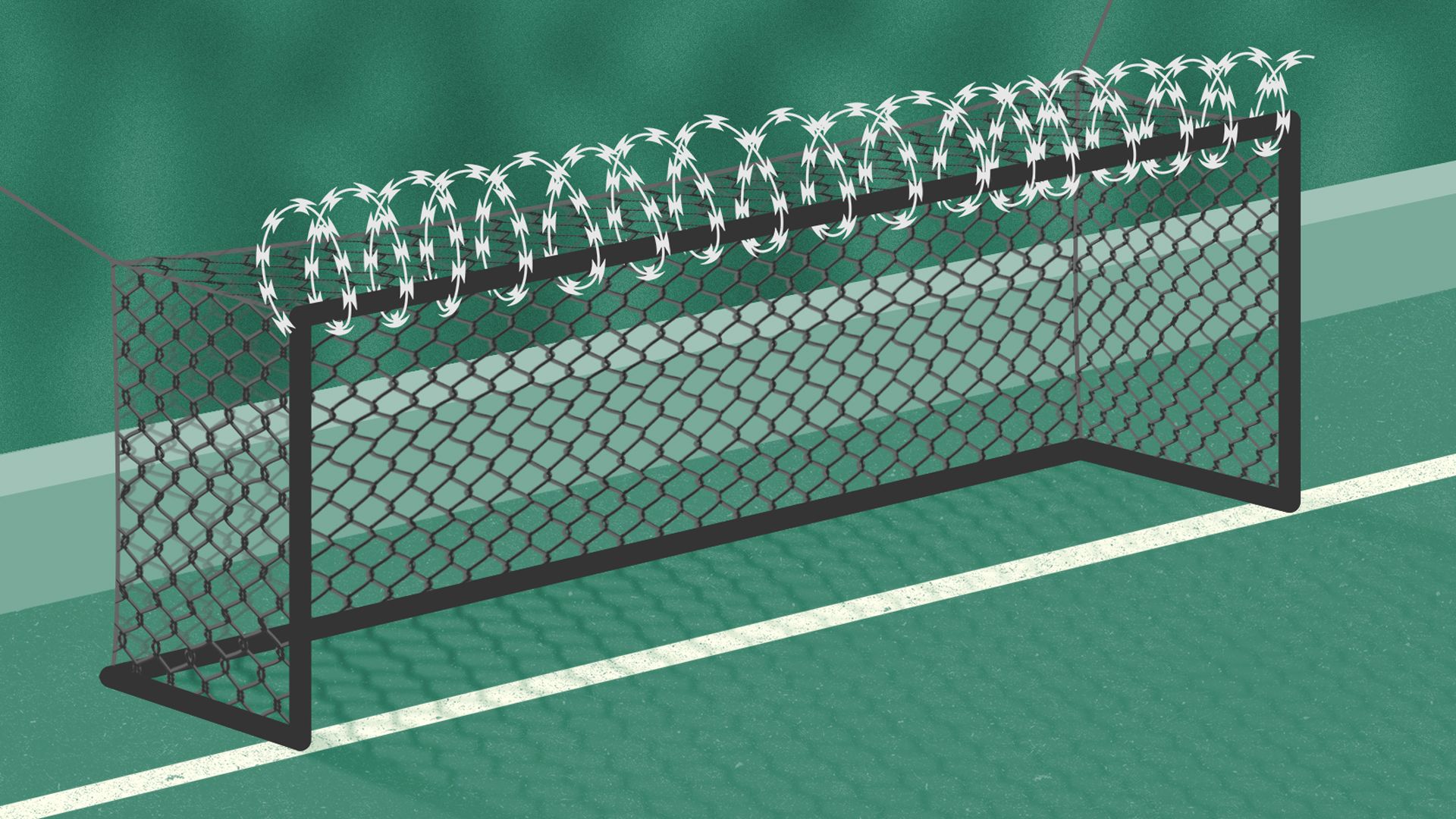
The agency driving President Trump's mass deportation campaign is now preparing to welcome millions of foreign visitors at the World Cup, Axios' Brittany Gibson writes.
- Why it matters: Next Friday's World Cup kickoff in L.A. will trigger a wave of arrivals who'll come face-to-face with the Department of Homeland Security and the immigration system.
Activists, fans and a former FIFA president have cautioned against coming to the U.S., claiming visitors should fear racial profiling, surveillance, and even ICE detention.
- DHS Secretary Markwayne Mullin pushed back on those concerns in a CBS News interview, saying ICE won't be there to "round up" immigrants at matches.
The Trump administration has softened some restrictions to make travel possible for players, staff and fans.
- Iran and Haiti, both on the travel ban list, will field teams this summer. Fans from Algeria, Cabo Verde, Côte d'Ivoire, Senegal, and Tunisia will be able to avoid paying a $15,000 visa bond (to discourage visa overstays) with their proof of match ticket.
7. 🛍️ Why returns are surging
Apparel retailers are fielding a sudden flood of returns from customers who are getting slimmer due to weight-loss drugs, Axios' Nathan Bomey writes.
- Why it matters: "Returns are among the biggest profit-killers for retailers, particularly online businesses," The Wall Street Journal reports (gift link). "Shipping, labor and warehousing costs add up. And items sent back might be out of season, meaning retailers have to resell them at a discount."
👖 Those taking GLP-1 drugs can drop sizes as quickly as once a month.
- Returns for medium, large and extra-large clothes are surging the most, Impact Analytics told the Journal.
8. 🇺🇸 1 for the road

Construction is underway along the full length of the National Mall for celebrations of America's 250th birthday, 28 days from now.
📬 Thanks for reading! Please invite your friends to join AM.
Sign up for Axios AM