Axios AM

August 25, 2026

☕ Hello, Tuesday! Smart Brevity™ count: 1,341 words ... 5 mins. Thanks to Shane Savitsky for orchestrating. Edited by Carolyn DiPaolo and Andrew Pantazi.
🗳️ It's runoff day in South Carolina's GOP Senate primary, likely deciding who succeeds the late Sen. Lindsey Graham: his sister, Sen. Darline Graham, or Rep. Ralph Norman. What to watch tonight in South Carolina ... Georgia ... Oklahoma.
1 big thing: Trump's D-Day becomes a waiting game

President Trump's "economic D-Day" for Iran came and went yesterday with little of the shock or awe it promised, amounting instead to yet another extended ultimatum, Axios' Zachary Basu writes.
- Why it matters: Operation Economic Outcast will unfold not like the Allied invasion of Normandy, but as a sweeping, slow-burn sanctions campaign that could eventually lock Iran's foreign enablers out of the U.S. financial system.
Zoom in: Treasury Secretary Scott Bessent kicked off the operation by blacklisting more than 60 Iran-linked targets and widening the reach of secondary sanctions. "Every country has a defined timeline to shut down activities we have identified," he said.
- Bessent declined to name specific countries or deadlines, saying the administration preferred "quiet diplomacy" before resorting to "the hammer of U.S. Treasury actions."
- "Why would I want to blow up the global financial system?" he told reporters when pressed on the gradual rollout, saying countries deserve a chance to change their behavior.
🇨🇳 Between the lines: The real test will be China, which accounts for roughly 90% of Iran's exported oil and remains one of the regime's most important economic lifelines.
- If Trump follows through on his threats, secondary sanctions could force Chinese banks, refiners and shippers to choose between Iran and access to dollars, U.S. banks and markets.
The intrigue: Chinese President Xi Jinping is set to visit the White House on Sept. 24, giving Trump another reason to think twice before risking a new confrontation with the world's second-largest economy.
2. 🗳️ Mail-in maelstrom
The Supreme Court cleared the way yesterday for President Trump to implement parts of an executive order restricting mail-in ballots.
- Why it matters: The decision could complicate the midterms, putting election officials on a tight deadline to comply with potential changes, Axios' Josephine Walker and Avery Lotz write.
Catch up quick: Trump's order, issued in March, directed the Department of Homeland Security to compile lists of citizens eligible to vote and, separately, the U.S. Postal Service to craft rules restricting ballots to those on state-submitted lists of eligible voters.
- A coalition of Democratic state attorneys general challenged it, arguing that states administer elections under the Constitution.
🏛️ SCOTUS didn't decide whether Trump's order was legal, instead finding that states lacked standing to challenge the executive order because it was an "internal directive" that didn't harm the states that sued.
- The ruling was 6-3, with the three liberal justices dissenting.
What's next: The USPS is still blocked from implementing its rule changes for now due to a nationwide injunction in a separate case earlier this month.
3. 📝 Data center cheat sheet
A special look for AM readers at Axios CEO Jim VandeHei's deep dive on data centers — suddenly animating the midterms — published first in his weekly Axios C-Suite newsletter:
It's almost impossible to wrap your brain around the scale of the cash dedicated to the data center buildout — now the biggest capital project in human history. The key stats:
- 📈 Total online: About 4,000 and counting across the U.S., with 580 hyperscale facilities designed to handle the massive computing demands of tech giants.
- 🗳️ Total delayed by politics: At least 75 projects nationwide totaling roughly $130B in potential investment were impacted in Q1 2026.
- 💡 Average site capacity: 62 megawatts — nearly twice the power capacity of the typical site in Virginia at the end of 2024.
- 💰 Average cost to build: Roughly $2.1B-$2.4B all in for a 62-megawatt data center.
- 🧑💻 Average employees: About 50 to keep the average Virginia site running. That number balloons to a peak of 1,500 workers onsite during the 12–18 months of construction.
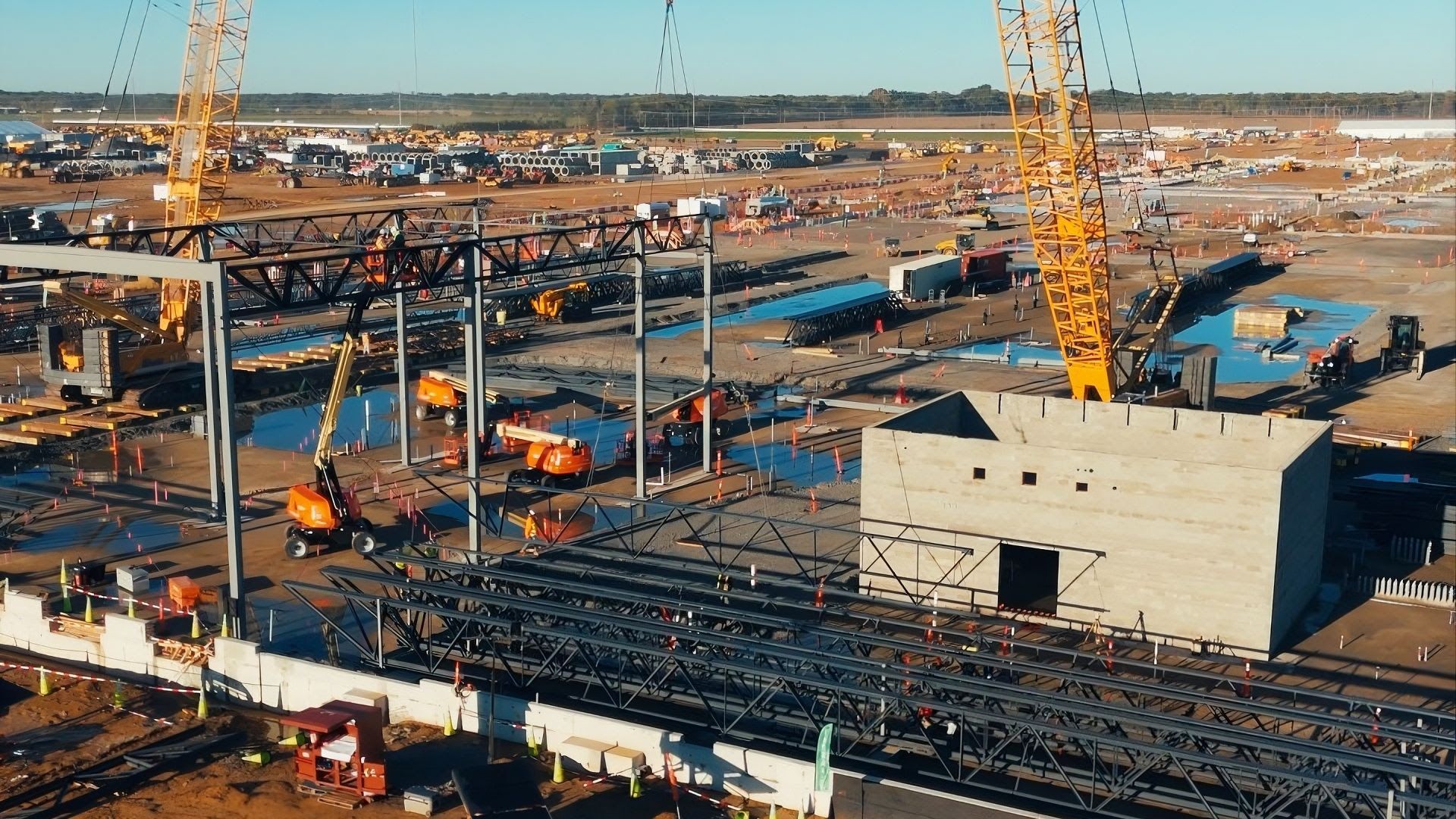
Between the lines: Yes, data centers guzzle both water and power, but one demand dwarfs the other.
- Water, overhyped: The water use of every data center in America in 2023 equaled less than 1% of the water used to irrigate the nation's agriculture that year.
- Electricity, underhyped: Their electricity use is likely more massive than you imagine — and still surging. Data centers used 4.4% of U.S. electricity in 2023. That's forecast to be 12% by 2030.
- 📈 If you're a CEO or on a CEO's team: Ask to join Jim's new weekly Axios C-Suite newsletter.
4. 🛂 Mass visa crackdown
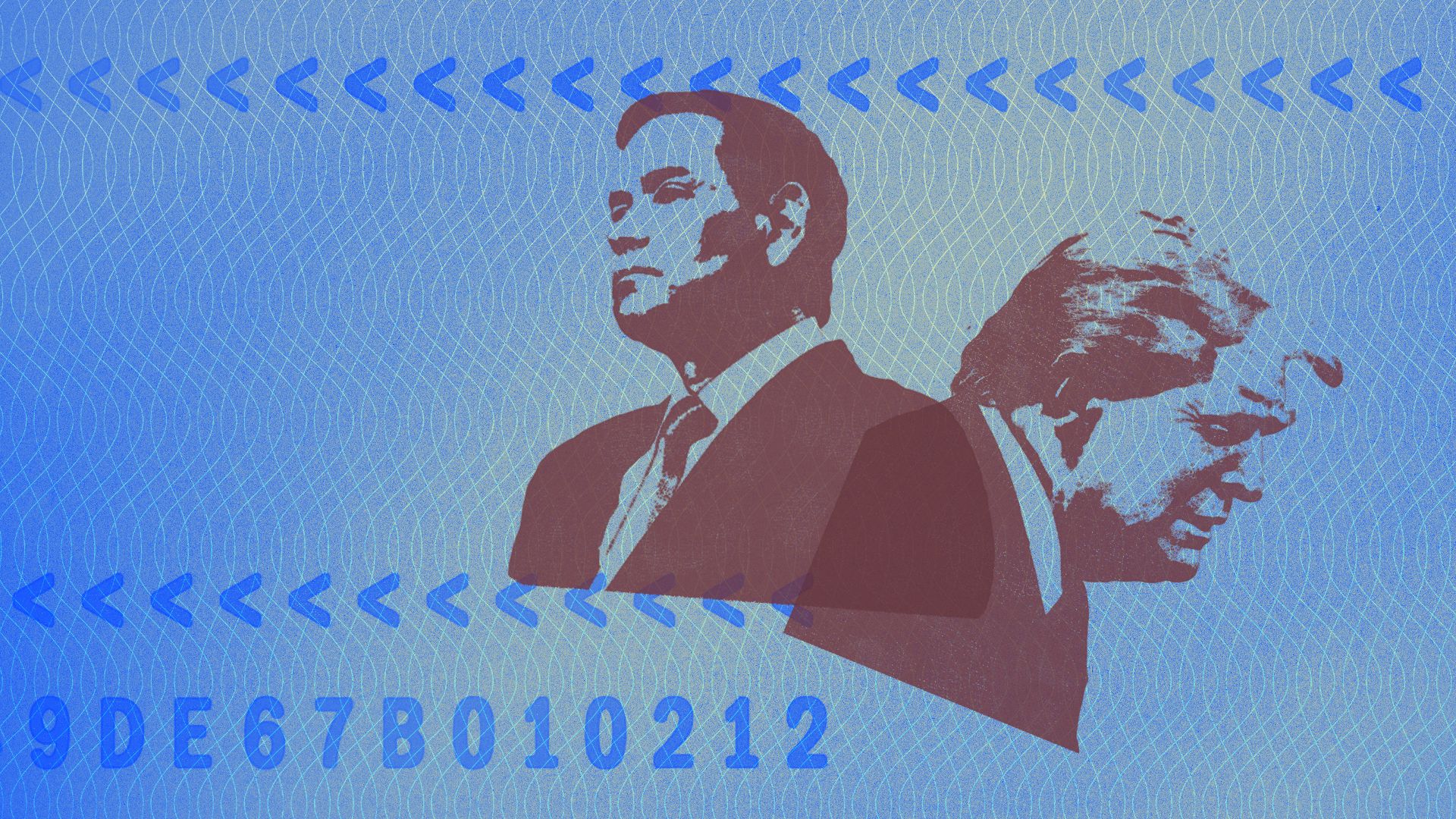
The Trump administration is preparing to revoke the business and tourism visas of up to 200,000 foreign nationals who have applied for or are seeking asylum in the U.S., AP's Matthew Lee reports.
Why it matters: If carried out, the move would be the largest single mass revocation of visas in American history — and would likely face legal challenges.
The big picture: The move would target asylum seekers on B1 or B2 visas that the administration argues were used as a pretext to enter the country.
- B1 visas are generally issued for business trips, and B2 visas are generally issued for tourism, family visits or medical care.
- Current applicants for the visas are asked to affirm that they won't apply for asylum and prove that they intend to return to their home countries.
What's next: The revocations won't necessarily result in immediate deportation, administration officials told AP.
- Most with pending asylum cases would be recategorized but would lose their status as business or tourism travelers.
5. 🇨🇦 Inflation fears point true north

The U.S.–Canada trade fight is shaping up to become an all-out trade war, threatening America's path to lower inflation, Axios' Courtenay Brown and Neil Irwin write.
What's going on: Neither side is backing down, with Canada expected to target politically sensitive U.S. sectors — like steel, dairy and agricultural equipment — with tariffs in the run-up to the midterms.
- Trade talks collapsed Friday night, triggering 50% U.S. tariffs on roughly $20 billion of Canadian goods, including wine, cement and dairy products.
- Canada's retaliation doesn't take effect until Sept. 8, leaving time for an off-ramp. But for now, neither side sounds interested in restarting talks.
The big picture: Economists had growing confidence that the inflation hit from Trump's tariffs was largely in the past.
- The new Canada tariffs — and any further tit-for-tat actions — threaten to revive those pressures just as the Iran war's energy shock pushes prices higher.
6. 🗽 Stat du jour: NYC booms as tech hub

New York City is home to more tech workers than San Francisco for the first time in CBRE's annual industry report.
- New York is the top destination for people who received a tech-related bachelor's degree in 2023.
🍎 What's happening: The Big Apple's tech boom is driven in large part by finance's embrace of AI, CNBC reports.
Worth noting: Though NYC leads SF in raw tech jobs, the Bay Area remains much more reliant on the industry overall.
- 10.7% of SF's workforce is in tech, compared to 4.2% of NYC's.
7. 🩻 Charted: America's ER waits
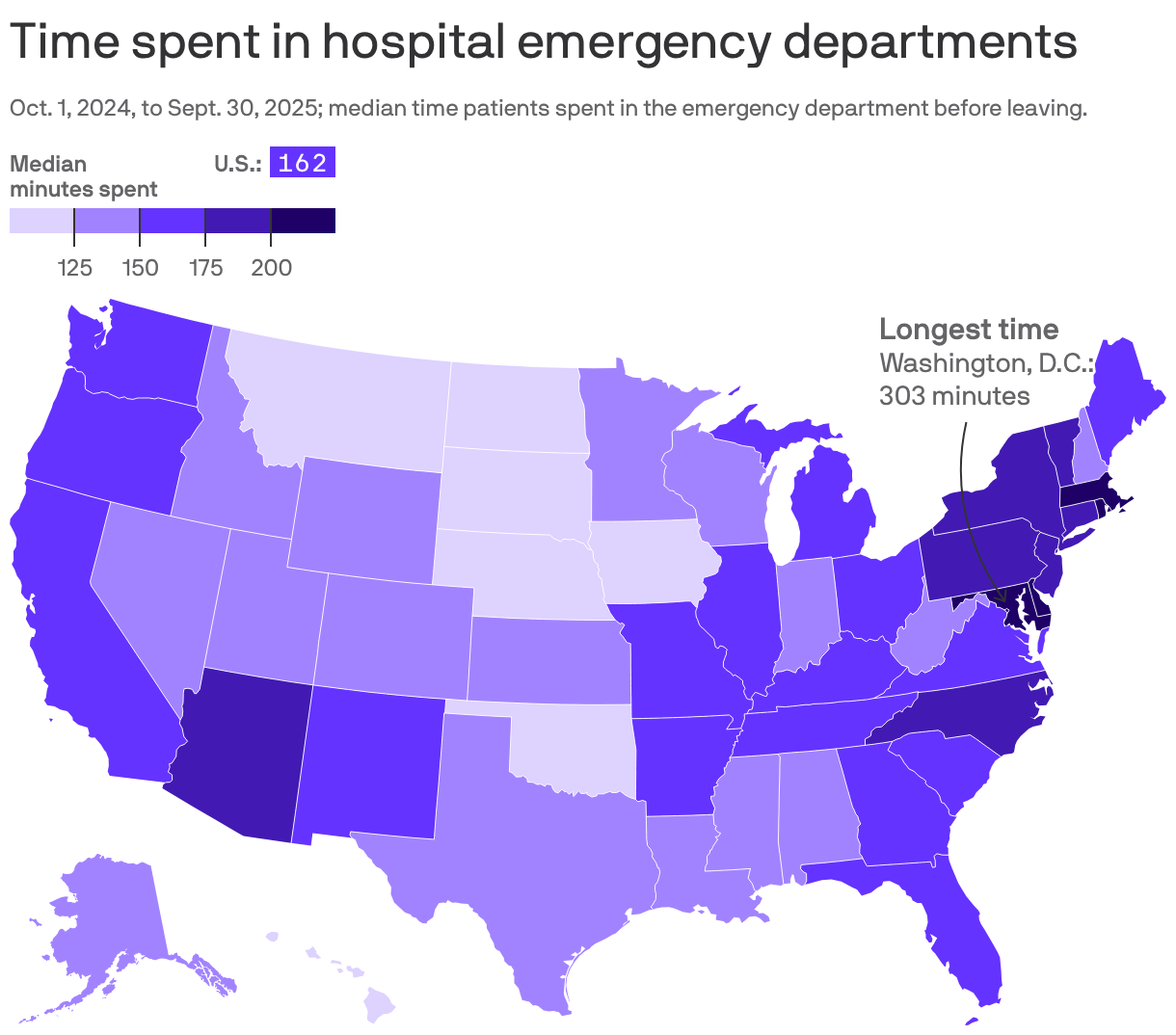
Americans now spend an average of more than 2.5 hours in hospital emergency departments, Axios' Maya Goldman reports from new federal data.
⏲️ The average time spent in the emergency department was 162 minutes.
- D.C. had the highest average visit length — 303 minutes.
- North Dakota had the lowest, with 110 minutes.
‼️ An average of 2% of patients nationwide left the ER before being seen.
8. 📺 1 trend to go: Nostalgic teen TV

Adults are finding a nostalgic summer escape in teen shows that evoke the good old days.
The latest: Amazon Prime Video renewed "Sterling Point" for a second season after it held the streamer's top spot for most of the month.
- It's Amazon's third coming-of-age renewal this year, along with "Off Campus" and "Every Year After," Deadline notes.
🇨🇦 The sun-drenched series on Canada's rural Lake Muskoka is part of a wave of teen shows that stash the phones and reference a more lo-fi past, The Guardian's Emma Madden observes:
- "At a moment defined by social media loneliness and atomization, they place love, sex and intimacy back within reach, creating analog worlds built around face-to-face connection."
📬 Thanks for reading! Please invite your friends to join AM.
Sign up for Axios AM