Axios AM

July 26, 2026

1 big thing: 100 days 'til Election Day


We're 100 days out from the '26 midterms. There are 18 true toss-up races for the House and four for the Senate, according to the latest ratings by the Cook Political Report with Amy Walter. Axios' Hans Nichols tells us what he's hearing on the Hill:
The House environment favors the Dems. The terrain favors Republicans.
- The same is broadly true on the Senate side — except the structural advantages are even greater for Republicans, Hans writes.
THE HOUSE: Currently 218 Rs, 212 Ds, 1 independent and 4 vacancies.
🫏 Why Democrats are upbeat:
- The polls. The latest Fox News poll has Democrats ahead by 7 points on the generic ballot. Toss in Democratic enthusiasm — and Democratic candidates outperforming 2024 nominee Kamala Harris in the vast majority of special elections — and you can see why House Republicans are privately so nervous.
- The cost of living. Yes, inflation has cooled. But prices have risen during the first two years of President Trump's current term, and that's especially true on the one billboard everyone sees — gas prices. The real political gift for Democrats is the direct link between $4-a-gallon gasoline and the unpopular war in Iran that Trump launched.
🐘 Why Republicans are cautiously optimistic:
- Redistricting. Add up all the mid-cycle redistricting in nine states, squint through a Republican lens, and you'll see nine new GOP seats. Put on Democratic glasses and assume Republicans are renting a few of those seats (especially in mostly Hispanic parts of the Rio Grande Valley) instead of owning them, and it looks closer to six seats.
- Either way, Republicans like where they ended up in the redistricting wars of 2026.
🌽 One key battleground: For House Minority Leader Hakeem Jeffries (D-N.Y.), the road to the majority runs through Iowa, which has been hit hard by inflation and retaliatory agriculture tariffs. On a good night this year, Democrats could pick up two seats.
- But if Republicans hold all four seats, it's hard to see Democrats winning the gavel.
THE SENATE: Currently 53 Rs, 45 Ds, and 2 independents who caucus with Ds.
👀 Why Republicans are upbeat: Democrats need to flip four seats — with North Carolina, Maine, Alaska and Ohio presenting the clearest path.
- In Maine, after populist Graham Platner flamed out, Democrats have an untested statewide candidate, ex-state Senate President Troy Jackson, against a proven winner, Sen. Susan Collins.
- If Democrats lose Maine, they'll need to win in three double-digit Trump states. If they lose Maine and Michigan, make that four states Trump won handily.
⚡ This brings us to the final wildcard of the Democratic primary season: the Aug. 4 showdown between Rep. Haley Stevens and progressive insurgent Abdul El-Sayed in Michigan.
- Stevens' money advantage is staggering — $50 million to $1 million on the PAC front in the last two months. And yet the race is tied in the polls.
Many establishment Democrats think El-Sayed — who has the support of progressive Rep. Alexandria Ocasio-Cortez (D-N.Y.) — is too far left to win a general election.
- El-Sayed's run for Senate is something of a proving ground for AOC, who's weighing a bid for Senate or president in 2028.
2. 🇮🇷 Trump pauses strikes

President Trump directed the U.S. military not to conduct new strikes in Iran on Friday, breaking a nearly two-week streak of daily attacks, Axios' Barak Ravid reports.
- Why it matters: It's unclear if Trump's order on Friday was a one-off or the start of a lull after 13 days of U.S. attacks.
💡 Between the lines: Trump's decision reflects that, short of a return to major combat operations, the current level of U.S. strikes has reached the limit of its effectiveness.
- If Trump orders a return to strikes, the U.S. military can mobilize on relatively short notice.
- The U.S. military is still preparing plans for a possible return to major combat operations, but Trump hasn't ordered it to move in that direction, the sources said.
How it happened: Every afternoon for the past two weeks, Trump has approved strike plans submitted by the military. They were conducted within hours. On Friday, Trump received a similar plan but didn't give a green light. Instead, he directed the military not to conduct strikes, the sources said.
- Shortly after the Friday directive, Trump told reporters at the White House that he could continue or even escalate strikes, including "knocking out everything they have."
- But he made clear that he thinks the "smarter strategy" is to "make a deal" with Iran. "We're talking to [the Iranians] right now," Trump said. "I think they're getting more and more serious as the days go by. We're locked and loaded and ready to go, but we're talking to them."
- That night, Trump said at the White House Correspondents' Association dinner that he doesn't think Iran is ready to make a deal at the moment, "but I'm willing to listen."
🇮🇱 Behind the scenes: The Israeli security cabinet and Israel Defense Forces expected another round of U.S. strikes Friday, and even prepared for a massive U.S. attack that could trigger retaliation against Israel, Israeli officials say.
- The cabinet and military didn't feel they had a full picture of what the U.S. would do, so they prepared for a major bombing offensive and remained on high alert.
- On Friday night, the Israelis were notified that Trump did not approve more strikes.
3. 🔮 What Sam will tell the White House

4. 🦞 It's on! Susan Collins vs. Troy Jackson

Troy Jackson, a former state lawmaker and logger, won the Democratic nomination for U.S. Senate in Maine yesterday and will face longtime GOP Sen. Susan Collins in November.
- Jackson, 58, will need to convince the state's large independent voting bloc that it's time to replace Collins, 73.
Jackson is a former Maine Senate president and fifth-generation logger from rural northern Maine. He campaigned alongside Graham Platner and was a favorite among progressives to replace him, AP reports.
- Republicans immediately launched an ad campaign accusing Jackson of having a volatile temper and linking him to Platner. The Senate Leadership Fund, Republicans' super PAC, plans to spend over $42 million against Jackson.
5. 🪧 Unions vs. AI

6. 🥬 Cyclosporiasis rising
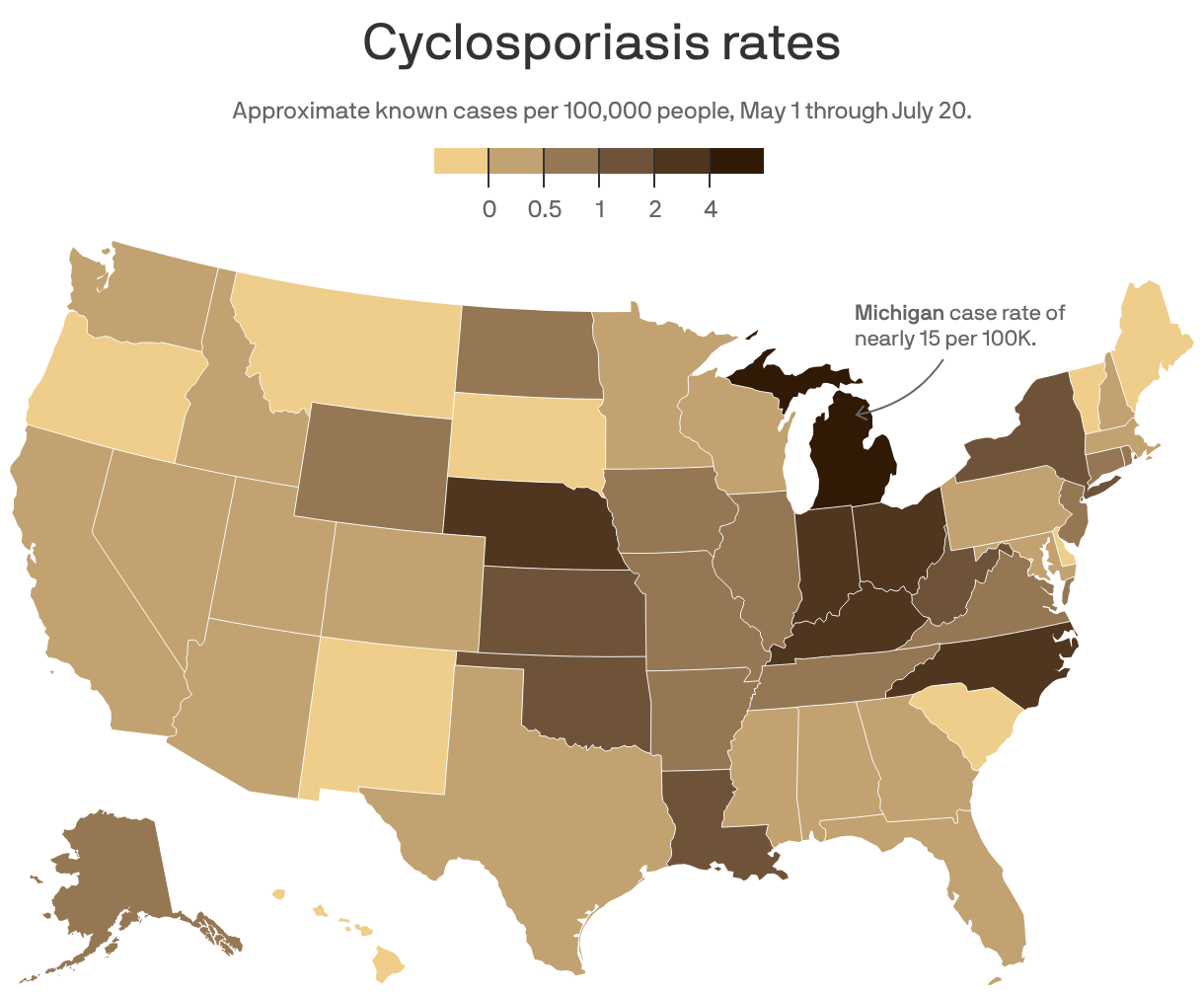
Cyclosporiasis cases have now been reported in at least 41 states, and infection rates continue to rise in the five states where the CDC has declared an outbreak.
- The CDC reported 4,173 confirmed cases in the U.S. between May 1 and July 20. Investigations continue to focus on contaminated iceberg lettuce as a source for the outbreak, Axios' Brad Jennings reports.
Between the lines: Case numbers are likely higher than the map suggests.
- The CDC notes that it's aware of at least 7,400 cases — many from Michigan and Ohio — that have not yet been lab-confirmed. Plus, some people who get sick never get tested for cyclosporiasis.
7. 🎮 Crisis for video-game industry

8. 🐸 1 for the road: Georgia swamp joins icons
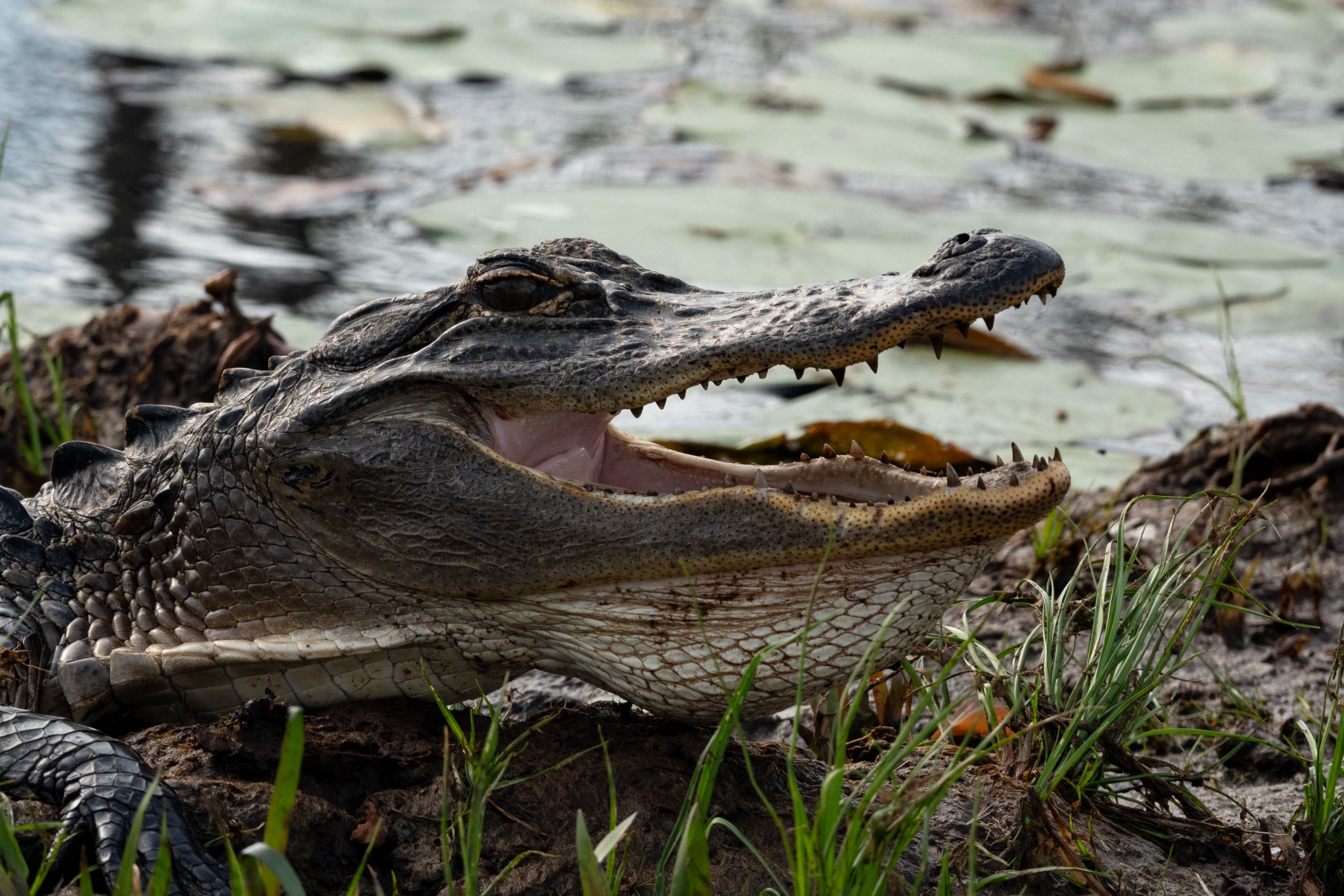
The latest UNESCO World Heritage site, joining iconic places like the Taj Mahal, the Great Wall of China and the Grand Canyon, is a swamp in Georgia — the 407,000-acre Okefenokee National Wildlife Refuge.
- "One of the South's last truly wild places, the Okefenokee is home to an astonishing array of wildlife, including black bears, red-cockaded woodpeckers and thousands of alligators. Its flora includes black gum trees and carnivorous plants with names such as hooded pitcher and golden trumpet," The Washington Post reports (gift link).
🌱 Why it matters: The swamp — one of the world's largest intact freshwater ecosystems — has faced threats from proposed mining projects for decades.
- As of yesterday, the Okefenokee is a UNESCO World Heritage site, recognized for its "outstanding universal value" to humanity, though the designation alone doesn't prevent future mining proposals.
The big picture: The Okefenokee is the only World Heritage site in Georgia and the 27th in the United States.
Axios AM