Axios AM

November 13, 2025

1 big thing: Fiasco of Trump's own making

Four months ago, President Trump blocked the release of the Jeffrey Epstein files. Yesterday's disclosure of thousands of Epstein emails showed why, Axios' Marc Caputo writes.
- Why it matters: The emails contained no real smoking gun. But they shed new light on the relationship between the two men, with gossipy, unflattering descriptions of Trump by Epstein.
Trump was put into a defensive crouch as the news dominated conversation on Capitol Hill, television and social media.
- The tranche of emails released by the House Oversight Committee all but ensured the GOP-run chamber would bend to public pressure and vote for a measure to release the investigative records Trump has tried to keep hidden.
The White House lobbied two key Republicans yesterday to drop their support for the effort, to no avail.
- Trump got personally involved: He called Rep. Lauren Boebert (R-Colo.) early Tuesday and reached out by phone to Rep. Nancy Mace (R-S.C.), the N.Y. Times reports. Trump and Mace were playing phone tag, a source told Axios.
🖼️ The big picture: Trump's reaction to the Epstein scandal is a window into how he handles major controversies that invite criticism about his leadership.
- Whether it's the current affordability crisis, COVID in 2020 or the Russia probe in 2017, he has a penchant for pushing back against attacks by calling them Democratic hoaxes or con jobs.
- He then tries to kill the controversy with such a heavy hand that it helps keep the story alive.
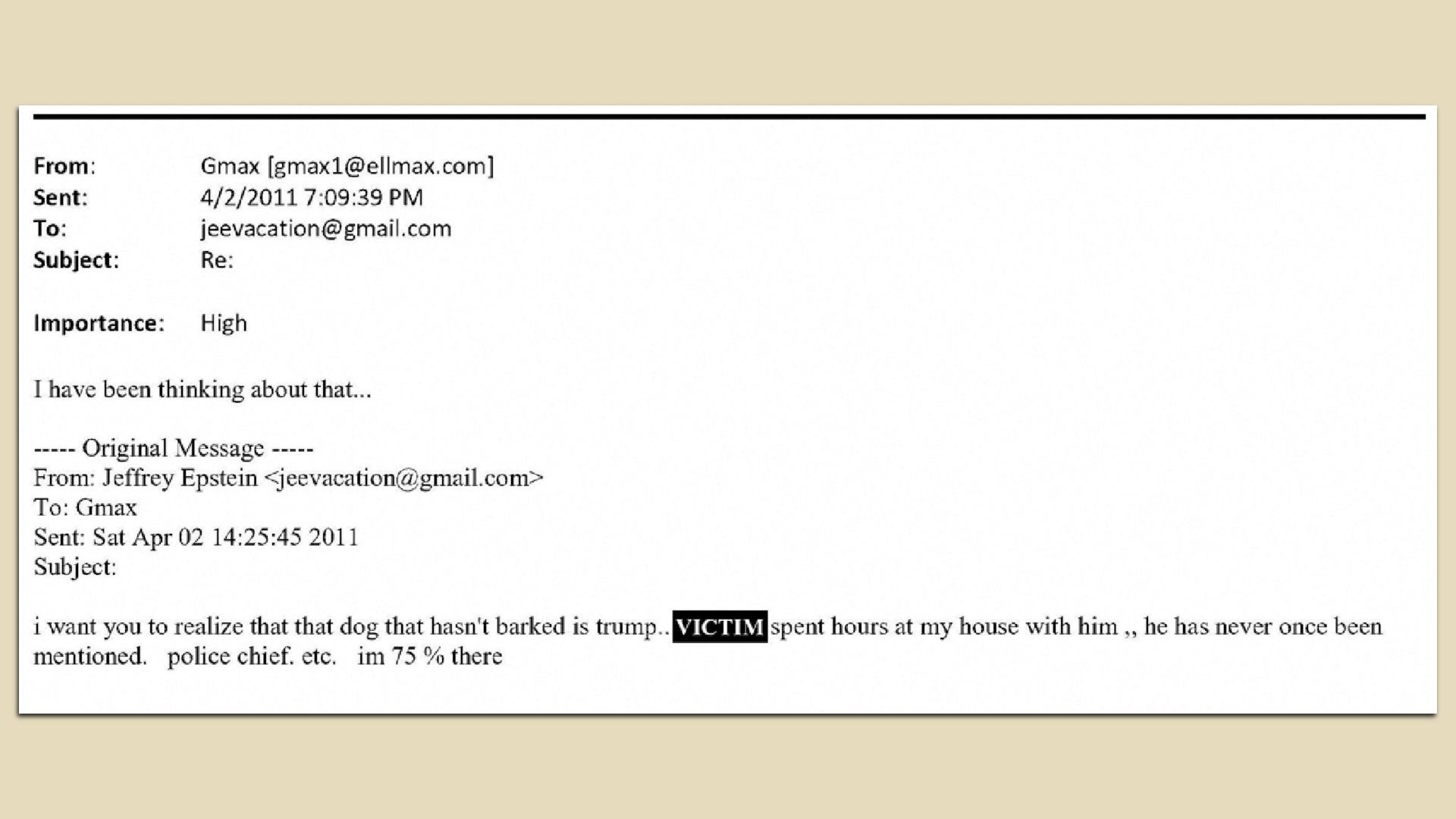
One confidant told us: "The minute he thinks it's unfair to him and it's a personal attack, he just goes into fight mode. No one wants to ask him what's going on here [with Epstein] because he just gets angry."
🔭 Zoom out: The Epstein files are an issue now because Trump and his top allies — from Vice President Vance to FBI director Kash Patel to Attorney General Pam Bondi — had promised to release the investigative files before Trump won the 2024 presidential election.
- That promise energized Trump's conspiracy-thirsty MAGA base, which saw the files involving Epstein — a convicted sex trafficker who died in prison in 2019 — as a chance to expose crimes among the rich and powerful.
Then in July, six months after taking office, Trump reversed course and forbade the release of the files.
- "He told Pam [Bondi] not to release the files. We don't exactly know why," said another Trump insider.
White House Press Secretary Karoline Leavitt said Democrats "selectively leaked emails" to "create a fake narrative to smear President Trump": "The fact remains that President Trump kicked Jeffrey Epstein out of his club decades ago for being a creep to his female employees."
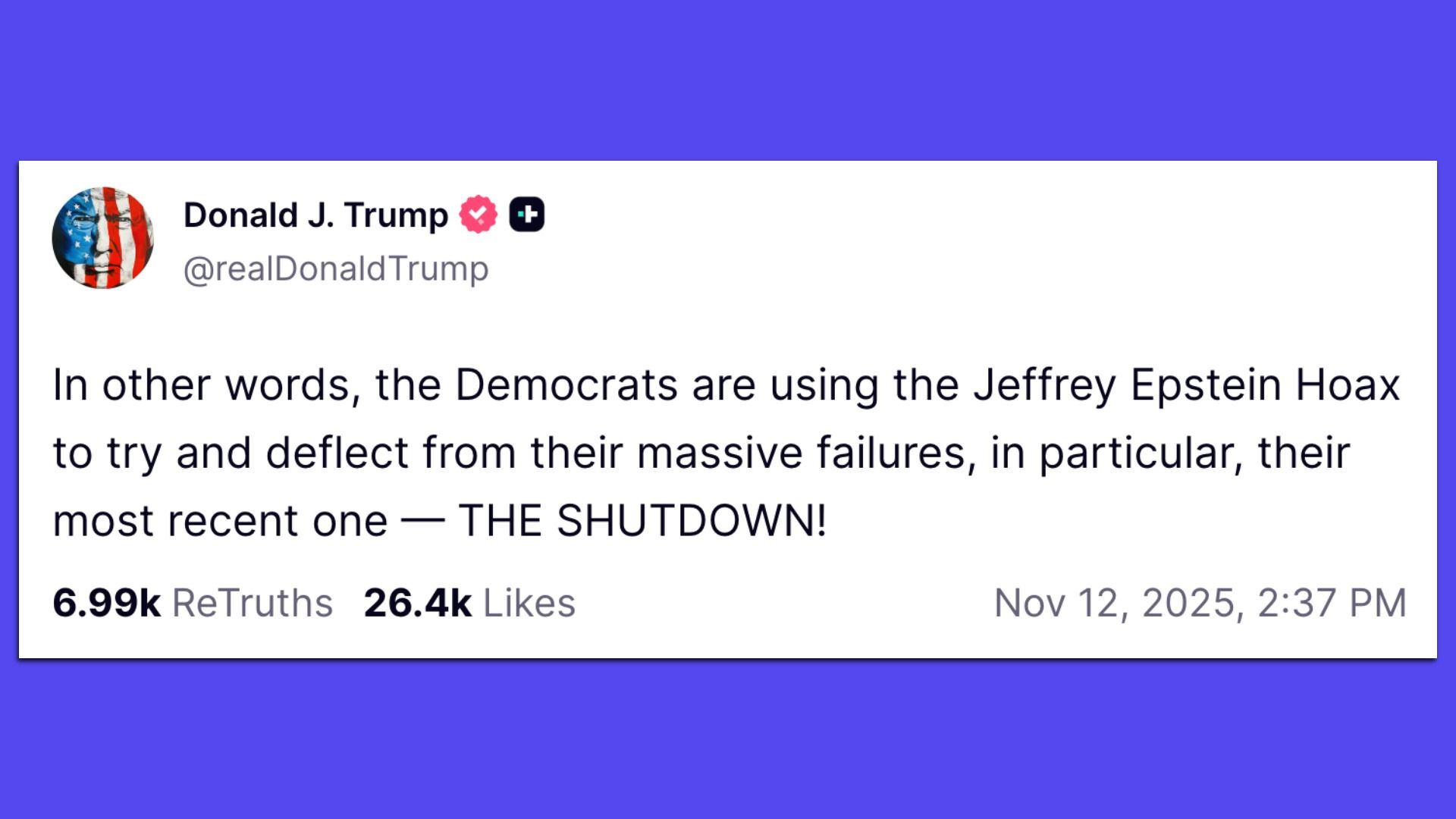
🔮 What's next: House leaders say they expect scores of Republicans may join Democrats next week in voting to release the Epstein files, despite Trump's lobbying.
- The measure is likely to die in the Senate, where it takes 60 votes to approve legislation and Republicans hold 53 of the 100 seats.
Keep reading ... Emails released by GOP ... Emails released by Dems.
2. 🪄 43rd day is the charm
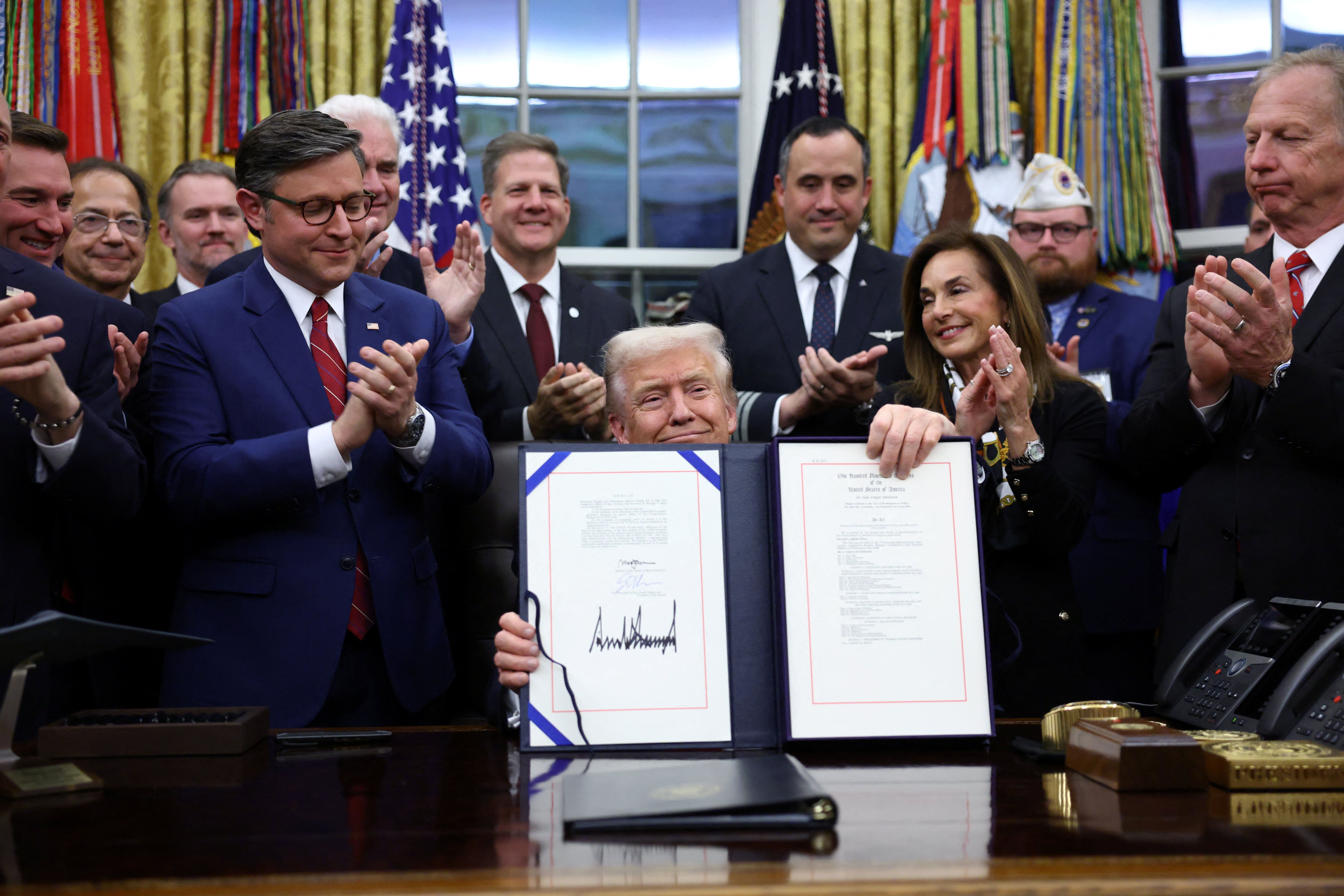
President Trump signed a bill last night to reopen the government and officially end the 43-day shutdown — the longest in American history, Axios' Kate Santaliz and Andrew Solender write.
- Why it matters: The shutdown left thousands of federal workers without pay and disrupted services across the country for nearly seven weeks.
The package funds the government through Jan. 30, reverses federal layoffs that happened after Oct. 1 and funds key agencies through the rest of the fiscal year.
- Eight Senate Democrats broke with their party in support of a bipartisan deal to reopen the government.
- The package then passed 222-209 in the House, with two Republicans (Reps. Thomas Massie of Kentucky and Greg Steube of Florida) voting against it and six Democrats — Reps. Jared Golden (D-Maine), Adam Gray (D-Calif.), Don Davis (D-N.C.), Marie Gluesenkamp Perez (D-Wash.), Tom Suozzi (D-N.Y.) and Henry Cuellar (D-Texas) — voting in favor.
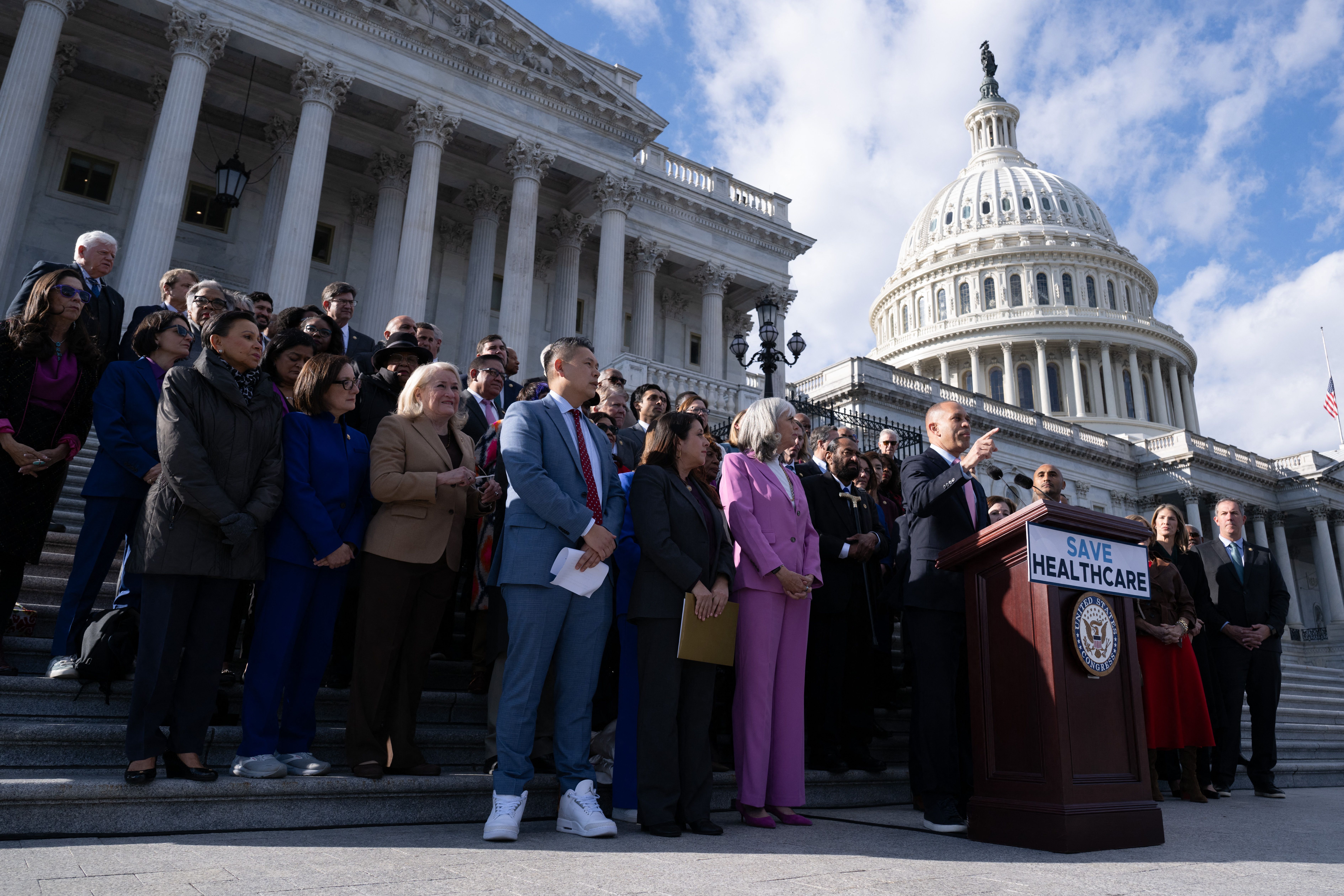
👓 Between the lines: The Senate deal rests on the promise of a vote on extending Affordable Care Act subsidies next month — but it faces an uphill climb in the Senate and isn't likely to be voted on in the House.
- That has left many Democrats furious, with some calling on Senate Minority Leader Chuck Schumer (D-N.Y.) to step down.
Get Axios Hill Leaders, our weeknight newsletter from Capitol Hill.
3. 📞 Scoop: Mamdani preps Trump playbook

4. 🌡️ Charted: Surprise climate progress
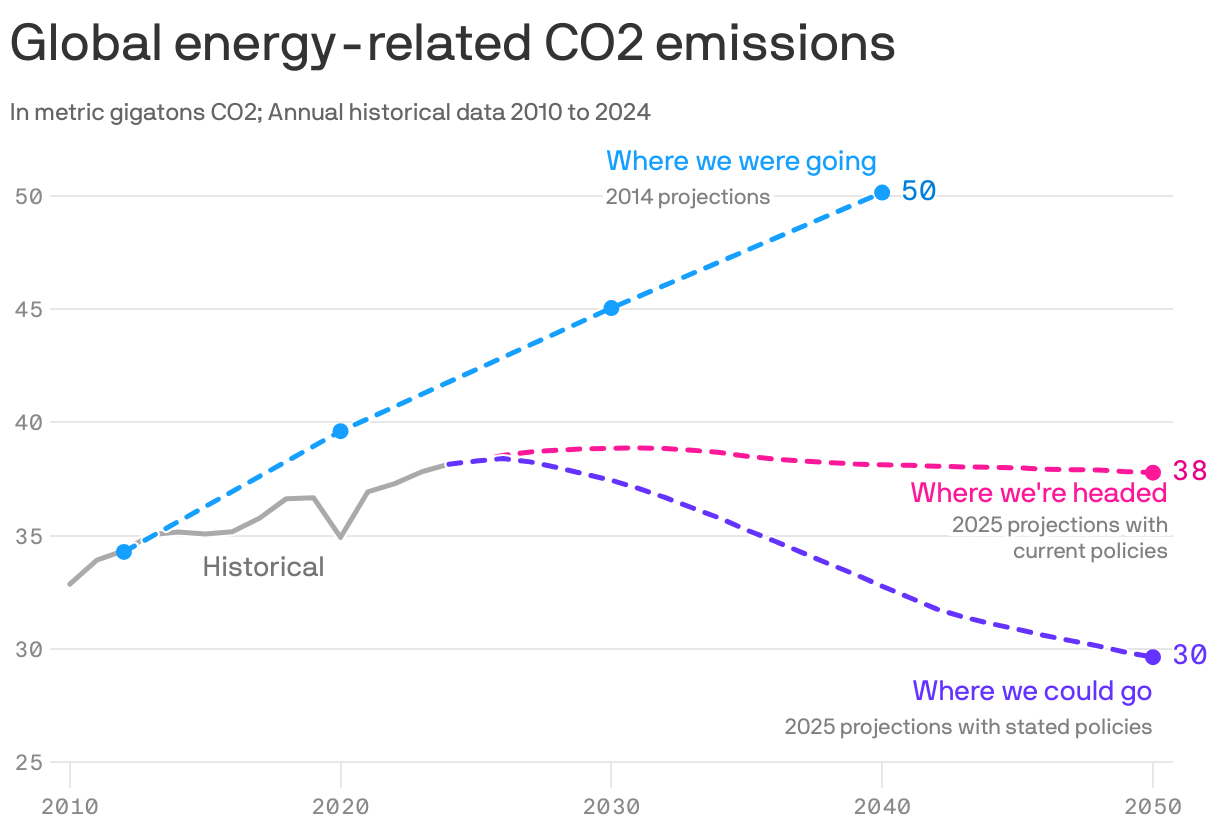
Global efforts to address climate change are going far better today than they were a decade ago — even with recent politics pushing the problem to the back burner, Axios Future of Energy co-author Amy Harder writes.
- Why it matters: We usually operate on daily, monthly and yearly time frames. So it can be easy to miss the energy transition unfolding over decades and centuries.
🔬 Zoom in: This chart compares two projections on greenhouse gas emissions from the International Energy Agency to one from more than a decade ago.
- The large gap between the top line and the lower two shows the progress made on clean energy over the last decade.
5. 💰 Scoop: Israel's "America First" aid pitch

Israel is seeking a new 20-year security agreement with the U.S. — doubling the usual term and adding "America First" provisions to win the Trump administration's support, Israeli and U.S. officials tell Axios' Barak Ravid.
- Why it matters: Passing such a deal — which in the past has included $4 billion per year in military aid — will now be more complicated because of growing frustrations with Israel, including within Trump's MAGA base.
6. 🤖 ChatGPT's risky charm offensive

7. ✈️ Young women want out


Two in five of younger women say they'd like to leave the U.S. permanently — more than twice the share of young men, Axios' Emily Peck writes from a new Gallup survey.
- Why it matters: It's a sign of a widening divide between the genders in the U.S., driven by growing political dissatisfaction among American women.
🔎 Between the lines: The numbers started surging right before President Trump's first term in office and increased again in the years after the Supreme Court overturned abortion rights in the Dobbs decision.
8. 🏆 1 for the road: Best workplaces

Axios AM