Axios AM

November 10, 2026

1 big thing: Trump's imperial last act

2. 🔎 Nvidia's peril deepens
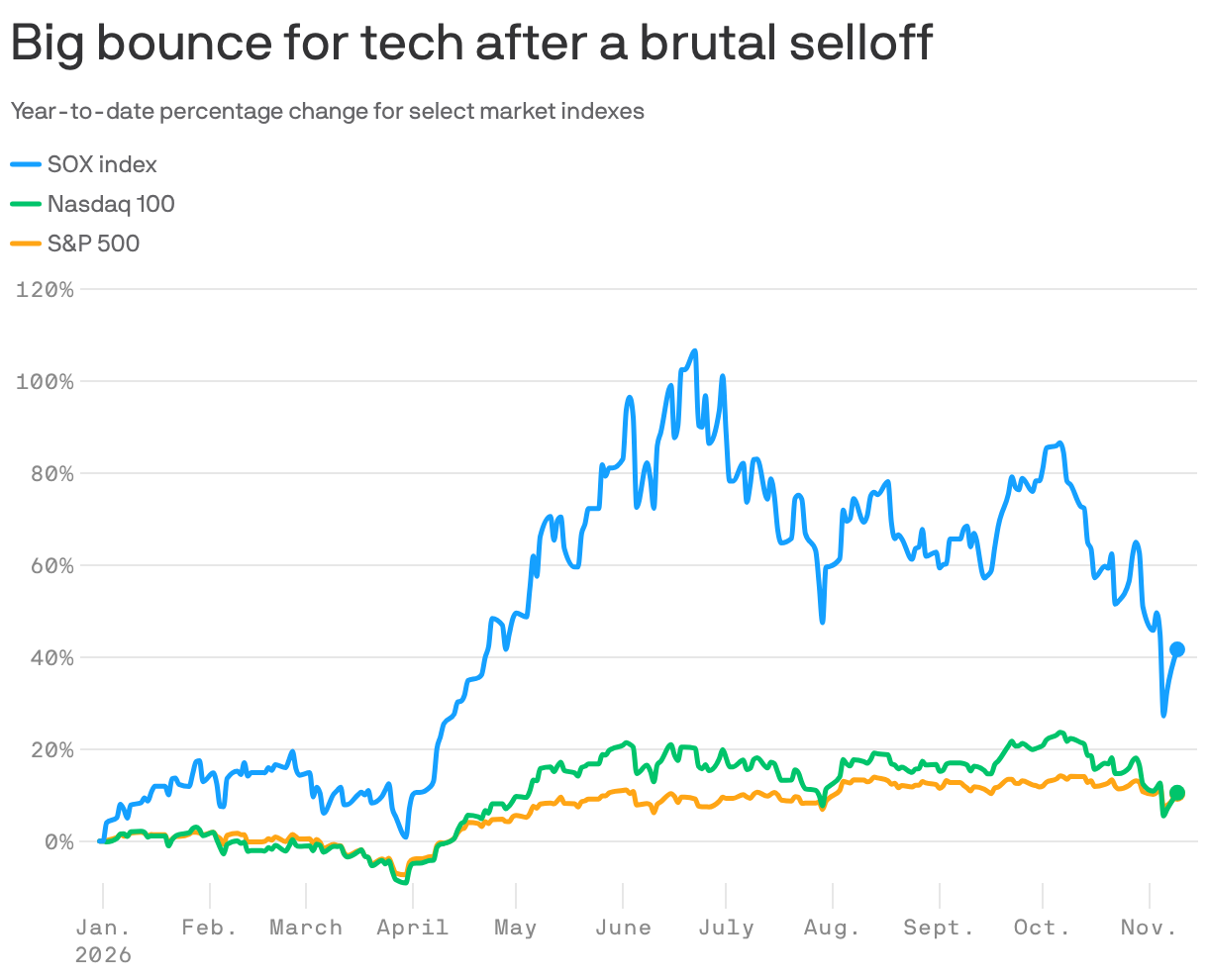
Nvidia doesn't have a clear succession plan for CEO Jensen Huang, as growing spy-scandal revelations threaten his hold on the chips giant he founded, built and personified.
- Why it matters: The peril for Huang (pronounced wong) shows the vulnerabilities of an iconic company being so dependent on one executive — with huge risks to investors, customers and, in this case, the AI economy, Axios' Nathan Bomey and Emily Peck report.
The mushrooming scale of the crisis:
- Nvidia controls the most valuable commodity in the world, and one man controls Nvidia.
- China is hungry to buy or copy Nvidia's chips, which could determine which superpower wins the AI race.
- After denying it, Jensen Huang admitted Sunday to an affair with Alice Huang, an executive of a Singapore-based data center company who is believed by U.S. intelligence to be a spy for the Chinese government.
- Jensen Huang was in frequent, chummy communication with President Trump during the affair.
- Trump ignored warnings from the top of his administration and allowed chip sales that benefited the Chinese spy's company.
- The Commerce Department was digging hard on Nvidia and the spy's company, until it abruptly wasn't amid Nvidia's interventions — reporting by The New York Times that opened a new front in the crisis yesterday. (Gift link)
🔭 The big picture: The storm over Nvidia "may exacerbate fears among investors over the durability of the AI boom, after a revolt against data centers by voters in America's midterm elections," The Economist notes.
- Go deeper: "Nvidia's crisis and the politics of an AI pause," by Axios chief tech correspondent Ina Fried.
3. 💥 MAHA's White House revolt
Calley Means quickly rose from wellness entrepreneur to senior Trump health adviser — and now he's attacking the White House and suggesting top aides undermined the president's health agenda, Axios' Caitlin Owens and Adriel Bettelheim write.
- Why it matters: His scorched-earth campaign — which continued yesterday in comments to Axios — marks a stunning turn for one of the administration's most vocal advocates of the "Make America Healthy Again" agenda.
Means, who is widely credited with brokering the alliance between Robert F. Kennedy Jr. and President Trump in 2024, resigned from his administration post late last month.
- He told Axios he's going public with allegations of corruption — particularly involving former White House Chief of Staff Susie Wiles — because "it is existential to the survival [of] America that we rid DC of Susie's brand of politics."
- Means launched his attacks Friday on "The Joe Rogan Experience" and continued them Sunday on CBS' "Face the Nation" and across social media.
🖼️ The big picture: MAHA leaders have complained for months about a lack of progress on issues around healthy foods and pesticide use.
The intrigue: The MAHA base sees new chief of staff Stephen Miller as an ally. Miller's wife, Katie, hosted Health Secretary Robert F. Kennedy Jr. on her podcast and has posted photos of dishes with ingredients like raw milk.
- Share this story ... Get Axios Future of Health Care, our daily briefing on the policy moves, business trends and innovations reshaping the industry.
4. ⛽ Gas falls below $4 a gallon


Gas prices fell below $4 per gallon today for the first time since July 19, to $3.98, per AAA tracking.
- Why it matters: High prices were highly visible election-season reminders of broader cost-of-living increases that helped fuel Democratic midterm gains, Axios' Ben Geman reports.
💡 What's happening: Falling gasoline costs follow recent declines in crude oil prices.
- Traders are responding to signs of potential U.S.-Iran diplomacy and ascendant Democrats' pledges to help force an end to the conflict.
5. 🏛️ House GOP's power struggle
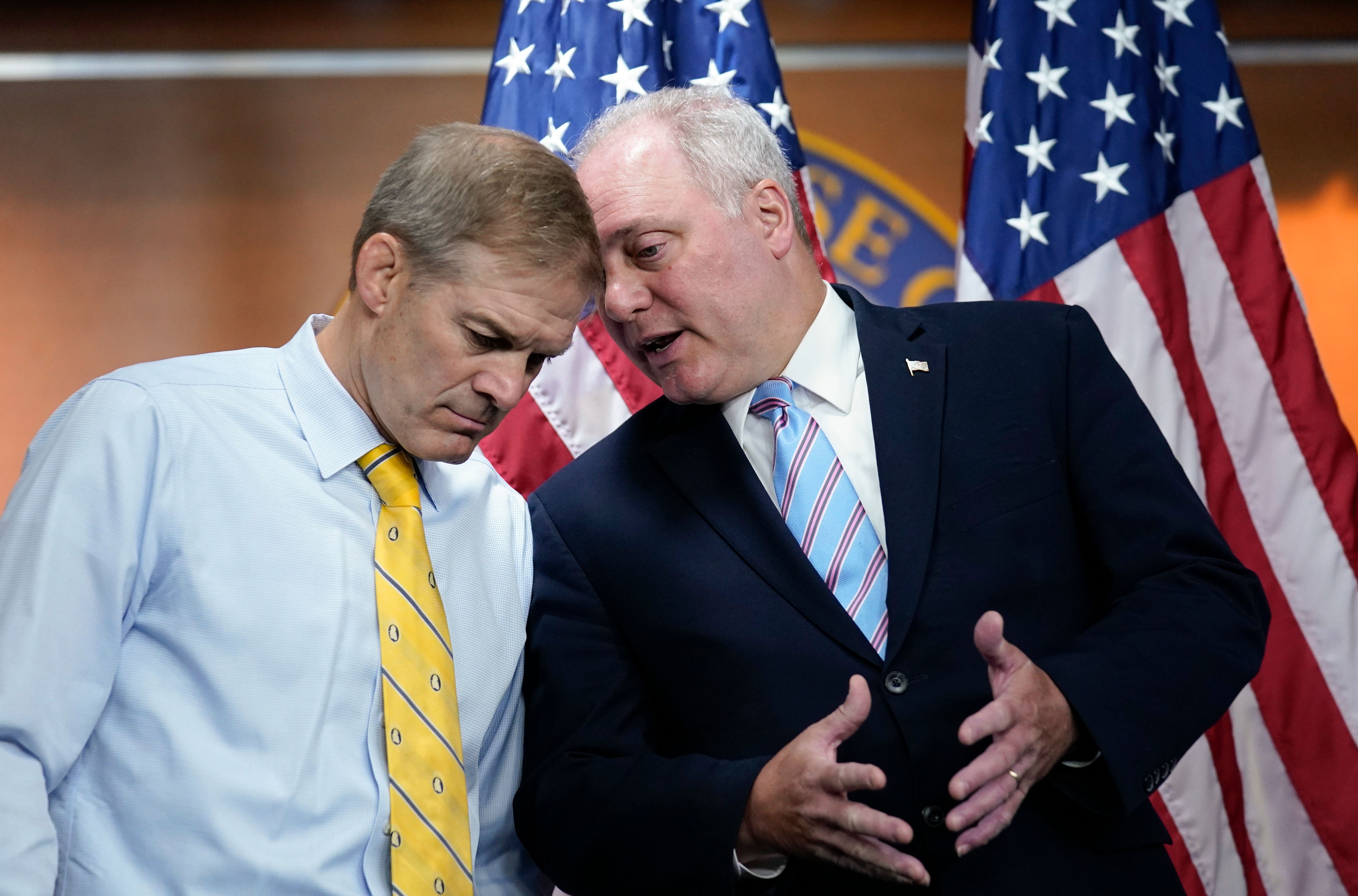
House Republicans will choose a new leader this morning after last week's devastating election losses, Axios' Kate Santaliz writes.
- Why it matters: Majority Leader Steve Scalise (La.) and Judiciary Chair Jim Jordan (Ohio) will headline the battle for control of what's left of the Republican conference — with every other top position also up for grabs.
Scalise is pitching himself as the steady hand who can lead Republicans back to the majority, leaning on his decade of experience in leadership.
- Jordan is casting himself as the candidate for change, tapping into frustration among Republicans who believe last week's devastating losses demand a shake-up at the top.
👂 What we're hearing: Scalise allies are increasingly confident heading into today's vote, with Rep. Mario Diaz-Balart (R-Fla.) arguing that calls to delay the leadership elections are a sign that Jordan's supporters don't have the votes.
6. ⚡ State Department dustup in Haiti
7. 🗳️ California voters reject billionaire tax
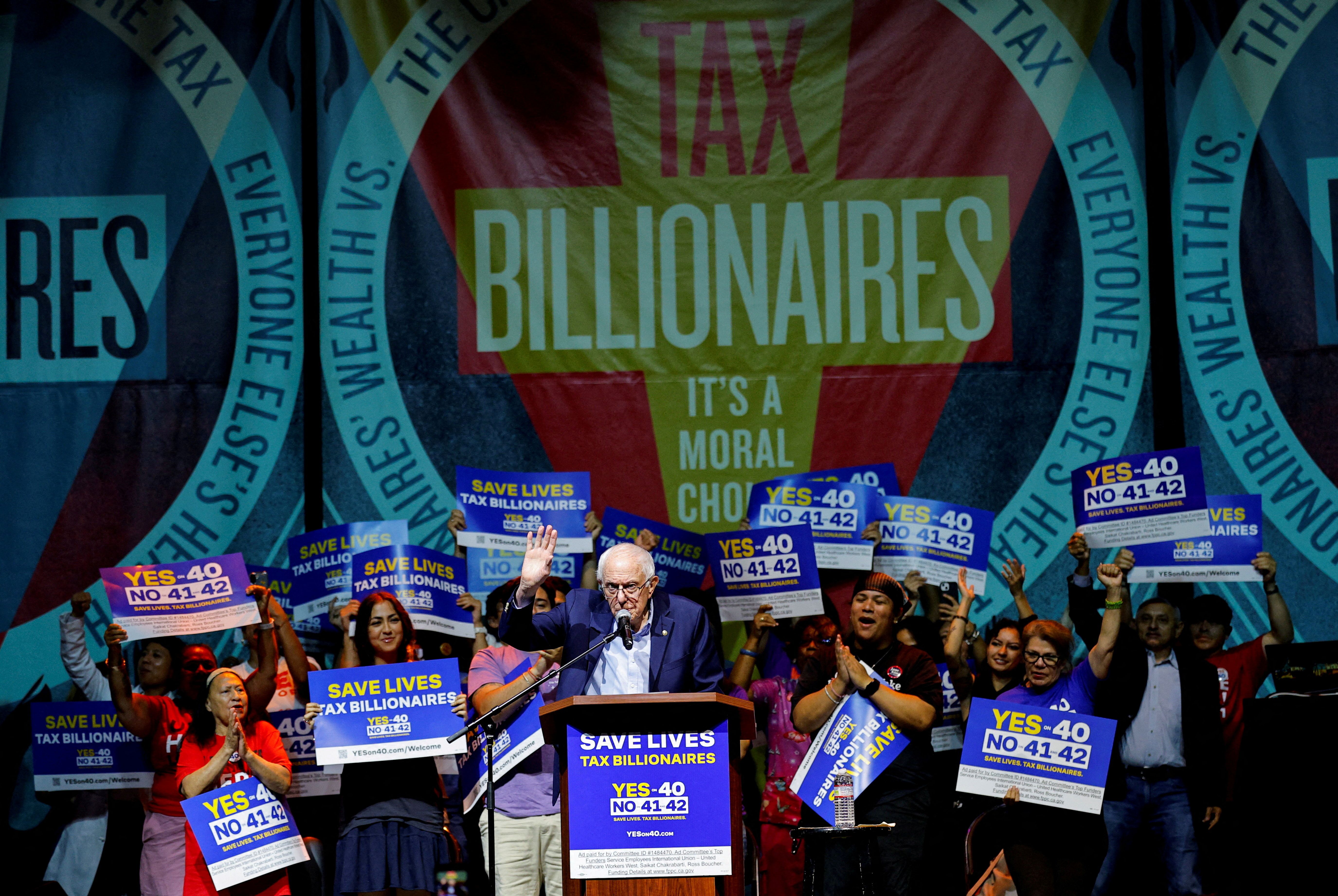
California voters rejected a first-in-the-nation tax on the net worth of billionaires, following a contentious ballot fight that generated huge spending by some prominent tech leaders.
- The defeat of the wealth tax is a win for Gov. Gavin Newsom and Gov.-elect Xavier Becerra, both Democrats, who opposed it. Critics said the tax would have pushed ultrawealthy taxpayers out of the Golden State.
Why it matters: Proposition 40 was the nation's biggest test yet of an idea progressives have long championed — raising taxes on the ultra-rich by targeting their investments, AP reports.
The count is 53% to 47%, with 83% of votes in.
- AP called the race last night. Most Californians vote by mail. Any ballot postmarked by Election Day that arrives within a week is counted, meaning it often takes days or even weeks for close races to be settled.
💰 The "no" side raised roughly 10 times as much as the "yes" side. Google co-founder Sergey Brin alone dumped more than $100 million into a political action committee working to defeat the measure.
- The measure would have imposed a one-time 5% tax on the wealth of Californians with a net worth over $1 billion.
8. 🌉 1 for the road: $100 million Airbnb gift
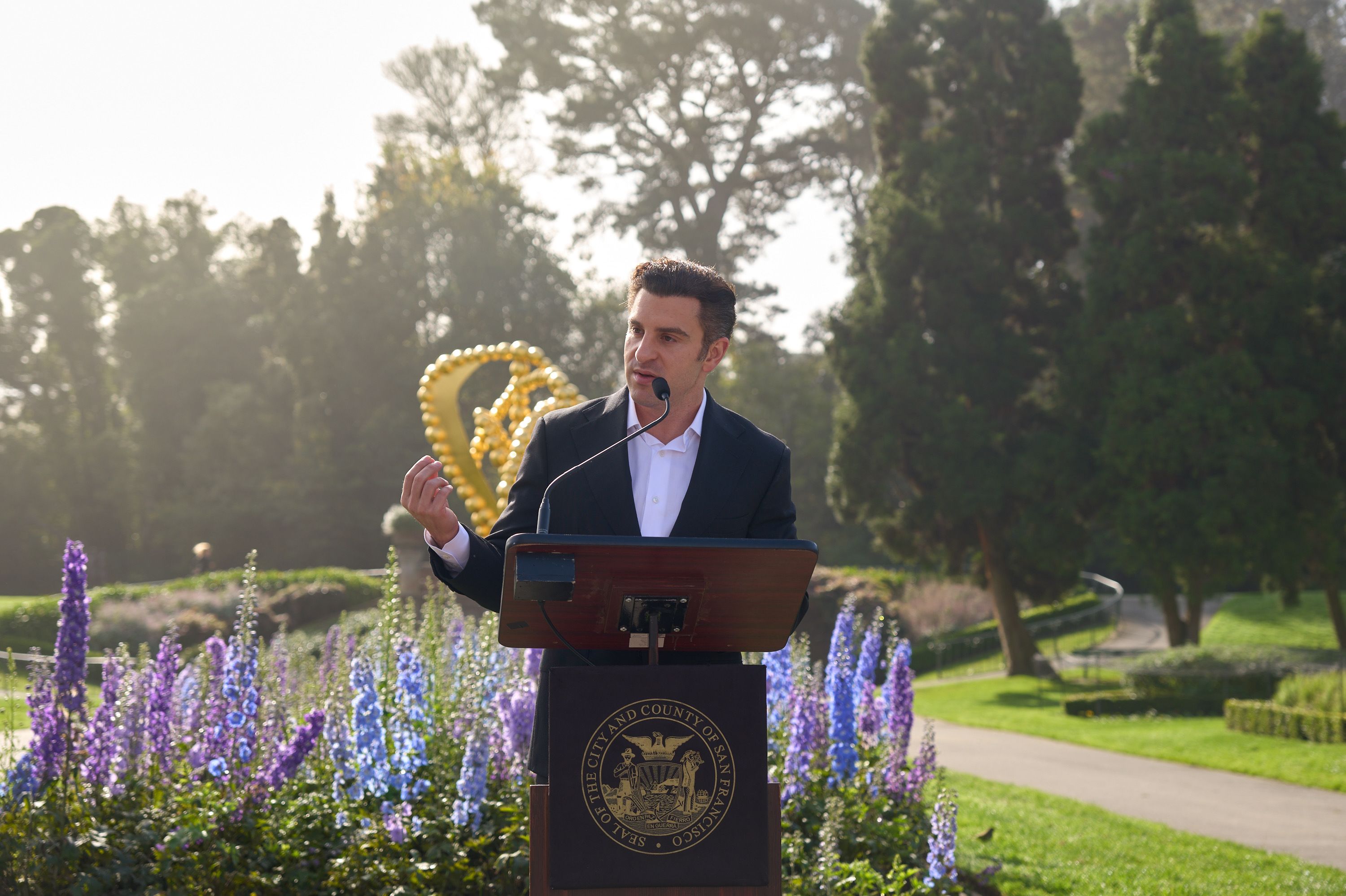
Brian Chesky, Airbnb co-founder and CEO, is donating $100 million to the San Francisco Recreation and Parks Department — the largest-ever donation to the city by an individual, Axios San Francisco's Nadia Lopez writes.
- Chesky's donation is more than a third of the department's proposed spending for next year.
Between the lines: San Francisco Mayor Daniel Lurie, who appeared with Chesky for yesterday's announcement, has increasingly sought private funding for initiatives addressing homelessness, public safety and the city's economic recovery.
- Chesky, whose global company was founded in San Francisco nearly two decades ago, serves on a council of business leaders advising the mayor on economic issues.
Axios AM