Axios AM

October 28, 2025

1 big thing: The power to do almost anything

President Trump is asserting the right to unilaterally use the military wherever, whenever and be the sole judge and jury of his own actions, Jim VandeHei and Mike Allen write in a "Behind the Curtain" column.
- Why it matters: Of all the unprecedented actions, these might carry the most sweeping consequences — not just now, but for future presidents.
The new precedent is being set in real time: The only real limit on Trump appears to be Trump himself. Neither the conservative Supreme Court nor the GOP-led Congress has shown much interest in limiting this executive.
- This dynamic frees Trump to use federal troops in U.S. cities over the objection of a state's governor, or kill people overseas without war authorization or scrutiny, or prosecute his critics in U.S. courts, or seize congressional powers over tariffs and spending.
It's important to reckon with the logic behind this, which will ultimately be validated or invalidated by the Supreme Court. Future presidents will be able to claim the same power Trump does.
- Eye on what matters most: Under this theory, there's little to stop or slow ever-expanding presidential power. This pushes power away from ordinary voters, through their congressional representatives, and into the hands of one person. This theory of virtually unlimited presidential power isn't new. But it's never been stretched this far, this fast.
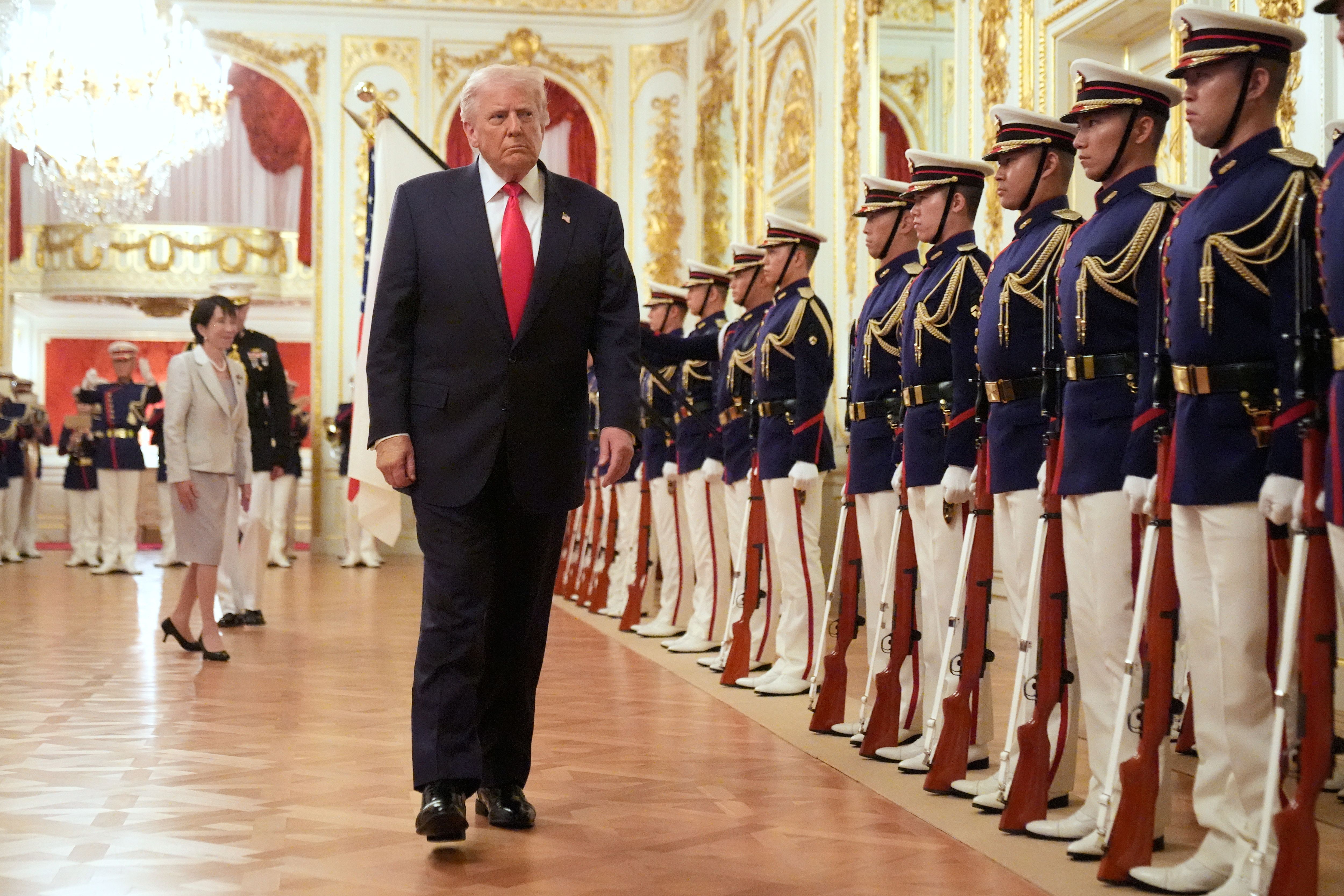
👀 Behind the scenes: Some Trump appointees want more federal control of locally administered elections. Axios' Marc Caputo recently asked a senior administration official if there'd been any discussion in the White House about seizing voting machines, sending troops to polling stations, or trying to take over state election systems.
- "Absolutely not," the official replied. "But there are people around here who would probably like that."
There's basically a three-step process now established for presidents to do as they please:
- Unilaterally declare an emergency. Trump does this a lot, most notably by arguing that fentanyl trafficking is a clear and present national emergency worthy of using the military to kill people without war authorization in the Caribbean. The power to kill, without meaningful oversight or explanation, is about as absolute as you can get. He has also usurped congressional power to levy tariffs. Trump is hardly the first president to stretch the bounds of emergency authority: President George W. Bush's administration relied on post-9/11 powers to wiretap Americans without a warrant. President Obama invoked 9/11-era powers to set new precedents for drone strikes. President Biden tried to rely on emergency powers to forgive student debt, but the Supreme Court stopped him.
- Claim full power to determine the legality of their own actions. This is a new and dramatic twist. Trump says this often, though he insists he would comply with any court rulings challenging his power. So far, he has. But Trump doesn't hide his belief in limitless power. He has "told executive branch lawyers that they may not question any legal judgment that he — or Attorney General Pam Bondi, subject to his 'supervision and control' — already decided," the N.Y. Times' Charlie Savage reports. Trump declared in an executive order in February: "The President and the Attorney General's opinions on questions of law are controlling on all employees in the conduct of their official duties." Simply put, he alone judges legality.
- Assert full, unilateral power to unleash the military, overseas and domestically, to enforce his will. Trump is pushing this piece by piece at home, in cities he deems overrun by crime, and abroad in the Caribbean, where the U.S. military has killed dozens of alleged drug smugglers without any proof of imminent threat. Domestically, Trump hasn't taken the step of using troops for law enforcement or direct crowd control. But taken in total, the precedent is clear: The commander-in-chief has sole discretion on what constitutes threats and appropriate military responses, at home and abroad.
There are only two big possible brakes:
- The only way for Congress to truly intervene would be to impeach and remove the president. But the latter requires a supermajority vote — nearly impossible in a 50-50 country. It's a long process and only practical when the opposing party holds large majorities, especially in the Senate, where it takes two-thirds to convict.
- The Supreme Court, in theory, holds more immediate power: It can rule presidential actions illegal and hope the president abides by the ruling. But the court really has no way to actually force the president to comply because the president alone controls the military — an uncomfortable, if never wholly tested, design quirk of our Constitution. The 6-3 court has signed off on almost all of Trump's most sweeping claims of executive power: The justices have allowed him to fire just about every government worker he has tried to fire, deport people to countries they've never set foot in, and unilaterally slash billions in federal spending. They even ruled that presidents can commit certain crimes without fear of prosecution.
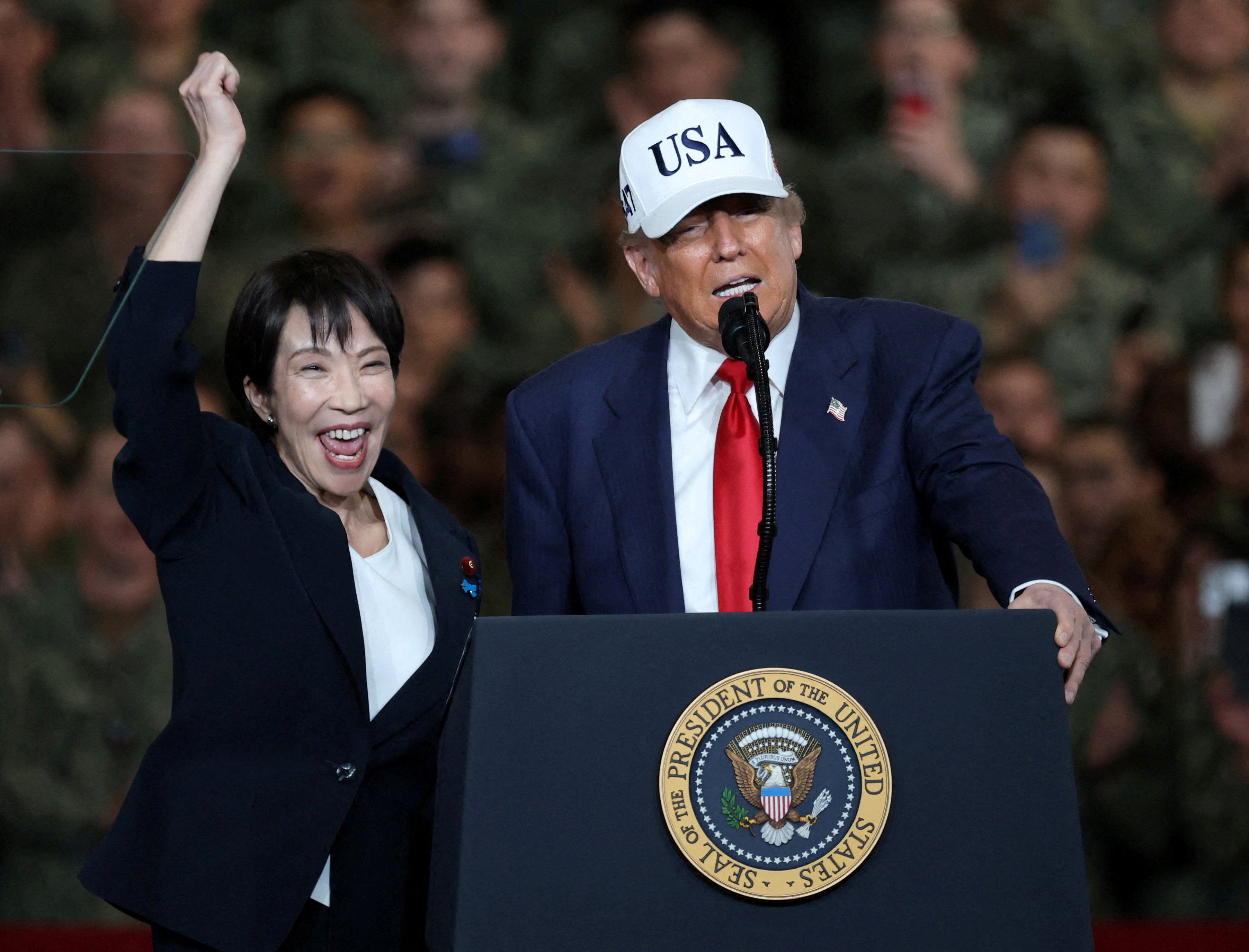
The bottom line: Trump, building on 25+ years of ever-expanding presidential power, has set the precedent for once-unthinkable scenarios.
- This applies not just to him but to all presidents going forward. That's why precedents matter.
Share this column ... Marc Caputo and Sam Baker contributed reporting.
2. ⚠️ Barrage of AI-driven layoffs

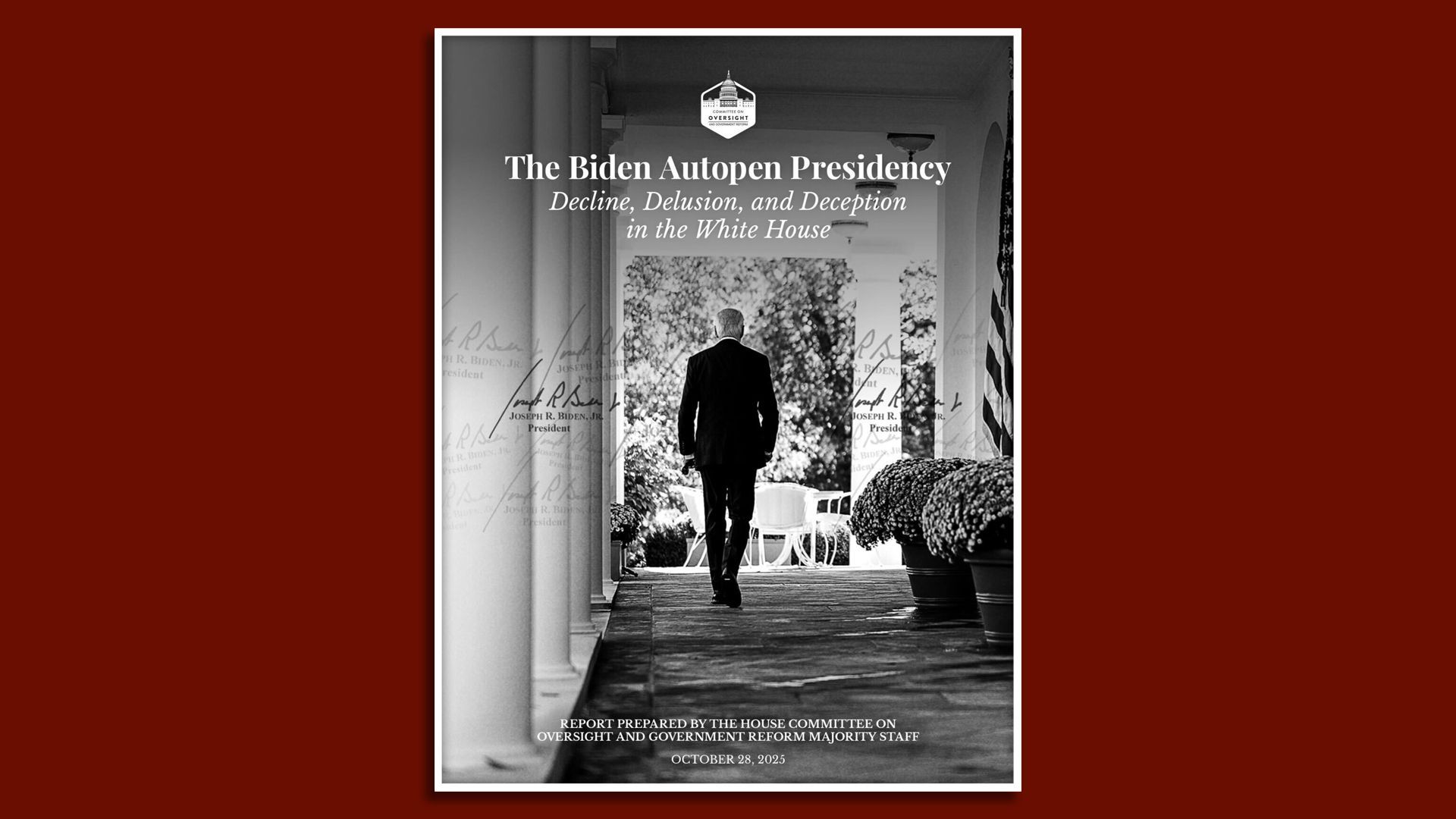
3. 💡New Biden report reveals debate turmoil
4. 📈 New "Magnificent 7" contenders


Investors eager to make a fortune on AI, but priced out of the "Magnificent 7" boom of the last three years, are turning their attention to three other tech stars coming in hot in recent months:
- If stock market strategists are right, Broadcom, Oracle and Palantir could be the next big plays that challenge the Mag 7 for AI dominance, Axios Markets author Madison Mills writes.
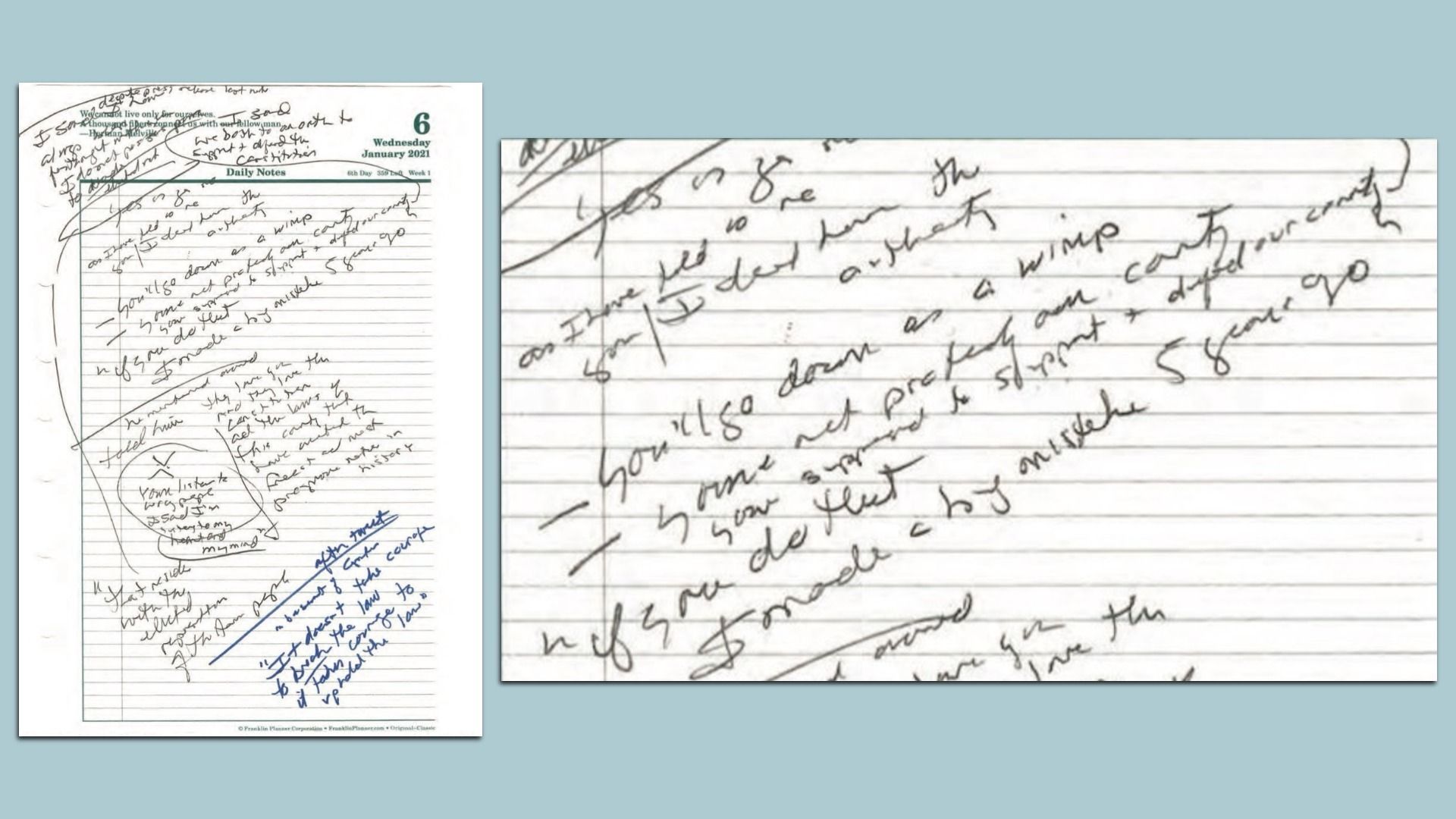
5. 📜 Jotting down history: Pence notes revealed
6. 🐌 Mapped: Our traffic time suck
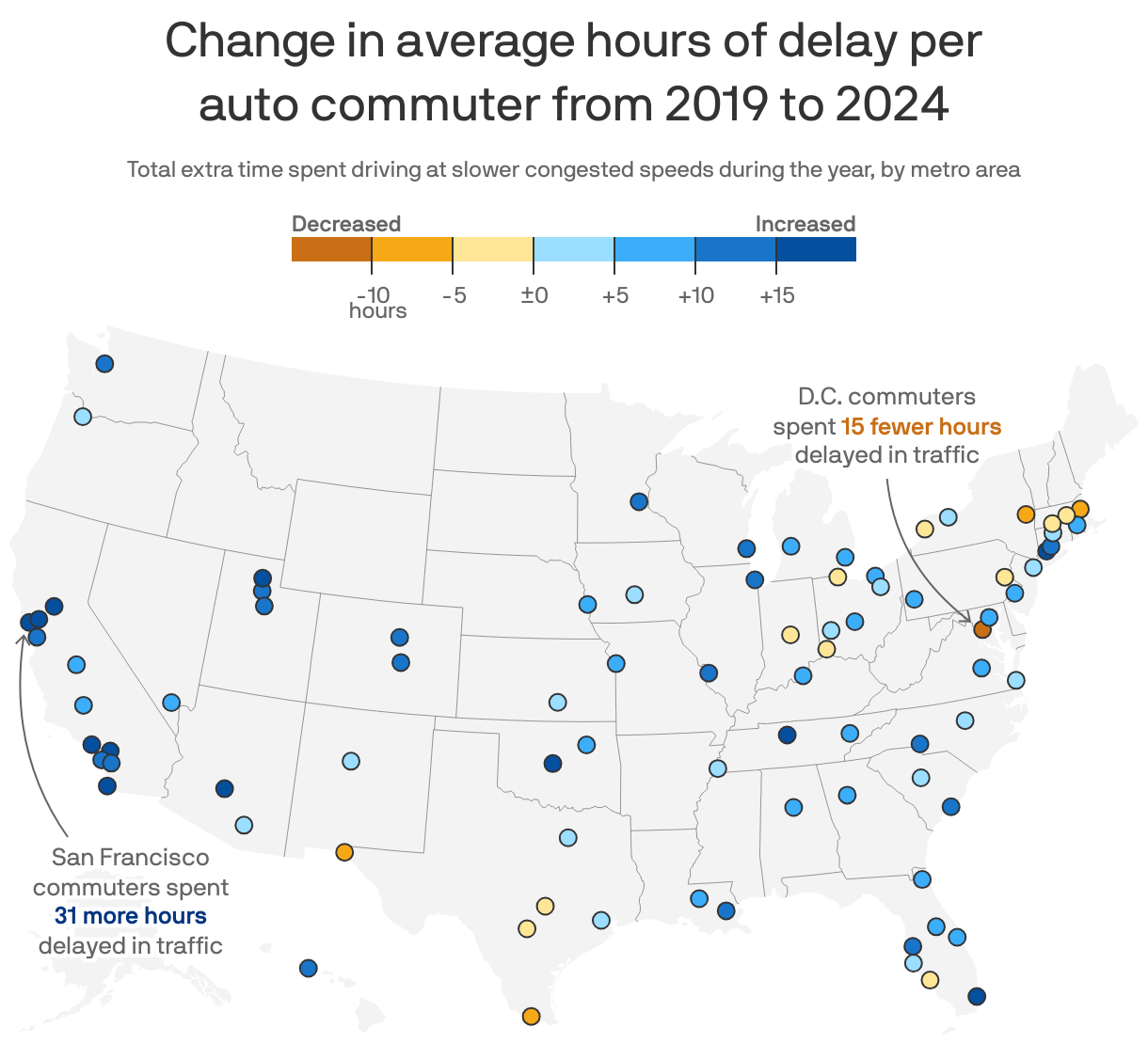
The average U.S. car commuter is spending a record 63 hours annually stuck in traffic amid changes in when and why we drive, Axios' Alex Fitzpatrick writes from a new report by the Texas A&M Transportation Institute.
- That's the most since 1982, when the dataset began.
Go deeper: Worst-hit cities.
7. 🎸 Axios interview: Joe Scarborough adds to "Morning Joe" buffet

Four hours of "Morning Joe" just isn't enough for Joe Scarborough. The MSNBC host tells Axios that for viewers who crave a lunchtime hit, he's launching an early-afternoon newsletter, "The Tea, Spilled by Morning Joe."
- "Your newsletter in the morning really drives the day," Scarborough told me. "We thought by noon, it'd be time for another one."
Why it matters: Scarborough and Mika Brzezinski, whose show has been shaping and driving elite opinion for nearly 20 years, have expansive plans for their "Morning Joe" franchise. In addition to "The Tea," debuting today, they plan virtual town halls for fans to get questions answered by the cast.
🕶️ "I just wanted to build out the community ... so we're not just a 6-to-10 a.m. [ET] show that will then have viral clips living throughout the rest of the day," Scarborough said.
- "We're going to expand the podcast, have afternoon updates on the podcast. We're going to have [virtual] community town hall meetings at least once a week. People who're signed up with the newsletter can call in and talk to members of the 'Morning Joe' family," including Willie Geist, Jonathan Lemire, Mike Barnicle and more.
📺 MSNBC announced yesterday that its rebrand as MS NOW (as a Versant spinoff from Comcast NBCUniversal) will take place Nov. 15, with the message: "Same Mission. New Name."
- Scarborough told me that when he met with Versant CEO Mark Lazarus and MS NOW president Rebecca Kutler, they told him: "Be entrepreneurial ... Whatever you want to do, be creative, let's do it!"
☕ Scarborough said the newsletter will embrace the Axios hallmarks of Smart Brevity and elegant efficiency. "If the foundation of French cooking is three things — butter, butter, butter," he said, "the goal for me, visually, is white space, white space, white space."
- Get "The Tea" ... Share this story ... FAQ on MS NOW.
8. ⚾ 1 for the road: 18-inning World Series classic

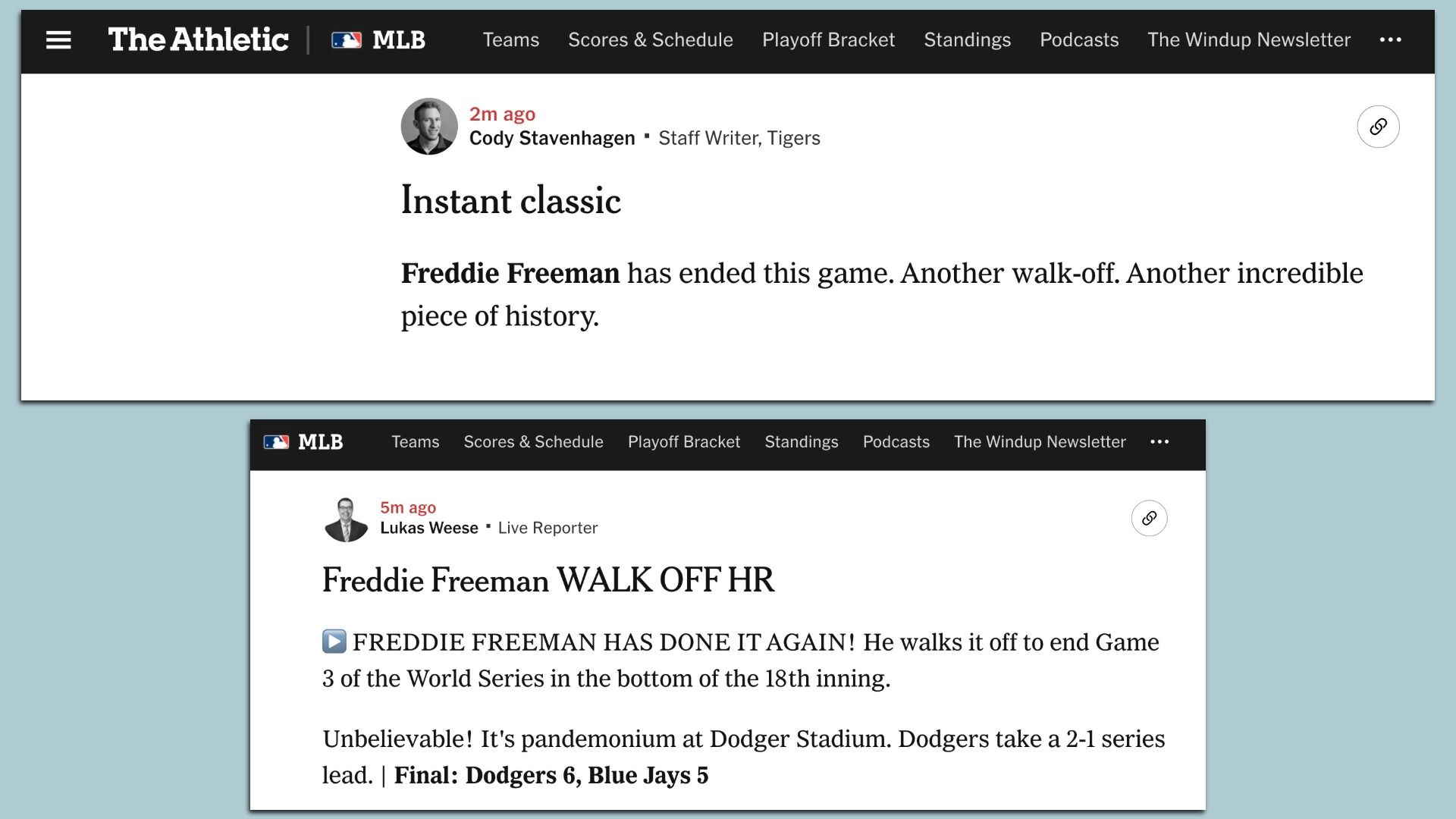
World Series Game 3 at Dodger Stadium between the Dodgers and the Toronto Blue Jays went 18 innings — tying the record for the Fall Classic — and lasted 6 hours, 39 minutes, ending at 2:50 a.m. ET
- The Dodgers won 6-5 with a Freddie Freeman walk-off homer after another night of history by Shohei Ohtani.
- The Blue Crew now leads the series, 2-1.
📱 This was what the N.Y. Times homepage looked like when I woke up at 2:30 a.m. ET to put the finishing touches on AM:

Axios AM