Axios AM

August 17, 2025

1 big thing — Axios investigates: North Korea's IT invasion

2. 👀 Putin's maximalist claims
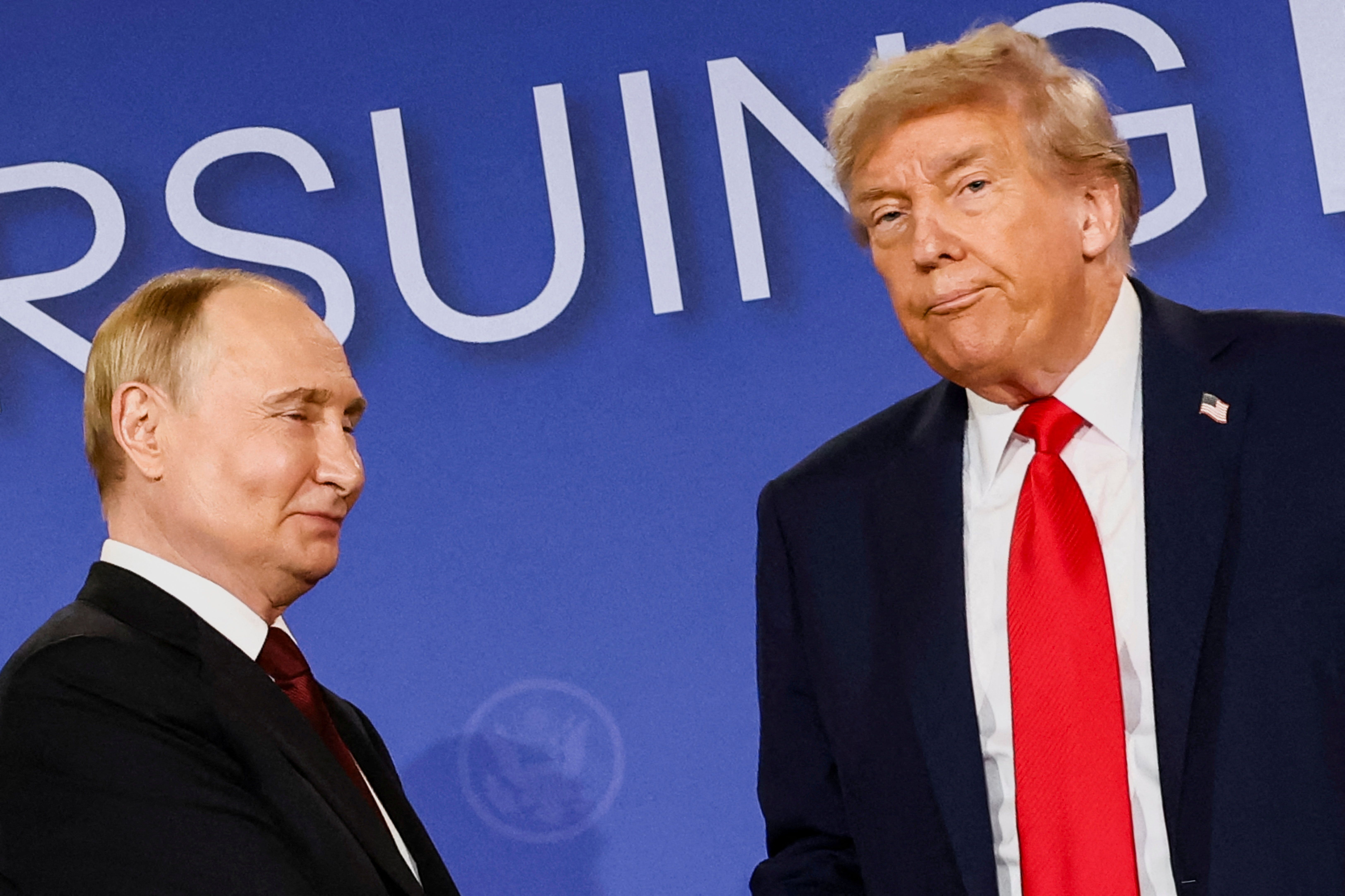
The peace terms that Russian President Vladimir Putin laid out at the summit with President Trump included Ukraine withdrawing entirely from two of its eastern regions, Axios' Barak Ravid and Dave Lawler report.
- 🔮 What's next: Trump will meet Ukrainian President Volodymyr Zelensky tomorrow in Washington. He also told European leaders in a post-summit call that he wants to arrange a trilateral summit with Putin and Zelensky as soon as this Friday, two sources briefed on the call said.
- ⚡ New this morning: European leaders will join Zelensky during his White House meeting with Trump — an apparent effort to prevent a repeat of February's heated Oval Office confrontation.
But based on Putin's conditions, a major breakthrough appears unlikely.
👀 Breaking it down: Trump and his special envoy Steve Witkoff briefed Zelensky and several European leaders on Putin's positions last night on their flight back to Washington from Anchorage.
- They said Putin had demanded that Ukraine cede two of the four regions to which Russia has laid claim (Donetsk and Luhansk), and freeze the front lines in the other two (Kherson and Zaporizhzhia). Russia controls nearly all of Luhansk, but only about three-quarters of Donetsk.
Between the lines: This proposal calls for significantly more territory to shift from Ukrainian to Russian control than vice versa. Moscow might argue that is reasonable, since Russia has the upper hand militarily. But Ukraine would almost certainly reject it.
- Putin also requested that the U.S. recognize Russia's sovereignty in the parts of Ukraine it would gain under a peace deal, according to the source.
3. 💰 Feeling the squeeze

4. 🪖 3 states send National Guard to D.C.
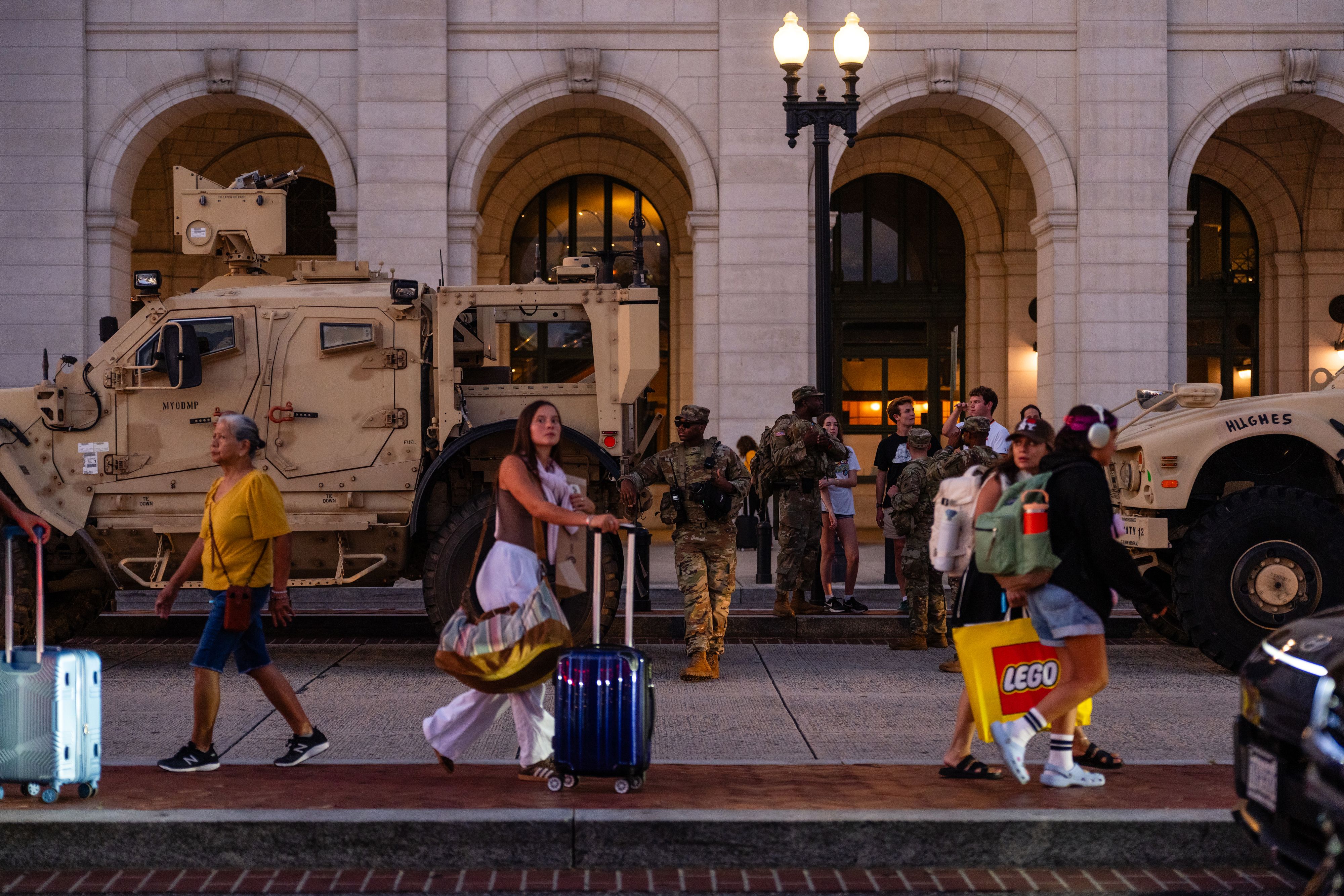
Three Republican-led states are deploying hundreds of National Guard members to the nation's capital to bolster the Trump administration's effort to overhaul policing in Washington.
- West Virginia said it's deploying 300 to 400 Guard troops, South Carolina pledged 200 and Ohio says it'll send 150, AP reports.
Why it matters: The new troops — adding to federal law enforcement and 800 D.C. National Guard members — mark a significant escalation of the federal intervention.
The Republican governors of the three states said they're sending the soldiers at the request of the Trump administration.
- A protest against Trump's intervention drew scores to Dupont Circle yesterday before a march to the White House, about 1½ miles away. Demonstrators assembled behind a banner that said: "No fascist takeover of D.C." Some in the crowd held signs saying: "No military occupation."
5. 🥊 MAGA eager to spread D.C. takeover
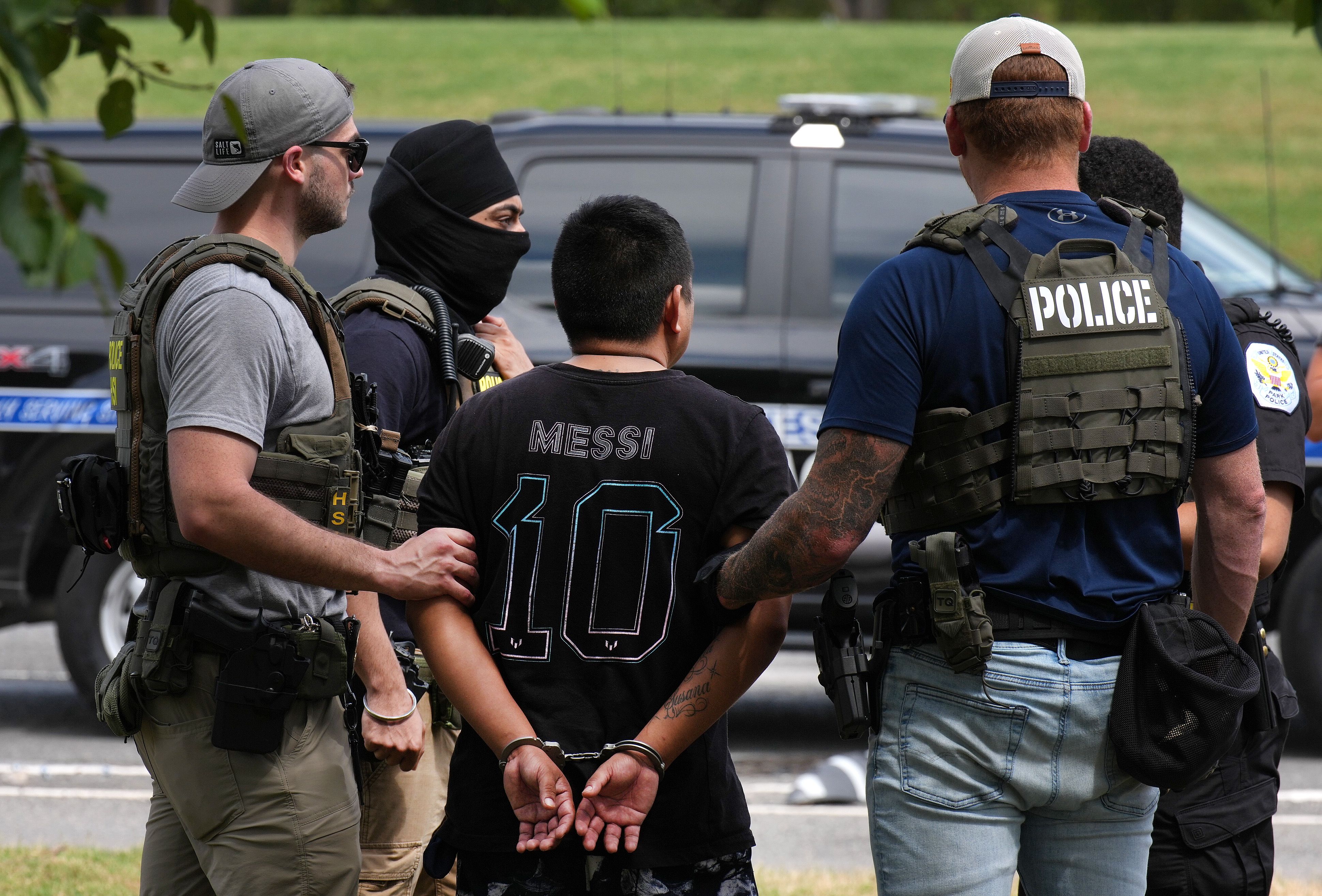
President Trump's MAGA movement sees his D.C. crackdown as bigger than crime — it's an opportunity to deal another setback to liberals by expanding the movement in urban areas, Axios' Tal Axelrod reports.
- Why it matters: Despite the protests over Trump's stunning show of force on D.C.'s streets, MAGA's most vocal voices believe that if the anti-crime push is successful — and Trump is certain to declare it so — it could win converts in cities and help expand the movement's rural base.
"We have an opportunity to show city folks that life doesn't have to be this way," one senior MAGA media figure told Axios. "There are things you can do to control crime. This definitely could spread to other cities, simply by demand."
🔎 Reality check: Trump's D.C. crime claims don't match the data. Violent crime is falling in the city, not rising, Axios D.C.'s Anna Spiegel reports.
- Plus, D.C.'s status as a federal city gives the president unique powers with the National Guard and federal law enforcement there. Any attempt by Trump to impose similar federal patrols in other Democrat-run cities likely would be met with the type of protests that Trump's immigration crackdown sparked in Los Angeles.
- Even in D.C., Trump's efforts are facing legal hurdles. A federal judge on Friday got the administration to back off replacing the head of the city's police department with the head of the Drug Enforcement Administration.
🎙️ For now, MAGA-friendly podcasters are gleefully speculating about what other blue cities could get the same treatment. Cities Trump has slapped with the "high-crime" stereotype — Baltimore, Chicago, San Francisco and more — are being cited as logical next steps for federal intervention.
- They want to activate "citycons," as podcaster Jack Posobiec said on his show Thursday — urban Americans supposedly pushed to the right by crime concerns.
6. 🗞️ N.Y. Post week in review
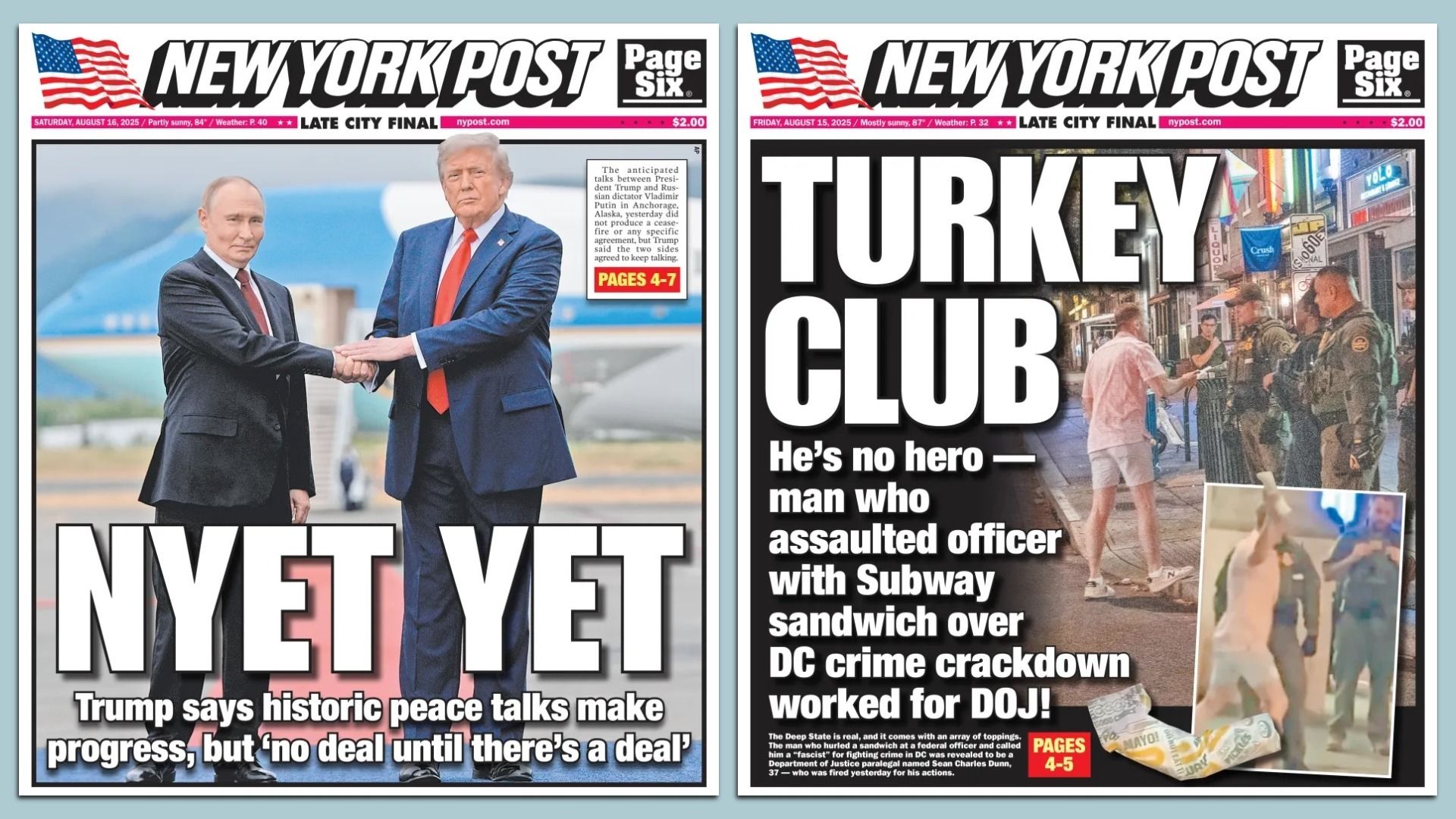
Go deeper: "Fired DOJ employee could face prison for throwing sandwich at officer" (WashPost gift link).
7. 💼 UK, EU firms move stock listings to U.S.

Top tech companies in Europe and Britain are going public in New York — and some corporate heavyweights are moving their stock listings stateside, where business is growing faster, The Wall Street Journal reports:
"Amsterdam and London pioneered the creation of public-stock trading centuries ago, raising money for voyages to Asia, Africa and the Caribbean that forged Europe's colonial empires. Now, Europe's stock markets face a crisis of inactivity."
Why it matters: "European leaders see the withering of these historic exchanges as an emergency — and one of the culprits behind Europe's economic stagnation, low productivity, and the widening wealth gap between its citizens and Americans," the Journal notes.
💬 Europe doesn't want to be "just a zone between America and Asia," Stéphane Boujnah, CEO of Euronext, which owns seven stock exchanges in the region, told the Journal.
- Stephan Leithner, CEO of Deutsche Börse, operator of the Frankfurt Stock Exchange, said: "The wealth creation will happen to Texas teachers and California public-sector employees, not to European pensioners."
Keep reading (gift link).
8. 👗 1 for the road: Carrie Bradshaw's enduring looks
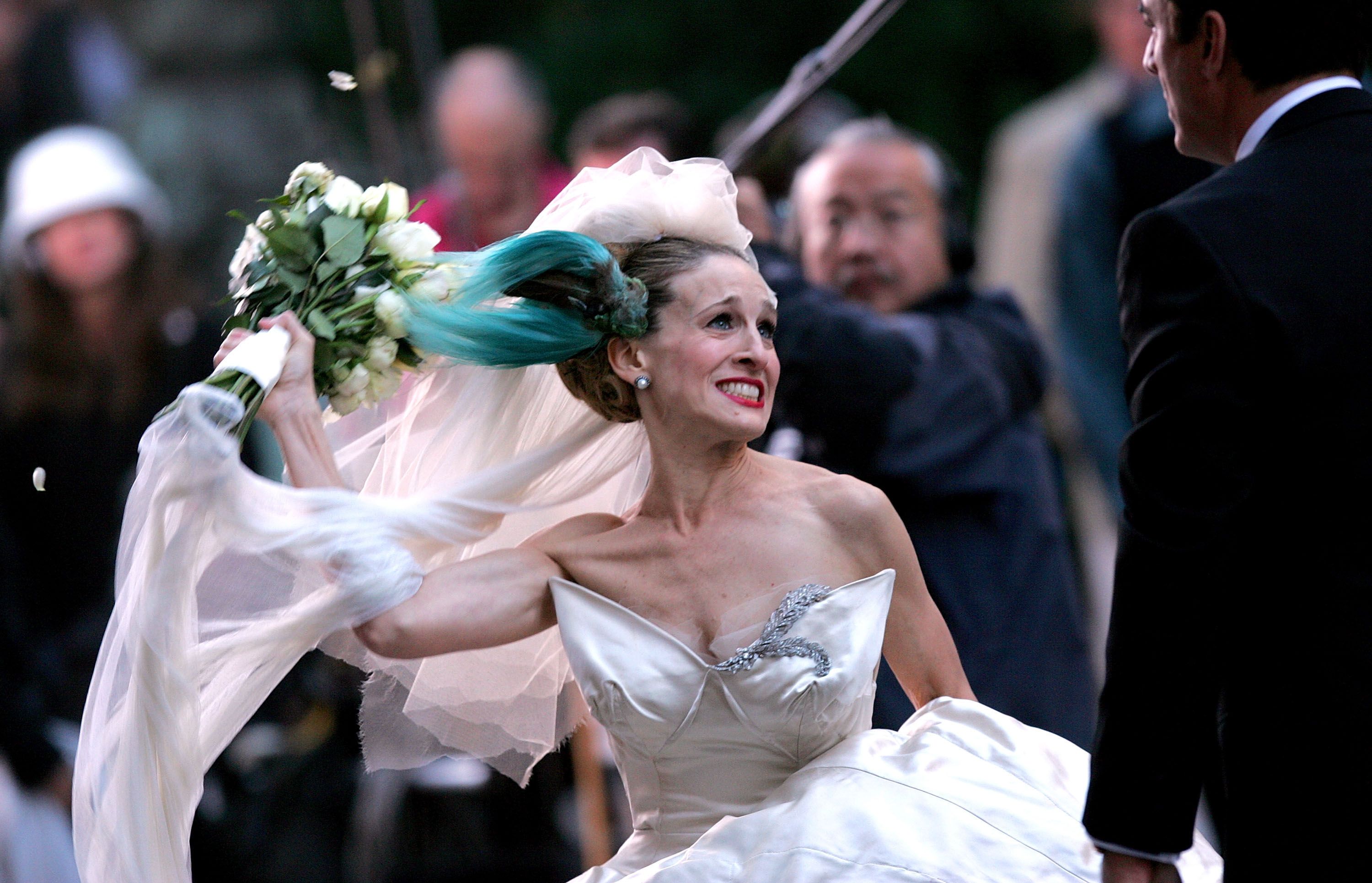
It's the end of an era as Carrie Bradshaw leaves our screens for good. But since the pilot of "Sex and the City" aired in June 1998 until the show's streaming reboot, "And Just Like That...," released its finale Thursday, the looks of the protagonist — played by Sarah Jessica Parker — have been iconic.
- Across multiple series, seasons and decades, "Carrie's exaggerated skirts and hats and heels and dresses remained one of the show's few constants," The New York Times' Alisha Haridasani Gupta writes (gift link).

Zoom in: Parker's original 'Sex and the City" contract included terms that she would own almost all of Carrie's outfits.
- So when the reboot came along, there was a closet full of pieces to revive.
Some of Carrie's clothes that appeared on "Sex and the City" and then "And Just Like That..." years later included a black studded belt, a pair of royal blue Manolo Blahnik stilettos and, of course, her Vivienne Westwood wedding gown (pictured above).
Axios AM