Axios AM

July 27, 2025

β Happy Sunday! Smart Brevityβ’ count: 1,586 words ... 6 mins. Thanks to Kate Marino and Zachary Basu for orchestrating. Copy edited by Donica Phifer.
1 big thing: AI's global race in the dark

The U.S.-China AI race, now freshly embraced by President Trump, is a competition in the dark with no clear prize or finish line, Axios' Scott Rosenberg writes.
- Why it matters: Similar "races" of the past β like the nuclear arms race and the space race β have fueled innovation, but victories haven't lasted long or meant much.
The big picture: Both Silicon Valley and the U.S. government now agree that we must invest untold billions to build supporting infrastructure for an error-prone, energy-hungry technology with an unproven business model and an unpredictable impact on the economy and jobs.
πΊπΈ What they're saying: "America is the country that started the AI race. And as president of the United States, I'm here today to declare that America is going to win it," Trump said at an event this past week titled "Winning the AI Race."
- Policy experts and industry leaders who promote the "race" framework argue that the U.S. and China are competing to establish the technology's standards and break the "superintelligence" barrier.
- They suggest the world faces a binary choice between free, U.S.-developed AI imbued with democratic values or a Chinese alternative under the thumb of the Communist Party.
β’οΈ Flashback: The last time a scientific race had truly world-shaping consequences was during the Second World War, as the Manhattan Project beat the Nazis to the atomic bomb.
- The nuclear arms race with the Soviet Union that followed was a decades-long stalemate that cost fortunes and β more than once β left the planet teetering on an apocalyptic brink.
π°οΈ The 1960s space race was similarly inconclusive.
- Russia got humanity into space ahead of the U.S., but the U.S. made it to the moon first.
- Once that leg of the race was over, both countries retreated from further human exploration of space for decades.
State of play: With AI, U.S. leaders are once again saying the race is on β but this time the scorecard is even murkier.
- The best the industry can say is that we're racing toward AI that's smarter than people. But no two companies or experts have the same definition of "smart" β for humans or AI models.
- China has been catching up to the U.S. in AI research and development, most tech experts agree. But this edge is largely meaningless, as innovations propagate broadly and quickly within the AI industry.
π¨π³ Between the lines: The "beat China" drumbeat is coming largely from inside the industry, which now has a direct line to the White House via Trump's AI adviser, David Sacks.
- "Whoever ends up winning ends up building the AI rails for the world," OpenAI chief global affairs officer Chris Lehane said at an Axios event in March.
- Arguing for controls on U.S. chip exports to China earlier this year, Anthropic CEO Dario Amodei described competitor DeepSeek as "beholden to an authoritarian government."
Yes, but: In the era of the second Trump administration, many Americans view the government as increasingly authoritarian.
- With Trump himself getting into the business of dictating the political slant of AI products, it's harder for America's champions to sell U.S. alternatives as more "free."
2. Humanitarian "pause" in Gaza

The Israel Defense Forces said it would implement a humanitarian pause in several population centers across Gaza beginning this morning, Axios' Barak Ravid reports.
- Israel conducted air drops of food into the besieged strip last night. Jordan and the United Arab Emirates began air drops today, with more expected in the coming days.
The big picture: The pause is part of a broader set of measures approved Saturday by Prime Minister Benjamin Netanyahu in response to mounting international criticism over the catastrophic humanitarian crisis in Gaza.
- It marks the first time Israel has paused military operations in Gaza since March, when it unilaterally resumed the war and halted the delivery of humanitarian aid.
- The IDF said it would establish "humanitarian corridors" to allow safe passage for UN convoys and aid organizations delivering food and medicine.
3. π Econ mega-week
The U.S. economy is about to enter one of the busiest weeks economists have ever seen, Axios' Courtenay Brown writes.
- GDP: The economy shrank in the first quarter because of tariffs, even as underlying figures pointed to healthy activity. Expect the opposite dynamic in the Q2 GDP report out Wednesday.
- Jobs: New data will be released on job vacancies, layoffs and quits (Tuesday) and private sector hiring (Wednesday) β all leading up to the all-important July government payroll report (Friday).
- Inflation: The Fed, under immense pressure from the White House to cut interest rates, is widely expected to keep rates steady on Wednesday. The central bank's preferred measure of inflation, alongside spending and income figures, will come out Thursday.
π€ Between the lines: It's a huge week for Trump's trade policy, with the U.S. and China holding a third round of high-level trade talks in Stockholm, ending on Wednesday.
- On Thursday, oral arguments will begin in the court case examining whether many of Trump's tariffs are legal.
- Friday is Aug. 1 β the date those tariffs are scheduled to surge higher for countries without trade deals.
4. π¨ New overnight: Trump threatens Harris

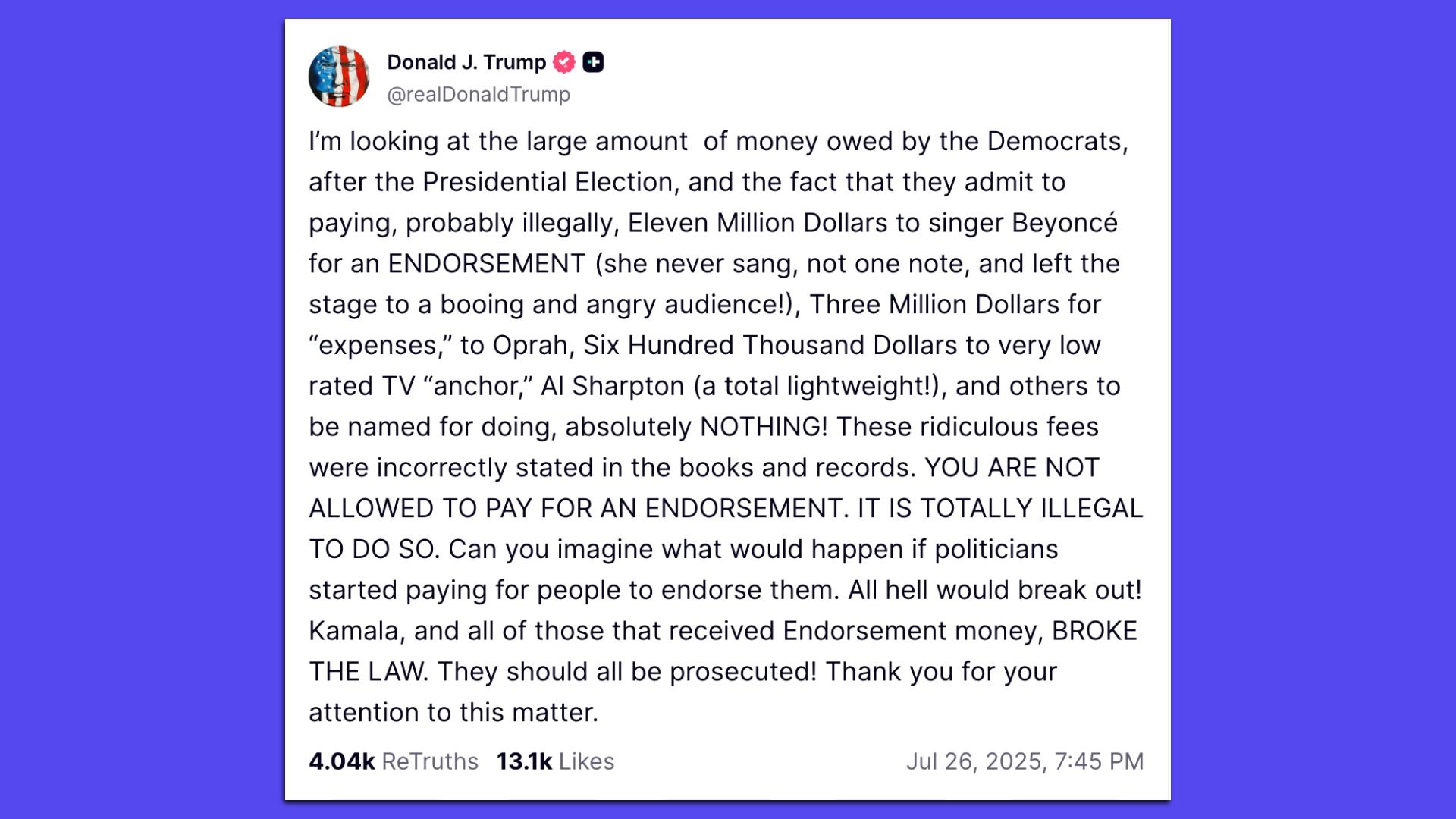
President Trump lashed out at his political opponents in a series of late-night Truth Social posts, widening his grievance campaign as pressure mounts over his handling of the Epstein files.
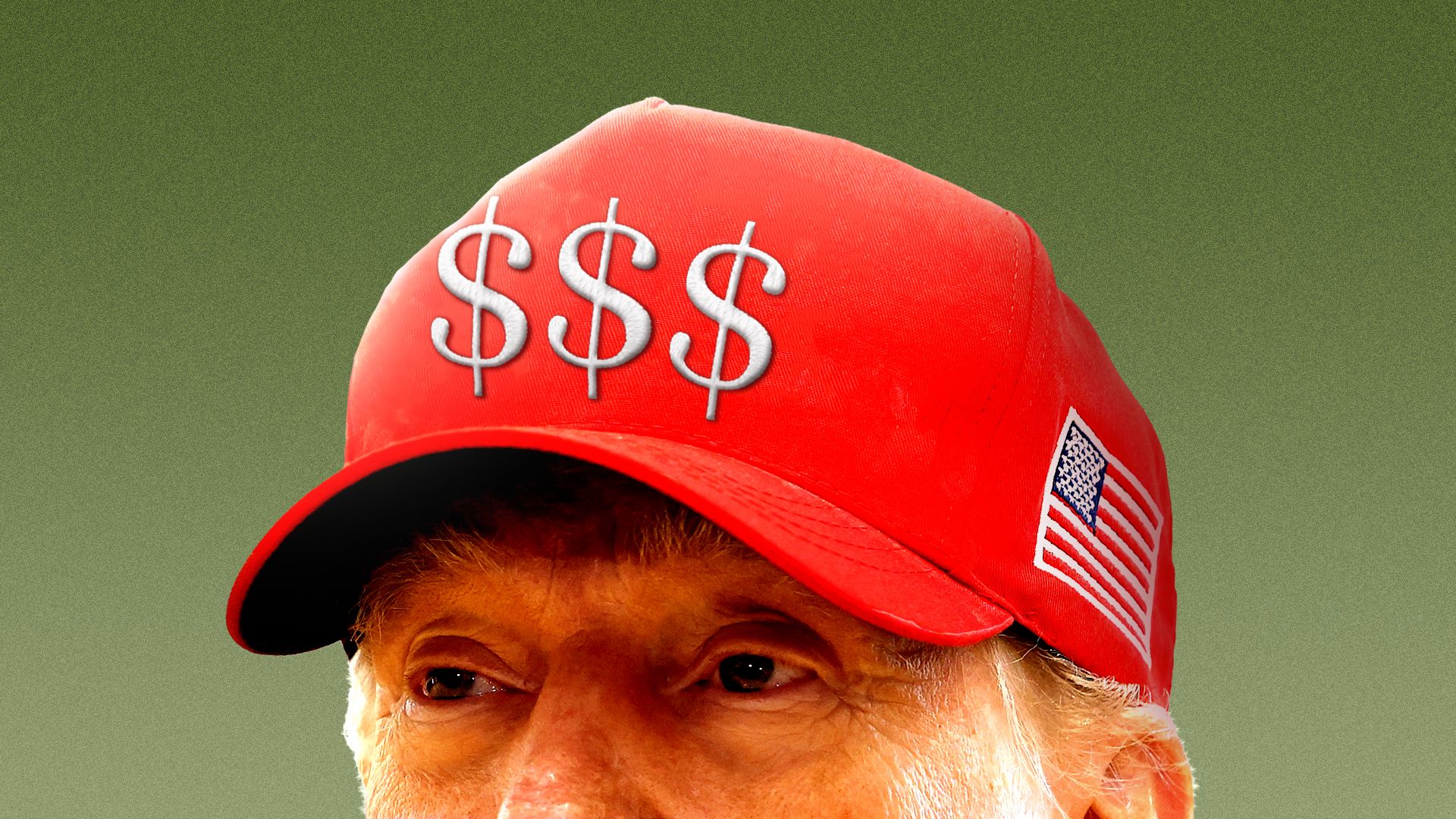
- Trump's newest target: Former Vice President Kamala Harris, whom he baselessly accused of paying for celebrity endorsements from BeyoncΓ©, Oprah and Al Sharpton in 2024.
π Between the lines: Trump's calls to prosecute former Obama officials for "treason" have set off a scramble inside the Justice Department to satisfy the president without committing to a tit-for-tat political investigation, the N.Y. Times reports (gift link).
5. π£οΈ Meddler-in-chief
If you're a leader of a major company in the U.S., President Trump may decide to meddle in your business, Axios' Emily Peck and Eleanor Hawkins report.
- Why it matters: "I've known three generations of CEOs. This is the toughest administration to work with," says Jeffrey Sonnenfeld, a professor at the Yale School of Management.
π¬ Zoom in: Trump has made a habit of front-running corporate announcements or forcing the hand of America's largest companies, whether on social media or through sweeping proclamations and executive orders.
- He declared (but overstated) the arrival of cane-sugar Coca-Cola, demanded the Washington Commanders change their name, and took credit for Apple's re-shoring announcement.
Between the lines: There's a growing belief that negotiations with the administration don't hinge on business imperatives, but are instead "all about quid pro quo," said a senior consultant who asked to be anonymous because they represent multiple companies at the White House.
π§ Here's what works β and what doesn't β when it comes to dealing with the president, according to business leaders.
- Don't lash out. Companies are a lot more careful about being publicly critical of this administration.
- Meet privately. The savviest CEOs "don't humiliate Trump, they talk with him privately," says Sonnenfeld.
- Also helpful: Saying nice things about the president publicly.
6. π Dems hit 35-year low
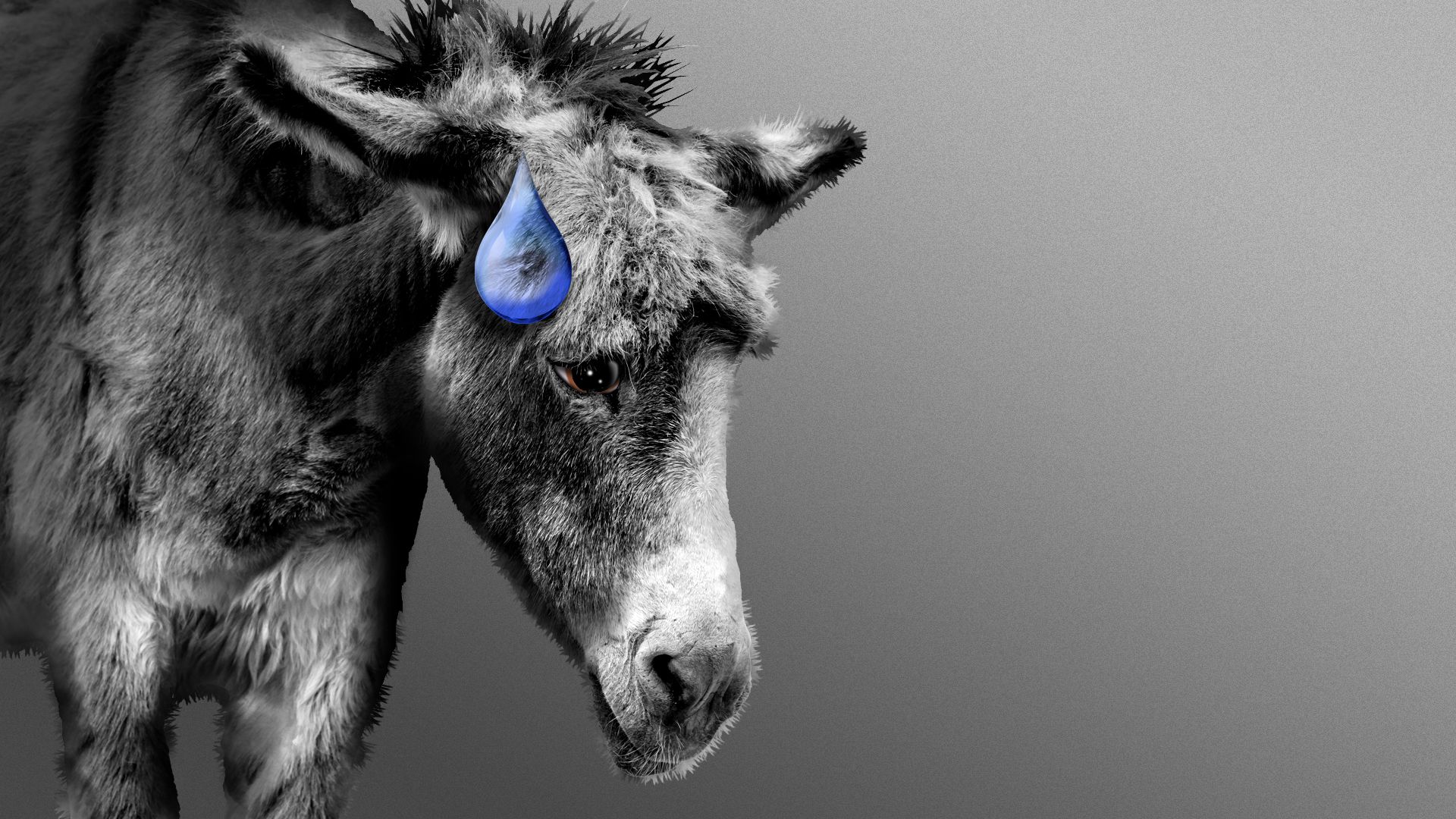
63% of voters hold an unfavorable view of the Democratic Party, according to a new Wall Street Journal poll.
- That's the highest share recorded in WSJ polls dating back to 1990, with just 33% of voters expressing a favorable view.
π€― Why it matters: For all the talk of President Trump's plunging approval rating, voters still trust Republicans over Democrats on immigration (+17), inflation (+10), foreign policy (+8) and more.
- "The Democratic brand is so bad that they don't have the credibility to be a critic of Trump or the Republican Party," said Democratic pollster John Anzalone.
Keep reading (gift link).
7. π Hot biz strategy: Buy crypto
It's the latest crypto craze: Public companies are raising money and investing it in bitcoin.
- Why it matters: It's yet another sign β along with the reemergence of meme stocks and a string of stock market records β that the market is getting frothy.
π Since the start of June, 98 companies have announced plans to raise a total of $43 billion so they can buy cryptocurrencies, The Wall Street Journal reports (gift link), citing crypto advisory firm Architect Partners.
πΌοΈ The big picture: President Trump's promise to be the "first crypto president" helped send crypto prices soaring.
- Software company Strategy (previously MicroStrategy), the first to pioneer the bitcoin-buying approach, has seen its stock more than double over the last year.
- Other companies, like e-bike maker Volcon and chip maker Sequans Communications, saw massive spikes when they announced their own crypto-buying plans, according to the Journal.
π₯ Reality check: Crypto prices tend to tank from time to time, especially after buyers get swept up in hype around a trade that seems too good to be true, writes Axios' Brady Dale.
- A crypto downturn could set off a vicious selling cycle by firms caught chasing the hype.
8. 𦬠1 for the road: World's largest wildlife overpass

Colorado is constructing what state transportation officials say will be the world's largest wildlife overpass crossing, Axios' Alayna Alvarez writes.
- The big picture: The $15 million project, expected to be completed in December, is a massive effort to keep both animals and drivers safer on one of the state's busiest stretches of highway.
π§ The overpass will span 209 feet across six lanes of traffic and measure 200 feet wide.
- It'll connect 39,000 acres of big game habitat in Douglas County to more than 1 million acres of the Pike National Forest.
π¬ Thanks for reading! Please invite your friends to join AM.
Sign up for Axios AM