Axios AM

August 12, 2021
Happy Thursday! Smart Brevity™ count: 1,190 words ... 4½ minutes. Edited by Zachary Basu.
⚡ Situational awareness: The FDA is expected to authorize a third dose of the Pfizer and Moderna vaccines for immunocompromised people as early as today. Go deeper.
1 big thing — Biden's COVID fear: Fading vaccines
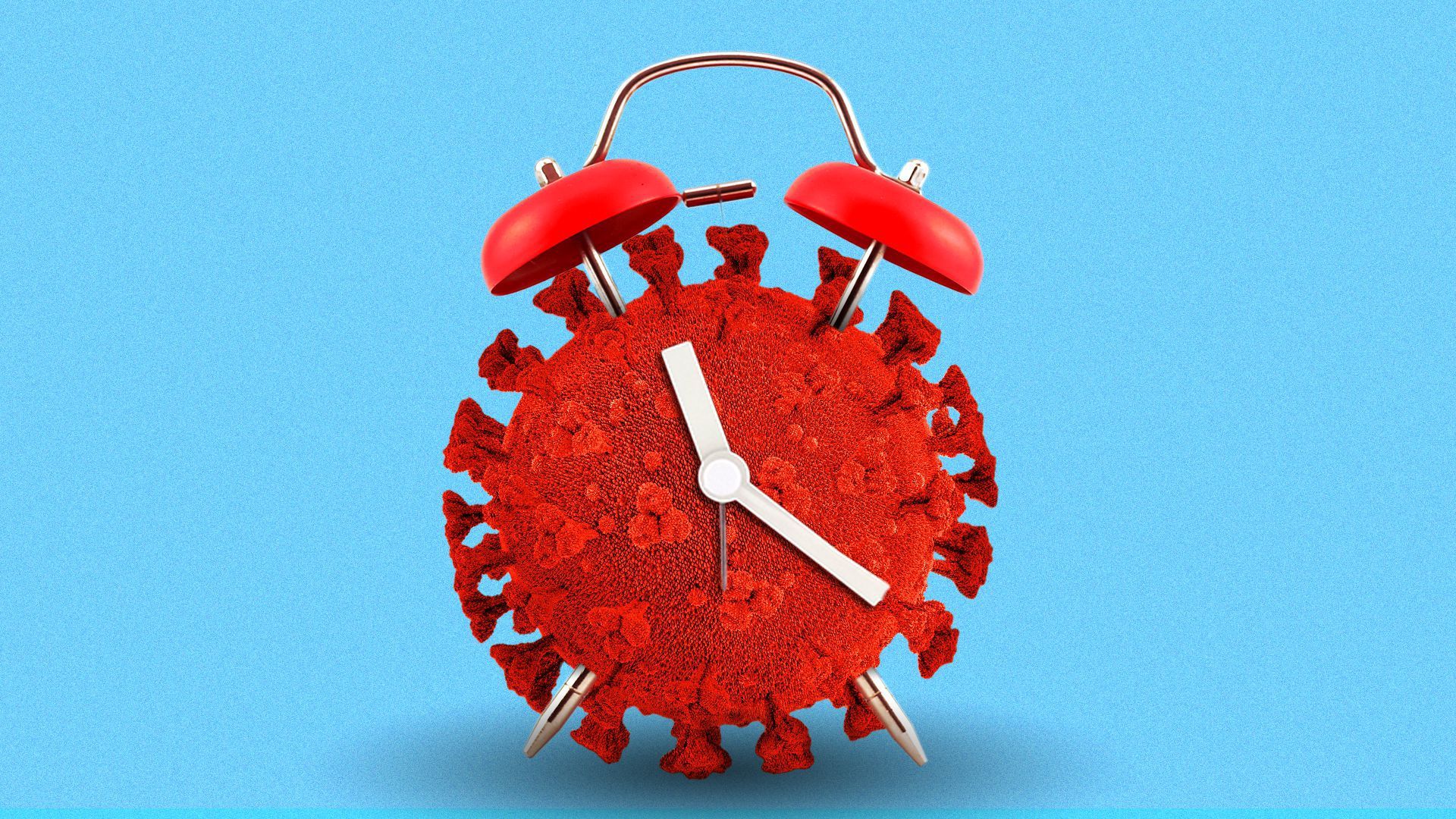
Illustration: Annelise Capossela/Axios
Surprising new research shows the effectiveness of COVID vaccines fading faster than expected, raising fears inside the Biden administration about the health and messaging consequences for Americans.
Why it matters: "I think everybody believes this wanes over time. The question is to what extent," a senior Biden official told Axios' Caitlin Owens and Sam Baker.
- "Nobody wants to be behind the eight-ball here. We want to catch it before there’s an issue, and that's why there is very intense scrutiny."
What's happening: All the COVID vaccines continue to offer almost 100% protection against death, and extremely strong protection against serious illness. Those findings have stayed consistent across the world.
- But a growing body of research shows that the vaccines are losing some potency against milder infections.
State of play: Specific numbers vary from study to study and country to country. But directionally, there's a clear trend:
- Preliminary findings from the Mayo Clinic, which have not yet been peer-reviewed, show that the Pfizer vaccine is preventing significantly fewer infections now than before the Delta variant became dominant. The same study found a smaller drop in Moderna's efficacy.
- The study has raised alarm bells within the Biden administration, as Axios reported yesterday. "If that's not a wakeup call, I don't know what is," a senior Biden official told Axios.
Pfizer itself has said it believes its vaccines are losing around six percentage points of efficacy every two months.
- Research from Israel and the U.K. reached similar conclusions.
- Moderna has also said it believes boosters will be necessary.
The bottom line: The vaccines work incredibly well at protecting against severe disease and death, meaning the benefits of getting vaccinated are immense.
2. Cops and COVID
Illustration: Megan Robinson/Axios
Notable numbers of police officers across the country are refusing the COVID vaccine, ignoring mandates and leaning on their unions to back them up, Axios' Russell Contreras reports.
- Why it matters: The Fraternal Order of Police, a national police union that represents 356,000 officers, estimates that more than 500 officers have died from COVID.
What's happening: Denver's top public safety leader said last week he'll discipline police officers and sheriff's deputies who ignore a mandate to get vaccinated. A Denver Police Protective Association survey found 57% of its members aren't vaccinated.
- A tenth LAPD employee died last week from COVID complications, the L.A. Times reported. Half of the department remains unvaccinated.
- The San Francisco Deputy Sheriffs' Association promised that deputies would quit en masse or seek early retirement over San Francisco Mayor London Breed's new vaccine mandate for officers.
3. Mapped: Taliban's four-month rampage

On April 14, President Biden announced a full U.S. troop withdrawal from Afghanistan by Sept. 11: "War in Afghanistan was never meant to be a multi-generational undertaking. ... And it's time to end the forever war."
- This pair of maps shows what's happened since then.
U.S. officials warn that the capital, Kabul, could be overrun sooner than originally feared. (WashPost)
- Go deeper: Our lead story from yesterday, "Inside the Biden administration as Afghanistan collapses."
4. Pic du jour: Twin sets

Photo: Jeff J Mitchell/Getty Images
For unknown reasons, Scotland's Inverclyde region produces an above-average number of twins, giving it the nickname "Twinverclyde."
- This fall, the primary schools added 15 pairs of twins — 13 of them pictured above.
5. ⛽ Biden's gas jam


The White House increasingly views rising gas prices as a potential political peril — and is asking some of the world's biggest oil producers to pump more oil, Andrew Freedman writes in Axios Generate.
- A White House official told Axios that the administration can simultaneously push forward its ambitious climate agenda — while being "vigilant" that middle class families don't suffer from a temporary surge in gas prices as the economy recovers.
Biden pointed out yesterday that his infrastructure bill includes no gas-tax increase: "[G]as prices are lower than they were early in this decade. But they’re still high enough to create a pinch on working families."
6. Emerging hubs: Where America is building
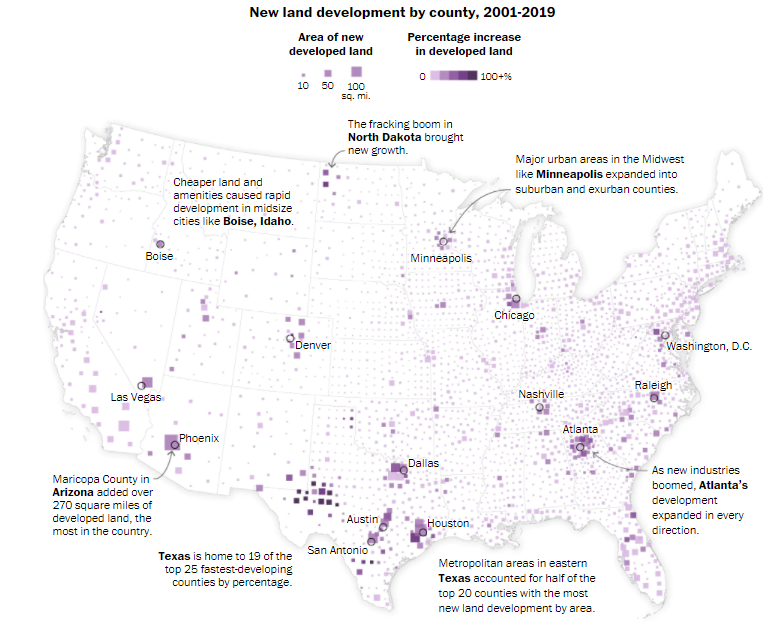
From 2001-19, the built-up landscape of America grew by more than 14,000 square miles, the WashPost's Zach Levitt and Jess Eng report from government "land cover" data released last month:
- "Suburbs are sprawling out in Arizona and Nevada as industries move to the Sun Belt, retirement communities are popping up in Florida as the baby boomer generation ages, and oil and natural gas wells have emerged across North Dakota and West Texas."
7. Pictured: One California town
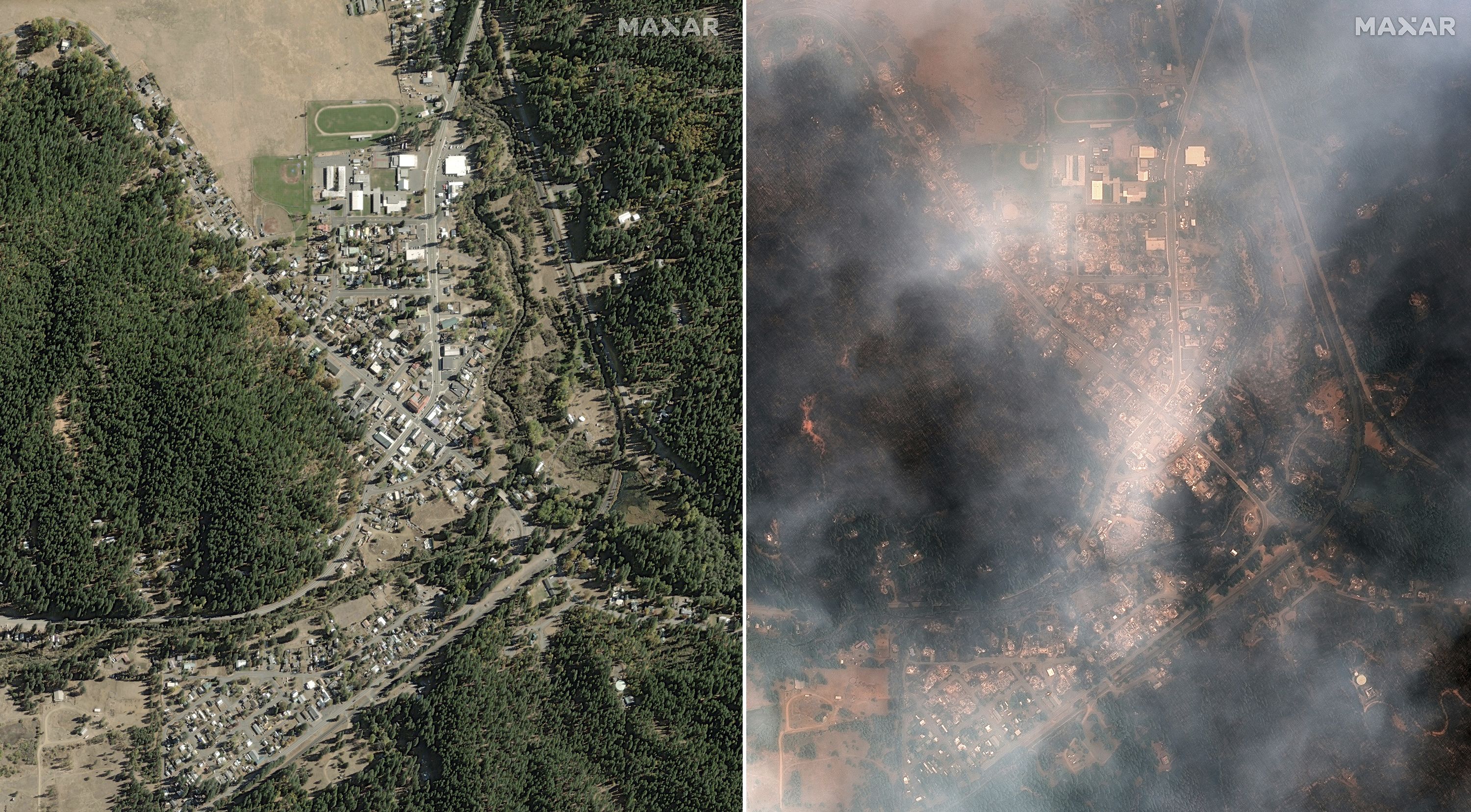
These satellite photos show Greenville, Calif. — which had a population of 817 — before and after it was nearly obliterated by Northern California's Dixie Fire, now the second largest in state history.
- A gas station, church, hotel, museum and bar were gutted in the tiny town, which dates to California's gold rush. Some wooden buildings were 100+ years old. Go deeper.
8. Charted: GOP sours on big business
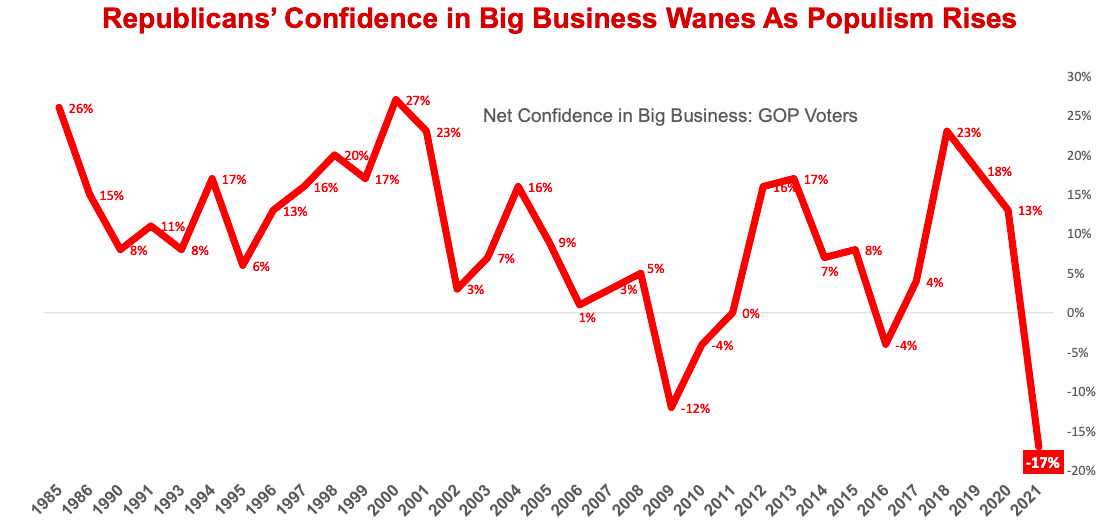
Bruce Mehlman of Mehlman Castagnetti Rosen & Thomas found this clever way to visualize rising GOP populism, in a preview for Axios AM readers of one of the famous slide decks he uses for client talks.
- See the full deck, "Failures' fallout."
9. 🗞️ N.Y. Times changes newsletter strategy
The N.Y. Times is rolling out a slew of subscriber-only newsletters from news and opinion writers, as a way of delivering more benefits to paying customers, Axios Media Trends author Sara Fischer reports.
- At least 18 new and existing newsletters will only be available to subscribers, beginning Aug. 16.
- Seven opinion newsletters will be introduced, said Kathleen Kingsbury, The Times' Opinion editor. Writers include Times tech opinion columnist Kara Swisher; writer and sociologist Tressie McMillan Cottom; and Jay Caspian Kang, previously a writer-at-large at the Times Magazine.
Between the lines: The rise of independent publishing platforms like Substack is inspiring newsrooms to experiment with more personality-driven content, mostly via newsletters and podcasts.
- A few Times journalists have left for Substack.
- Signaling the case The Times can make in recruiting and retaining journalists, Kingsbury pointed to the paper's "unrivaled audience, stability, and infrastructure."
10. 1 smile to go: Always on our phones

In a break from protocol, Pope Francis took a cellphone from an aide and chatted animatedly while standing at center stage in a Vatican auditorium for his weekly public audience yesterday, AP reports.
- The pope gestured with his free hand as if the caller could see him.
- He twice moved his right hand as if he were signing something.
This pope has had quite a lot to say about phones:
- He said in 2019 that priests taking cellphone pictures during Mass is "a very ugly thing": "The priest says 'lift up your hearts.' He does not say: 'Lift up your cell phones to take pictures.'"
- In 2017, he said: "What would happen if we treated the bible like we do our mobile phones? ... If we turned around to retrieve it when we forgot it? If we carried it with us always, even a small pocket version?"
- He has also urged us to switch them off at times, and put them away during meals. But I guess not during audiences!
📬 Please invite your friends, family, colleagues to sign up here for Axios AM and Axios PM.
Sign up for Axios AM

Catch up with the most important news of the day