Axios AI+

September 18, 2025

Tune in here starting at 2:25pm ET to hear conversations live from NYC at Axios' inaugural Media Trends Live event, featuring radio and media personality Charlamagne tha God, Redstone Family Foundation president Shari Redstone, Snap CEO Evan Spiegel, ESPN chairman Jimmy Pitaro and more.
Today's AI+ is 1,300 words, a 5-minute read.
Situational awareness: Nvidia announced this morning it will invest $5 billion in Intel and collaborate with its rival on developing chips for data centers and PCs, in a move that follows the U.S. government's taking a nearly 10% stake in Intel.
1 big thing: Washington wrestles with AI job cuts

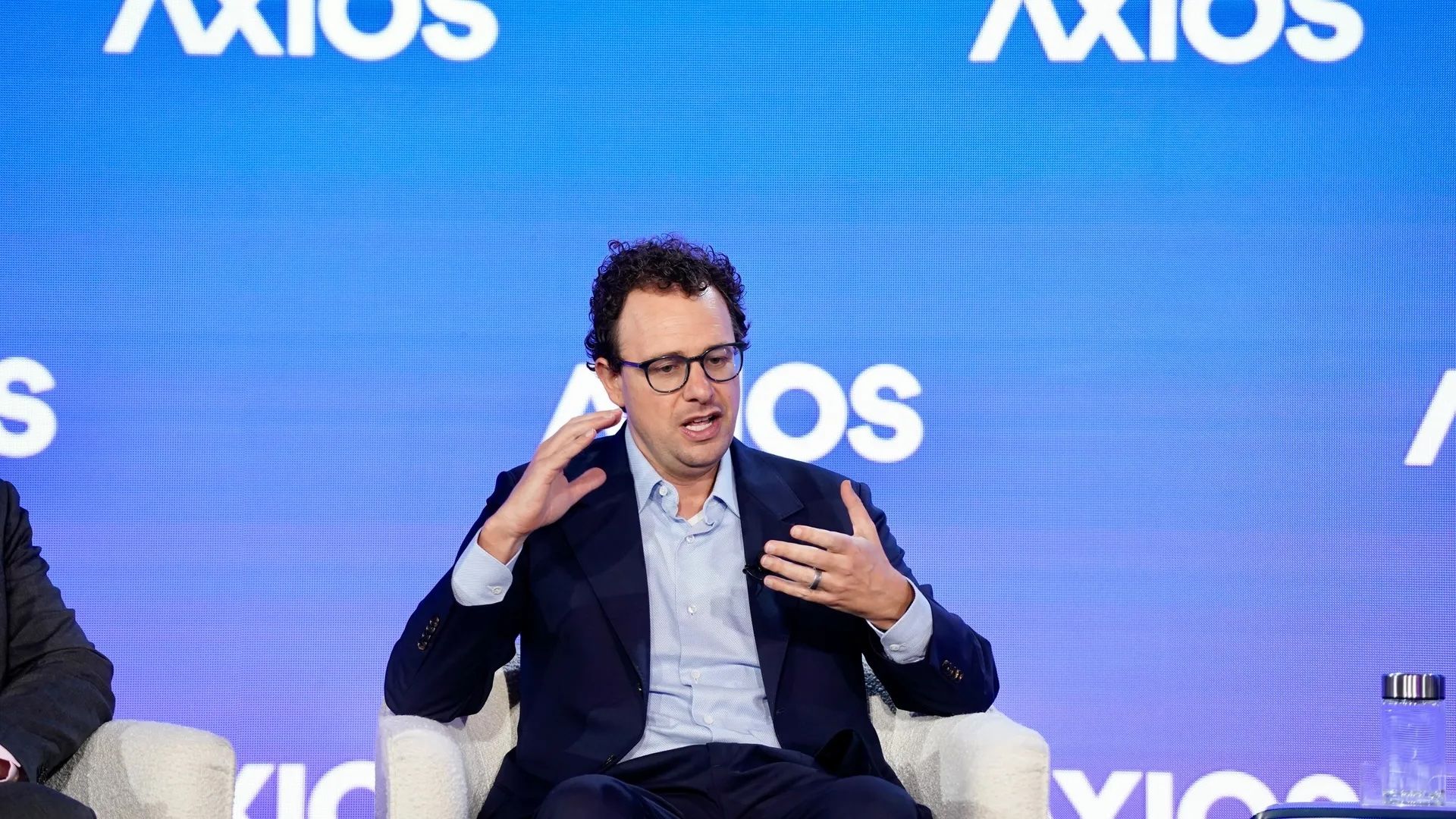
Our 2025 AI+ DC Summit mapped a stark divide in approaches to handling a predicted tidal wave of jobs disrupted or eliminated by AI.
Why it matters: Whether and how to help workers navigate a job market reshaped by AI will be one of the most consequential choices the U.S. government makes in the next few years.
Anthropic CEO Dario Amodei revisited his prediction of a potential white-collar bloodbath from AI in an interview with Axios CEO Jim VandeHei that kicked off the event.
- That outcome isn't certain, Amodei said — "When an exponential is moving very quickly, you can't be sure. ... I think it is likely enough to happen that we felt there was a need to warn the world about it and to speak honestly."
- Anthropic co-founder Jack Clark, who oversees the company's policy operation, added, "You need some kind of policy response at the scale of disruption we expect in the next five years."
As AI's displacement of human jobs continues to accelerate, Amodei said, a public-sector fix may be in order.
- "I suspect at the end of this that the government is going to need to step in, especially during a period of transition, and provide for people," Amodei said.
- "One thing I've suggested is, maybe you might want to tax the AI companies."
Yes, but: At the end of the summit, White House economic adviser Jacob Helberg argued for leaving more of the business of job-market adaptation to private industry.
- "The notion that the government necessarily has to hold the hands of every single person getting displaced, you know, underestimates the resourcefulness of people," Helberg said in an interview with Axios' Maria Curi.
- "The top-down approach, where we assume that the government has to have the answer to everything, actually underestimates the incredible adaptability and resourcefulness of the private sector."
Between these two poles, legislators, executives and policymakers offered a variety of alternative ideas for protecting workers in an era of disruption.
Rep. Ro Khanna (D-Calif.), in an interview with Axios' Ashley Gold, suggested the U.S. might need a sort of public employment agency.
- "I believe we need a future workforce administration to hire from schools across the country ... an AI Academy. ... It needs to be a government agency, putting them to work for a few years so their skills don't atrophy."
Sen. Mark Kelly (D-Ariz.) offers a different approach as part of a larger "AI for America" plan he unveiled yesterday that involves establishing a public "trust fund" paid for by tech companies.
- "There is a possibility we could have millions of people put out of work by artificial intelligence. Hey, AI companies need customers. You're not going to have customers if people don't have jobs," Kelly said in an interview with Ina.
- Upskilling and retraining workers is the "biggest thing" that lawmakers should work on now, and that effort "also benefits AI companies," he said.
- Kelly's proposal outlines several possible ways tech companies might contribute to such a fund: by paying more for their use of public resources (like power, water and land), through additional taxes on profits from digital ad tools powered by AI; or from new taxes on "AI-based revenue windfalls."
The bottom line: This debate is just getting started — and is sure to play a role in both the 2026 midterm elections and the 2028 White House race.
2. Race with China splits AI leaders, policymakers
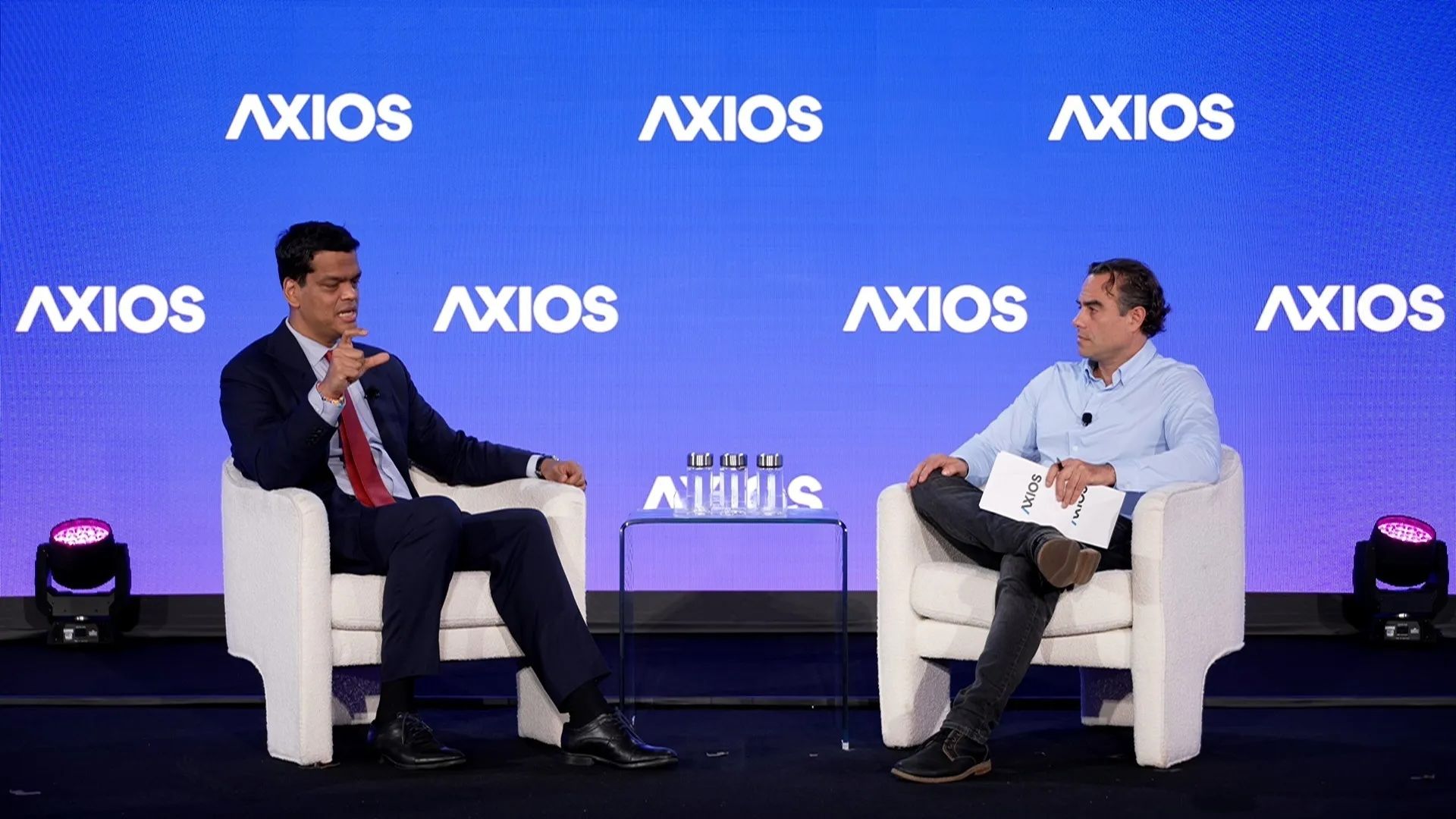
U.S. leaders in government and business agree that the U.S. must win an AI race with China — but that's where the consensus ends.
Why it matters: Choices the U.S. makes today about U.S.-China trade could shape the AI industry's global fate for decades.
Driving the news: Onstage talks with key legislators, policymakers and executives at the AI+ DC Summit revealed deep rifts over how to handle the sale of advanced AI chips to China — and where U.S. policies on AI regulation and safety should land to best compete with Beijing.
The U.S. needs a "metric for winning" in the race with China, White House AI adviser Sriram Krishnan told Axios' Dan Primack.
- Krishnan said he measures American success via market share with its rival. That would put a premium on U.S. companies' global sales — including to China.
The other side: America's edge in AI chip development may be the only advantage the U.S. still has over China, Anthropic CEO Dario Amodei said at the summit — and the government should protect that advantage.
- "It is mortgaging our future as a country to sell these chips to China," Amodei said.
- The Trump administration has advanced plans to let American companies like Nvidia and AMD sell chips to China, with the government taking a 15% cut of revenue.
Yes, but: Lisa Su, CEO of U.S. chipmaker AMD, disagreed with Amodei.
- "Our most advanced chips are export controlled, and they should be export controlled, but there is also an opportunity for us to get an AI stack that is based on American technology out into the world, and I think that is a good thing," she said at the event.
Zoom out: Industry and government leaders at the AI+ Summit also disagreed over how to think about AI regulation in the shadow of the race with China.
- Sen. Ted Cruz (R-Texas) argued that the U.S. must prioritize beating China over efforts to regulate AI safety.
- "Whichever nation wins the race for AI, the values of that nation will dominate AI," he said.
- Last week, Cruz introduced a bill to create a federal "sandbox" that would let AI companies seek temporarily relaxed regulations.
Navrina Singh, CEO of Credo AI, told Ina that America's effort to win out over China would falter if businesses and consumers don't trust the U.S.' safety framework.
- "If there's a conversation about the best of ... AI innovations, and we are not talking about governance, we are not talking about trust, I think we should really count ourselves out then," Singh said.
Our thought bubble: The race with China has become an all-purpose card to play in debates about AI policy — you can use it to support almost any position.
Go deeper: AI's race in the dark with China
3. Meta unveils new smart glasses
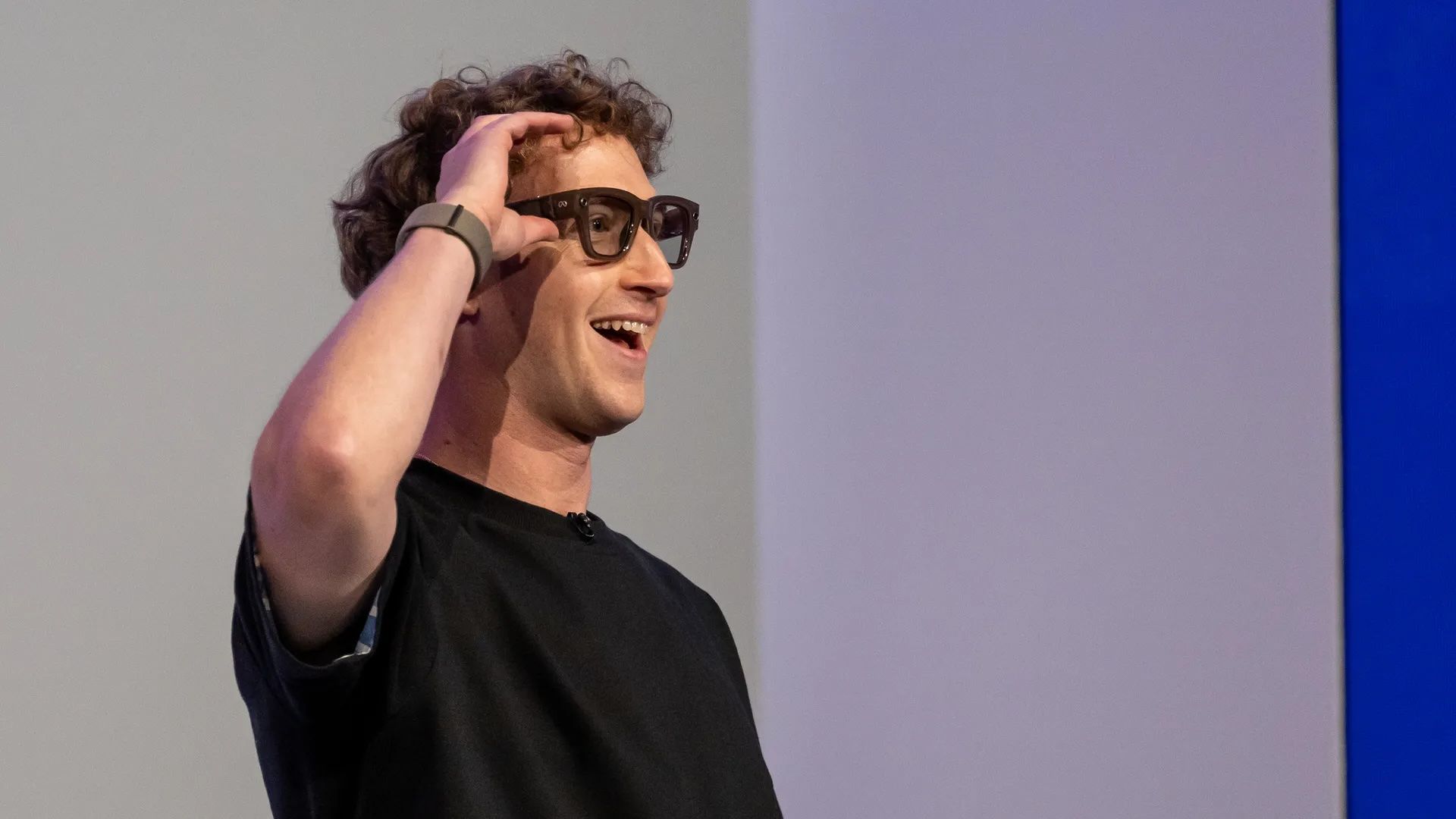
Mark Zuckerberg announced that Meta's newest AI-powered smart glasses include a tiny display and can be controlled by a neural wristband using "barely perceptible movements," AP reports from Menlo Park, California.
Why it matters: The Meta founder, chair and CEO evangelizes glasses as the next step in human-computer interaction — beyond keyboards, touch screens or a mouse.
"Glasses are the only form factor where you can let AI see what you see, hear what you hear," Zuckerberg said during the Connect developer conference.
- Glasses users can read text messages, make video calls and follow map directions on the devices.
- The glasses, Meta Ray-Ban Display, will be available Sept. 30 for $799.
Go deeper: Hands on with Meta's Orion glasses: a glimpse of the future
4. Training data
- An exodus of key top executives from Elon Musk's xAI has been fueled by disagreements over aggressive financial projections and management by Musk's lieutenants, sources tell the Wall Street Journal.
5. + This
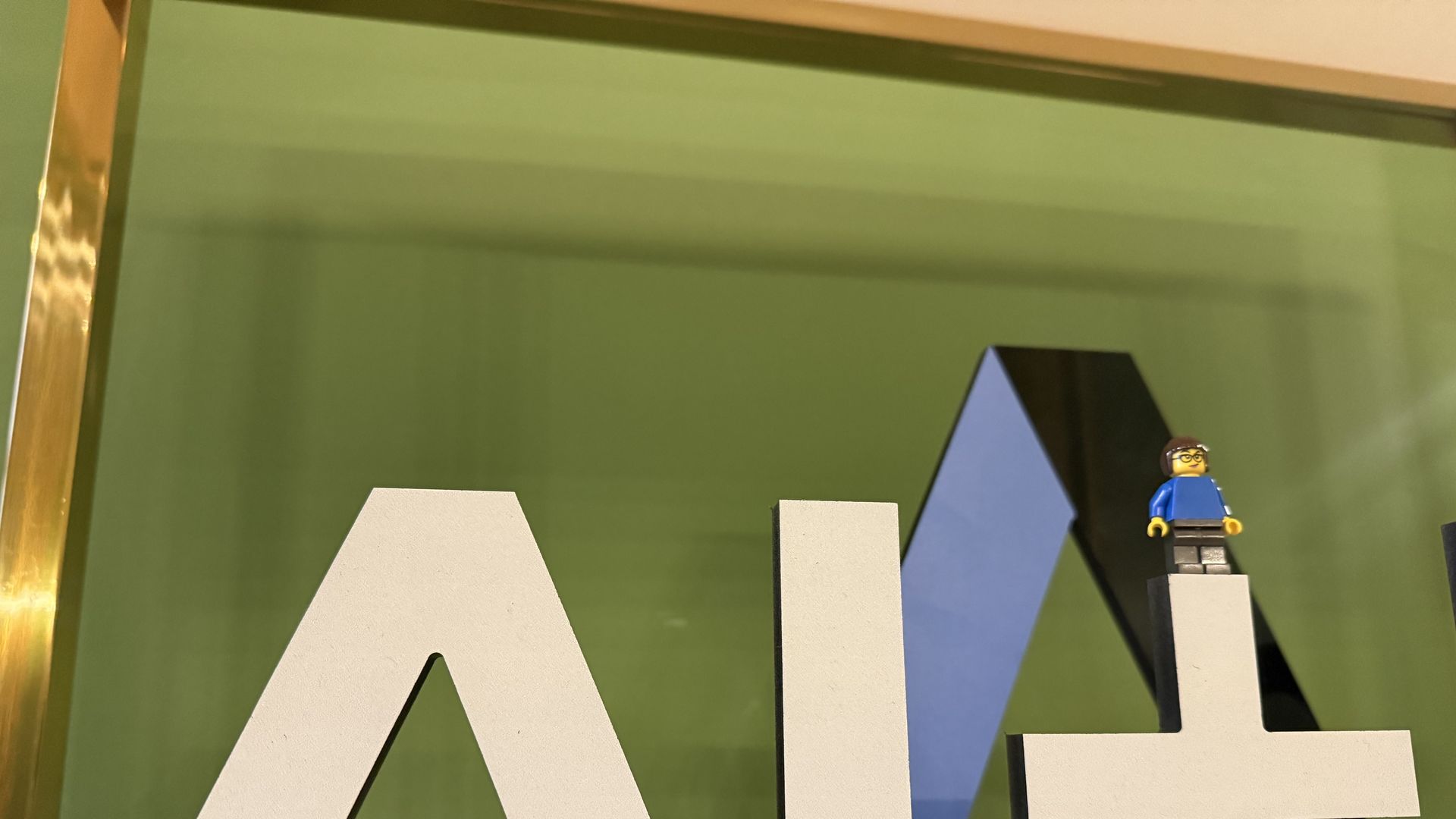
It was great to meet with so many readers at our summit yesterday. Even Lego Ina had a blast.
Thanks to Scott Rosenberg and Megan Morrone for editing this newsletter and Matt Piper for copy editing.
Sign up for Axios AI+
