Axios AI+

September 05, 2025

Hello from San Francisco, where we had summer for approximately three and a half days and now it's cold again. Today's AI+ is 988 words, a 3.5-minute read.
1 big thing: Melania's "robots are here" message

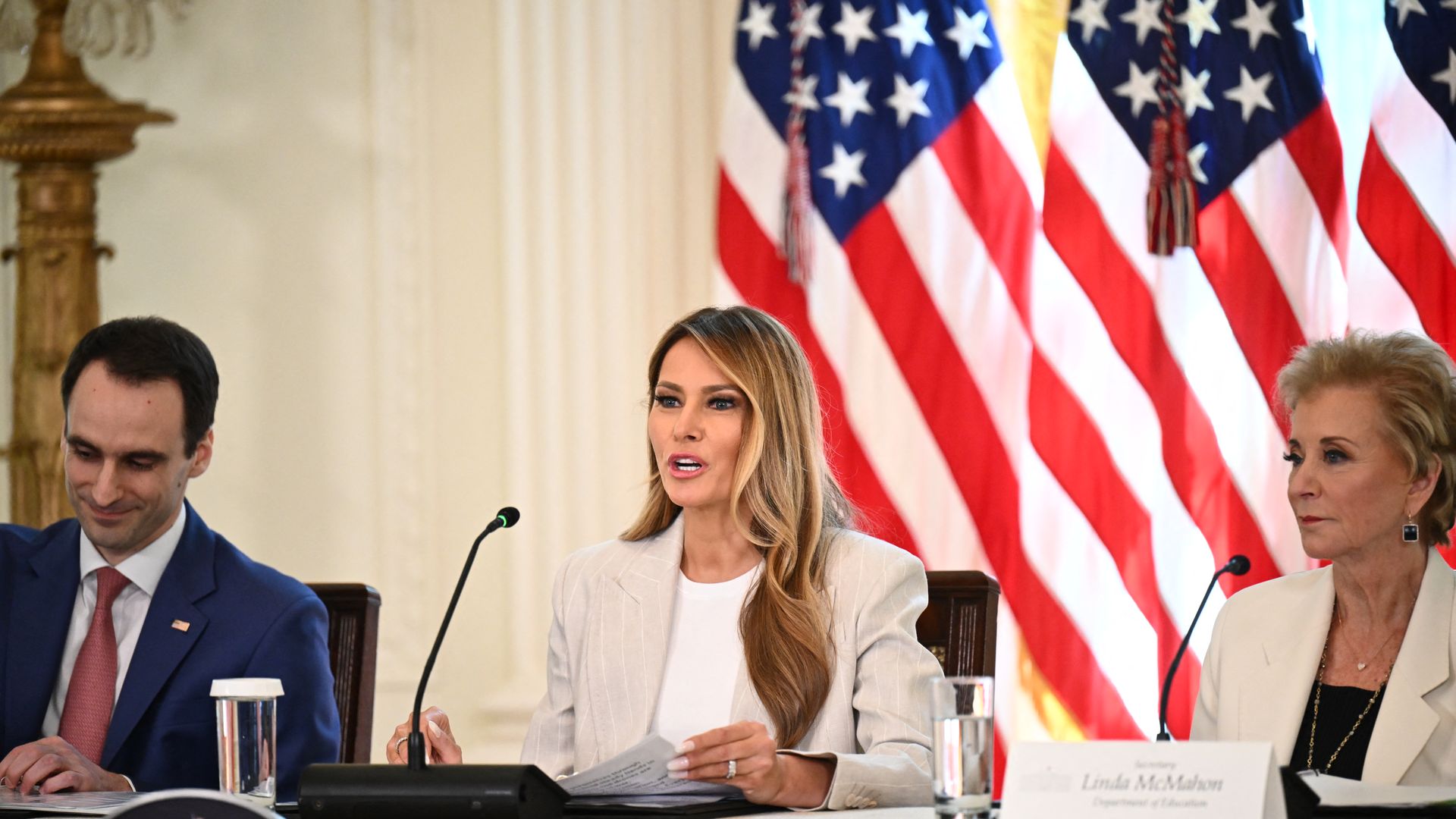
First lady Melania Trump called early AI literacy essential to America's future at a White House event yesterday with tech CEOs and cabinet officials.
Why it matters: The White House sees AI in K-12 education as a key part of ensuring American competitiveness.
- Administration officials are doubling down on AI programs and grants and arguing that AI will help, not hurt, American workers.
- "The robots are here. Our future is no longer science fiction," Trump said.
Driving the news: The first lady's office announced an "Age of AI" challenge for students and teachers last month, and yesterday's announcements were made as part of the White House Task Force on AI Education.
- Tech giants — including Amazon, Google, Microsoft and OpenAI — pledged new donations and AI education programs for K-12, college students and workers as part of yesterday's event.
- Trump was flanked by a number of cabinet officials who discussed AI initiatives within their agencies, with Energy Secretary Chris Wright saying the U.S. needs to "massively grow our electricity production" to meet AI demands.
- Tech leaders in attendance included the CEOs of IBM, Google, Microsoft and OpenAI. David Sacks, the White House's AI and crypto czar, also attended. OpenAI CEO Sam Altman was spotted in the first row.
State of play: The first lady has prioritized kids' online safety, championing the passage of the TAKE IT DOWN Act earlier this year.
- The law aims to bolster protections against nonconsensual sexual imagery, including AI-generated deepfakes and revenge porn.
Inside the room: Later yesterday evening, President Trump hosted more than two dozen tech and AI CEOs at the White House for a lavish dinner celebrating Trump's role in American AI investment, with guests including Altman, Apple's Tim Cook, Microsoft co-founder Bill Gates and Google founder Sergey Brin.
- Altman thanked Trump "for being such a pro-business, pro-innovation president," adding: "It's a very refreshing change. ... I think it's going to set us up for a long period of leading the world, and that wouldn't be happening without your leadership."
- Cook specifically thanked the first lady for focusing on education.
- Former White House friend Elon Musk was not at either of yesterday's White House events, though he posted on X that he had been invited but couldn't attend.
Yes, but: The afternoon event concentrated on ways AI could help teach kids rather than discussions of potential risks to their safety and mental health.
- "As leaders and parents we must manage AI's growth responsibly. During this primitive stage, it is our duty to treat AI as we would our own children — empowering, but with watchful guidance," the first lady said.
The White House events come on the heels of a series of high-profile reports concerning teenagers who died by suicide after engaging with AI chatbots.
- The FTC reportedly plans to question AI companies about chatbots and children.
What's next: AI classroom policies are still very much in flux as students enter the fourth school year with access to ChatGPT.
- Educators are struggling to teach kids how to use generative AI responsibly, without allowing them to use the tools as a chatbot cheating assistant.
2. Ruling frees Google to double down on AI

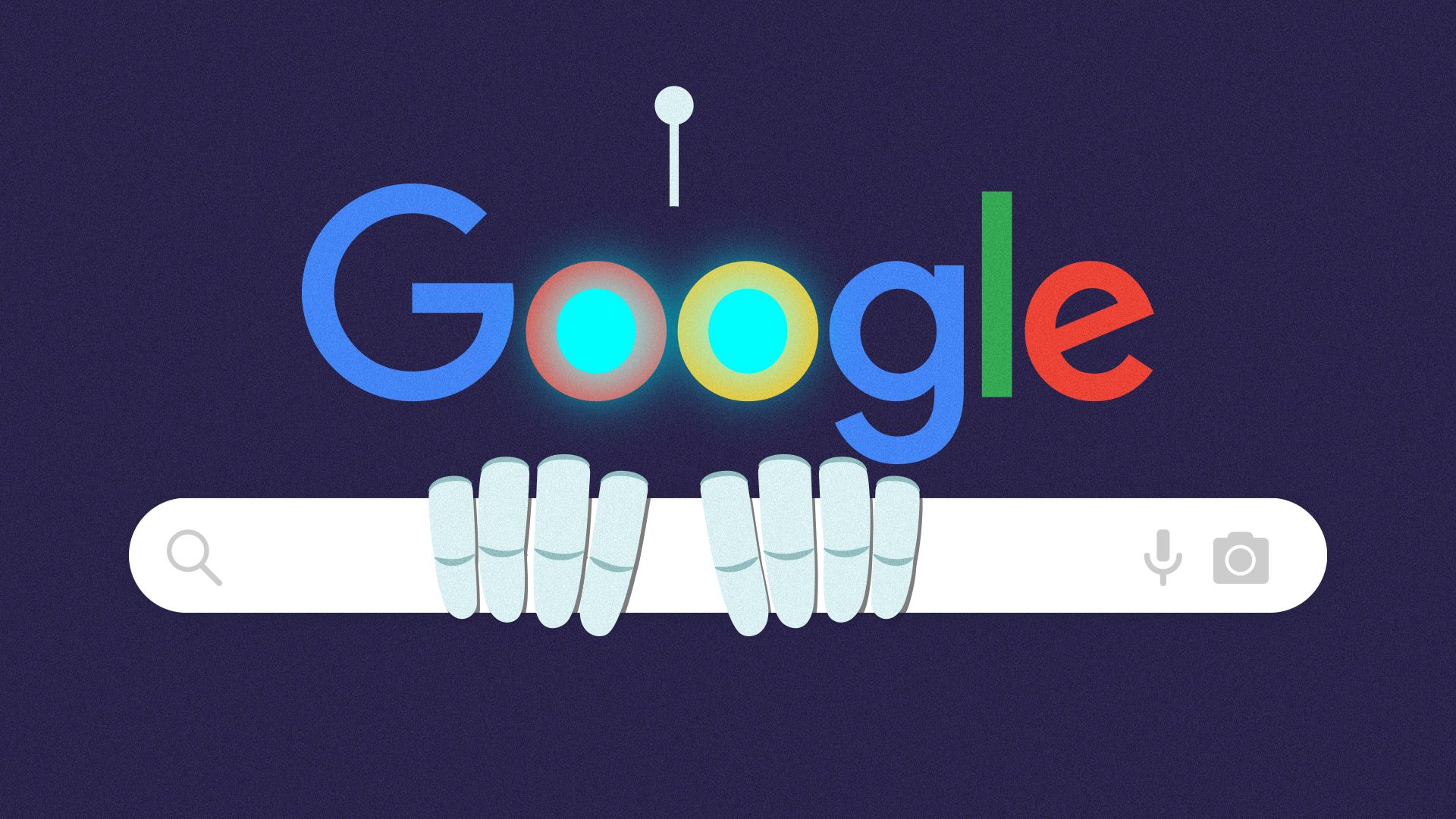
Google can thank AI for proving that the search giant is facing plenty of competition.
- With a crucial antitrust case over, the company may have more room to fight in the AI arena.
Why it matters: Wall Street is suddenly a lot more bullish on parent company Alphabet's prospects.
What they're saying: "This clears the path for Google to dive into the deep end of the pool on AI," Dan Ives, global head of technology research at Wedbush Securities, told Axios.
- OpenAI and Perplexity made clear their interest in potentially buying the Chrome browser, showing how valuable Google's market position is, even amid the AI revolution.
Zoom in: A judge's ruling framed AI as a direct threat to the primacy of traditional internet search, undercutting the DOJ's case that Google holds an unshakable monopoly.
- The court sees AI as Google's competition, and it spent about half of the 200-plus-page ruling discussing exactly that.
- But the company still faces constraints, like sharing data with competitors and a bar on locking in long-term search deals.
Zoom out: For investors, the ruling removes a key overhang. Google was the third-worst performer among the "Magnificent 7" big tech companies this year until markets priced in a legal win. That slump left Alphabet looking cheap.
- The stock is currently trading around 20 times forward earnings, which is 10% below its historic average — and the cheapest in the Mag 7.
- Google is "basically a value stock," writes Chris Marangi, co-CIO of value at Gabelli Funds.
The intrigue: The ruling's emphasis on AI as a competitor for Google paints the bear case for the stock pretty well.
- Investors will want to see a new AI story from Alphabet in short order, whether that's growth in its Gemini platform or higher adoption of AI mode in Google search.
3. Training data
- OpenAI, collaborating with Broadcom, will start producing its own AI chip next year for internal use, reducing its reliance on Nvidia, sources tell the Financial Times.
- ProRata.ai, a startup focusing on helping publishers earn revenue via AI, has raised a new $40 million round, CEO Bill Gross exclusively tells Axios.
- OpenAI announced a certificate program and a new jobs platform designed to connect employers with workers who understand and can use AI tools. (OpenAI)
- Warner Bros. Discovery is suing Midjourney, alleging that the company's AI tools create images and video of Superman, Batman, Bugs Bunny, Daffy Duck and Tom and Jerry.
4. + This
Enjoy this Instagram Reel or Facebook post featuring a clip from a 1975 episode of the PBS kids' show "ZOOM," where one of the young hosts invents AI tutors.
Thanks to Scott Rosenberg for editing this newsletter and Matt Piper for copy editing.
Sign up for Axios AI+
