Axios AI+

June 15, 2026

Ina here, sending congrats to the Carolina Hurricanes and New York Knicks for winning the Stanley Cup and NBA championships, respectively. (And impressively.) Today's AI+ is 1,168 words, a 4.5-minute read.
1 big thing: Anthropic's Fable 5 scramble

Anthropic's much-anticipated, powerful Fable 5 AI model lasted just days in the public's hands, after an urgent report from Amazon triggered a scramble inside the White House that ended in a dramatic Friday night takedown.
Why it matters: The episode shows how the government and AI industry are making up the rules in real time as increasingly powerful models raise national security concerns.
- It also raises questions about why Amazon would strike such a disruptive blow against a company in which it is a major investor.
Driving the news: The Trump administration gave Anthropic 90 minutes Friday to take down Fable and Mythos — its most powerful models — before subjecting them to sweeping export control rules, according to an Anthropic source.
Catch up quick: At 1pm ET on Friday, Anthropic received a call from the government instructing it to roll back the release of the Mythos and Fable models because of a "national security threat," but with no further details, the source said.
- The government and Anthropic had already worked on pre-release testing of Fable — which is a general-use version of Mythos — and the company had received explicit approval to deploy.
- "We immediately sought to understand the specific nature of the threat so we could remediate it," the source said, but the government held firm on the demand.
- On Friday about 5:30pm ET, the White House sent Anthropic a letter, first reported by Axios, informing the company the Fable and Mythos models would be subject to sweeping export control rules. By about 10pm, users lost access to Fable.
Behind the scenes: On Thursday, Amazon CEO Andy Jassy expressed concerns to Treasury Secretary Scott Bessent that Anthropic's most powerful models could be jailbroken.
- Amazon shared a report showing how its researchers were able to jailbreak and access portions of the Mythos model that pose a national security threat, sources familiar told Axios.
- During the conversations, Anthropic officials laid out how the alleged Amazon jailbreak was relatively simple, could be achieved with other models, and did not demonstrate a flaw in Fable 5's safety systems.
What they're saying: "As a leading cloud provider that serves a large number of private and public sector customers, it's not uncommon for governments to seek our counsel on potential security risks. When they occur, we don't share the details of these discussions," an Amazon spokesperson said in a statement.
The big picture: The export control letter targets one company, but people across the industry are watching because it could become a precedent.
- Under the controls, not only would Anthropic's most advanced models be inaccessible to foreign adversaries — something Anthropic says it was already preventing — but they would also be inaccessible to U.S. allies or foreign nationals in the U.S.
- The implications were immediately felt inside Anthropic, where many foreign-born workers need access to the company's models.
Between the lines: The government's response "seems way out of line with what's actually in the research report," Luta Security CEO Katie Moussouris, who Anthropic shared the Amazon report with, told Axios.
- Moussouris said the researchers were able to find security vulnerabilities by asking questions normal defenders would ask AI, which is exactly what the model was intended to do.
- "All AI models need to be able to help defenders in exactly this way, or we won't be able to scale our defense against attackers," Moussouris said.
The other side: Anthropic failed to "honor" a recent cyber executive order, administration officials claim, and the company's purported failure to take the matter seriously led to this current scramble.
- "Anthropic has not done a great job at trying to speak to the administration and appreciate the ideological differences," one source familiar with the administration's thinking said.
- "It's like they just speak in different languages," the source said, adding that the company has not figured out how to communicate with this administration.
What we're watching: Senior technical Anthropic staff are in Washington to meet with White House officials and try to repair the dispute, a source close to the company tells Axios.
- Anthropic is also set to meet today with the CIA, Commerce Department and White House official Michael Kratsios to work through adhering to a cyber executive order, officials told Axios.
2. Cyber leaders defend Anthropic's banned model
Prominent cybersecurity leaders — including CISOs, security researchers and executives at Adobe, Zoom and Sophos — are urging the Trump administration to reverse restrictions on Anthropic's most advanced AI models, arguing the move hurts cyber defenders more than attackers.
Why it matters: Pulling back access to Anthropic's first publicly available Mythos-class model could kneecap cyber defenders just as they're bracing for a wave of AI-powered hacking threats, the leaders argue.
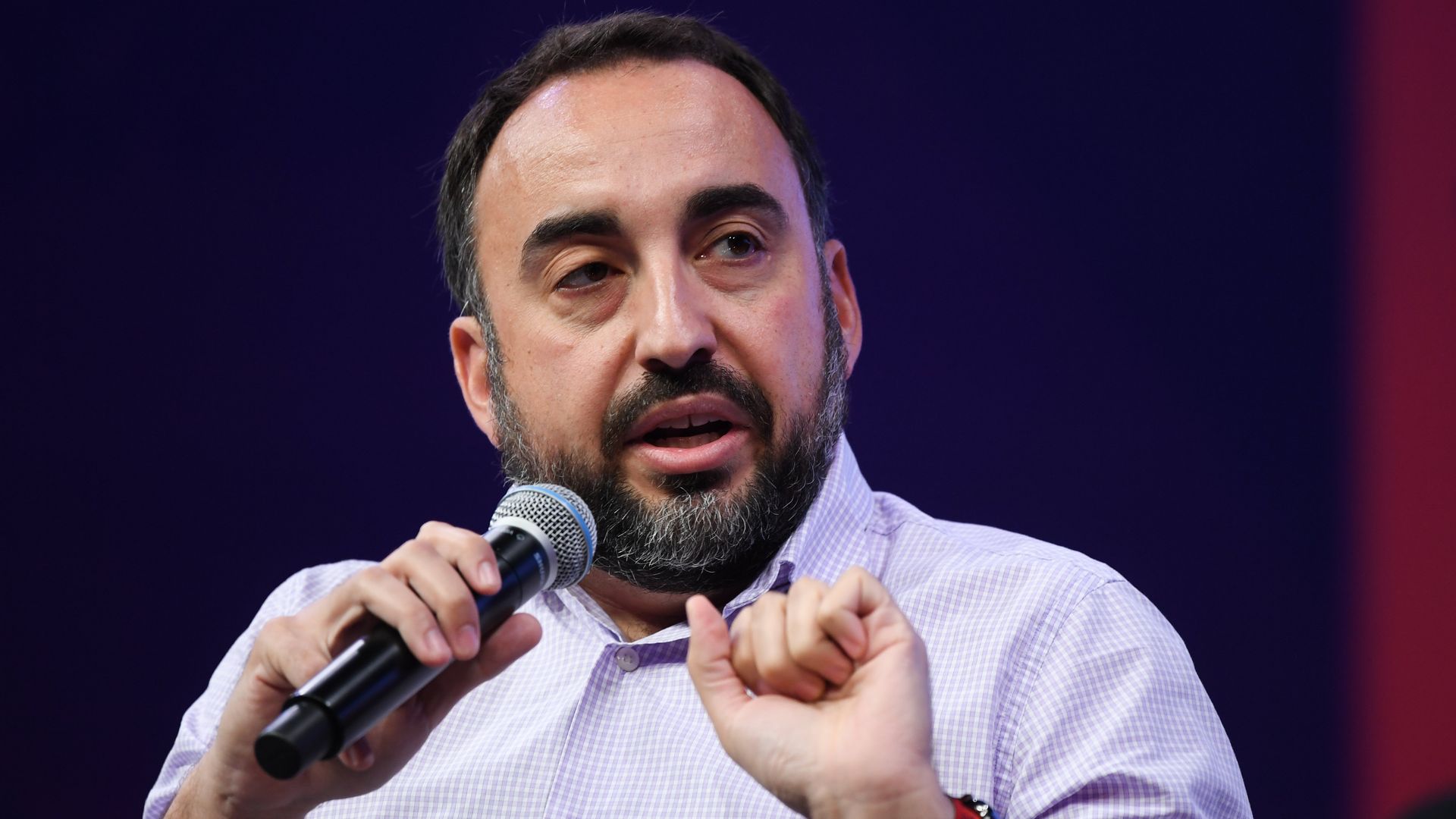
Driving the news: The loosely organized group of experts, led by former Facebook chief security officer Alex Stamos, argue in the letter that the issue Amazon researchers flagged exists across other leading AI models, too.
- As of Sunday evening, the letter had over 40 signatories. Luta Security CEO Katie Moussouris, SocialProof Security CEO Rachel Tobac, Veracode co-founder Chris Wysopal, prominent computer scientist Paul Vixie, Sophos CEO Joe Levy and Nvidia security researcher Aaron Grattafiori are among those who signed the letter.
- "This action has taken the best models away from defenders, created market uncertainty, and risked America's AI leadership without any real risk to justify it," the letter says.
3. SpaceX goes 19% higher in first day of trading
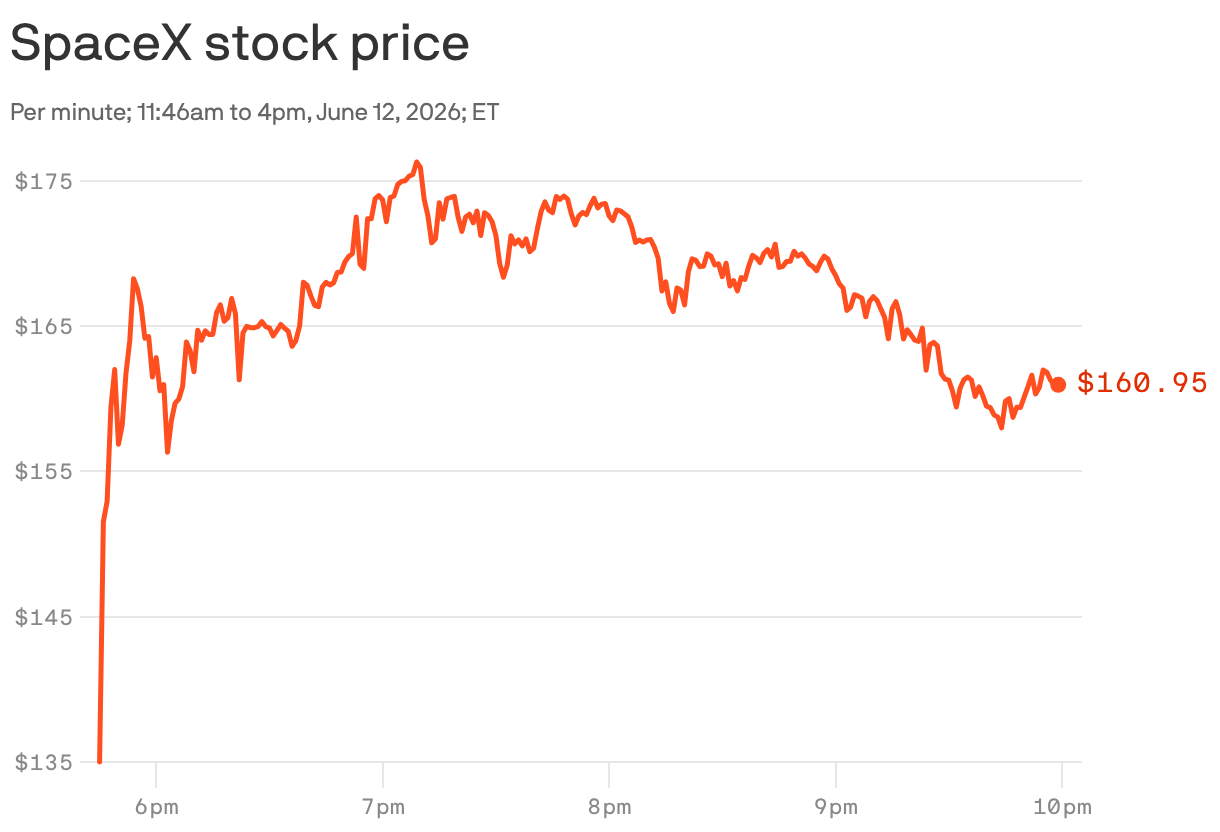
SpaceX shares rose 19% in their first trading day, landing it as the sixth-largest company in the U.S.
Why it matters: Elon Musk's company ended Friday with a $2.1 trillion market cap, officially the biggest IPO in U.S. history.
Driving the news: SpaceX shares priced at $135 late Thursday afternoon.
Friction point: SpaceX went into its IPO trading at 90 times its sales. (Not profits. Sales.)
- That indicates a valuation that is divorced from underlying business fundamentals, Adam Johnson, portfolio manager at the Bullseye American Ingenuity Fund, told Axios.
- Historically, the majority of companies that go public underperform the market in the first three years, according to analysis from University of Florida finance professor Jay Ritter.
Yes, but: The top-performing companies in the S&P 500 are all trading at a premium to their underlying earnings, a dynamic that has been exacerbated by the euphoria around the AI boom.
- "Hype is a borrowing, if you will, in the short term against future performance, so some companies will repay it," Isabelle Freidheim, founder at Athena Capital, told Axios.
What we're watching: What happens when the lock-up period ends.
4. Training data
- How AI is making health care even less affordable. (Axios)
- Microsoft CEO Satya Nadella says companies need to build a "learning loop" to compound what humans and AI models learn. (X)
5. + This
One of the options in the Calm app for those looking to fall asleep is to listen to one of the company's lawyers read Calm's terms of service. Brilliant. No notes.
Thanks to Megan Morrone for editing this newsletter and Matt Piper for copy editing.
Sign up for Axios AI+