Axios AI+
August 28, 2025

I was struggling to find the bright side as I wrote today's newsletter. Then I saw this, about the discovery of a rare orange shark. And it doesn't get much brighter than that. Today's AI+ is 1,130 words, a 4.5-minute read.
1 big thing: AI school bets on two-hour academic day

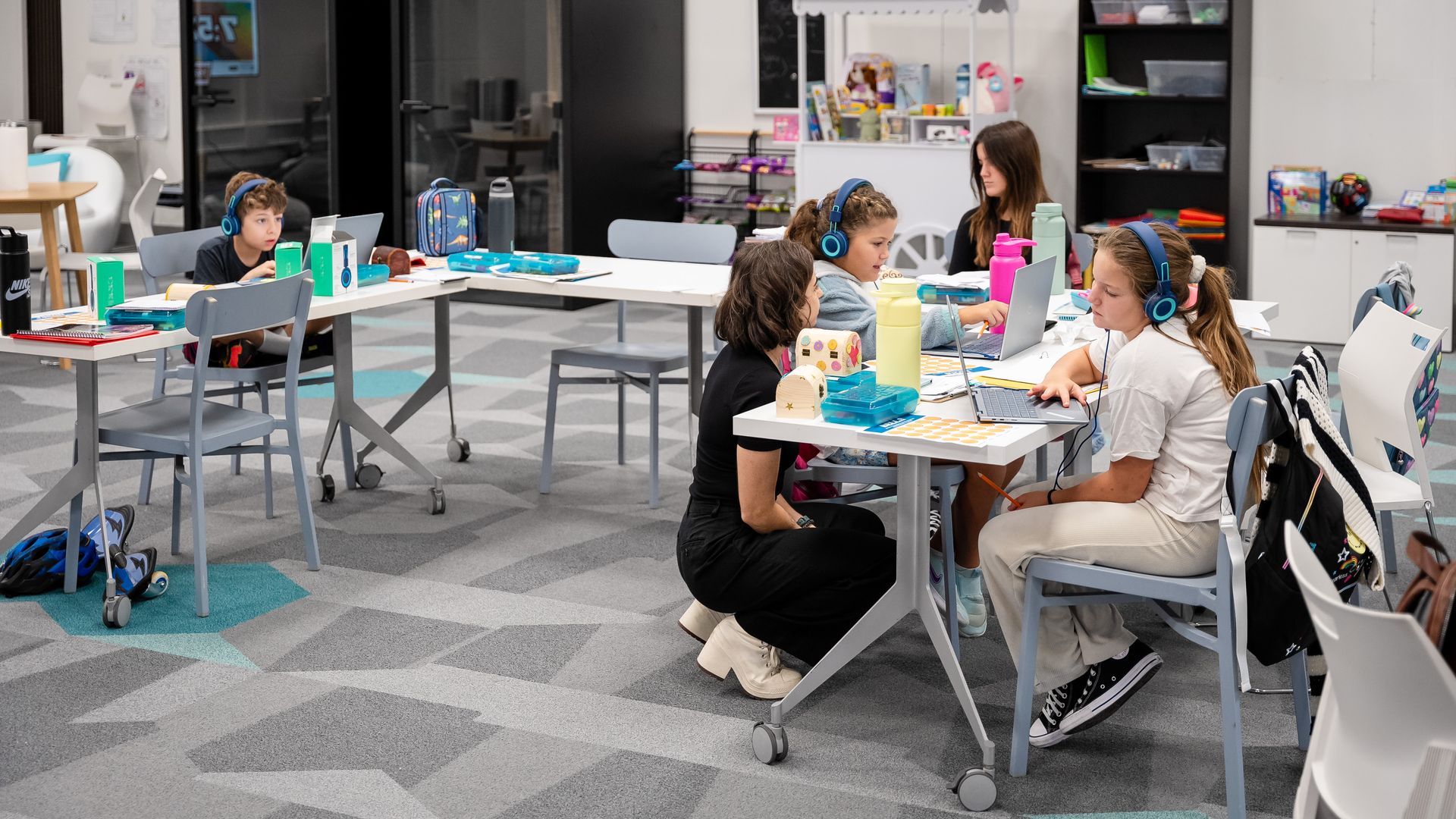
An AI-driven private school that teaches core subjects for just two hours a day is nearly doubling its U.S. footprint, adding eight new campuses from California to Puerto Rico.
Why it matters: With tuition starting at $40,000, Alpha Schools is riding the parental school choice movement while embracing the technology that will shape kids' futures — a challenge public schools are grappling with.
How it works: At Alpha Schools, students spend no more than two hours on core academics, then devote the rest of the day to developing life skills.
- AI models generate personalized learning plans for students, who then learn on third-party apps like Synthesis Tutor and Math Academy, as well as Alpha Schools' own programs. Each subject is taught in 25-minute sessions, with short breaks in between.
- Founder MacKenzie Price tells Axios that, unlike traditional schooling, Alpha Schools can ensure students master concepts before new material is introduced.
What they're saying: "If a kid comes to us and is behind, we're able to help catch them up," Price says. "If a kid comes to us who's been bored in traditional school because they're more advanced, they're able to really take the ceiling off."
- Afternoon skills workshops, such as a team bike race or running a lemonade stand, are designed to teach practical skills like financial literacy and public speaking.
- Instead of teachers, the schools employ "guides," who start at $100,000 a year. They don't create lesson plans or lectures. Think of them more like coaches, who work to motivate students and come from a range of backgrounds, from tech to law.
The other side: Skeptics have questioned the effectiveness of replacing teachers with AI and restricting learning to 25 minutes per subject.
- One of the core benefits of education is the socialization of young people, says Bryan Proffitt, vice president of the North Carolina Association of Educators. Teachers help students understand how to treat each other and how to relate to others' emotions.
- "Think back to your own high school days. You had your own quirky teacher. They made you reflect on who you are," Proffitt tells Axios. "[The idea that] machines are going to be able to meet those needs for our kids is absurd."
Zoom out: Alpha applied to open a public-school charter network in multiple states, but state boards in Pennsylvania, Texas, Utah, Arkansas and North Carolina rejected the idea, the New York Times reported.
- So far, only Arizona has agreed to partner with Alpha. It will open a virtual AI charter school this fall.
Case in point: Raleigh parent Jesse Miele — who calls the current education system a "death trap" — is considering enrolling his 8- and 4-year-old in Raleigh's new Alpha School. He says his children's private Christian school has failed to embrace technology.
- During a "simulation day," Miele says he was blown away by how a guide encouraged his timid son to make it to the top of a rock climbing wall — blindfolded.
- "This is about what is best for my children," Miele tells Axios. "If I have the resources to do it, then why wouldn't I?"
The big picture: Alpha School, which avoids political and social issues, is gaining more national attention, boosted by the support of billionaire Bill Ackman, an outspoken critic of DEI.
- Price says the anti-DEI movement was not a driving factor behind the school's inception, although her disappointment in her daughter's public education was.
The bottom line: "I would love to be able to bring this model of education to more and more people and make it more accessible," Price says. She says she hopes the public system "will embrace this idea."
- Proffitt, of NCAE, says: "It's a $45,000 private school run by a for-profit company. None of those things should have to do with the education of young people."
2. Nvidia has a China problem

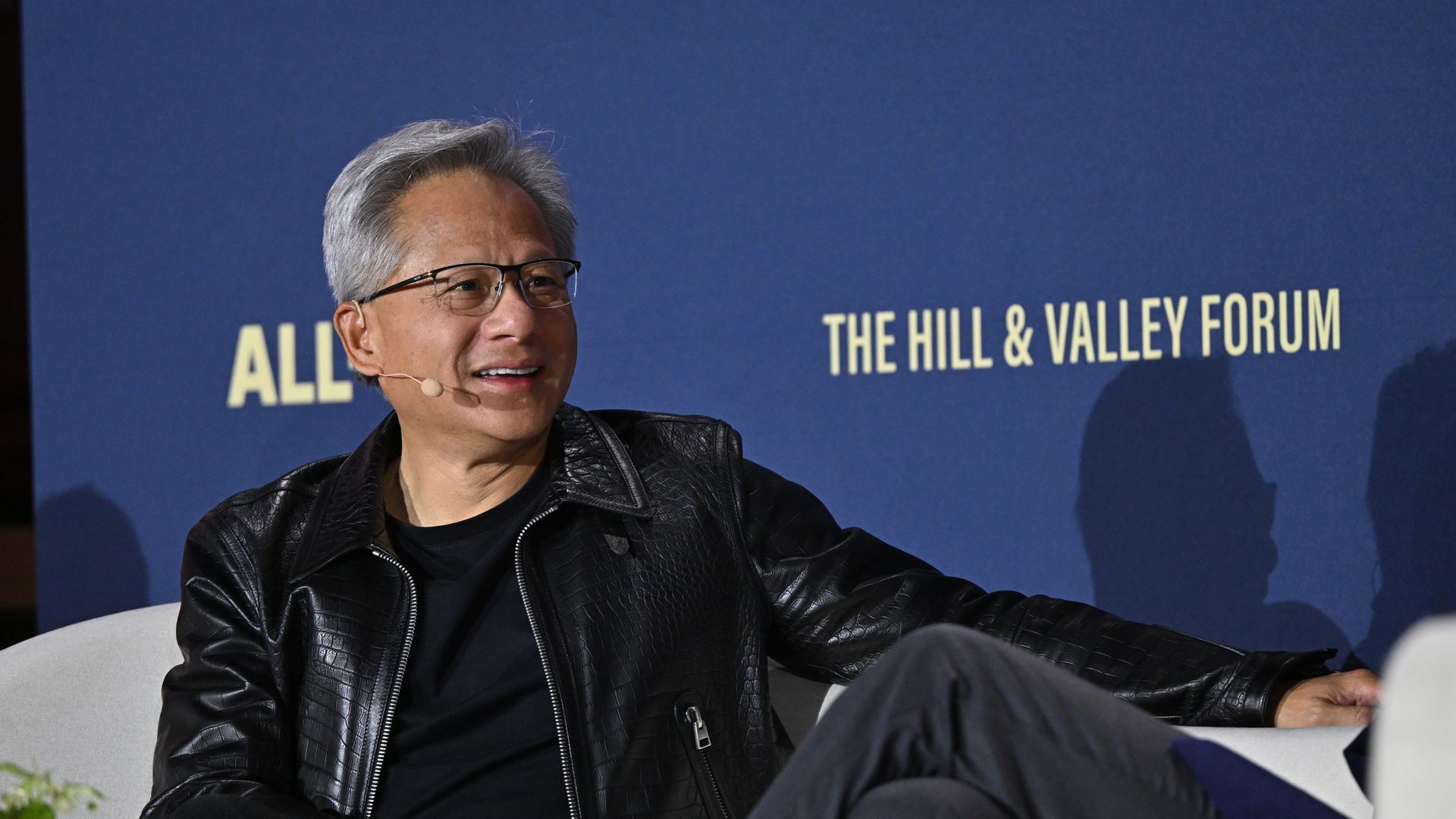
Nvidia, the biggest company in the world by market cap, reported better-than-expected results yesterday. But export controls to China dampened its data center revenue, and that's making investors nervous.
Why it matters: Nvidia is caught in the middle of a Trump trade war that could impact its earnings growth and the trajectory of the entire stock market.
Zoom in: Nvidia delivered 56% revenue growth from a year ago, to $46.7 billion, and net income growth of 59%, to $26.4 billion, as the AI economy continues to boom.
Yes, but: Nvidia forecast sales of $54 billion for the third quarter, disappointing some investors.
- "Though that was in line with the average Wall Street estimate, some analysts had projected more than $60 billion," Bloomberg noted.
What they're saying: "We need [China] more than they need us," Paul Meeks, managing director and head of technology research at Freedom Capital Markets, tells Axios.
- CEO Jensen Huang sees the Chinese market as a $50 billion opportunity that could grow 50% per year.
- That's why investors want the doors to that market wide open.
Catch up quick: The Trump administration barred exports of Nvidia's H20 chips to China in April.
- The ban was reversed in July after the Nvidia CEO visited the White House and agreed to give a 15% cut of revenue from China chip sales to the U.S. government.
- Nvidia still can't sell its most powerful chips to China, though it is urging the U.S. government for approval.
By the numbers: Export controls pressured its data center revenue, which came in just below Wall Street estimates at $41.1 billion.
- Part of that was due to a $4 billion reduction in H20 chip sales.
State of play: Nvidia CFO Colette Kress said the company would ship between $2 billion and $5 billion worth of H20 chips in the current quarter.
- The company gets half of its data center revenue from large cloud service providers, which happen to be the other biggest companies in the S&P 500.
- All of those companies have already committed to record AI spending, which could translate to upside for Nvidia.
Zoom out: Nvidia makes up 8% of the value of the benchmark S&P 500.
- If export controls impact Nvidia, the effects could reverberate through the entire stock market.
3. Training data
- OpenAI and Anthropic each gave their rival custom access for safety testing, a step some see as a way to ensure companies are adopting best practices. (TechCrunch)
- Meanwhile: Anthropic said it's seeing evidence of bad actors using Claude for "vibe hacking." (The Verge)
4. + This
Topps has made a baseball card featuring a squirrel that ran onto the field last week during a Yankees-Red Sox game.
Thanks to Scott Rosenberg and Megan Morrone for editing this newsletter and Matt Piper for copy editing.
Sign up for Axios AI+
